The Justice tarot card meaning centers on fairness and truth: look honestly at the evidence, consider who is affected, and make a decision you can explain. This Major Arcana tarot card connects choices with consequences, but it does not say that every painful experience is deserved. Someone else's harmful behavior remains their responsibility.
Upright Justice favors honesty, balanced judgment, and clear agreements. Reversed Justice asks you to notice bias, unfair treatment, or a refusal to accept responsibility. When you pull this card in your tarot reading, separate what you know from what you fear. Then decide what needs to happen next.

Justice tarot card meaning at a glance
- Main keywords: fairness, truth, accountability, choices, and consequences
- Upright meaning: weigh the facts, honor an agreement, and take responsibility
- Reversed meaning: bias, dishonesty, unequal treatment, or avoiding accountability
- Yes or no: a qualified yes when the choice is fair; pause when important facts are missing
- Try this question: What would I decide if the same rule applied to everyone?
Justice Upright Meaning
When the Justice card appears upright, the card indicates a need for an honest assessment. You may be choosing between offers, settling a disagreement, or deciding whether to keep a promise that has become inconvenient. Impartiality means giving relevant facts a fair hearing, including facts that challenge your preferred answer.
The upright Justice card can feel reassuring when you have acted carefully. It can also be uncomfortable when you owe someone an apology. Actions have consequences, and naming your part gives you a chance to make things right. Justice reminds you that taking responsibility for your actions is different from accepting blame for everything that happened.
Suppose a group project went badly. Instead of saying, "Nobody did anything," list the tasks, deadlines, and messages. If you missed your own deadline, admit that. If another person took credit for your work, keep the evidence and ask for a correction. The same standard should protect you as well as hold you accountable.
What Justice means in a tarot reading
The Justice card represents balanced judgment, but the meaning of Justice depends on the question and the position in the spread. If the Justice card appears in the present position, check what needs a decision now: a conversation, a contract, or a boundary you have postponed. In a future position, use it to prepare for the possible results of a choice rather than to declare that an outcome is fixed.
When this card comes up as advice, Justice says to slow down enough to distinguish evidence from assumptions. As a description of a person, it may suggest someone principled or careful about rules, but one card cannot establish their character. A reading often signals a useful theme to explore, not a hidden fact about somebody else.
Justice in love and relationships
Justice in love suggests checking whether words and actions match. In a love reading, an upright card can favor mutual respect, honest intentions, and a commitment both people understand. Love and romance need room for enjoyment, too; fairness does not mean keeping a running score of every nice thing you do.
If one partner always rearranges their plans, a fair conversation could start with, "Can we alternate whose schedule comes first?" For someone dating, the card suggests being clear about exclusivity instead of hoping you share the same definition. Whether you are single, partnered, or considering separation, consent and boundaries matter more than keeping the peace.
Reversed, the card may point to unequal effort, double standards, or an apology that never leads to changed behavior. It cannot tell you a person's private feelings or prove infidelity. Ask about observable behavior. You do not owe a harmful partner another chance simply because you pulled a card of fairness.
Justice in career, money, and school
At work, Justice may bring attention to contracts, hiring decisions, performance reviews, and who gets credit. Before accepting an offer, compare the salary, hours, duties, and notice period in writing. If a decision seems unfair, record what happened and ask which criteria were used rather than relying on office rumors.
For money, the card also encourages a clear view of what you owe and what someone owes you. Splitting rent fairly might mean accounting for different room sizes rather than assuming an equal split works for everyone. Review fees, repayment terms, and receipts before committing; the card cannot promise profit or predict your financial future.
In legal matters, the Justice tarot card indicates a theme of evidence and process, not a court verdict. Ask a qualified legal adviser about deadlines, documents, and your options. A hopeful reading is not a reason to ignore a notice or sign something you do not understand.
Justice Reversed Meaning
Justice reversed may indicate a distorted assessment: missing evidence, favoritism, dishonesty, or a rule applied to one person but not another. The reversed position can also describe your own reluctance to admit a mistake. Check which explanation fits the facts before deciding that someone must be at fault.
If you have been treated unfairly, reversed Justice does not tell you to blame yourself. True justice requires looking at power and circumstances as well as personal choices. Keep useful records, seek support, and choose a safe way to challenge the decision. If you caused harm, a specific apology and a repair are more helpful than defending your intentions. "I shared your message without permission; I have deleted it and will ask first next time" names both the problem and the change.
Justice tarot card reversed can describe harsh self-judgment as well. Perhaps you are treating one mistake as proof that you are a bad person. The reverse of avoidance is not endless punishment. Be accurate about what happened, repair what you can, and allow new evidence about yourself.
Justice yes or no meaning
For a yes or no question, the card upright leans toward a qualified yes if your plan is fair, informed, and consistent with your commitments. If you are asking, "Should I ask for the pay I was promised?" the useful answer is to gather the agreement and have that conversation. It is not a guarantee that the employer will agree.
Reversed suggests "not yet" when the terms are unclear or the decision depends on a biased account. A yes/no label cannot tell you whether justice will prevail in a dispute. A better follow-up is, "What fact, safeguard, or advice do I need before acting?"
Justice advice: choose a fair next step
Write down the facts in one column and your interpretations in another. "They replied two days later" is a fact; "They do not respect me" is an interpretation. Add what you still need to find out. This small exercise helps you make a decision without pretending your feelings are irrelevant.
Imagine Aurica asking you to explain your choice to someone who gets the shorter end of it. Would your reason still sound fair? That is a useful practice prompt, not a demand to please everybody. You can refuse an unreasonable request kindly and firmly. Inner strength helps you hold a boundary without turning the conversation into a contest.
For spiritual growth, Justice is also a card of honest reflection. This Major Arcana card asks you to notice the difference between defending your intention and recognizing your impact. Some readers describe its cause-and-effect theme as karma. Use that idea to examine your own choices, not to claim that illness, abuse, or bad luck is a cosmic punishment. The card carries no authority to decide what another person deserves.
One archetype, four perspectives
Justice Across Four Tarot Decks
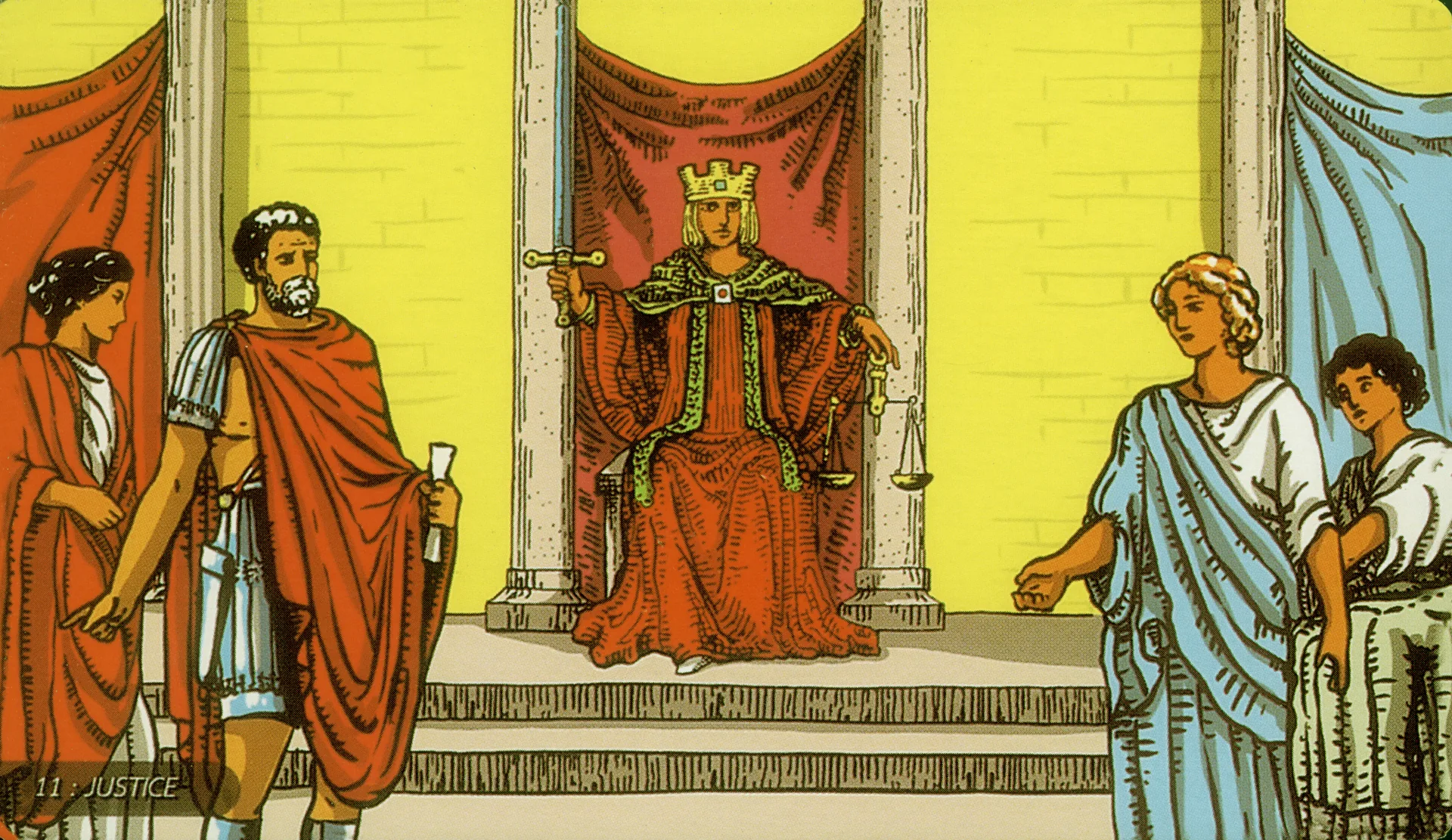
Compare the familiar Rider-Waite-Smith card with the moments before, behind and after the classic scene in three Lo Scarabeo decks.
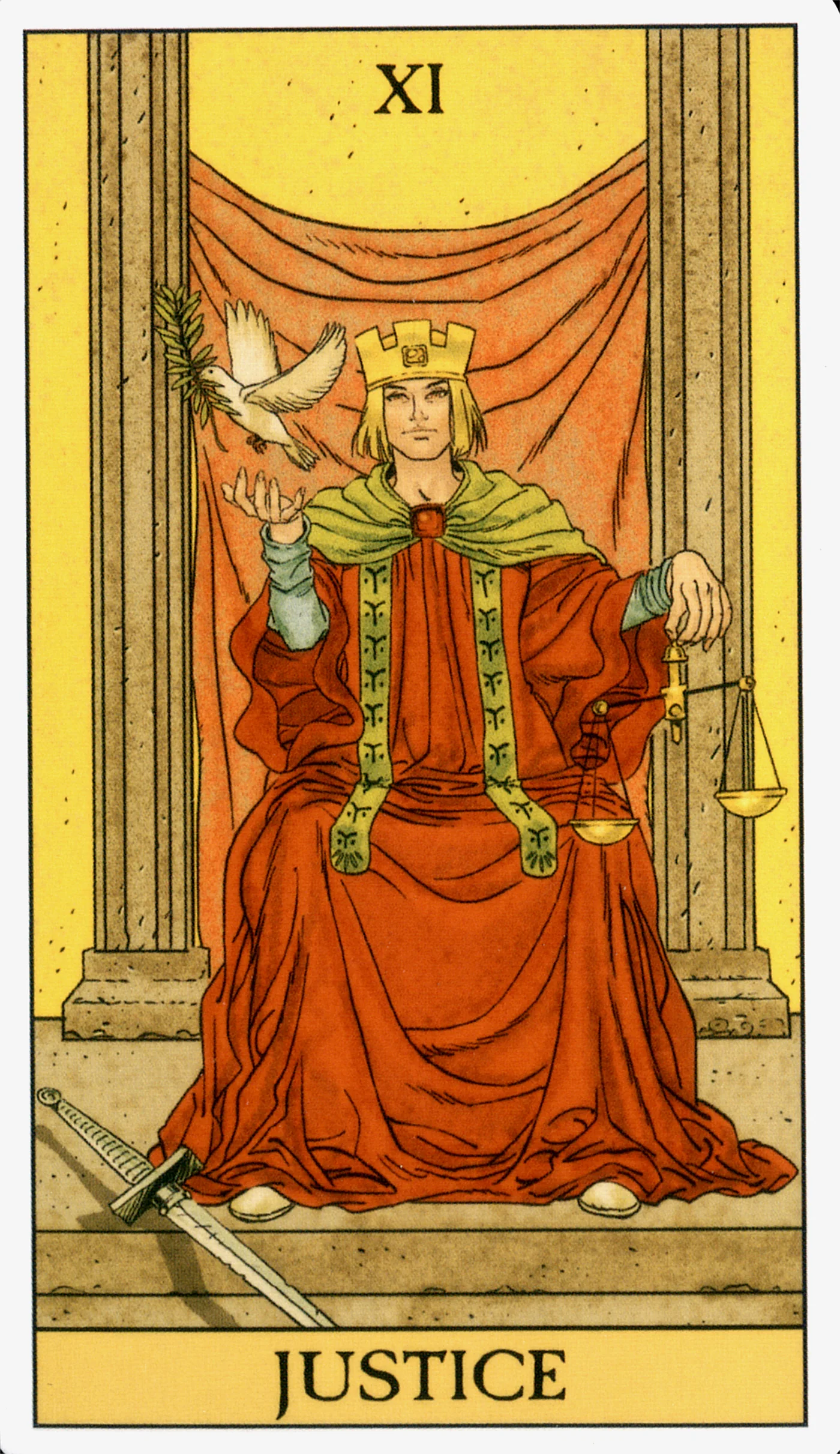
What apparently happens just before
What actually happened
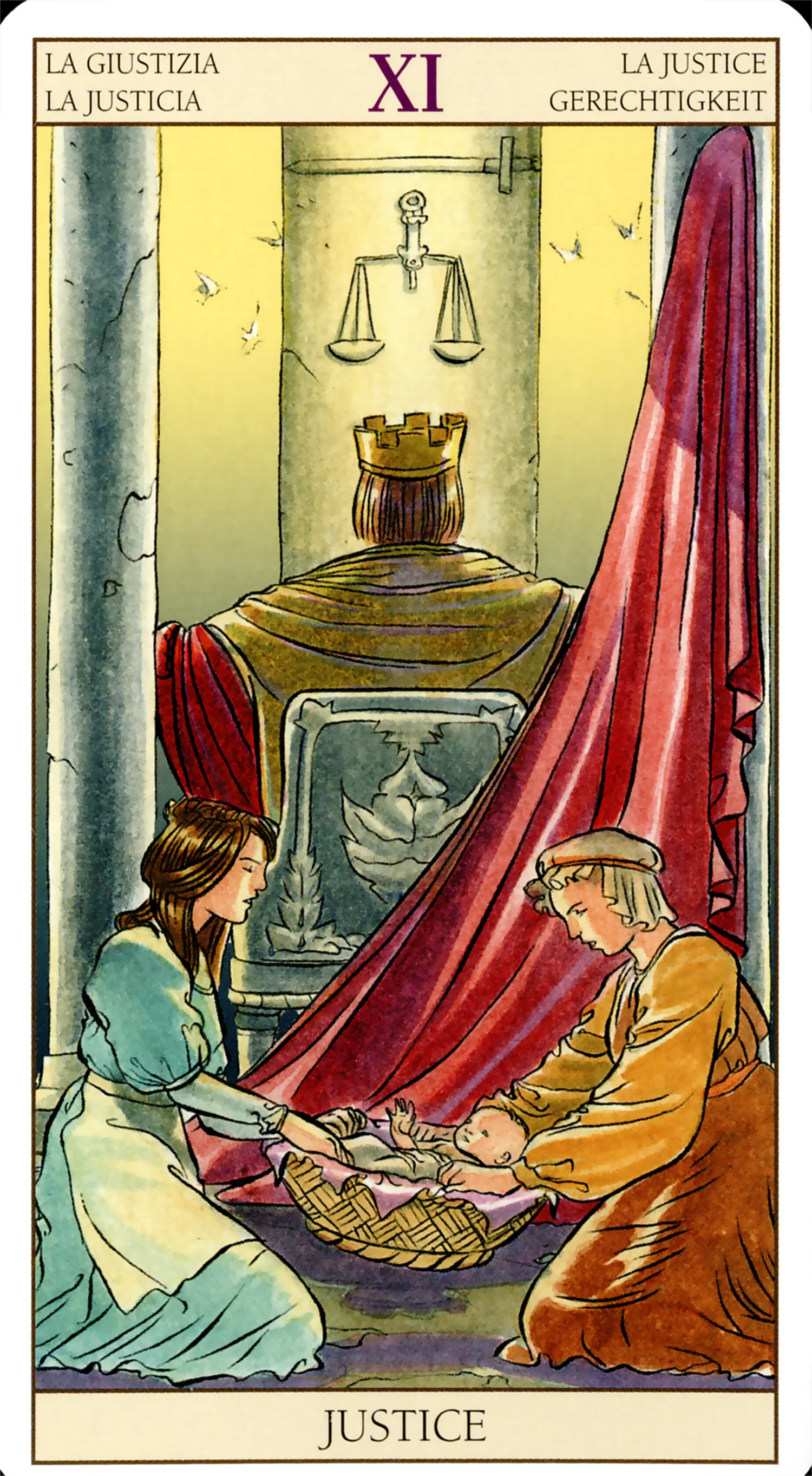
What happened on the opposite side
What apparently happened afterwards
Symbols to notice on the Justice card
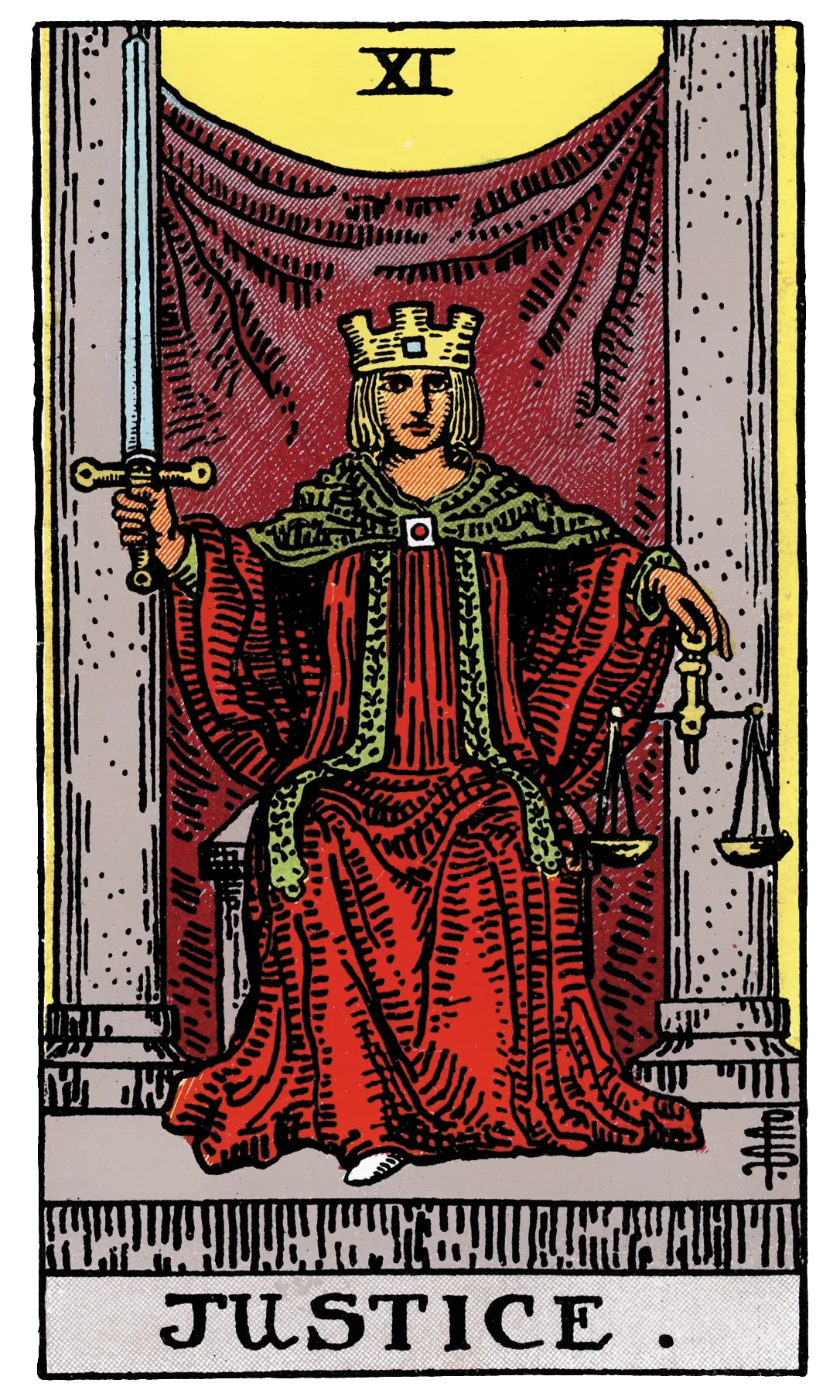
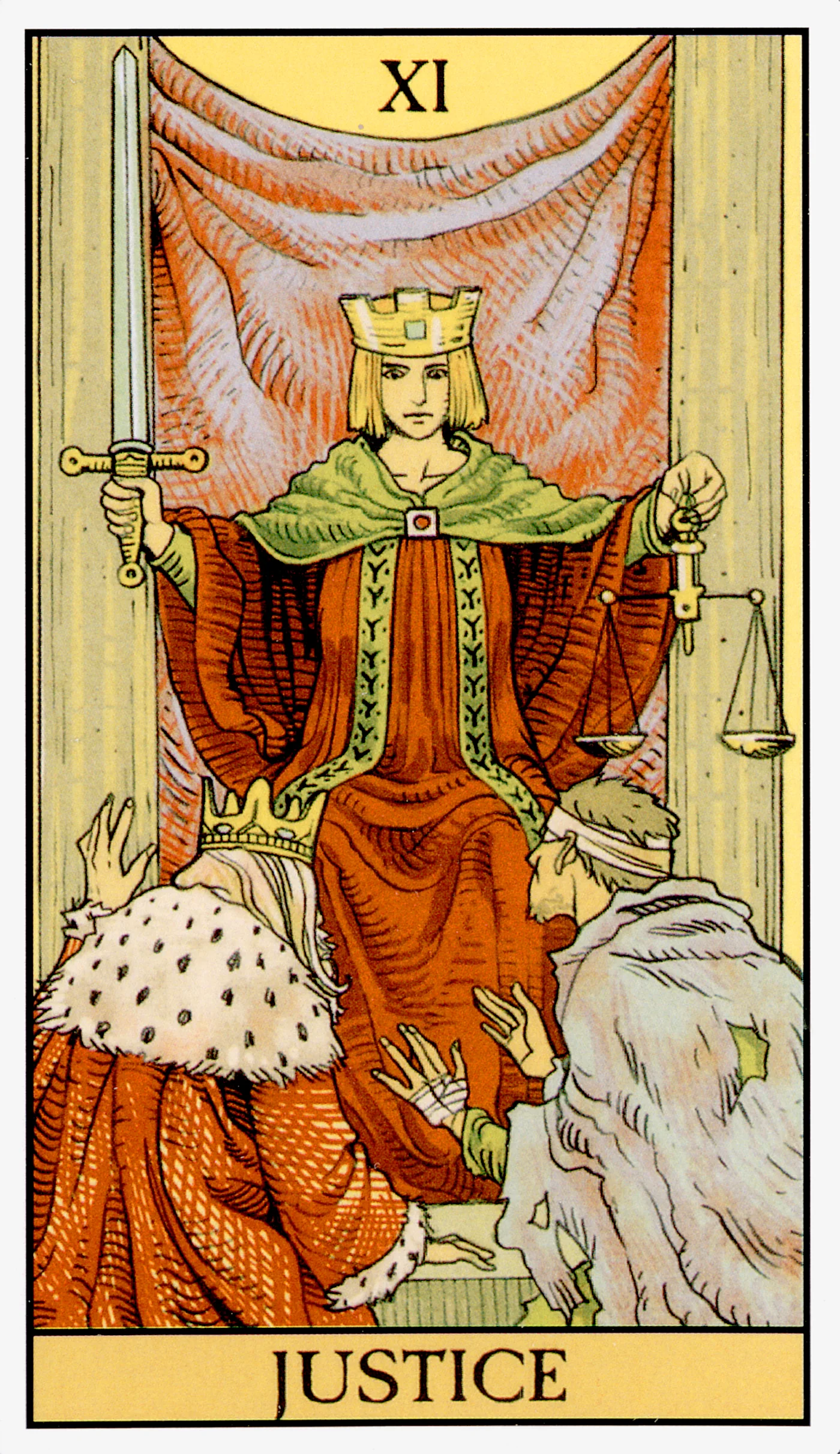
In the Rider-Waite-Smith portrait shown here, Justice sits between two pillars, facing forward without a blindfold. The figure on the card holds an upright sword on the viewer's left and scales on the right. Justice wears a red robe with green trim, a crown with a square detail, and a small white shoe visible beneath the hem. The panorama above expands the scene; it is not the same composition as the original portrait.
Justice holds the scales lightly rather than resting them on a table. The scales invite you to weigh evidence and competing needs. The sword of Justice is a double-edged sword, often read as discernment and a decision that cuts both ways: the standard you apply to someone else also applies to you. The crown can suggest authority and clear thought; the red clothing can suggest that judgment has to become action.
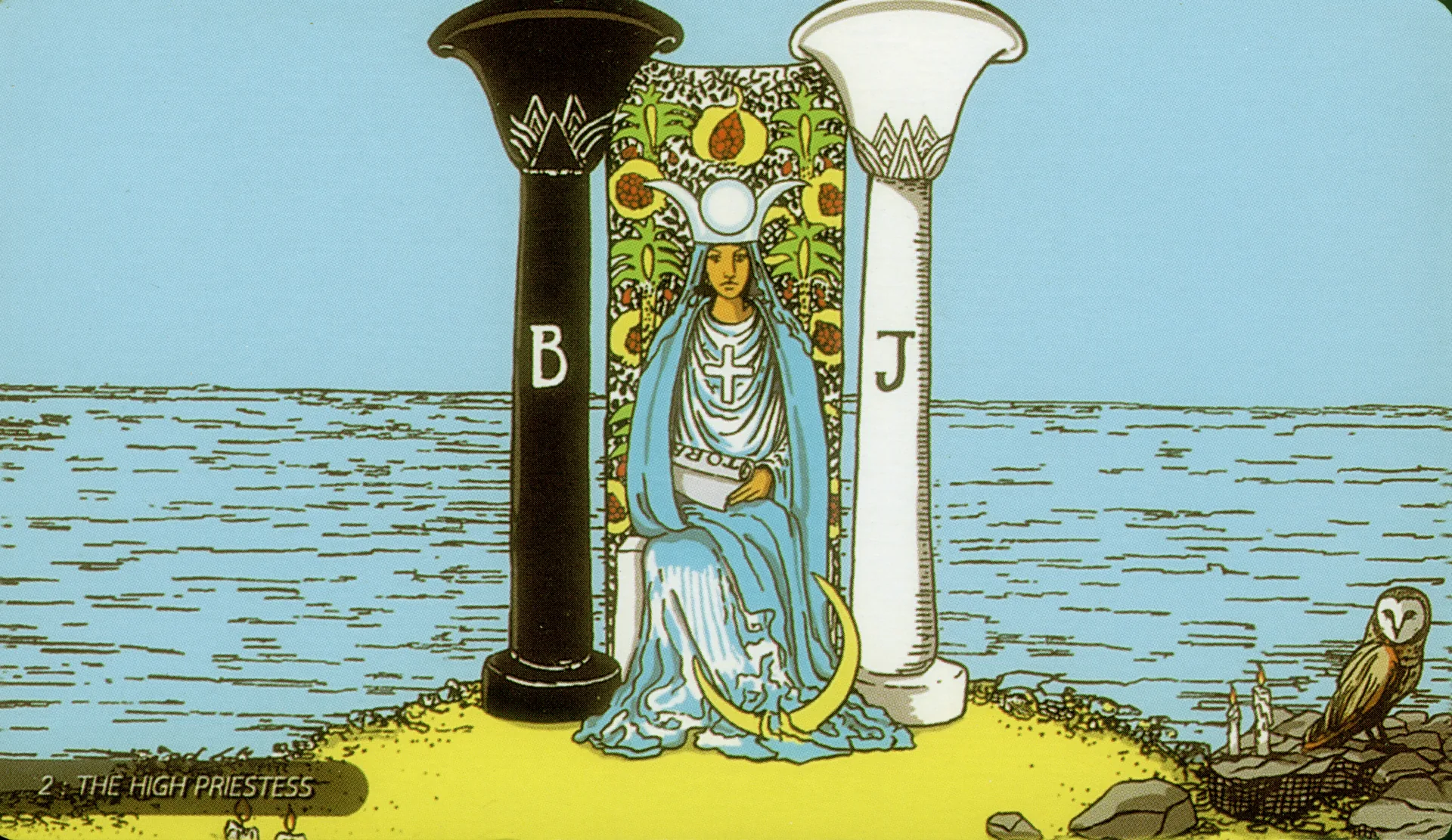
The two pillars recall the High Priestess, but these are not her labeled B and J pillars. Justice and the High Priestess offer an interesting contrast: one asks what the evidence supports, while the other invites attention to what is not yet clear. The figure of Justice faces you with open eyes, a useful image for conscious judgment. Meanings still vary by reader.
Number, Libra, and the element of Air
Justice is traditionally card VIII in Tarot de Marseille, whereas Rider-Waite-Smith places it at card XI. Strength and Justice exchange positions between these systems. Follow the numbering of your own deck rather than assuming every edition uses eleven.
In a common Golden Dawn-derived correspondence system, Justice is linked with Libra and the element of Air. Libra is ruled by Venus in astrology; that connection does not make Venus a universal direct planetary assignment for the card. These associations can enrich a reading about balance and judgment, but they do not predict a legal result or diagnose a health problem.
Justice with other cards
With the High Priestess, pause before making a decision if something important is still unknown. With the Emperor, examine who makes the rules and whether they are applied consistently. With the Two of Cups, talk about an agreement both people can freely accept.
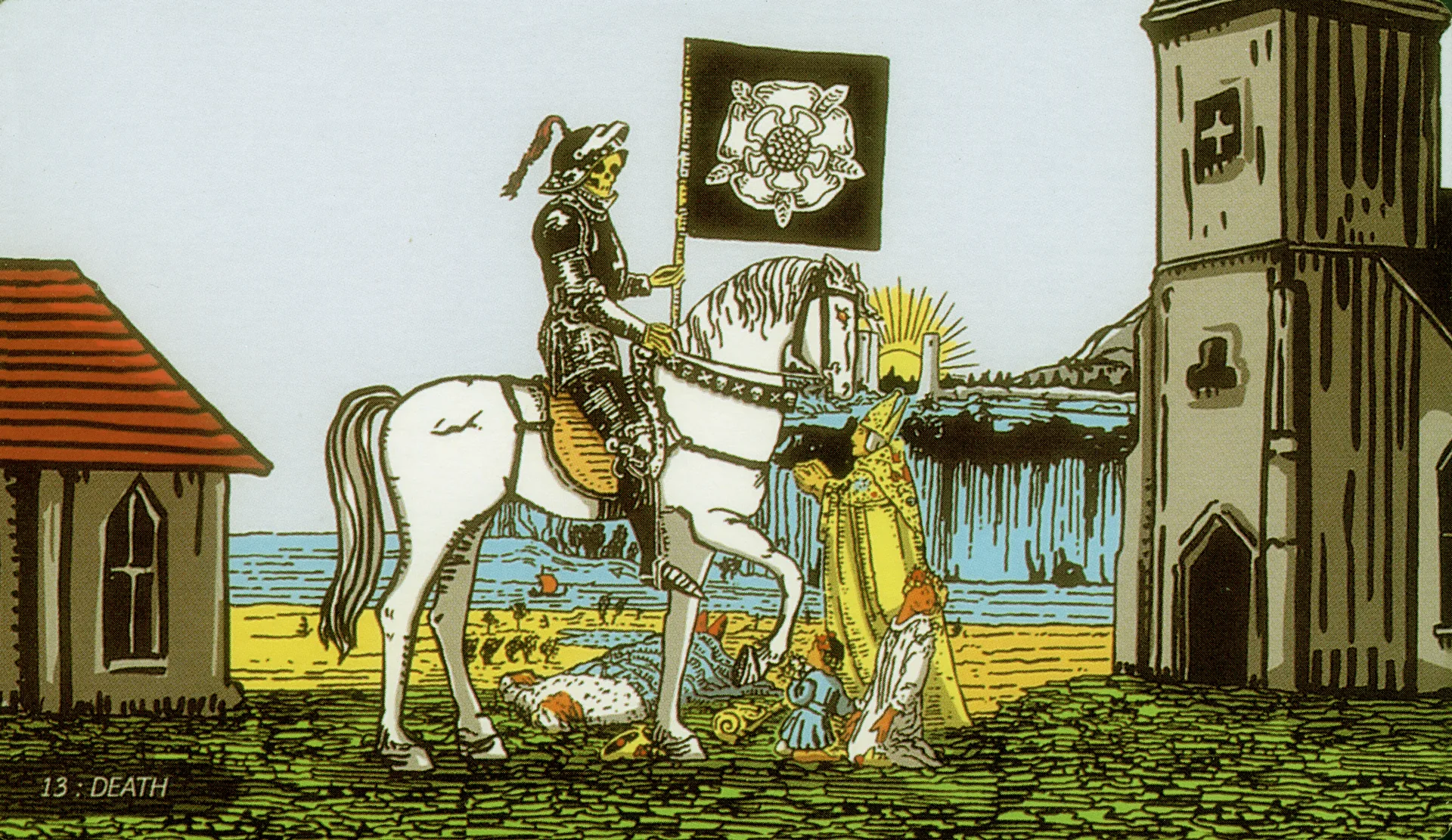
Justice beside Death can suggest ending an arrangement whose terms no longer fit: closing a shared account after a separation, for example. Beside the Devil, look for an obligation that has become coercive or a contract with restrictions you overlooked. These are prompts for interpretation, not proof of danger or a prediction of death.
Helpful questions to ask with Justice
- What do I know, and what am I assuming?
- Would I apply this rule if our roles were reversed?
- What belongs to my responsibility, and what does not?
- What change would make this agreement fairer?
One card, many perspectives
See Justice Card from Other Decks
Discover how other tarot decks interpret this card. Select a deck to explore its full review and gallery.

Joie De Vivre Tarot 
Pulp Fiction Tarot 
Sinking Wasteland Tarot 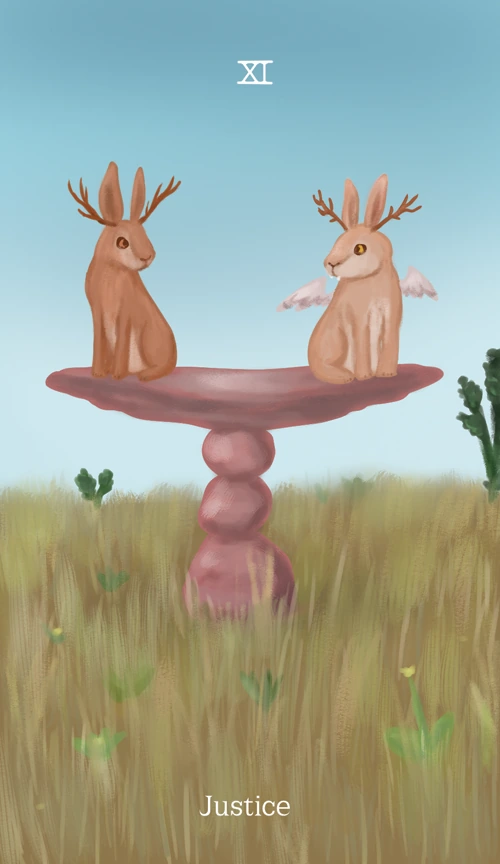
Cryptid Tarot 
Modern Medieval Tarot 
Romanov's Dynasty Tarot 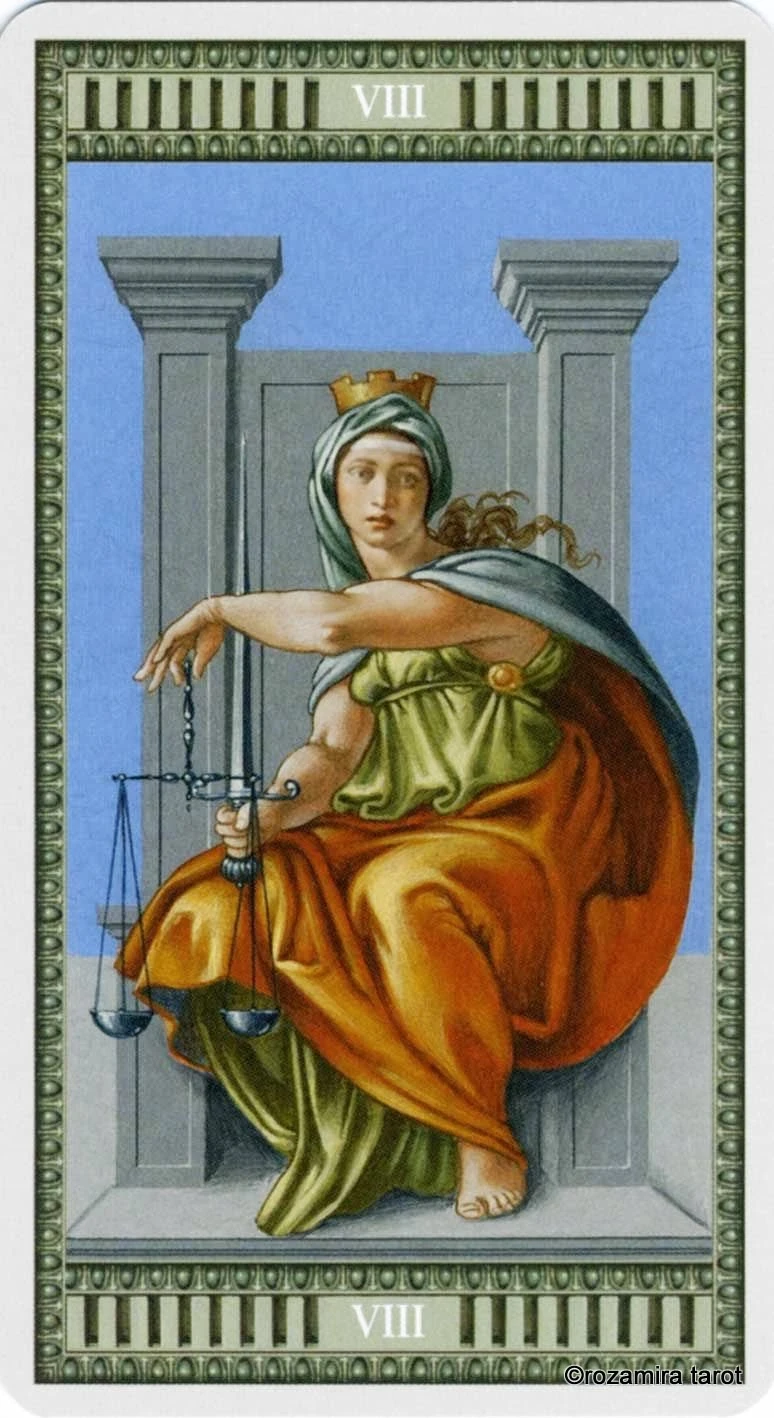
Michelangelo Tarot 
Holy Card Tarot 
Silver Era Tarot 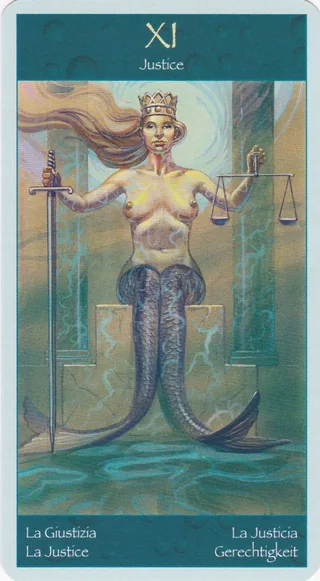
Tarot of Mermaids Tarot 
Golden Tarot by Kat Black Tarot 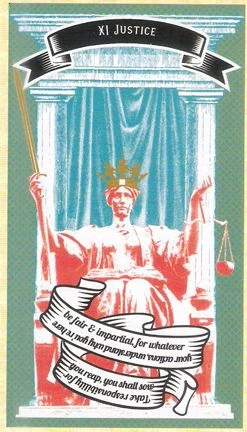
Original Madam Clara Tarot 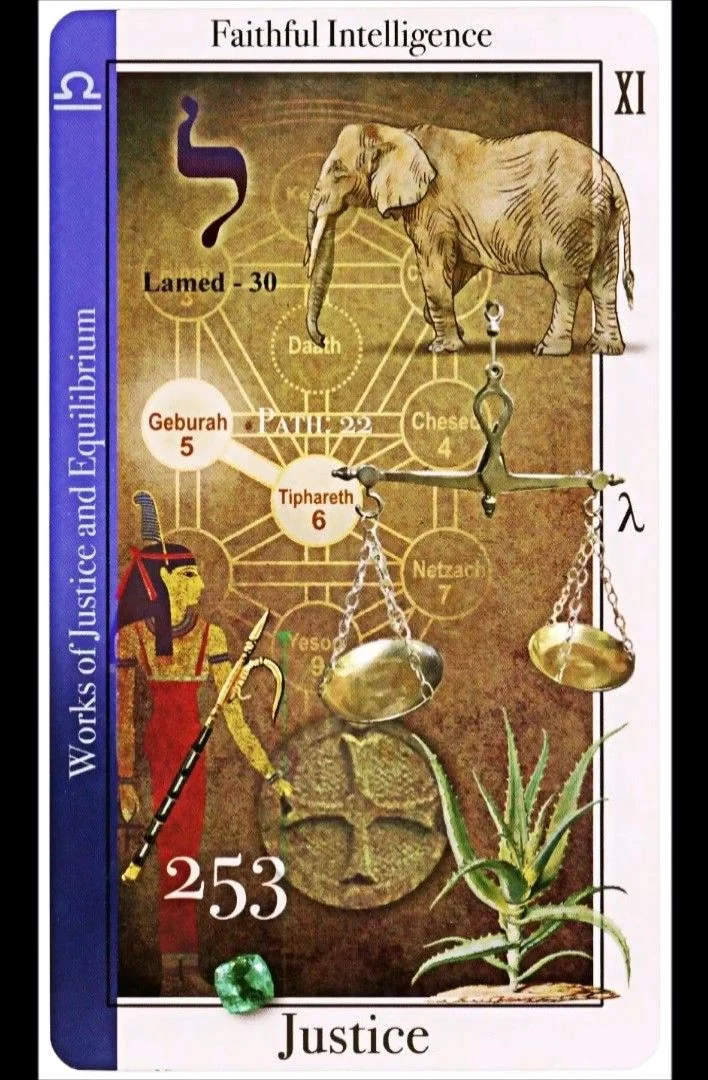
Tarot of Magical Correspondences 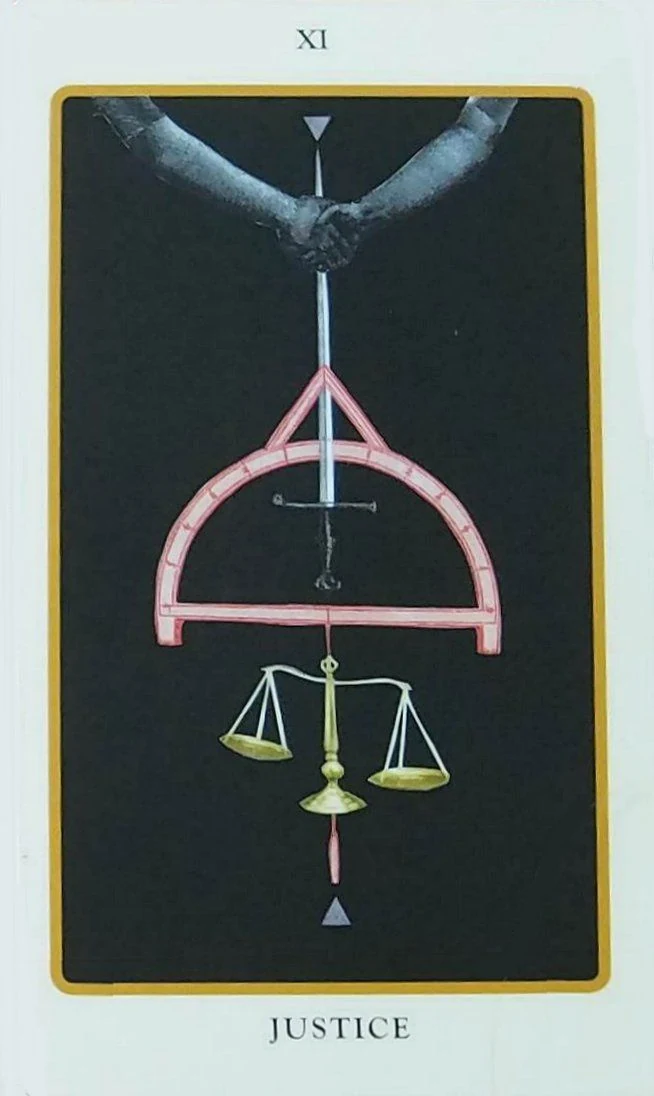
Spolia Tarot 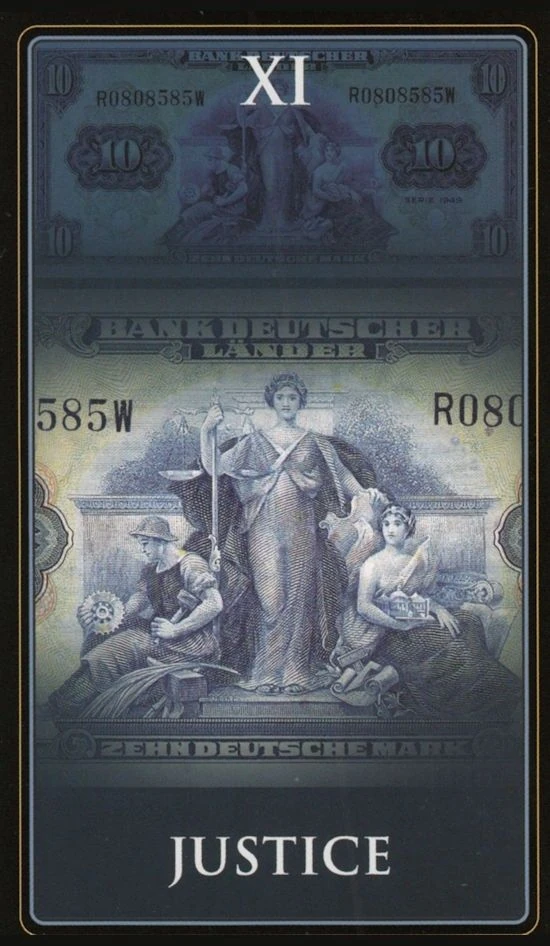
Money Tarot
Justice FAQ
Is Justice a good tarot card?
The card is a good prompt for clear thinking, but it is not a promise of a favorable outcome. Upright and reversed meanings both ask you to examine the facts and your choices. It can support an honest agreement or bring attention to an unfair one.
What should I do after pulling Justice?
Check one decision against the facts. Read the terms, ask a direct question, or name a mistake you can repair. If the situation involves a legal deadline, get qualified advice rather than waiting for another reading to settle it.
Does Justice reversed mean I did something wrong?
No. Justice reversed may describe unfair treatment, missing information, or harsh self-judgment as well as avoiding responsibility. Compare the interpretation with what happened. Do not assume that being hurt means you caused or deserved it.
Can Justice predict health or a court decision?
No. Like Justice in any other position, it can help you reflect on choices but cannot diagnose illness or determine a verdict. If you are worried that a habit could lead to health problems, discuss the actual symptoms or concerns with a clinician. For a dispute, a legal adviser can assess the evidence and deadlines.