Explore the Michelangelo Tarot Cards
Browse the complete exact-edition card gallery in official deck order. Select a group to filter the continuous gallery, or choose any card to open the full-size Lightbox.
78 verified cards shown

Aurica’s Quick Take
I love how this deck feels like a Renaissance sketchbook opening beneath my hands. Its figures are strong, tender, and exposed, so I begin with posture: who reaches, who turns away, and where the body holds its breath.
I let those gestures lead before reaching for memorised keywords. The green architectural borders contain each scene while skin, cloth, sky, and stone keep the emotion immediate. I notice the first movement, compare it with tradition, then ask what choice it suggests.
It shines for reflective questions, creative blocks, relationships, and moments when courage needs a human face. It may feel intense if you prefer gentler imagery, so I would begin with one card and give its gesture room to breathe.
Let the figure that catches your eye become a companion rather than a command, and may this beautiful, human deck help you meet your own courage with tenderness and hope.
What is Michelangelo Tarot?
Michelangelo Tarot is a tarot deck with its own visual identity. Instead of treating the cards like plain flashcards, it asks you to read mood, symbol, color, expression, and atmosphere together.
This makes the deck useful for readers who want more than memorized keywords. The best tarot decks give you something to notice right away, then reward a second look with deeper meaning.
Deck details at a glance
- Deck: Michelangelo Tarot
- Use: tarot review, deck browsing, journaling, and intuitive reading
- Best for: intuitive readers, tarot collectors, journalers, and anyone who chooses decks by artwork and atmosphere
- Not ideal for: readers seeking a completely neutral deck, plain keyword cards, or artwork that does not shape the reading
- Watch for: color, symbol, posture, atmosphere, repeated details, and visual storytelling
Artwork and first impression
The first impression of Michelangelo Tarot matters because the artwork sets the emotional weather of a reading. Notice what your eye catches first: a face, animal, object, doorway, color, gesture, or empty space.
That first detail is often the doorway into the card. Some decks speak loudly and quickly. Others ask you to sit quietly and let the symbolism open slowly. A deck is working when it gives you clear things to notice without making the reading feel forced.
Where the body becomes the message
Michelangelo Tarot does not whisper through tiny decorative clues; it speaks through shoulders, hands, weight, and the space between bodies. I read the first physical tension before I reach for a keyword, because the pose often tells me where the question is braced.
That makes each draw feel like standing before a fresco while the plaster is still warm. Look for the figure who bears weight, the one who reaches, and the one who turns away; then ask where the same movement lives in your situation.

CARD STUDY
Strength: power carried through the body
Against a clear blue field, a nude youthful figure sits upright above a crouching, grey-bearded man in green. A lion skin hangs behind the younger body, a pale strap crosses the chest, one hand gathers it near the shoulder, and the other grips a staff. The direct gaze and open posture feel exposed rather than armoured.
The card makes strength physical: height, balance, restraint, and the uncomfortable fact that power changes the shape of every relationship. Upright, I read it as courage that can hold steady without hiding. In shadow, the same arrangement can warn of domination, pride, or forcing someone else to carry the strain.
In a reading, ask: what am I truly supporting, and who is bent beneath it? The answer may be brave persistence, but it may also be permission to loosen your grip and choose a kinder form of control.
How it reads in practice
In practice, Michelangelo Tarot works best when you combine classic tarot meanings with direct observation. Start with the card title, then ask what the image adds. Does it make the message softer, sharper, stranger, more practical, or more emotional?
This keeps the reading grounded. Tarot does not need to sound complicated to be helpful. A clear question, a careful look, and one practical next step are often more useful than a dramatic prediction.
Movement is the deck’s second language
Once I have read the weight of a single figure, I widen my gaze. This deck repeats reaching arms, turning torsos, lifted faces, and planted feet, so a spread can feel like several moments of one Renaissance drama laid side by side.
Notice which card begins the motion and which one receives it. That small sequence can turn a row of familiar titles into a clear story about initiative, confidence, waiting, and the moment action becomes visible.
FOUR PACK
Bodies in motion: from intention to arrival
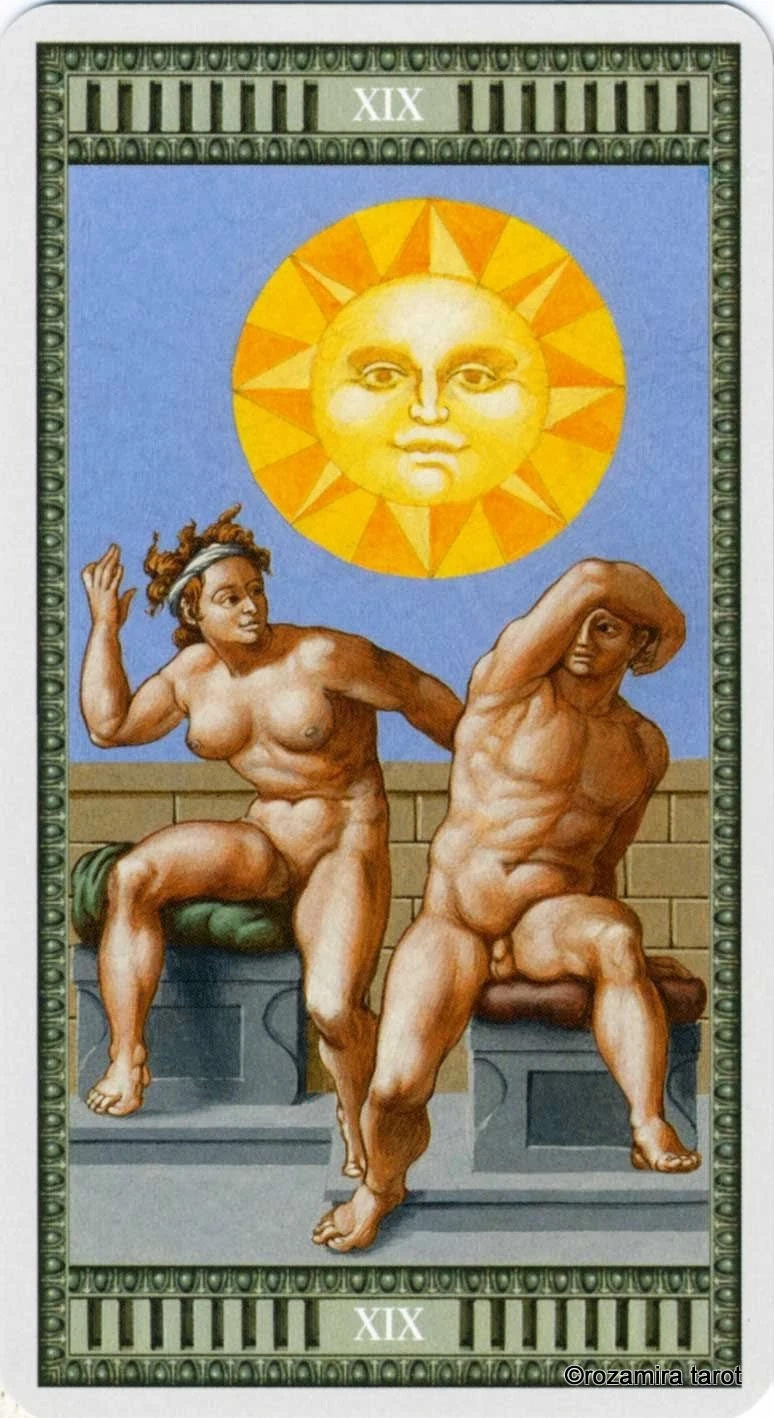
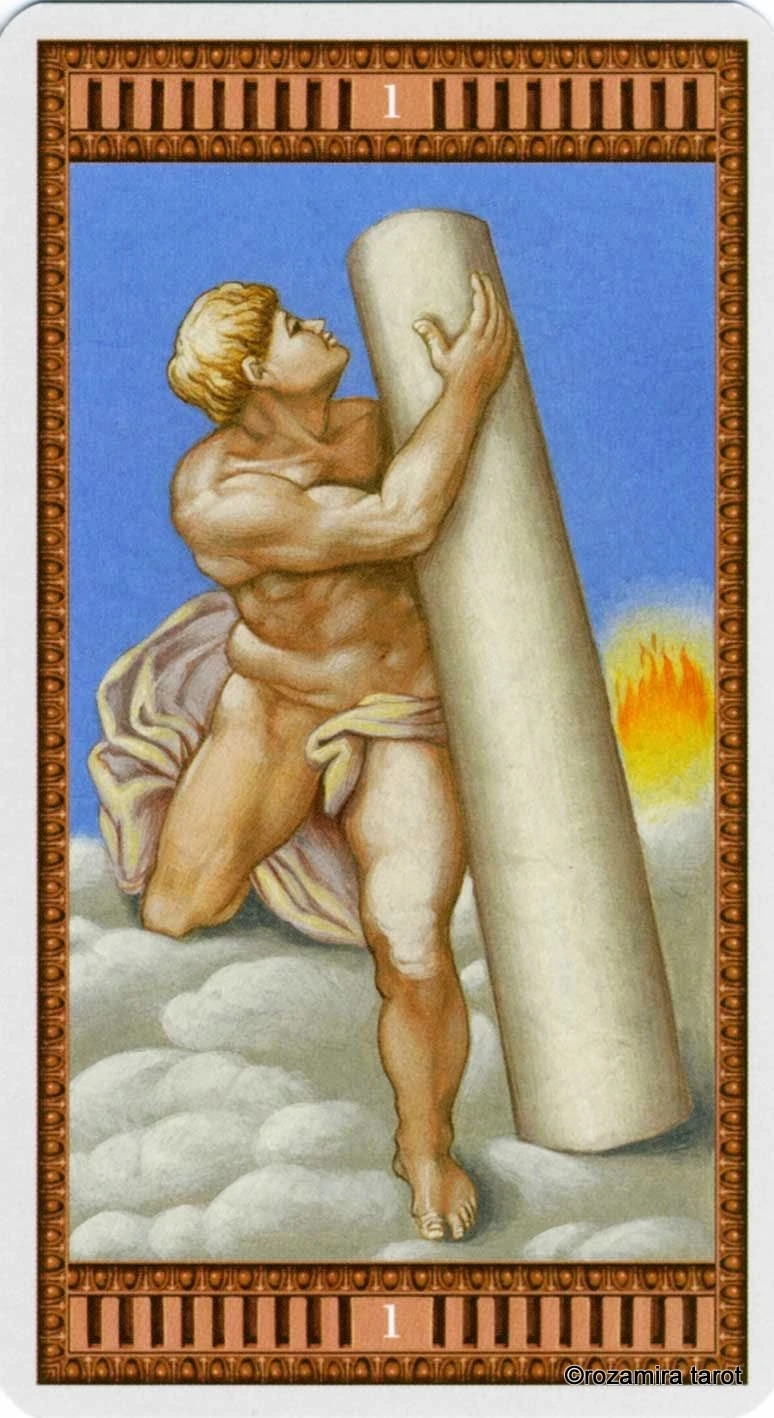
The Magician raises both hands while a sword and vessel rest below; The Sun brings two seated figures beneath a blazing face; the Three of Wands braces beside three tall staffs with a ship offshore; and the Ace of Wands presses a figure against a pale column above clouds and fire. Together they move from charged intention into expression, direction, and wholehearted effort.


Beginner friendliness
Beginners can use Michelangelo Tarot if the art feels readable and interesting. If the images make you want to keep looking, that curiosity can carry you through the learning stage.
Try a one-card daily pull for a week. Write three notes: what you noticed first, the traditional meaning, and one real-life action. This simple routine teaches the deck’s voice without overwhelming you.
When a pause is not the same as peace
Beginners sometimes rush to make every card decide the question. Michelangelo Tarot is especially useful when you let uncertainty remain visible for a moment, because its bodies show how much effort indecision can demand.
Before choosing a meaning, name what the figure can and cannot see, where the hands are placed, and what the surrounding sky contributes. The reading becomes gentler and more precise when you separate a thoughtful pause from a frozen one.

CARD STUDY
Two of Swords: the cost of holding still
A blindfolded nude figure crouches on a grey stone seat beneath a white crescent moon. One sword angles upward behind the head while the other points down across the lower body; a golden cloth loops around the figure and the stone. The crossed directions create tension even though the body itself is seated.
Upright, this can be a deliberate pause while two truths are weighed. The blindfold makes inner listening important, yet the exposed body and strained arm suggest that postponement is not effortless. In shadow, the pose can become avoidance: holding opposing answers so rigidly that neither can move.
In an actual spread, ask what information is missing and what decision is already being felt in the body. A useful next step may be small: lower one sword, gather one fact, and make room for movement.
Love and relationship readings
For love readings, Michelangelo Tarot can help you look at emotional patterns instead of chasing a yes-or-no answer. Ask what needs care, what is being avoided, where trust is growing, and what boundary would make the situation healthier.
For friendship and family questions, look for distance, closeness, protection, movement, and repeated symbols. Those clues can show whether the energy feels open, guarded, tired, playful, or ready for repair.
Tenderness here is rarely still
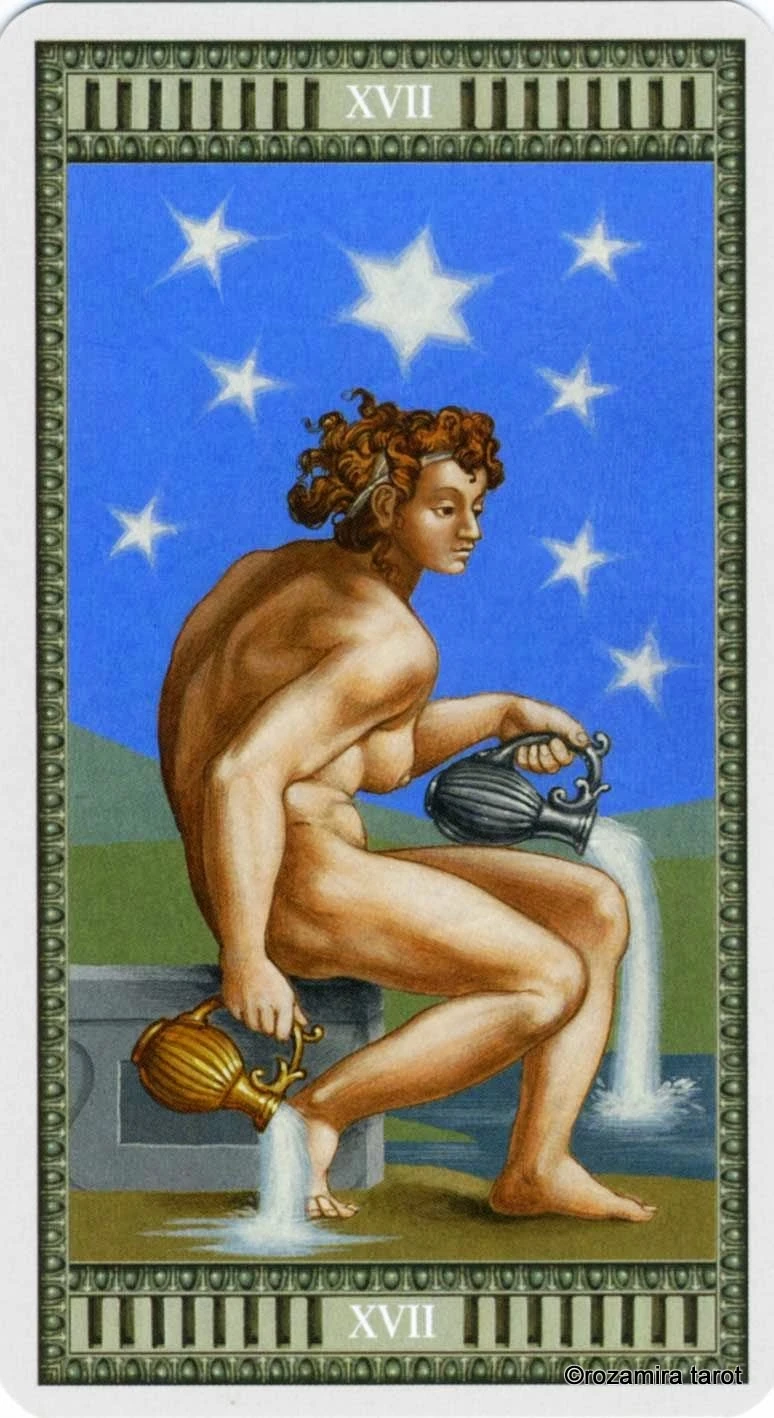
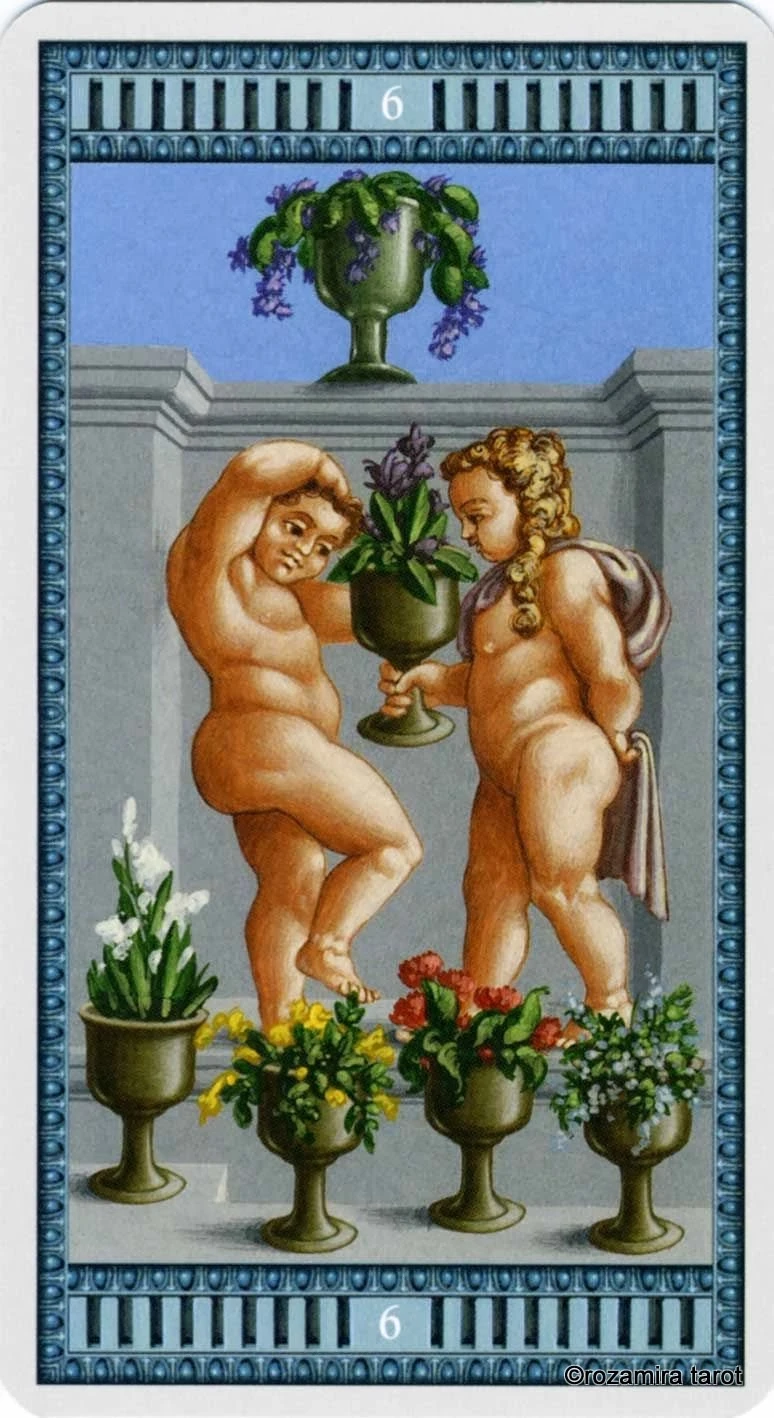
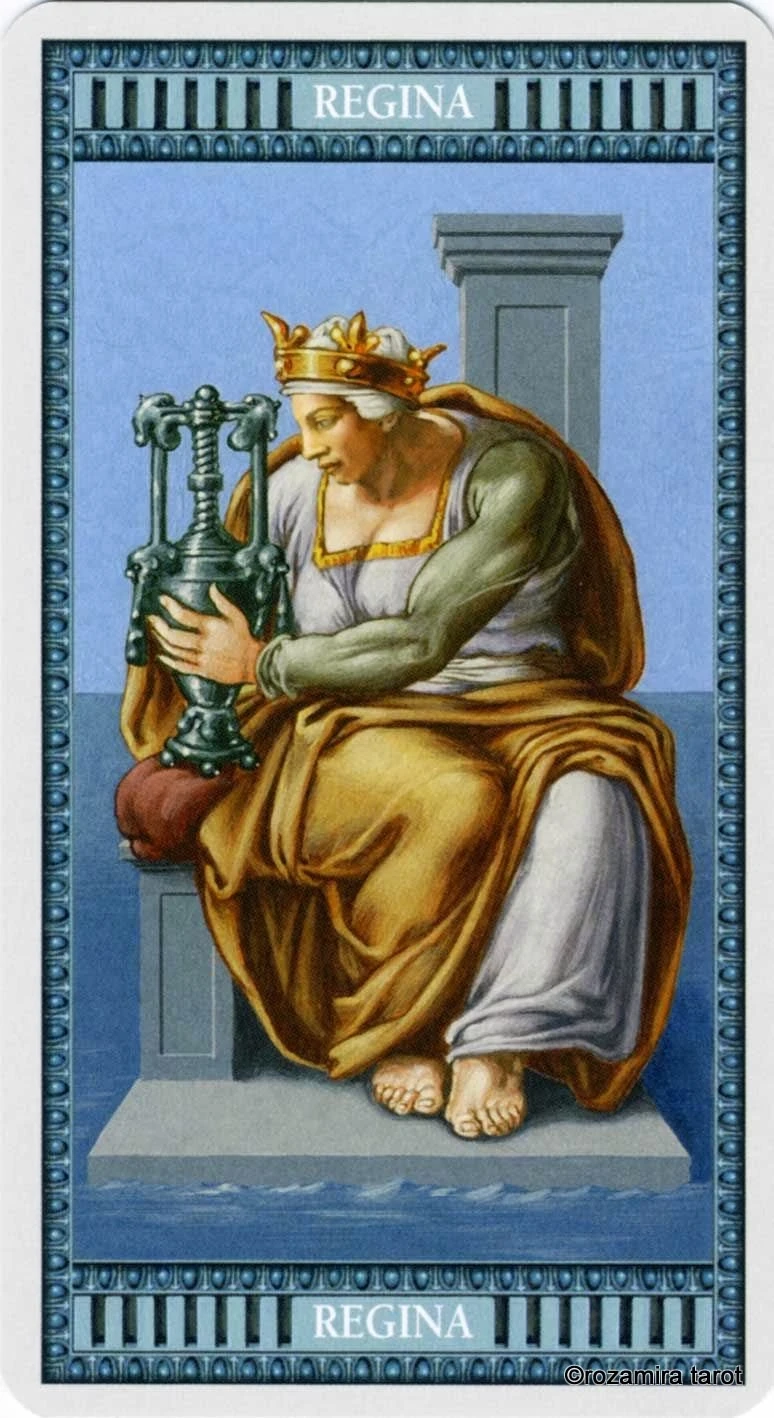
The relationship cards feel alive with approach and retreat. Some figures reach with both hands, some pour, some offer flowers, and some turn toward an ache they cannot neatly solve. I find that honesty more useful than a perfect romantic tableau.
Read these cards as a conversation about contact: who offers, who receives, what is remembered, and where longing needs a boundary. The emotional weather becomes clearer when you let sweetness and difficulty share the same spread.
FOUR PACK
The heart in motion: desire, care, memory, and hurt
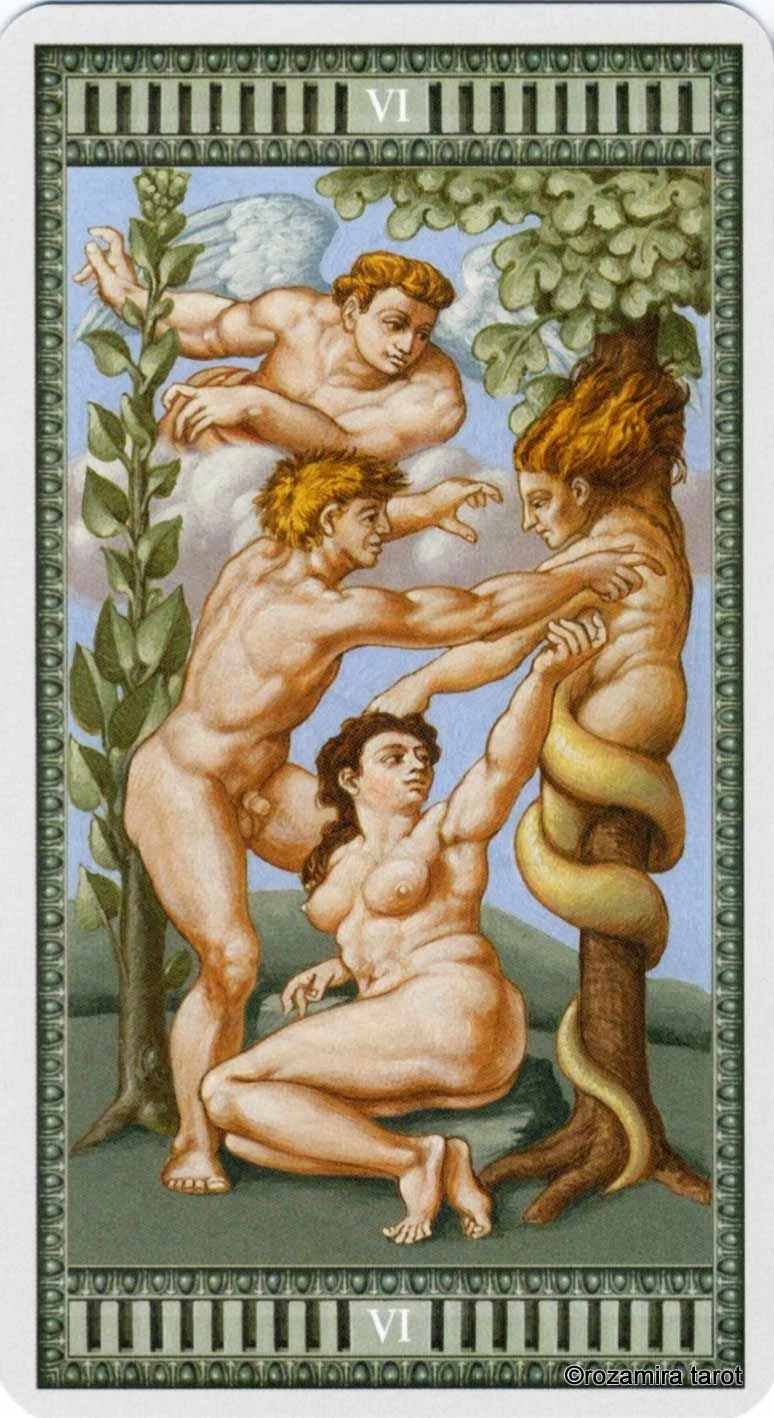
The Lovers gathers reaching bodies between trees; The Star pours water beneath a field of white stars; the Six of Cups places two children among flower-filled vessels; and the Queen of Cups cradles an ornate cup close to her chest. Together they show that intimacy can be chosen, replenished, remembered, and protected without pretending it is simple.
Career, money, and creative readings
For career and money questions, Michelangelo Tarot is most useful when you ask about focus, timing, pressure, confidence, and the next practical move. Watch for symbols of movement, delay, support, risk, or discipline.
For creative work, use the deck like a mirror. Ask what wants to be made, what is blocking the idea, and what small action would bring it back into the real world.
Craft asks for patience, not just inspiration
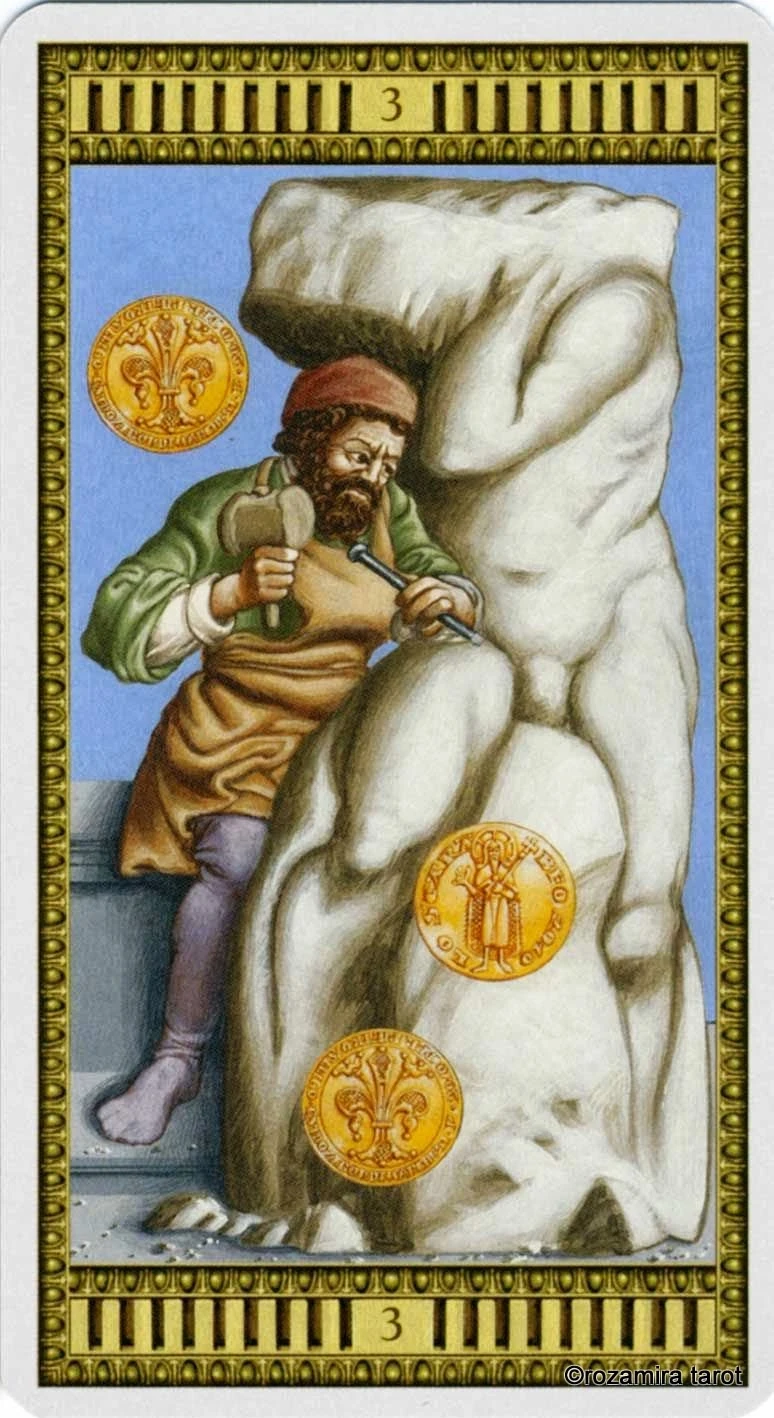
In creative and practical readings, I watch how this deck handles tools. A hammer, chisel, staff, blade, or coin is never merely an item in the frame; it tells me whether energy is being shaped, defended, offered, or allowed to sit unfinished.
This is where the Renaissance atmosphere becomes wonderfully practical. The grand body of a statue begins with one careful strike, and a large ambition becomes believable when the next piece of work is small enough to hold in your hands.
CARD STUDY
Three of Coins: making vision tangible
A bearded craftsperson in a red cap, green sleeves, and a brown apron works with a hammer and chisel against a monumental pale stone figure. Three gold coins sit across the blue background and the sculpture, while small chips gather near the figure’s foot. The maker is much smaller than the work, yet the tools meet one exact point.
Upright, this is skill made visible through attention, repetition, and respect for material. It can point to collaboration, but this particular image also honours the solitary discipline behind finished work. In shadow, the huge unfinished form may mirror overwhelm, perfectionism, or labour that has lost contact with purpose.
In a reading, choose the next place for the chisel rather than trying to finish the whole statue at once. Ask which detail needs mastery now, whose feedback is useful, and what evidence would show that the work is genuinely improving.
Pros and cons
Swipe sideways to compare Pros and Cons
| Pros | Cons |
|---|---|
| Clear visual identity and memorable mood. | The style may not fit every reader or every mood. |
| Good for intuitive reading, journaling, and themed spreads. | Some cards may need guidebook support at first. |
| Helpful for readers who want artwork to carry part of the message. | Readers wanting a plain classic deck may prefer a simpler Rider-Waite-Smith option. |
| Works well for daily pulls and focused questions. | No additional con listed |
A quieter kind of mastery
Not every achievement in this deck arrives with applause. Some cards place a lantern in one hand, a blade beside a wounded heart, or a coin above a resting body. They remind me that mastery includes solitude, disappointment, recovery, and stewardship.
When these images appear together, I look for the path from inner truth to outer stability. The difficult card is not an interruption to success; it may be the honest turning point that keeps success from becoming hollow.
FOUR PACK
Solitude, sorrow, opportunity, and stewardship
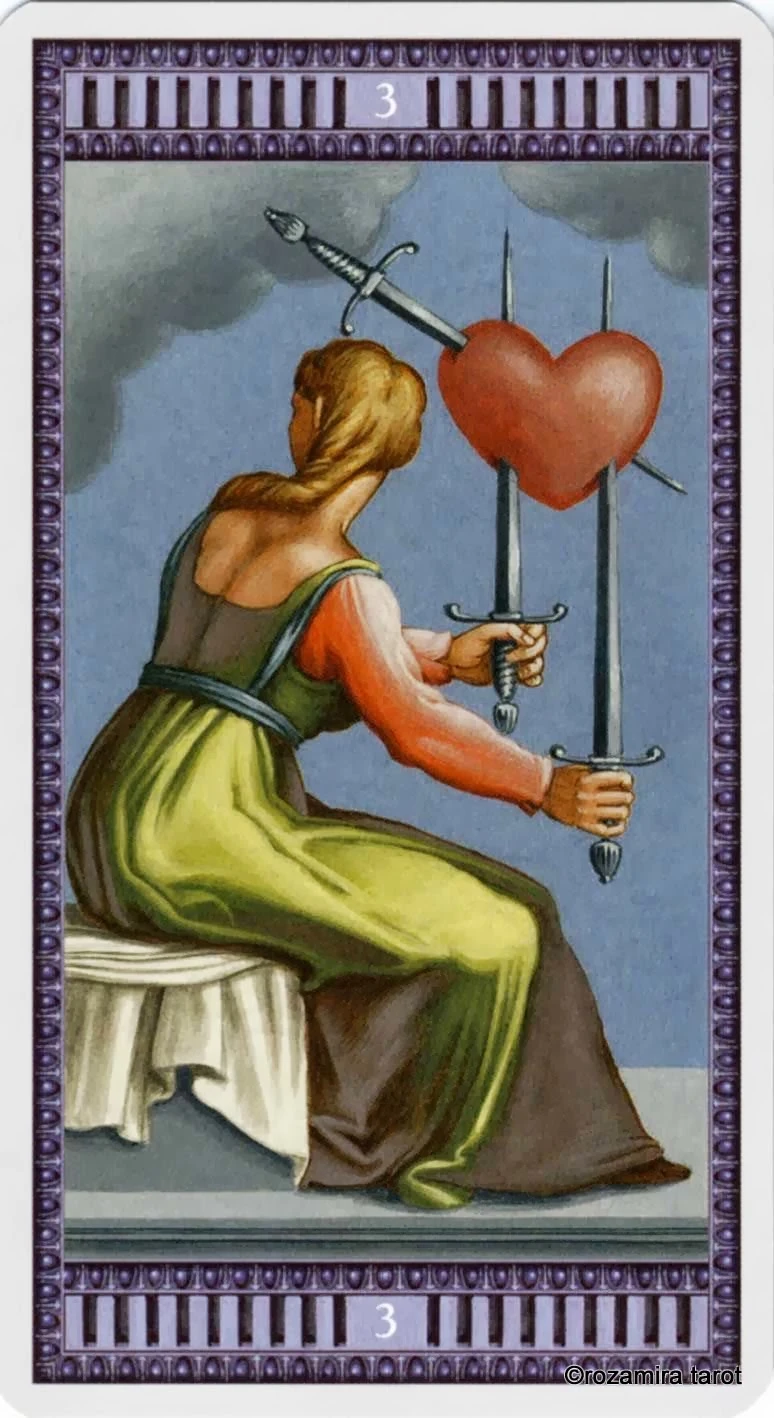
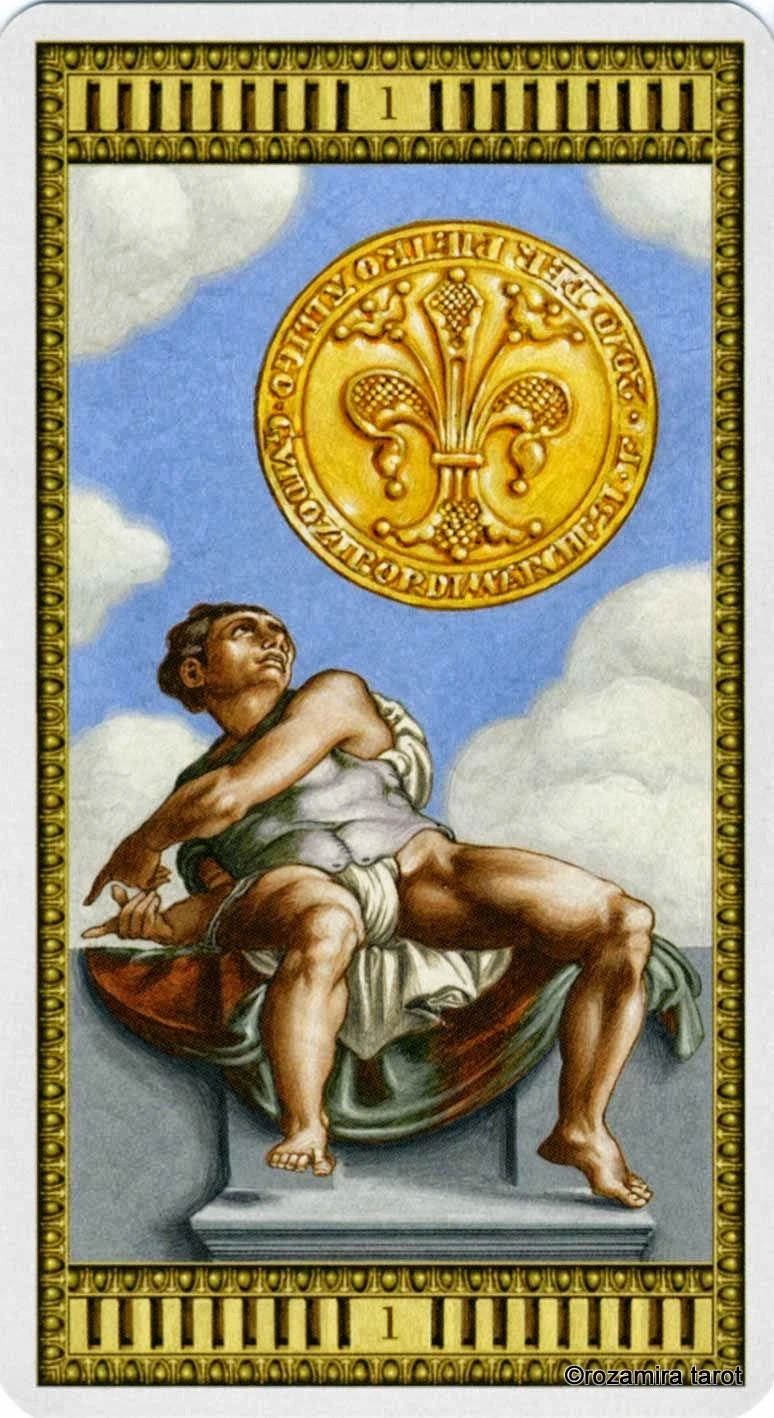
The Hermit carries a glowing lantern beside a small flame-tipped tree; the Three of Swords faces a heart pierced by three blades; the Ace of Coins rests beneath one great golden coin; and the King of Coins sits crowned with staff and coin before a carved bull’s head. This sequence moves from private searching through pain and possibility toward mature care for what has been built.


Final thoughts on Michelangelo Tarot
Michelangelo Tarot is worth exploring if its world already feels interesting to you. The right tarot deck is not always the most famous one; it is the one you will actually use, study, and return to.
Use your honest reaction as the test. If several cards make you pause and ask what they mean, the deck has the spark a useful reading tool needs.
Michelangelo Tarot FAQ
Is Michelangelo Tarot good for beginners?
It can be beginner-friendly if the artwork feels clear to you. New readers should keep a simple tarot keyword list nearby while learning.
What kind of readings is Michelangelo Tarot best for?
It is best for daily pulls, journaling, emotional check-ins, creative questions, and readings where image and mood matter.
Does Michelangelo Tarot follow traditional tarot meanings?
It uses traditional tarot structure, while its Renaissance artwork gives those meanings a distinctive emotional tone. Read both the card title and the movement within the image.
Who should skip Michelangelo Tarot?
Skip it if you want a completely neutral deck, plain keyword cards, or artwork that does not strongly shape the reading.
How do I compare Michelangelo Tarot with other tarot decks?
Look at several Major Arcana, Minor Arcana, and court cards. The Minor Arcana are especially helpful because they reveal how the deck handles everyday situations.
Can Michelangelo Tarot be used for serious readings?
Yes. A themed tarot deck can support serious reflection when the question is clear and the interpretation remains grounded.


