The Moon tarot card meaning centers on uncertainty, intuition, and the stories we tell ourselves when information is incomplete. You can take a feeling seriously without assuming it tells the whole story. This Major Arcana tarot card invites you to notice what feels unclear, check what you can, and leave room for what you do not yet know.
Upright and reversed Moon tarot card meanings share that question of clarity. Upright, the Moon often describes ambiguity, imagination, or fears and illusions. Reversed, it can suggest confusion easing or a worry that still needs examination. Neither position proves deception or predicts what will happen.

The Moon Tarot Card Meaning at a Glance
- Main keywords: confusion, dreams, fear, and intuition
- Upright meaning: unclear feelings, hidden details, imagination, and trusting your instincts carefully
- Reversed meaning: truth coming out, fear fading, or seeing through confusion
- Yes or no: Maybe. Things are not fully clear yet.
- Best question to ask: What is this card trying to help me understand right now?
The Moon upright meaning: intuition and uncertainty
The Moon upright often appears in readings about uncertainty and confusion. You may have a strong impression but little evidence, or several possible explanations for the same event. The upright Moon asks you to slow the interpretation down. What did you observe, and what did you add to the story?
For example, a friend replies briefly to a message. You wonder whether they are upset, but they could also be busy. Instead of guessing, ask a gentle question or wait for more context. You have noticed a feeling; now you can find out whether your first explanation fits.
Intuition can help you notice discomfort, interest, or a pattern worth checking. To trust your intuition responsibly, use it as a starting point for questions rather than a final verdict. Gut feelings are shaped by experience, hopes, and fears; they can help, and they can be mistaken.
Moon keywords and meaning in a tarot reading
When the Moon appears, the question and position matter. In a past position, it may help you reflect on a period you did not fully understand. In the present, it can invite you to name a lack of clarity. In a future position, consider how you would handle incomplete information instead of expecting a secret to be revealed.
The Moon can also be a creative card. Images, music, and dreams do not have to give literal answers to be interesting. A sketch or journal entry may help you recognize a feeling that ordinary conversation misses. You can enjoy that imaginative side without treating it as supernatural knowledge.
The Moon in love and relationships
In a love tarot reading, the Moon suggests looking at the difference between what you know and what you fear or hope. An unanswered message, mixed signals, or an unspoken expectation can leave plenty of room for misunderstanding. Ask about the state of the relationship rather than trying to read another person's private feelings.
If you are dating, enjoy the possibility of connection while learning about the person through their words and actions. If you are together, a useful question is, "Are we making the same assumption about this?" The card cannot establish cheating, hidden motives, or whether someone loves you.
Traditional lists sometimes include deception among the Moon keywords. That is an interpretation to investigate only where actual evidence warrants it, not an accusation supplied by a card. If you already face coercion or threats, practical support and a safety plan matter more than a reading.
The Moon in career, money, and school
For your career path, the Moon can indicate a question that needs clearer information: an unclear job description, conflicting feedback, or a deadline nobody has confirmed. Ask for the terms in writing. You do not have to rely on intuition when someone can answer a concrete question.
In money matters, an attractive offer may be hard to assess until you see the fees and conditions. Check the numbers and use qualified advice when needed. Tarot cannot establish that an investment is safe, predict earnings, or replace financial due diligence.
At school, the Moon meaning may fit the moment when you are unsure what an assignment asks. Contact the teacher, look at an example, or test your understanding with a small draft. Confusion is a problem you can clarify, not evidence that you lack ability.
The Moon reversed meaning: finding clarity
The Moon reversed can describe confusion starting to lift. A conversation may clarify a misunderstanding, or you may recognize that an old fear is affecting a new situation. Let the facts come to light at their own pace; reversal does not guarantee a revelation.
Another reversed meaning is uncertainty turned inward. You might dismiss a concern too quickly or keep revisiting the same worry without learning anything new. When the Moon is reversed, ask whether you have gained useful information or only changed the story you tell about it.
Some readers say the Moon reversed indicates release from fear; others read the reversed Moon as continued uncertainty. Compare both with your circumstances. If things start to become clearer, name what changed. If they have not, a calm request for information may help more than another reading.
The Moon yes or no meaning
The Moon usually leans toward "unclear" or "not yet" in a yes or no reading. There may not be enough information for a confident answer. That is different from a definite no: you can ask what would help you decide.
For a low-stakes creative choice, exploring a possibility may be worthwhile. For a medical, legal, or financial decision, consult appropriate evidence and professional advice. A yes/no card cannot settle those questions.
The Moon advice: give uncertainty a practical next step
Imagine Aurica asking, "What do you know, and what are you imagining?" Put the answers in separate columns. If emotions may be clouding your judgement, a pause can make the distinction easier to see. Then choose one question you can actually answer today.
You can allow your intuition to guide your attention without letting it decide everything. Perhaps a conversation feels awkward; you can ask whether you missed something. Perhaps a project feels exciting; you can try a small version before making a large commitment.
If fears and anxieties are holding you back, stay calm and reduce the task. Read the email again tomorrow, ask someone reliable for a second view, or take a break from repeated card pulls. Persistent anxiety or distress deserves support from a qualified professional; the Moon is not a diagnosis or treatment.
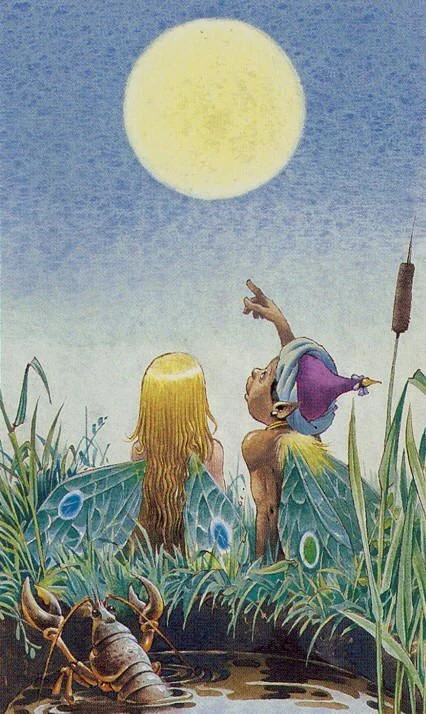
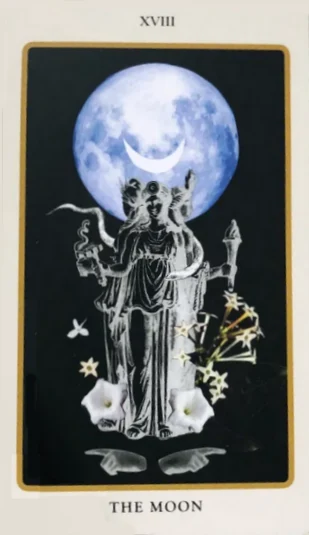
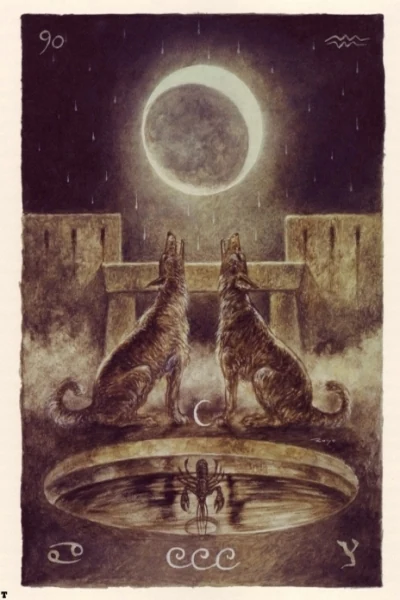
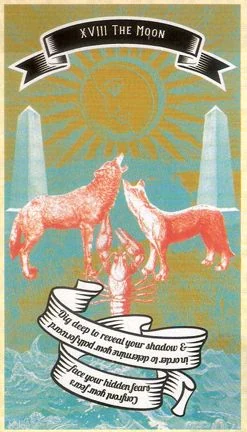
One archetype, four perspectives
The Moon Across Four Tarot Decks
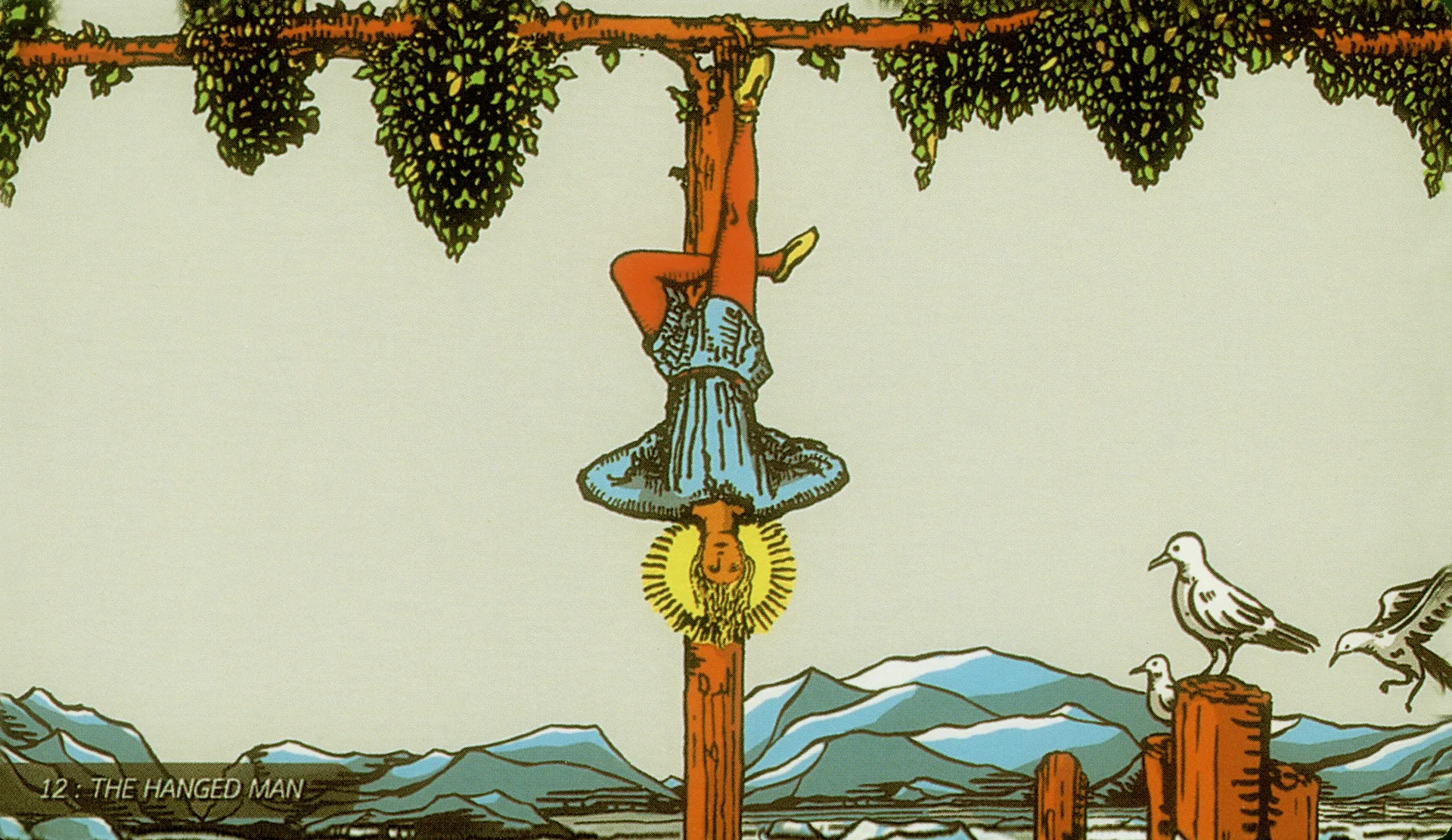
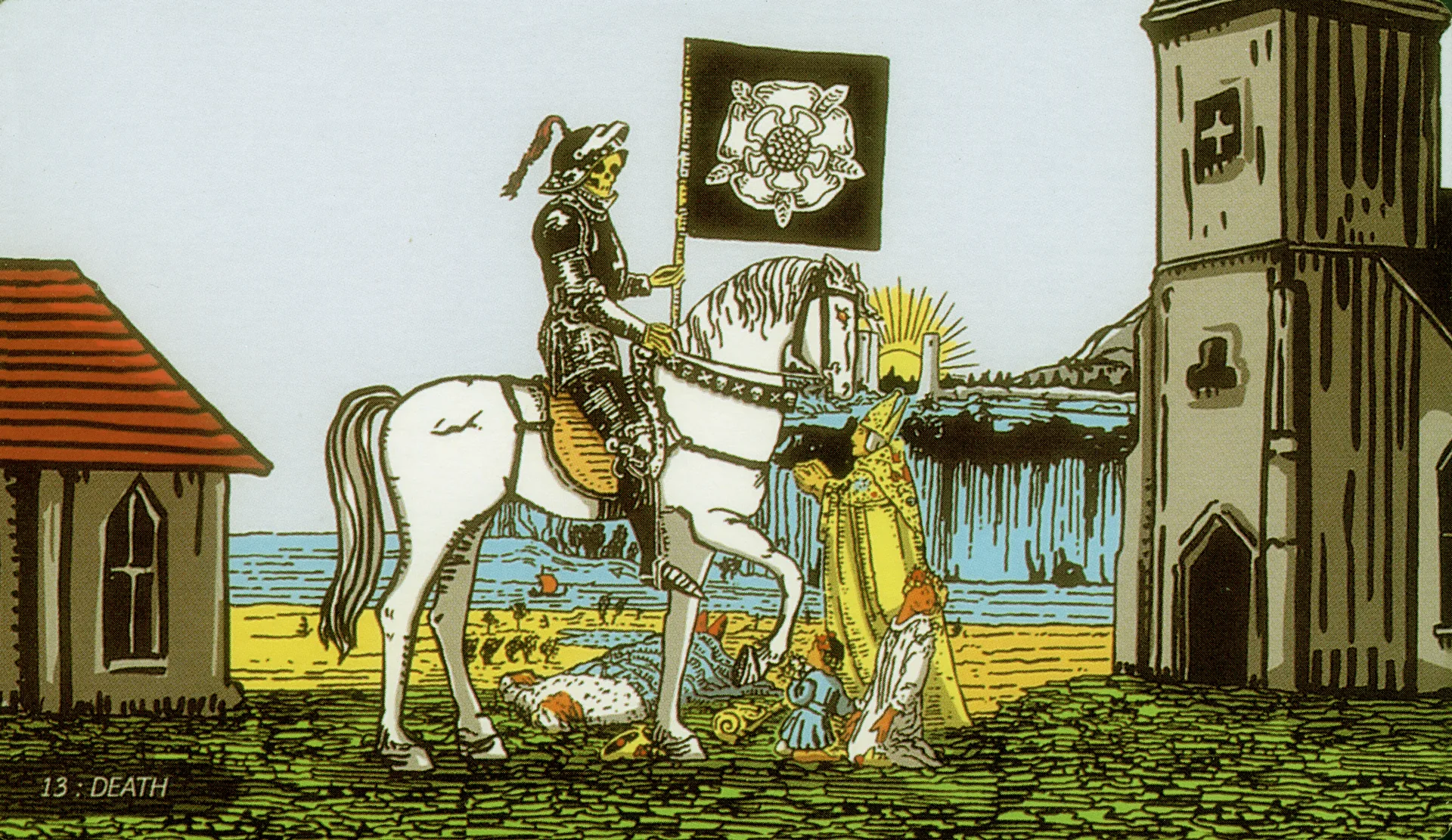
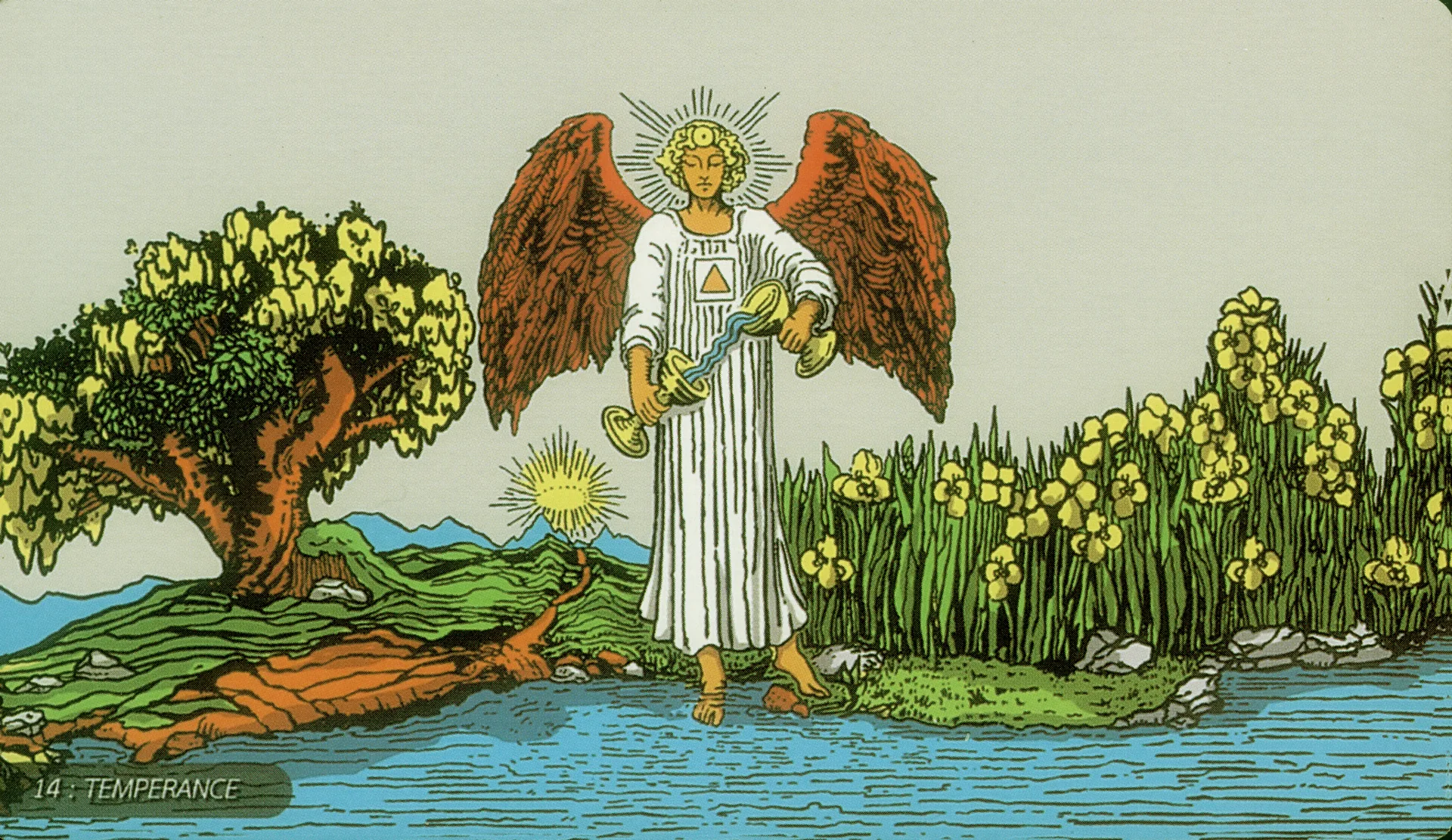
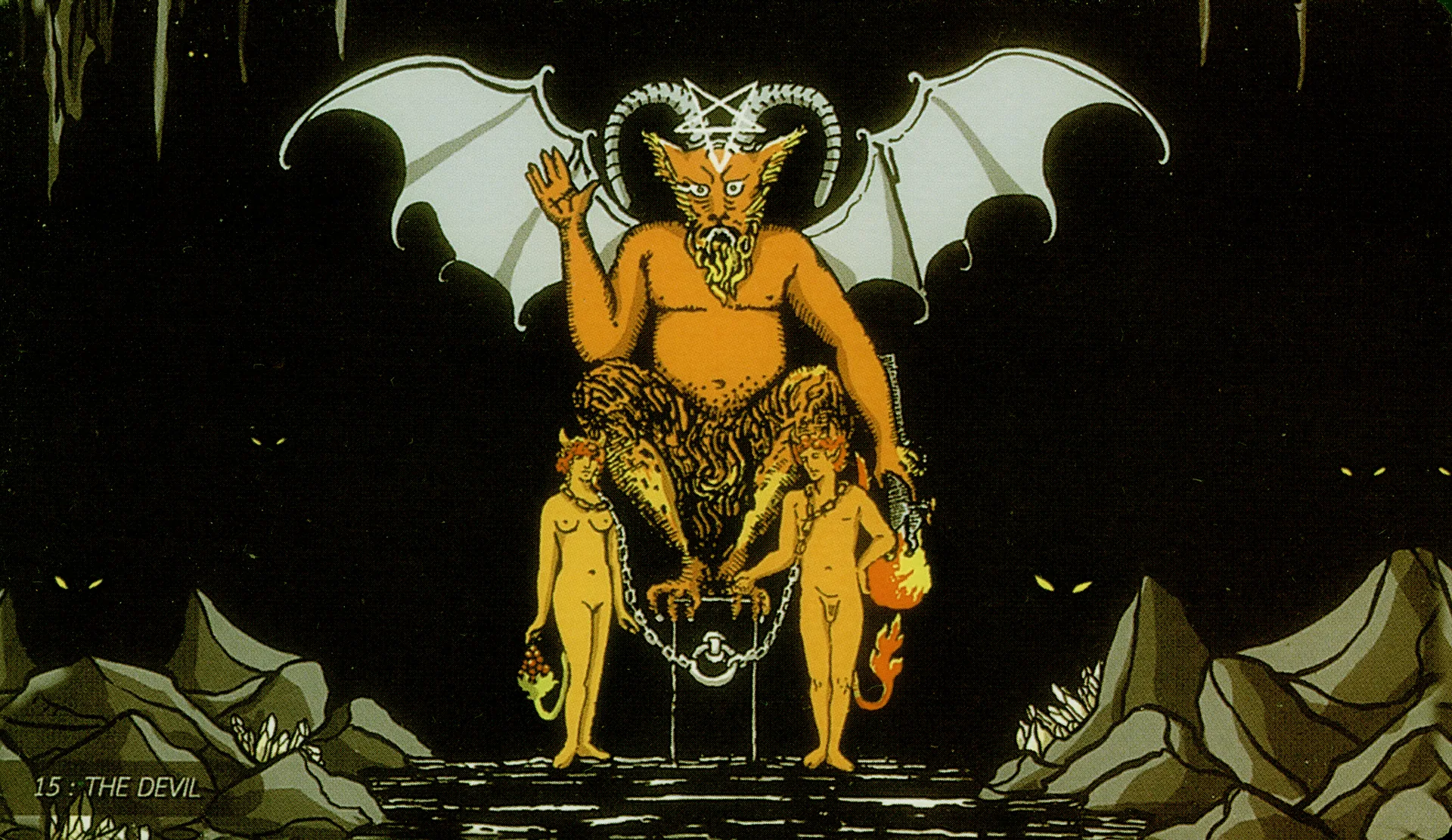
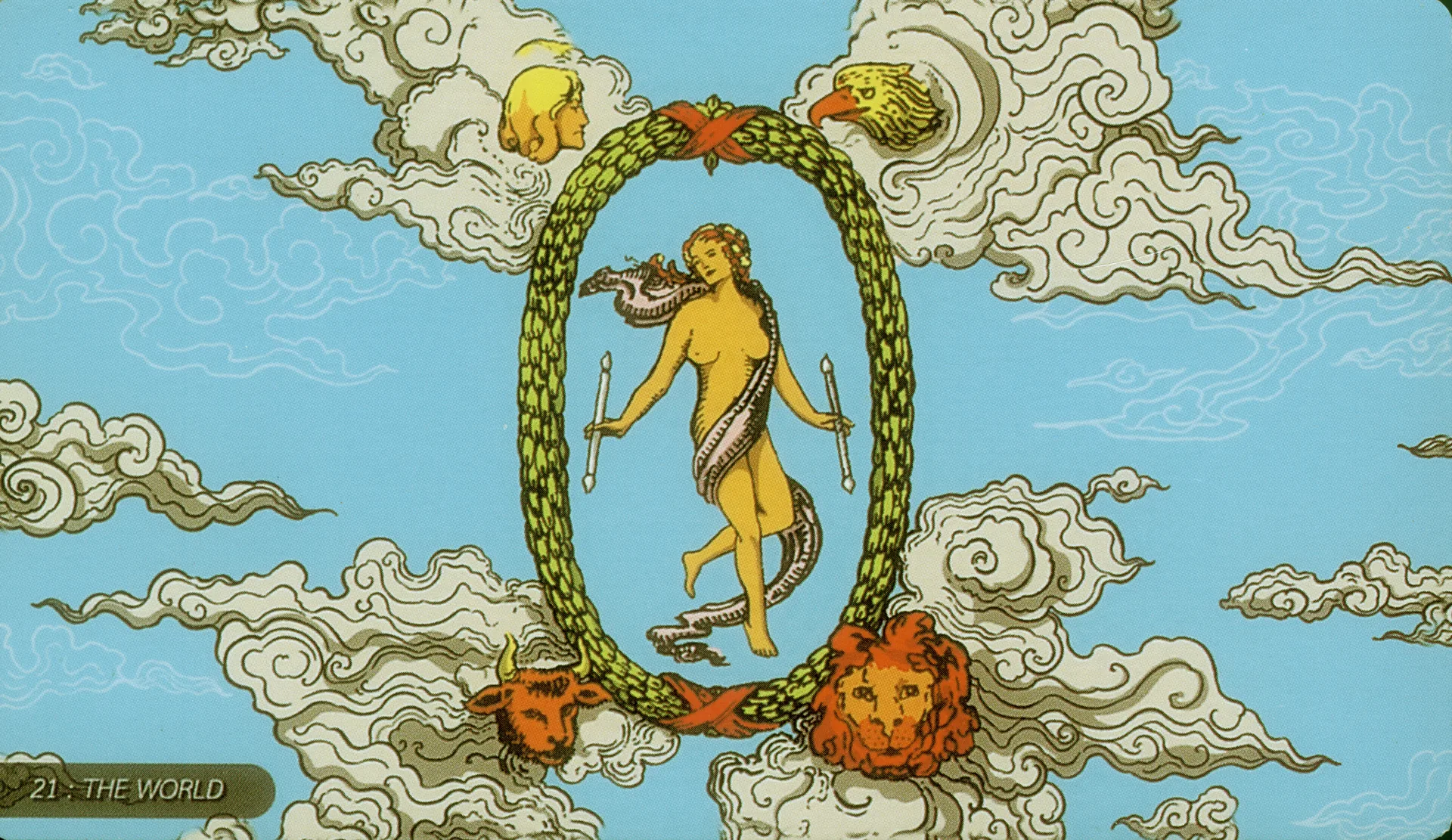
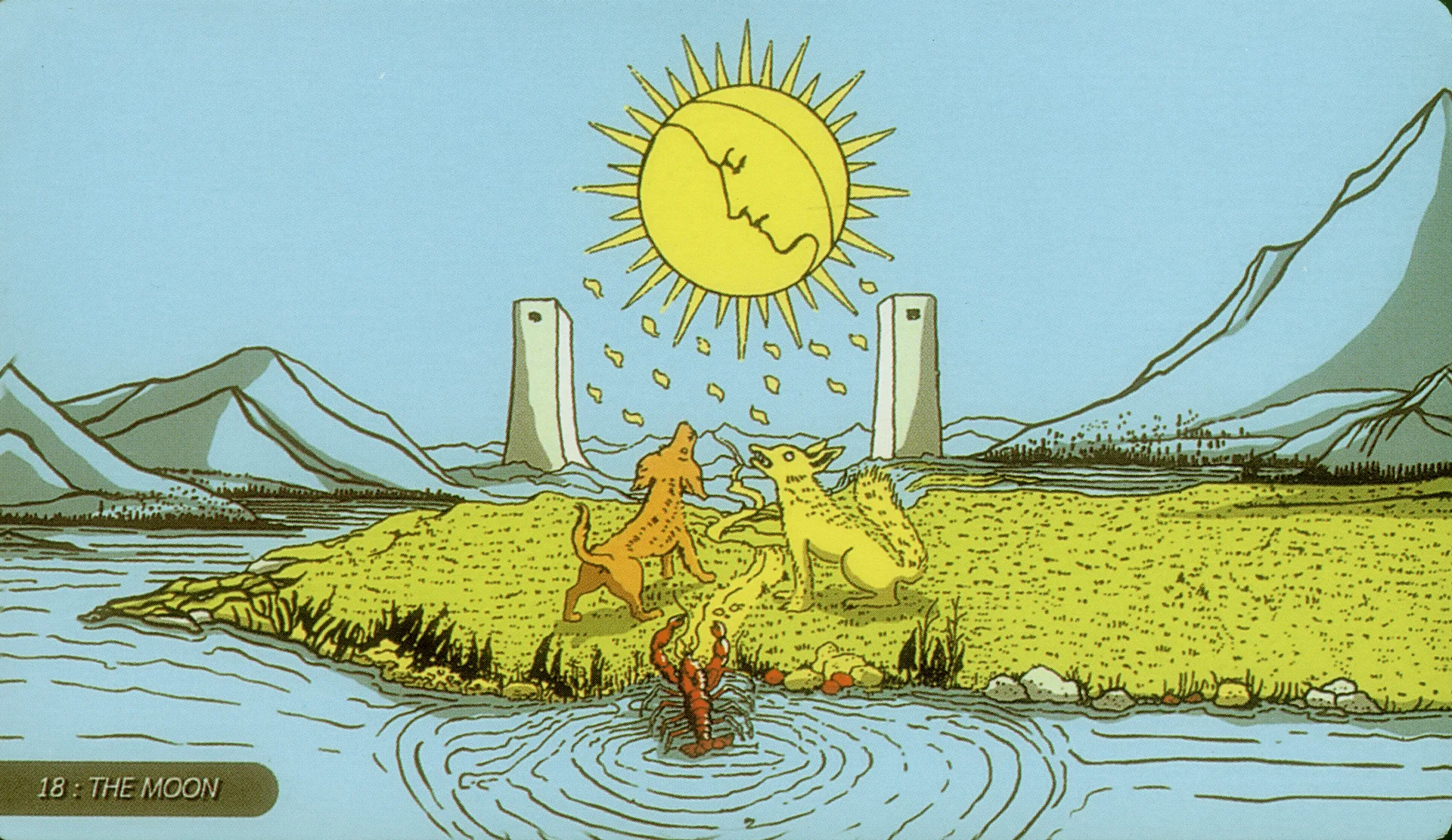
Compare the familiar Rider-Waite-Smith card with the moments before, behind and after the classic scene in three Lo Scarabeo decks.
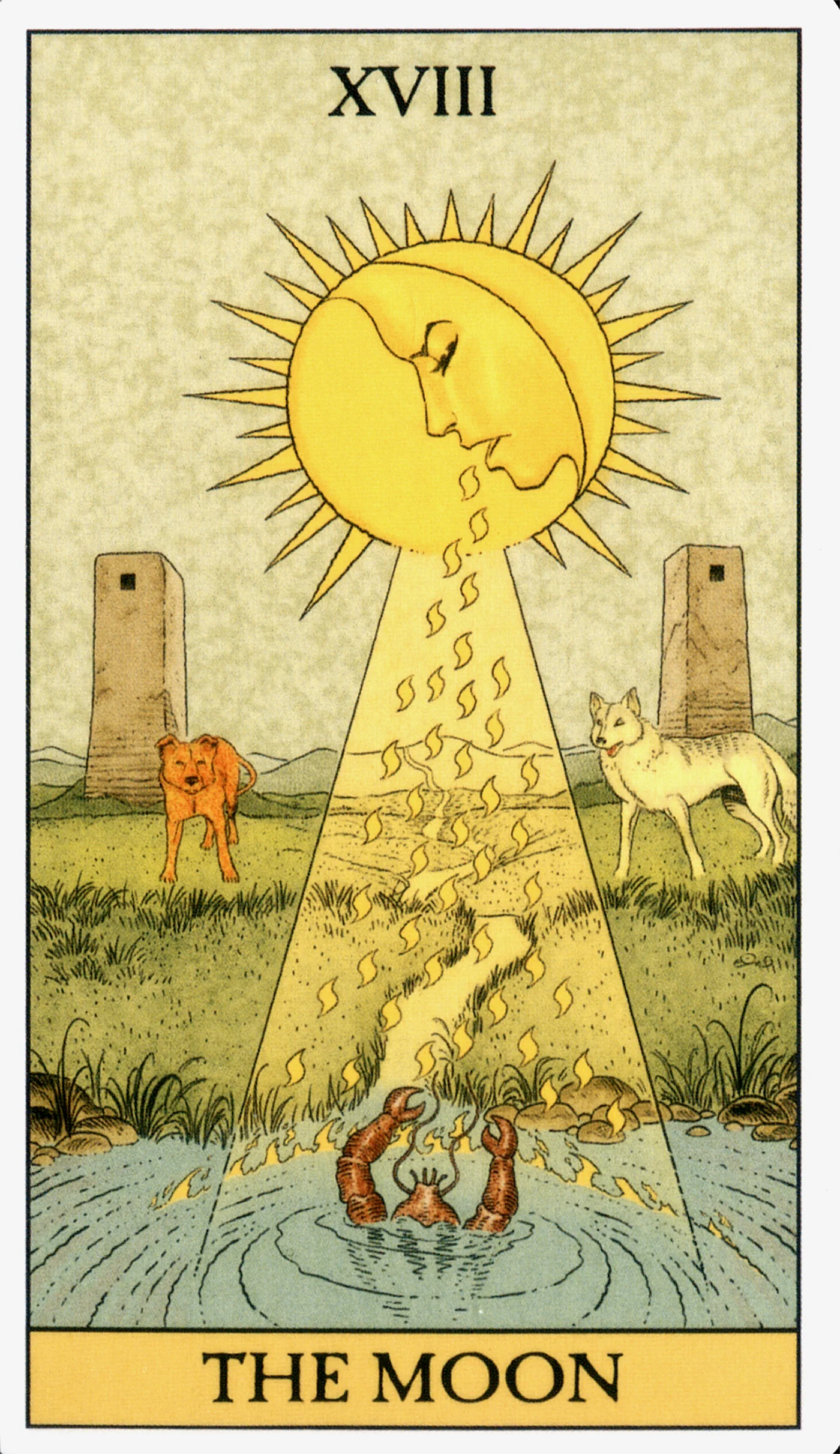
What apparently happens just before
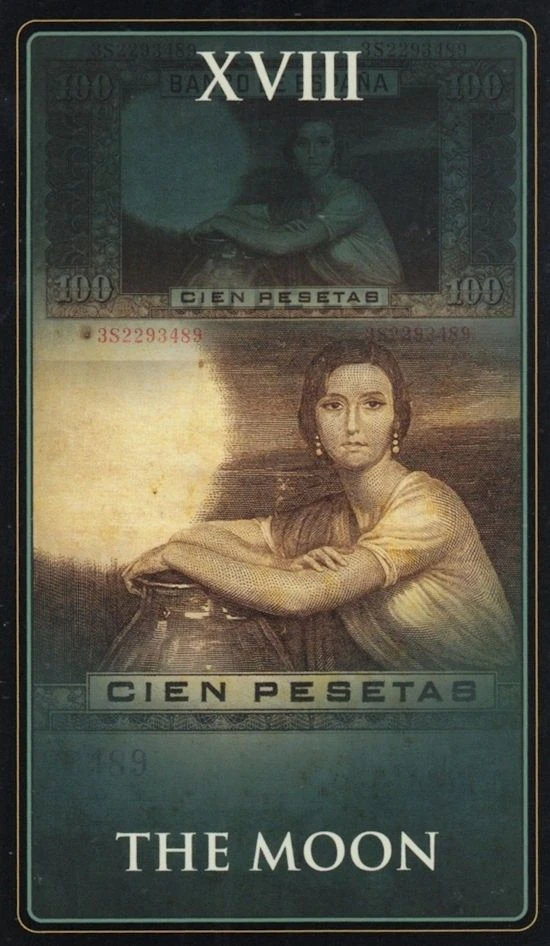
What actually happened

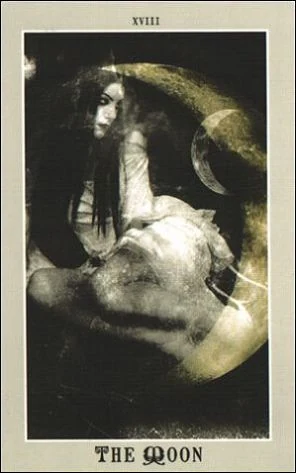
What happened on the opposite side
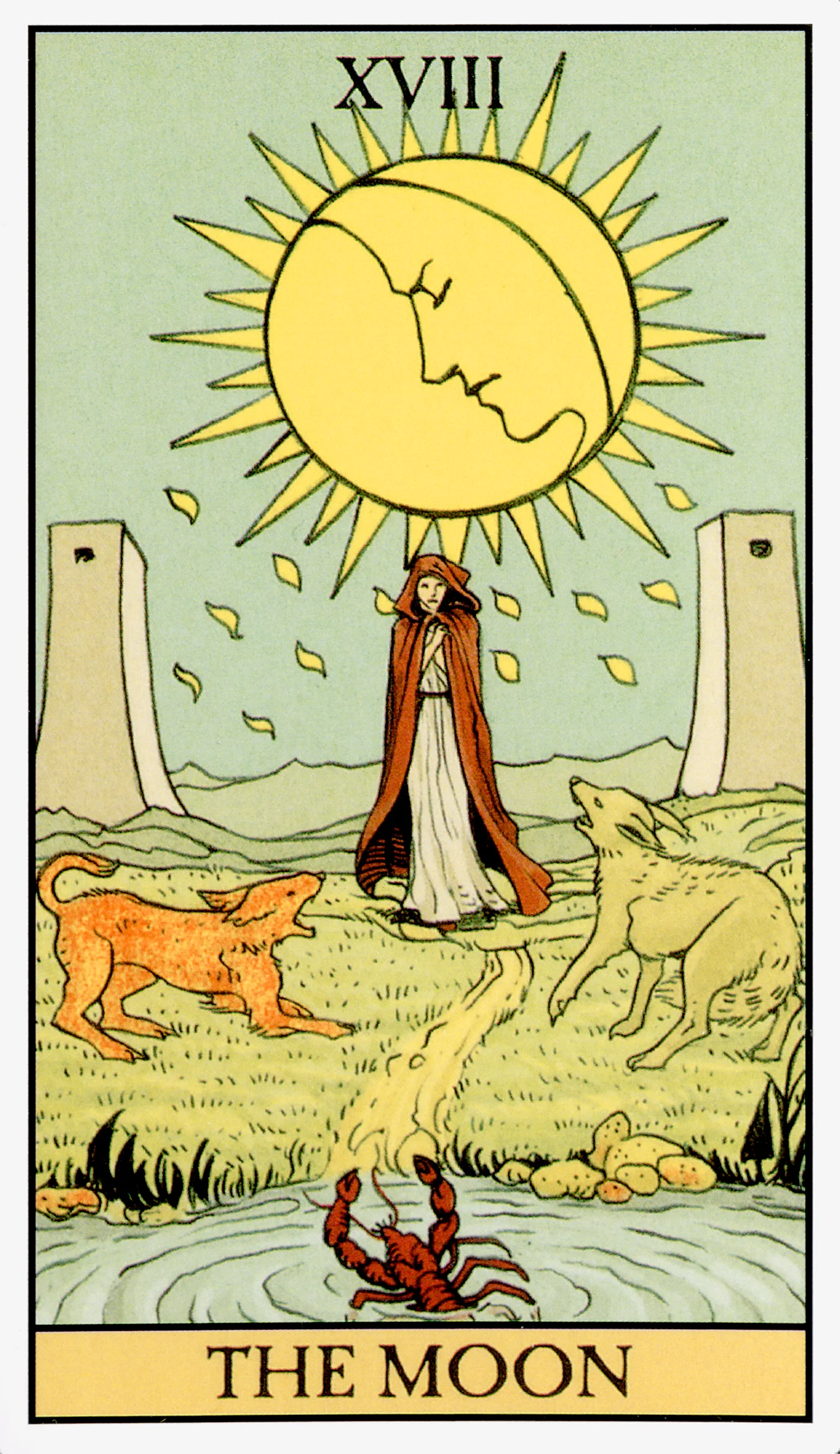
What apparently happened afterwards
The Moon tarot card description and symbolism
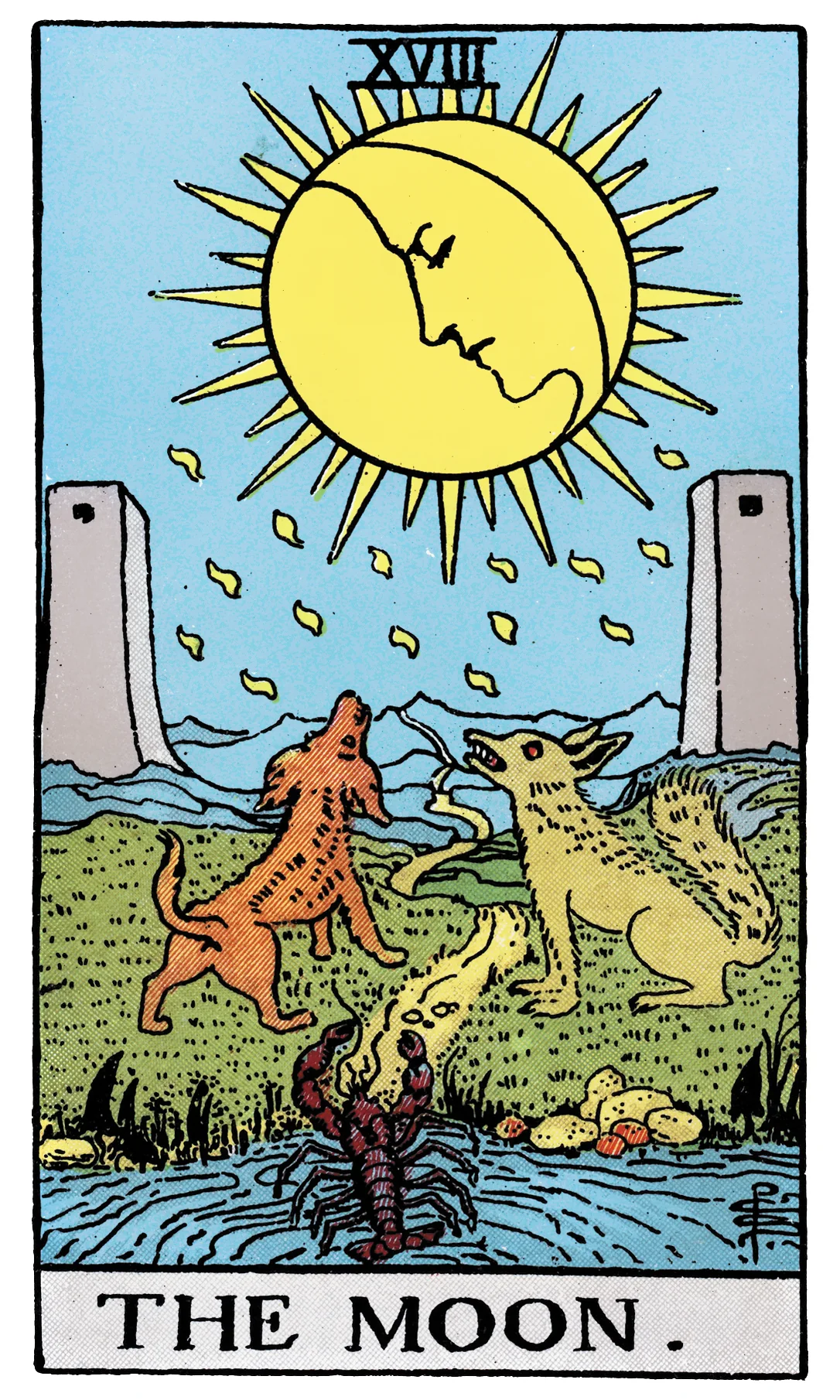
The Rider-Waite-Smith portrait shown here is numbered XVIII, or eighteen. The Moon card shows a large yellow moon with a face, rays, and falling yellow shapes. Beneath it are two towers, a dog and a wolf, and a winding path toward distant hills. A crayfish rises from water at the bottom. The wide hero is an expanded panorama, not the original portrait composition.
The dog is often read as the tame or familiar side of instinct, and the wolf as the wild or unfamiliar side. The water and crayfish can symbolize impressions coming to the surface, while the path suggests continuing without seeing the whole route. These are traditional readings of the picture, not scientific claims about the subconscious.
The Moon symbolizes uncertainty in many modern readings because moonlight gives a different view from daylight. When the light is dim, details can be hard to distinguish. That does not mean something is hidden by another person; it may simply mean you do not have the full picture. Fear can cloud an otherwise ordinary situation.
Number XVIII and traditional correspondences
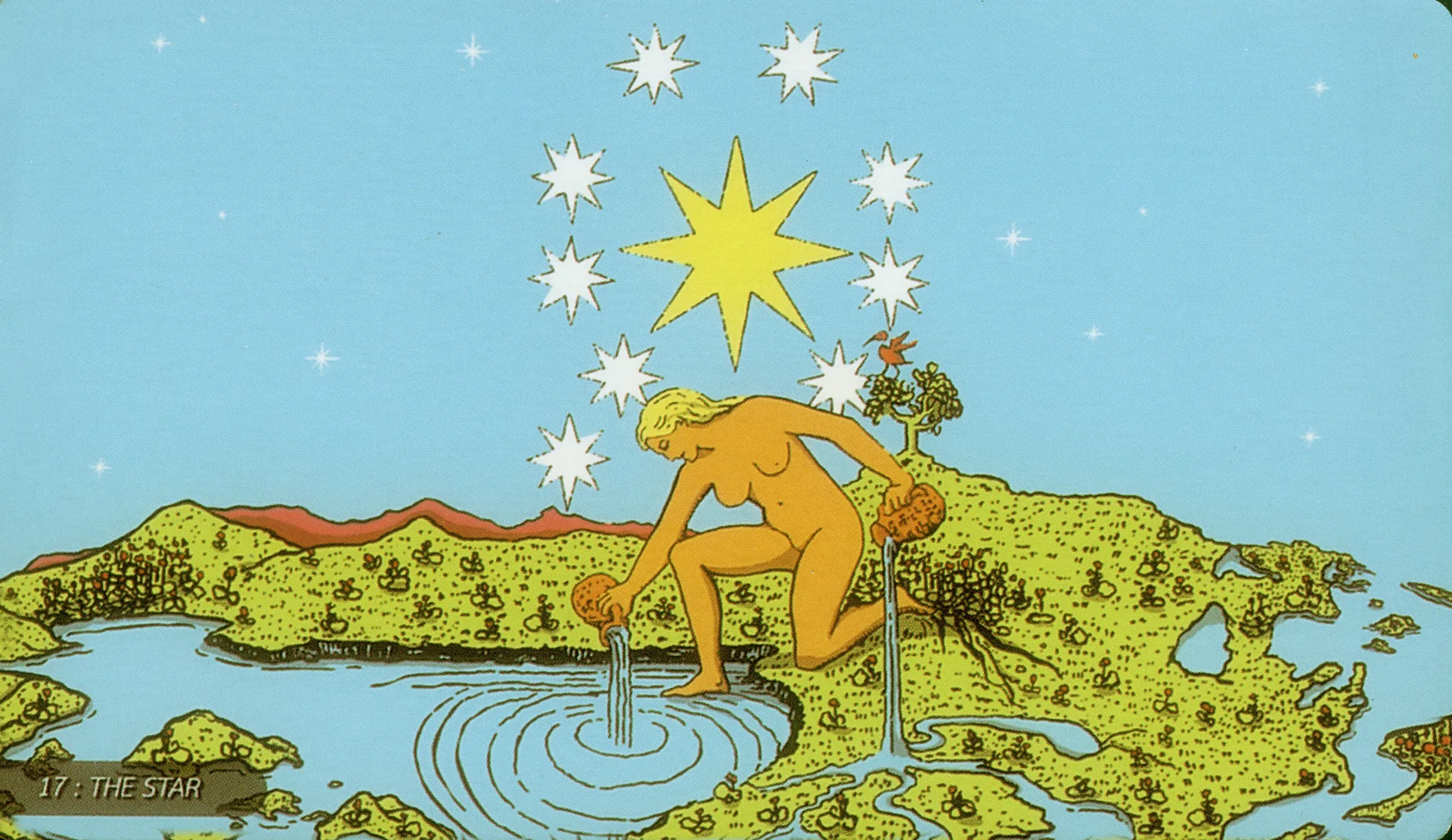
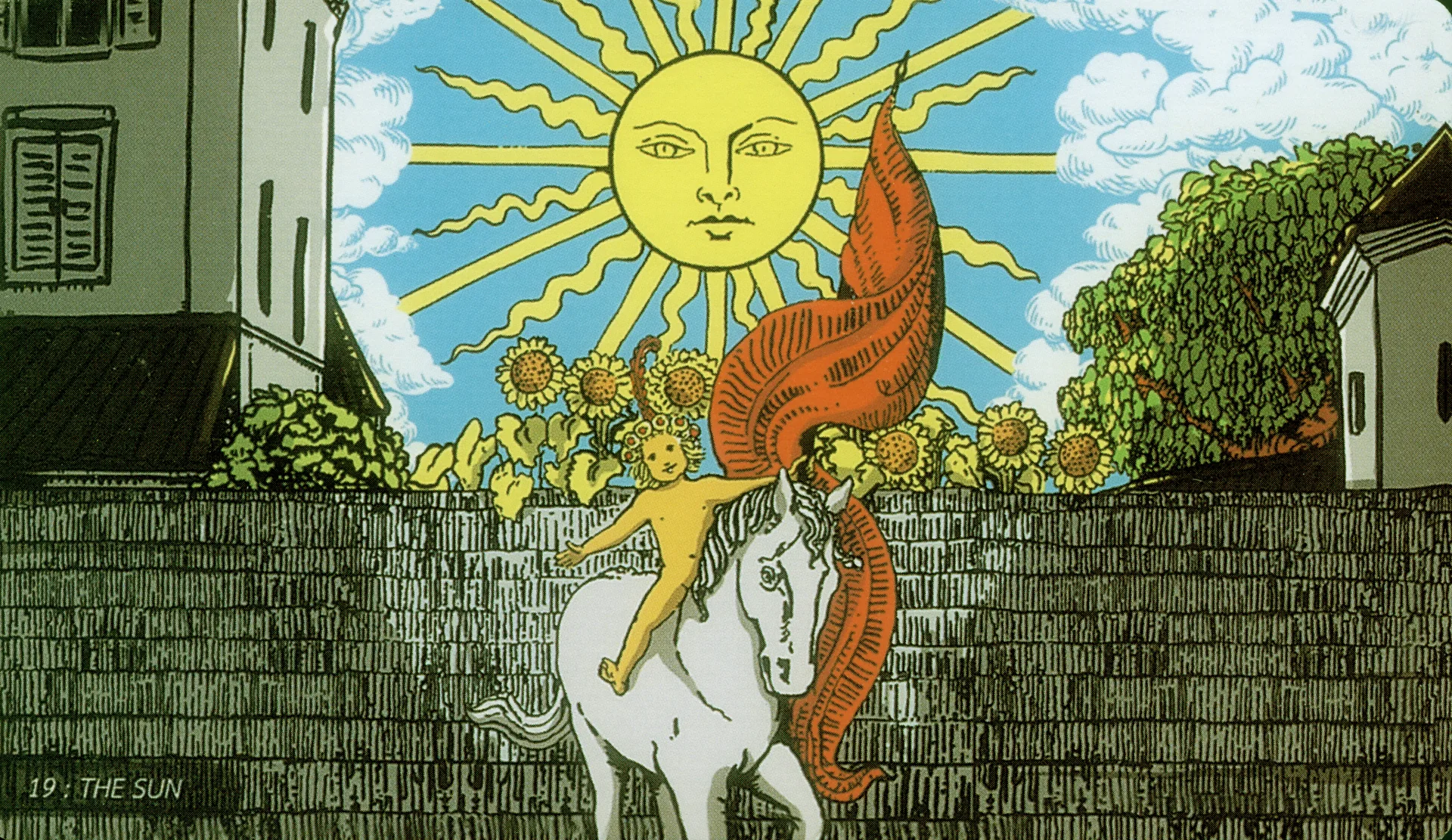
The Moon is card eighteen in the Major Arcana, between the Star card and the Sun. In a numerology approach, 1 + 8 reduces to 9; some readers compare that with the Hermit's reflective search. This is an interpretive method rather than a universal rule.
In Golden Dawn-derived systems, the Moon is associated with Pisces and the Hebrew letter Qoph. Many modern readers also connect the card with Water because of its emotional themes and imagery. These correspondences vary by tradition and tarot deck. The card's name does not make the celestial Moon its planetary attribution in every system.
The Moon with other tarot cards
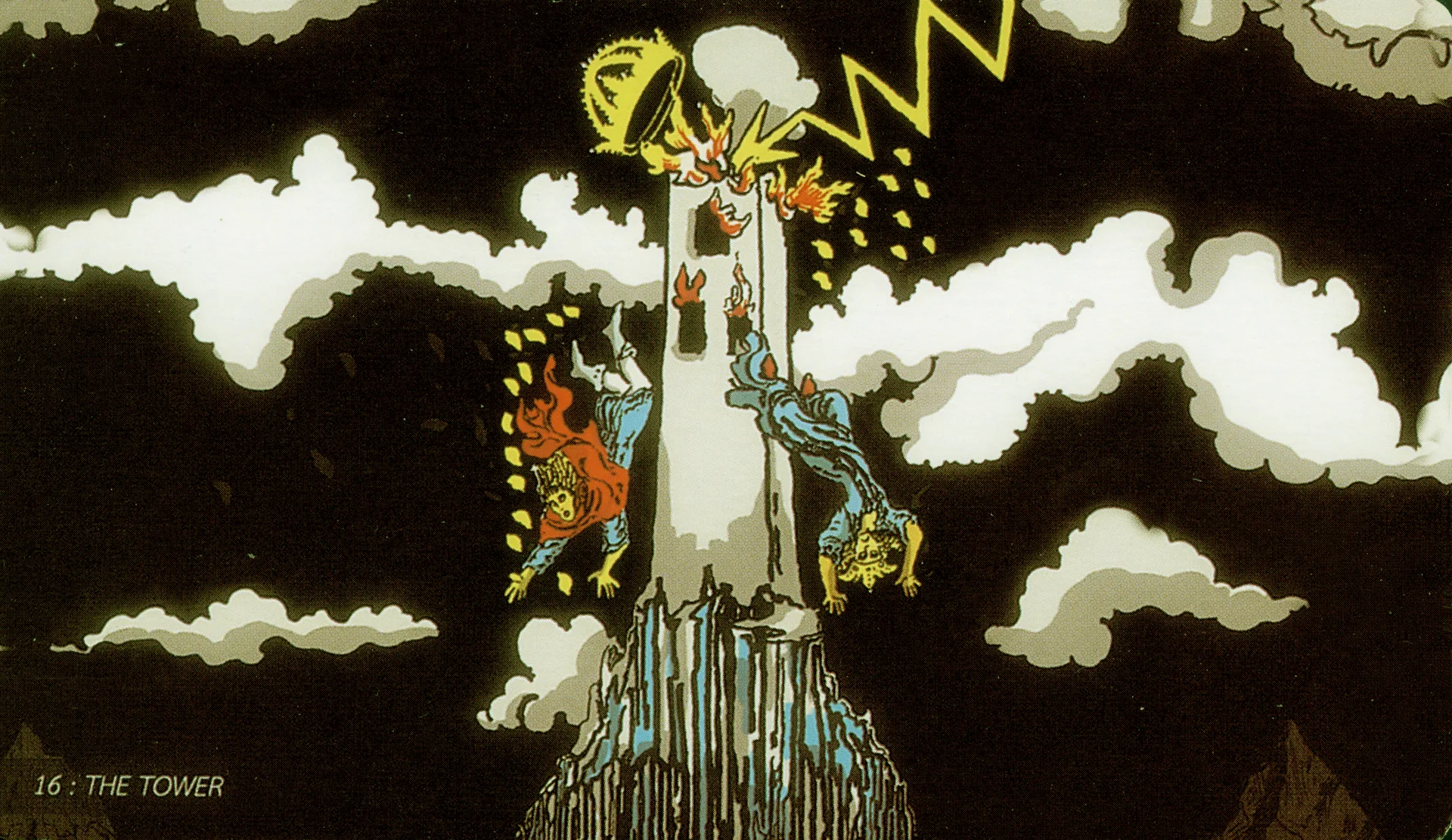
With the Star, the Moon can prompt a comparison between hope and uncertainty: what supports your hope, and what still needs checking? With the Sun, it can invite you to compare an unclear impression with information you can see plainly. Those pairings do not guarantee that everything will become clear.
With the High Priestess, consider how you listen inwardly while respecting what you cannot know. With the Seven of Cups, compare appealing possibilities against practical details. With the Devil, examine whether a familiar habit makes it harder to see things clearly, without assuming danger or wrongdoing from the combination alone.
Biddy Tarot emphasizes intuition, fear, and illusion in its Moon interpretation. You can use that as one reading perspective alongside your own deck's guidebook. If you read tarot through a free tarot app, check the question and context rather than treating a short keyword answer as a personal verdict.
Helpful questions to ask with the Moon
- What have I observed, and what am I assuming?
- What information would help me get to the bottom of this uncertainty?
- What can wait until I have a clearer view?
If you feel tempted to jump to conclusions, turn the impression into a question. The Moon cannot tell you that someone is lying, but it can give you a reason to pause and ask what you might have missed.
One card, many perspectives
See The Moon Card from Other Decks
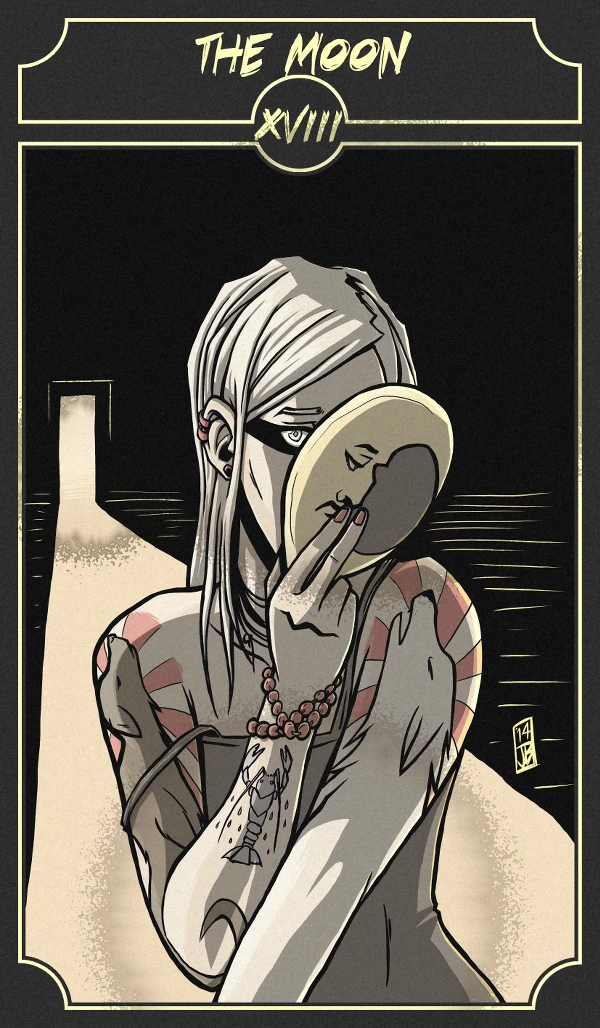
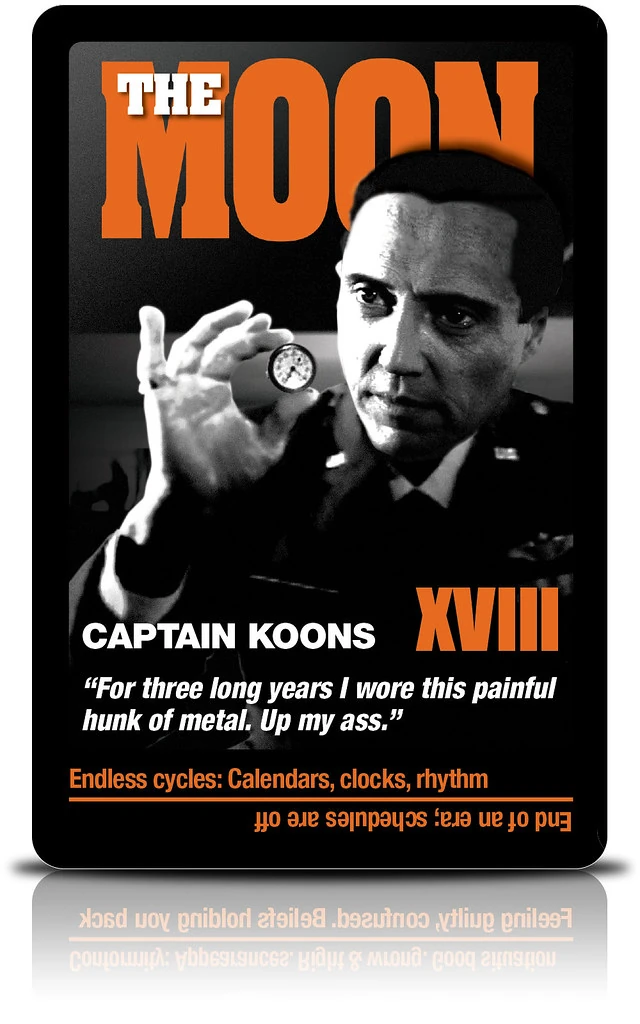
Discover how other tarot decks interpret this card. Select a deck to explore its full review and gallery.





The Moon FAQ
Is the Moon a bad tarot card?
No. It can be unsettling, but it can also support imagination and thoughtful reflection. Whether it feels like a positive card depends on your question and context. It does not announce bad luck or prove that a situation is unsafe.
What should I do after pulling the Moon?
Separate observations from assumptions and choose one useful question. You might ask for clarification, review an agreement, or give yourself time before deciding. You do not need to solve every uncertainty at once.
Does the Moon reversed mean the truth will come out?
Not necessarily. Moon reversed can suggest confusion easing, but it does not guarantee a revelation. Look for actual new information before deciding that you now see the truth.
Does the Moon mean someone is deceiving me?
No. The card cannot prove deception, identify a liar, or reveal private feelings. If you have a concern, assess specific behavior and ask appropriate questions instead of using the card as evidence.
Should I pay attention to my dreams after drawing the Moon?
You can pay attention to your dreams as material for reflection or creativity. Notice themes or feelings without assuming they predict events or reveal facts about other people. A dream journal can be interesting without becoming a source of certainty.