Amazon search results; no verified retail edition. Check the deck and edition before buying.
Explore the Romanovs Dynasty Tarot Cards
Explore the surviving card fronts from Romanovs Dynasty Tarot, an unpublished historical computer-collage deck credited to Aleksey Kluev and Vladimir Strannikov. Choose a group to filter the Gallery, or select any card to open the full-size Lightbox.
Showing all verified cards.
Amazon search results; no verified retail edition. Check the deck and edition before buying.

Aurica’s Quick Take
The first thing I feel in Romanovs Dynasty Tarot is ceremony: polished medals, guarded faces, heavy rooms and the quiet pressure of being watched. Then the details begin to loosen that formal pose. A figure turns slightly away, a palace becomes a burden, and history stops feeling distant. The cards ask what happens when a public role grows too small for the living person inside it.
I would reach for this deck when a reading circles power, family expectation, reputation or an inherited pattern. Begin with the familiar tarot meaning, notice the role the portrait is performing, then look into the background for the feeling that official image cannot contain. That gentle three-step rhythm keeps the history from swallowing the reading.
I find something tender in that tension between inheritance and choice. We can honour where we began without letting it write every page that follows. Take one small, honest detail from a card, and let it become a little window into the life you are still free to shape.
A royal album with a pulse beneath the velvet
The deck is credited jointly to Aleksey Kluev and Vladimir Strannikov, and archived records describe it as an unpublished 78-card computer-collage project. No publisher, ISBN, retail edition, guidebook or exact commercial listing has been verified. The Gallery therefore remains an archival presentation of the complete verified card-front sequence, not a promise that a physical deck can currently be bought.
The surviving images gather historical portraiture, elaborate gold frames and assembled settings into a world of ceremony and unease. This is an archival reading of the artwork, not an account of handling a verified printed edition.
Card study
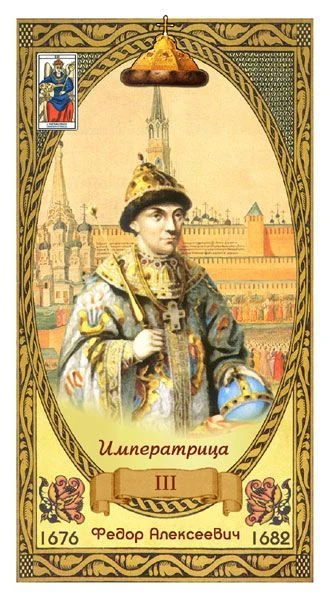
The Empress: care wearing a crown
This Empress arrives as a formally dressed sovereign, with a staff held upright, a blue orb at the side and palace towers behind the ornate robes. The small traditional tarot inset and the elaborate gold frame keep the collage connected to its archetype. The masculine portrait is not a mistake to explain away; it opens the archetype. Nurture here is not softness alone. It is stewardship, continuity and the daily labour of keeping a whole realm alive.
Upright, the card can speak of creating conditions in which people or ideas can flourish. In shadow, care hardens into control and protection becomes possession. In a reading, ask where you are tending something because you love it—and where you are preserving it merely because it bears your name.
How the portraits speak in a spread
These cards rarely whisper. Uniforms, crowns, robes and grand interiors announce status before emotion. I like to let that first impression stand for a moment, then search for the human seam: a guarded gaze, an exposed horizon, a figure dwarfed by architecture. That contrast is where the reading begins to breathe.
For an easy question, ask, “What role am I being invited to own?” A deeper question is, “Whose expectation am I still performing?” The hardest question turns the mirror inward: “What part of my identity depends on an old order staying exactly as it is?”
Four-card moment
The Crown and the Inheritance
Four cards for separating the gift inside a legacy from the obligation wrapped around it.
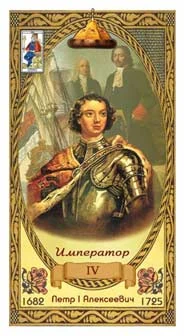
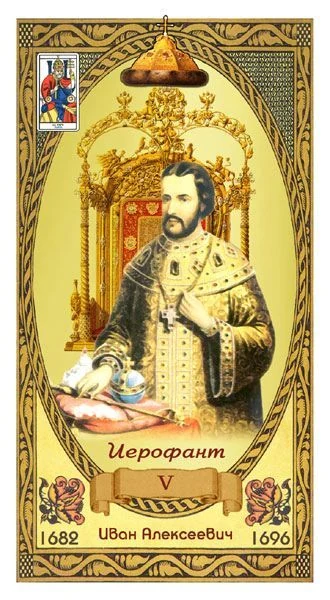

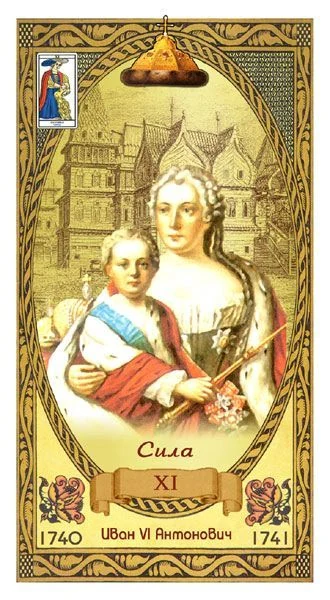
Read them as what you inherited, the rule that shaped it, what must now be weighed fairly, and the quieter strength that lets you choose your own way forward.
Begin with tarot, then let history add its weather
The deck follows a familiar 78-card framework: 22 Major Arcana, then Wands, Cups, Swords and Shields, with Princess, Knight, Queen and King courts. Shields is the printed material suit, corresponding broadly to Coins or Pentacles; the Russian titles read Щиты. Justice is VIII and Strength XI. That structure gives an experienced reader a firm path through unfamiliar collage imagery. A beginner can use it too, but a separate general tarot reference will help because no guidebook has been verified.
I would not try to identify every historical face during a reading. The visual truth is already generous: public costume, private expression, ceremony, conflict and change. Read what is clearly present. Let historical curiosity deepen the experience later rather than making factual recognition the price of intuition.
Card study
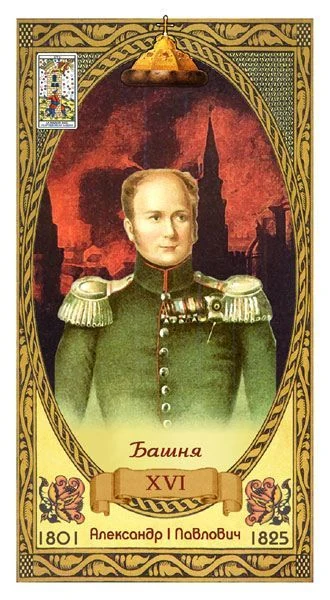
The Tower: composure after the structure has cracked
A uniformed figure holds a formal pose while a red, fire-lit sky and dark architectural silhouettes disturb the world behind him. That split is the card’s emotional blade. The portrait insists on order; the background knows the old arrangement is already ending.
Upright, the Tower names the moment reality breaks through presentation. Its shadow can be the exhausting attempt to look composed while everything underneath is shifting. In an actual reading, ask what is being protected: a person, a truth, or only the appearance that nothing has changed.
Artwork that turns reputation into atmosphere
The computer-collage style has the grain of an assembled archive rather than a seamless painted world. Portraits sit against palaces, landscapes, emblems and scenes of tension. That visible layering suits a deck about inheritance: every card feels made from what was handed down, what was displayed, and what history later remembered.
The strongest readings come when you notice where the layers agree and where they resist one another. A serene face against a troubled setting may show dignity, denial or both. Nearby cards decide which interpretation has weight. The deck rewards readers who can hold two feelings in the same hand.
Four-card moment
Behind the Palace Portrait
A spread for the difference between the image we manage and the truth asking to be seen.
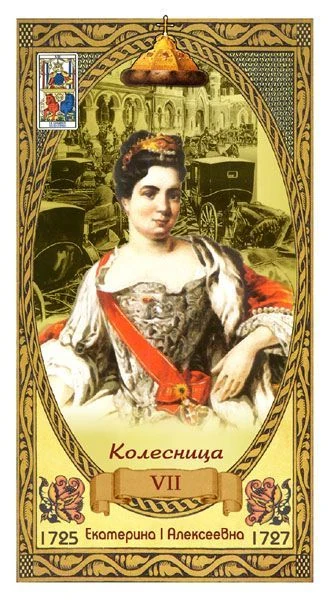

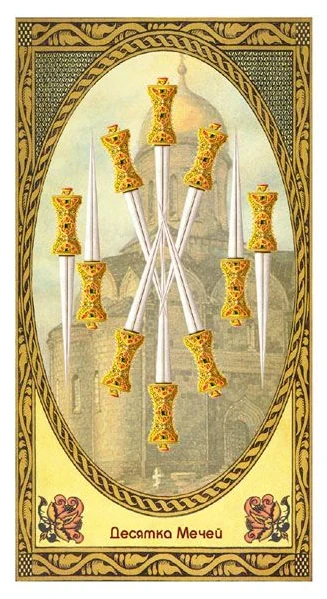
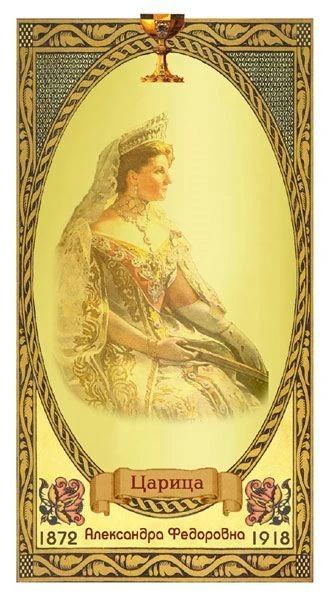
Name the image you present, the relationship beneath it, the cost of maintaining the silence, and the emotional honesty that could change the scene.
Who will feel at home with this deck?
This deck will appeal most to readers drawn to historical portraiture, dynastic stories and questions about lineage, leadership, reputation and family systems. It also makes a rich journaling companion because each formal image invites a second question: what does this person feel when the room is empty?
It may frustrate someone wanting a currently supported retail deck, a beginner booklet or close scene-for-scene Rider–Waite–Smith storytelling. The public source images are modest in resolution, and five are especially small. The Lightbox shows the best verified exact-art files recovered for this edition; it does not invent detail through upscaling.

Card study
The Star: hope beyond the family name
The Star places a moustached figure in a dark green uniform against pale, text-filled paper. A light sash crosses his chest; medals and gold epaulettes shine inside the patterned frame. The little traditional Star image at the upper left offers a different kind of light beside this official portrait. That contrast makes me ask whether recognition comes from the marks we wear or from the steadier values we live.
Upright, the Star can be renewal without denial: a future fed by values rather than nostalgia. Its shadow is the beautiful ideal kept too far away to guide real choices. In a reading, look for the smallest act that lets hope touch the ground today.
Buying guidance: admire the archive, distrust vague listings
No exact current retail product has been verified. The Amazon buttons open search results, not a confirmed listing for this archive deck. If a listing appears elsewhere, compare the title, the joint Kluev–Strannikov credit and several card faces against this verified Gallery. Treat stock claims, reproduction quality and seller rights as unconfirmed until the listing provides clear evidence.
No authentic commercial box has been found, so there is no invented packaging here. Aurica’s approved editorial portrait is not a photograph of someone using this unpublished deck. The card artwork comes from the separately verified archive. Keeping those two things distinct lets us enjoy the work without turning curiosity into a false product claim.
Four-card moment
When an Era Ends
A quiet spread for change that cannot be reversed but can still be met with integrity.

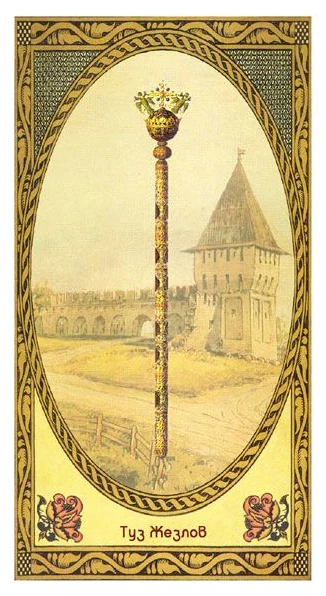
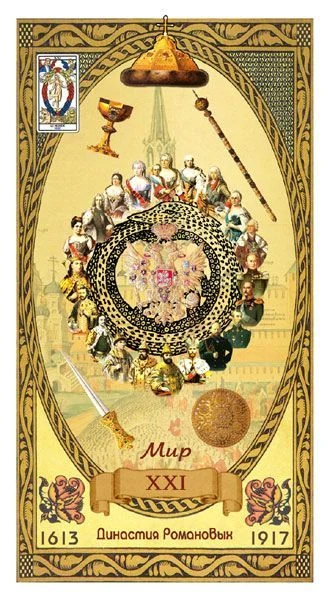
Follow the turning point, the structure that falls, the first honest spark, and the wider world that becomes visible once the old frame is gone.
A golden rule for reading Romanovs Dynasty Tarot
Do not confuse the portrait with the whole person. Read the archetype, notice the official role, study the pressure around it, then ask what human choice is still alive.
Final thoughts
Romanovs Dynasty Tarot is most moving when its grandeur gives way to tenderness. Under the medals and carved rooms, the cards keep returning to a question any reader can recognise: what do I inherit, and what may I choose anew? Approach the Gallery slowly, let one detail catch your eye, and trust that even the heaviest old story can open a door toward a freer future.
Romanovs Dynasty Tarot: pros and cons
| Pros — what I love | Cons — what to keep in mind |
|---|---|
| Historical portraits give questions about identity and inheritance a human face. | Archived catalogs describe an unpublished project, not a verified retail edition. |
| The layered collage atmosphere makes public image and private feeling interesting companions. | Five surviving fronts are especially small; no artificial detail has been added. |
| Familiar tarot structure offers a starting point without flattening the deck’s own character. | No creator-authored guidebook or separate creator roles have been established. |
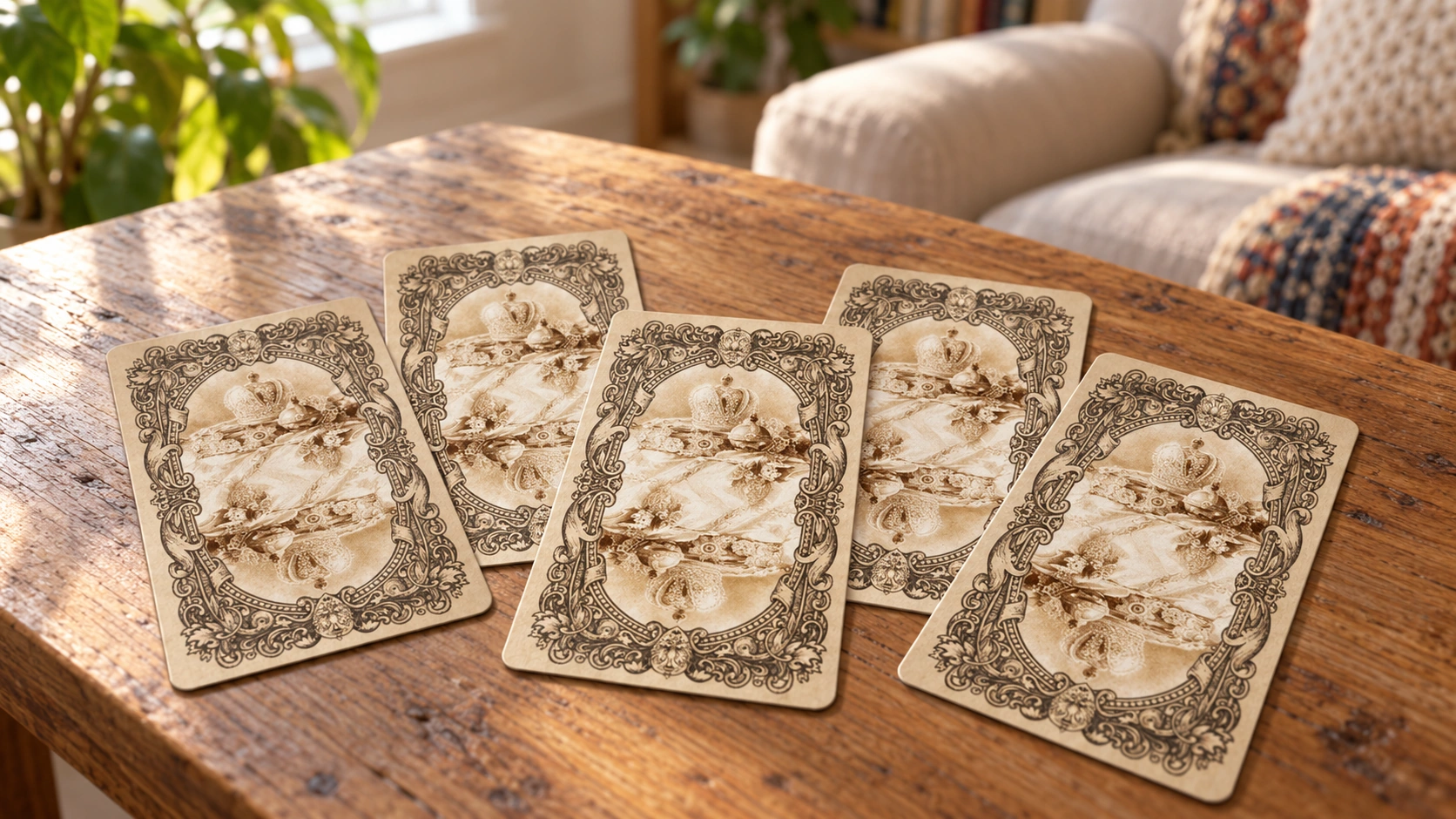
Amazon search results; no verified retail edition. Check the deck and edition before buying.
Romanovs Dynasty Tarot FAQ
Who created Romanovs Dynasty Tarot?
The deck is credited jointly to Aleksey Kluev and Vladimir Strannikov. A reliable source assigning separate author and artist roles has not been verified, so this review does not invent those roles.
How many cards are in Romanovs Dynasty Tarot?
The verified sequence contains 78 cards: 22 Major Arcana and 56 Minor Arcana across Wands, Cups, Swords and Shields.
Was Romanovs Dynasty Tarot commercially published?
Archived records describe it as an unpublished computer-collage deck. No publisher, ISBN, retail edition or guidebook has been verified.
Can I buy Romanovs Dynasty Tarot?
No exact current retail listing has been verified. Compare any listing carefully against the joint creator credit and the card faces in this Gallery before assuming it is the same work.
Does the deck follow a familiar tarot structure?
Yes. It uses 22 Major Arcana and four 14-card suits, with Princess, Knight, Queen and King courts.
Is Romanovs Dynasty Tarot beginner-friendly?
The familiar structure helps, but the historical portraiture and absence of a verified guidebook make it better for beginners who are happy to use a separate general tarot reference.