
The Judgement tarot card meaning is about taking an honest look at your life and deciding what comes next. You may already know that an apology, a change of direction or a long-delayed decision needs your attention. This card gives that moment a name without deciding your future for you.
Quick answer: Upright Judgement points to awakening, self-evaluation and a chance to act on what you have learned. Reversed, it can describe harsh self-criticism or a truth you keep postponing. The Judgement card asks for accountability, not a verdict on whether you are a good person.

Judgement Tarot Card Meaning at a Glance
- Main keywords: awakening, forgiveness, and answering a call
- Upright meaning: a wake-up moment, honest self-review, second chances, and stepping into a bigger purpose
- Reversed meaning: self-criticism, avoiding the truth, or not listening to the call inside you
- Yes or no: Yes, if you are ready to be honest and grow.
- Best question to ask: What is this card trying to help me understand right now?
Judgement Upright Meaning
The Judgement upright meaning centres on recognising something clearly enough to respond. Perhaps a repeated argument finally reveals a habit you can change. Perhaps a course, job or creative project no longer fits the person you are becoming. The upright Judgement card encourages a considered response rather than another round of waiting.
Renewal starts when you can see what happened clearly enough to do something differently. You can acknowledge past mistakes without making them your whole identity. If you broke a promise, name what happened, repair what you reasonably can and change the behaviour. Self-acceptance does not erase consequences; it makes honest change easier to sustain.
A new beginning after a period of uncertainty might start with something ordinary: booking a conversation, finishing an application or asking for feedback. You do not need a dramatic revelation. Notice the choice you can make today, then give yourself time to follow through.

Judgement tarot meaning in a tarot reading
Judgement is a Major Arcana card, numbered XX, or number 20, in the Rider-Waite-Smith tarot deck. As a card of the Major Arcana, it often brings a broad life theme into focus: the way past experiences shape your present choices. Its place among the Major Arcana cards, just before the World, invites reflection before completion, rather than promising that everything will suddenly fall into place.
Tarot card meanings change with the question and position in a tarot spread. In a past position, Judgement can help you revisit a decision and what it taught you. In the present position, it asks what needs a clear response. In a future position, use it as preparation for a review or choice, not proof that a specific event will happen.
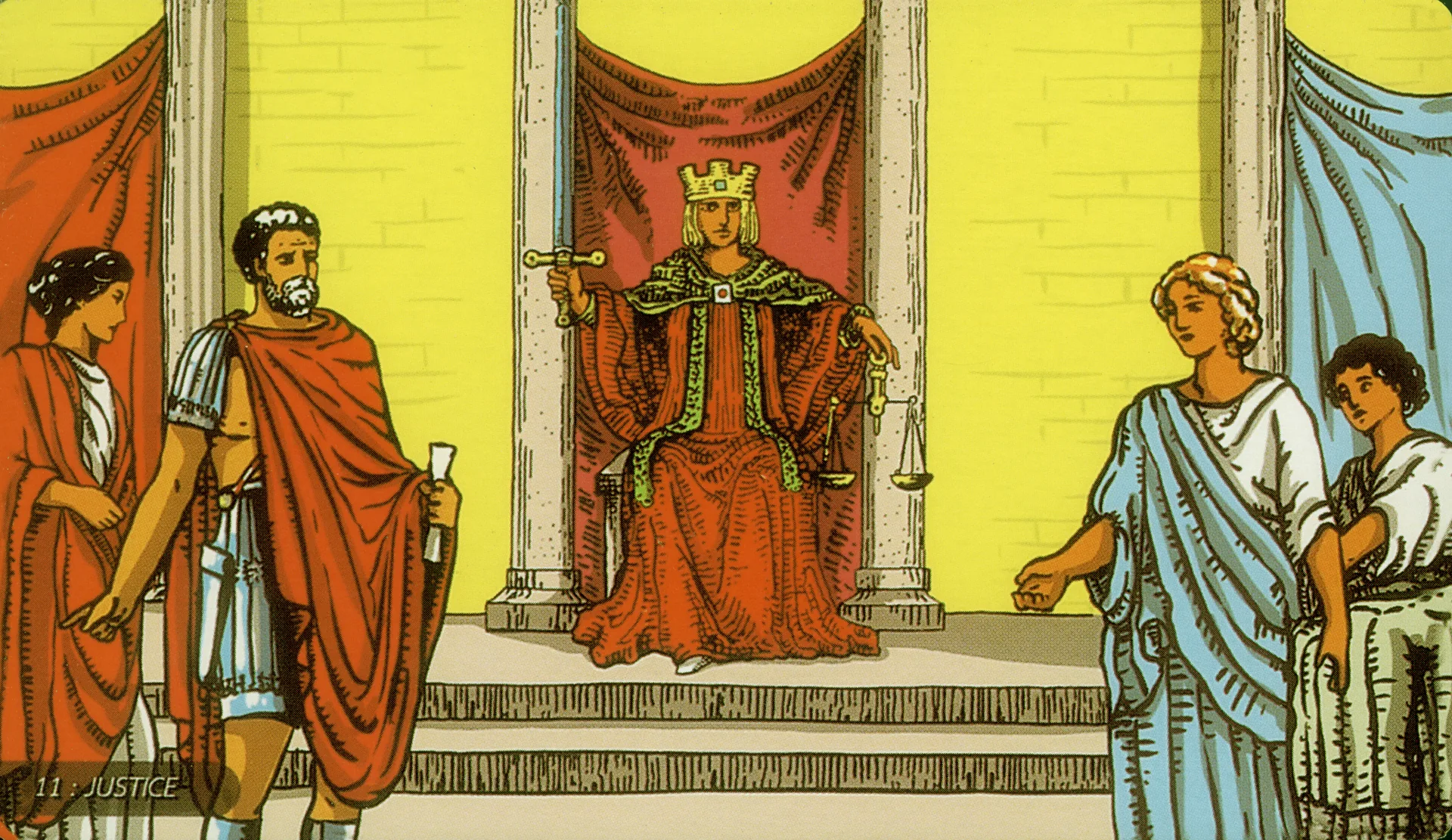
The surrounding cards add detail. With Justice, look at fairness, evidence and responsibility. With Death, consider what needs to end before you can embrace new possibilities. With the Six of Cups, an old connection or memory may be relevant, but nostalgia alone does not make returning wise. These are reading examples, not fixed predictions.
Judgement in Love and Relationships
Judgement tarot love interpretations often concern an honest conversation about where a relationship stands. A love and relationship question might be: are we both willing to acknowledge what has happened and change how we treat each other? A deeper connection needs observable effort, not just a hopeful reading.
In a love tarot reading about reconciliation, a second chance is a possibility to consider, not a promise that an ex will return. Look for freely given consent, changed behaviour and respect for boundaries. Forgiveness can mean letting go of resentment while choosing not to reconnect. You do not owe renewed contact to someone who harmed you.
If you are single, the Judgement card suggests reviewing what past dating experiences have taught you. Which expectations still help, and which hold you back? In a long-distance relationship, discuss practical commitments such as visits and communication instead of asking the cards to reveal private feelings. Tarot love guidance is most useful when it leads to a conversation you can actually have.
Judgement in Career, Money, and School
In a career tarot reading, Judgement can prompt a review of career choices, skills and your sense of purpose. You might be considering retraining, asking for a promotion or returning to unfinished study. Before you make a significant decision, compare the work itself, the costs and the support available. If the work matters to you, check what it would take to do it.
For example, after receiving feedback you could ask which part is specific and useful, then choose one skill to practise. If a role is negatively impacting your wellbeing, review your options rather than assuming you must stay to prove yourself. A life-changing decision can happen in stages; research and a small trial may teach you more than a rushed resignation.
With money, the card can support an honest review of spending, debt or a missed obligation. Check the actual numbers and get qualified financial advice when needed. Tarot cards cannot tell you whether an investment will profit or a job offer will arrive. For school, use the same approach: review feedback, ask for help and decide what you can improve before the next deadline.
Judgement Reversed Meaning
Judgement reversed can describe a review that has become stuck. You may avoid feedback because it feels uncomfortable, or keep replaying a mistake after you have done what you can to repair it. Neither pattern gives you much room to make a choice. Ask whether you need more information, a practical next step or less punishment in your own self-talk.
Judgment reversed is the alternative spelling used in some decks and guides; it refers to the same card. A reversed card does not diagnose you or prove you have ignored a higher purpose. In this reading, it points to hesitation, denial or self-doubt that deserves a closer look.
Try separating facts from a harsh conclusion. "I missed the deadline" is a fact you can respond to; "I always ruin everything" is a sweeping judgment. After a period of introspection, write down what needs repair and what is already over. Letting go of the past can mean keeping the lesson while stopping the endless replay.
Reversed relationship advice also calls for care. An apology without changed behaviour is not enough, and a card is not evidence that someone secretly wants reconciliation. Choose a boundary you can explain and maintain. If deep wounds are making daily life difficult, seek suitable support rather than using tarot as treatment.
Judgement Yes or No Meaning
For a yes or no question, Judgement often leans toward a conditional yes: proceed if you have reviewed the facts and are ready to take responsibility. If the choice involves returning to an unsafe situation or ignoring important evidence, the answer should not become yes merely because the card is upright.
Reversed, read it as "pause and review" rather than an automatic no. Ask what is missing before committing. A useful follow-up is, "What would make this decision responsible?" Health, legal and financial decisions need appropriate evidence and professional guidance beyond a tarot card reading.
Judgement Advice
The Judgement card advises you to review what happened and choose a response that fits the situation. Write down what happened without exaggerating your fault or avoiding it. Decide what you can repair, who needs a conversation and what you will do differently next time. You can strike a balance between accountability and kindness to yourself.
If you describe this as listening to your higher self, keep the advice grounded in your values. A higher purpose might mean work you find useful or a commitment you want to honour. It does not require certainty about the spiritual realm. Ask what serves your highest good without overlooking the needs and consent of other people.
Some readers call recurring lessons karmic. Treat that as a spiritual interpretation, not evidence that suffering is deserved. The energy of the Judgement card can be read as a chance to stop repeating a pattern, with practical attention to the choices available now.
One archetype, four perspectives
Judgement Across Four Tarot Decks
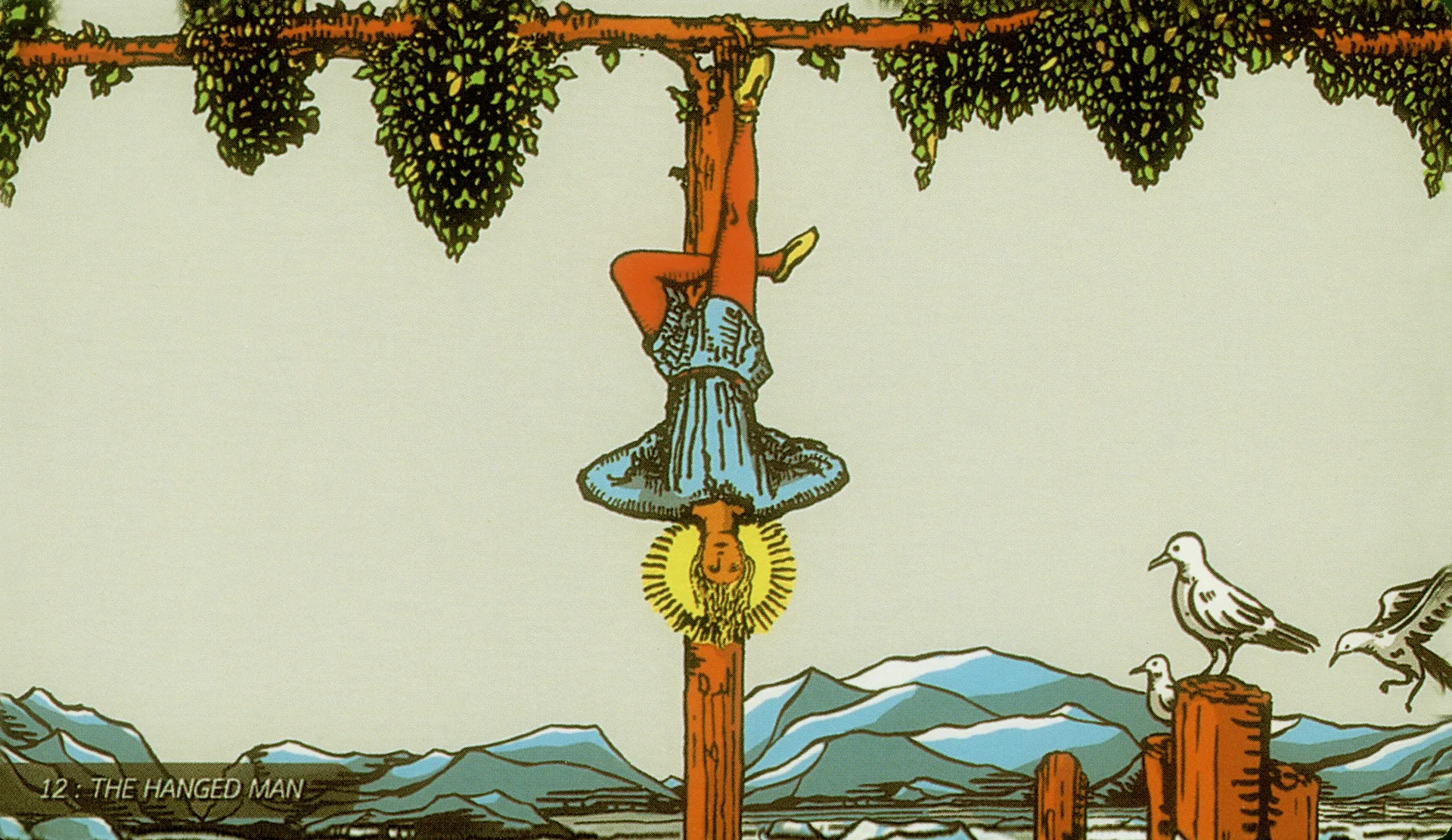
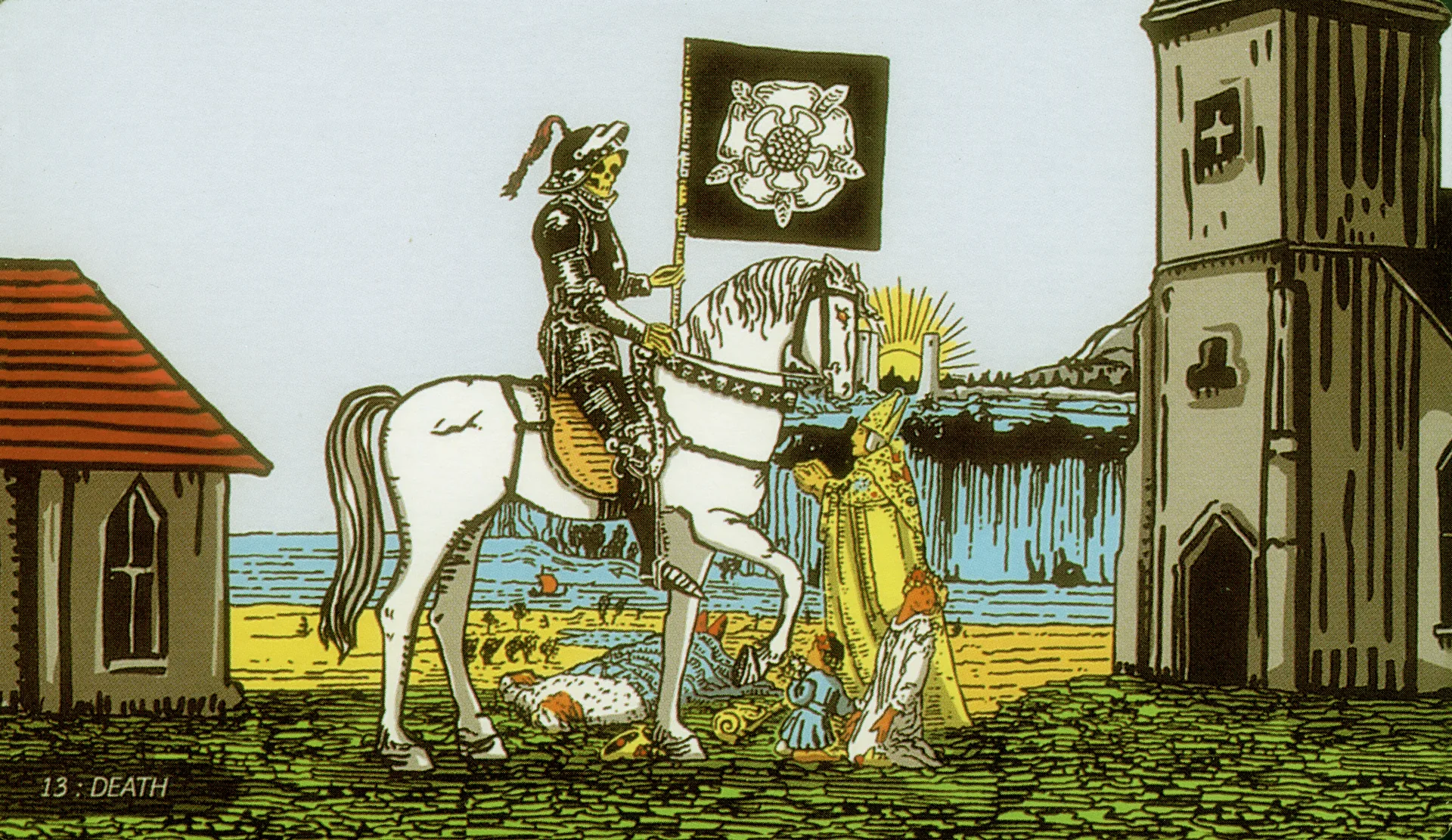
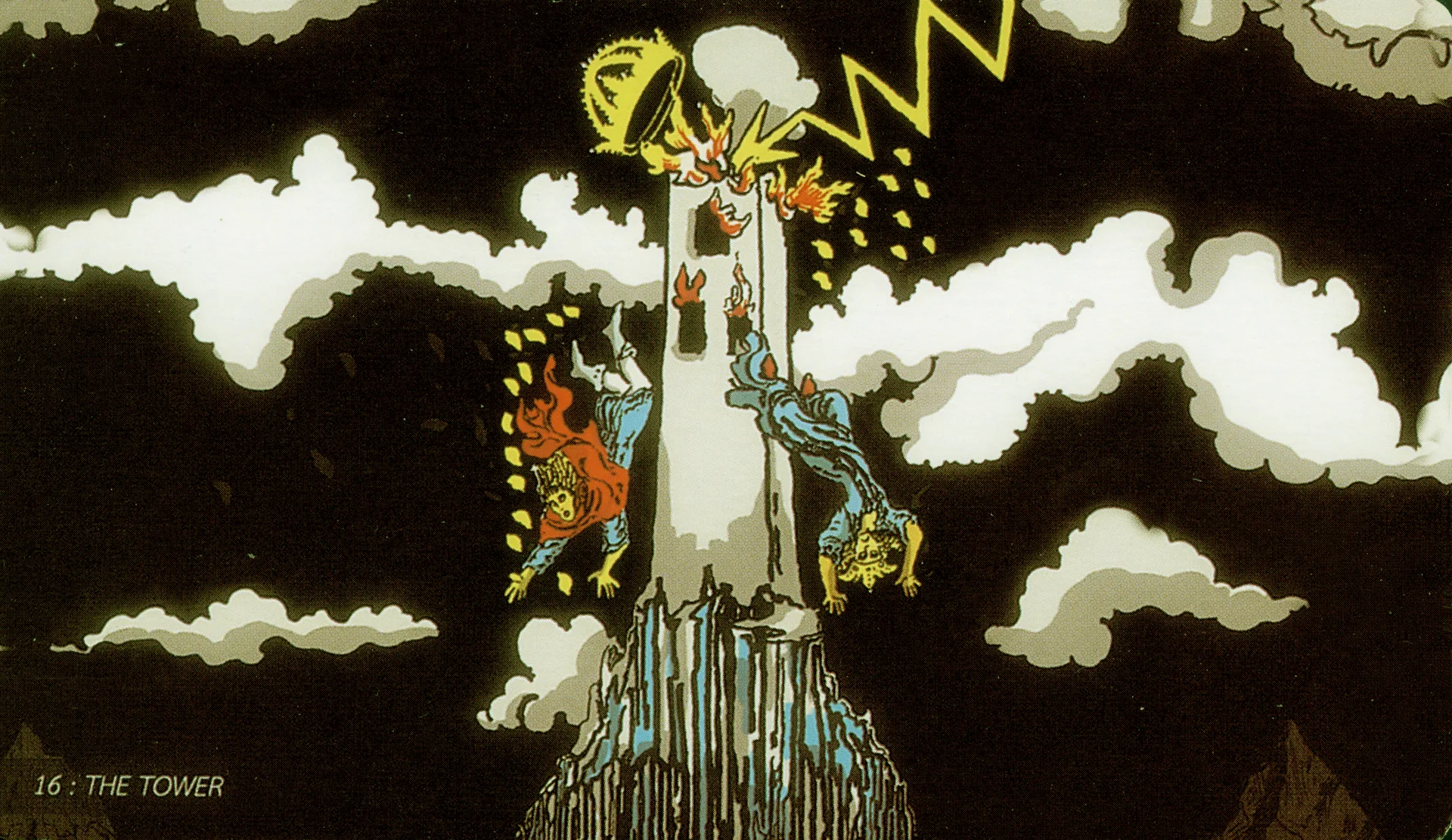
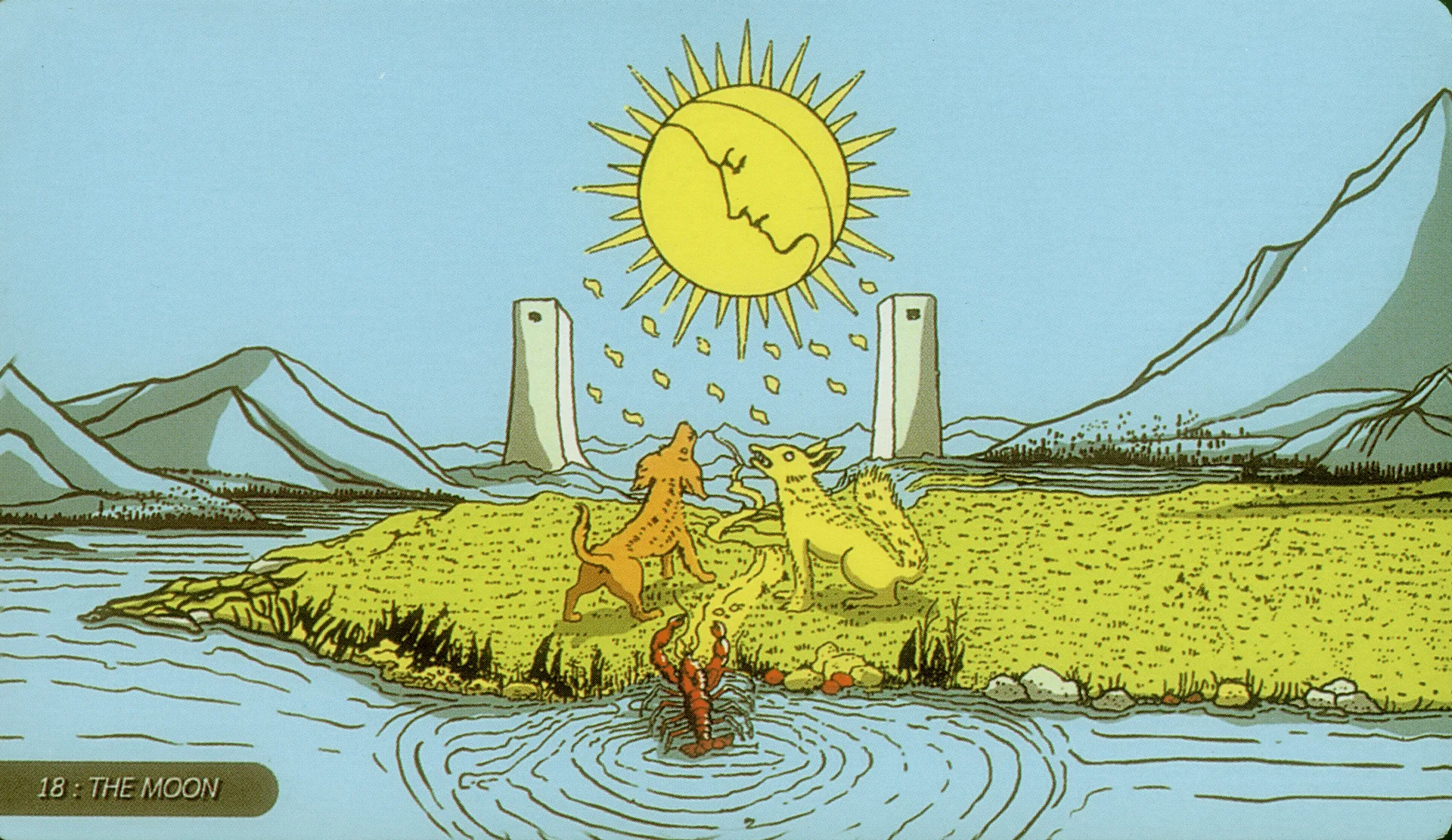
Compare the familiar Rider-Waite-Smith card with the moments before, behind and after the classic scene in three Lo Scarabeo decks.
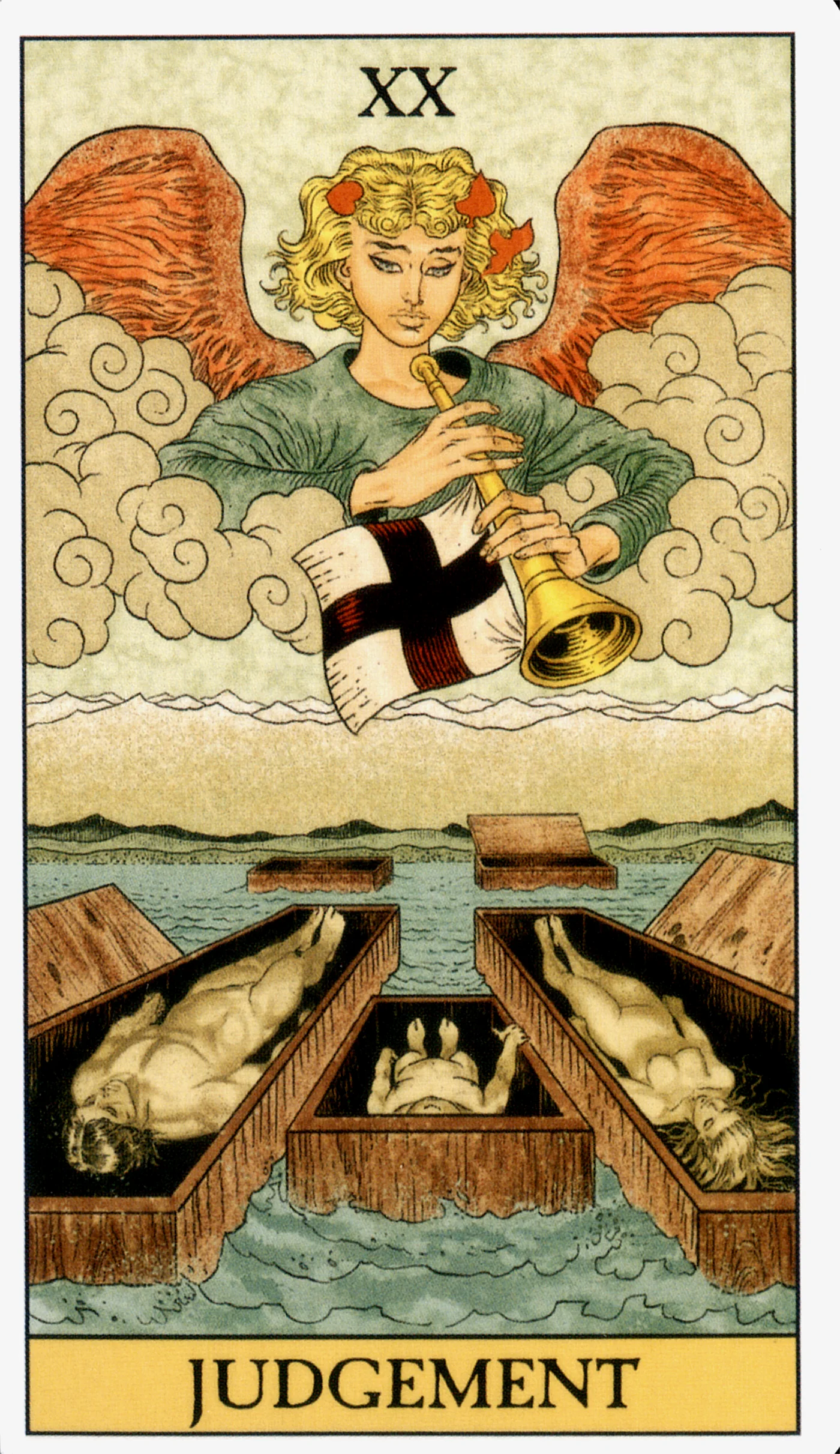
What apparently happens just before
What actually happened
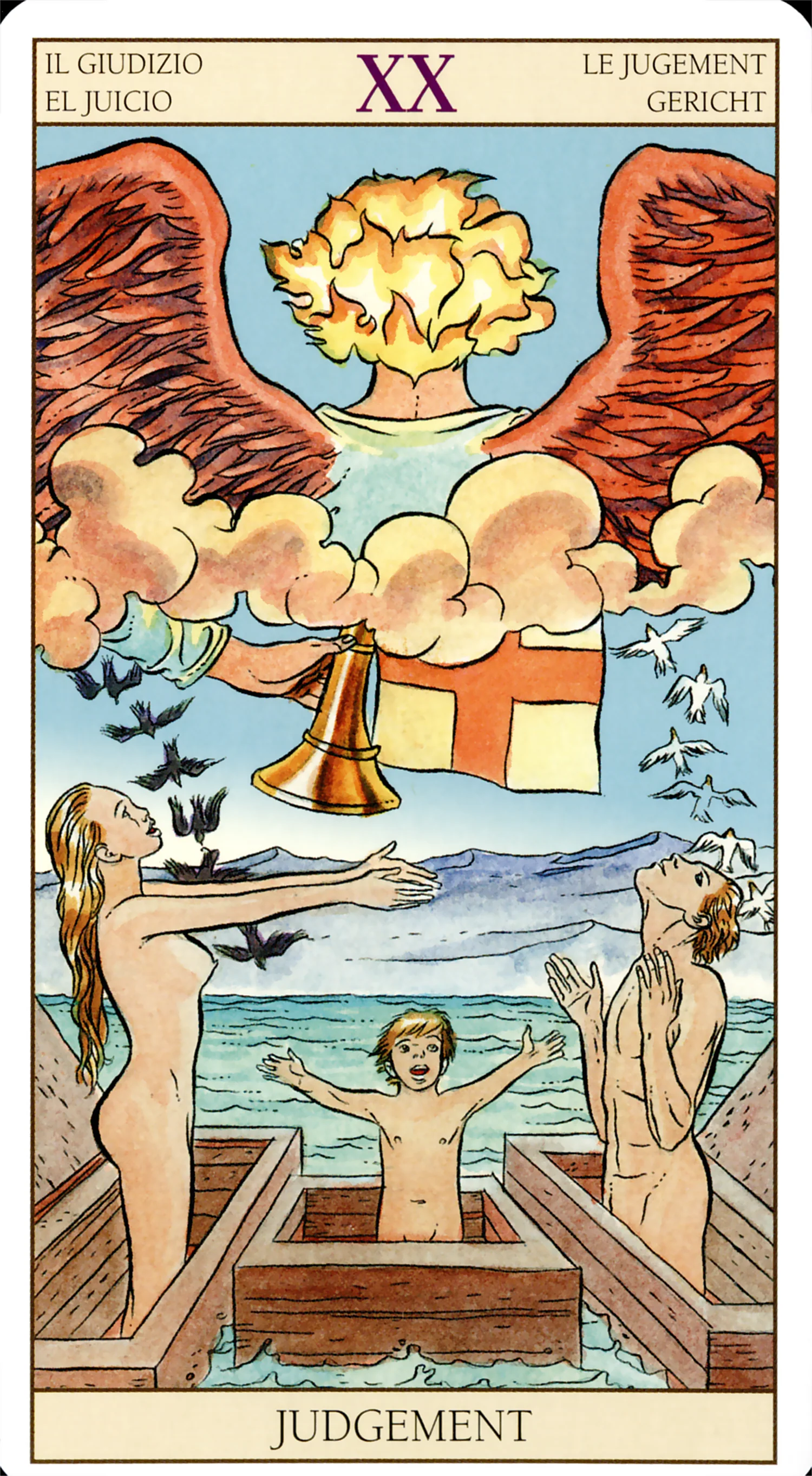
What happened on the opposite side
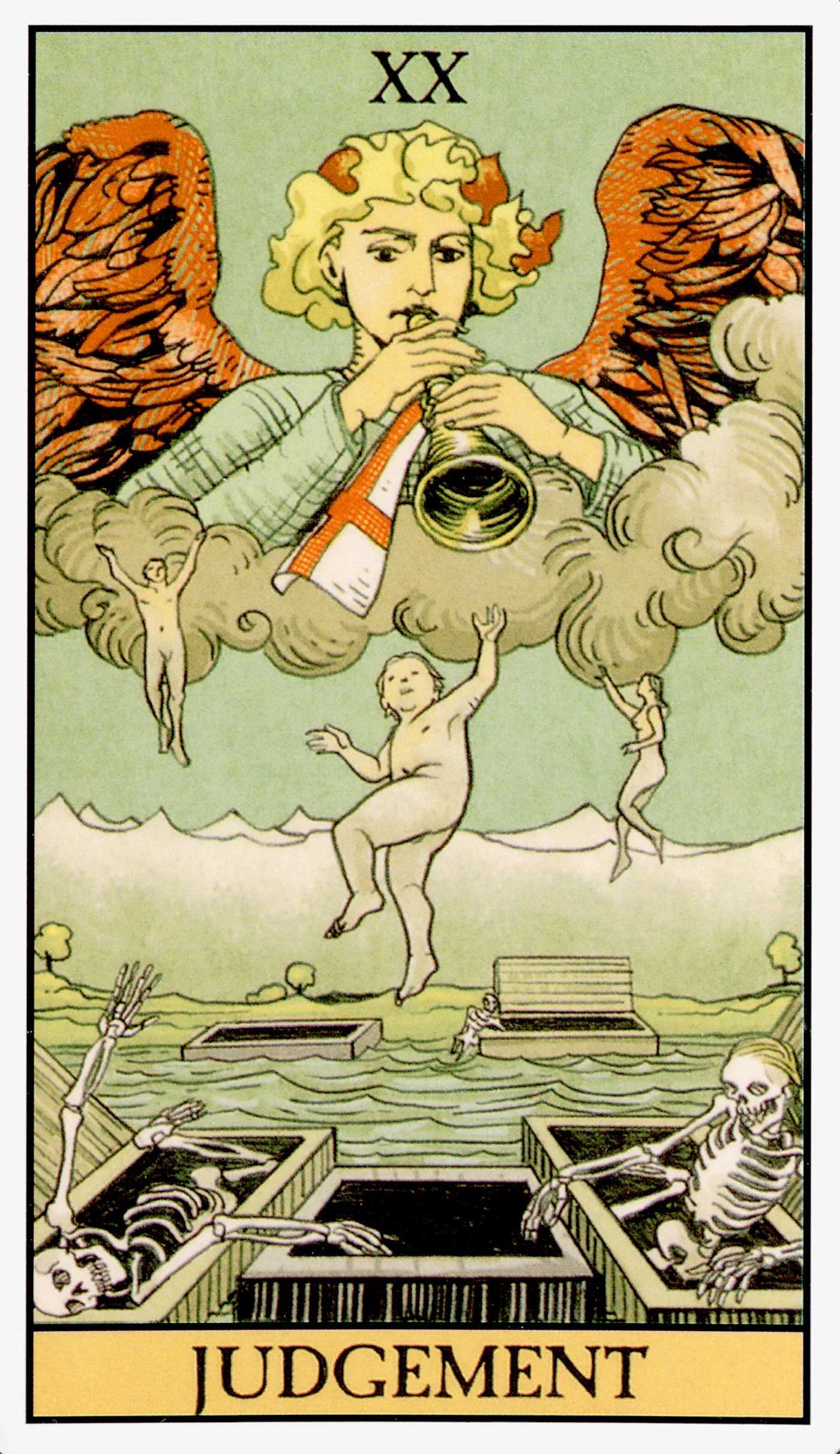
What apparently happened afterwards
Symbols to Notice on Judgement
In the pictured Rider-Waite-Smith card, a winged angel blows a trumpet above people rising from open coffins. A white banner carries a red cross, and pale mountains stand beyond the water. The rising figures reach upward; the numeral XX appears at the top. These are observations of this image, not details to assume in every deck.
Many modern guides identify the angel as Archangel Gabriel, God's messenger, and call the instrument Gabriel's trumpet. Waite describes an angel sounding a trumpet and frames the scene through spiritual awakening. The imagery draws on Christian resurrection scenes, but a reflective reading here concerns renewal and responding to a call, not literal resurrection or divine judgment of the reader.
For numerology, some readers reduce 20 to 2 and connect it with cooperation or reflection. Astrologically, modern systems sometimes associate Judgement with Pluto and transformation. These are different traditions, not universal facts about all tarot cards. Check your deck's guidebook before treating a correspondence as part of its intended meaning.
Helpful Questions to Ask with Judgement
- What have I learned that could change my next decision?
- What needs a genuine repair, and what am I only replaying?
- What evidence would help me choose whether to reconnect?
- What small action would make a fresh start believable?
One card, many perspectives
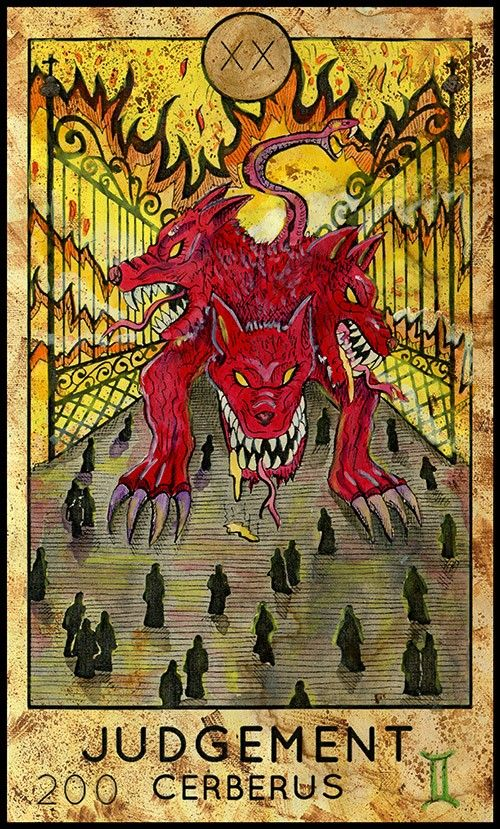
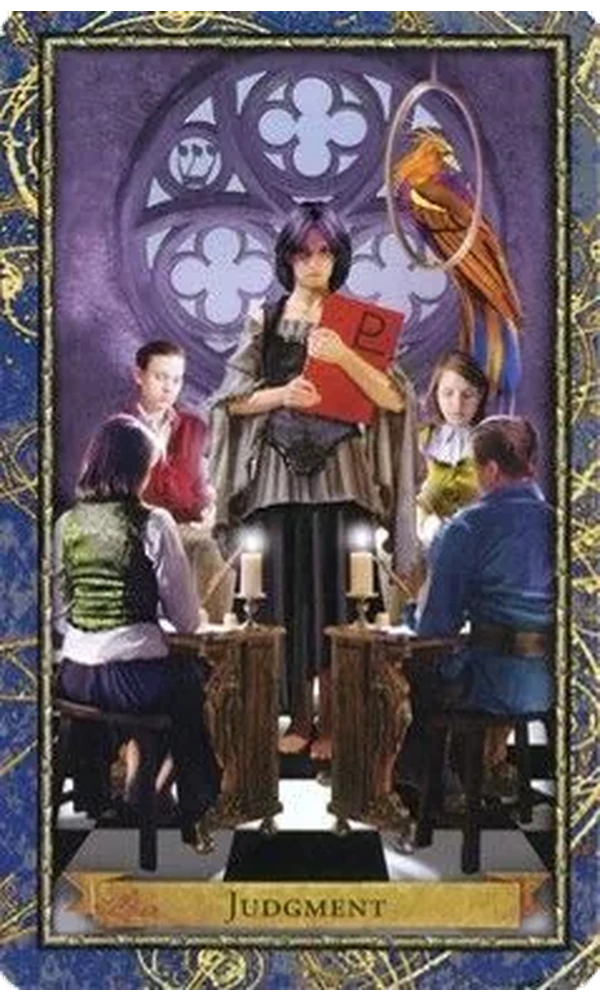
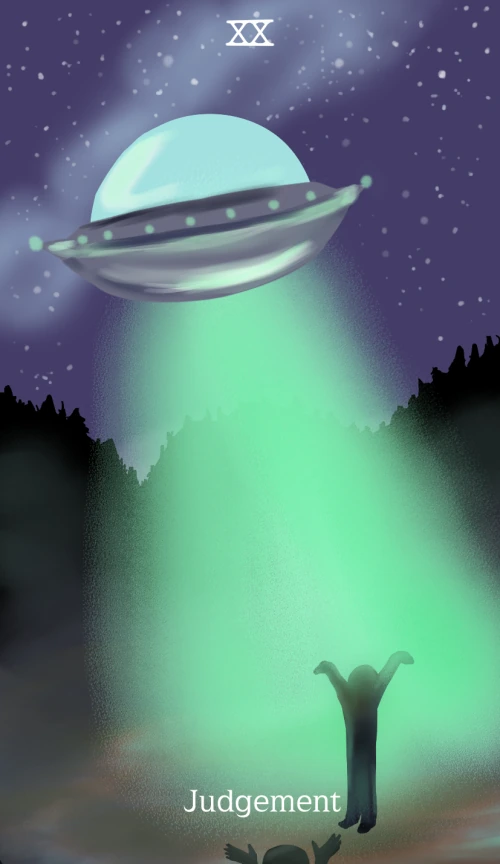
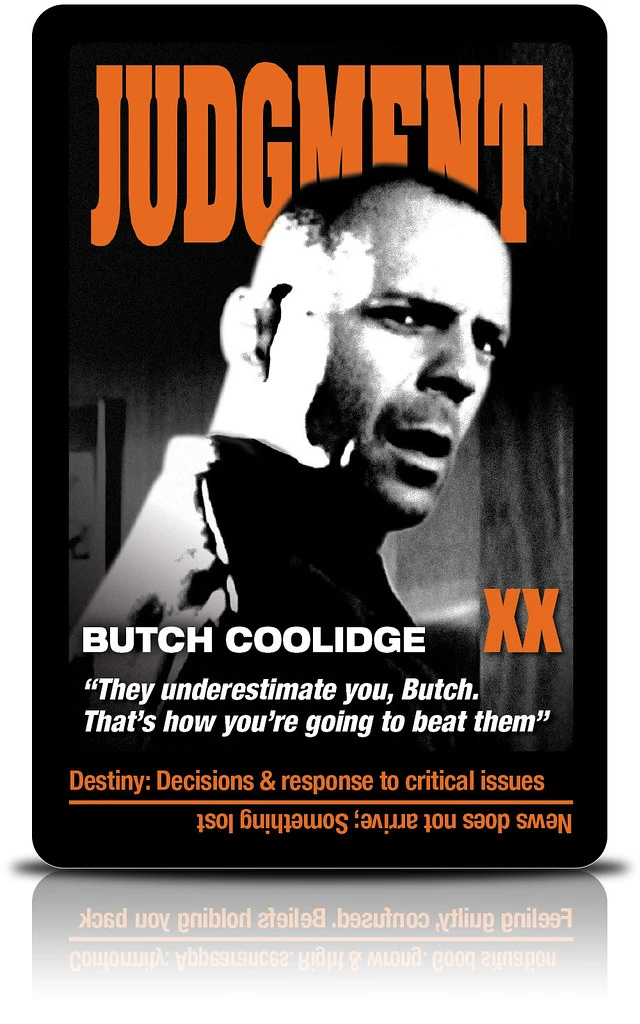
See Judgement Card from Other Decks
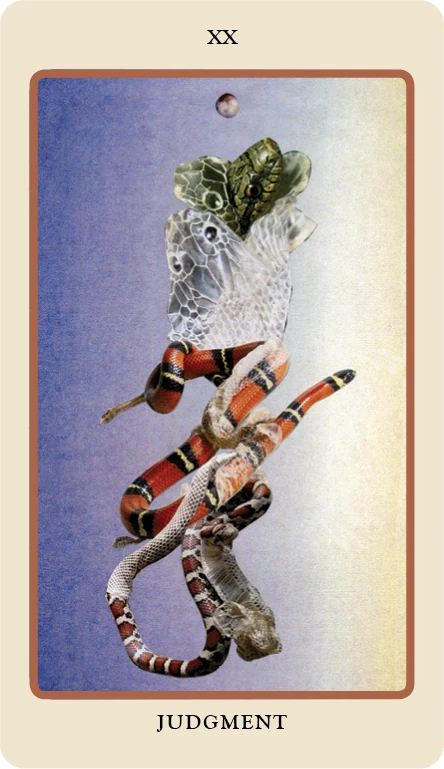
Discover how other tarot decks interpret this card. Select a deck to explore its full review and gallery.








Judgement FAQ
Is Judgement a good tarot card?
Judgement can be encouraging because it points to renewal and a considered fresh start. It can also ask you to face something uncomfortable. Its usefulness depends on the question and the choices you make, not a simple good-or-bad label.
Does Judgement mean someone will come back?
No card can confirm another person's plans or private feelings. Judgement can support reflection about a second chance, but reconciliation needs mutual consent, changed behaviour and safe boundaries. Moving on can be a responsible outcome too.
What does Judgement reversed mean?
Reversed, Judgement can suggest avoiding a decision, resisting useful feedback or judging yourself too harshly. Separate the facts from self-criticism, review what still needs attention and choose one manageable step.
How is Judgement different from Justice?
Justice usually brings fairness, evidence and consequences into focus. The Judgement card meaning concerns self-review, renewal and responding to what you have learned. Read them together as a prompt to be accountable while deciding what comes next.