Watch the Modern Medieval Tarot review
Explore the Modern Medieval Tarot Cards
Browse all 78 cards from the Modern Medieval Tarot by Shayn Amber Wetherell and Tim Wetherell. Choose a group to filter the continuous gallery, or select a card for the full-size Lightbox.
Showing all 78 verified cards.
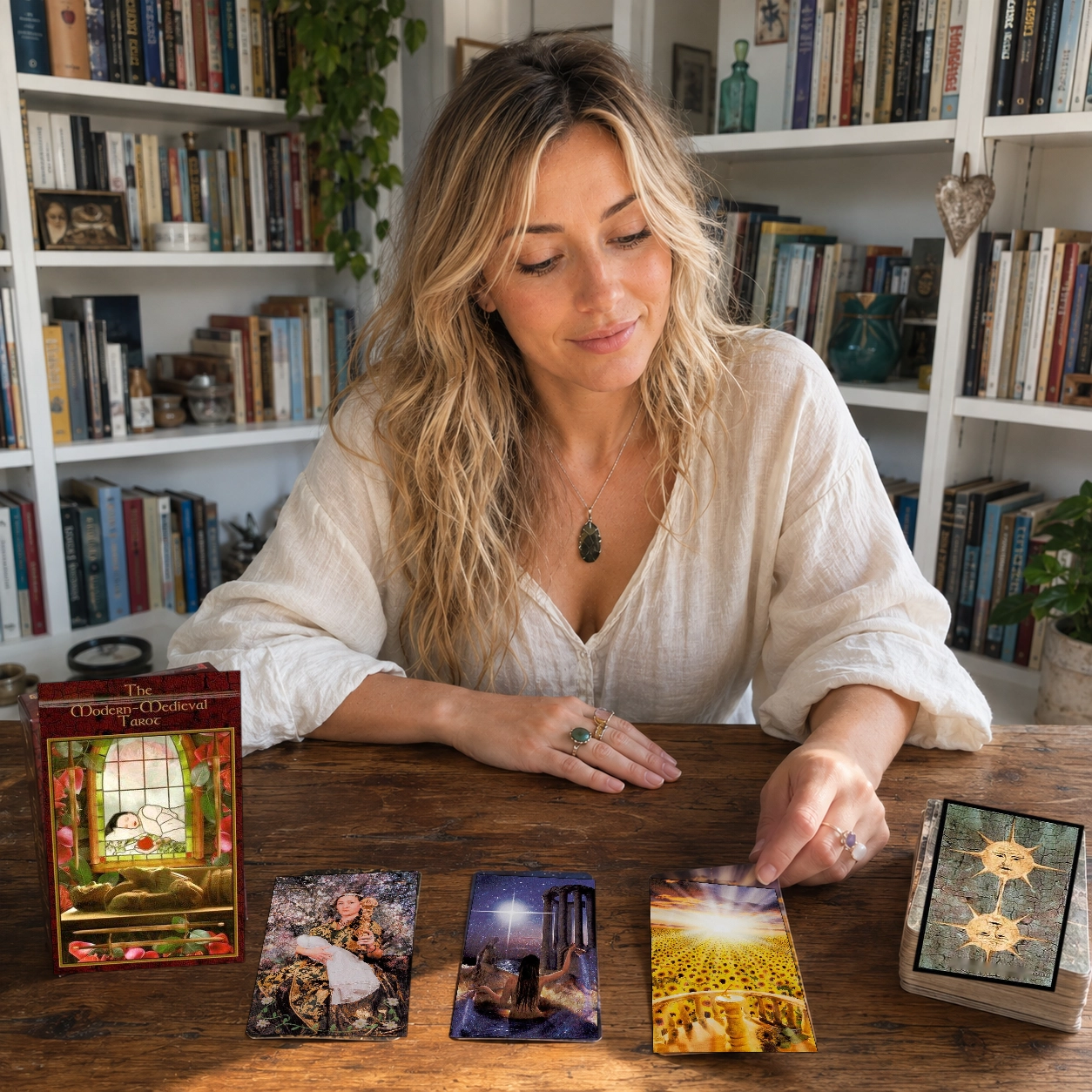
Aurica’s Quick Take
What catches me first is the way this deck feels like a dream stitched from court portraits, family photographs and pieces of theatre. The collage can be strange, but it is never emotionally blank. I can sense tenderness, pride, distance and desire before I reach for a traditional keyword.
When I read with it, I begin with the figure who holds my attention and ask what their expression is trying not to say. That small question opens the cards beautifully, especially for readings about relationships, identity and creative choices.
I would choose Modern Medieval Tarot when I want a reading with atmosphere and an unexpected point of view. If you prefer clean, familiar Rider–Waite–Smith scenes, it may feel too surreal; if you enjoy imagery that keeps revealing new connections, it is wonderfully absorbing.
What is Modern Medieval Tarot?
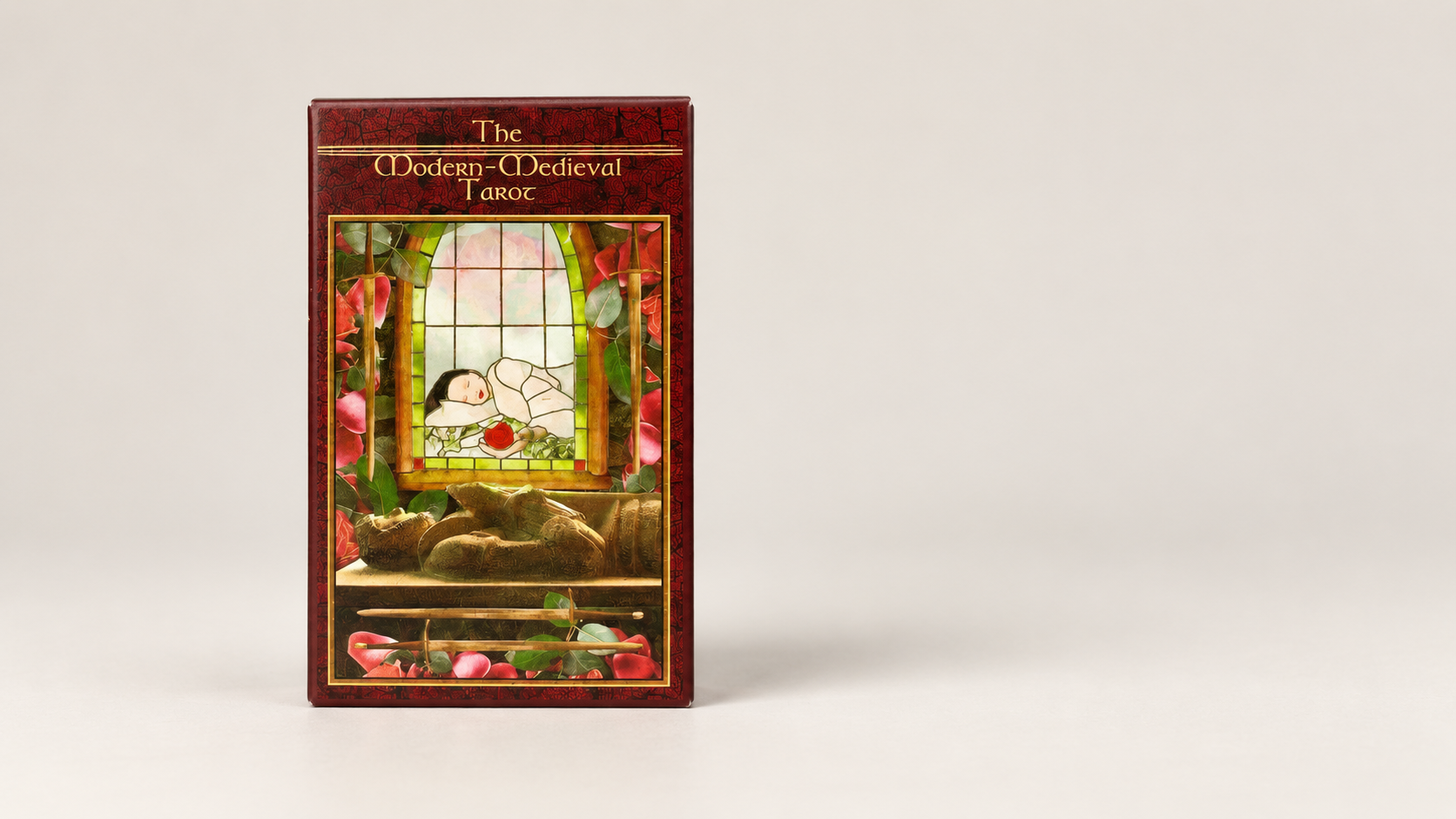
Modern Medieval Tarot is a 78-card collage deck created by Shayn Amber Wetherell and Tim Wetherell. It combines photographed faces, animals, architecture, fabrics and painted fragments into scenes that feel part family album, part illuminated theatre. The familiar tarot structure is present, but the artwork asks you to read expression, scale and juxtaposition before settling on a keyword.
That makes it especially rewarding for visual readers. A blindfold can be a strip of white cloth, a court card can feel like a portrait recovered from an attic, and a suit scene can become a tiny drama assembled from hands, ruins, coins or birds.

CARD STUDY
The Fool: a bright leap between scales
A woman in patterned red and orange turns in profile while a tiny jester-like figure appears to spring from the yellow orb near her hand. The scene layers blue sky, distant mountains and translucent circular textures, so the eye moves between the large calm face and the much smaller acrobat.
In a reading, begin with that contrast in scale. The card can ask which possibility feels playful enough to follow, what you are holding too tightly, and whether curiosity is inviting a first move before certainty arrives.
FOUR-CARD STUDY
Four cards for choosing a direction
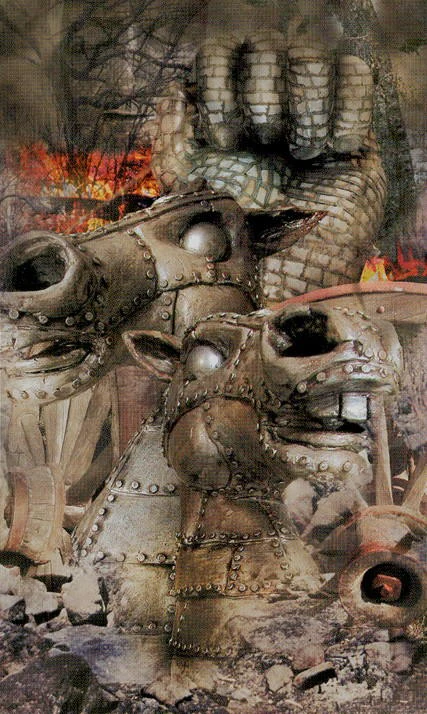
These four cards frame movement as a conversation between force, attraction, guarded thought and chance. Lay them left to right when a choice has several competing pulls.


How the collage language reads
The deck does not keep every scene at one visual temperature. Some cards are soft and almost dreamlike; others are stark, crowded or theatrically strange. That variation is useful in spreads because the visual shift between neighbouring cards can reveal where a situation feels gentle, defended, unstable or overfull.
Rather than searching for every conventional prop, notice the first living presence, the strongest colour, and the object that seems most out of place. Those three observations usually give the card a clear voice without flattening its collage work.
CARD STUDY
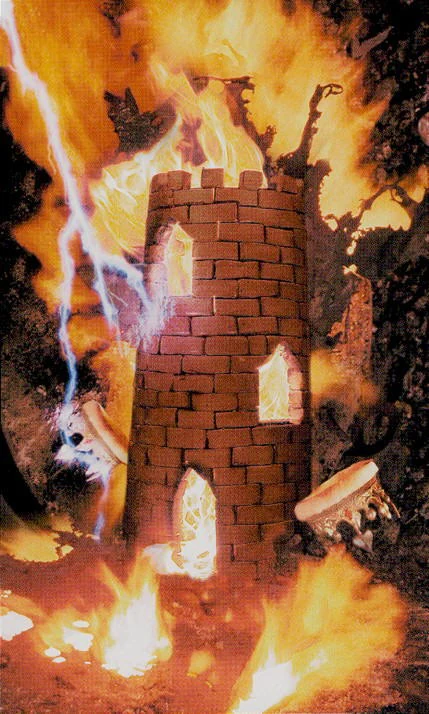
The Tower: the structure is visibly on fire
A cylindrical brick tower stands inside an orange blaze while pale lightning branches down its left side. Dark figures and fragments appear around the upper edge, and broken masonry sits near the base. The image is immediate: heat, impact and a structure that can no longer pretend to be secure.
When this card appears, ask what is already visibly failing rather than imagining a distant catastrophe. Beside calmer cards it may mark the one arrangement that must change; beside other pressured images it can show where the release has already begun.
FOUR-CARD STUDY
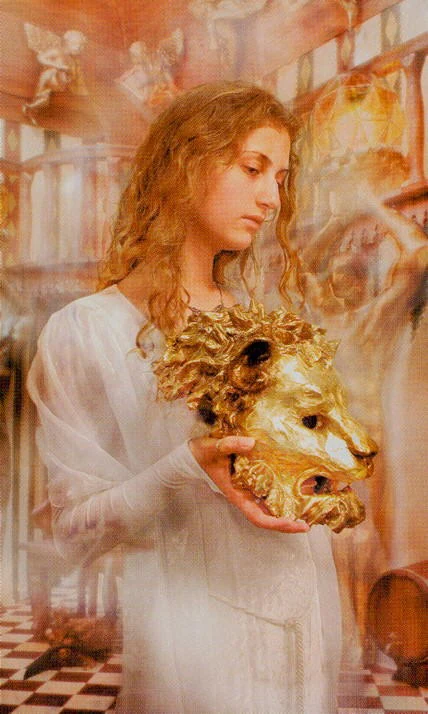
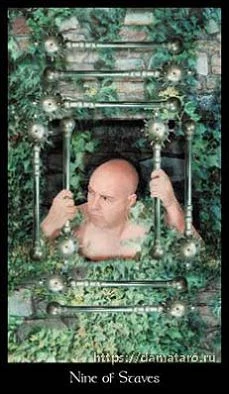
Four cards for pressure and endurance
This group moves from composed inner steadiness into defence, exhaustion and material strain. It suits questions about what can be sustained and where support is overdue.


Reading relationships, work and creative choices
For relationship readings, the photographed faces and bodies make distance easy to see: who turns toward another figure, who is hidden, and who occupies most of the frame. For work or money questions, the Coins cards make resources feel physical and shared rather than abstract. Creative readings benefit from the deck’s willingness to place unrelated textures together and let a new story form between them.
In multi-card spreads, give each card a plain visual sentence first. Then look for repeated hands, animals, arches, cloth, fire or circular forms across the row. That keeps the interpretation grounded in what this deck actually shows.

CARD STUDY
The Star: a quiet figure beneath a luminous sky
A seated figure faces away beside dark classical columns, one arm lifted toward a brilliant white star. The water and ground shimmer with violet and blue light, while smaller stars fill the sky. The card feels spacious and hushed after the deck’s busier scenes.
Use that openness as a reading cue. It can suggest making room for a distant hope, looking beyond the nearest structure, or allowing a simple guiding point to matter even when the route is not yet detailed.
FOUR-CARD STUDY
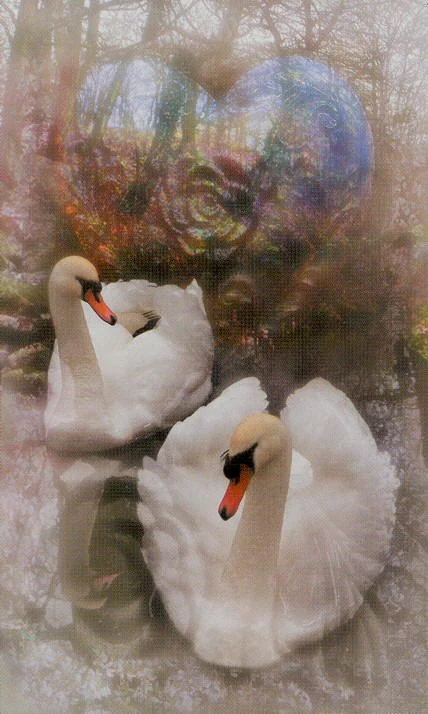
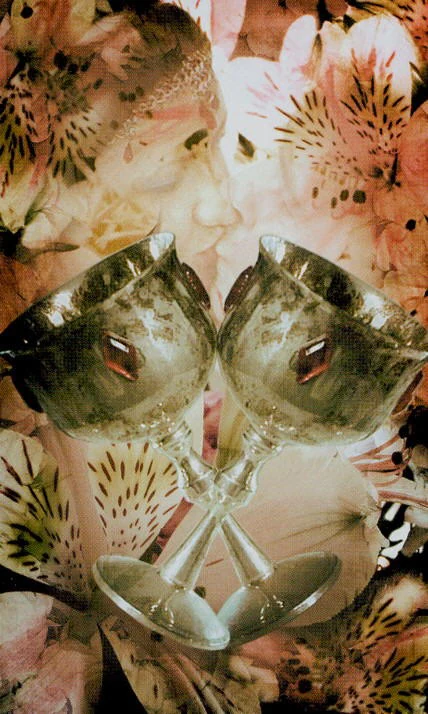
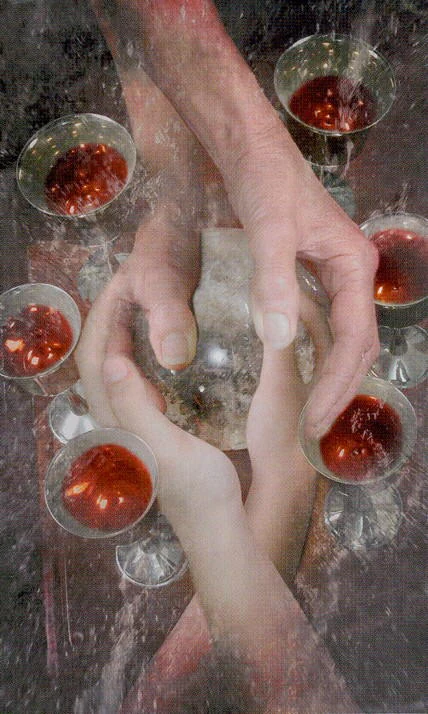
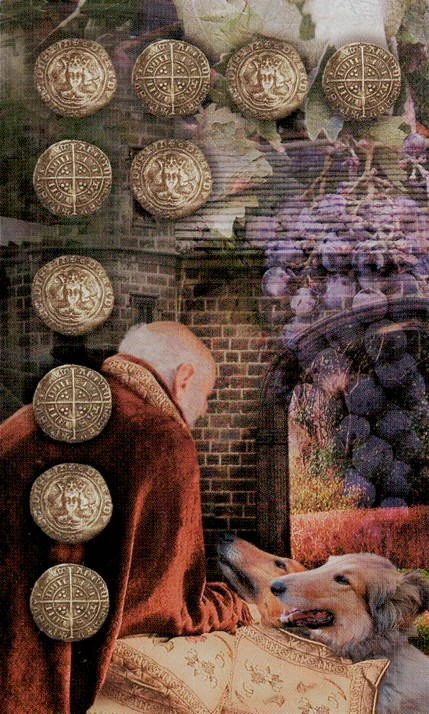
Four cards for connection and belonging
Glasses touch, hands meet over red cups, coins gather in an arch, and a domestic scene is surrounded by ten round emblems. Read this set when the question concerns trust, contribution or the kind of support a bond can hold.

Who will enjoy this deck?
Modern Medieval Tarot suits readers who enjoy surreal collage, expressive portraiture and cards that reward a second look. Beginners can still work with its standard 78-card structure, though the imagery is less literal than a direct Rider–Waite–Smith clone. Readers who prefer clean line art or a single historical period may find the deliberate visual collisions challenging.
It works best when you let the artwork lead. Name what is visible, compare the emotional weather of nearby cards, and only then bring in the traditional meaning. That approach gives the deck room to be unusual without becoming obscure.
Modern Medieval Tarot FAQ
Is Modern Medieval Tarot good for beginners?
It can be beginner-friendly if the artwork feels clear to you. New readers should keep a simple tarot keyword list nearby while learning.
What kind of readings is Modern Medieval Tarot best for?
It is best for daily pulls, journaling, emotional check-ins, creative questions, and readings where image and mood matter.
Does Modern Medieval Tarot follow traditional tarot meanings?
It uses tarot structure, but the deck theme gives those meanings its own flavor. Read both the card title and the picture.
Who should skip Modern Medieval Tarot?
Skip it if you want a completely neutral deck, plain keyword cards, or artwork that does not shape the reading.
How do I compare Modern Medieval Tarot with other tarot decks?
Look at several major arcana, minor arcana, and court cards. The minor cards are especially important because they show how the deck handles everyday life.
Can Modern Medieval Tarot be used for serious readings?
Yes. A themed or unusual tarot deck can still give serious guidance when the question is clear and the interpretation is grounded.