Temperance represents balance that you can live with, rather than perfect composure every minute. This Major Arcana card is about patience and moderation: making room for different needs without letting one take over. Think of a busy week when you need to work, see someone you love, and still get enough sleep. The answer is usually an adjustment, not another demand.
The upright meaning of the Temperance tarot card centres on cooperation, integration, and a steady pace. Reversed, it can point to imbalance, impatience, or extremes that have become hard to sustain. Neither orientation tells you to ignore a problem. Both ask what would help the situation work better in practice.

Temperance Tarot Card Meaning at a Glance
- Main keywords: balance, patience, moderation, and integration
- Upright meaning: blending different needs, cooperation, and steady progress
- Reversed meaning: imbalance, excess, impatience, or an unsustainable pace
- Yes or no: a conditional yes when the choice allows a realistic balance
- Best question to ask: What small adjustment would make this easier to sustain?
Temperance upright meaning: balance and moderation
Temperance upright suggests bringing things together carefully. You might be combining two people's ideas, learning a skill in stages, or finding a daily rhythm that gives you room to breathe. You might feel better after a week of manageable practice than after one exhausting push. Give a useful change enough time to become familiar.
The Temperance card often represents balance and harmony, but harmony is not the absence of disagreement. It can mean listening closely enough to find a middle ground on something negotiable. Perhaps you need quiet in the evening while your housemate likes company. Agreeing on a time for visitors is more useful than pretending neither need matters.
When Temperance appears upright, look for a workable blend rather than a forced compromise. Different ingredients can keep their character while becoming part of something shared. You do not need to split every decision exactly in half, and a fair agreement should not require one person to give up all their needs.
What Temperance means in a tarot reading
When this card appears, start with the question and the spread position. As advice, it may suggest patience. As an obstacle, it can describe difficulty coordinating competing needs. In a future position, it may suggest the possibility of gradual integration, not a guaranteed peaceful outcome. Other tarot cards and the facts of your situation change the emphasis.
The meaning of the Temperance card is especially useful when you are swinging between doing everything and doing nothing. If a project has stalled, try a shorter session on a regular day. If a disagreement keeps escalating, choose a time when you can both listen. The aim is to find the middle path that serves this situation, not to avoid making a decision.
Temperance in love and relationships
In a love reading, Temperance can point to mutual adjustment. A relationship may need a conversation about time together, time alone, or different ways of showing affection. Say what would help in concrete terms: "Could we have one evening together without our phones?" is easier to respond to than "You never care."
For someone dating, the card may encourage a pace that lets trust develop through actual behaviour. In a love tarot reading about an established partnership, it can suggest cooperation and repair when both people are willing. It cannot reveal private feelings, promise reconciliation, or prove that someone is your soulmate.
Patience is useful in a relationship where respect is mutual. It is not an instruction to endure abuse or keep smoothing over threats. You do not owe a middle ground on your safety. If you feel unsafe, practical support and a safety plan matter more than a card interpretation.
Temperance in career, money, and school
For work, Temperance favours coordination over a frantic pace. A team may need clearer handovers, realistic deadlines, or a way to combine different skills. On your own career path, it can be a prompt to learn gradually while keeping your current responsibilities manageable. It does not promise a promotion or tell you which job to accept.
With money, moderation can mean checking what you can afford before an impulsive purchase. Review essential costs and leave room for something enjoyable when the budget allows. A card does not predict returns or replace qualified financial advice. Balance is a practical plan, not a reason to divide money equally between a safe option and a dangerous one.
At school, mix practice with breaks and ask for help with the part you do not understand. Two focused sessions may serve you better than an exhausted night of cramming. If overwork is already the pattern, adding another productivity rule may be the wrong adjustment.
Reversed Temperance meaning: notice the imbalance
Reversed Temperance can describe a rhythm that has stopped working. You may be rushing, taking on too much, or switching between extreme responses. It can also point to competing priorities that need a clearer agreement. The reversed card is a prompt to notice the pattern, not a verdict that you have failed.
Look for the specific imbalance. Are you saying yes before checking your time? Does a plan leave no room for rest? Are you avoiding a needed conversation to keep the surface calm? These situations need different responses. Instead of telling yourself to "be more balanced," name the commitment you could reduce or the boundary you need to state.
Temperance reversed can also suggest that a supposed compromise is costing too much. If you always adjust and the other person never does, cooperation has become one-sided. You may need a firmer limit rather than more patience. In work or money questions, pause long enough to check the facts before making a rushed choice.
You do not have to remain calm to make a sensible decision. Frustration can tell you something needs attention. Name what is happening, then choose a response that does not make the problem harder to handle.
Temperance yes or no meaning
For a yes or no question, upright Temperance leans toward a conditional yes when cooperation, preparation, and a sustainable pace support the choice. Reversed, it often invites a pause to address an imbalance first. Neither is a universal answer: a sensible yes for a modest plan is not permission to accept an unsafe situation.
Try asking what conditions would make the choice workable. You might need a clearer budget, more information, or an agreement about responsibilities. That gives the querent, the person asking the question, something useful to consider beyond a prediction.
Temperance advice: make one useful adjustment
Temperance asks you to combine what matters instead of letting one demand crowd out everything else. Choose a small change you can try this week. Move a deadline if it is negotiable, plan a proper meal during a busy day, or ask someone to share a task. Then notice whether it helps.
The path of Temperance is often a process of adjustment. You try something, see what happens, and change the mix. Perfect balance is not a permanent state you have to achieve. Some days call for more effort; others call for rest. Moderation in your life can leave room for enjoyment as well as responsibility.
Wellbeing and spiritual reflection
Some tarot readers associate this card with healing or spiritual growth. Here, those are reflective themes, not medical claims. Temperance cannot diagnose illness, promise recovery, or show that a treatment is working. Bring health concerns to a qualified clinician and follow appropriate care.
For self-care, notice an ordinary need you have been overlooking. For self-reflection, write down two aspects of life that are competing for your attention and one way each could have room. A quiet moment with the card may help you think about purpose and meaning without turning the reading into another task to perfect.
One archetype, four perspectives
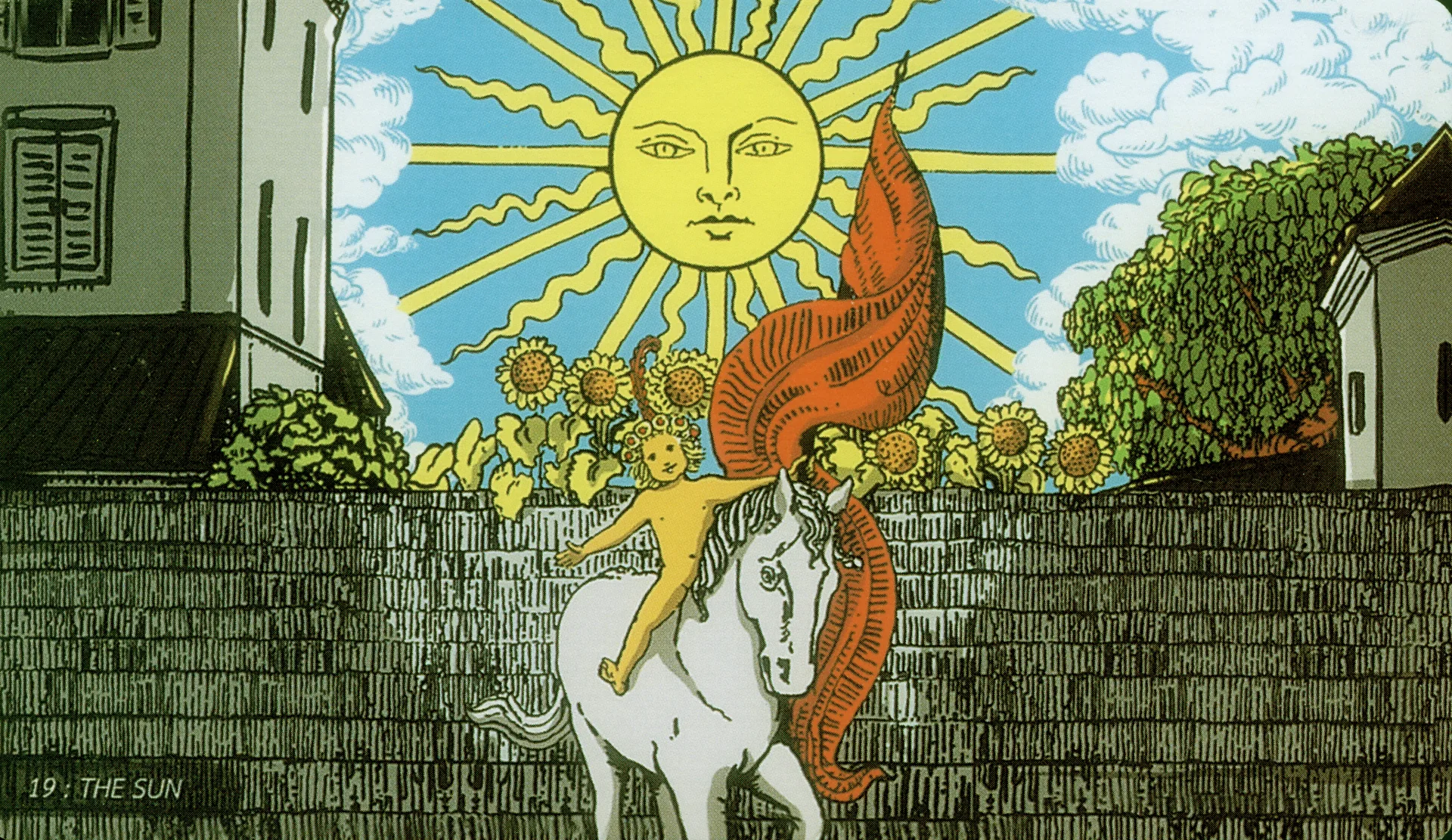
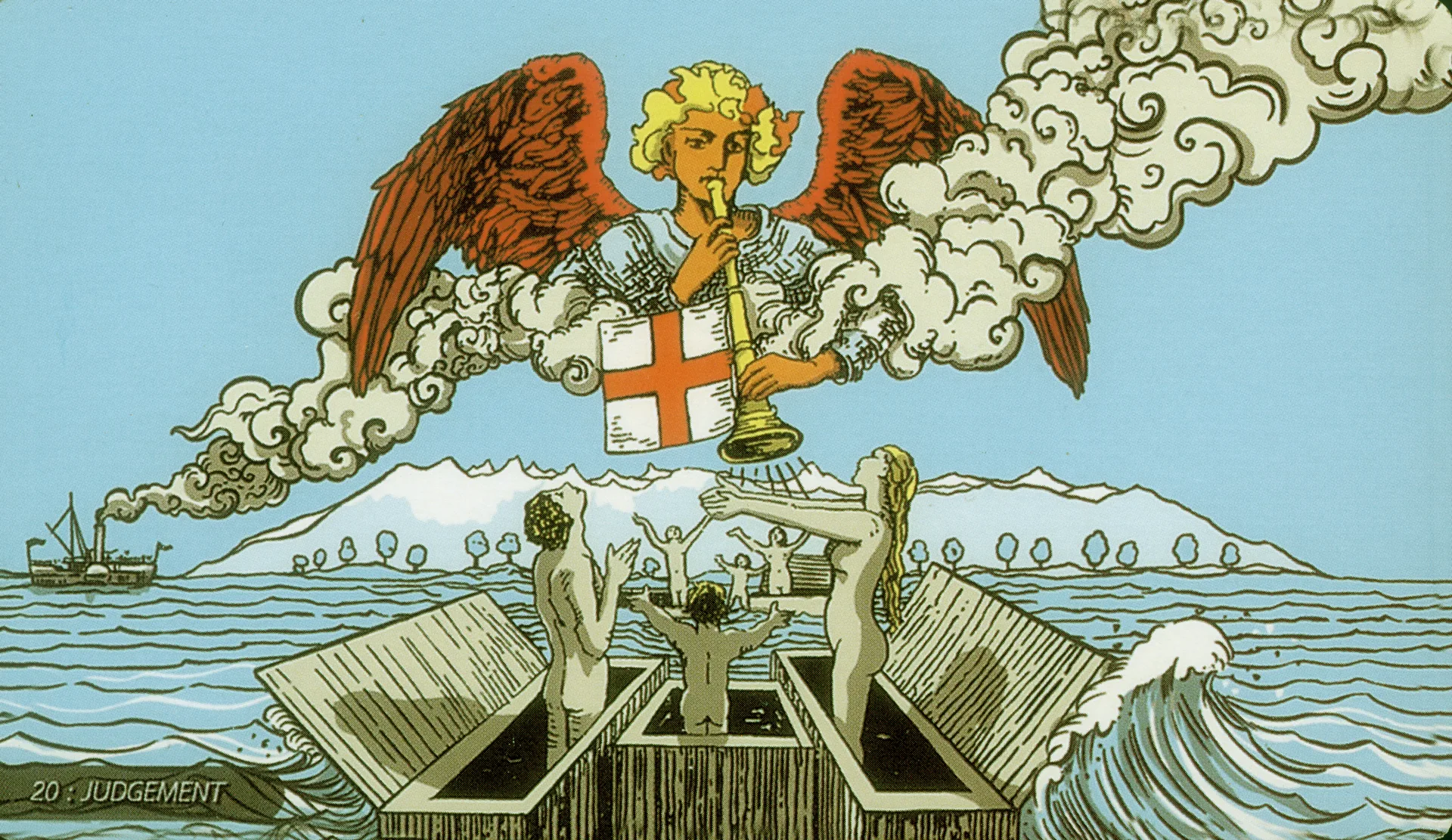
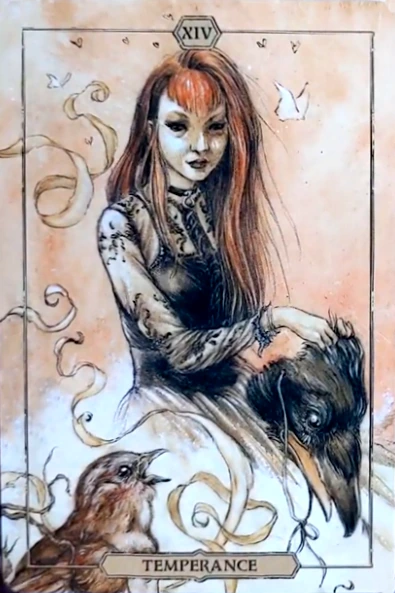
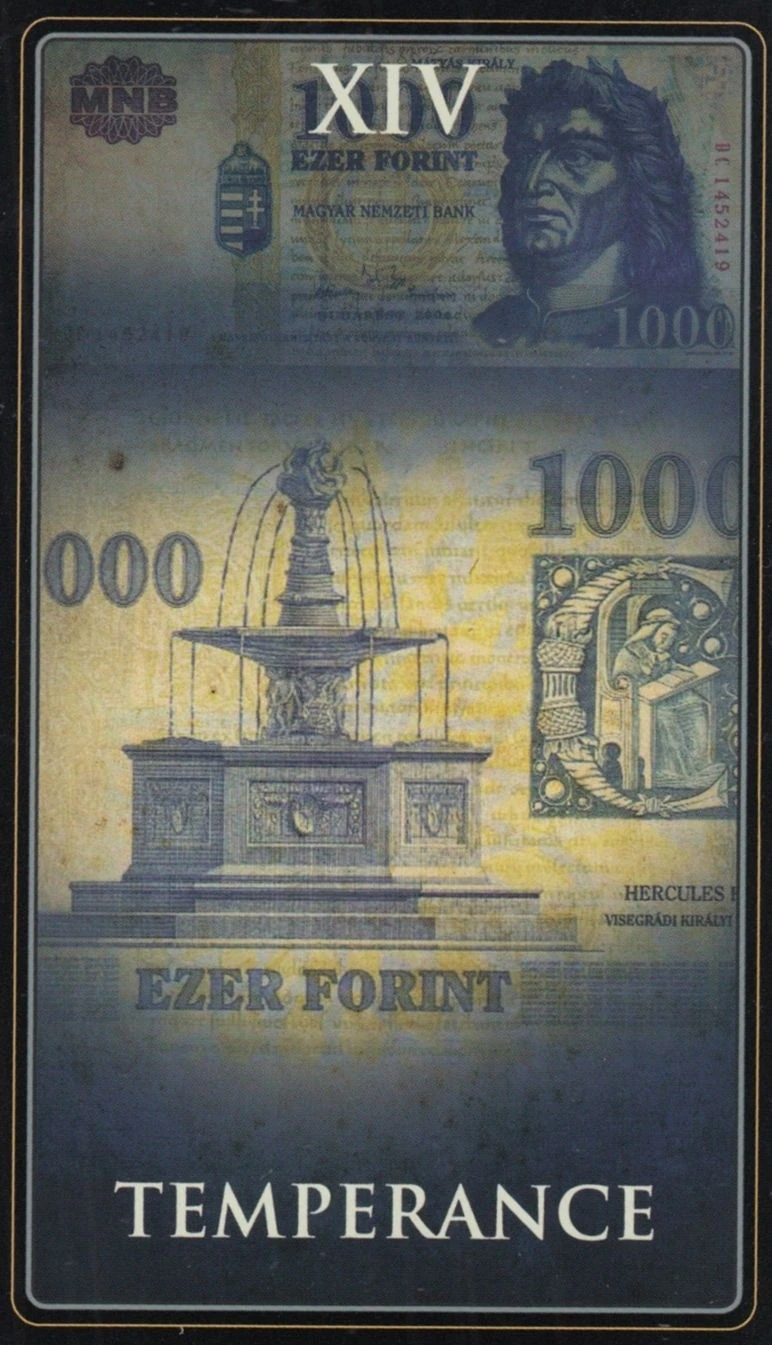
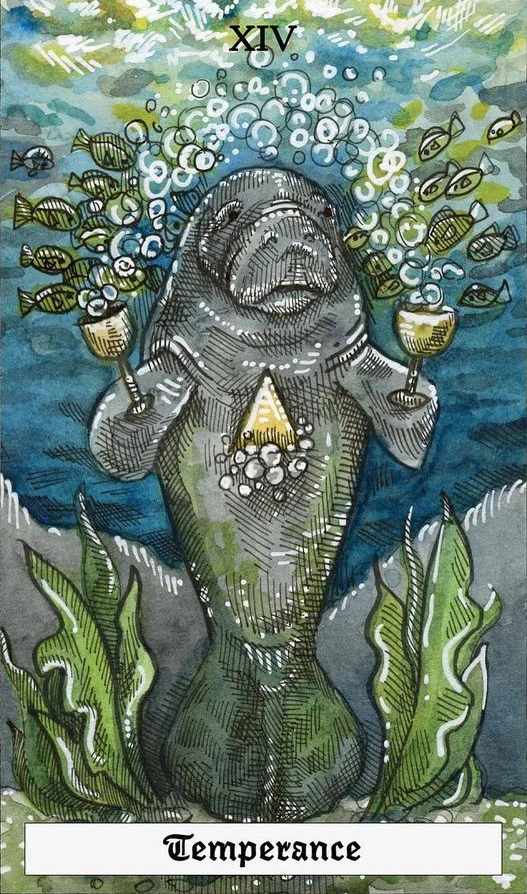
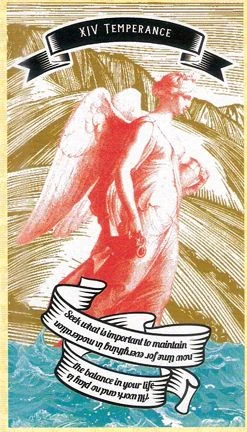
Temperance Across Four Tarot Decks
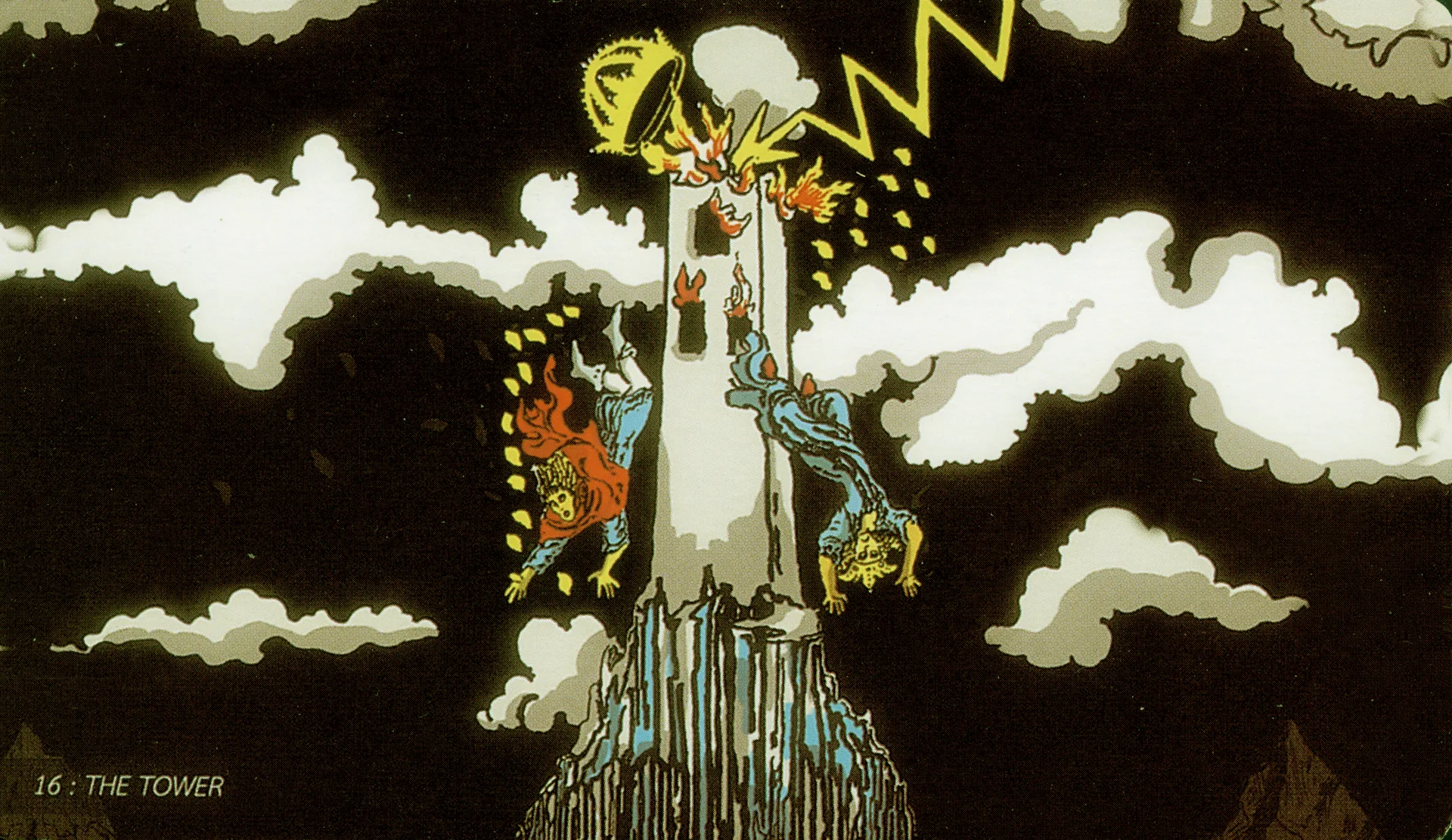
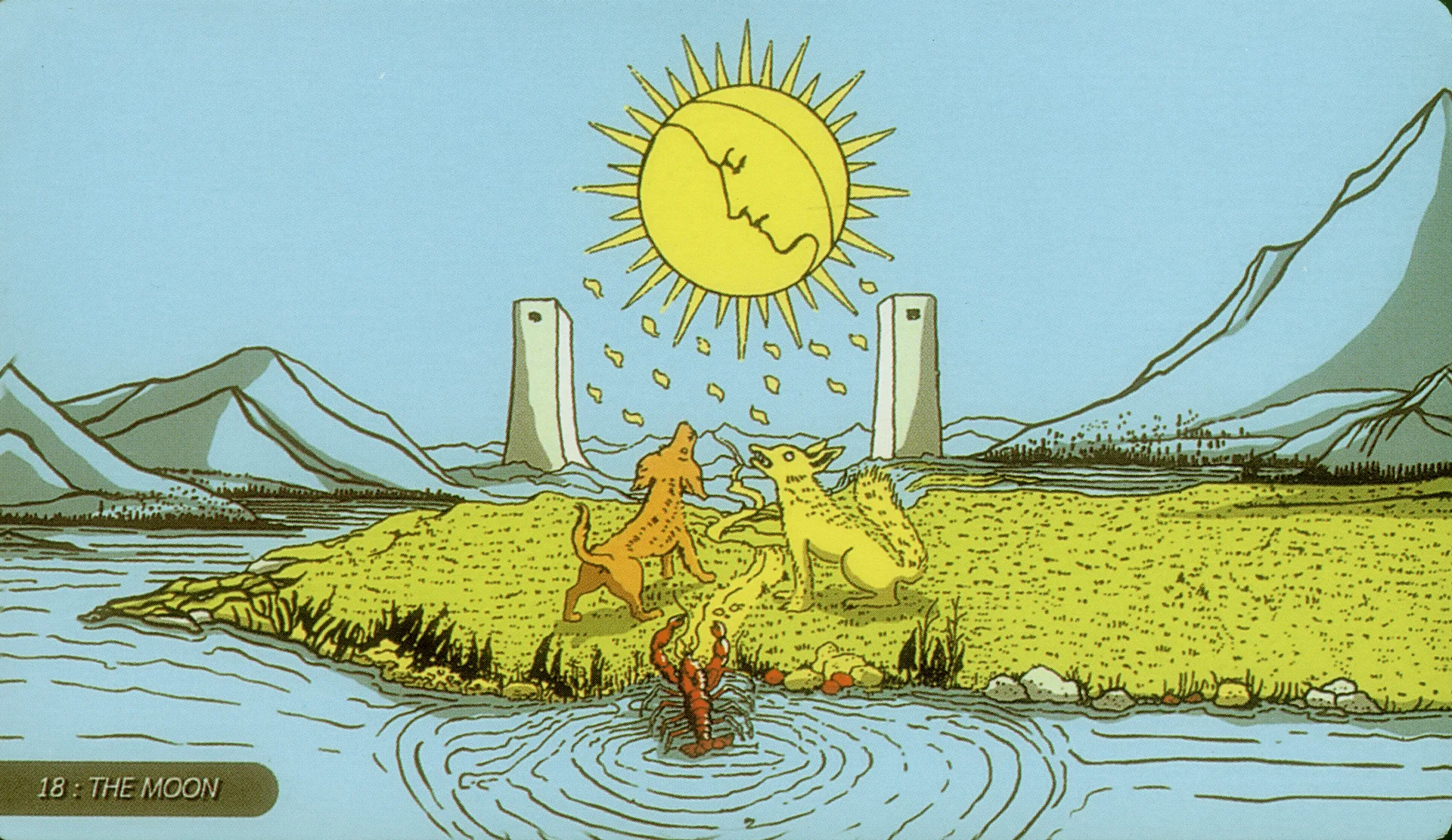
Compare the familiar Rider-Waite-Smith card with the moments before, behind and after the classic scene in three Lo Scarabeo decks.
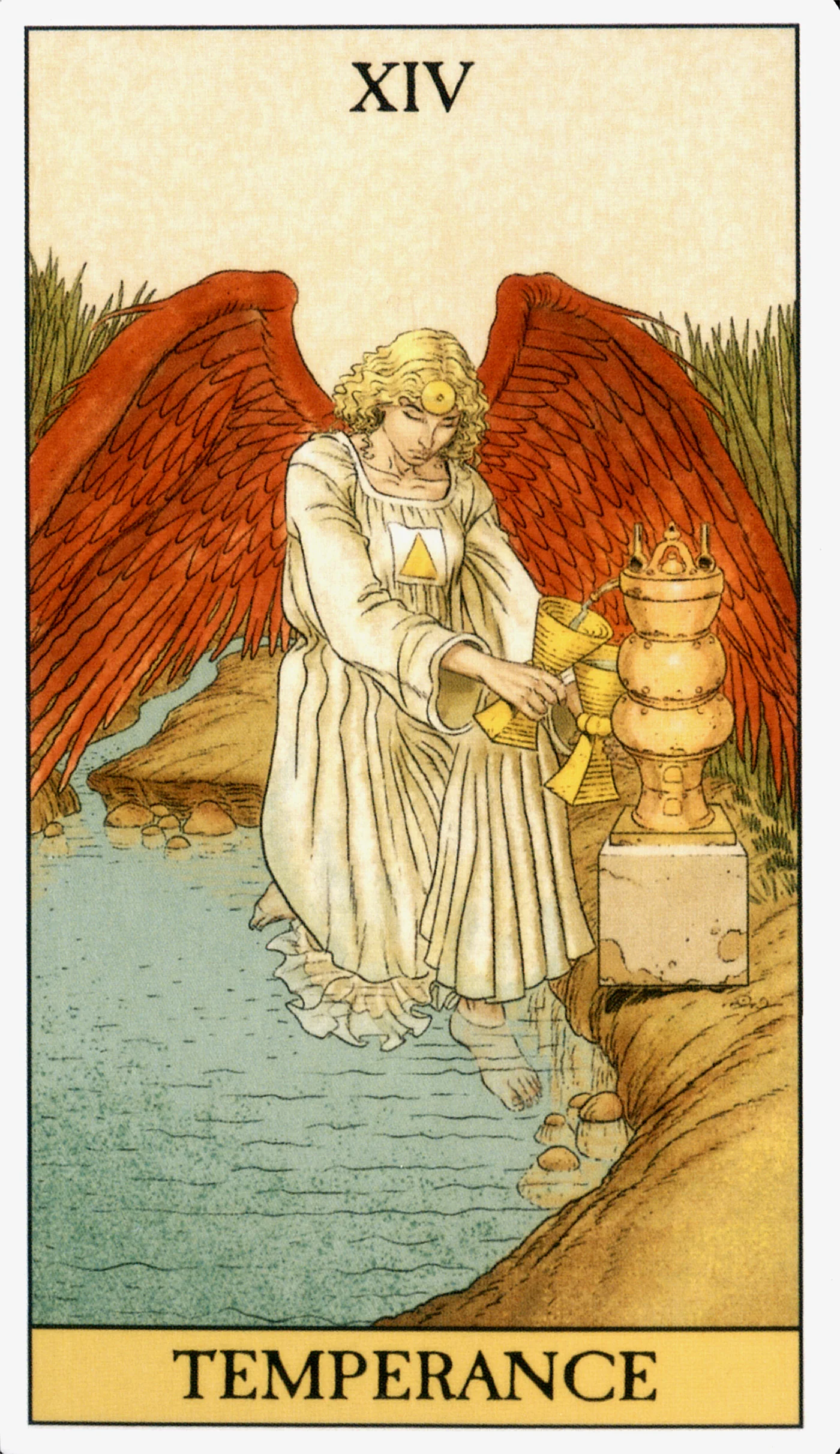
What apparently happens just before
What actually happened
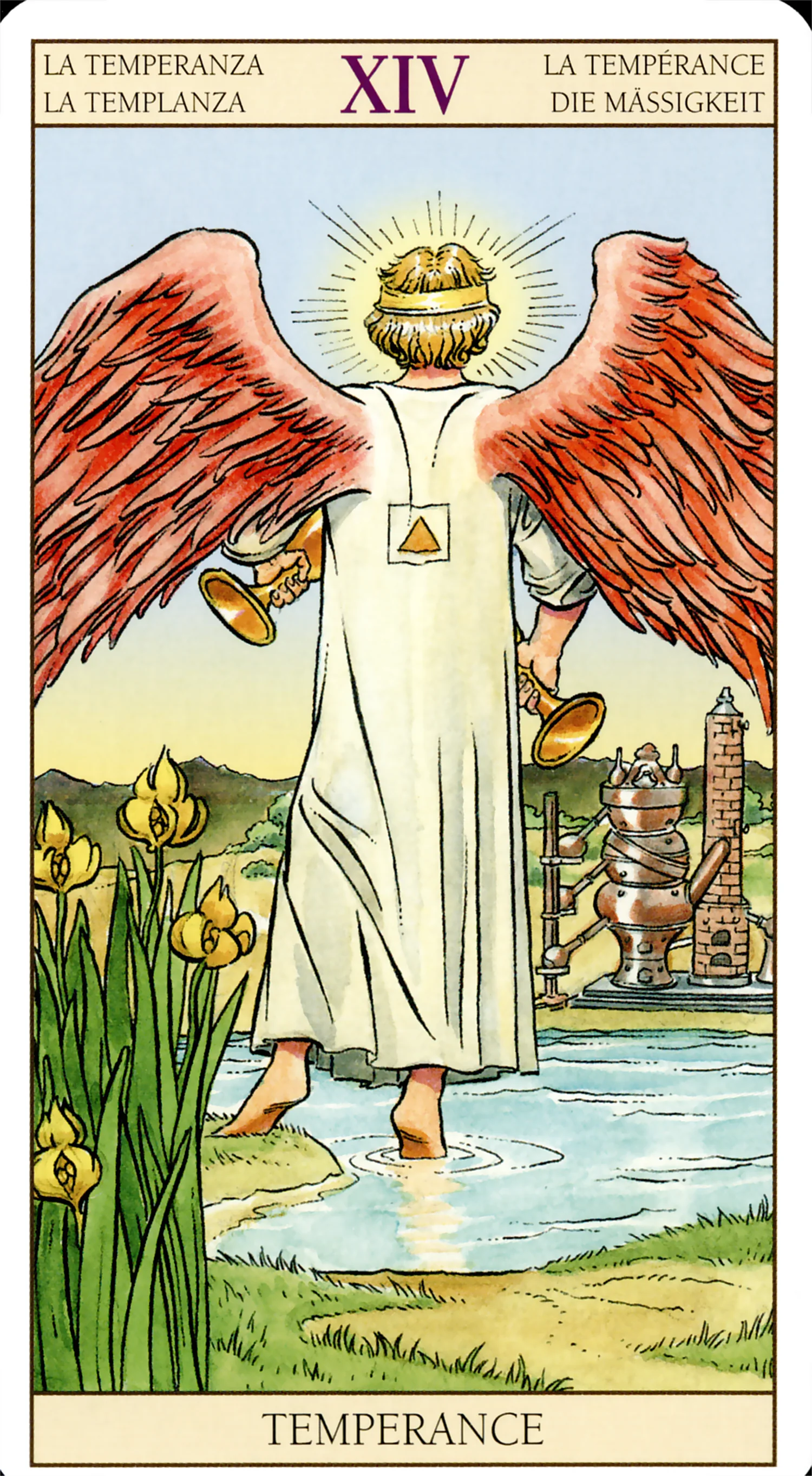
What happened on the opposite side
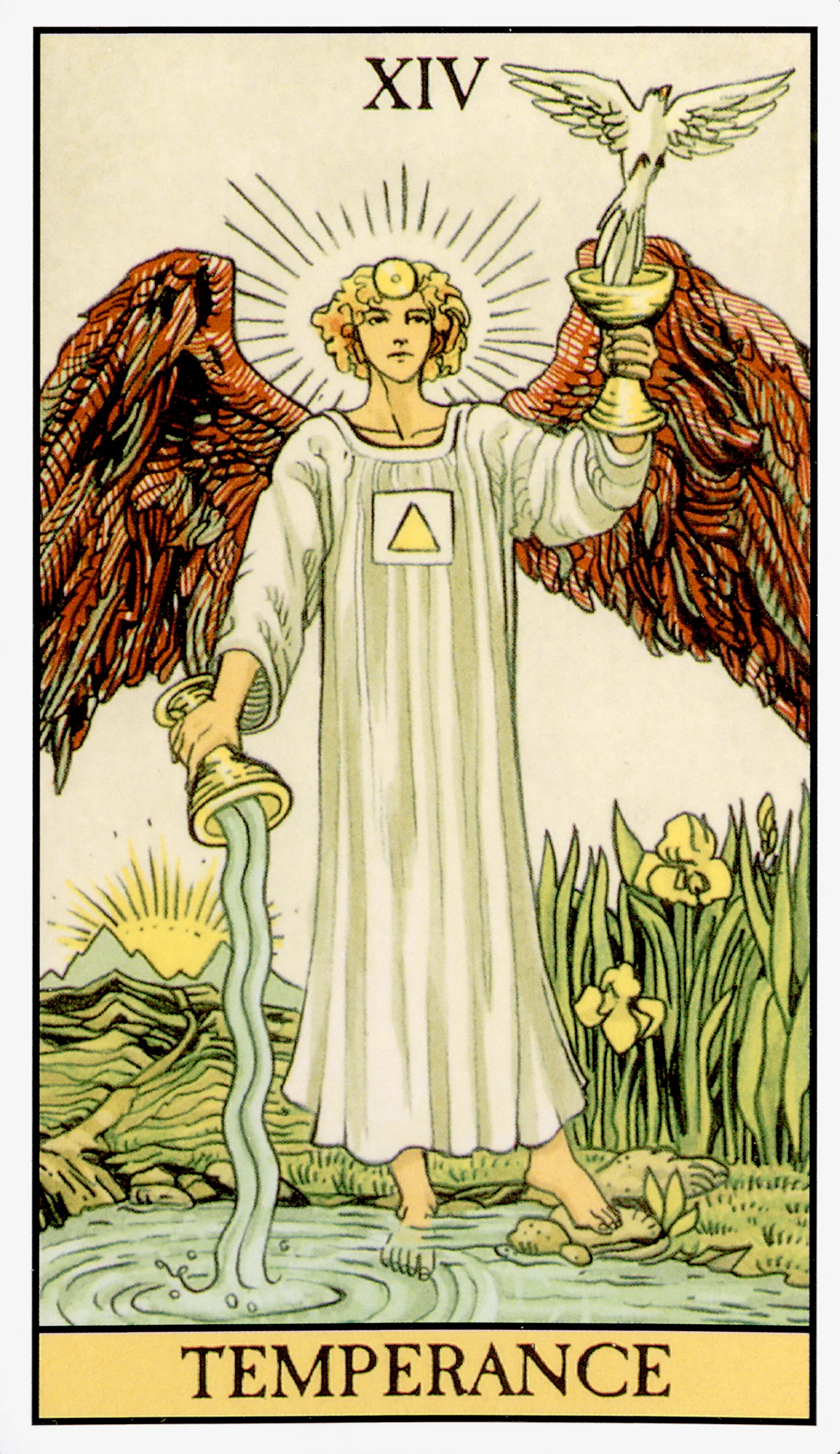
What apparently happened afterwards
Temperance symbols: the angel and flowing cups
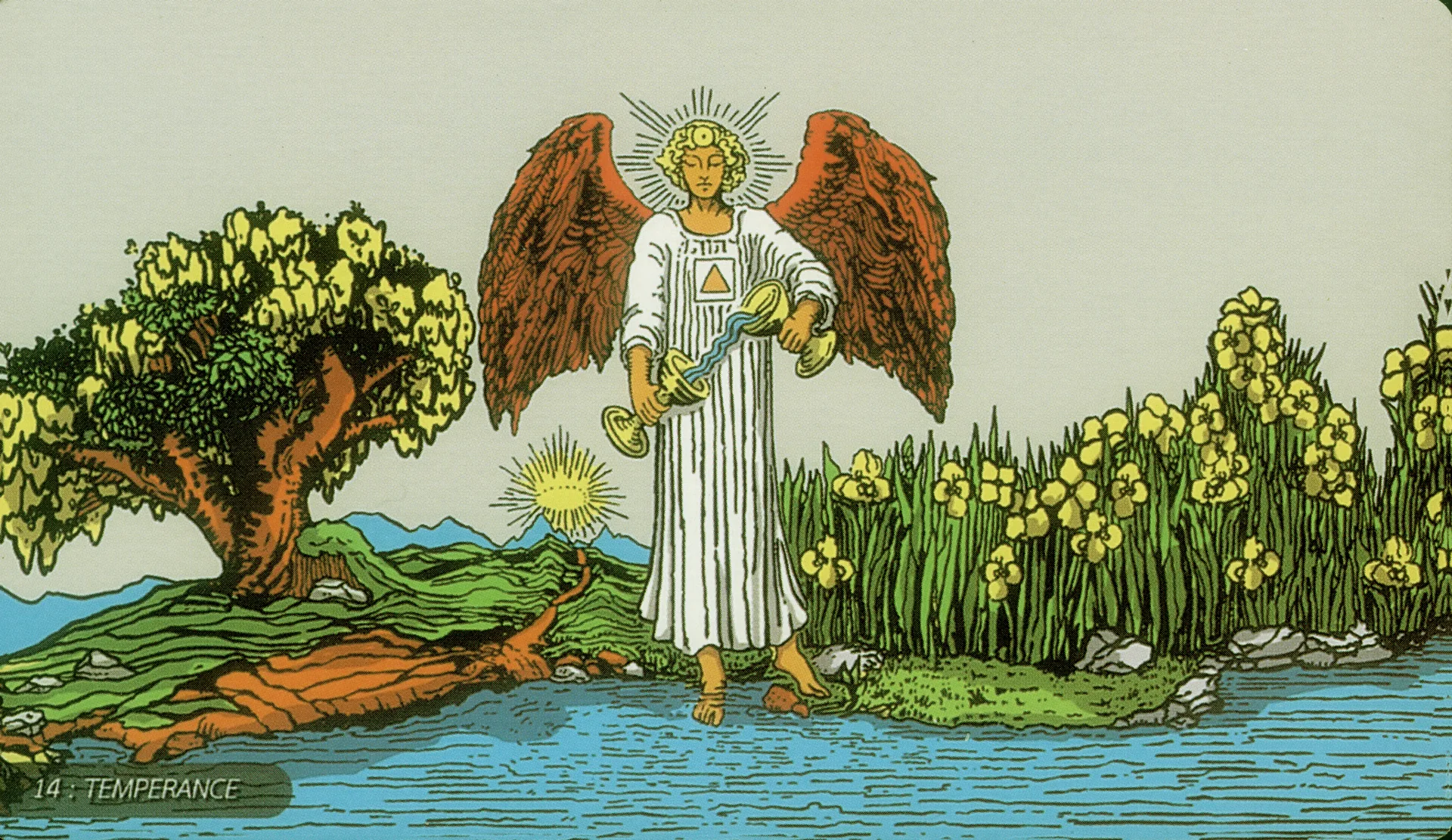
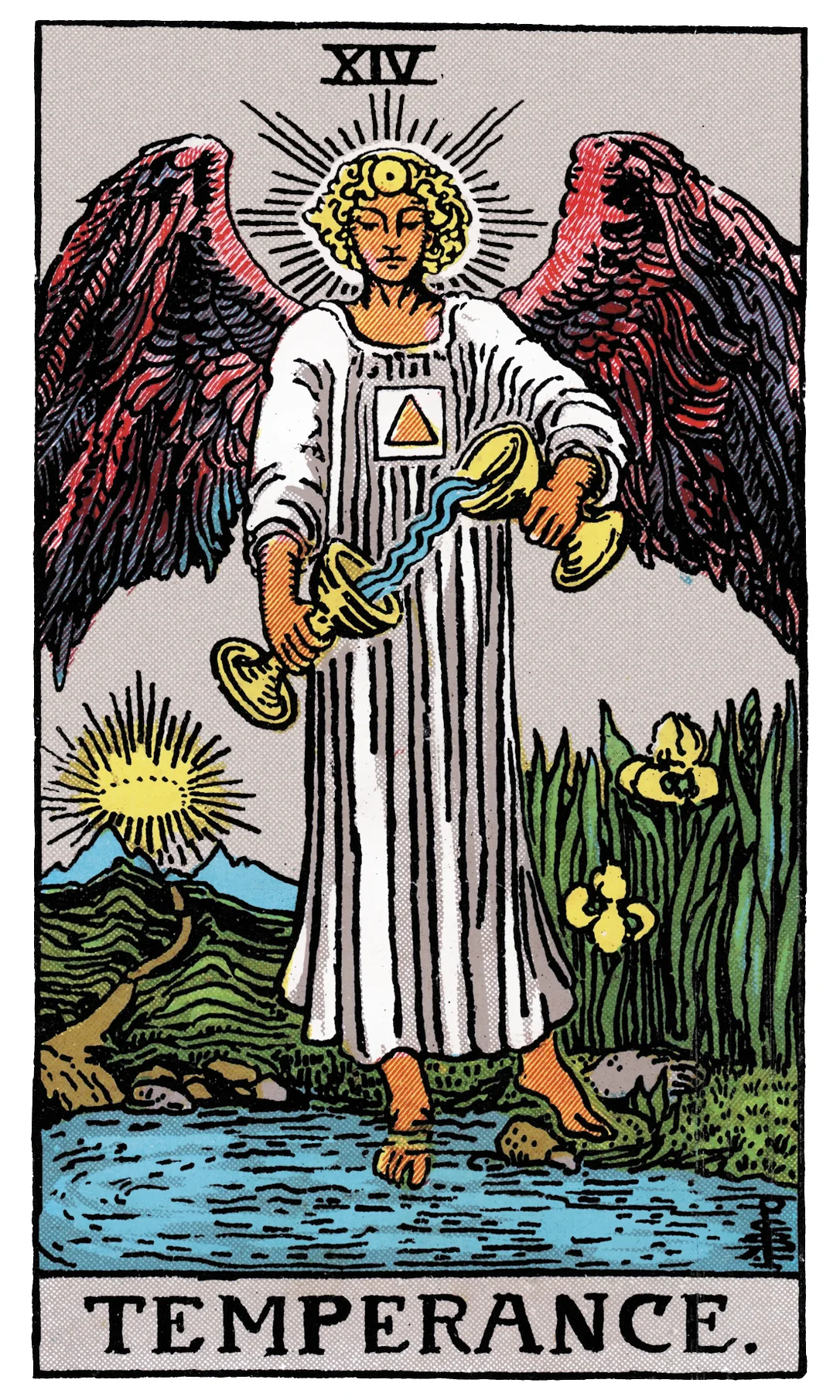
In the Rider-Waite-Smith tarot deck shown here, a winged figure in a white robe pours water between two cups. One foot is in the water and the other rests on land. A triangle sits inside a square on the chest, and a round mark appears on the forehead. Yellow flowers grow beside the pool. A winding path leads toward distant hills and a bright sun-like glow.
As the figure pours water between two cups, the flow is often read as a picture of integration: water from one cup meets the other without a visible break in the flow. Having one foot on land and one foot in the water can suggest staying grounded while acknowledging feelings. That is an interpretation of the image, not a claim that emotion and reason are separate substances.
Some readers call Temperance the card of alchemy, using the blend as a metaphor for making something workable from different ingredients. The triangle and square can be read through a similar idea of joining different qualities. That symbolic equilibrium leaves room for things to be different. Sharing a home, for example, does not require sharing every preference. Duality here can become cooperation rather than a fight between opposites. The picture gives you a starting point; your question gives it context.
Why Temperance is numbered XIV
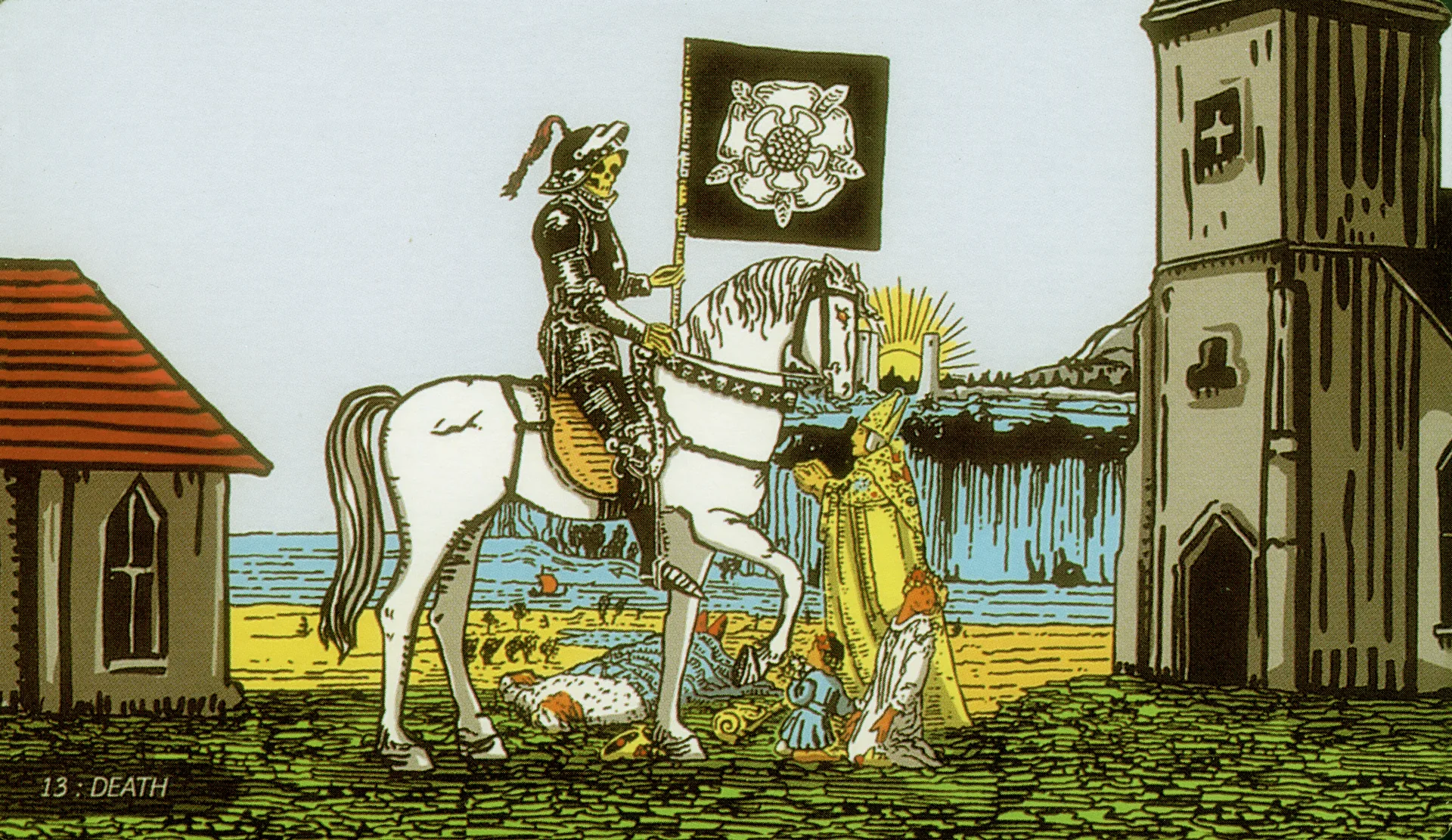
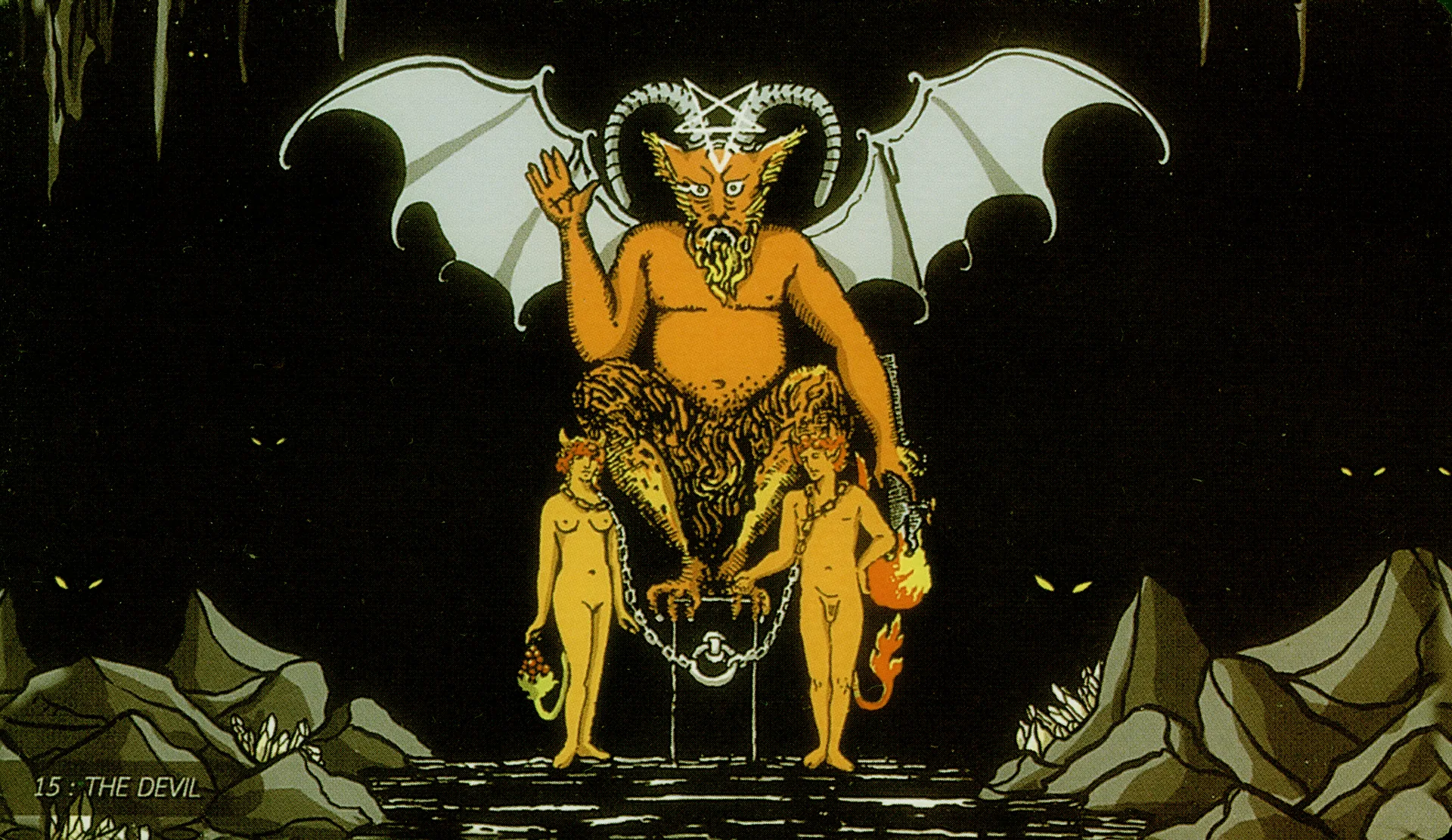
Temperance is numbered XIV, fourteen, in the familiar Major Arcana sequence. It follows Death and precedes the Devil. One way to read that order is to consider how to integrate a change before meeting the next challenge. It is a reading approach, not a fixed timetable for events.
Temperance correspondences and nearby tarot cards
Golden Dawn-derived traditions associate this Major Arcana tarot card with Sagittarius and fire. Other decks and reading systems may use different correspondences. The water in the artwork does not make a universal elemental assignment. Check your deck's guidebook before applying a system it may not follow.
Beside Death, Temperance can invite you to settle into a changed routine. Beside the Devil, it may prompt a look at a habit that is crowding out your choices. Beside the Two of Pentacles, it can draw attention to the practical work of managing commitments. These are possible readings, not combinations that guarantee an event.
Temperance keywords and questions to try
Balance, patience, moderation, and integration are useful Temperance keywords. To use them, ask where a small adjustment would help, which needs deserve a clearer agreement, and whether your current pace is sustainable. You can use the wisdom of tarot as a conversation with your situation: which part of this feels familiar, and what could you try differently?
If you are comparing tarot card meanings in books, online tarot resources, or tarot courses, notice which deck and tradition each writer uses. Biddy Tarot, for example, groups the upright card around balance, moderation, patience, and purpose. Those keywords are a starting point; the useful part is deciding how they apply to your question. A free tarot or oracle reading can offer a prompt, but it does not know your circumstances. You can enjoy exploring different interpretations without treating every answer as an instruction.
One card, many perspectives
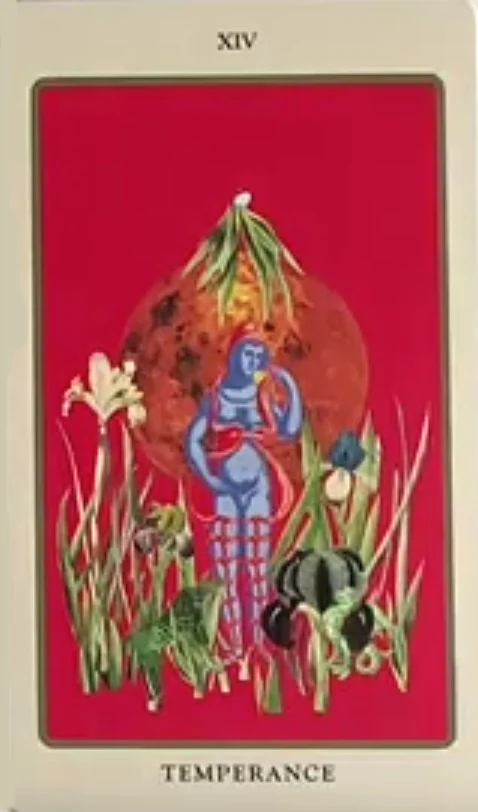
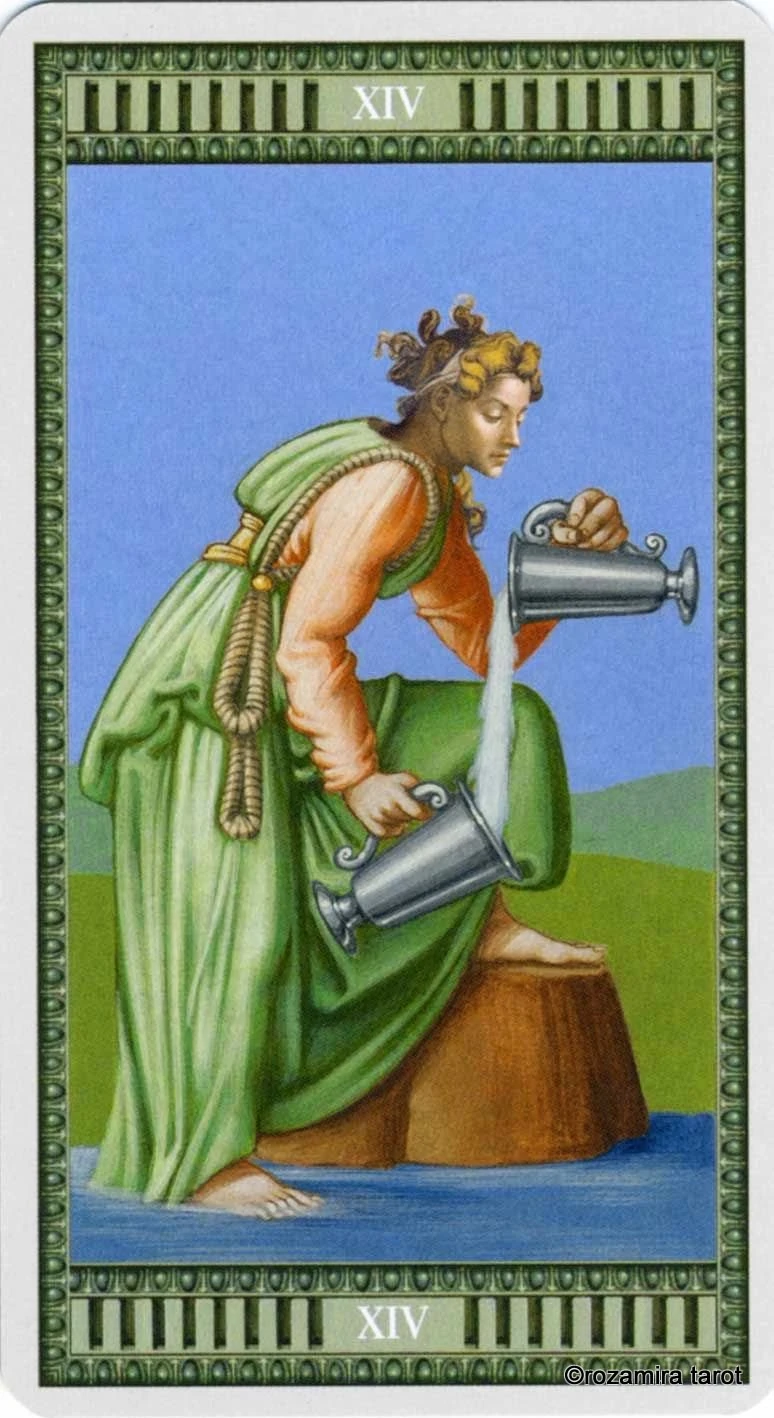
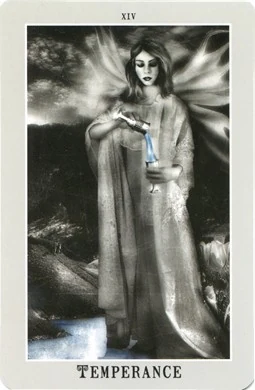
See Temperance Card from Other Decks
Discover how other tarot decks interpret this card. Select a deck to explore its full review and gallery.








Temperance FAQ
What does Temperance mean upright and reversed?
Upright, Temperance suggests balance, patience, moderation, and integration. Reversed, it can point to an imbalance, a rushed choice, or a pace you cannot sustain. Connect either meaning to your question and the practical facts of the situation.
Does Temperance mean someone loves me?
It can bring cooperation and mutual adjustment into a relationship reading, but it cannot confirm another person's private feelings. Look at their behaviour and have an honest conversation when it is safe to do so.
Is Temperance a yes or no card?
Upright, it often leans toward a conditional yes when the choice is workable and safe. Reversed, pause to address the imbalance first. The question and circumstances matter more than a fixed answer.
What should I do after pulling reversed Temperance?
Find the specific pattern that needs attention, such as overcommitment or a one-sided agreement. Try one realistic adjustment, ask for support, or set a clearer limit. You do not have to fix every part of your life at once.