
Holy Card Tarot Gallery
Explore the recovered Holy Card Tarot card fronts by their verified tarot families. Choose a card to open the larger accessible viewer.
A note from Aurica
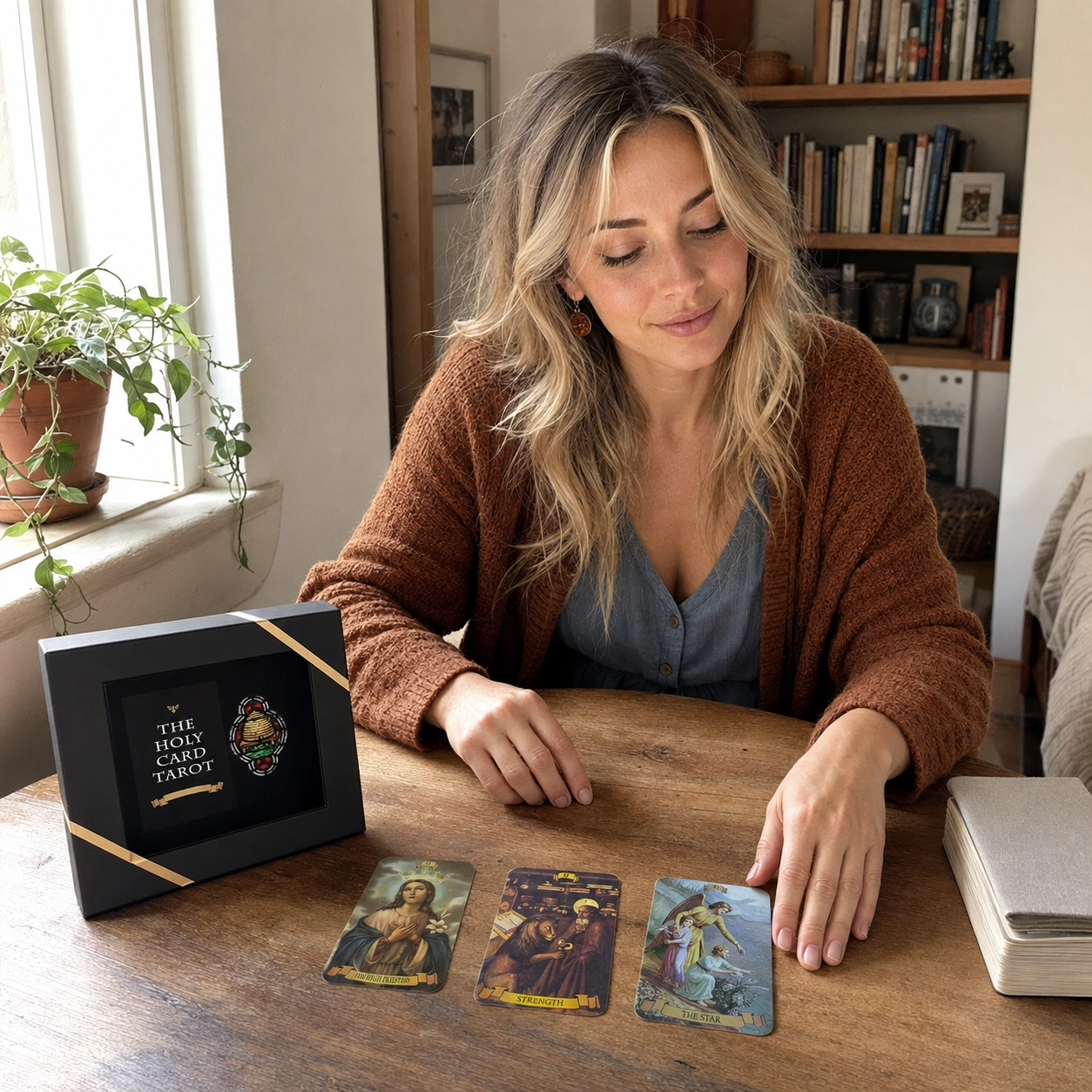
I find Holy Card Tarot most moving when a question needs reverence without becoming heavy. Patty Gallagher’s devotional collage gives the cards the tender, timeworn feeling of images kept between the pages of a family prayer book. Faces, halos, flowers, and small gestures seem to hold their breath, inviting me to slow down long enough to hear what the reading is really asking.
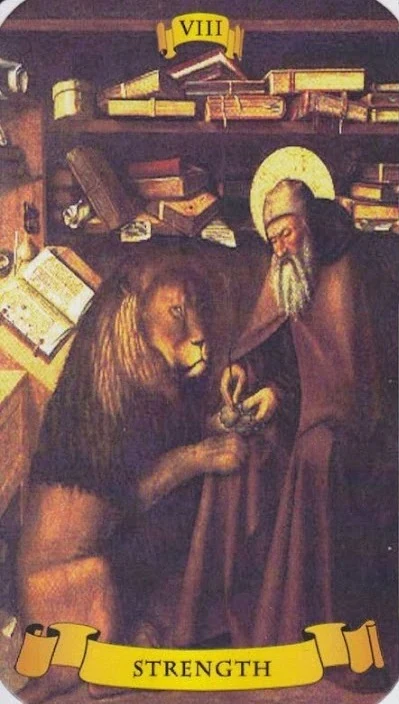
The High Priestess feels like sacred silence made visible: her hands rest near her heart, a lily brightens the muted sky, and her upward gaze suggests that wisdom does not always arrive by force. Strength carries a warmer, earthier courage. The lion’s quiet trust beside the robed figure turns bravery into patience, care, and the willingness to meet fear without humiliating it.
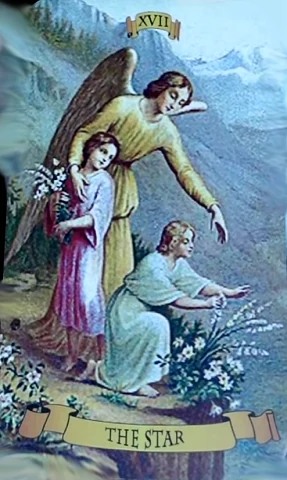
The Star opens the scene again. Its angel shelters two figures among blue mountains and white flowers, so hope here feels less like a dazzling promise and more like gentle protection after a difficult passage. In a spread, I begin with each card’s traditional role, then notice where the figure looks, what is being guarded, and which colour or gesture pulls my eye; that detail often reveals the kindest practical step.
I would reach for this deck for reflection, forgiveness, grief, spiritual questions, or any moment when blunt advice would bruise more than it helps. Its Christian imagery is specific, so I let the reader’s own beliefs set the emotional distance, while keeping the tarot message clear and grounded. Holy Card Tarot reminds me that quiet faith can be an action: meet the next choice with compassion, and even a small light can show you the way forward.
Holy Card Tarot is a devotional tarot deck built around saints, sacred hearts, chalices, church art, Marian color, old prayer-card atmosphere, and the harder spiritual questions that come with that language. It does not feel like a neutral teaching deck. It feels like a candlelit chapel table where the cards ask for patience, conscience, mercy, and truth.
This upgraded TarotFans review follows the current Light Seers-style format: YouTube near the top, a local native gallery, source CTAs, practical card studies, four-card reading moments, a final image CTA, and a compact FAQ. The gallery count stays honest at 74 available card images from the recovered same-deck source set.
Holy Card Tarot quick take
The deck is strongest when a reading needs spiritual atmosphere without becoming vague. A love question becomes less about chasing a yes-or-no answer and more about compassion, honesty, boundaries, and forgiveness. A work question can become a question of patience, discipline, vocation, and what kind of sacrifice is actually worth making.
I would not choose Holy Card Tarot for every sitter. The imagery is specific and Christian-coded enough that it will either deepen the reading or distract from it. For the right reader, that specificity is the appeal. The cards feel old, devotional, and emotionally serious without losing the familiar tarot structure.
Card study
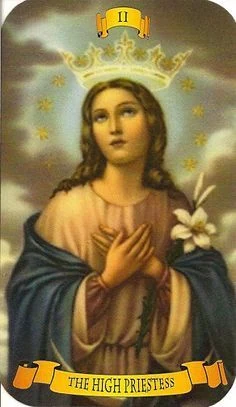
The High Priestess as sacred silence
The High Priestess is a natural doorway into this deck because she already belongs to mystery, restraint, and inner knowledge. In Holy Card Tarot, that silence feels less like secrecy and more like prayer. The card asks you to stop forcing an answer before the heart has become quiet enough to hear it.
In a relationship or family reading, I would read her as a pause before confession, a protected intuition, or a truth that should be handled gently. The advice is not to disappear. It is to listen until the next sentence can be spoken cleanly.
Artwork, tone, and reading voice
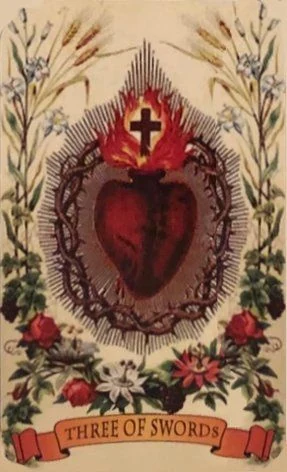
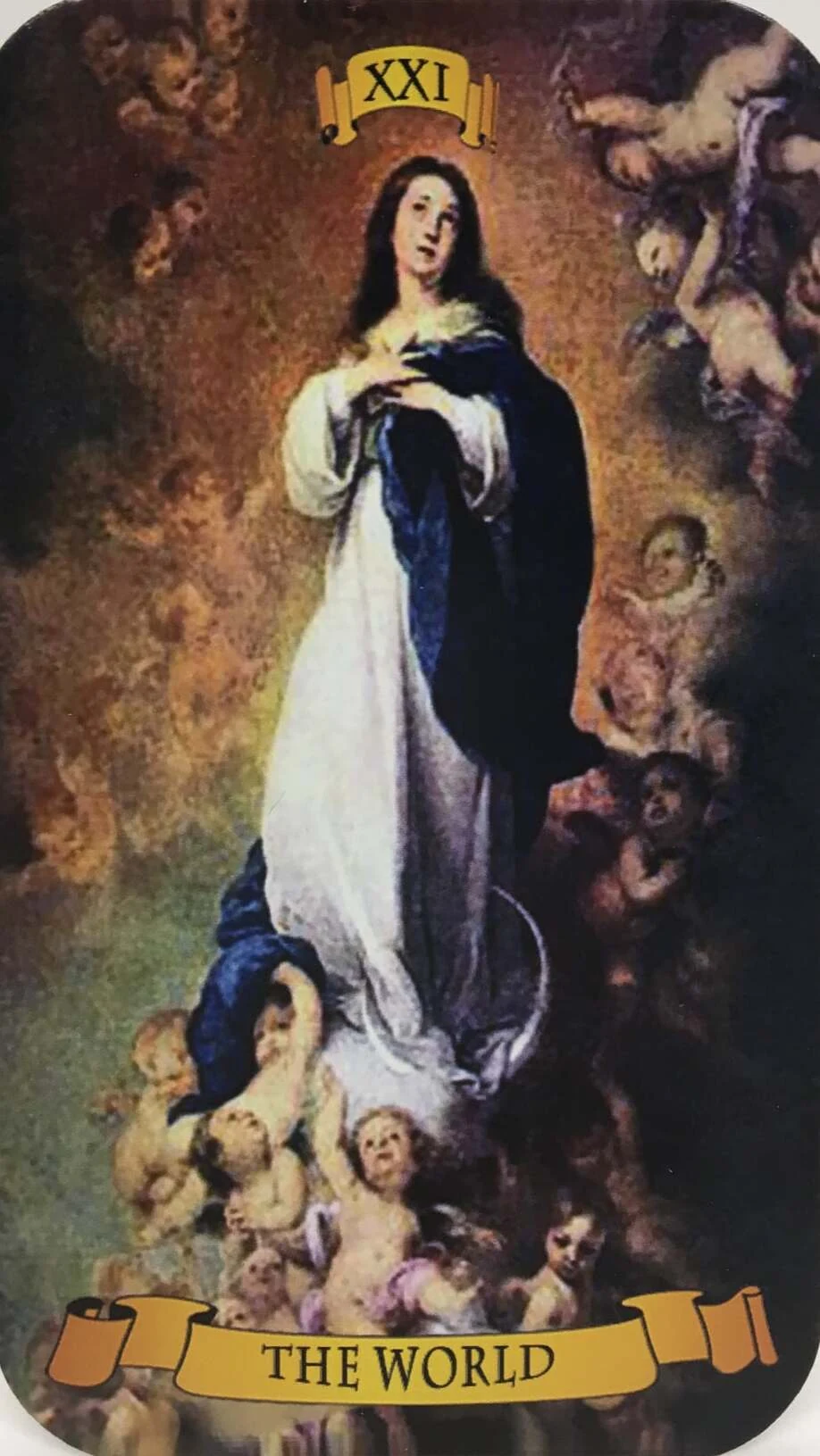
The artwork has a collage-like devotional quality. Some cards feel like stained glass, some like saint cards, and some like fragments of old religious paintings. That gives the deck a strong mood: sorrow can feel holy, hope can feel earned, and judgement can feel less like punishment than awakening.
Because the deck uses familiar tarot titles, it remains readable. The Fool, The Magician, Strength, Death, The Star, The World, Cups, Swords, Wands, and Pentacles are all present in the recovered gallery. The difference is the emotional filter. A card that might feel casual in another deck can feel more like conscience here.
Four-card reading
Prayer, pause, and a clean beginning
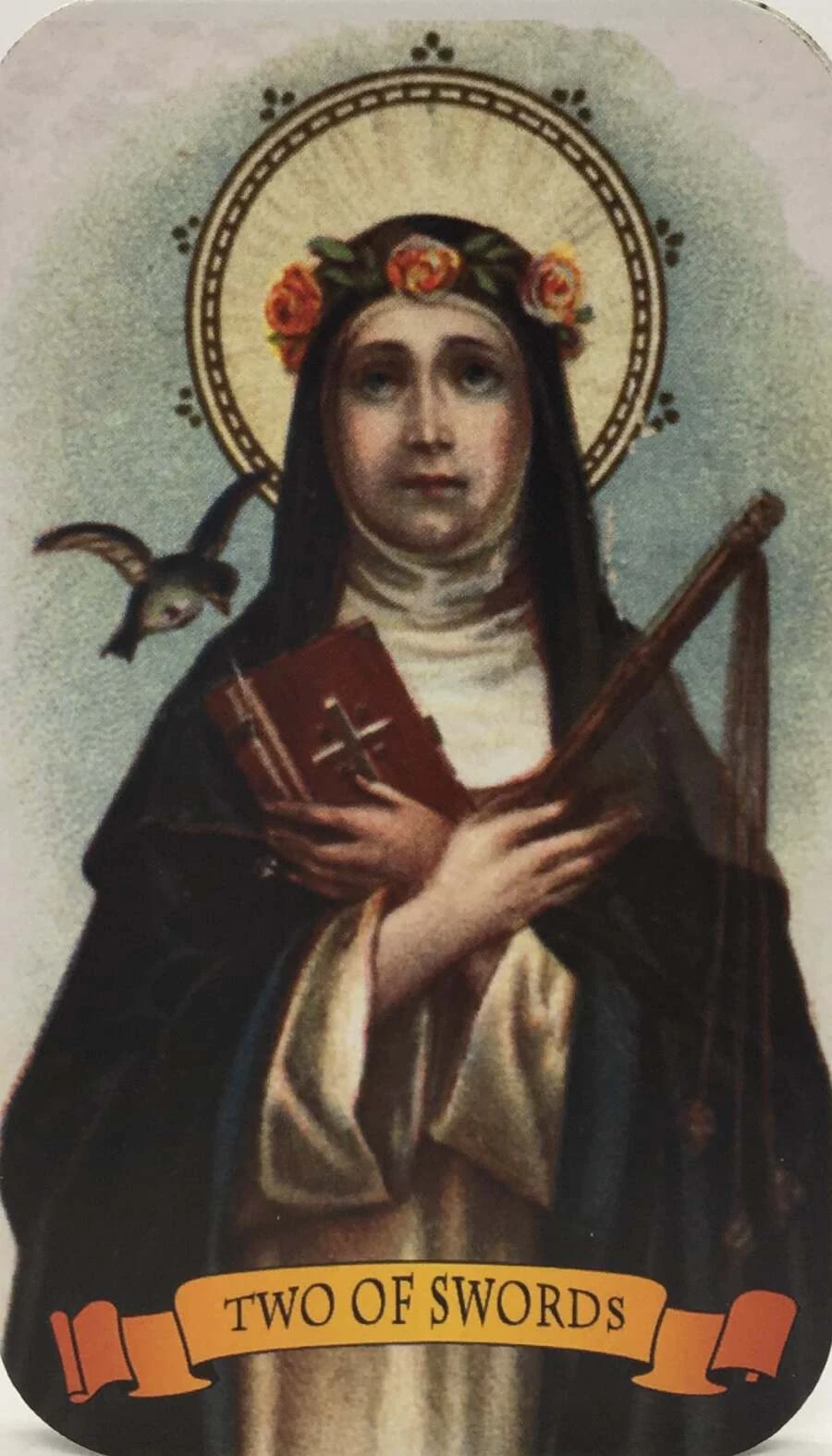
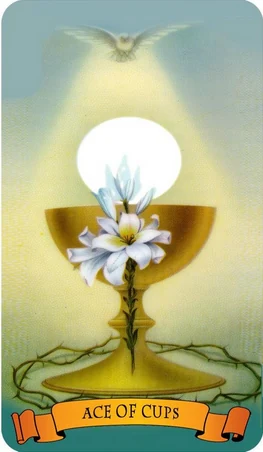
This line moves from sacred silence into a difficult pause, then opens the heart and clarifies the mind. It is a good example of how the deck can make a simple decision spread feel more contemplative.
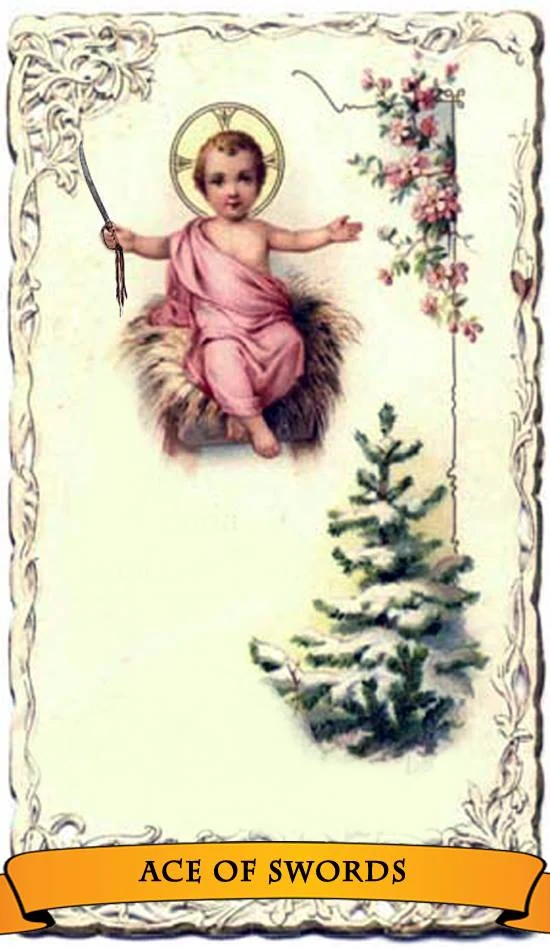
How Holy Card Tarot reads in practice
In practice, I would read Holy Card Tarot by naming the traditional card meaning first, then asking what the religious image changes. Does the card become more merciful, more severe, more patient, more sacrificial, or more accountable? That second question is where the deck starts to speak in its own voice.
The recovered gallery is not a full public archive, but it is enough to show the deck’s language clearly. The page preserves the available card-front images and labels variants honestly rather than pretending every card is present or guessing identities where the source is not complete.
Card study
Strength as grace under pressure
Strength is not just willpower in this deck. It feels like endurance with humility: the kind of courage that does not need to dominate the room. In readings about stress, money, or illness, that changes the message from “push harder” to “hold steady without losing your tenderness.”
That is a useful distinction. The card can still ask for discipline, but it also asks what kind of gentleness would make discipline sustainable. Holy Card Tarot is good at those morally textured readings where the right action is not the loudest one.
Let the image soften the question
After sitting with one card closely, I give its feeling a little room before laying out a wider story. In Holy Card Tarot, that pause matters: it lets a single gesture or colour settle, so the four-card sequence that follows can speak as a conversation rather than a rush of separate answers.
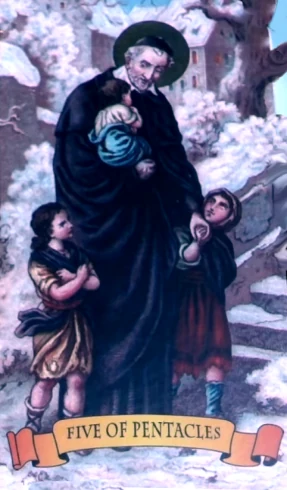
Four-card reading
Loss, endurance, and the return of hope
This sequence starts with hardship, asks for dignified endurance, receives hope, and ends in material or family stability. It is practical, but the deck makes it feel spiritual rather than merely financial.

Best uses for Holy Card Tarot
Holy Card Tarot is best for readers who enjoy Christian mysticism, saint imagery, ancestral questions, grief support, forgiveness work, and emotionally serious spiritual readings. It can also be powerful for journaling because the images invite slow reflection rather than quick keyword grabbing.
For beginners, the deck is approachable only if the religious art feels inviting. If the imagery feels alienating, choose a more neutral deck first. If it feels meaningful, Holy Card Tarot can teach you to read symbolism, mood, and moral tension alongside standard tarot structure.
Four-card reading
Love with compassion and accountability
This spread does not romanticize pain. It shows connection, hurt, memory, and emotional maturity. The deck is especially good at asking what forgiveness would require without denying that a wound happened.



Pros and cons
| Pros | Cons |
|---|---|
| Distinct devotional identity makes the deck memorable and emotionally specific. | The Christian/Catholic symbolism will not suit every reader or querent. |
| Strong fit for grief, forgiveness, moral crossroads, spiritual check-ins, and reflective journaling. | The public TarotFans gallery is honest at 74 available images, not a complete 78-card archive. |
| Familiar tarot titles keep the structure readable while the sacred-art tone adds depth. | Some antique/source-art choices can feel uneven if you prefer polished modern illustration. |
Card study
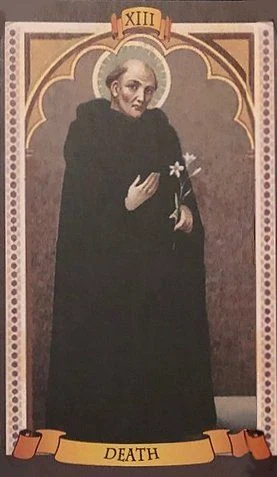
Death as a real ending, not a scare tactic
Death is one of the cards that proves this deck can be gentle without becoming evasive. The devotional tone makes the ending feel solemn rather than theatrical. Something is over; the question is how to honor what has ended without refusing the next season.
In a family-pattern reading, I would pair this with Judgement or Six of Cups and ask what inherited story is ready to be named. Holy Card Tarot gives that kind of work a strong ritual feeling.
Let the image soften the question
After sitting with one card closely, I give its feeling a little room before laying out a wider story. In Holy Card Tarot, that pause matters: it lets a single gesture or colour settle, so the four-card sequence that follows can speak as a conversation rather than a rush of separate answers.
Four-card reading
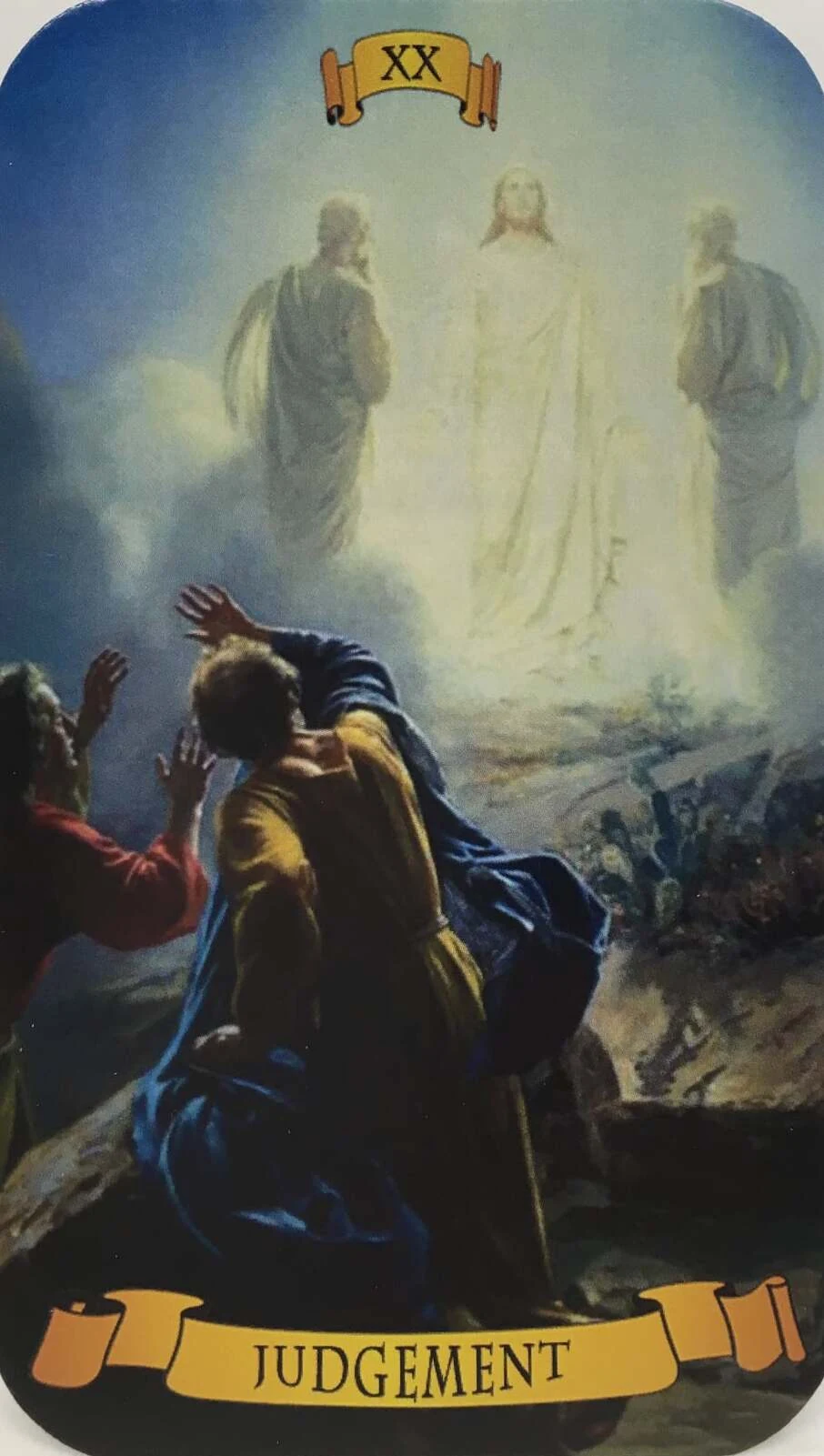
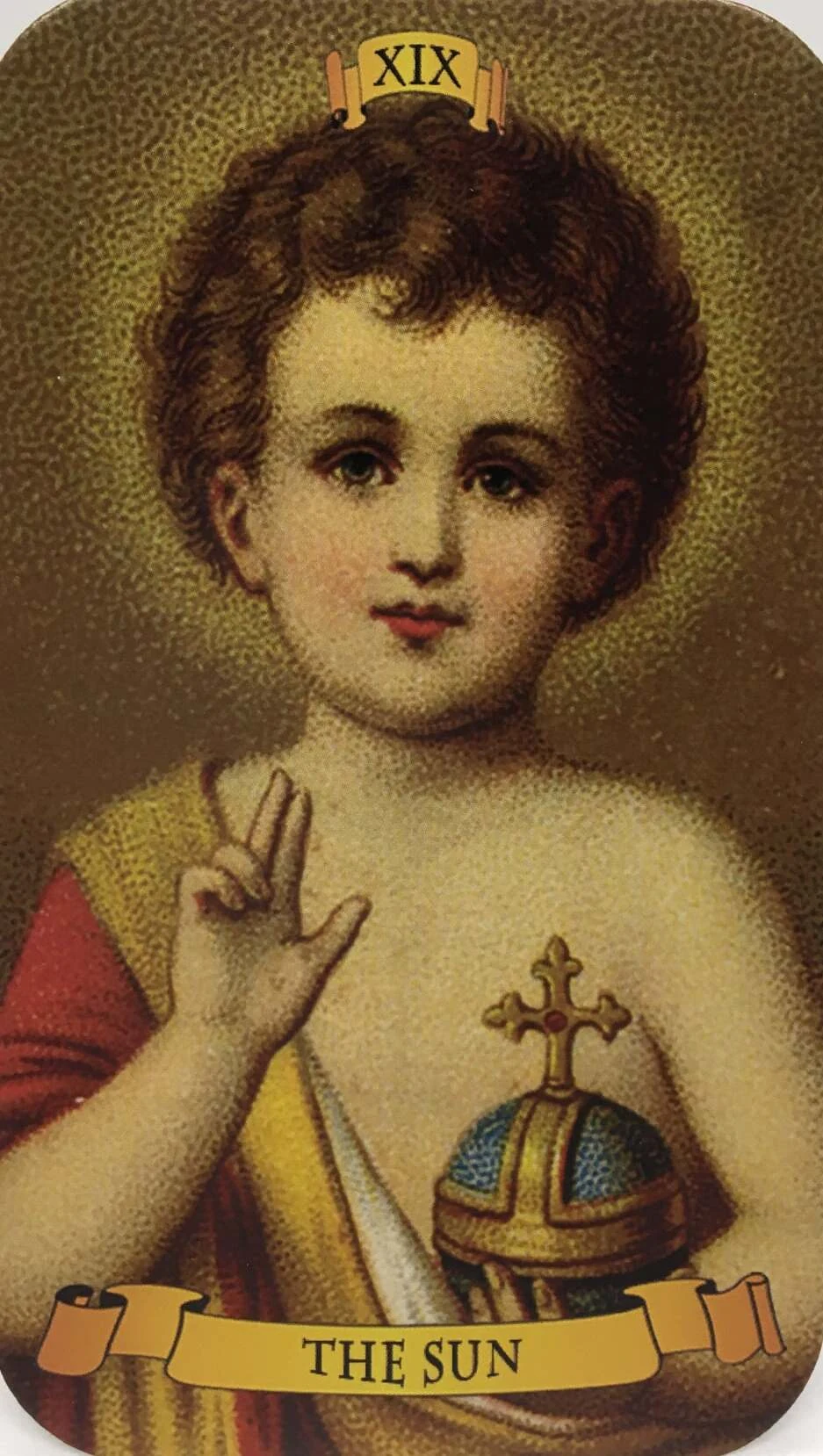
Awakening, repair, and completion
This major-card line is the deck at its most generous: wake up, heal honestly, let the light return, and close the cycle with perspective. It feels like absolution earned through truth, not forced positivity.
Final Thoughts
Holy Card Tarot is worth exploring if you want tarot to feel prayerful, antique, and morally awake. It is not the most neutral deck, and that is exactly why it works. The deck has a strong point of view: mercy matters, grief is real, sacrifice should be examined, and hope is not cheap.
If saint imagery, sacred hearts, Marian color, chalices, and old devotional art make you want to look closer, this deck has a voice that is hard to replace. If those symbols would get in the way of your reading, choose something more secular. Holy Card Tarot is best when its chapel-like mood is welcome at the table.

Holy Card Tarot FAQ
Is Holy Card Tarot a Christian tarot deck?
Yes. Holy Card Tarot uses Christian and Catholic devotional imagery: saints, sacred hearts, chalices, church art, Marian tones, sacrifice, mercy, judgement, and prayer. That religious language is the deck’s identity, not a surface decoration.
Is Holy Card Tarot beginner friendly?
It can work for beginners who enjoy sacred art, but I would still pair it with a basic tarot reference. The images are readable, yet the devotional tone can shift the mood of familiar card meanings.
How many Holy Card Tarot cards are shown here?
This TarotFans gallery shows 74 available Holy Card Tarot card-front images from the recovered same-deck source set. The page keeps that count honest rather than filling the four missing cards with uncertain substitutes.
What readings suit Holy Card Tarot best?
I like it for grief work, moral crossroads, forgiveness questions, spiritual check-ins, ancestral themes, and relationship readings where compassion and accountability both matter.
Who might want to skip Holy Card Tarot?
Skip it if Christian symbolism feels uncomfortable, if you want a neutral secular deck, or if you need bright everyday scenes on every card. The deck is specific, chapel-like, and intentionally devotional.
KEEP EXPLORING


