Explore the Spolia Tarot Cards
Browse the verified physical card fronts in the deck’s printed tarot, elemental and zodiac sequence. Choose an official group to filter the continuous Gallery, or select any card to open the full-size Lightbox.
Showing all cards.
Aurica’s Quick Take
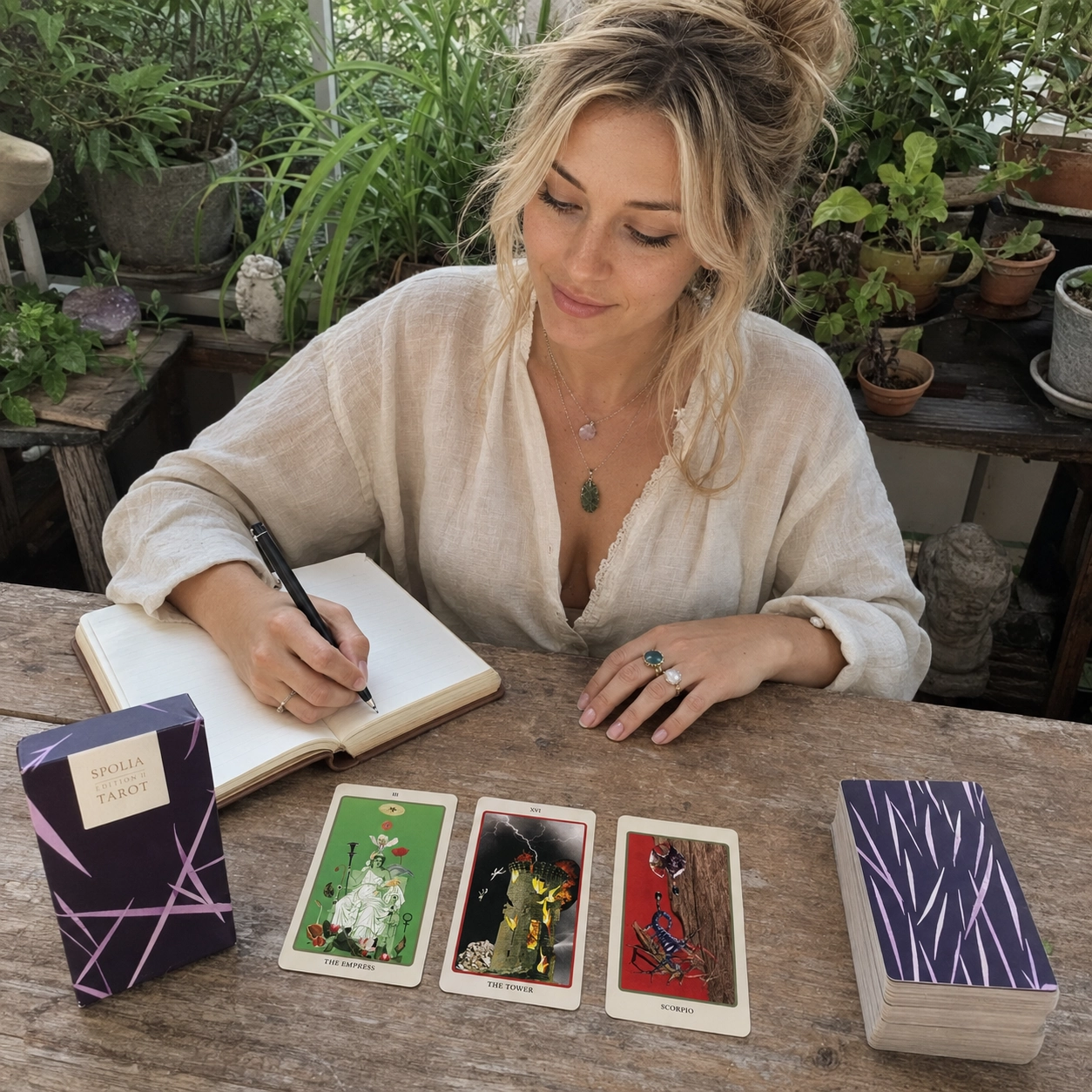
I love how Spolia turns found fragments into one vivid language. Flowers hover above a seated figure, lightning splits a black sky, and a scorpion waits among sharp red stems. It feels like a cabinet of wonders opened in daylight.
I begin with the piece that catches my eye, then ask what it does inside the card’s traditional role. The extra element and zodiac cards can name a reading’s weather, while the surrounding tarot cards keep the question grounded.
This is a deck for patient looking, not hurried certainty. Let each surprising join remind you that meaning can be rebuilt with care, and that your next clear step may already be glowing between the fragments.
A collage deck with sixteen extra doors
Spolia Tarot feels as though a museum drawer, a herbarium and an old book of symbols have been tipped onto the same table, then rebuilt with a mischievous modern hand. Jen May’s collage moves between classical bodies, flowers, animals, landscapes and sudden fields of colour, while Jessa Crispin’s writing gives the expanded system a way to speak.
This is not a standard 78-card edition. The physical deck contains 94 cards: the familiar 22 Major Arcana and 56 Minor Arcana, followed by Air, Fire, Water and Earth, then the twelve zodiac signs from Aries to Pisces. That wider structure is part of the deck’s identity, not a bonus to be quietly ignored.
Artwork that makes fragments feel alive
Spolia means reusing fragments or rubble as building material, and the name suits these images beautifully. A clipped hand can meet a flower, a classical figure can sit inside electric green, and a landscape can become a stage for something dreamlike. The joins remain visible enough to create tension rather than pretending the picture came from one world.
I read the seams as clues. Name the element that seems least expected, notice the feeling it creates, then compare that feeling with the card’s tarot function. The strange meeting matters, but it still needs to answer the question in front of you.

Card study
The Empress — abundance assembled from living pieces
A pale classical figure sits against vivid green, holding a tall dark staff while white drapery gathers across her body. Flowers rise above her head in a vertical line, leaves and blossoms crowd the lower edge, and the Venus glyph stands near the lower right. The collage makes fertility feel cultivated rather than merely decorative.
In a reading, I see creative nurture, bodily wisdom and the ability to give something a living form. Upright, the card can invite patient growth and generous care; in shadow, abundance may become overgiving or beauty used to avoid a real need. Ask what is ready to be tended, and what boundary will help it flourish.
How Spolia reads in an actual spread
The cards speak quickly through colour and scale. A tiny human figure beneath an enormous plant tells a different story from a frontal animal on a flat red field. Begin with that relationship before collecting every symbol. One strong visual verb—reaching, falling, holding, blooming, hiding—can become the spine of the reading.
For three cards, try what is being rebuilt, what material is available, and what new form wants to emerge. Describe the pictures aloud, connect them to the traditional positions, then finish with one action that can be taken in ordinary life.
Four-card story
Four elements, four kinds of weather
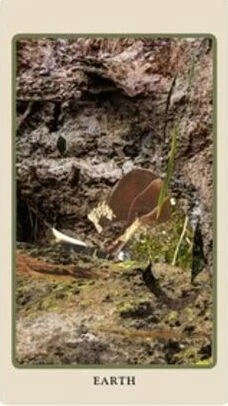
Air opens as a pale canyon of cloud between dark edges; Fire glows through molten orange and yellow; Water rushes beside immense blue-grey ice; Earth settles into rock, moss, soil and a partly buried vessel. Together they give a spread a physical atmosphere before a story has even begun.


Beginner guidance and three useful prompts
A beginner can grow with Spolia if curiosity is stronger than the need for tidy scenes. The titles and familiar tarot sequence offer a handrail, but collage can pull intuition in several directions at once. Work with the 78-card core until the rhythm feels steady, then invite the elemental and zodiac cards into shorter readings.
Gentle
Which visible detail describes today’s emotional weather?
Deeper
What old fragment can become useful in a new form?
Demanding
Where am I admiring symbolism instead of making the choice the spread shows?
Card study
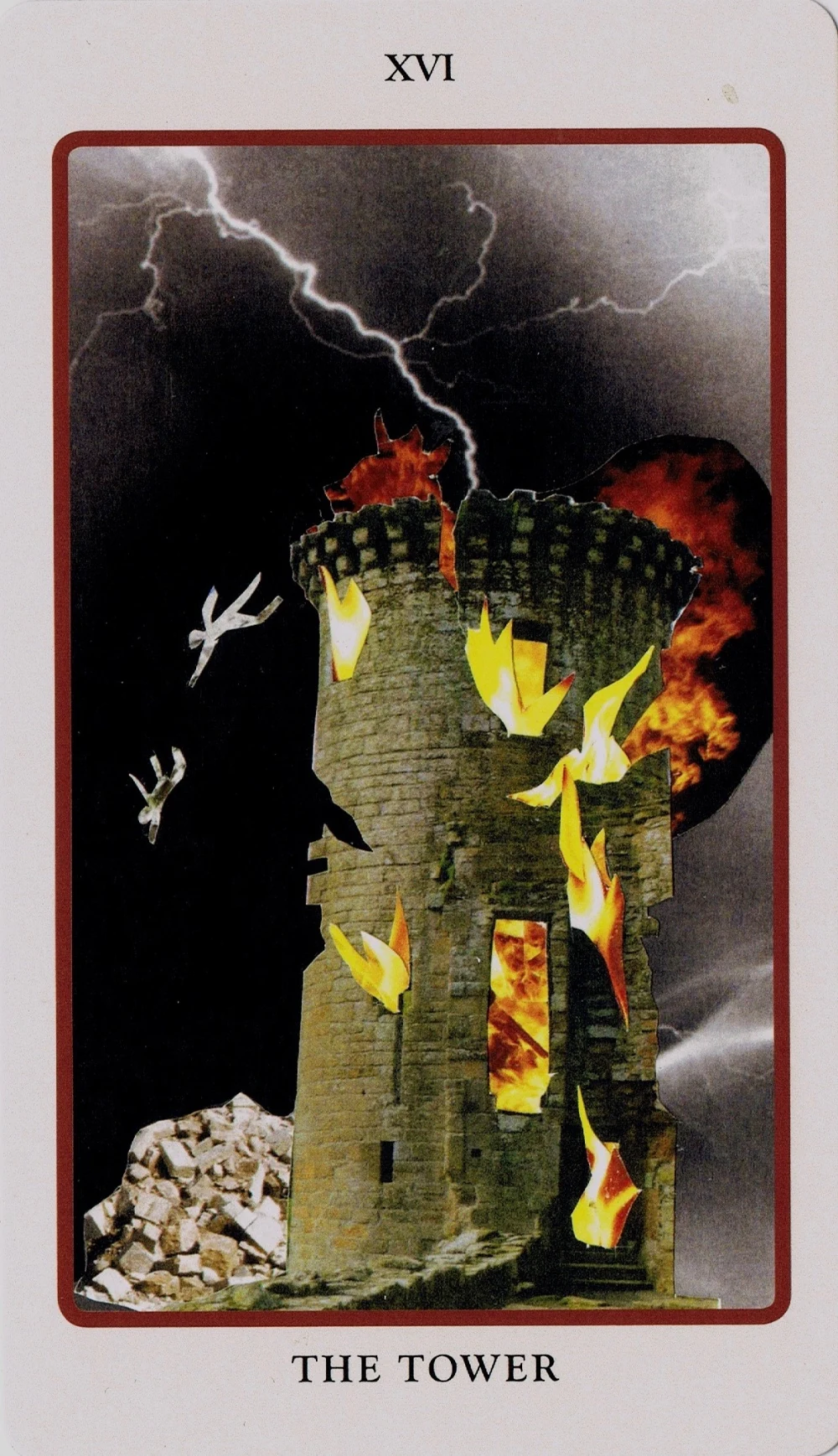
The Tower — the structure that cannot hide the fire
A stone tower fills the centre beneath branching white lightning. Yellow-orange flames burst from windows and walls, rubble gathers at the base, and two small pale figures tumble through the black space at left. A reddish animal shape appears above the broken crown while smoke burns behind it.
The card makes upheaval immediate: the damage is already visible. Upright, it can expose a structure that has become unsafe, false or too rigid to hold; in shadow, fear may make every change feel catastrophic. Look to the neighbouring cards for what is truly falling, what remains, and which honest action belongs after the shock.
Reading love, work and creative change
In relationship readings, look at distance, gaze and interruption. A blossom between two figures may feel tender, while a wall, claw, blade or dark gap can show what prevents exchange. Let the collage reveal the emotional arrangement, then ask what each person is actually able to offer.
For work and creativity, the deck’s method is almost a lesson in itself: gather what exists, notice the friction between pieces, and make a new structure. Coins can ground resources, Wands can show momentum, Swords can cut through the story, and Cups can reveal why the work matters.
Four-card story
Four signs with four very different textures
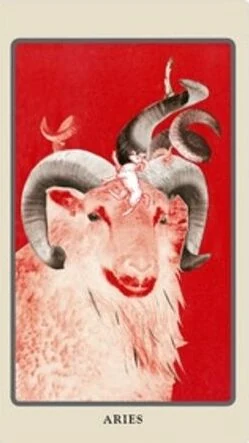
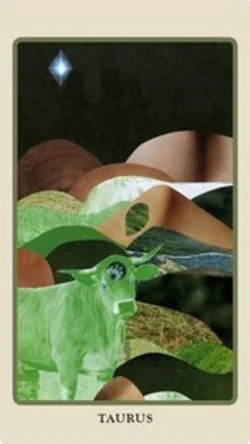
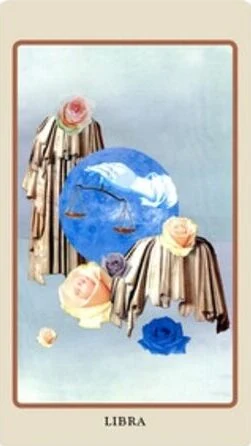
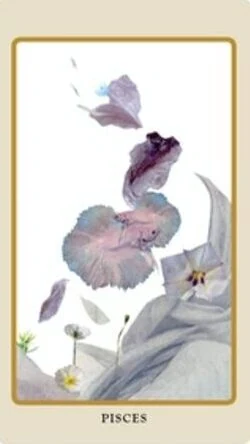
Aries faces forward as a pale ram against blazing red; Taurus stands green beneath layered hills and a bright diamond; Libra balances tiny scales across a blue globe surrounded by folded metallic forms and roses; Pisces drifts upward through pale flowers and soft violet shapes. These are not spare labels but four complete visual moods.
Who will connect with this deck?
Spolia may suit collage lovers, artists, writers, intuitive readers, astrology students and collectors who enjoy decks with a strong point of view. It has enough traditional structure to remain recognisable, yet the additional cards create fresh routes through elemental balance and zodiac temperament.
You may prefer another deck if you want minimal imagery, close Rider–Waite–Smith staging, a currently available mass-market edition or a system that stays strictly inside 78 cards. Browse the Minors and the expanded cards as carefully as the brightest Majors; they reveal whether this visual language will keep speaking to you.
Card study
Scorpio — intensity rooted in the red earth
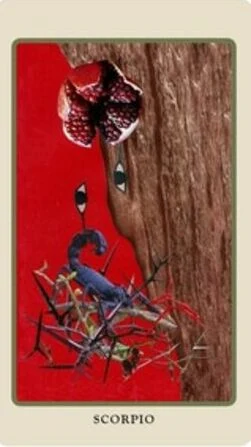
A blue-black scorpion sits low among thorny red stems, with a dark flower or seed head rising above it. The left field is saturated red while a rough brown vertical surface occupies the right, creating a hard meeting between heat and earth. Nothing in the image feels casual.
Used as one of the deck’s additional zodiac cards, Scorpio can deepen a reading around secrecy, desire, endings, loyalty or transformation. Its useful face is emotional courage and the willingness to meet what has been buried; its shadow can become fixation or control. Let the card describe the atmosphere, then return to the tarot cards beside it for the action.
Using the expanded system without crowding the reading
The extra cards work best when they have a clear job. An elemental card can describe what the situation needs more or less of. A zodiac card can show a style of response, a season of attention or a quality embodied by someone in the question. Neither should become a shortcut for making unsupported predictions.
If several extras appear together, pause before adding more cards. Ask which one sets the atmosphere and which one sharpens the human story. A small spread can hold plenty of depth when every card has room to breathe.
Four-card story
A journey made from impossible joins
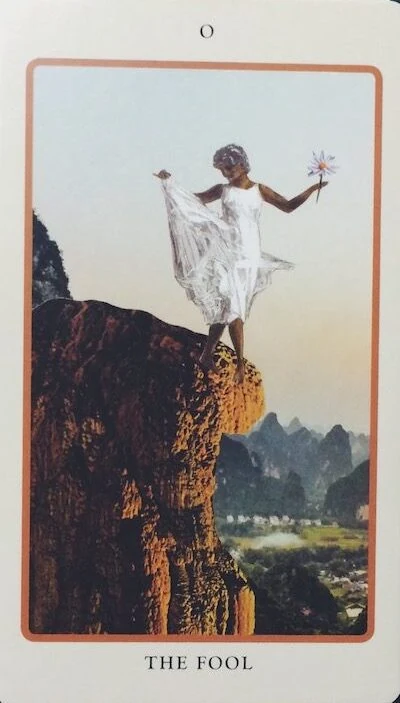
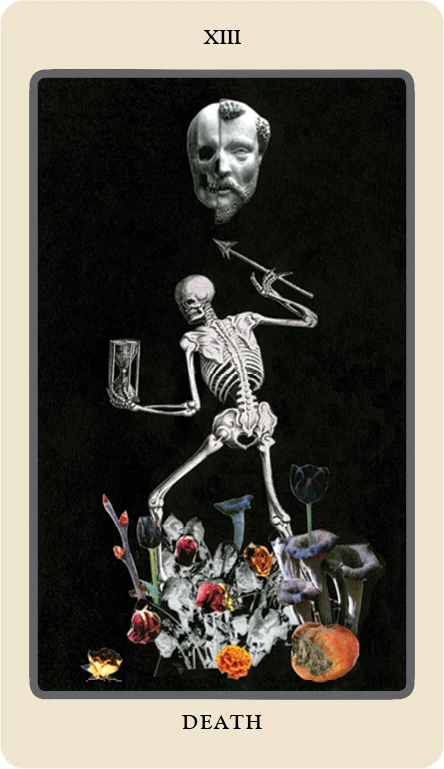
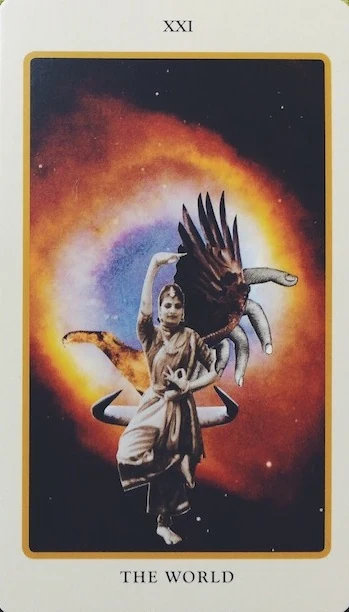
The Fool balances on a cliff in white; The Lovers rest among oversized pink and green leaves; Death places a moving skeleton above flowers and fruit on black; The World holds a many-armed figure before a radiant ring. Together they move from risk, through relationship and change, into an image large enough to hold contradiction.

Buying guidance for an out-of-print deck
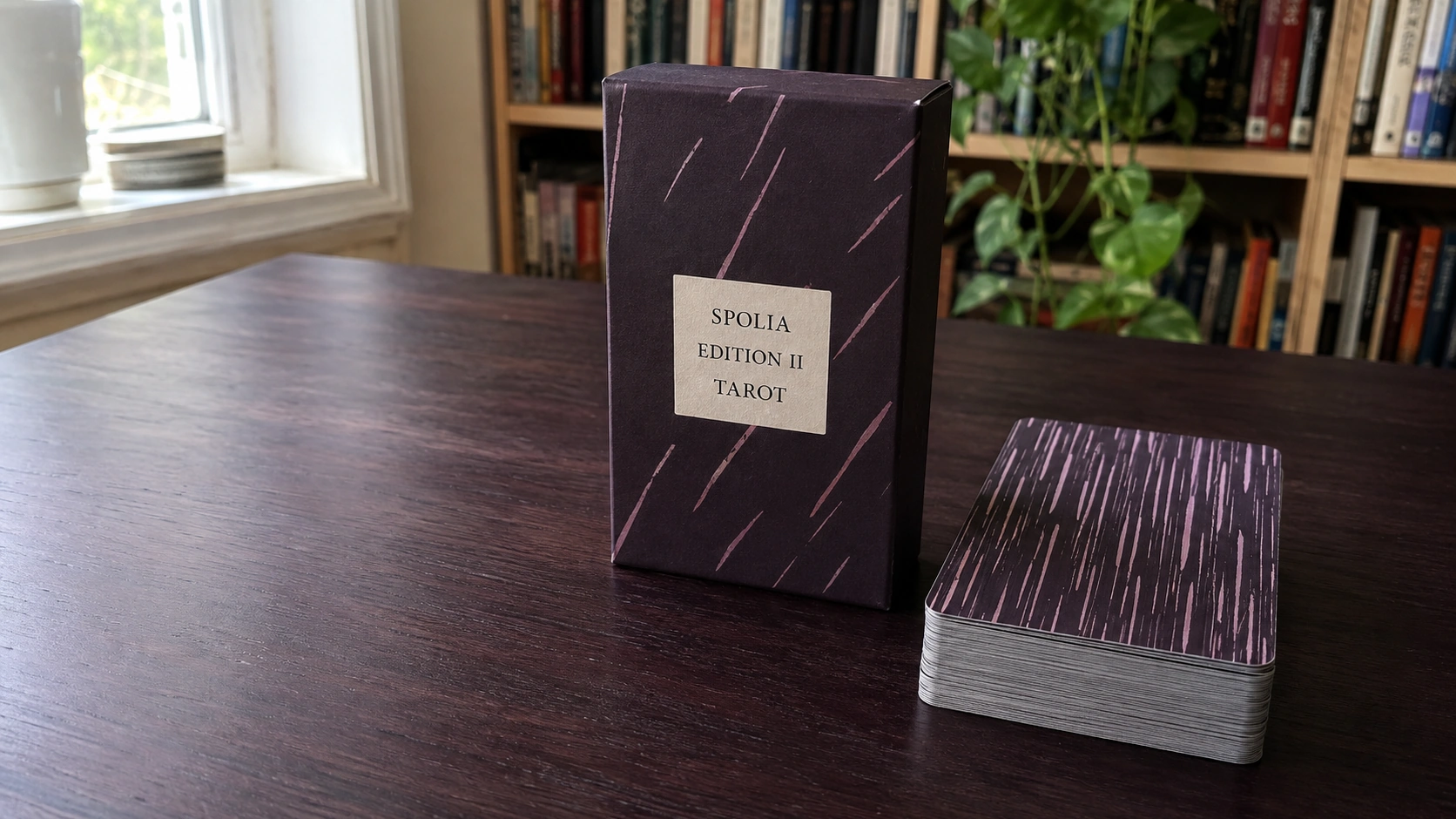
Jen May’s official site says Spolia Tarot sold out in 2021 with no plans for further editions. The page here reviews the second printing, corroborated as a 94-card edition whose card designs remained unchanged. Tara Romeo’s deep aubergine box and matching shard-patterned backs are useful visual checks alongside the cream-bordered collage fronts.
The buttons on this page lead to Jen May’s archival Spolia page, not to a live retailer and not to an Amazon offer. If you consider a second-hand copy, confirm that it includes the full expanded system, its manual and the correct box; condition and completeness matter more than an exciting listing title.
Aurica’s golden rule for Spolia Tarot
Let the strangest fragment open the reading, then let the clearest action bring it home.
The collage is an invitation to look again, not permission to float away from the question. Keep one eye on wonder and one on the step you can truly take.
Final Thoughts
Spolia Tarot is layered without feeling lifeless, scholarly without becoming a lecture, and beautiful without smoothing every rough edge. Its expanded Minchiate-inspired reach gives the deck more weather, temperament and elemental texture than a familiar 78-card sequence alone.
I would recommend it to the reader who loves symbols, collage and patient conversation with an image. Choose the fragment that stays with you, ask what it is rebuilding, and let the answer become a brave little piece of your next chapter.
 Explore Spolia Tarot on Jen May’s site
Spolia Tarot FAQ
Who created Spolia Tarot?
Artist Jen May and writer Jessa Crispin created Spolia Tarot together. Tara Romeo designed the deck, manual and box.
Why does Spolia Tarot contain more cards than a standard tarot deck?
The creators describe Spolia as a variation on the older Italian Minchiate tradition. It keeps the familiar tarot sequence and adds four elemental cards plus one card for each of the twelve zodiac signs.
How should I use the elemental and zodiac cards?
Let them describe the atmosphere, temperament or timing around a question, then return to the surrounding tarot cards for the action and practical direction. They can be mixed into the deck or explored as a smaller study group.
Is Spolia Tarot suitable for beginners?
It can reward an adventurous visual beginner, but the dense collage asks for slower observation. Learn the familiar tarot structure first, keep the manual nearby and add the elemental and zodiac cards gradually if the expanded system feels busy.
What readings suit Spolia Tarot best?
Its layered imagery is especially expressive for creativity, identity, relationships, transitions, shadow work and questions that benefit from historical, astrological or elemental texture.
Can I still buy Spolia Tarot new?
Jen May’s official site says the deck sold out in 2021 and there are no plans for another printing. Treat second-hand copies as collector purchases and compare the box, card backs and complete expanded system carefully.