The Hierophant tarot card is about what we learn from other people: their teachings, their customs, and the promises that hold a community together. I read it as an invitation to find good guidance without handing over your judgment. Learning from someone does not mean agreeing with them about everything. You can take the useful lesson and still make your own choice.
For a quick answer, this Major Arcana card points to tradition, mentorship, shared values, and commitment. Upright, it favors learning within a trusted structure. In reverse, it can ask you to question that structure, especially if belonging has started to cost you your honesty.

The Hierophant Tarot Card Meaning at a Glance
- Main keywords: tradition, learning, beliefs, and guidance
- Upright meaning: learning from teachers, following a trusted path, or respecting shared values
- Reversed meaning: questioning old rules, thinking for yourself, or feeling boxed in by expectations
- Yes or no: Yes, if the choice matches your values and what you have learned.
- Best question to ask: Which teachings help me live my values, and which am I following out of habit?
The Hierophant upright meaning: learning and shared values
When the Hierophant appears upright, the card suggests learning from someone who knows the subject well. That might be a tutor, a mentor at work, or a community elder who makes room for questions. Reading the Hierophant upright, I look for guidance you can put into practice rather than an impressive title.
The upright Hierophant often points to education, useful routines, and commitments you choose freely. A course with a clear syllabus can help when you are overwhelmed by scattered advice. A familiar weekly ritual can make room for friendship or reflection. Following proven methods is useful when those methods still serve the people using them.
The Hierophant represents shared knowledge, but respect does not require obedience to everything a teacher says. If this card is upright in a reading, ask whether the guidance is informed, fair, and open to challenge. A helpful teacher explains their reasoning and welcomes a question. That gives you something you can use after the lesson ends.

What the Hierophant card means in a tarot reading
When the card appears in a reading, connect it to your question before reaching for a fixed definition. A request for spiritual guidance is different from a question about joining a professional course. The Hierophant can also describe an institution, a family expectation, or your own wish to feel part of something.
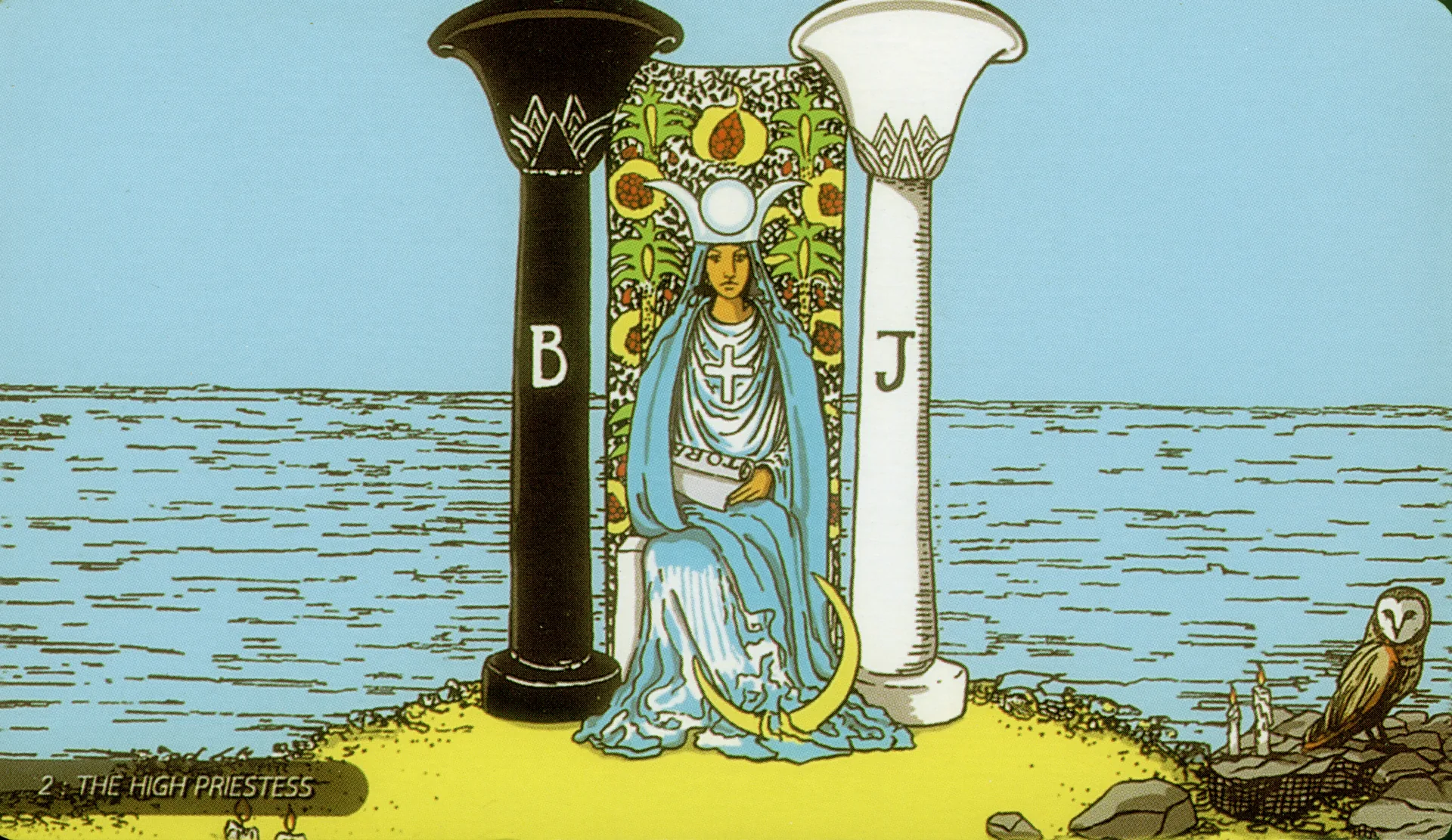
Among the cards in the tarot deck, it brings attention to knowledge passed between people. The High Priestess card offers a useful contrast: she is often read through inward listening, while this teacher points toward shared learning. These tarot card meanings work together when you check outside advice against what you notice for yourself.
The Hierophant in love and relationships
In a love and relationship reading, the Hierophant suggests a relationship question about shared values. Talk about what commitment means to each of you. Are you expecting exclusivity, marriage, a religious ceremony, or simply a dependable partnership? Taking a formal step can be meaningful when both people want it; this card does not predict a wedding.
If you are dating, notice whether you agree on the things that shape everyday life, such as family involvement or how you handle disagreement. Someone can share your background and still have very different priorities. A relationship reading cannot tell you another person's private feelings, so use the card to prepare an honest conversation.
The Hierophant in career, money, and school
For career paths, the tarot card suggests training, qualifications, or a mentor who can explain how an organisation works. You might ask a colleague to review an application or find out which credential a role actually needs. When the Hierophant is upright in a tarot reading, steady practice may be more useful than chasing a shortcut.
In terms of finances, read contracts and understand the rules before signing. Qualified financial advice can help you compare costs and risks; tarot is not evidence that an investment will pay off. For school, this card favors asking for clear feedback rather than pretending you understand a lesson you have not grasped yet.
The Hierophant reversed meaning: questioning the rules
The Hierophant reversed can point to rigid expectations, unhelpful conformity, or a wish to learn in an unconventional way. The reversed meaning depends on whether you are resisting a rule for a good reason or avoiding a responsibility you still believe in.
With the card reversed, I would ask who benefits from the rule and what happens when someone questions it. In the reversed position, a tradition that once felt comforting may now feel restrictive. You can respect what your family taught you while choosing differently instead of conforming just to keep the peace.
A reversed Hierophant can also describe advice that does not suit your circumstances. Seek another informed perspective, try a different learning method, or set a boundary with a group that demands agreement. The reversed card is not an instruction to reject every institution. Thoughtful independence includes knowing when help is worth accepting.
In relationships, reverse can bring disagreements about commitment or pressure to look acceptable to others. At work, it may suggest questioning an outdated policy or finding training outside a conventional route. Discuss the practical consequences before making a change, especially if other people depend on your decision.
The Hierophant yes or no meaning
For a simple yes or no question, I read the card upright as a conditional yes: the choice should match your values and have sensible support. In reverse, it is more often a pause to check expectations. A yes based only on fear of disappointing a group deserves another look.
Tarot meanings are prompts for reflection, not a guarantee. Ask what you need to learn before deciding, then use the facts available to you. If the question is about health, get guidance from a qualified clinician; neither orientation diagnoses illness or predicts pregnancy.
The Hierophant advice: choose a teacher, keep your judgment
The Hierophant invites you to make learning a shared activity. Ask someone knowledgeable to show you a technique, join a class, or talk with a friend about a custom you both enjoy. Learning together can be enjoyable, too. A class or shared ritual gives you people to ask, ideas to try, and company while you practise.
If you keep meeting the card in reverse, write down one rule you are following and why. You might keep a family celebration but change the part that makes you uncomfortable. Give yourself a specific alternative to try. The Hierophant asks for an honest relationship with your beliefs rather than a performance of certainty.
One archetype, four perspectives
The Hierophant Across Four Tarot Decks
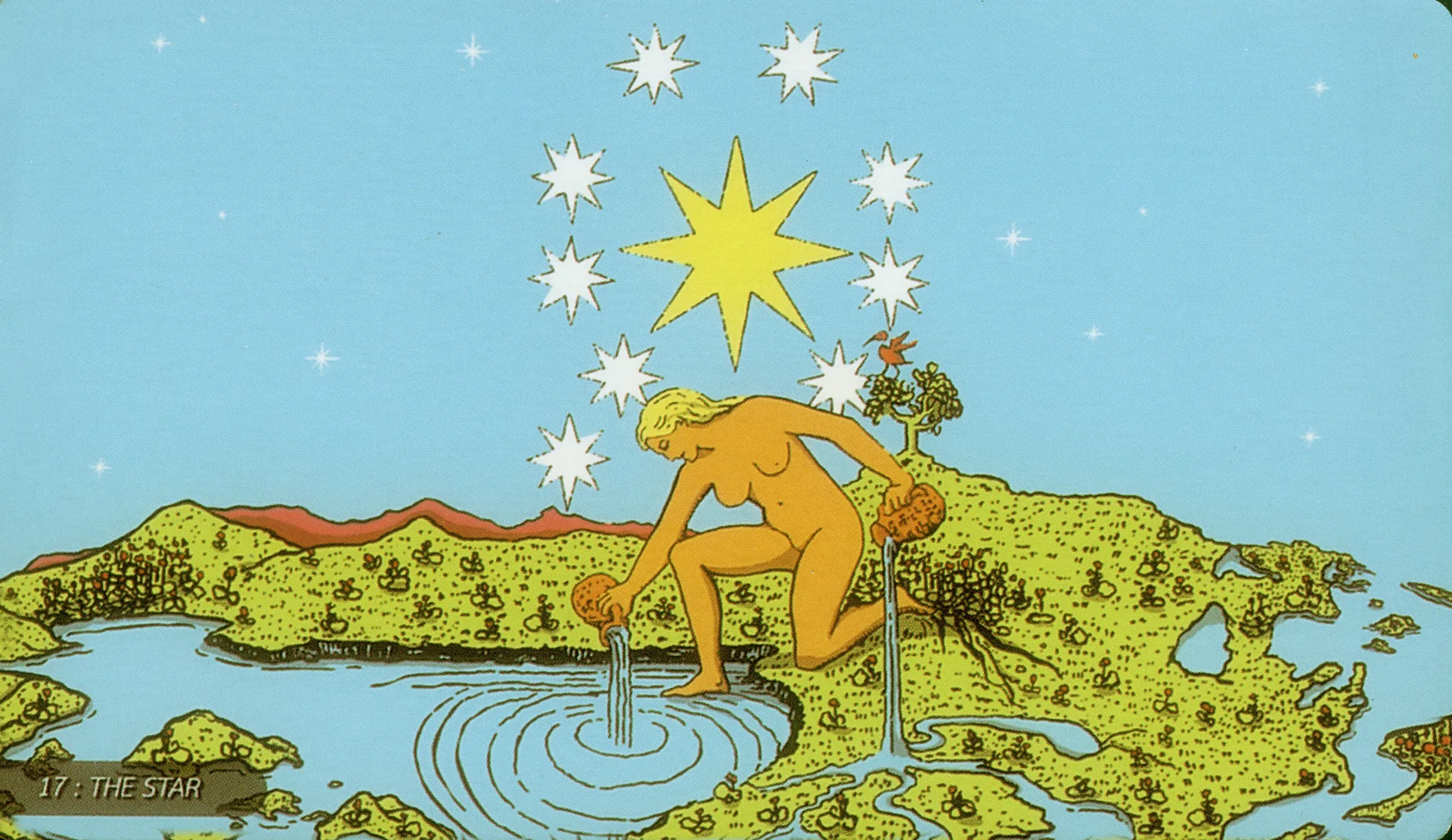
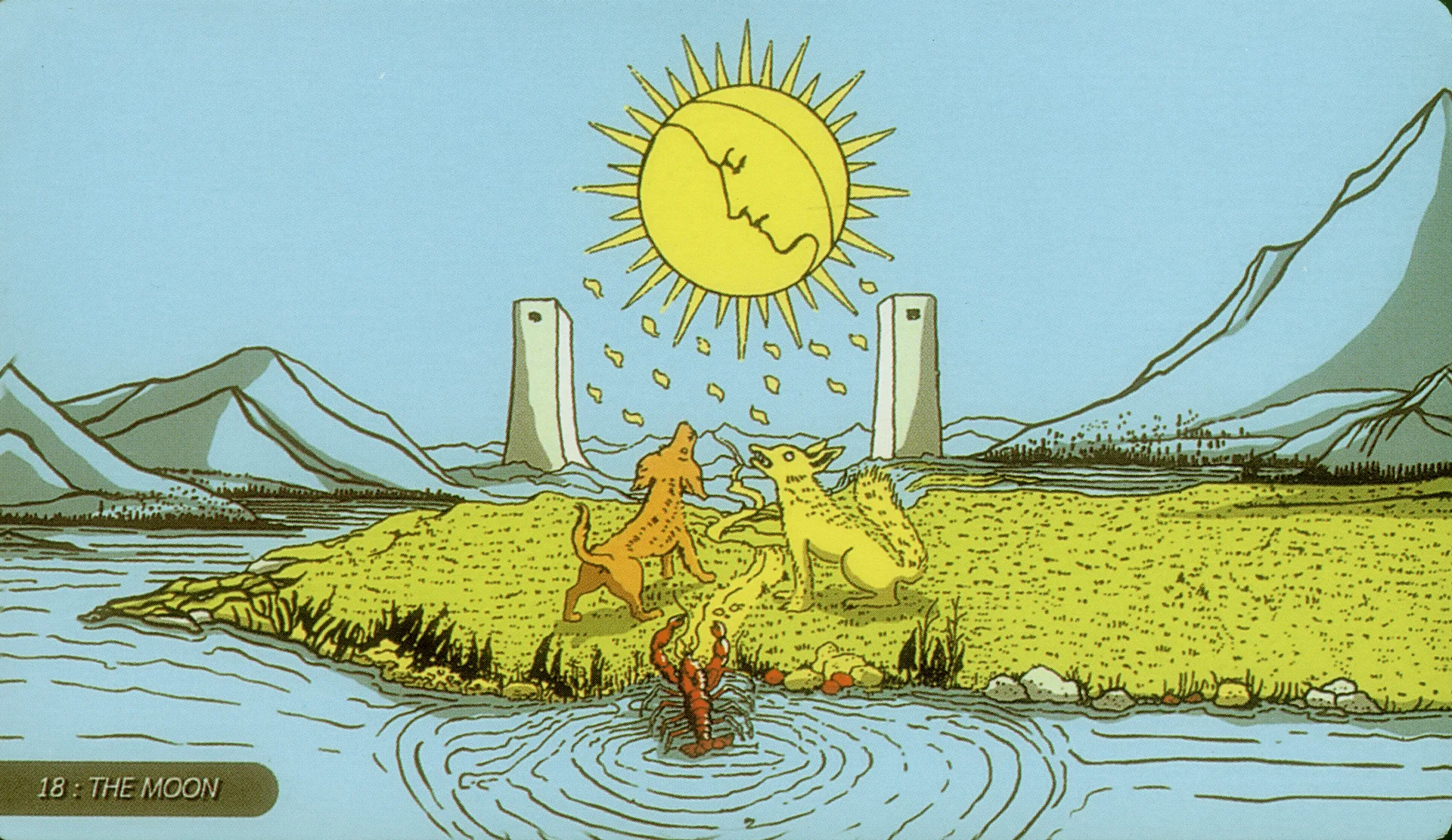
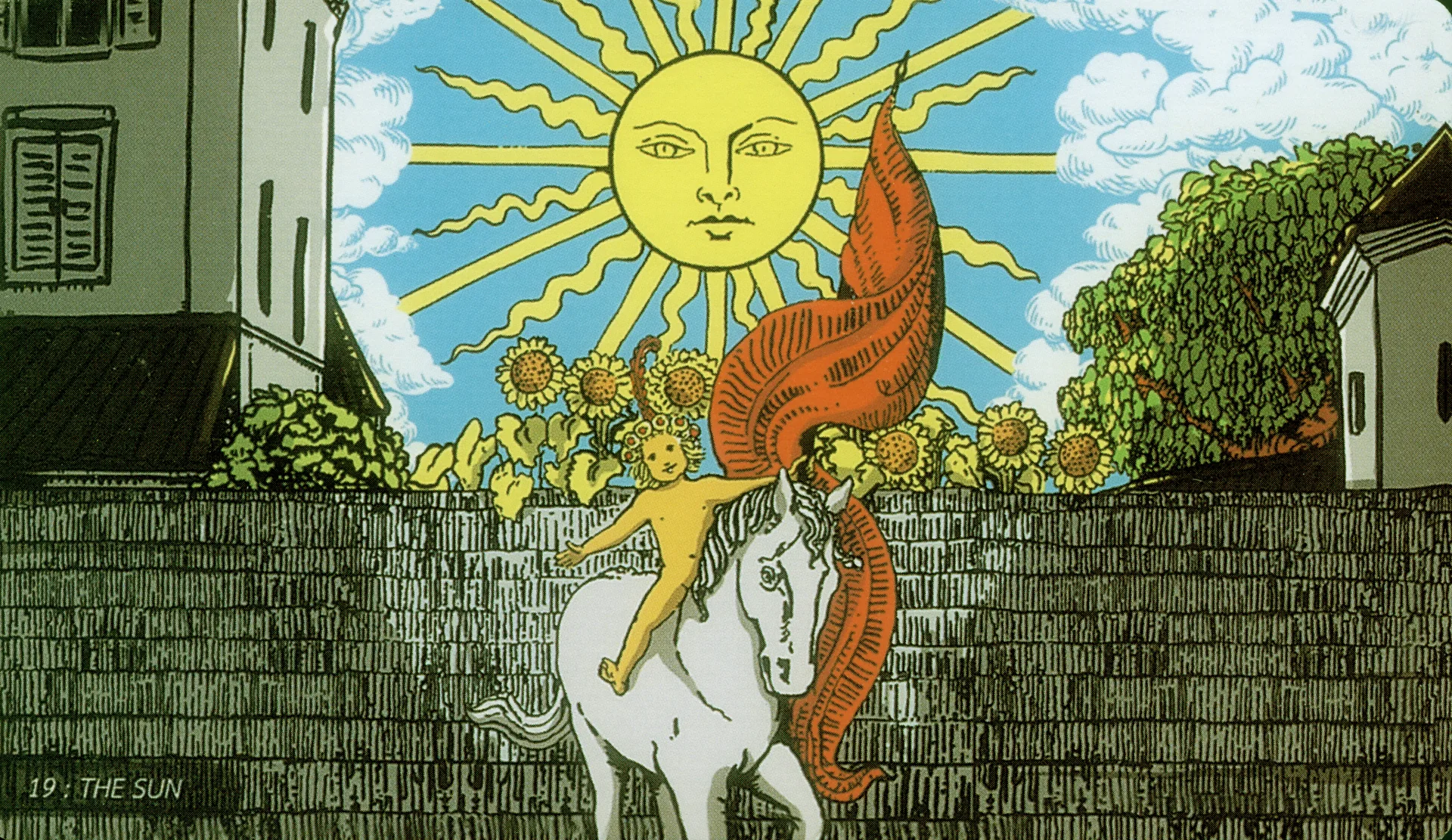
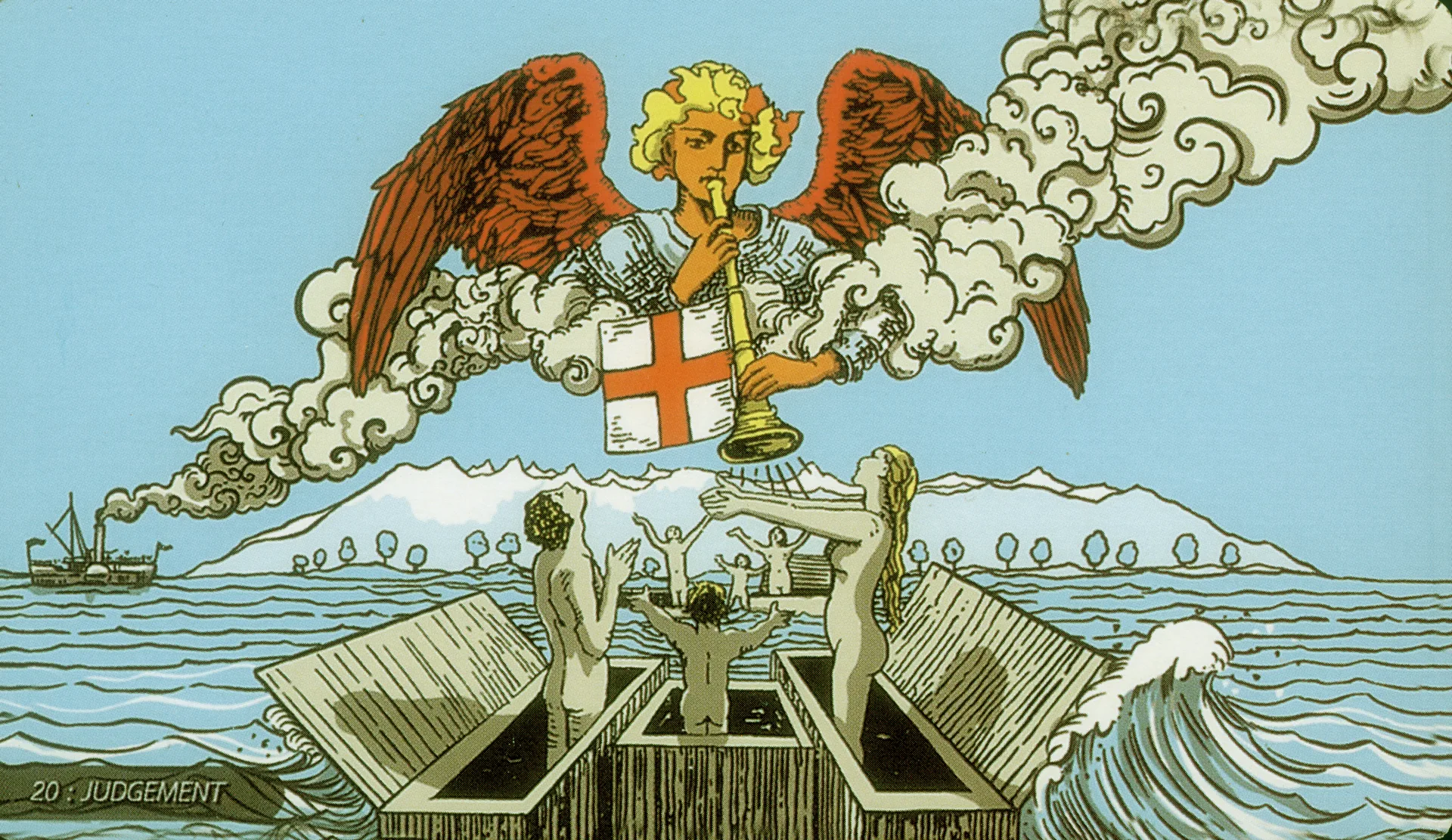
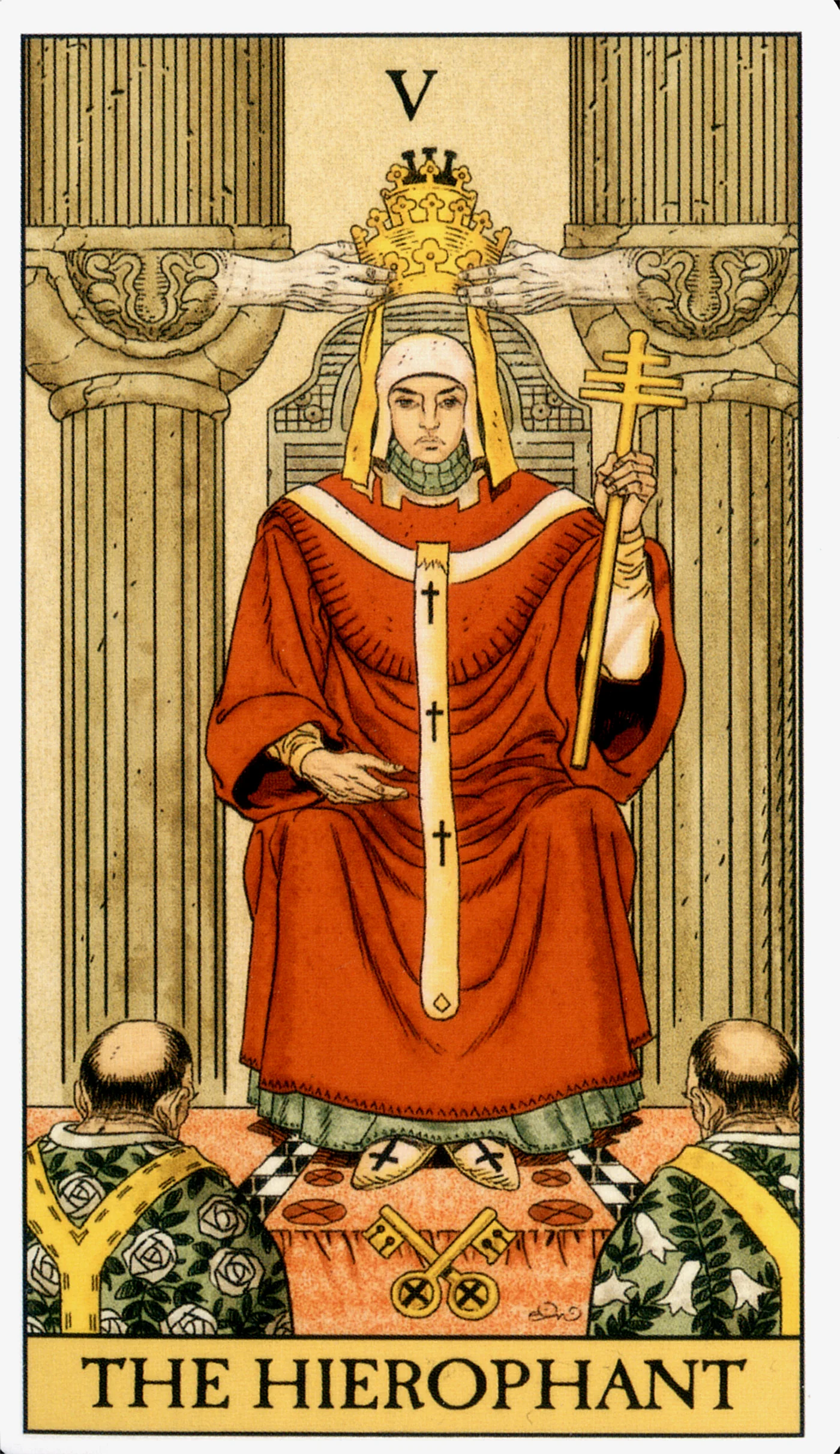
Compare the familiar Rider-Waite-Smith card with the moments before, behind and after the classic scene in three Lo Scarabeo decks.
What apparently happens just before
What actually happened
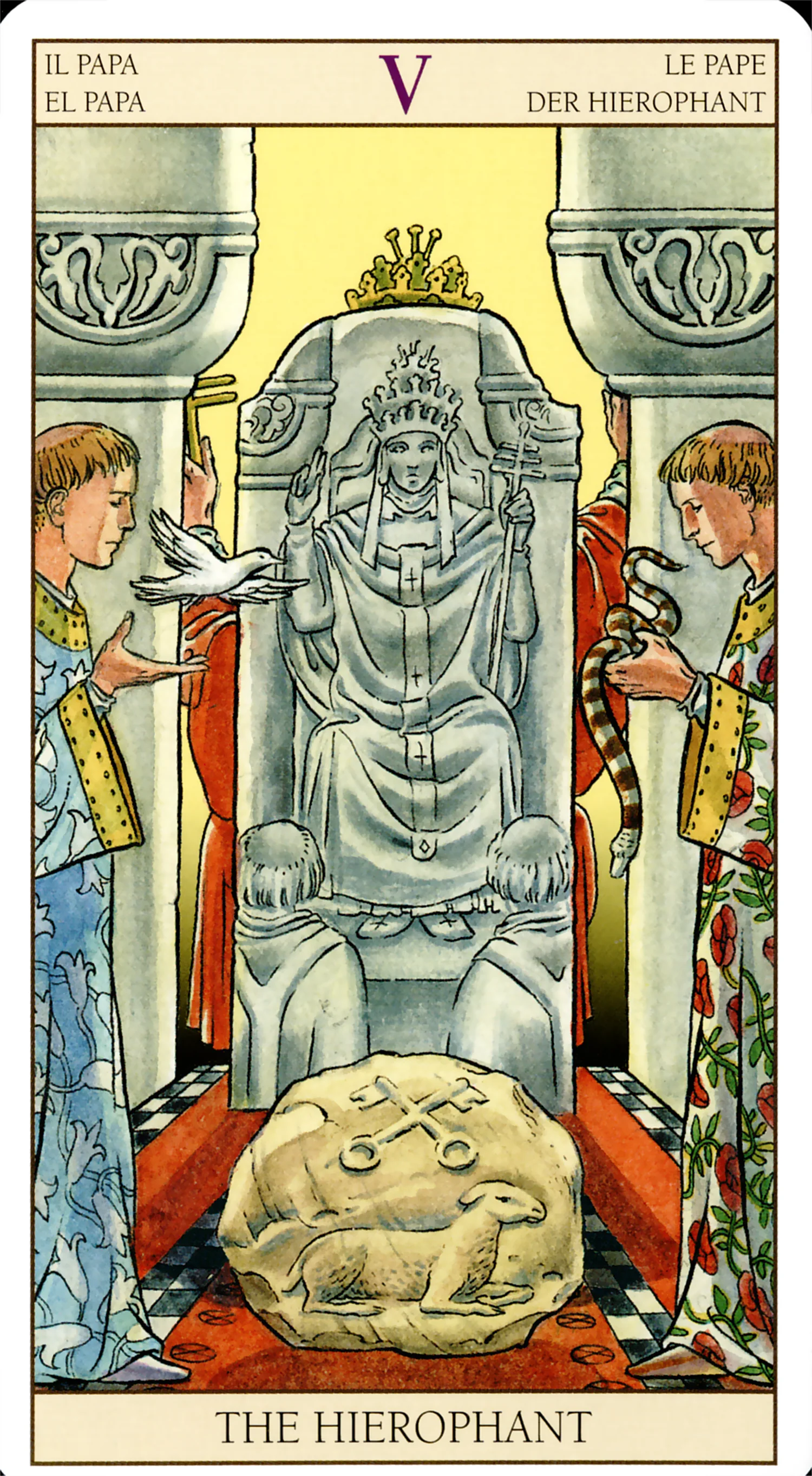
What happened on the opposite side

What apparently happened afterwards
The Hierophant symbols in the Rider-Waite-Smith deck
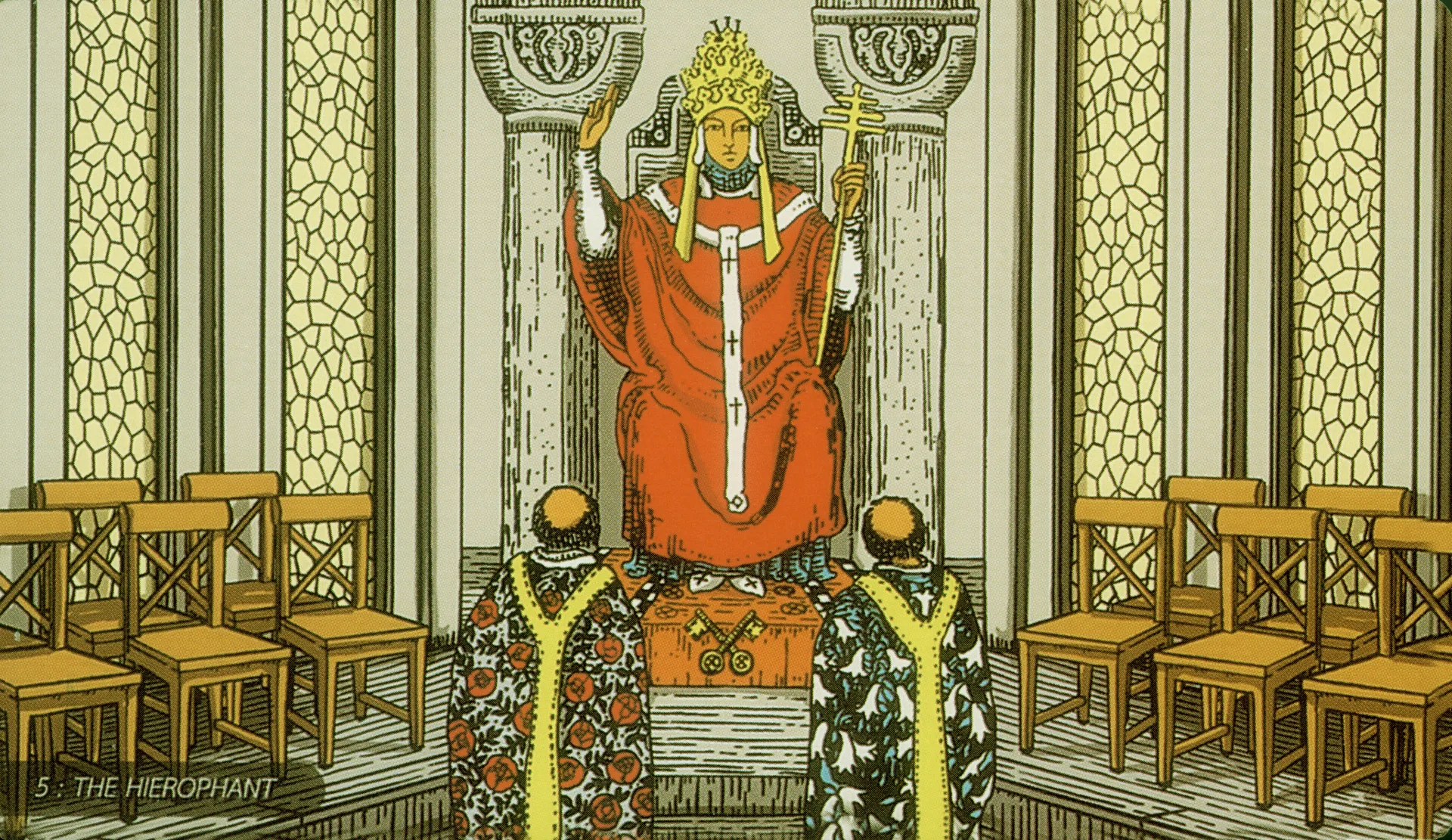
The card depicts a seated religious figure in red robes, wearing a triple crown or papal tiara. His right hand is raised with two fingers extended; his other hand holds a staff with a triple cross. Two figures kneel before him, and at his feet lie two crossed keys. The two pillars frame the scene; they do not carry the High Priestess's B and J labels.
This pope or high priest image makes the theme of spiritual authority easy to see. The keys can be read as access to teachings, while the seated teacher and learners suggest knowledge passed within a community. These are symbolic interpretations of visible objects, not proof that a particular spiritual or religious authority has the right answers for your life.
The Roman numeral V identifies Card V, number five in the Major Arcana. In older tarot traditions this figure is often called the Pope. In this deck, the Hierophant’s ceremonial clothing gives shared belief a public form, unlike the quieter inward focus often associated with the High Priestess.
Esoteric correspondence: why the Hierophant is associated with Taurus
In some esoteric correspondence systems, the Hierophant is associated with the zodiac sign of Taurus. Taurus is a fixed earth sign, a useful symbolic link to steadiness, familiar practices, and values that have stood the test of time. Other tarot traditions use different systems or do not use astrology at all.
Venus rules Taurus in astrology, so some readers bring that connection into discussion of the card's values and relationships. It is an indirect association, not a universal planetary assignment. These esoteric correspondences can add context to the Hierophant tarot meaning, but they do not determine someone's character or future.
Reading the Hierophant with other tarot cards
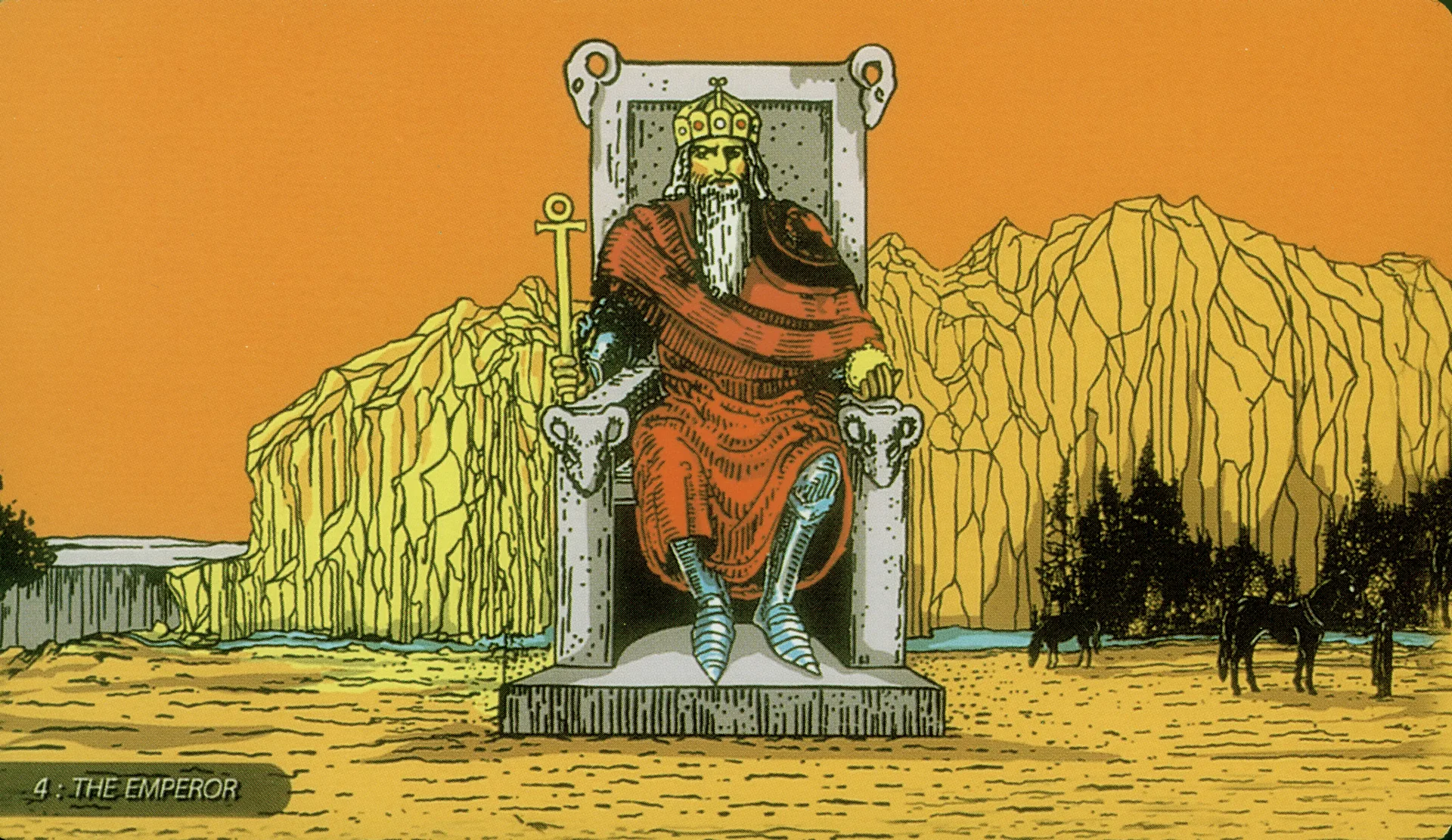
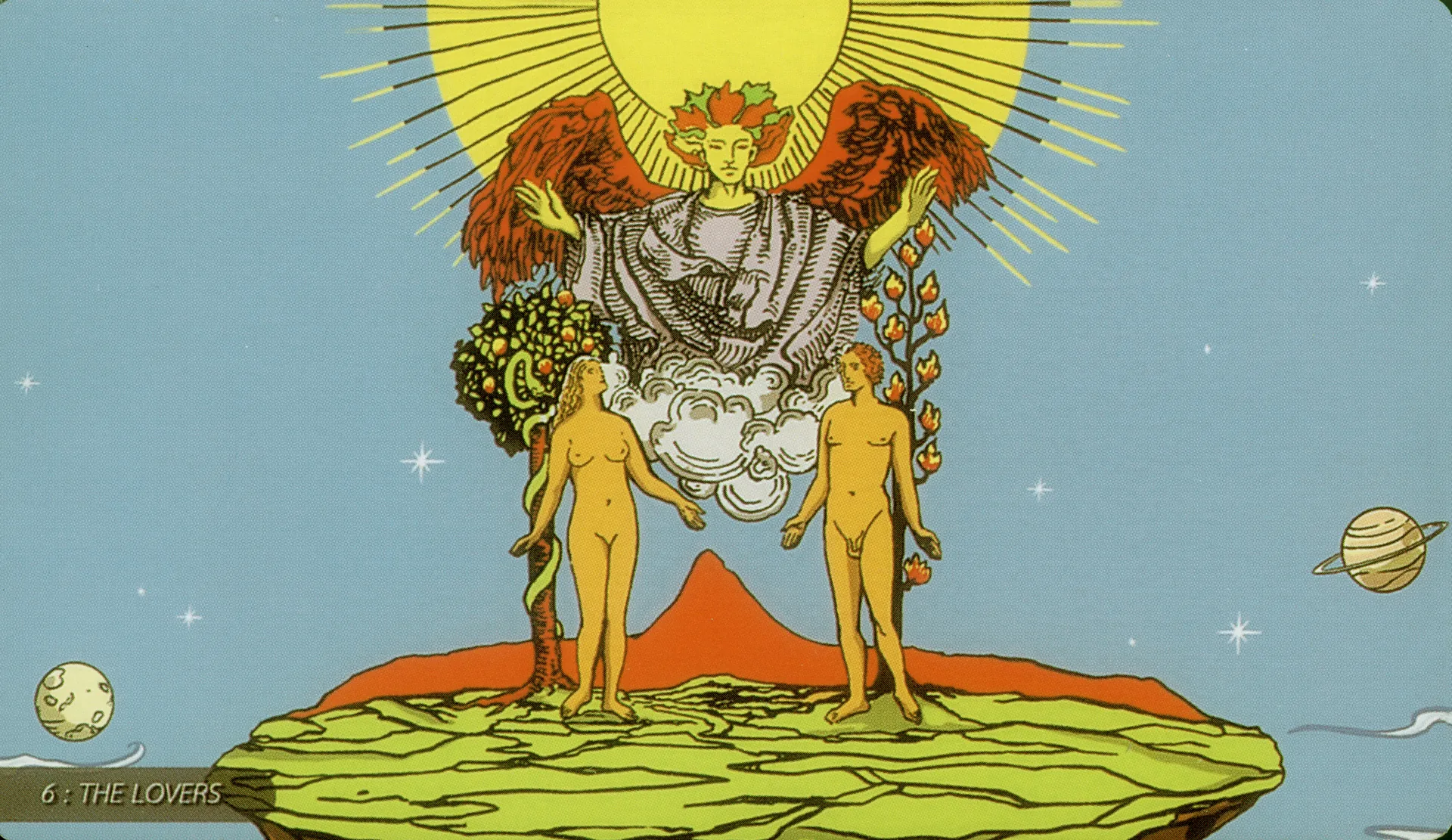
With the Emperor, look at how rules and authority work in practice. With the Lovers, consider whether a commitment reflects a choice you genuinely want. With the Hermit, make space to digest what a teacher has offered rather than immediately repeating it. These combinations are examples, not fixed forecasts.
The meaning of the Hierophant changes with its neighbours and the question. Spiritual and physical routines can support each other: a reflective practice may sit alongside an ordinary habit of showing up for your community. Notice which parts of a tradition help you live well, whether you read the card upright or in reverse.
Helpful questions to ask with the Hierophant
- Who can teach me what I need to know without demanding unquestioning agreement?
- Which shared values do I want to put into practice?
- Am I keeping this custom because I enjoy it, or because I fear disapproval?
- What evidence would help me decide whether a rule needs changing?
One card, many perspectives
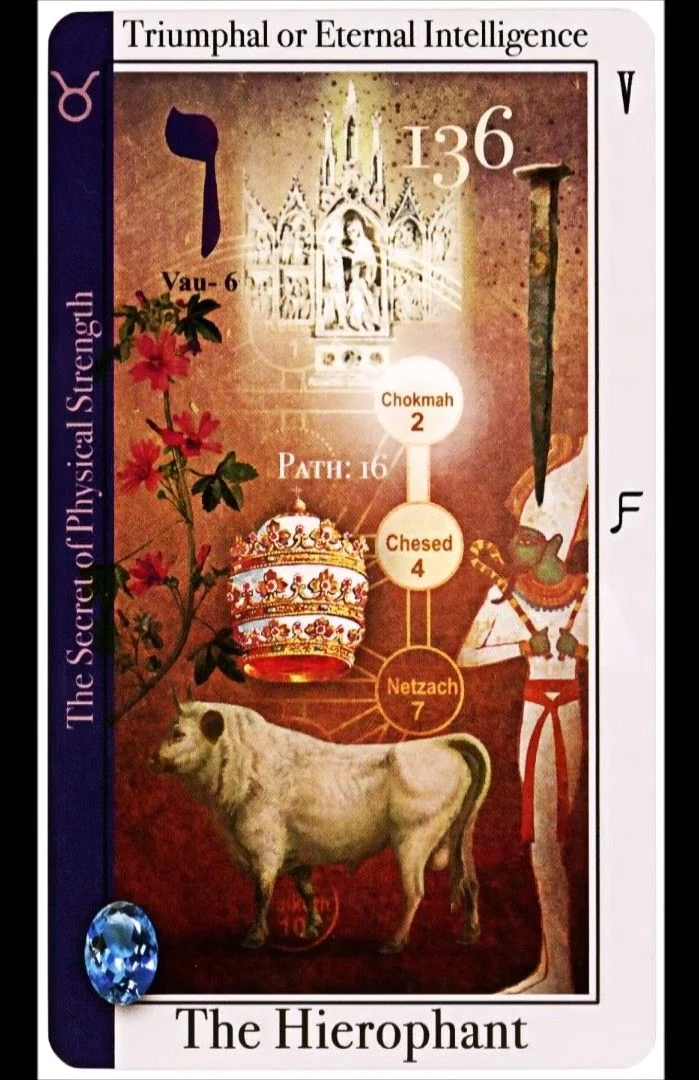
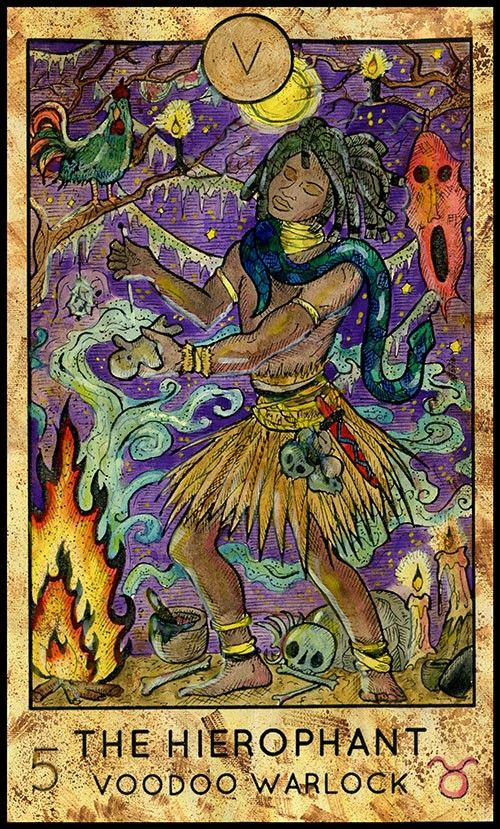
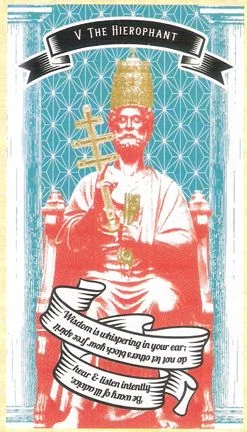
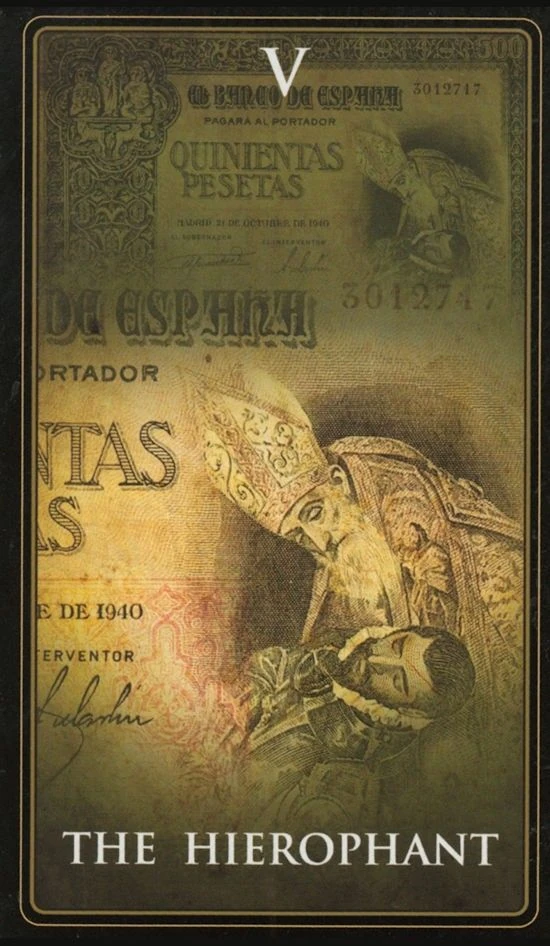
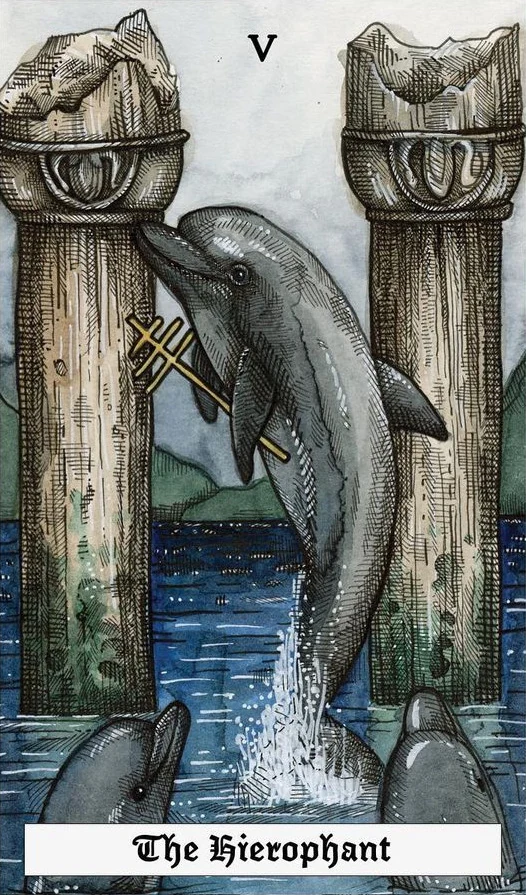
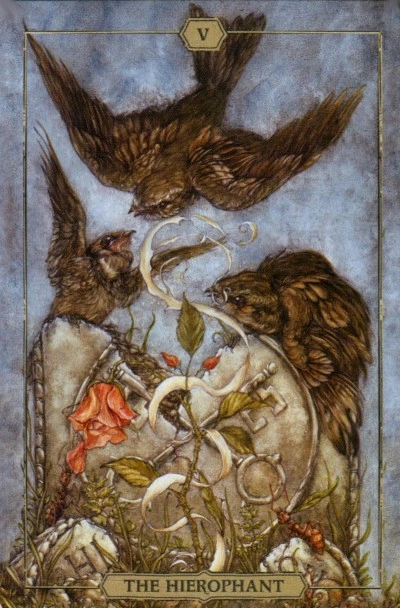
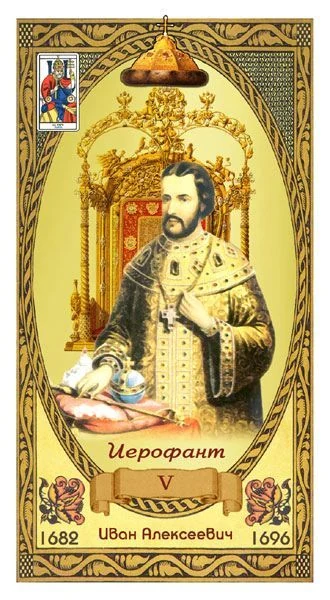
See The Hierophant Card from Other Decks
Discover how other tarot decks interpret this card. Select a deck to explore its full review and gallery.







The Hierophant FAQ
What does the Hierophant mean upright and reversed?
Upright, it points to learning, mentorship, shared values, and chosen commitment. In reverse, it asks whether a rule or expectation still serves you. Both orientations invite a thoughtful look at what you believe and how you learned it.
Does the Hierophant mean marriage?
It can bring commitment, shared customs, or formal agreements into focus, but it does not predict marriage. Talk with your partner about what commitment means to each of you instead of treating the card as a promise.
Is the Hierophant a religious card?
Its Rider-Waite-Smith artwork uses papal imagery, but you can read it beyond religion. Schools, professional organisations, family customs, and supportive communities all fit its theme of shared learning.
What should I do after pulling the Hierophant in reverse?
Choose one expectation to examine. Ask why it exists, whether it fits your values, and what a change would affect. Keep useful guidance while making room for your own informed judgment.