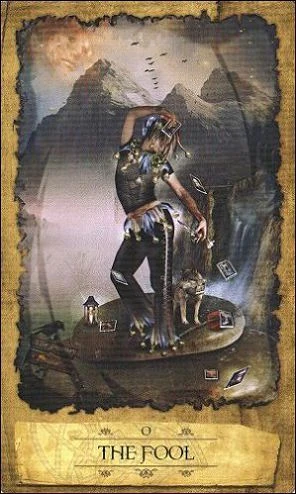
Explore the Mystic Dreamer Tarot Cards
Browse the verified card artwork in traditional order, filter by the deck’s official groups, or choose a card for an enlarged Lightbox view. Seven archive references preserve Heidi Darras’s correct artwork in an earlier frame where a matching published-frame source was unavailable.
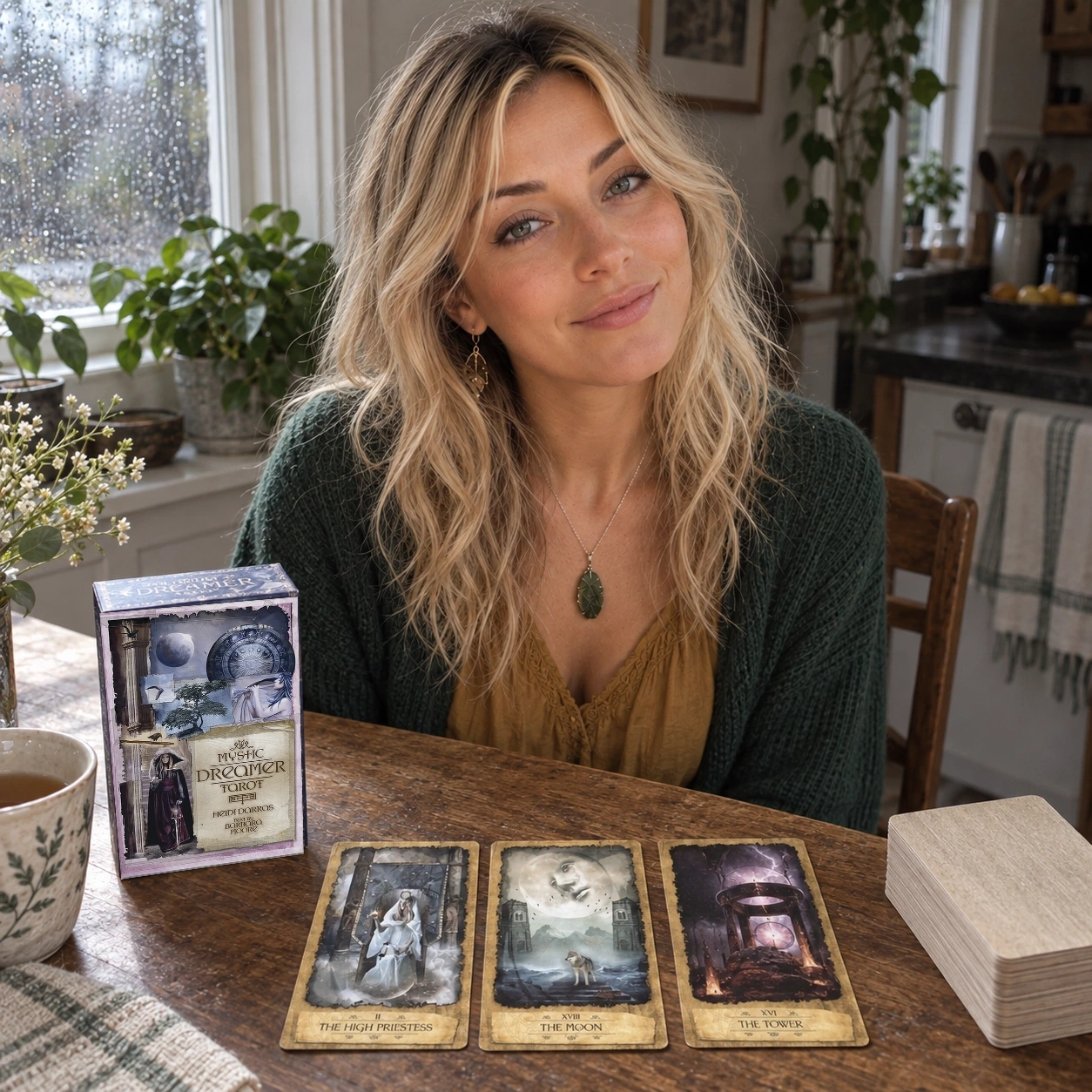
Aurica’s Quick Take
Mystic Dreamer Tarot is the deck I reach for when certainty goes quiet and one visual detail needs time to speak. Its moons, ruined rooms, windows, and reflective water make it especially alive for journaling, creative questions, and choices that need honesty before speed.
I start with the image that has the strongest pull. In The Moon, the face fills the sky while a lone wolf stands below; in The High Priestess, the repeated doorway turns privacy into a threshold. Those details open the reading, but I do not let them finish it alone.
I bring the image back to the card’s traditional work and let the neighbouring cards change its tone. A Swords card may ask me for language or a decision; a Pentacles card may turn a beautiful insight into a budget, boundary, practice, or date.
I close each spread with one grounded next step, however small: a sentence written down, a boundary named, or a choice given a date. Mystic Dreamer is at its warmest when a vivid symbol leaves the moonlit room with you and becomes a little more courage in ordinary life.
Mystic Dreamer Tarot review
What is Mystic Dreamer Tarot?
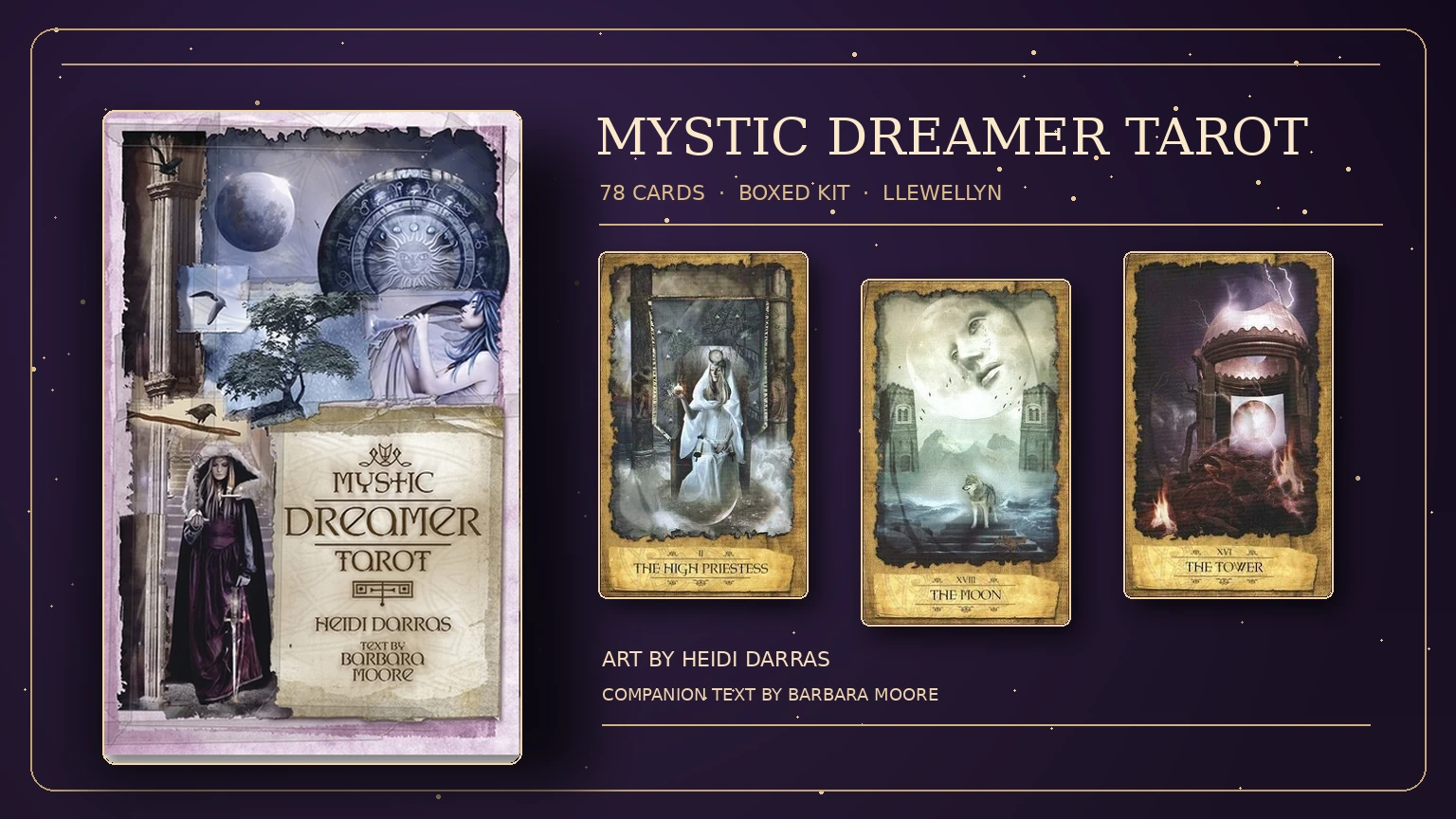
Mystic Dreamer Tarot is a complete 78-card deck illustrated by Heidi Darras, with a 240-page companion book written by Barbara Moore. Llewellyn published the boxed kit in September 2008. Its familiar Major and Minor Arcana structure is wrapped in moonlit photographic collage: ruined arches, reflective water, distant towers, pale figures, ravens, and enormous skies.
The deck is not simply dark for effect. Its recurring doors, windows, mirrors, and horizons keep asking the same useful question: what is visible, and what is still forming just beyond the frame?
Deck details at a glance
- Artwork
- Heidi Darras
- Companion book
- Barbara Moore
- Publisher
- Llewellyn, 2008
- Cards
- 78-card tarot
- Book
- 240 pages
- Format
- Boxed kit
Artwork built from thresholds and atmosphere
The cards use antique parchment borders around layered photographic scenes. Browns and charcoal hold the edges while silver-blue moons, pale robes, lightning, and water create flashes of attention. The court cards and numbered suits remain recognisable, yet each scene feels like a remembered place rather than a stage set.
Start with what the picture makes physically clear: who is facing whom, where the path opens, what object catches light, and whether the figure seems protected or exposed. Then connect that observation to the card’s traditional role. The deck becomes more precise when mood is treated as evidence, not as the whole answer.

Card study
The High Priestess: knowledge at the threshold
A white-robed figure stands inside a dark architectural frame, holding a glowing orb while a second image recedes behind her like a memory. The repeated doorway makes this card feel less like a sealed mystery and more like a threshold that asks for patience.
Upright, she can show intuition, privacy, and knowledge that is still forming. In shadow, the same distance can become avoidance. Name what you sense, then check it against the facts and neighbouring cards before acting.
How to read Mystic Dreamer without drifting into vagueness
Ask questions that allow insight and movement. “What am I not seeing about this decision?” gives The Moon somewhere useful to work; “Tell me what will happen” leaves too much room for projection. Describe the visible scene first, add the traditional tarot function second, and finish with one action or question that can be tested.
Reversals are optional. The fronts already contain shadow through distance, concealment, blocked doorways, and divided light. If you read upright only, use the surrounding cards to decide whether a symbol is opening, protecting, delaying, or warning.
Four-card reading
From uncertainty to a clean decision
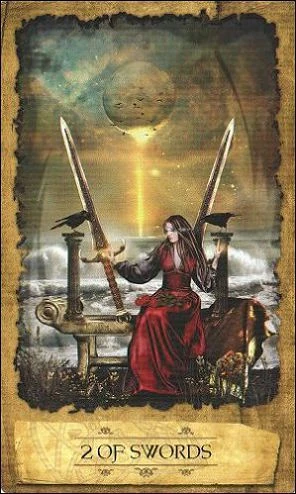
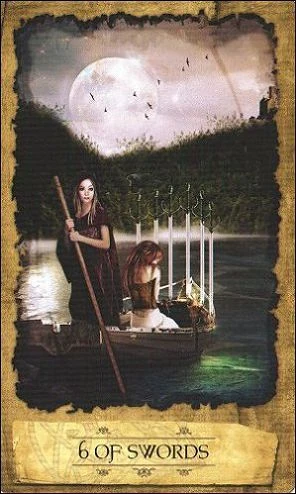
Let The Moon, Two of Swords, Six of Swords, and The Star answer four positions: what is unclear, what choice is paused, what transition is already under way, and what direction deserves hope. Read the movement across the images rather than treating them as four isolated verdicts.
See Mystic Dreamer Tarot on Amazon

A beginner-friendly first week
The deck’s titles and suits provide familiar anchors, while Barbara Moore’s companion book offers enough room for a structured study. Begin with one card each morning. Write three lines: what you see, what the traditional card contributes, and one choice the combined message suggests.
At the end of the week, spread all seven cards together. Look for repeated settings—water, towers, trees, thresholds, or the night sky. Repetition often carries the reading’s central concern more clearly than a long list of keywords.
Card study
The Moon: when feeling fills the whole sky
A pale moon-face dominates the sky above a lone wolf, dark water, distant mountains, and two towers. The enormous face makes emotion impossible to ignore, while the small animal below gives instinct a body and a voice.
This is uncertainty with useful clues. Upright, The Moon can invite dreamwork, imagination, and careful listening. In shadow, it may warn that fear is writing the story. Separate what is visible from what is assumed, then ask which detail can be checked today.
Work, money, and creative direction
This deck handles creative uncertainty especially well because its images make hidden structure visible. Pair an imaginative question with a practical one: “What wants to be made?” followed by “What would make it real this week?” The second question turns atmosphere into a plan.
For money and career readings, let Pentacles describe resources and habits, while Swords clarify the decisions and stories around them. Keep forecasts modest. Use the cards to compare options, notice pressure, and choose a responsible next move rather than promise a fixed outcome.
Four-card reading
Build the dream without losing the ground
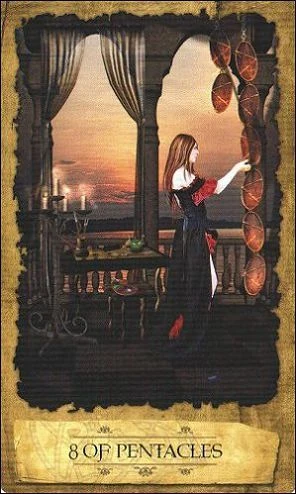
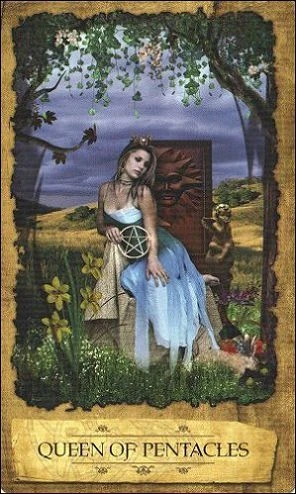
Use Ace of Pentacles, Eight of Pentacles, Queen of Pentacles, and King of Pentacles for the seed, the practice, the care, and the durable result. This spread is especially useful when an imaginative reading needs a budget, a calendar, or a repeatable next step.


Love, friendship, and emotional boundaries
The recurring distance between figures can be revealing in relationship readings. Notice whether people share a frame, face one another, or reach across an object that both protects and separates them. A beautiful scene does not automatically describe an easy bond; ask whether the connection is mutual, lived, and supported by action.
For difficult conversations, use four prompts: what needs to be heard, what belongs to me, what belongs to the other person, and what boundary would protect warmth rather than punish someone.
Card study
The Tower: the structure cannot hide the storm
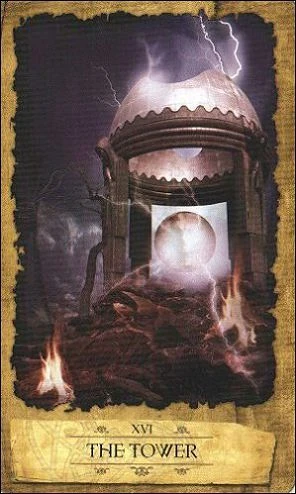
Lightning surrounds a domed tower as fire burns at its base and a bright sphere glows inside the central opening. Unlike a simple image of collapse, this scene holds destruction and revelation together: the old shell is failing, but something inside is becoming visible.
Read it as a call to respond honestly, not as a promise of disaster. What structure has stopped protecting what matters? What truth can now be named? The next card should help decide whether the best step is repair, release, or immediate support.
Who will enjoy this deck?
Mystic Dreamer Tarot suits readers who enjoy gothic-romantic collage, moonlit architecture, emotional storytelling, and images that reward slow looking. It is also a strong match for journaling and for readers who like traditional card names but want a less literal visual world.
Readers who prefer clean minimalism, bright daylight, borderless cards, or very direct Rider–Waite scene copies may find it heavy. The best test is simple: look through the complete gallery and notice whether the deck makes you curious enough to ask a better question.
Four-card reading
A relationship mirror with four clear questions
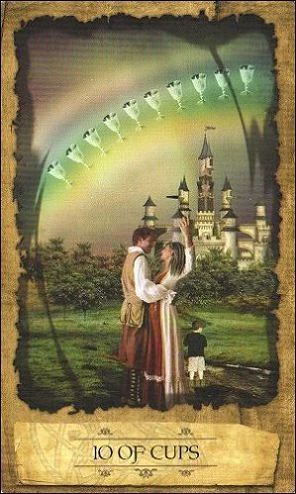
Read The Lovers, Two of Cups, Queen of Cups, and Ten of Cups as choice, mutuality, emotional maturity, and shared belonging. If one image promises more than the other three support, treat it as a desire that still needs a bridge in ordinary life.



Mystic Dreamer Tarot pros & cons
Pros
- All 78 cards are fully illustrated in a coherent, dreamlike photographic-collage style.
- Traditional titles and familiar suits give intuitive readings a stable tarot framework.
- The official boxed kit includes a substantial 240-page companion book by Barbara Moore.
- Muted gold borders, recurring moons, doors, water, and ruins create strong visual links across a spread.
- The artwork rewards journaling and close observation without requiring invented symbolism.
Cons
- The dark palette and layered scenes can feel visually dense in a large spread.
- Some figures and settings are moodier than readers seeking bright, literal Rider–Waite scenes may prefer.
- The ornate parchment border occupies more space than borderless-deck fans may like.
- The 2008 boxed-kit format is larger than a pocket deck.
- Some archived card previews show the artwork in an earlier frame, so assess the physical edition separately.
Buying guidance and the deck’s golden rule
Match any listing to the official title, creator credits, 78-card count, 240-page companion book, and the publisher’s boxed-kit specifications. The publisher page is the safest reference point for the boxed kit; marketplace condition and included materials can vary.
Mystic Dreamer’s golden rule: let the dream open the reading, but make the interpretation earn its place. Name the visible detail, connect it to tarot structure, check the rest of the spread, and leave with one grounded next step.
Final Thoughts
Mystic Dreamer Tarot is most persuasive when its atmosphere becomes a form of attention. A giant moon can magnify uncertainty, a doorway can turn secrecy into readiness, and a storm can reveal the weak point in a structure before it falls.
Go slowly, use the book when the visual language feels dense, and keep real-world context beside intuition. The result is a deck that can feel cinematic without becoming empty—a dream world with enough architecture to help a reading stand.
Mystic Dreamer Tarot FAQ
Who created the Mystic Dreamer Tarot?
Heidi Darras created the deck artwork, and Barbara Moore wrote the companion text. Llewellyn published the boxed kit in September 2008.
How many cards are in Mystic Dreamer Tarot?
The deck has 78 cards: 22 Major Arcana and 56 Minor Arcana across Wands, Cups, Swords, and Pentacles.
What comes in the official boxed kit?
Llewellyn lists the product as a boxed kit with 78 cards and a 240-page companion book.
Is Mystic Dreamer Tarot good for beginners?
It can be, especially for visual learners. The familiar 78-card structure and full companion book offer support, while the layered artwork encourages readers to practise observation before reaching for keywords.
What do the card backs look like?
The publisher’s product imagery confirms the boxed kit and printed card fronts, but does not clearly show a loose card back. Ask the seller for a photograph if its design matters to your reading style.
Where can I buy Mystic Dreamer Tarot?
See Mystic Dreamer Tarot on Amazon and check the selected format, seller, condition, and whether the 78-card deck and companion book are included before ordering.