THE CARD GALLERY
Explore the Wizards Tarot Cards
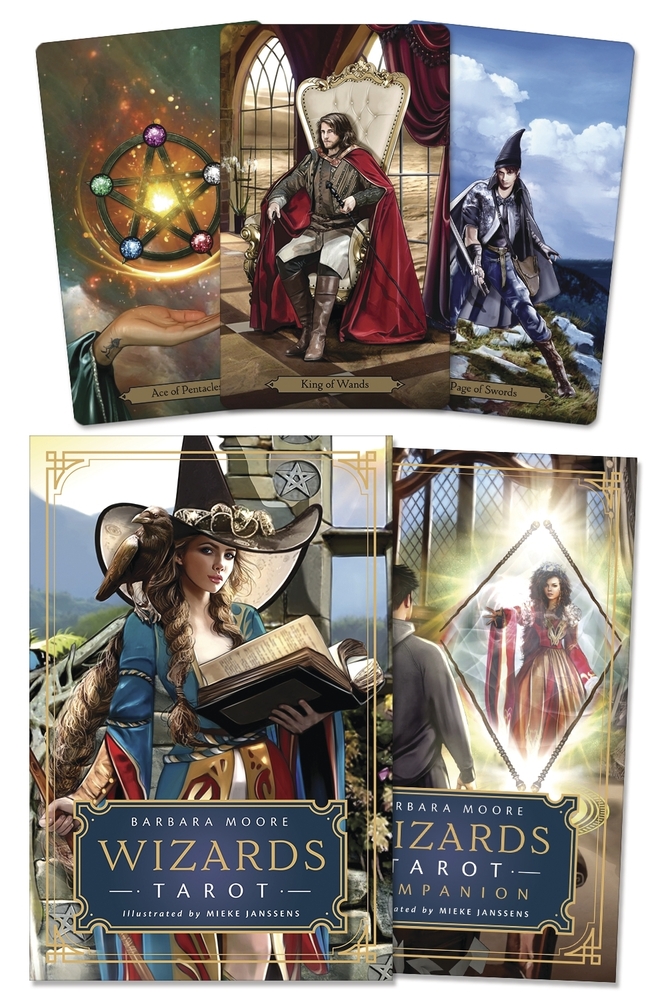
Step inside Barbara Moore and Mieke Janssens’ vivid school of magic. Choose a card to open the full-size view.
Card artwork is displayed from the rights-holder-authorized supplied collection.
Aurica’s Quick Take
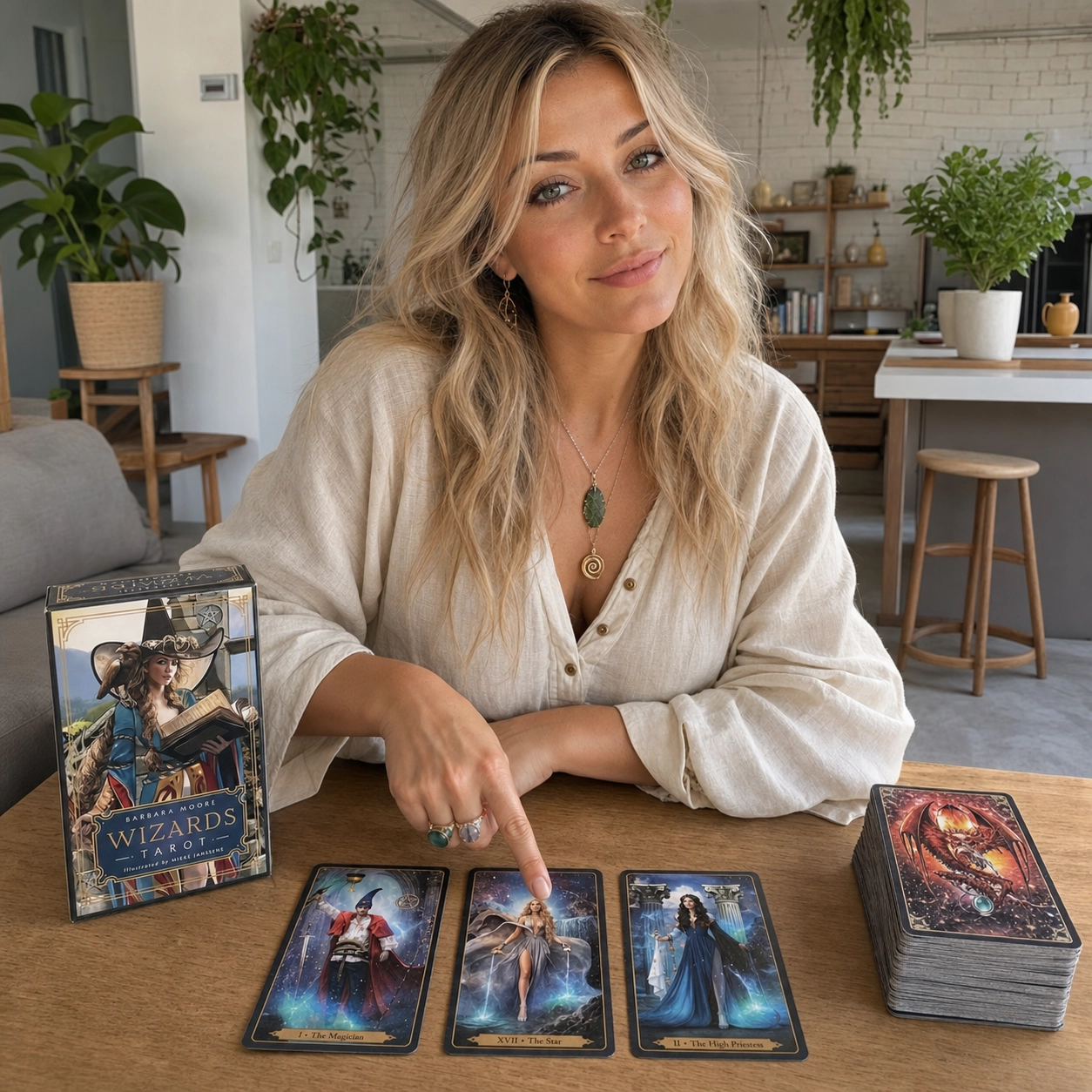
These cards feel like a door into a busy school of magic. Lessons flare, tempers slip, and wisdom belongs to the person who learns to listen. Mieke Janssens gives each scene enough movement that my eye finds a clue before my mind names a meaning.
I reach for this deck when a question is tangled in confidence, study, ambition, or belonging. The familiar tarot structure keeps the reading steady, while the wizard-school setting makes power feel learnable. A raised wand can be courage or showing off; a closed door can be protection or fear.
Read slowly: notice who teaches, who watches, and where the energy gathers. Then return that first impression to the card’s traditional role and the surrounding spread. Let this deck remind you that wisdom is not a locked tower; every honest question can become a bright step into your own magic.
Wizards Tarot review: a deck where magic has homework
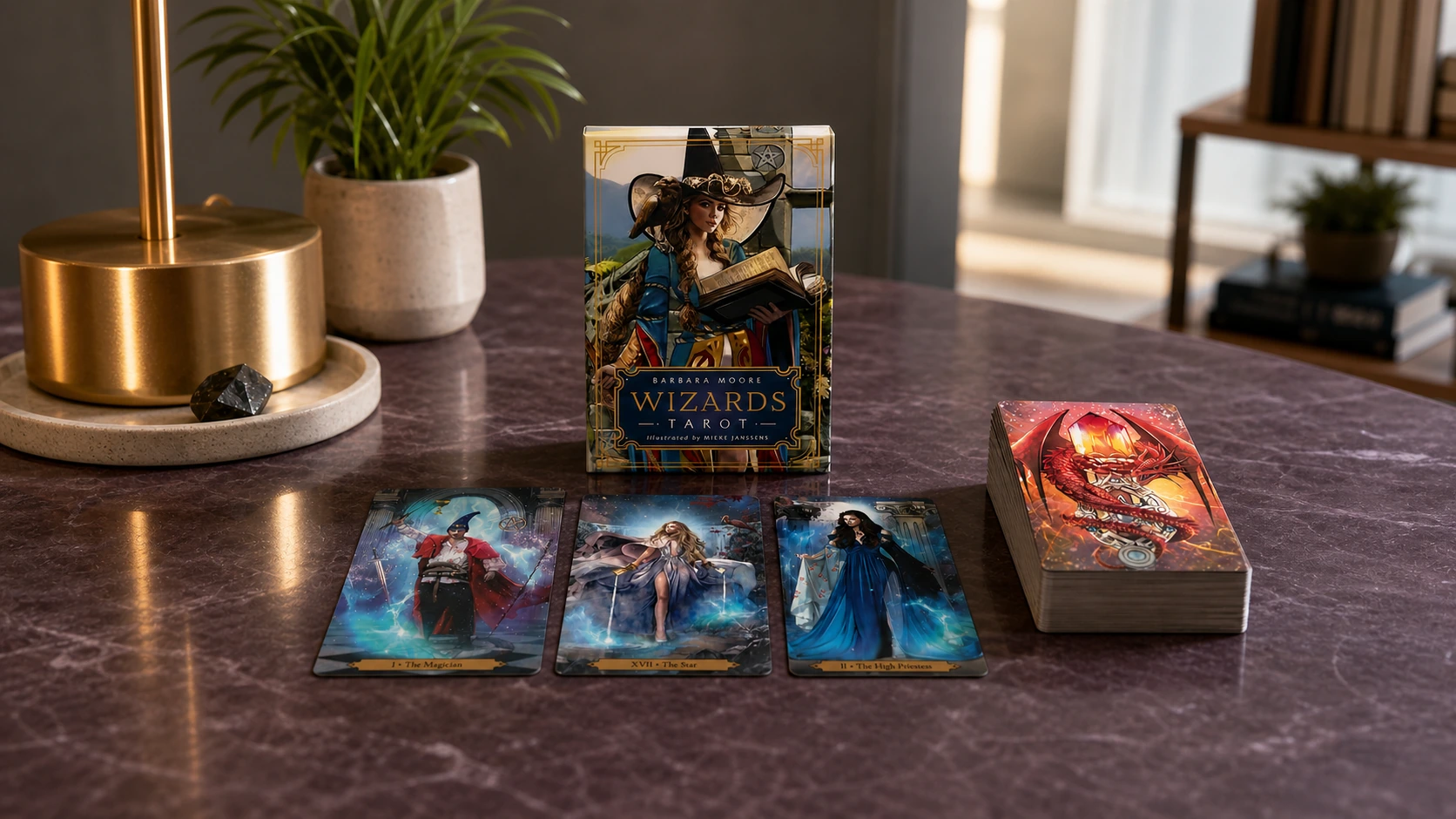
Barbara Moore’s Wizards Tarot, illustrated by Mieke Janssens, takes the familiar 78-card tarot system into an academy of magic. That premise could have been only decorative. Instead, the school setting gives the deck a practical question to ask again and again: what does it take to grow into your own power?
The answer changes from card to card. Some figures study, some perform, some hide, and some have already learned that mastery includes restraint. Because the scenes are busy and emotionally direct, a reading tends to begin with character and atmosphere before it settles into textbook keywords. I find that especially useful when the real issue is confidence, mentorship, rivalry, belonging, or the difference between ability and readiness.
The structure remains recognizably tarot. The Major Arcana keep their standard names, and the four suits stay Wands, Cups, Swords, and Pentacles. Readers who know the Rider-Waite-Smith sequence will have a reliable map, while newer readers get narrative scenes that make many of the cards approachable without turning them into one-note illustrations.
Card study
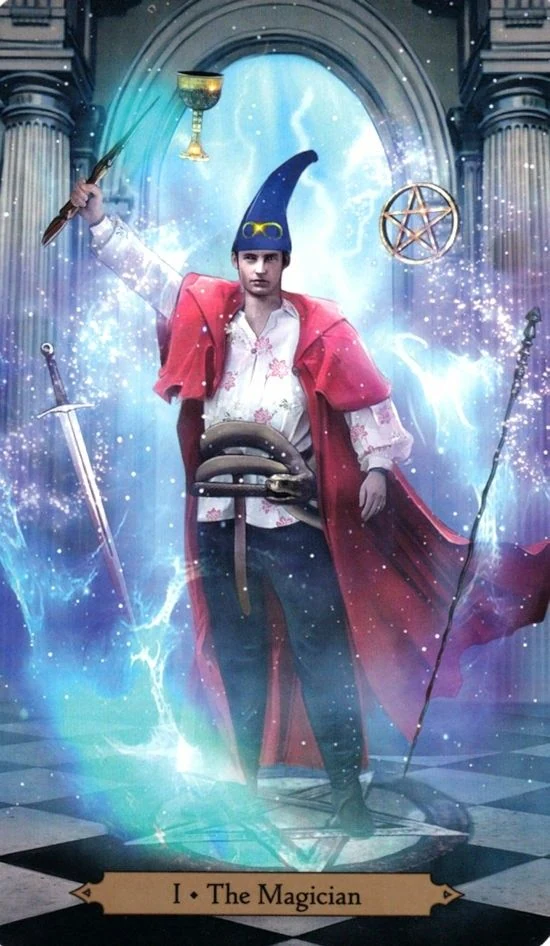
The Magician: power brought into the room
The Magician stands beneath a stone arch as blue-white energy gathers around him. A cup and pentacle hover overhead, a sword rises at one side, and a wand answers from the other. His red outer robe moves like a banner, while the infinity symbol on his pointed hat quietly says that the real resource is not a single tool but the ability to connect them.
I read this as focused participation. The card does not promise that talent will act by itself; it asks the reader to choose a tool, name an intention, and begin. In a helpful position, this Magician is confidence with direction. In shadow, the spectacle can become distraction, performance, or an attempt to control every outcome. When it appears, I ask: what is already in your hands, and what changes once you use it deliberately?
How the deck reads in an actual spread
This is not a quiet, minimalist deck. Characters occupy most of the frame, color arrives in saturated bursts, and magical effects often show where attention is gathering. In a three-card spread, I usually read the faces and body language first: who is taking up space, who is avoiding the center, and who seems to understand more than they are saying?
Then I look at the architecture. Classrooms, towers, halls, forests, and ritual spaces are not neutral backgrounds here. They tell me whether a situation is structured, exposed, private, unstable, or ready for collaboration. Finally, I return to the traditional card meaning and ask what the wizard-school scene has made more specific. This three-step rhythm keeps the art from becoming mere fantasy decoration.
The result is a deck that handles developmental questions particularly well. It can speak clearly about being a beginner, overestimating your control, learning from a difficult teacher, finding peers, or accepting that competence takes repetition. It also has enough drama for relationship and shadow work, although readers who prefer sparse symbolism may need a few extra seconds to decide which visual cue matters most.
CARD MOMENT
Learning the language of power
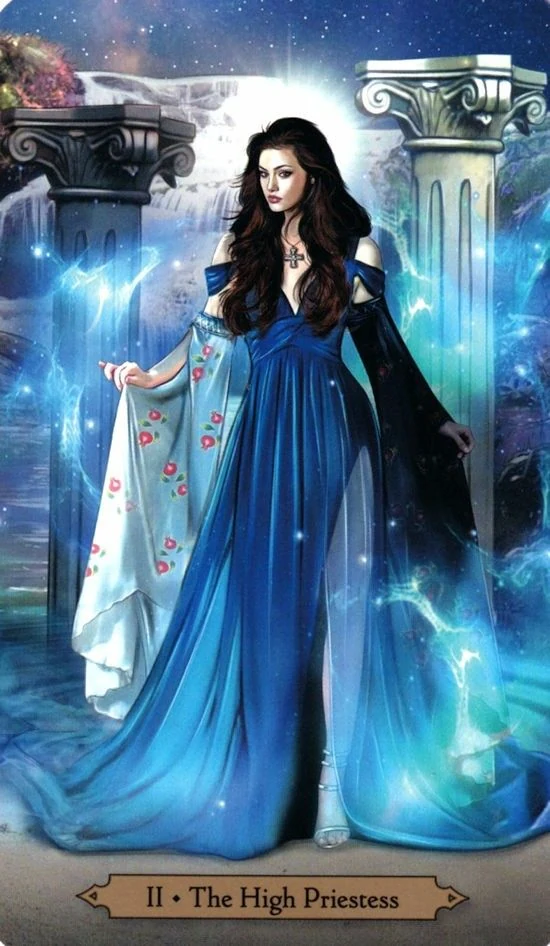
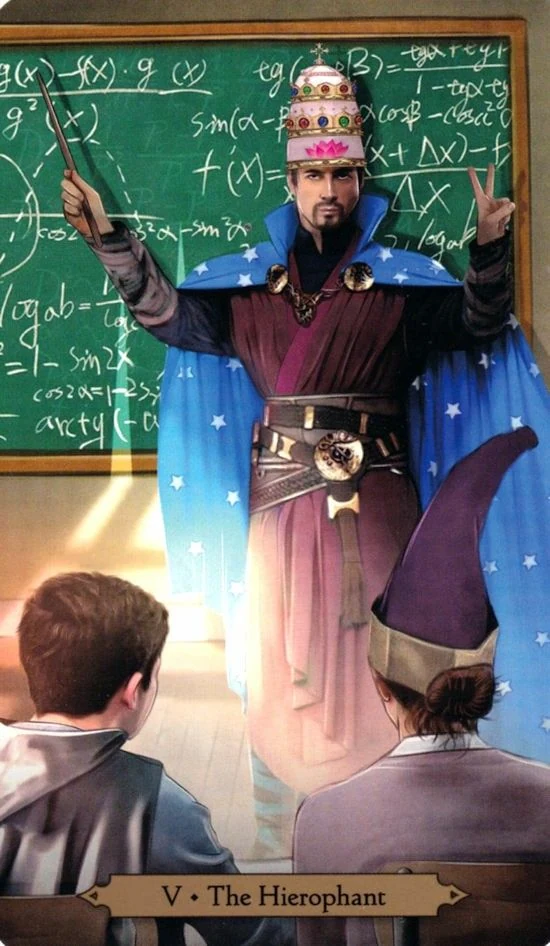
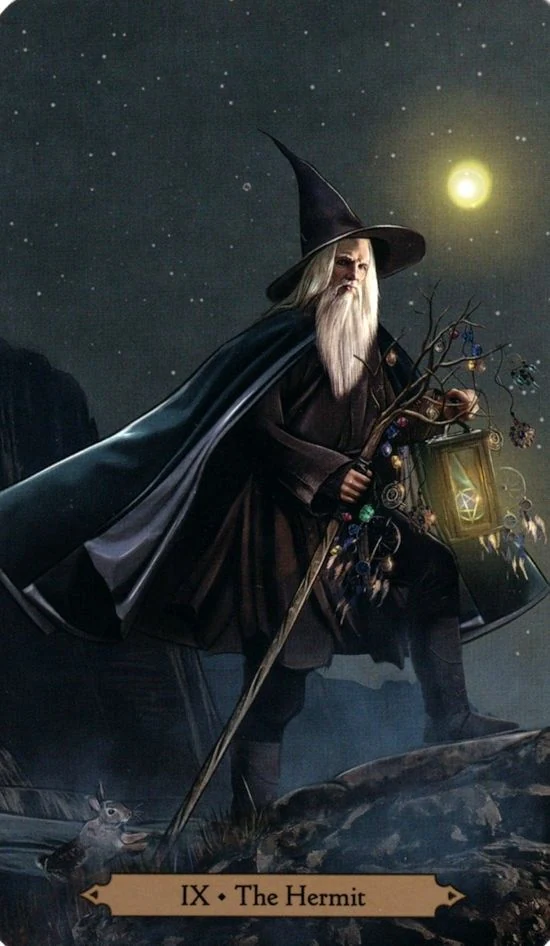
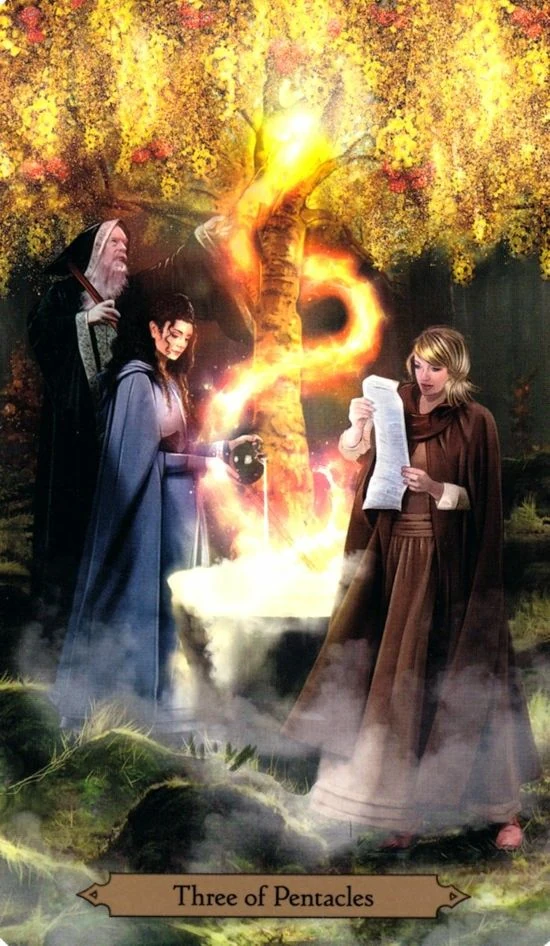
The High Priestess, The Hierophant, The Hermit, and Three of Pentacles show four kinds of learning: inner knowing, formal teaching, solitary searching, and knowledge made useful with other people. Together they ask whether this moment needs silence, instruction, practice, or collaboration.
A beginner-friendly way to meet the cards
If this is your first tarot deck, do not try to memorize all 78 cards at once. Begin with one daily draw and write down three things: the first detail you noticed, what the character appears to want, and the action the traditional meaning suggests. Check the guidebook after you have made that first observation, not before. The goal is to develop a conversation between image and structure rather than waiting for a definition to do all the work.
For reversals, I would start gently. Read a reversed card as energy that is blocked, private, excessive, or delayed, and let the surrounding cards tell you which option fits. The theatrical artwork can tempt a reader toward dramatic conclusions; a simple positional question keeps the interpretation grounded.
Card study
The Tower: when the lesson breaks open
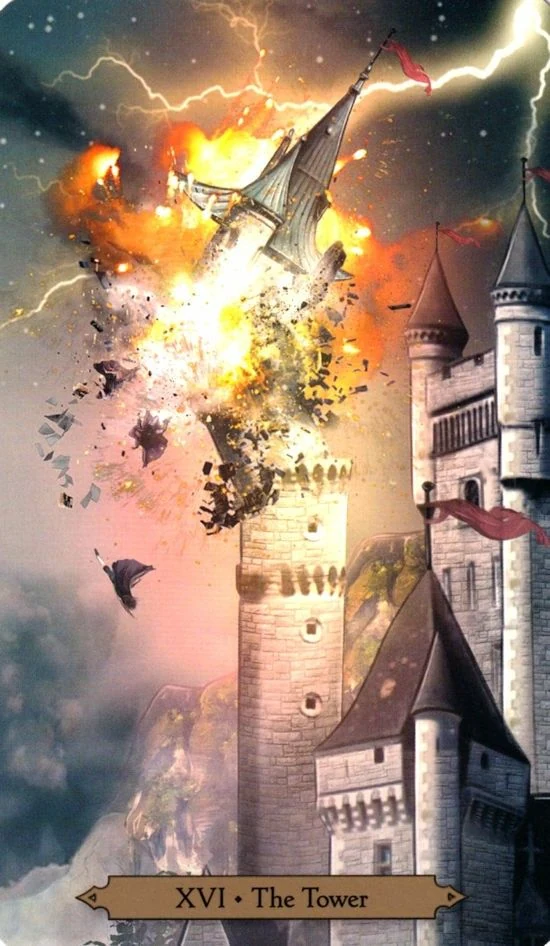
Lightning forks across a dark sky as the upper tower explodes into flame and flying stone. Small figures fall away from the shattered structure, while the neighboring castle remains standing. The image is loud and immediate: one part of the world cannot continue in its present shape, even though life beyond it has not vanished.
This Tower speaks to the exact moment a false certainty gives way. Upright, it can be the truth arriving too quickly to tidy up first. In shadow, fear may keep the reader staring at the blast and missing what is still intact. I would not soften the disruption, but I would ask where the neighboring walls are sound, what support remains, and which belief no longer deserves rebuilding.
The art style: cinematic, character-led, and emotionally loud
Mieke Janssens paints the deck like a sequence of fantasy-film stills. Robes move, spells flare, weather gathers, and expressions are easy to read even at normal card size. The parchment-gold title plaques give the images a consistent lower edge, while the dark outer treatment lets the saturated blues, reds, and golds feel even brighter.
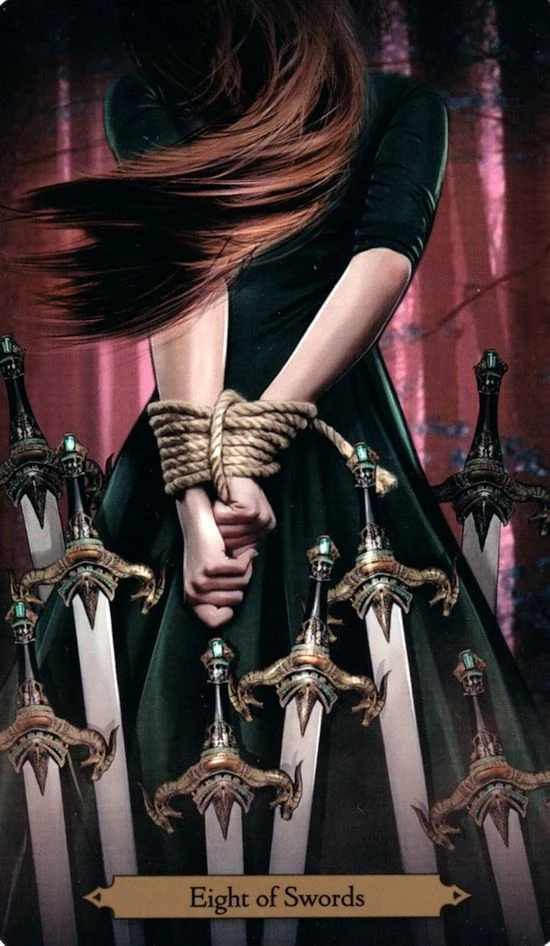
The strongest cards use spectacle to clarify meaning. The Tower does not leave much doubt about instability, and the Eight of Swords makes restriction physical. Quieter cards work through posture, distance, and gaze. That contrast gives a full reading a pleasing pulse: not every card shouts, but even the restrained scenes feel occupied.
There is a trade-off. The visual world is specific, and its youthful academy atmosphere will not disappear when the question is about work, family, or money. For some readers that continuity creates immersion. Others may find that it places too much story between them and the archetype. If you want austere geometry or open-ended abstract art, this is probably not your deck. If you enjoy reading motives, relationships, and turning points, it has plenty to work with.
CARD MOMENT
When feeling becomes a spell
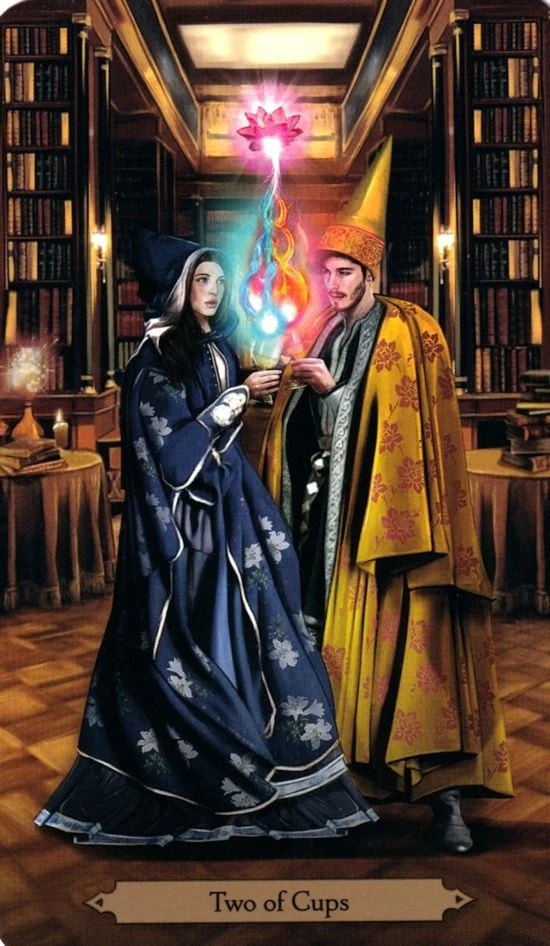
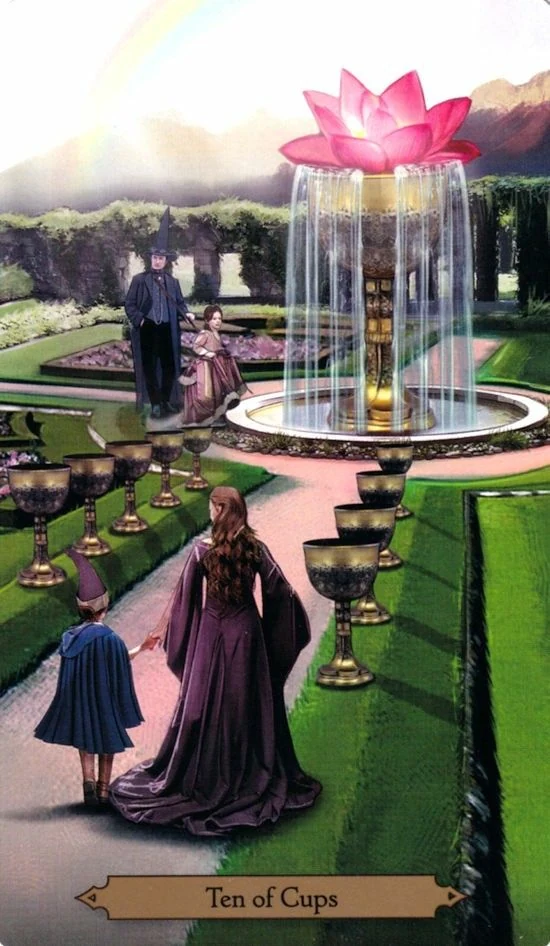
Two of Cups, Queen of Cups, Seven of Cups, and Ten of Cups move from meeting to emotional maturity, then through seductive possibility and toward shared contentment. I use this group to separate a genuine bond from projection: the heart can imagine beautifully, but it still needs honesty and reciprocity.


Where Wizards Tarot shines
Learning and career readings
Mentors, classrooms, rank, competition, and practiced skill give professional questions unusually concrete imagery.
Confidence and identity
The deck is good at distinguishing genuine readiness from performance, insecurity, or the desire to be seen as powerful.
Relationship dynamics
Expressions and staging make attraction, distance, loyalty, rivalry, and emotional projection visible quickly.
Story-led journaling
Readers who like to write can enter a scene, follow the character’s choice, and discover the meaning through narrative.
Where it may hesitate
The cards are richly illustrated, so small spreads are usually clearer than large tableau layouts. Court cards can feel like specific personalities rather than neutral roles, and the academy setting may be too youthful for readers who want a solemn or historically rooted atmosphere. The gallery below is the best way to test that fit: look at several suits, not only the dramatic Major Arcana.
Card study
Eight of Swords: the prison made from a story
A woman in a dark green dress stands with her back turned, wrists bound tightly behind her. Eight ornate swords rise around her like a narrow metal fence, and wind pulls her hair across the scene. Nothing in the image feels restful; the pressure gathers around hands that cannot reach forward and a face we cannot see.
The traditional restriction of this card becomes intensely personal here. It can describe a real limit, yet it also asks whether fear has made every direction look equally dangerous. In a useful position, the Eight of Swords invites one small test: loosen a single assumption, ask for help, or name the choice that still exists. In shadow, it warns against treating anxious thoughts as complete evidence. The surrounding cards show whether the knot needs patience, information, or a firm boundary.
Who will enjoy this deck?
I would recommend Wizards Tarot to readers who enjoy fantasy worlds, character psychology, and a clear Rider-Waite-Smith foundation. It suits beginners who learn through pictures, intermediate readers who want new narrative angles, and collectors looking for a cohesive illustrated world rather than a loose anthology of styles.
It may also be a thoughtful choice for a younger adult reader, provided the guide or teacher keeps difficult cards in context and avoids treating tarot as fixed prediction. The imagery makes emotional states accessible, but accessibility should come with good boundaries: readings can support reflection and conversation, not replace qualified medical, legal, financial, or mental-health care.
Questions to ask before buying
- Do you enjoy figurative fantasy art? The school-of-magic setting is present in nearly every card.
- Do you read from body language? Faces, posture, costume, and relationships carry much of the deck’s voice.
- Do you want traditional scaffolding? The familiar sequence and suits make the deck easier to learn than its elaborate art first suggests.
- Do you prefer large spreads? If so, check whether the visual density feels energizing or crowded on your reading surface.
CARD MOMENT
Four faces of mature power
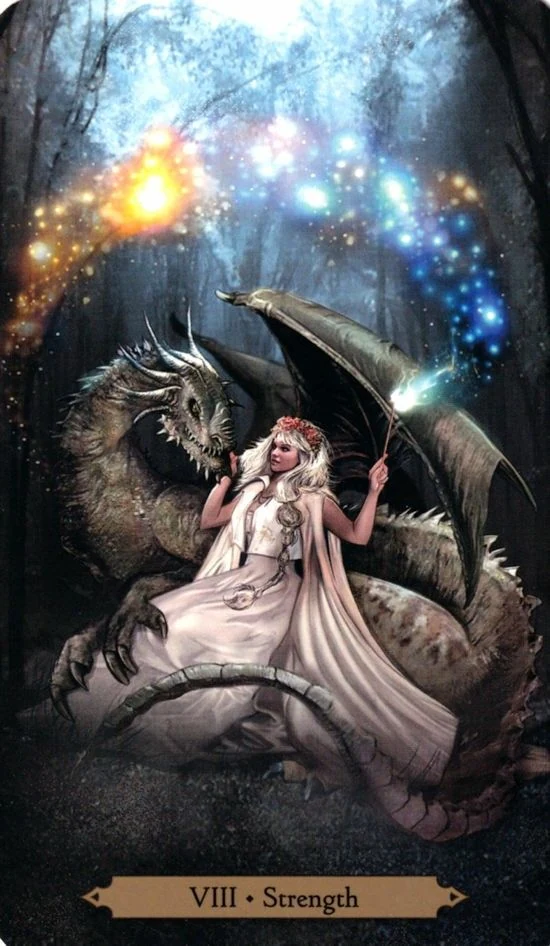
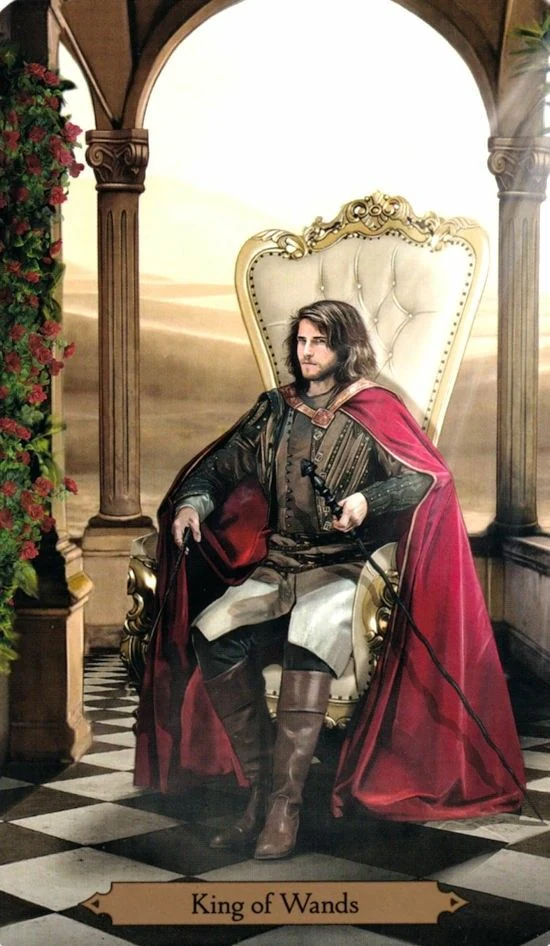
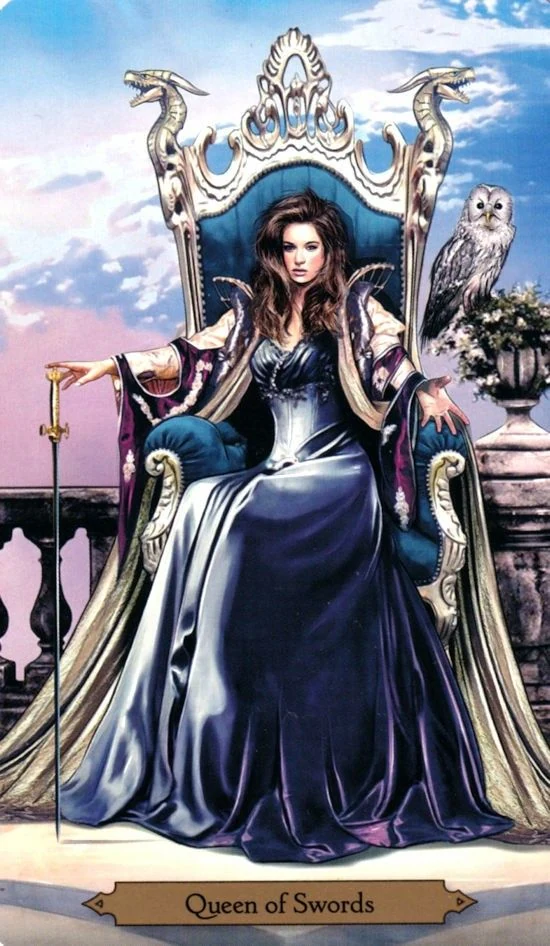
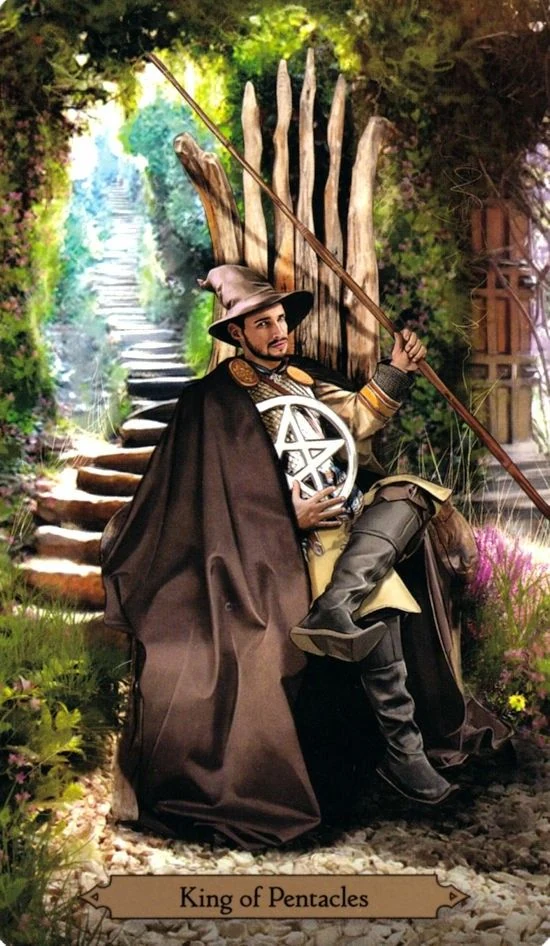
Strength, King of Wands, Queen of Swords, and King of Pentacles each hold authority differently: calm courage, creative command, clear discernment, and material stewardship. The spread becomes a useful mirror when leadership is the question. Which quality is alive, and which one has been left outside the room?
A simple reading ritual for this deck
- Name the lesson. Phrase the question as something you can understand, practice, or decide rather than something fate must announce.
- Notice the role. Is the central figure acting as student, teacher, rival, protector, witness, or performer?
- Find the source of power. Look for the object, gesture, relationship, or environment that changes the scene.
- Translate it into one action. End with a practical next step small enough to complete.
This ritual keeps the fantasy frame connected to ordinary life. The cards can be theatrical, but the best reading usually ends with something simple: ask the question, make the boundary, practice the skill, or admit what you know.
Final thoughts
Wizards Tarot succeeds because its concept and its reading voice agree. This is a deck about power, but even more about apprenticeship: how power is learned, shared, misused, interrupted, and matured. Janssens’s vivid scenes make those tensions immediately legible, while Moore’s familiar tarot framework keeps the spectacle attached to a usable system.
It will not be the right fit for every table. The art is detailed, the world is specific, and the emotional volume can be high. For a reader who likes narrative clarity and fantasy drama, though, those are strengths. I would choose it for questions about growth, confidence, study, community, and the moment when potential has to become practice.
Wizards Tarot FAQ
Who created Wizards Tarot?
Wizards Tarot was created by Barbara Moore and illustrated by Mieke Janssens. This review covers the Llewellyn edition published in 2020.
Is this a complete 78-card tarot deck?
Yes. The published deck contains 78 cards with the standard Major Arcana and the four suits of Wands, Cups, Swords, and Pentacles. Our visual gallery currently documents 76 verified card fronts because The Hanged Man and Nine of Swords were not present in the authorized source board.
Is Wizards Tarot suitable for beginners?
Yes, especially for beginners who learn from character, atmosphere, and story. Familiar Rider-Waite-Smith structure provides a dependable foundation, though the detailed artwork rewards slow observation.
What kinds of readings suit this deck?
It is especially expressive for questions about confidence, education, work, mentorship, belonging, relationships, personal power, and shadow patterns. Smaller spreads help the detailed scenes stay visually clear.
Does the deck use traditional suits?
Yes. The Minor Arcana uses Wands, Cups, Swords, and Pentacles, and the Major Arcana follows familiar names and numbering.
Is the gallery the full deck?
No. The gallery contains 76 of 78 verified card fronts. It does not substitute packaging, duplicate pins, or a card back for the two unavailable cards.
Where can I buy Wizards Tarot?
The Amazon buttons on this page link to the Barbara Moore edition. TarotFans may earn a commission from qualifying purchases at no additional cost to you.