Fantasy World Tarot Card Gallery
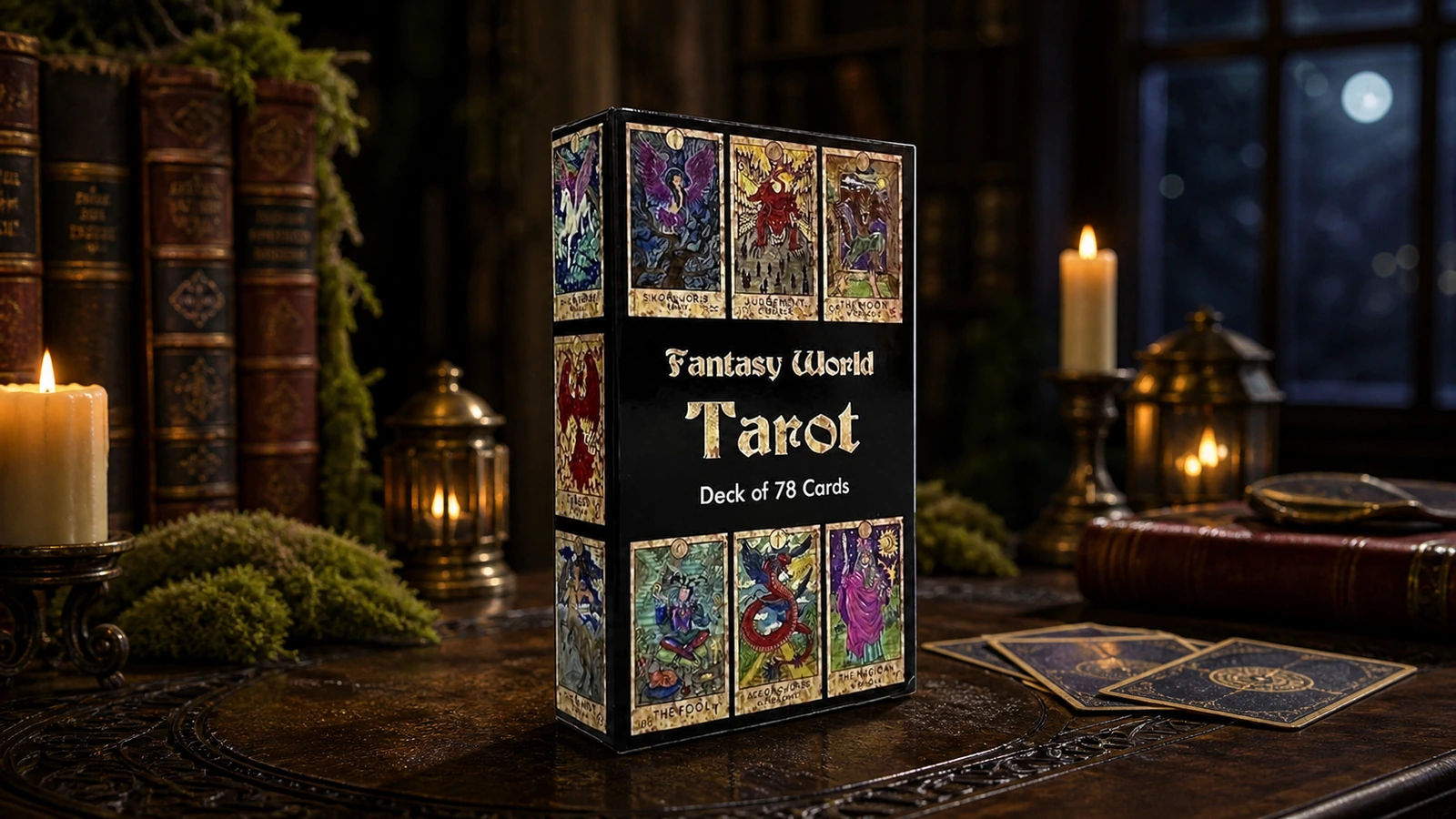
Browse this carefully verified partial gallery of Fantasy World Tarot card fronts. The clearest available exact-deck sources are used without cropping the artwork. Tap any card to open the larger carousel.
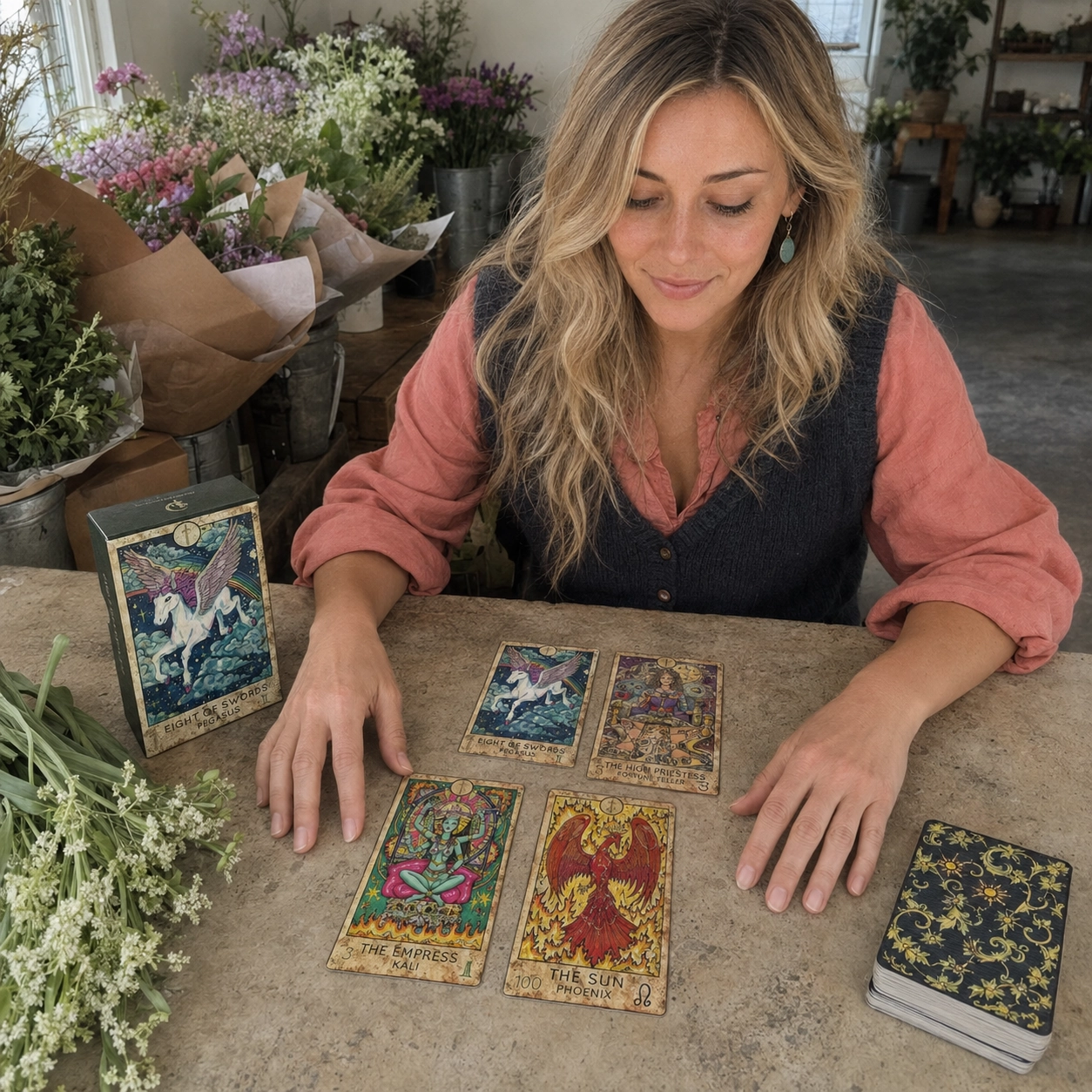
A note from Aurica
Fantasy World Tarot feels like opening an old cabinet of legends and hearing every creature begin its story at once. I love its rough parchment edges, jewel-bright colours, and wonderfully unruly cast. Pegasus lifts through blue cloud, Kali holds fierce abundance in all her hands, and the Phoenix turns the Sun into a promise that warmth can return after even the darkest chapter.
When I read with this deck, I begin with the creature before I reach for a memorised meaning. I ask what it protects, what it hungers for, and whether it is approaching, retreating, warning, or inviting. Then I bring that first feeling back to the card’s familiar tarot role. The High Priestess as a Fortune Teller, for example, asks me to notice what I already sense before I demand another sign.
The cards speak most clearly when I let their personalities meet. Pegasus can reveal the thought that wants freedom; Kali can show where creation and destruction are sharing the same heartbeat; and the Phoenix can warm a difficult spread without pretending the fire never hurt. I still test that picture against the question and the surrounding cards, but the creatures give my intuition a vivid doorway to walk through.
I would reach for Fantasy World Tarot when a reading feels flat, timid, or too polite to name the truth. Its monsters and marvels bring shadow, humour, courage, and imagination back to the table, while its familiar structure keeps the message grounded. May its wild little world remind you that every strange part of your story can become a source of wisdom, and that your own brave next chapter is already beginning to glow.
Fantasy World Tarot feels like opening a strange old bestiary and discovering it can answer tarot questions. Each card pairs tarot structure with a creature, monster, spirit, or mythic being, so the reading starts with a very simple question: what is this creature doing, and what does it want you to notice?
This is not a soft minimalist deck. It is colorful, rough-edged, playful, and a little chaotic in the best way. I would reach for it when a reading needs instinct, shadow, humor, Halloween atmosphere, or a creative prompt that feels more alive than a plain keyword.

Creature card study
The World — Ouroboros
The World as an Ouroboros is one of the cleanest ideas in the deck. Completion is not shown as a finish line; it is shown as a circle, a loop, and a pattern that knows how to renew itself.
In a reading, I would use this card for a cycle closing, a lesson returning, or a person finally seeing the full shape of a story. It is especially helpful when the question is about endings that are also beginnings.
Artwork and first impression
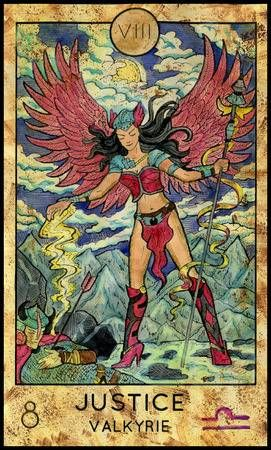
The artwork has a handmade fantasy-zine energy. Some cards are clearer than others, and the source images come from a video walkthrough rather than perfect studio scans, but the personality comes through. The best cards feel instantly readable: Demon, Werewolf, Ouroboros, Valkyrie, Tooth Fairy, Leviathan, and Bunyip all bring a strong emotional flavor.
The creature labels are the doorway. A new reader can look at the card and ask whether the being is protecting, tempting, hiding, hunting, healing, transforming, or testing a boundary. That keeps the review simple enough for younger readers without flattening the tarot meaning.
Four-card creature spread
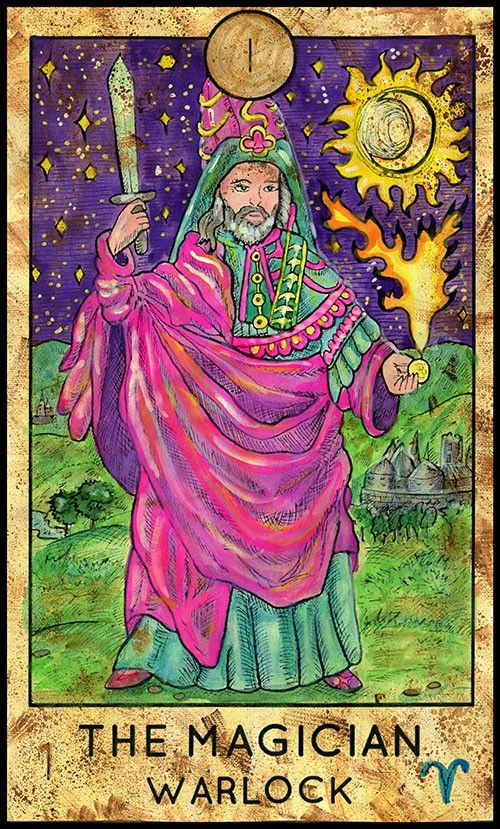
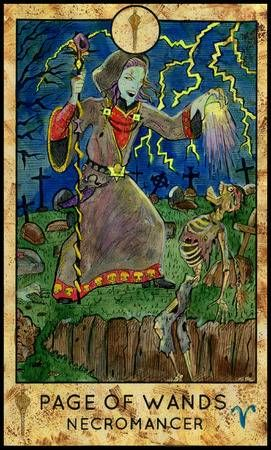
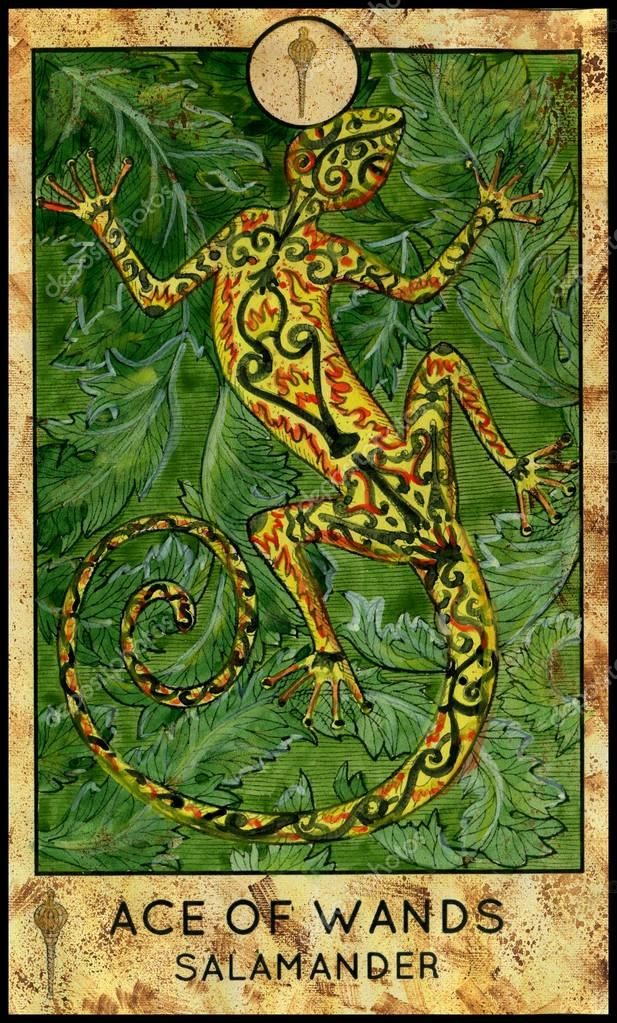
Creative spark: Magician, Page of Wands, Ace of Wands, and Star
The Warlock gathers tools, the Chameleon adapts, the Salamander lights the spark, and the Tooth Fairy keeps a strange little hope alive. This is a perfect mini-spread for a creative project that needs courage and flexibility.

How it reads in practice
I read this deck visually first and traditionally second. Start with the creature. Is it a threat, a guide, a trickster, a guardian, or a wounded thing? Then add the tarot meaning. That order makes the cards feel less like decorations and more like living archetypes.
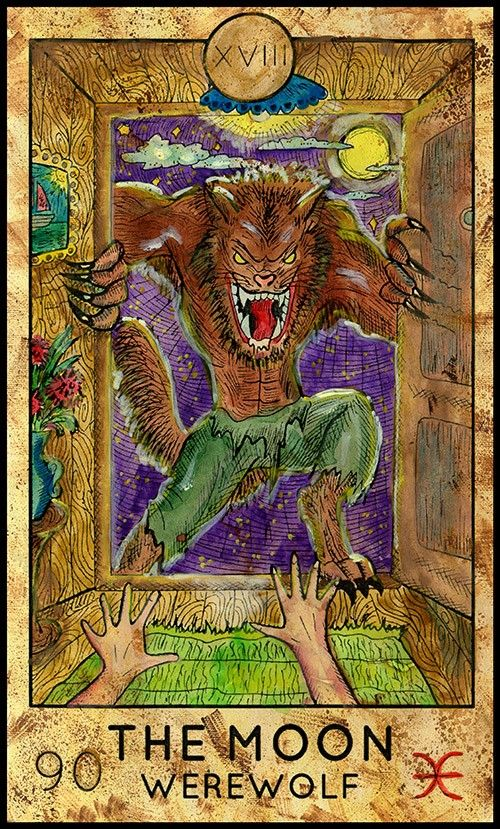
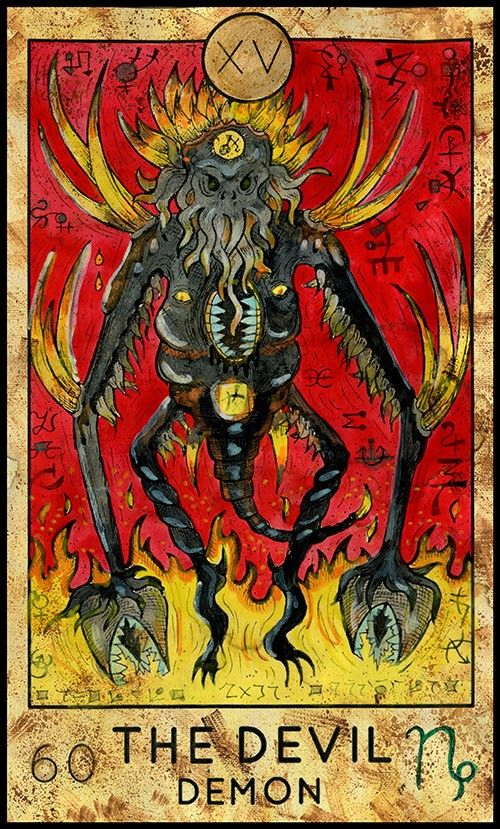
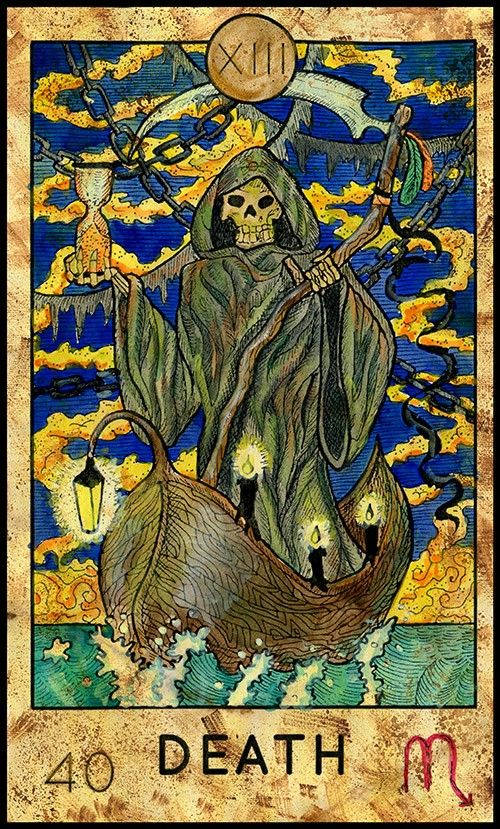
For shadow work, the deck can be blunt without feeling cruel. The Devil as Demon speaks about attachment. Death as Grim Reaper makes endings unavoidable. The Moon as Werewolf makes fear and instinct feel embodied. It is a deck that helps you name what is already growling in the room.
Moonlit card study
The Moon — Werewolf
The Moon already rules dreams, fear, instinct, and the path that is hard to see. Making it a Werewolf brings that meaning into the body. The hidden thing is not only outside you; it may be something you become when the light changes.
I would read this card as anxiety, intuition, old survival habits, or a truth that appears after the rational mind softens. It is excellent for questions about projection, fear, and emotional night vision.
When the creatures turn toward shadow
The darker cards are most useful when I slow the reading down. Rather than treating a monster as a prediction, I notice the feeling it stirs, compare that response with the question, and let the surrounding cards show whether the creature is warning, guarding, grieving, or asking for change.
Four-card creature spread
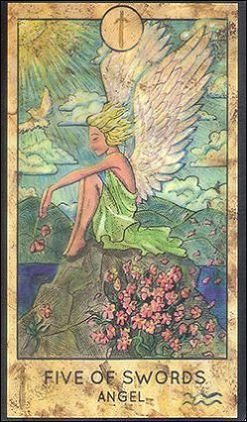
Shadow work: Devil, Death, Four of Swords, and Five of Swords
This line reads like a hard truth: name the attachment, allow the ending, rest before you react, and choose the cleanest path even when pride wants a fight.

Best uses for this deck
Fantasy World Tarot is especially good for daily pulls, Halloween readings, monster archetype work, writing prompts, and readings where the querent needs a clear symbolic hook. It can also be useful for relationship readings when desire, fear, projection, or emotional hunger is part of the question.
Try a simple three-card spread: the creature I am showing, the creature I am hiding, and the creature that can help. That structure fits this deck beautifully because it treats every card as a being with motives, instincts, and medicine.
Four-card creature spread
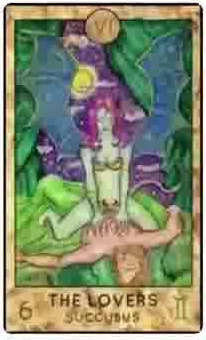
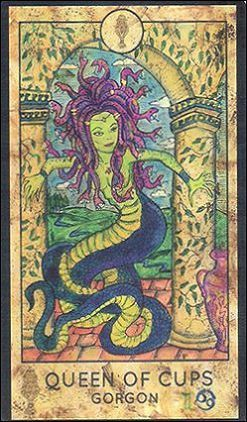
Relationship weather: Two of Cups, Lovers, Ten of Cups, and Queen of Cups
The Unicorn starts with trust, the Succubus tests desire, the Leviathan makes the feelings huge, and the Bunyip asks for emotional depth instead of surface romance.


Desire, choice, and emotional weather
Fantasy World Tarot becomes especially revealing when attraction and instinct share the same spread. I look for the difference between a creature that invites honest closeness and one that dazzles, distracts, or feeds on uncertainty; that contrast gives the next card study its bite.
Choice card study
The Lovers — Succubus
The Lovers as a Succubus is bold. It shifts the card away from sweet romance and toward choice, desire, temptation, and energetic exchange. That does not make the card bad; it makes it honest about attraction.
In relationship readings, I would ask: is this connection nourishing both people? Is chemistry making the choice less clear? Are we choosing from love, hunger, loneliness, fantasy, or fear of being alone?
Pros and cons
| Pros | Cons |
|---|---|
| Memorable creature pairings make the tarot meanings easy to feel quickly. | The art and recovered video-source images are not as crisp as a polished studio deck. |
| Great for shadow work, creative prompts, Halloween readings, and fantasy-minded readers. | Readers who want soft minimalist symbolism may find the deck too loud or busy. |
| The honest partial native gallery gives a strong same-deck preview before buying. | One card is missing from the gallery because the available source frame had a visible overlay. |
Four-card creature spread
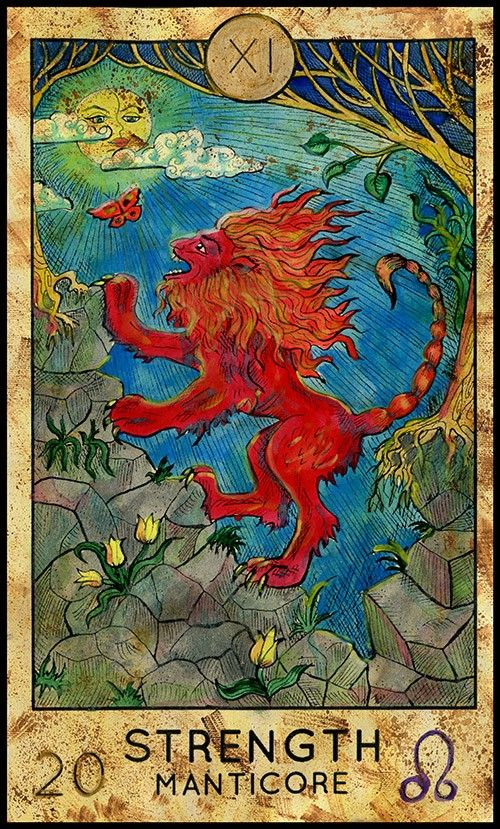
Courage: Strength, Justice, King of Swords, and Six of Wands
The Manticore steadies raw power, the Valkyrie asks for fairness, the Wyvern speaks with sharp wisdom, and the Golem shows victory through patient strength.


Final Thoughts
Fantasy World Tarot is messy, memorable, and full of personality. I like it most when I stop asking it to behave like a traditional deck and let it speak in monster language. The creature choices give the cards an immediate emotional temperature, which makes the deck surprisingly usable for intuitive readers.
The gallery is intentionally partial: The Hermit / Yeti is omitted because the available source frame carried a video overlay. That careful limit leaves the creatures that are shown clear, useful, and true to the evidence.
Fantasy World Tarot FAQ
Is Fantasy World Tarot beginner friendly?
Yes, if the beginner enjoys visual creature symbolism. The monster labels make the mood easy to grasp, while a simple Rider-Waite-Smith keyword guide can support learning.
Is the TarotFans gallery complete?
No. It is a carefully verified partial gallery. The Hermit / Yeti is omitted because the only available source frame carried a visible video overlay.
Is this the same as Fantastical Creatures Tarot?
No. This review covers Fantasy World Tarot by Vera Petruk from the linked video walkthrough.
What readings suit this deck best?
It suits shadow work, creative writing prompts, Halloween-season readings, monster archetypes, daily pulls, and questions where instinct or pattern matters.
Who should skip this deck?
It may not suit readers who want soft minimalist art or gentle devotional imagery. It is made for readers drawn to a strange, colourful, creature-filled tarot personality.
Does Fantasy World Tarot follow traditional tarot meanings?
Mostly yes, while filtering familiar meanings through fantasy creatures. The creature adds emotional texture without replacing the card’s traditional role.
More Tarot Decks to Discover
 Fantastical Creatures TarotMythic beings in a classic tarot structureRead the review →
 Beautiful Creatures TarotGothic glamour and expressive charactersRead the review →
 Anne Stokes Legends TarotDragons, fantasy legends, and dramatic artRead the review →
 Barbieri TarotBold fantasy illustration and powerful figuresRead the review →
 Hezicos TarotWhimsical creatures and storybook magicRead the review →
 Fairy Tale TarotFamiliar tales reimagined for readingsRead the review →