
Explore the Ostara Tarot Cards
Browse the verified Schiffer/REDFeather edition by Molly Applejohn, Eden Cooke, Krista Gibbard, and Julia Iredale. Filter the continuous gallery by the deck’s official groups, or select any card to open the full-size Lightbox.
Showing the selected card group.
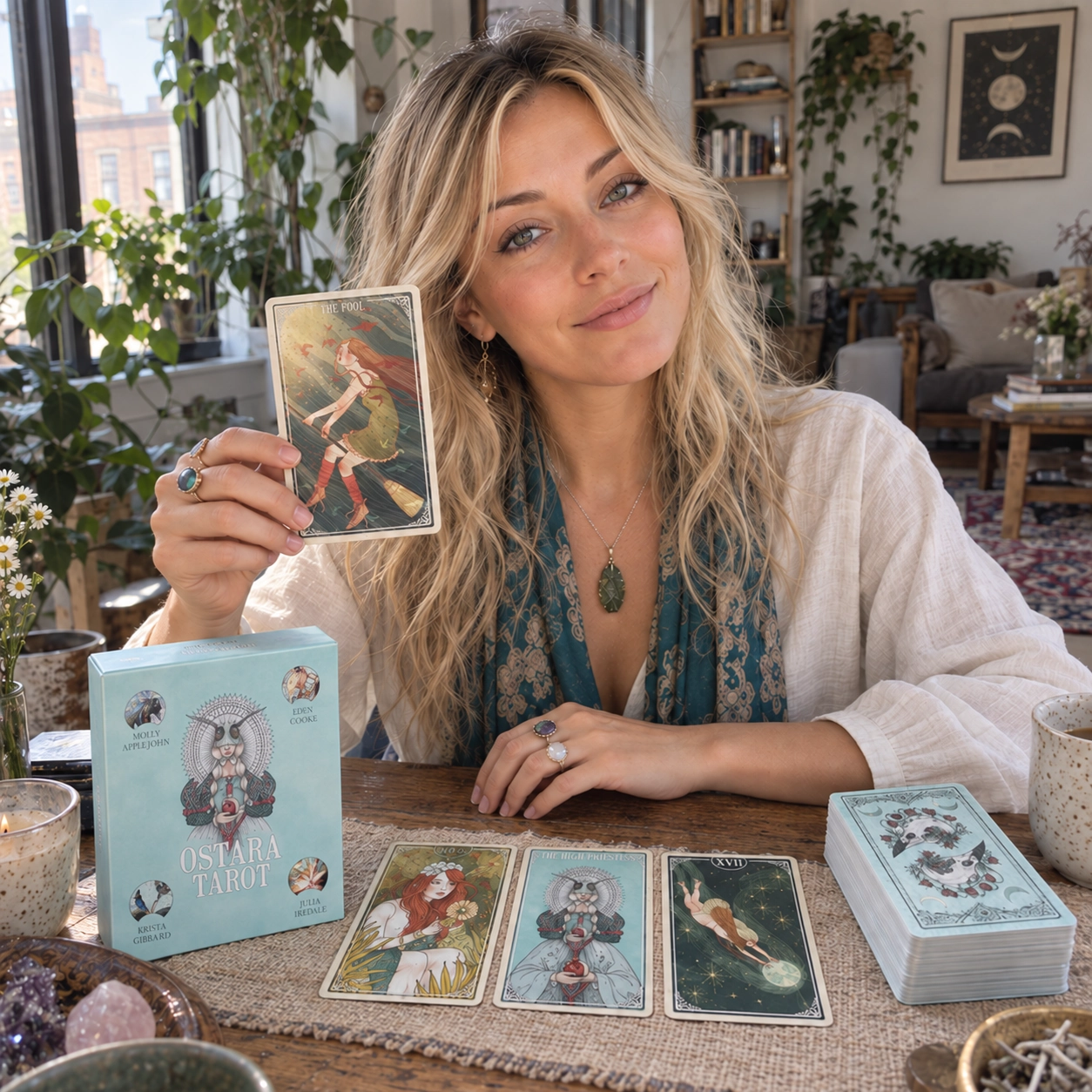
Aurica’s Quick Take
Ostara Tarot feels like four sketchbooks opening onto the same bright spring morning. One card whispers through feathers and watercolour; the next arrives with sharper wind, richer earth, or a figure stepping beyond the border.
I love that change of voice. I ask what my eye noticed first, then compare that feeling with the card’s traditional role and the question on the table. Familiar structure keeps the reading grounded, while the shifting art keeps it emotionally awake.
Julia Iredale illustrates Wands, Eden Cooke Cups, Krista Gibbard Swords, and Molly Applejohn Coins, so suit changes become part of the story. I reach for this generous deck for creative blocks and seasonal reflection. May Ostara Tarot remind you that a new beginning only needs a little courage, curiosity, and room to grow.
Spring energy, four artistic voices
What makes Ostara Tarot different?
Published by Schiffer’s REDFeather imprint, this boxed set contains a complete 78-card tarot deck and a 112-page guidebook. Its four Vancouver-based creators met at art school and built the deck together from a shared interest in tarot and the occult. That collaborative origin is visible: each artist keeps a recognizable hand, yet recurring natural forms, feminine figures, deities, animals, and seasonal change hold the deck together.
The Major Arcana presents deities and mystical archetypes, while the Minor Arcana leans on animal guides and scenes that connect inner experience to the living world. The result is not a literal spring-only deck. “Ostara” is better understood as a lens of renewal: waking up, crossing a threshold, meeting instinct, and deciding what deserves to grow.
Card study
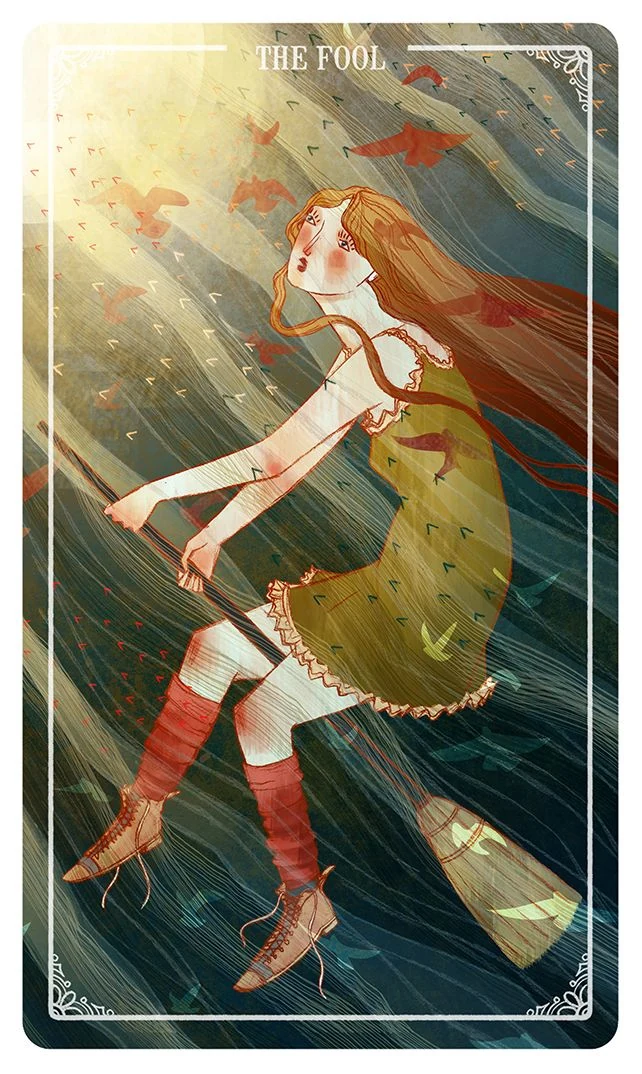
The Fool — moving before certainty arrives
A red-haired traveler strides into strong weather while loose pages or birds lift around her. The diagonal posture makes this Fool feel active rather than absent-minded: the card is already in motion.
In a reading, begin with the visible tension between forward momentum and unstable conditions. The image can support a question such as: What do I need to trust, and what practical detail still needs checking before I step?
How the four artists read as one deck
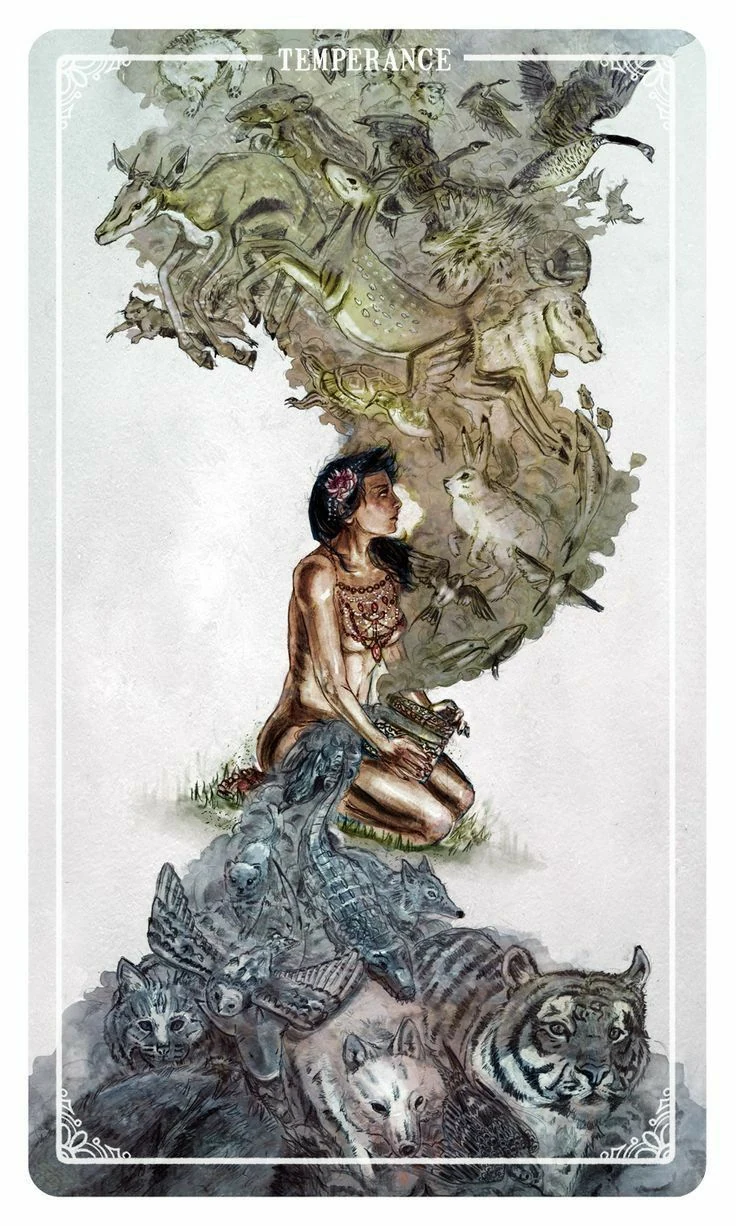
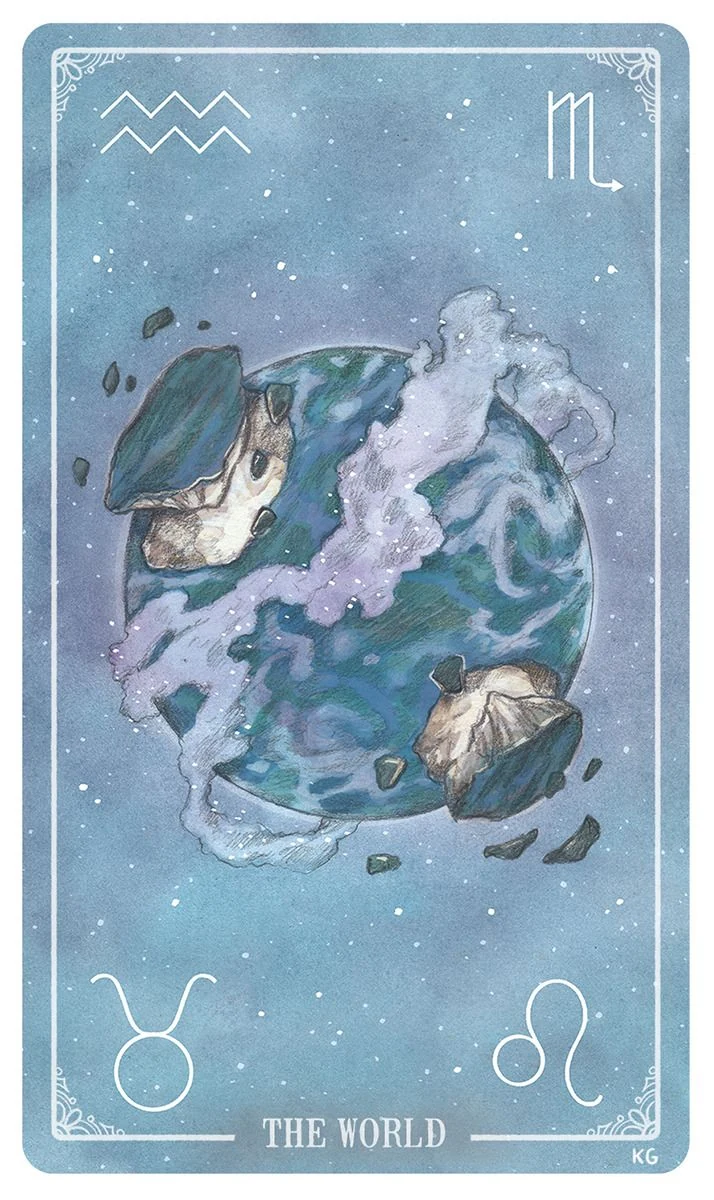
Ostara Tarot’s greatest strength is also its test. A new card may arrive in a different medium, palette, or level of realism from the one before it. Rather than forcing those changes into a single visual grammar, use them as part of the reading. Ask whether the new style feels more intimate, mythic, playful, stark, or embodied. That shift often tells you where the spread’s emotional emphasis has moved.
The borders and titles provide continuity, and the traditional sequence keeps the meanings legible. The variation is most useful when you treat it as contrast, not inconsistency.
Four-card study
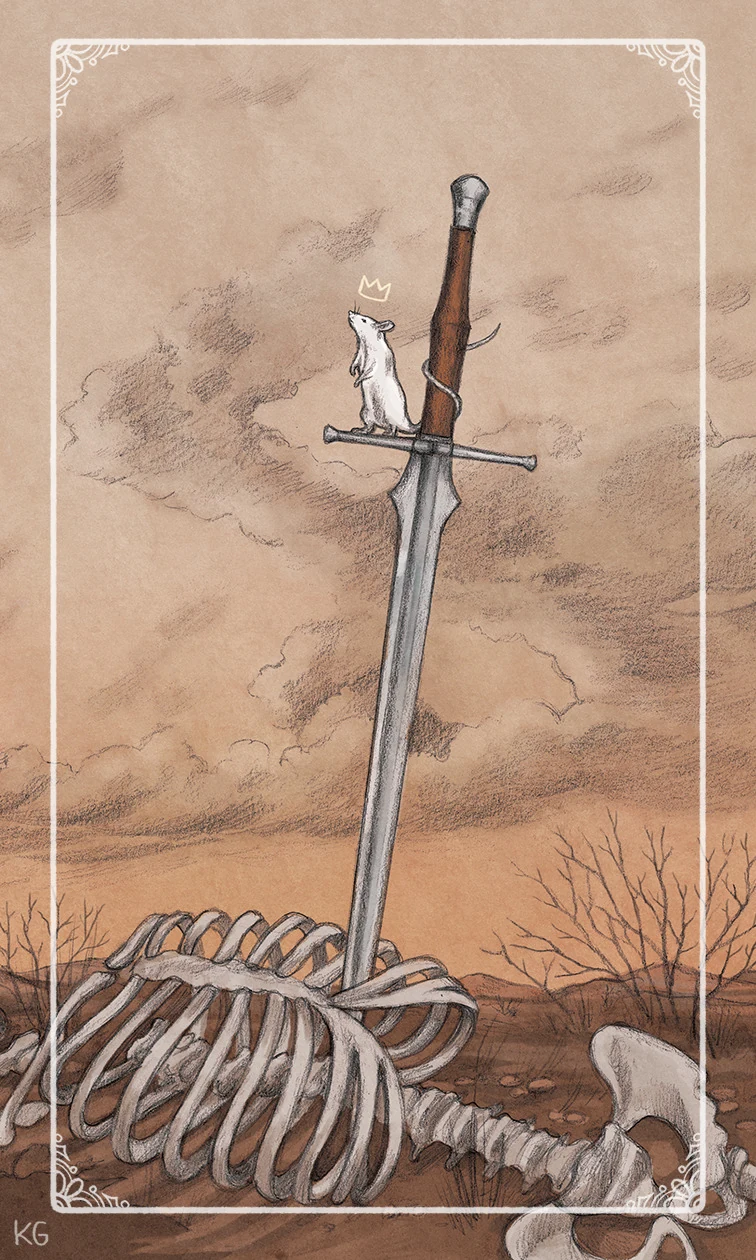
The four elemental beginnings
Read left to right as ignition, feeling, discernment, and material possibility. Each Ace starts something, but the artwork changes the texture of that beginning.



Is Ostara Tarot beginner-friendly?
Yes—with one useful condition. A beginner should be comfortable comparing the card’s title and traditional meaning with what the image actually shows. The deck follows the familiar Major and Minor Arcana structure, so it does not require learning a new system. Its challenge is visual variety, not structural obscurity.
Start by describing the scene without interpretation: character, animal, direction, color, weather, and distance. Then add one traditional keyword. That two-step method keeps intuition anchored and turns the four art styles into a learning advantage.
Easy reading
Pull one card and name the first visible action. Finish the sentence: “Today, I can…”
Medium reading
Compare two cards. Notice what changes in posture, landscape, animal presence, and artistic style.
Deep reading
Map the traditional meaning, the guidebook voice, and your own image response. Keep all three distinct before synthesizing them.

Card study
The High Priestess — stillness behind an owl mask
A pale, front-facing figure holds a vessel at the center of a symmetrical composition. The feathered or owl-like headdress obscures the eyes, while circular forms and patterned sleeves make the card feel formal and contained.
This is a useful card for separating silence from avoidance. Ask: What is already known but not yet ready to be explained? In a busy spread, its symmetry can act as a visual pause.
Reading relationship, creativity, and work
For relationship readings, Ostara Tarot is strongest when the question invites pattern recognition rather than a yes-or-no verdict. Look for how figures face one another, whether animals protect or interrupt the scene, and whether the landscape feels open, enclosed, cultivated, or wild.
For career and creative work, the changing styles can be especially productive. A sudden shift from delicate line work to a bold figurative scene may mark the point where an idea needs action. Ask which card describes the seed, which describes the weather around it, and which shows the work required to help it survive.
Four-card study
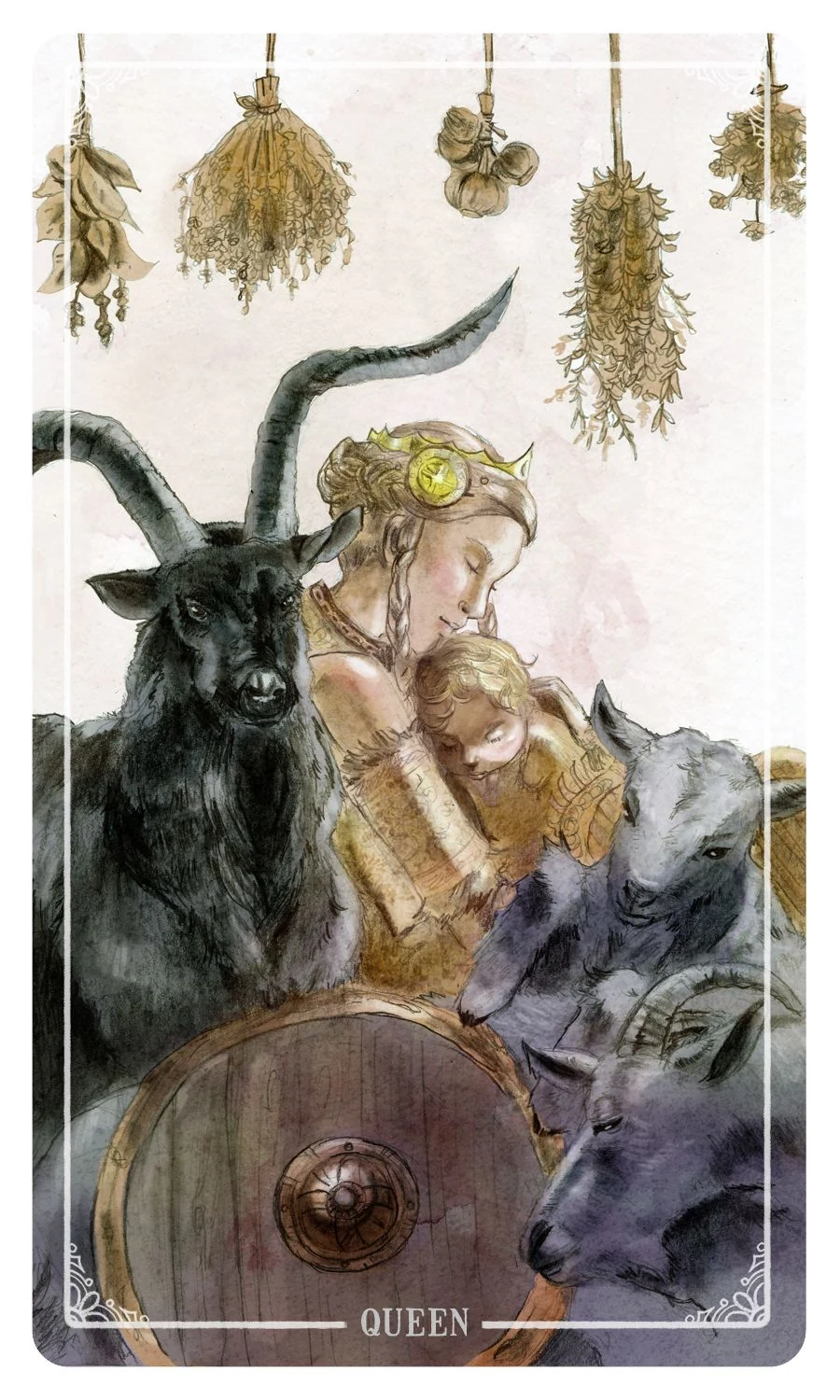
Four faces of embodied authority
The Queens offer four different ways to hold power: expressive heat, emotional depth, precise judgment, and grounded stewardship.


Who will connect with this deck?
Ostara Tarot is a strong match for readers drawn to contemporary illustration, feminine archetypes, animal symbolism, seasonal practice, and decks that reward visual journaling. Collectors may also value the collaborative structure because it lets four artists answer the same tarot framework without erasing their differences.
It may be less comfortable for readers who want one consistent painterly style, a strict Rider–Waite–Smith scene-for-scene remake, or very large printed keywords. The cards ask you to tolerate a little visual surprise.

Card study
The Moon — meeting the path by reflected light
A cool-toned figure stands in profile beneath a brilliant crescent, with dark silhouettes and small lights gathering near the lower edge. The figure’s attention is split between what can be held and what can only be sensed.
Instead of reducing The Moon to confusion, use the visible nighttime conditions. The card asks how to move when information is partial. A grounded prompt is: Which clue is real, and which part of the story am I supplying from fear?
How Ostara Tarot reads in practice
The deck reads best when you let a spread develop in stages. First identify the practical sequence of cards. Next observe which artistic voice feels loudest. Finally, notice the environmental rhythm: wind, water, animals, flowering, darkness, or open ground. These layers keep the reading specific without pretending every decorative detail has a fixed dictionary meaning.
For a four-card reading, use positions that mirror growth: seed, conditions, choice, outcome. This gives the deck’s renewal theme a practical shape and makes it useful outside explicitly seasonal questions.
Four-card study
A path from intention to integration
Use these positions as intention, bond, recalibration, and completion. The spread moves from focused agency toward a result that can live in the wider world.


Deck details, guidebook, and edition guidance
- Title: Ostara Tarot
- Creators: Molly Applejohn, Eden Cooke, Krista Gibbard, and Julia Iredale
- Publisher: Schiffer Publishing / REDFeather Mind, Body, Spirit
- Format: boxed set with 78 tarot cards and a 112-page guidebook
- Card size: approximately 2¾ × 3¾ inches
- ISBN: 978-0-7643-5282-9
The official REDFeather listing describes upright and reversed explanations, keywords, 22 Major Arcana lessons, and animal-guided Minor Arcana. Before buying from any marketplace, compare the ISBN, creator names, pale aqua box, and included guidebook. You can also consult the official Ostara Tarot product page for the current publisher specifications.
Before you choose it
Ostara Tarot pros and cons
Pros
- Complete traditional tarot structure with imaginative contemporary imagery.
- Four artistic voices create strong contrast for intuitive and creative readings.
- Nature, animal, and seasonal motifs support reflective journaling.
- Substantial guidebook includes keywords and upright and reversed meanings.
Cons
- The shifts in illustration style may feel less cohesive to some readers.
- Several scenes benefit from guidebook context during early readings.
- Readers wanting a literal Rider–Waite–Smith clone may prefer a more conventional deck.
Final thoughts
Ostara Tarot succeeds because it treats collaboration as part of the divination. The cards do not all whisper in the same voice, yet they share a world of renewal, instinct, feminine presence, and ecological attention. That tension gives repeated readings room to breathe.
Choose it if you want a deck that is structurally familiar but visually alive. Work with it slowly enough to hear the difference between the four artists, then notice how those differences begin to converse across a spread.

Ostara Tarot FAQ
Who created Ostara Tarot?
Ostara Tarot was created by Vancouver-based illustrators Molly Applejohn, Eden Cooke, Krista Gibbard, and Julia Iredale. The collaboration preserves four visual voices within one complete tarot system.
How many cards are in Ostara Tarot?
The boxed set contains 78 cards: 22 Major Arcana and 56 Minor Arcana. It also includes a 112-page guidebook.
Is Ostara Tarot good for beginners?
Yes, especially for visual learners. It uses the familiar tarot structure, and the guidebook provides keywords plus upright and reversed explanations. The main adjustment is learning to read across four illustration styles.
Does Ostara Tarot follow Rider–Waite–Smith meanings?
It keeps a recognizable traditional tarot sequence and many familiar correspondences, but it reinterprets the scenes through contemporary figures, deities, animals, and nature-centered imagery rather than copying every Rider–Waite–Smith composition.
What readings suit Ostara Tarot best?
It is particularly strong for personal renewal, relationships, creative work, seasonal reflection, journaling, and questions where image, atmosphere, and instinct matter.
What should I check before buying?
Check for the four creator names, ISBN 978-0-7643-5282-9, the pale aqua box, all 78 cards, and the included guidebook. Availability and pricing can change, so confirm the live listing before ordering.


