Explore The Labyrinth Tarot Cards
Browse the complete verified deck in canonical order. Choose a group or open any card for a larger, keyboard-friendly view.
A note from Aurica
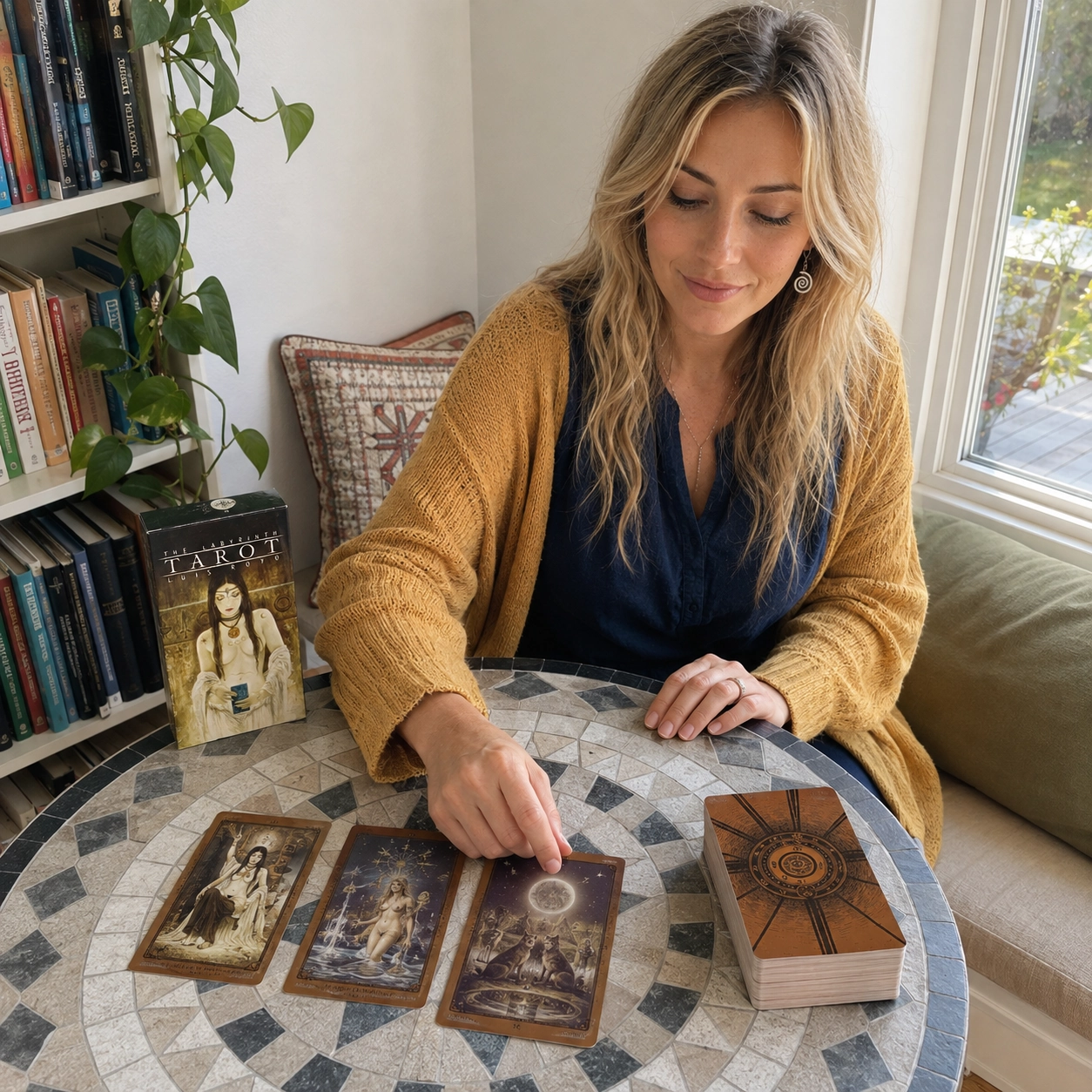
I love the hush that falls over The Labyrinth Tarot before I have interpreted a single symbol. Its sepia figures seem to have stepped out of a half-remembered dream, while tiny planets, crescents and circles glimmer like clues scratched into an old wall. The High Priestess feels especially still to me: she does not offer a tidy answer, but waits at the threshold until I am ready to notice what my first glance missed.
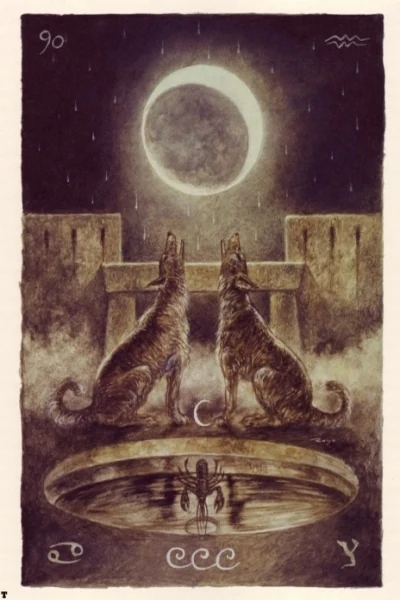
The Moon is where this deck becomes beautifully honest. Those watchful creatures, the pale orb and the dark water below it make uncertainty feel like a real landscape rather than a mistake to escape. Beside The Star, that mood softens. I see a small light returning after confusion—not a blazing promise, but enough brightness to reveal the next turn in the path.
When I read with these cards, I treat the spread as a journey. I notice which figure draws my eye, match that feeling with the card’s familiar tarot role, and then look for a repeated planet, colour or gesture nearby. The pip cards ask for a little more number-and-suit knowledge, yet their green, red, blue and gold fields make emotional changes easy to feel as the reading moves.
This is the deck I would choose for a question with history inside it: a creative block, a choice that keeps circling back, or a truth that cannot be rushed. Follow one symbol rather than every symbol, let each card illuminate the next, and this winding Labyrinth can help you meet your own brave way forward.
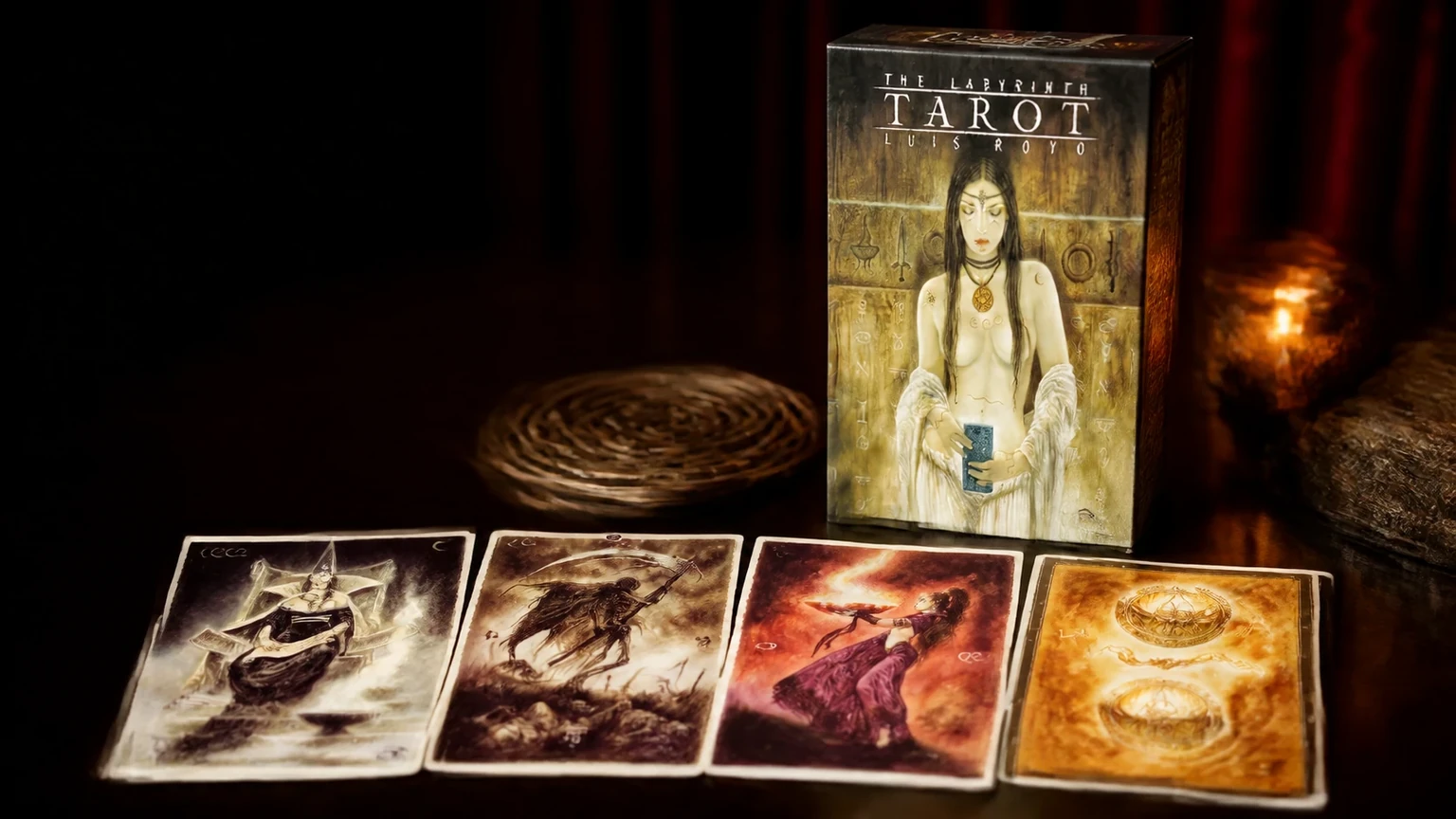
The Labyrinth Tarot is Luis Royo’s dark-fantasy journey through a complete 78-card tarot. Its sepia Major Arcana and figurative courts feel like pages from an occult sketchbook, while the four pip suits break into vivid green, red, blue, and gold.
This review covers the actual Luis Royo deck shown in the walkthrough above—not the later Jim Henson film-themed deck with a similar name. Below you can inspect every card in a verified, duplicate-free gallery.
What is The Labyrinth Tarot?
Published in 2005, The Labyrinth Tarot is a 78-card deck created by Spanish fantasy artist Luis Royo. It keeps a recognizable tarot framework but expresses it through architectural ruins, planetary and zodiac symbols, ritual objects, warriors, queens, and dreamlike figures.
The labyrinth is less a literal maze than a reading metaphor: one winding path toward a difficult truth. That makes the deck particularly effective for shadow work, long-term choices, creative blocks, and moments when a simple yes-or-no answer would miss the point.
Deck details at a glance
| Creator | Luis Royo |
|---|---|
| Original release | 2005 |
| Publishers | Fournier / Lo Scarabeo |
| Cards | 78: 22 Major Arcana + 56 Minor Arcana |
| Suits | Wands, Cups, Spades, Pentacles |
| Visual style | Dark fantasy, sepia figures, color-coded pips |
| Best for | Shadow work, symbolism, path readings, collectors |
| Card size | Approximately 60 × 110 mm |
Artwork and first impression
The strongest visual decision is the split between figurative cards and pip cards. The Major Arcana and courts are layered, sensual, and atmospheric. The numbered Minor Arcana are more restrained: repeated ritual objects, a limited color per suit, and small symbolic variations carry the meaning.
Royo’s figures often appear caught between action and stillness. Thrones, towers, weapons, fire, moons, and circular emblems make the deck feel ceremonial without turning every card into the same gothic scene.
A threshold rather than a lecture
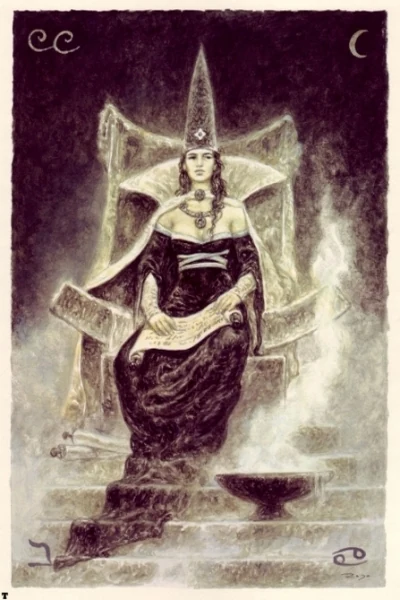
The High Priestess sits inside a pale, architectural space where crown, crescent, basin, and planetary marks do more work than a printed keyword. The card asks for observation before interpretation: what is concealed, what is reflected, and what must be approached quietly?
In a reading, she works well as the point where analysis stops and inner knowledge begins.
How the labyrinth becomes a reading method
A useful way to read this deck is to treat every spread as a path. The first card shows where you entered, the middle cards show what complicates the route, and the final card shows the next honest step—not necessarily a neat ending.
This approach suits decisions that have history behind them. Instead of asking “Which option wins?”, ask “What pattern am I walking, what keeps me inside it, and where is the turn I can actually make?”
Entering, searching, turning, arriving
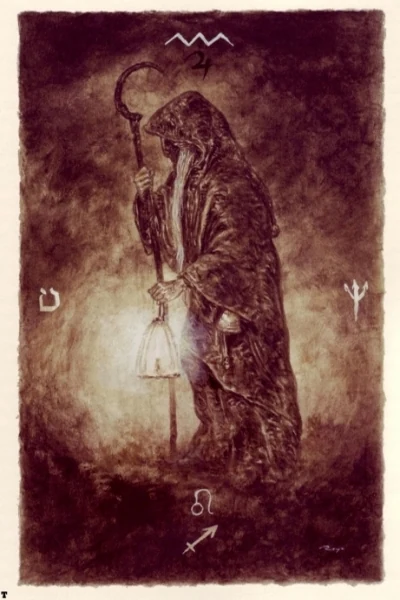
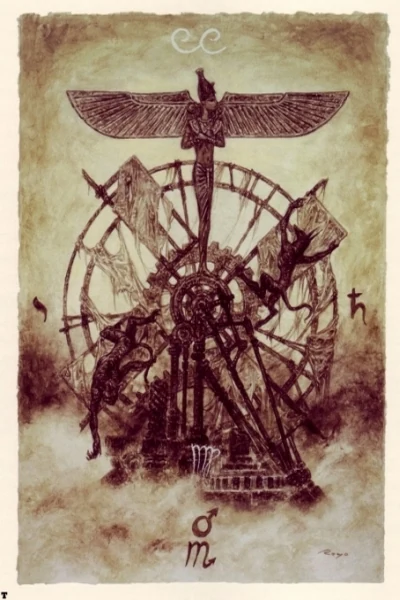
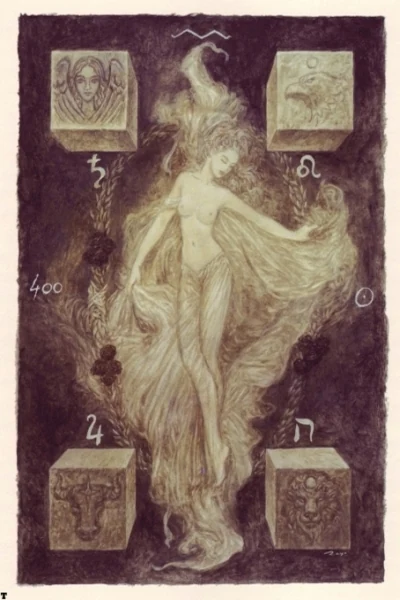
A compact sequence for questions about direction and purpose. Read it as movement rather than four isolated definitions.
Major Arcana: detailed, symbolic, and psychologically heavy
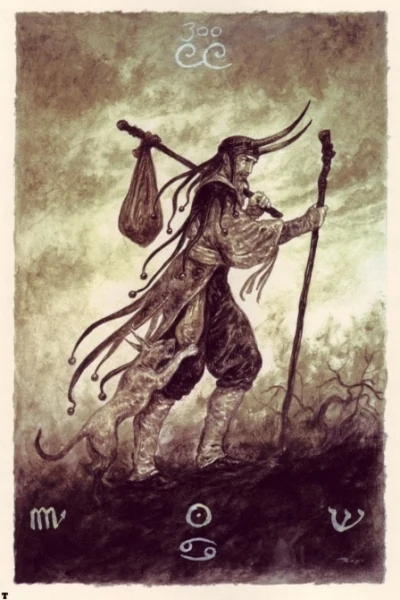
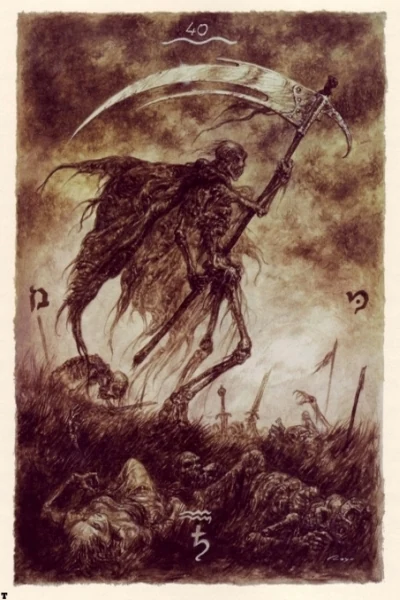
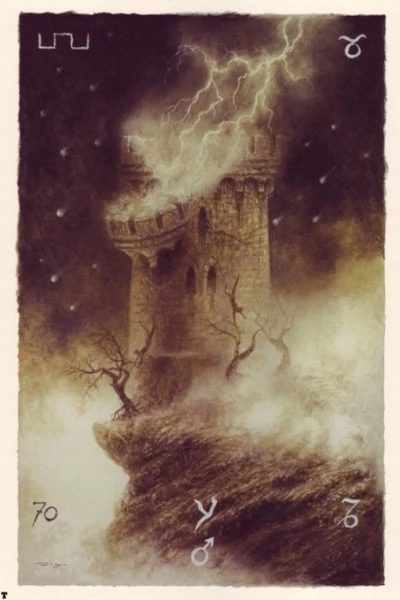
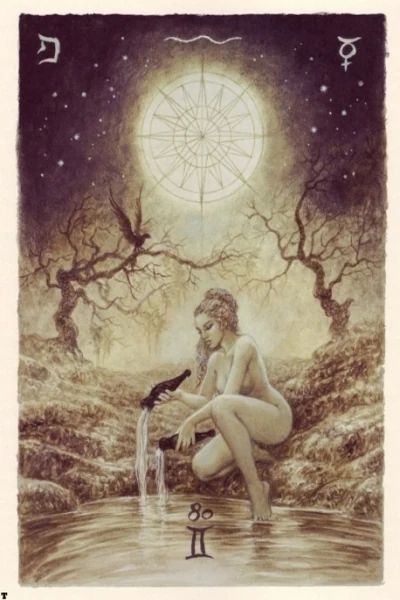
The Major Arcana carry the deck’s richest visual storytelling. Several cards feel recognizable at once—The Tower erupts, The Moon watches over mirrored animals, Death advances with a scythe—but the astrological marks and unfamiliar staging prevent the images from becoming simple copies of Rider–Waite–Smith scenes.
This is where the deck earns its “labyrinth” name. The cards invite you to trace connections between image, planet, body language, and repeated circular forms.
A clean cut through an old route
Death is drawn as a dark, forward-moving figure rather than a distant warning. The sweeping blade and exposed path make the transition feel active: something is being cleared so movement can resume.
For practical readings, this card is strongest when the question becomes “What must stop receiving my energy?” rather than “What bad thing will happen?”
Minor Arcana: pips, courts, and four distinct colors
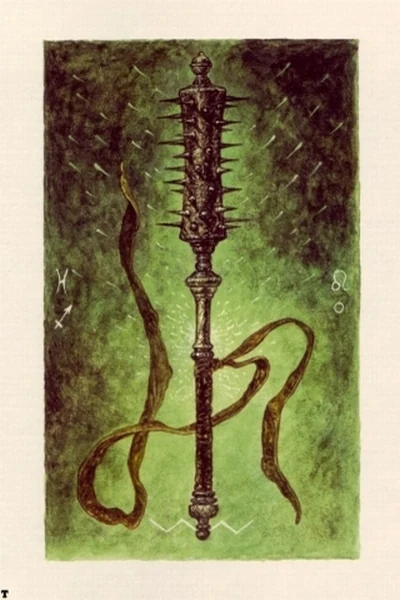
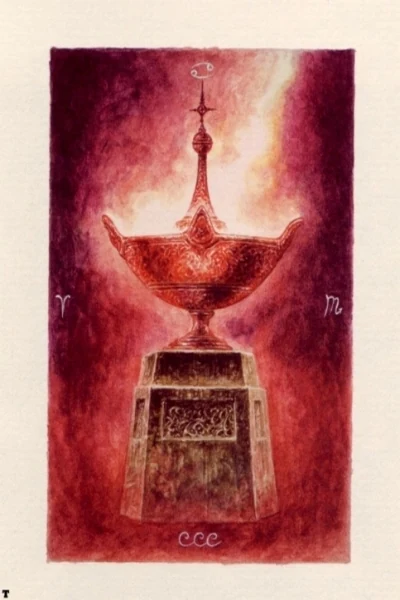
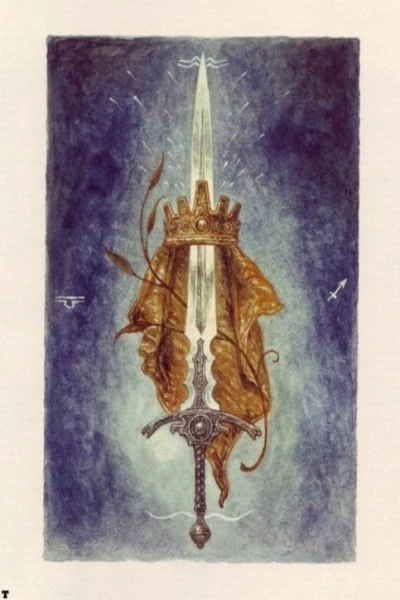
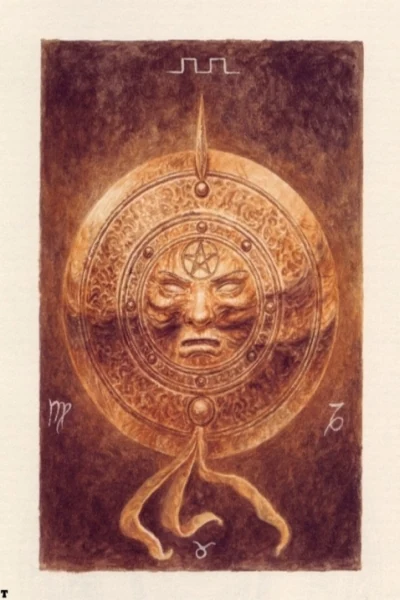
The numbered cards are pip-based rather than fully illustrated daily-life scenes. Green Wands, red Cups, blue Spades, and gold Pentacles make suit recognition fast, but beginners will still need to bring their own number and element knowledge.
The courts restore the figurative art. Pages, Knights, Queens, and Kings become bridges between the spare numbered cards and the denser Major Arcana. Note that the deck uses Spades where many tarot decks use Swords.
The four Aces set the deck’s visual grammar
Compare each suit at its simplest: force, feeling, thought, and material form. The color shift is immediate even before interpretation begins.
How The Labyrinth Tarot reads in practice
This deck reads best when you combine traditional structure with direct visual evidence. Name the suit and number first, then notice the image’s alteration: an extra blade, flower, crack, shield, flame, or figure. Those differences keep the pip cards from becoming interchangeable.
For larger spreads, use the color blocks as navigation. A run of red Cups makes emotional emphasis obvious; several blue Spades can show pressure, strategy, or mental conflict before you interpret each rank.
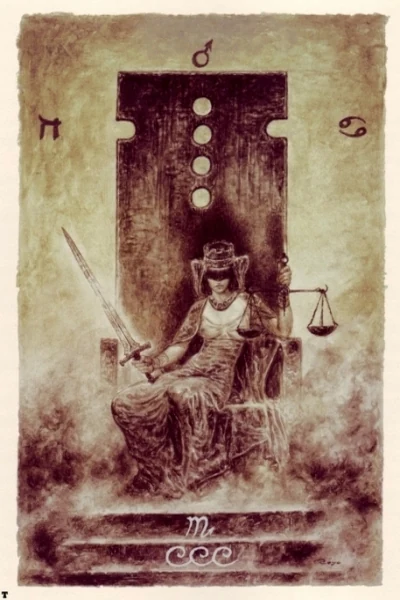
Balance with an edge
Justice places the scales beside a blade and a dark, upright threshold. The image is less about abstract fairness than the weight of a decision: evidence must be faced, and the cut must be precise.
It is an effective card for boundaries, consequences, contracts, and choices where avoiding judgment has itself become a decision.
Is The Labyrinth Tarot beginner-friendly?
It is better as a second deck than a first. The Major Arcana and courts provide strong visual anchors, but the numbered Minor Arcana do not supply complete narrative scenes. A beginner can absolutely learn with it, provided they keep a concise reference for suit, number, and court meanings.
Experienced readers may appreciate the restraint. The pips leave room for numerology, elemental dignity, spread position, and surrounding cards instead of dictating one fixed story.
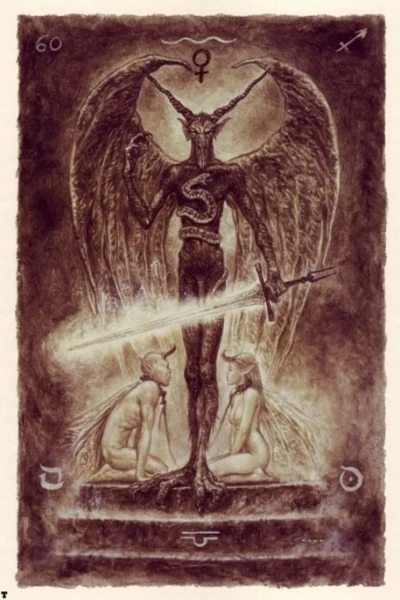
A shadow-work sequence with a way out
Move from uncertainty through disruption and attachment toward a quieter point of orientation. Keep the final card practical: what small hope can be acted on now?
Pros and cons
Pros
- Distinctive Luis Royo artwork
- Complete traditional 78-card structure
- Strong Major Arcana and court personalities
- Color-coded suits are easy to scan in spreads
- Excellent atmosphere for shadow and path work
Consider before buying
- Pip cards require more tarot knowledge
- Mature fantasy imagery and some nudity
- Multilingual naming varies by edition
- Several editions and packages circulate
- Not connected to Jim Henson’s film deck
Final Thoughts
The Labyrinth Tarot is not trying to be neutral. It is dark, symbolic, sensual, and intentionally uneven in visual density. That contrast is its character: ornate archetypes lead into disciplined pips, then back into richly drawn courts.
Choose it if you enjoy fantasy art and want a deck that turns a reading into a path of symbols. Skip it if you need scenic Minor Arcana or a gentle first-learning deck.
Frequently asked questions
Who created The Labyrinth Tarot?
Spanish fantasy artist Luis Royo created the deck. It was published by Fournier and Lo Scarabeo.
How many cards are in The Labyrinth Tarot?
It is a complete 78-card tarot: 22 Major Arcana and 56 Minor Arcana.
Does the deck use Swords?
The equivalent suit is labeled Spades. It occupies the same structural place commonly held by Swords.
Is The Labyrinth Tarot good for beginners?
It can be learned by a beginner, but its pip-style numbered cards make it more comfortable as a second deck.
Is this the Jim Henson Labyrinth tarot deck?
No. This review covers Luis Royo’s 2005 Labyrinth Tarot, not the later film-themed deck by Minerva Siegel and Tomás Hijo.
Is the full deck shown here?
Yes. The gallery contains all 78 cards in canonical order with unique source and output checksums.


