The Three of Swords tarot card meaning centres on heartbreak, grief, separation, and a truth that is painful to accept. Upright, it often asks you to acknowledge what hurts rather than explain it away. Reversed, it may invite recovery, an honest conversation, or attention to pain you have been trying to bury.
Drawing the Three of Swords does not mean that a break-up, betrayal, or other loss is about to happen. If you are already sorrowful, the image may simply give your feelings a place in the reading. You can respond to what is real today without expecting the worst tomorrow.
For example, a friend may cancel a plan that mattered to you. You can name the disappointment, ask what happened, and decide whether the friendship needs a conversation. The card is not evidence that the friend wanted to cause pain. Start with the experience you can actually describe.

3 of Swords Tarot Card Meaning at a Glance
- Main keywords: heartbreak, painful truth, grief, emotional honesty
- Upright meaning: something is beginning to take shape through teamwork, support, or first results. In the Swords suit, this connects to thoughts, words, truth, stress, and decisions
- Reversed meaning: mixed effort, weak support, or growth that needs a stronger plan. The reversed meaning asks you to check how you are handling thoughts, words, truth, stress, and decisions
- Yes or no: usually no, but it can be a yes to healing through honesty
- Best question to ask: What is this card trying to help me understand right now?
The summary above needs a correction: "teamwork, support, or first results" and "mixed effort, weak support, or growth that needs a stronger plan" are inherited wording, not Three of Swords interpretations. For this card, upright usually concerns heartache or a painful truth; reversed can suggest processing pain, recovery, or unresolved hurt. Read these meanings in the context of your question and what you already know, not as predictions. If the card touches a sore spot, give yourself time and ask for the support you need.
Upright Three of Swords: heartbreak and emotional honesty
The upright Three of Swords often describes a moment when an uncomfortable fact becomes hard to avoid. A relationship may not be meeting your needs, a hoped-for opportunity may have fallen through, or a disagreement may have left you deeply hurt. Acknowledging the loss can be more useful than insisting that you should feel fine.
Read the Three of Swords upright as an invitation to separate the event from the story you tell about yourself. Being turned down for one role is an event. Deciding that you will never be wanted anywhere is a much larger conclusion, and one that the card cannot establish.
Heartbreak and emotional disappointment can affect your concentration, appetite, and willingness to socialise. The image gives you a way to talk about those difficult emotions; it does not diagnose their cause. Consider what would make the next day easier, such as a meal with someone you trust or help with an ordinary task.
Honesty does not have to be harsh. You might say, "I felt hurt when the decision was made without me," rather than claiming to know someone else's motives. That makes room for a clear response while keeping your own experience visible.
If the reading touches a recent loss, give yourself time. You do not have to turn grief into a lesson before you can ask for company. Sometimes the useful response is to recognise that you need to grieve and accept company without having to make conversation.

Three of Swords in a tarot reading
The card's position changes the question. In the past, it may prompt you to notice an old hurt that still shapes a choice. In the present, ask what needs to be acknowledged. In a future position, consider how to communicate clearly and seek support; it does not establish future pain and sorrow.
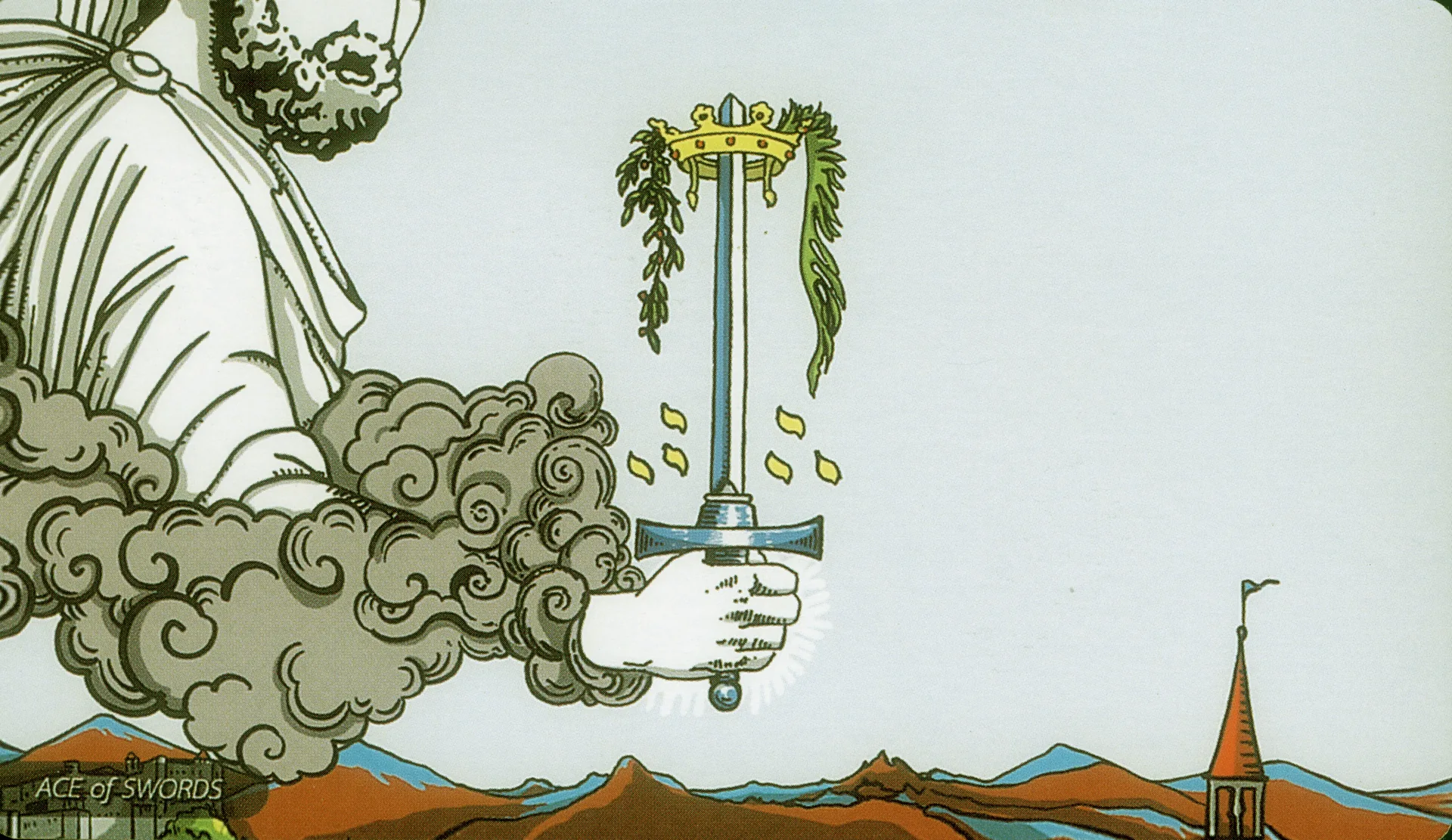
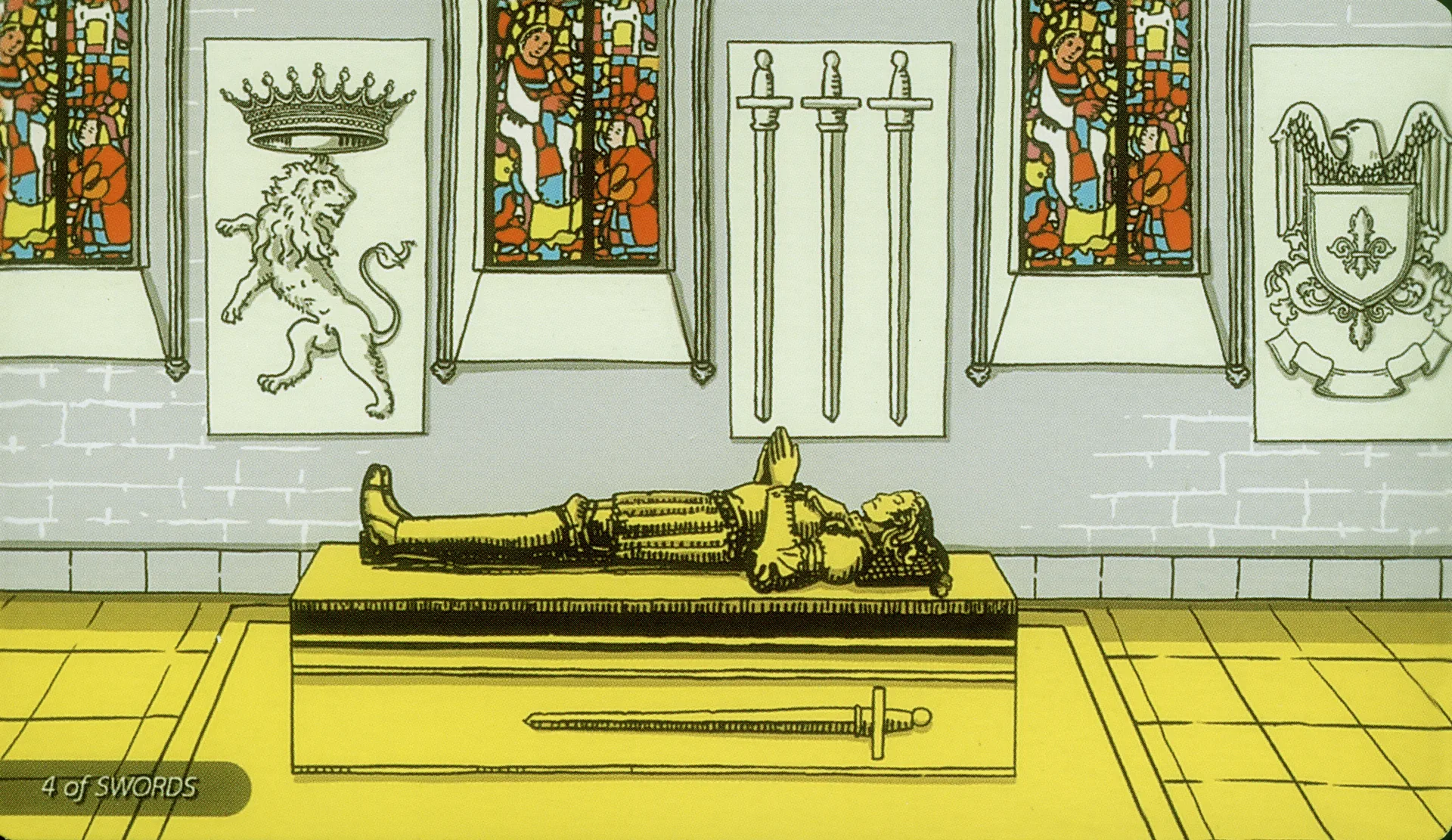
Surrounding cards can help you ask a more specific question. Beside the Ace of Swords, consider what honest information would clarify the situation. With the Four of Swords, think about rest and a quieter schedule. With the Star, explore what makes hope feel believable again. These are interpretive examples, not promises about events or recovery.
Love and relationships: respond to what is known
In a love reading, the card often raises sadness and heartbreak, disappointment, or the strain of a difficult conversation. It can describe an existing break-up or hurt feelings without predicting separation. If you and a partner disagree, identify the issue itself: an unmet agreement, a dismissive comment, or different expectations.
The three blades do not prove that there is a third person in a relationship. Tarot cannot reveal a partner's private feelings, establish infidelity, or guarantee that an ex will return. Ask directly where it is safe to do so, and assess actions and freely given consent.
If you are single, an old heartache may affect how much trust feels comfortable. Losing a first love can stay with you even when you want to date again. Give yourself space to meet people at a pace you can enjoy rather than making a new relationship a test of whether you have recovered.
Being able to forgive is a personal choice, not a requirement of the reading. Forgiveness does not require renewed contact, and you do not have to minimise mistreatment. If communication has improved, look for consistent changes over time rather than assuming that one apology resolves everything.
Career, money, and school: deal with the practical loss
At work, this card can prompt reflection on rejected applications, critical feedback, or a disagreement that has damaged trust. A loss of a job has financial consequences as well as an emotional cost. Check immediate needs, benefits or notice terms, and who can help with applications before trying to solve your entire career at once.
After job loss, self-criticism can make every rejection feel personal. Ask a trusted person to review one application or practise one interview with you. Those are concrete steps to improve your chances without pretending that optimism guarantees an offer.
If your question concerns financial loss, work from actual statements, contracts, and a budget. The image is not investment advice or a forecast of debt. For serious decisions, seek qualified advice and check deadlines. At school, a disappointing result may call for feedback and a revised study plan rather than a verdict on your ability.
Three of Swords reversed meaning: recovery or pain kept inside
The Three of Swords reversed is often read as a change in how you carry a hurt. You may be ready to talk, making room for support, or beginning to see an experience with more distance. It can also suggest that pain remains unspoken, especially when everyone expects you to move on.
The reversed Three of Swords does not guarantee healing or reconciliation. Ask what has changed in your daily life. Are conversations calmer? Can you sleep, concentrate, or enjoy an afternoon more easily? Small observations are more useful than deciding that an upside-down card means everything is fixed.
You might want to let go of negative emotions, but trying to force them away can turn sadness into another reason to criticise yourself. Notice the negative thoughts, question claims such as "This is all my fault," and choose support that helps you deal with the situation.
Reversed in relationships, the card can also invite a discussion about repair. Name the behaviour that needs to change and what would help rebuild trust. Wanting to stop an argument is different from resolving its cause. If you hold grudges, ask what remains unanswered; if someone pressures you to forgive, keep your boundaries.
A better week can still include a difficult afternoon. When old memories return, that does not automatically undo the progress you have made. You can acknowledge them and let them go when you are ready, without treating that phrase as an instruction to suppress them.
Three of Swords yes or no meaning
Many readers lean toward no when this card is used for a yes-or-no question, especially if the situation involves unresolved hurt. That is a convention within a reading method, not a factual answer. Reversed, some readers emphasise repair, but neither orientation guarantees a positive result.
Try asking what would make a responsible yes possible, or what a no would protect. Another person's consent, a legal deadline, or a financial commitment needs real information. A free tarot reading can give you a reflection prompt; it cannot supply those missing facts.
Advice: make room for the hurt without feeding it
Begin with one honest sentence about what happened. "I miss the life we planned" is different from "Nothing good will ever happen again." The first describes what you miss. The second assumes you know the rest of your life.
Consider one small act of care: a walk with a friend, arranging a practical appointment, or asking someone to sit with you. A good cry may feel relieving for some people, while others need quiet or movement. You do not have to show sadness in a particular way for it to count.
You may notice sorrow in your life across several areas of your life, particularly when a loss changes routines and relationships. Decide what needs attention today and what can wait. Ask for the kind of help you need: "Could you help me sort these forms?" is easier to answer than trying to explain everything at once.
Health and wellbeing: support rather than diagnosis
The card can help you reflect on mental and emotional strain, including feeling in need of healing after loss or heartbreak. It cannot diagnose illness, confirm pregnancy, or promise a cure. The pierced heart is symbolic artwork, not a medical warning about your heart.
If pain and hurt are interfering with daily life, consider professional support. Physical symptoms need appropriate medical assessment rather than a tarot explanation. Use the reading to organise what you want to discuss, not to delay care or change treatment on your own.
One archetype, four perspectives
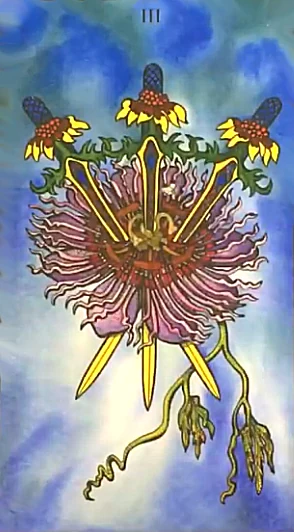
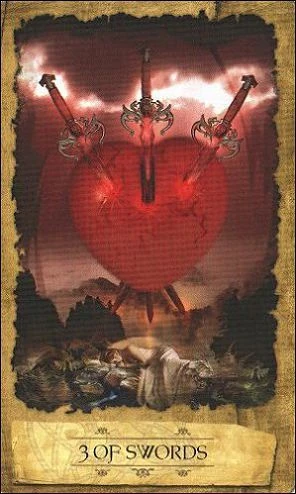
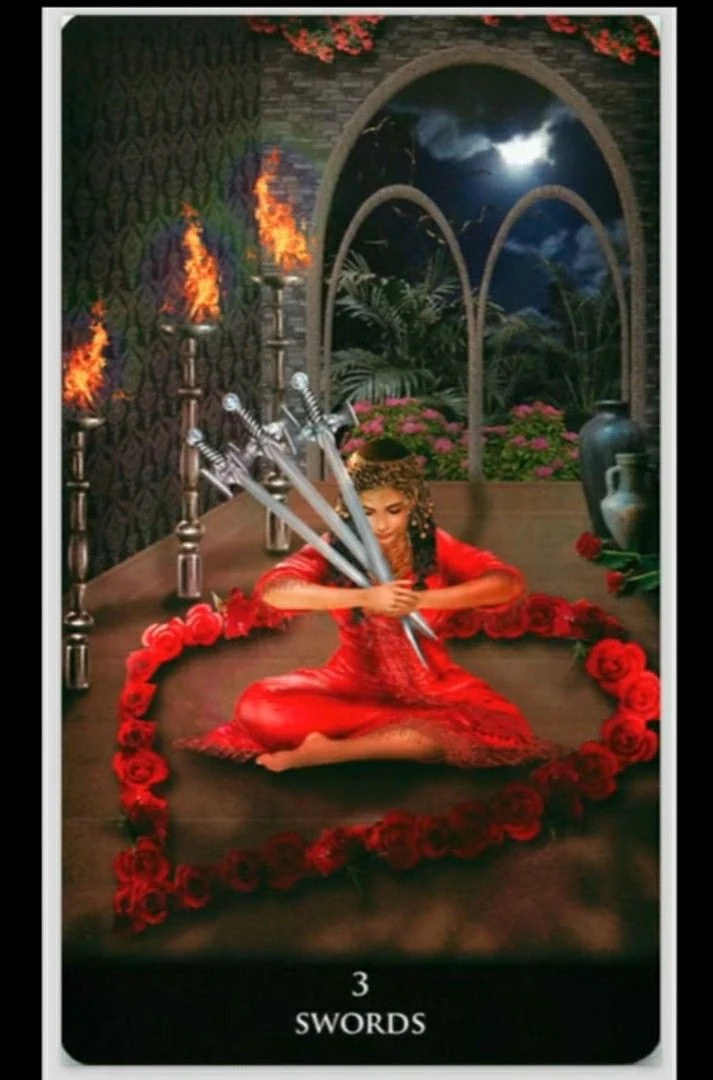
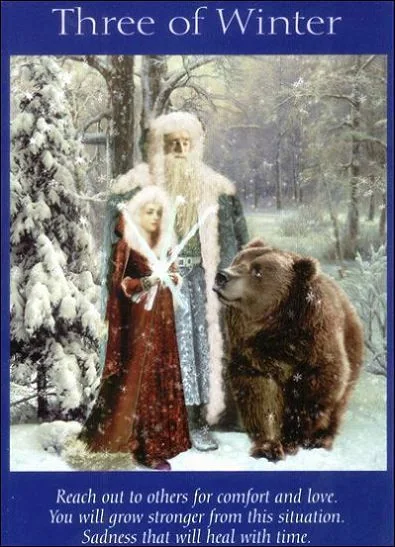
Three of Swords Across Four Tarot Decks
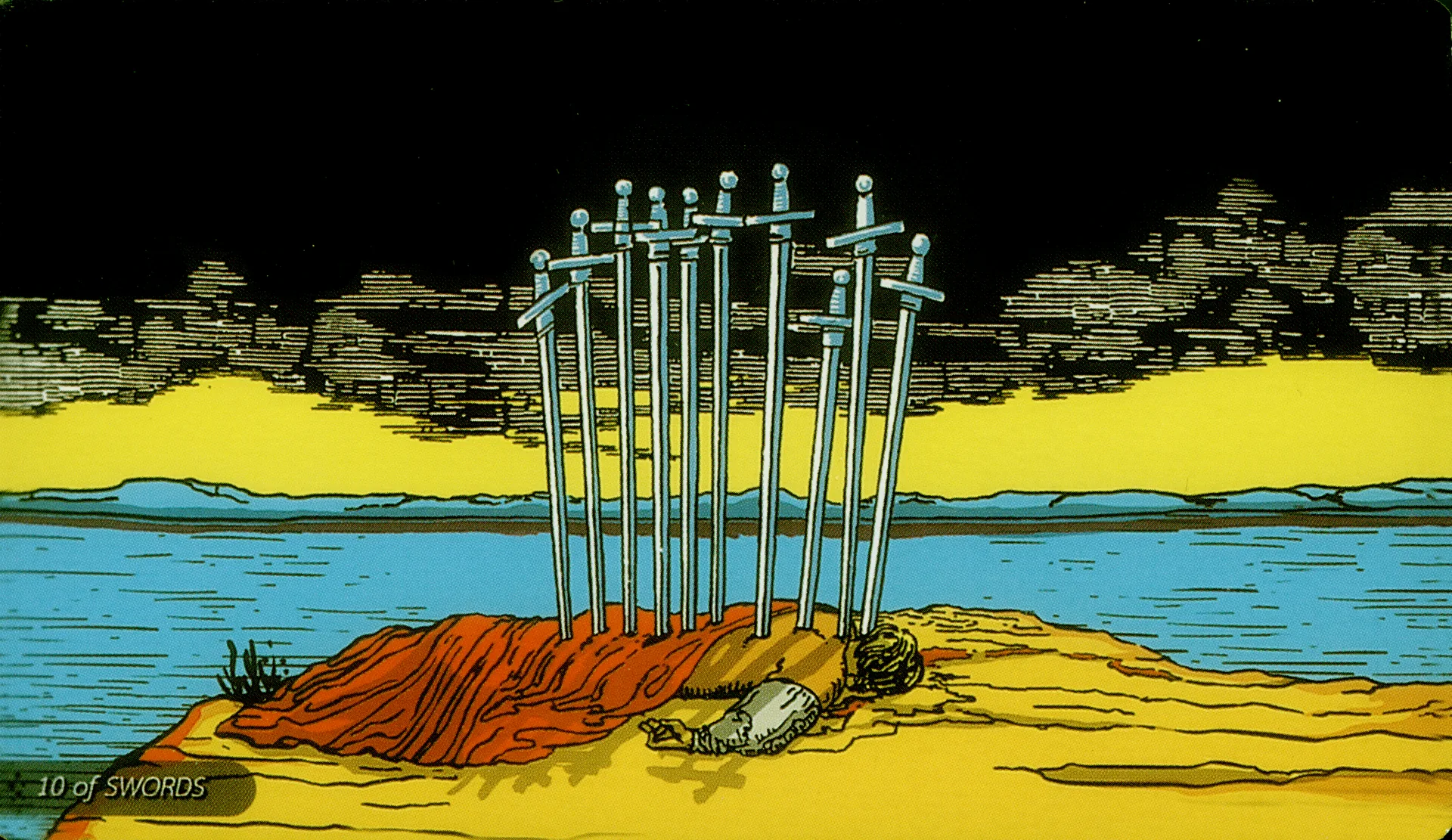
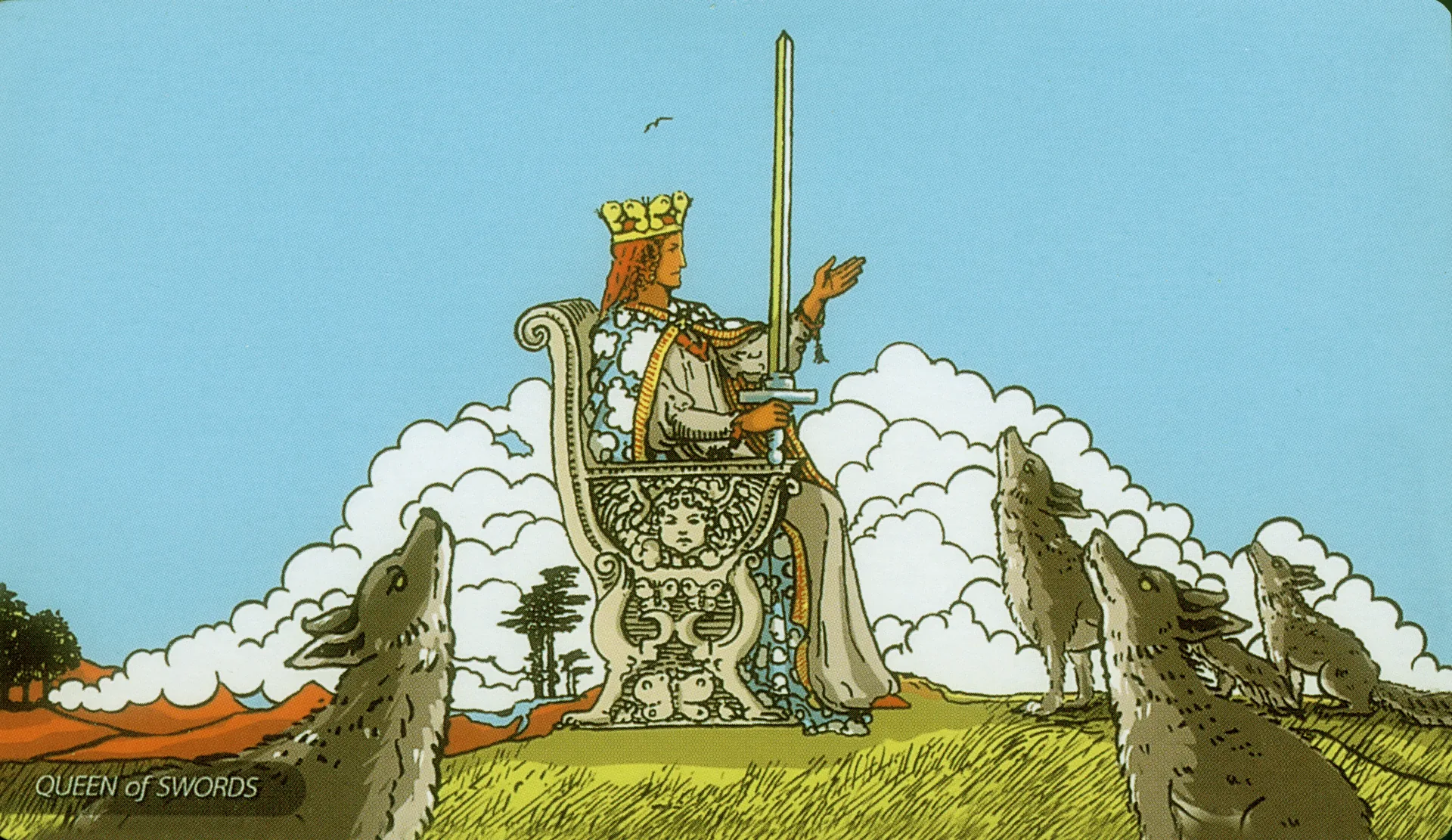
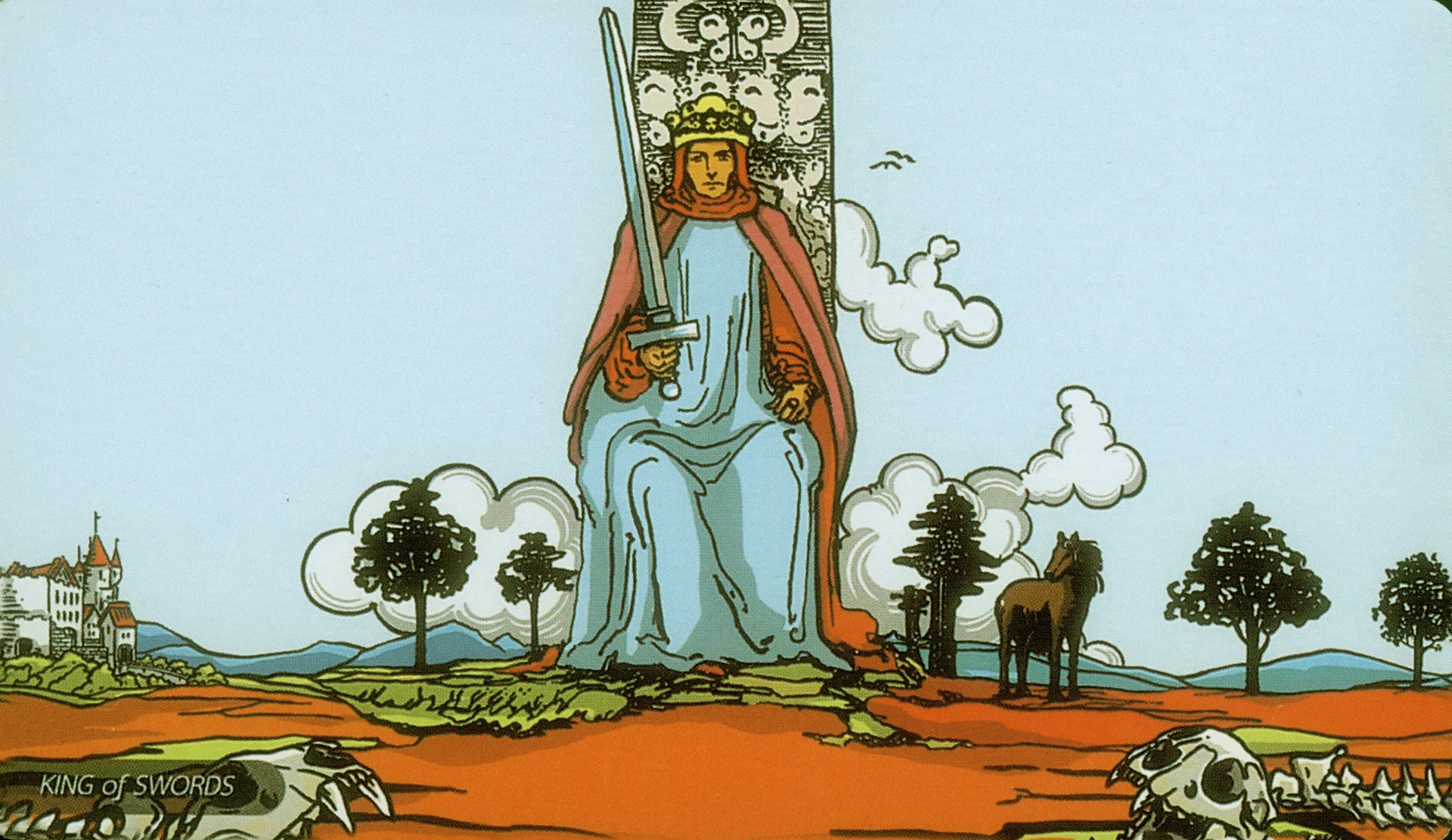
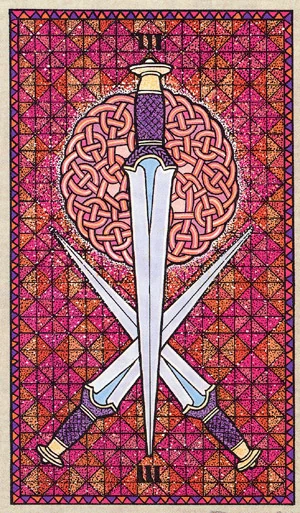
Compare the familiar Rider-Waite-Smith card with the moments before, behind and after the classic scene in three Lo Scarabeo decks.
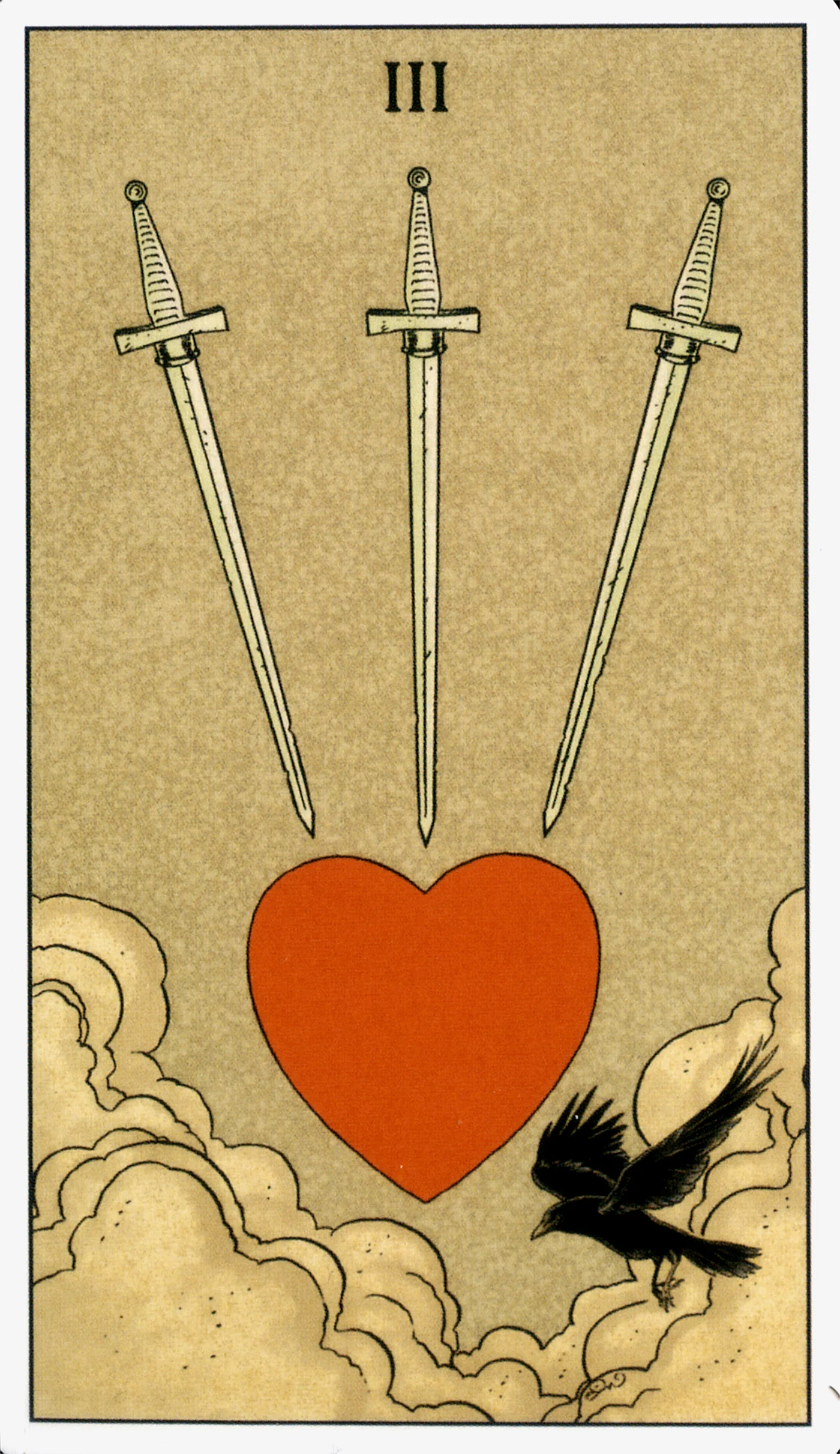
What apparently happens just before
What actually happened

What happened on the opposite side
What apparently happened afterwards
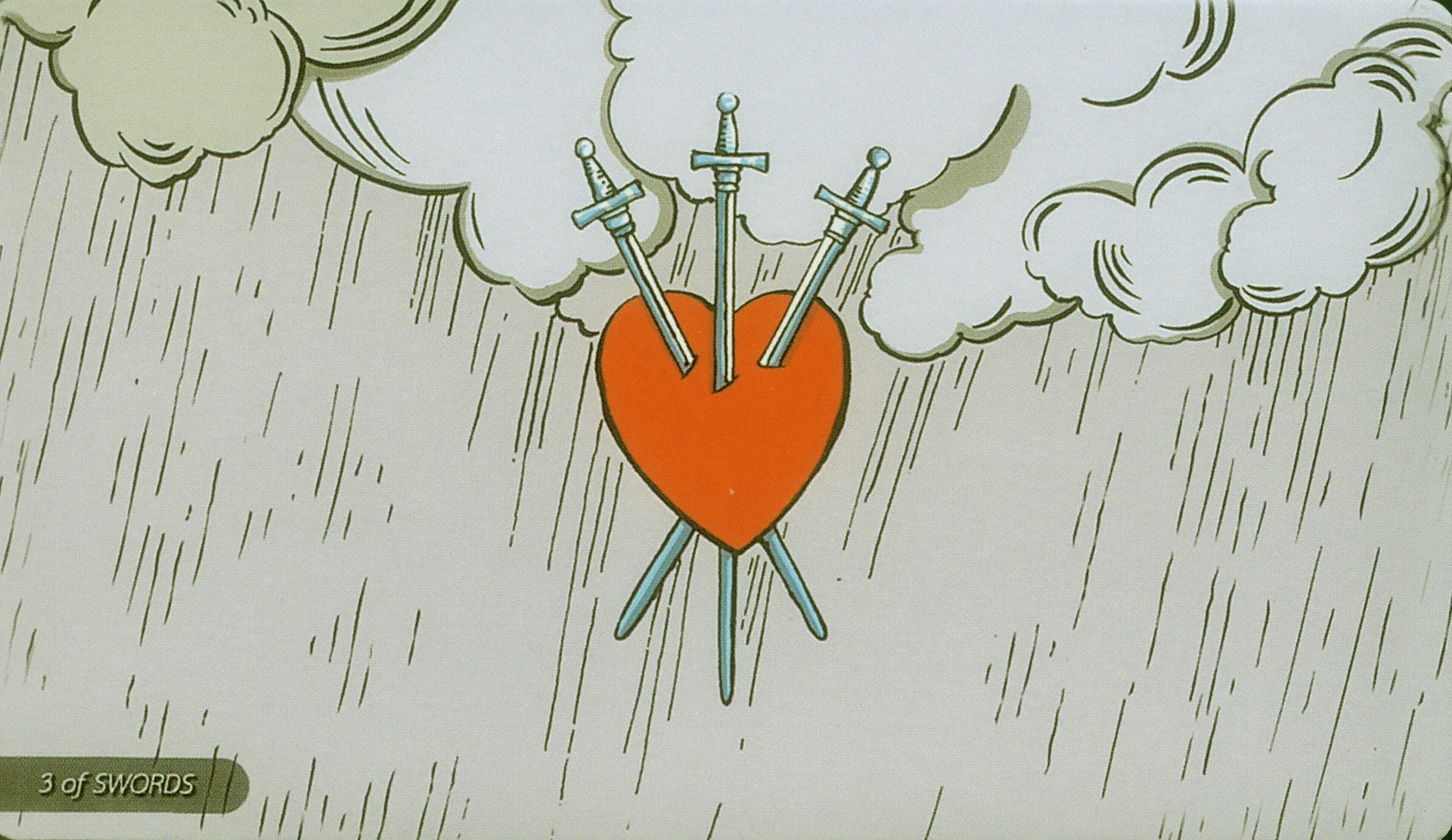
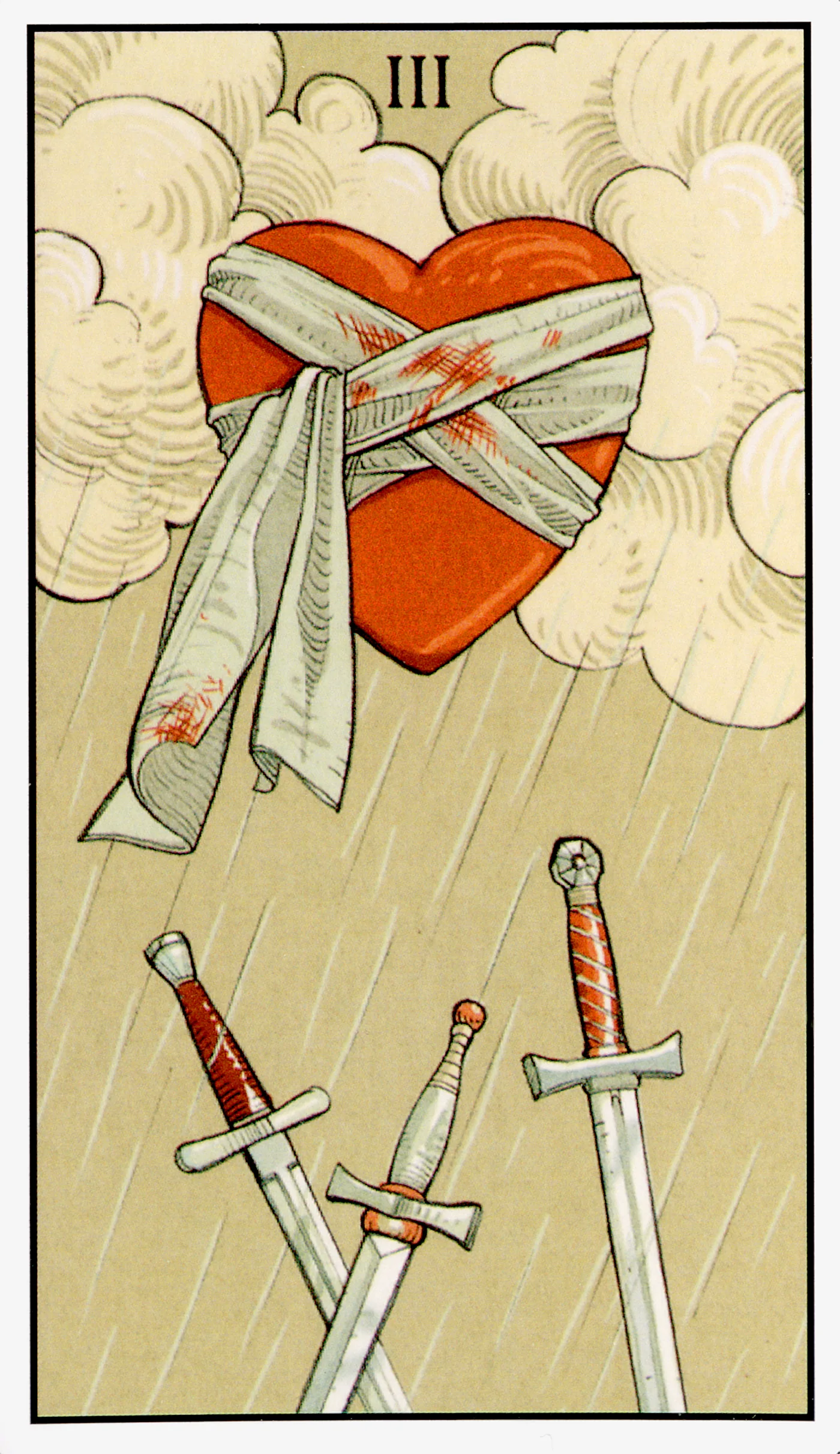
Three of Swords card description: heart, rain, and storm clouds
In the separately verified Rider-Waite-Smith portrait, the numeral III appears above a red heart pierced by three swords. One blade runs vertically through the centre and two angle across it. Grey clouds and diagonal rain fill the background. There is no person in this composition.
The swords pierce the heart in the picture, giving readers a direct image for emotional pain. Rain and storm clouds can suggest tears or a difficult period. These are symbolic interpretations, not evidence that a storm, injury, or tragedy will occur. The larger hero panorama is an expanded illustration; the separate portrait is the basis for these observations.
In many modern systems, Swords relates to the mind and intellect, communication, and the element Air. The heart can invite attention to feeling, while the blades invite attention to words or thoughts that wound. A keyword such as heartbreak is useful, but it should not replace the actual question in front of you.
The Three rank and traditional tarot meanings
The Three of Swords is one of the Minor Arcana cards in a standard 78-card tarot deck. It is the Three of the Swords suit, not the third Major Arcana trump. You may encounter the singular term arcanum in writing about an individual card; it does not change the card's rank or suit.
Threes are sometimes read through themes of development or expression. That pattern does not make every Three a card of teamwork or success. Here, the verified artwork and the question matter more than a generic rule applied to all cards in the deck.
In The Pictorial Key to the Tarot, A. E. Waite describes three swords piercing a heart with cloud and rain behind. His divinatory list includes removal, absence, delay, division, and rupture. His reversed list includes error, loss, distraction, disorder, and confusion. Modern recovery interpretations are not a direct quotation of that list, and its older language should not be used as a diagnosis.
Golden Dawn-influenced astrology associates this card with Saturn in Libra. These correspondences vary by tradition and are not universal rules. Tarot enthusiasts can compare systems with curiosity while keeping claims about real people grounded in evidence.
Helpful questions to ask after drawing the card
What has hurt, and what do I know about it? What am I willing to see without deciding that everything is hopeless? Who could offer practical support? What would help me allow time to heal rather than demand an immediate answer?
Heartbreak is part of life for many people, but that does not make any particular loss easy. Enjoy comparing the artistic choices in different decks if that feels helpful, or put the cards away and return later. If the image feels too much today, you can leave the reading there.
One card, many perspectives
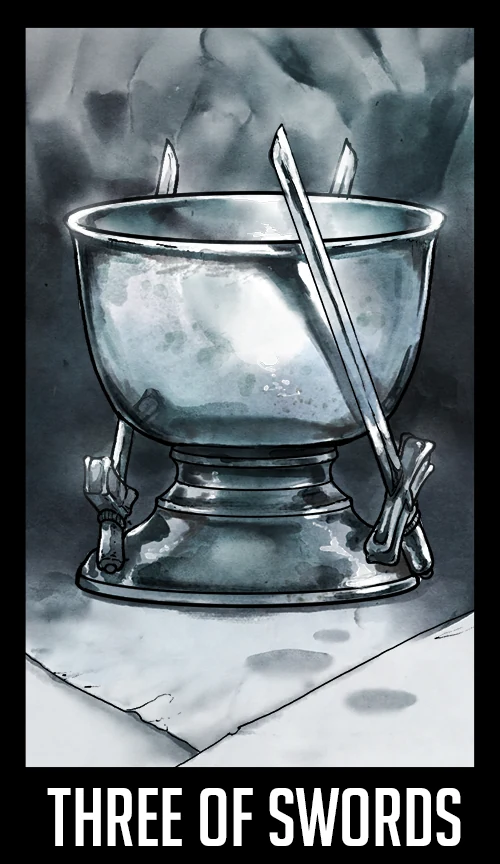
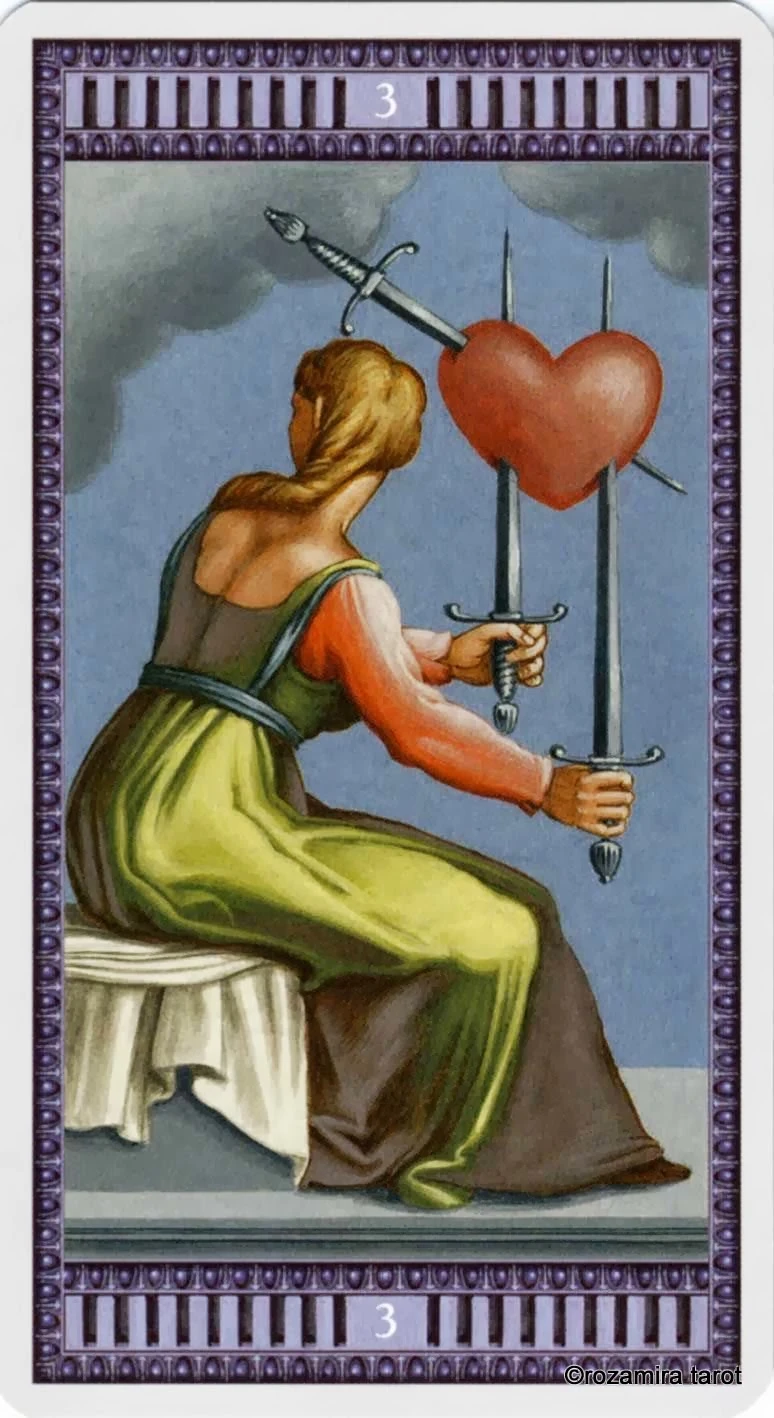
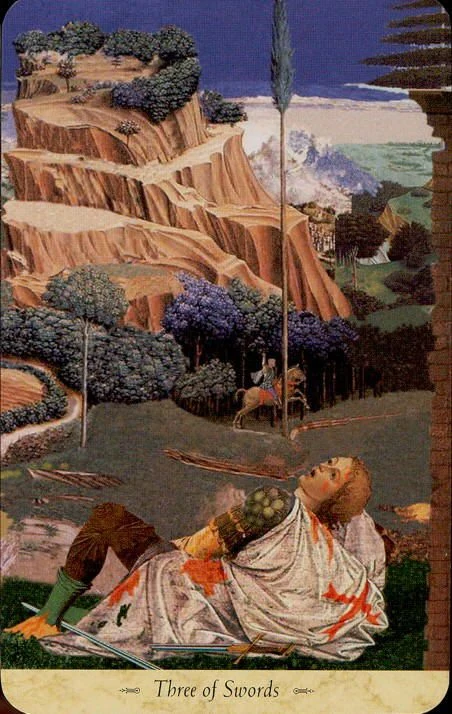
See Three of Swords Card from Other Decks
Discover how other tarot decks interpret this card. Select a deck to explore its full review and gallery.







Three of Swords FAQ
What does the Three of Swords mean upright and reversed?
Upright, it often concerns heartbreak, separation, or a painful truth. Reversed, it may invite recovery or attention to hurt kept inside. Neither orientation establishes what will happen next.
Does the Three of Swords mean a break-up or cheating?
No. It can prompt reflection on disappointment or an existing separation, but it cannot prove betrayal, reveal someone's private feelings, or predict that a relationship will end. Use direct communication and real evidence.
Is the Three of Swords a yes or no card?
Many readers lean toward no, particularly when unresolved hurt is involved. This is a reading convention rather than a guaranteed answer. Ask what information, consent, or support is needed before deciding.
What should I do after pulling the Three of Swords?
Name what hurts, separate facts from worst-case assumptions, and choose one manageable act of care. Ask for support when you need it. You do not have to force forgiveness or make an immediate life-changing decision.