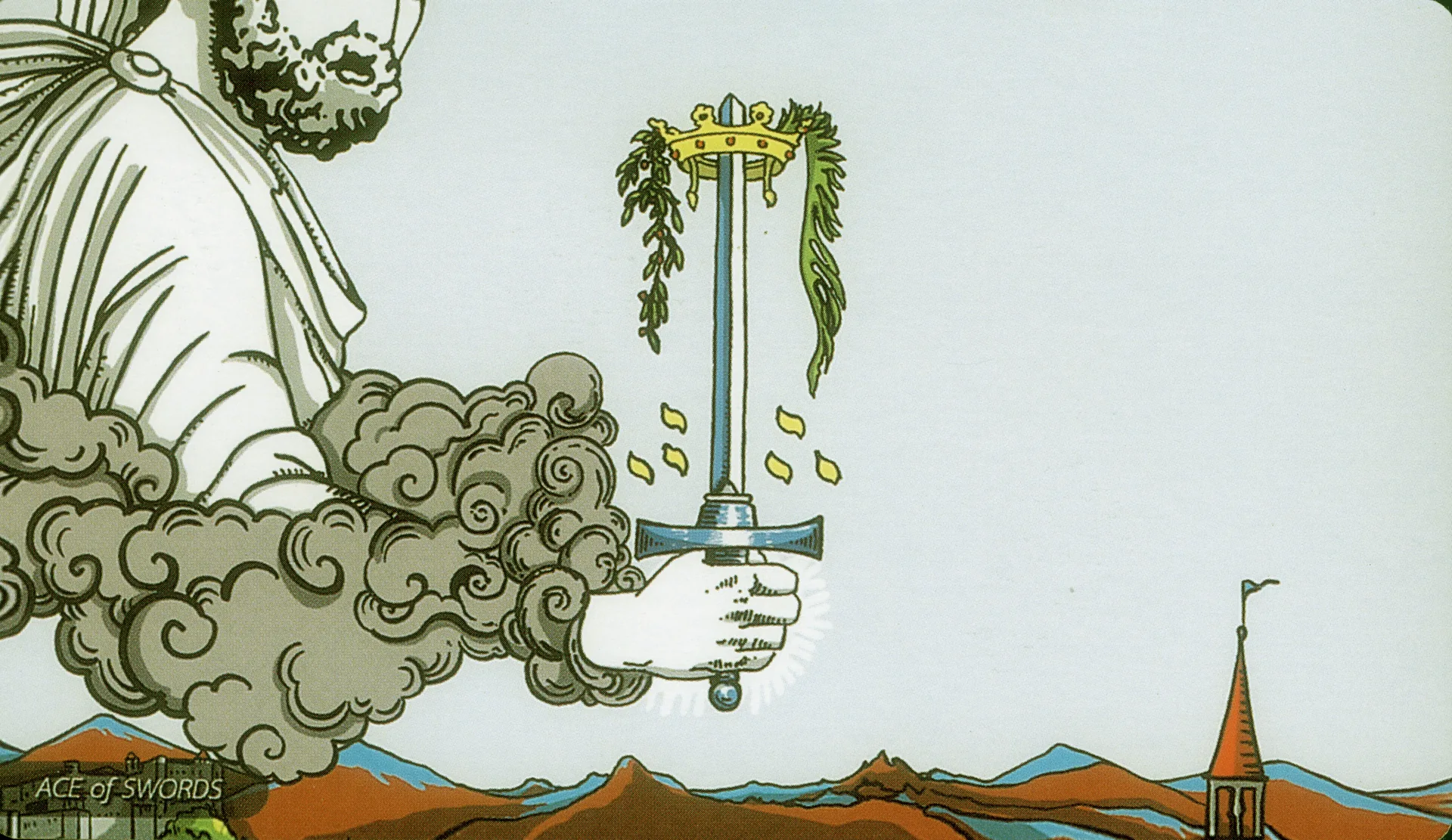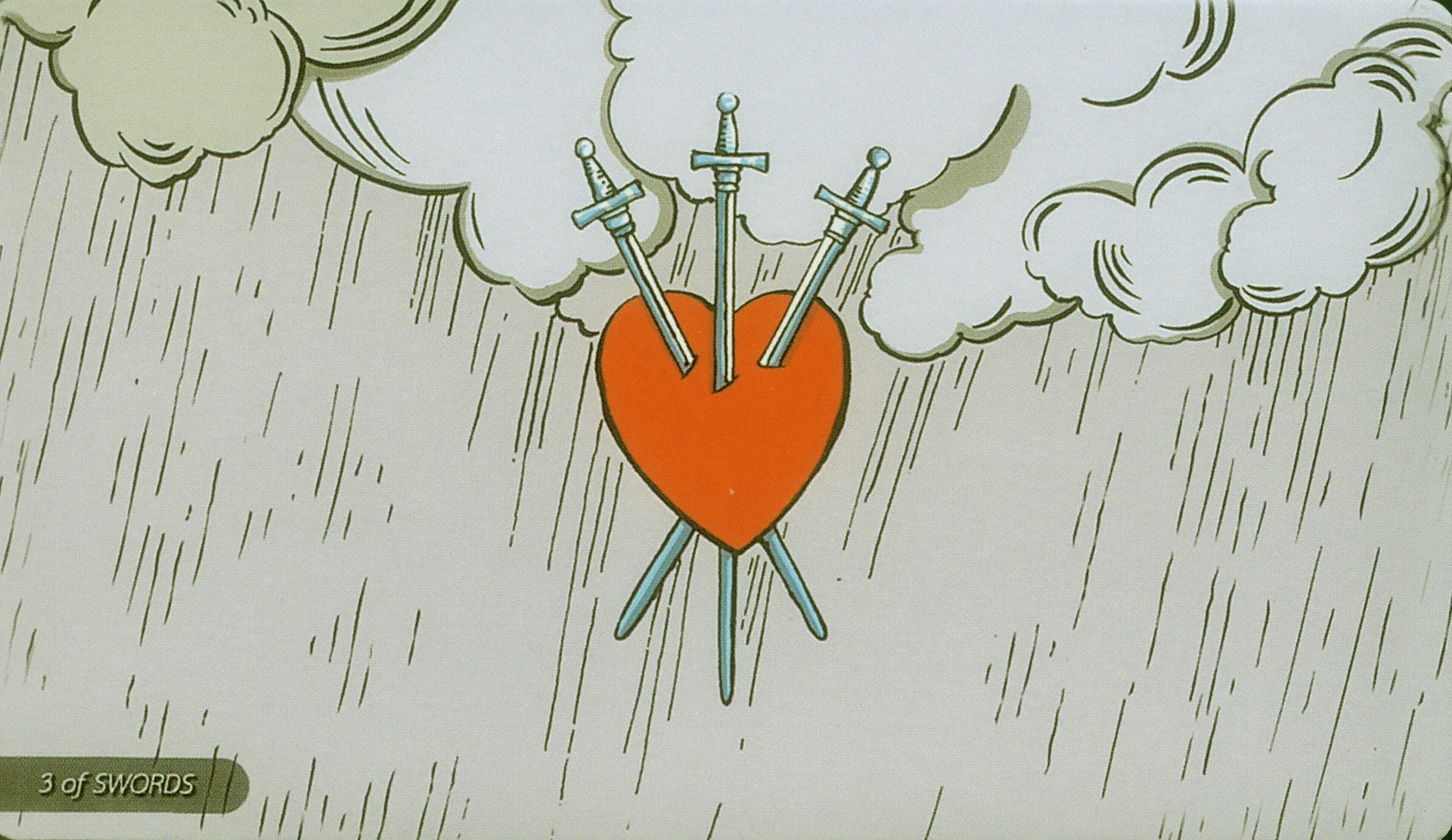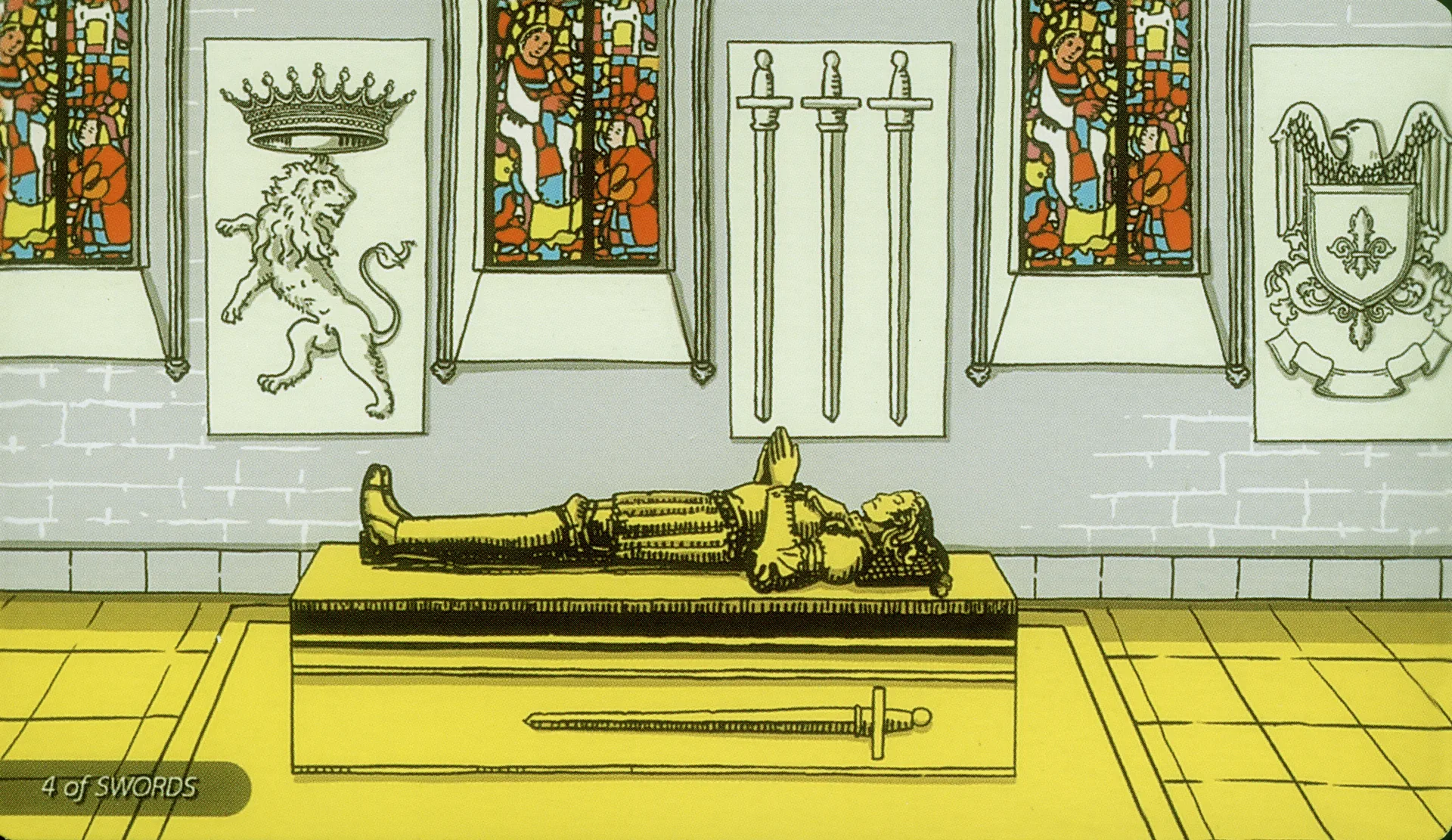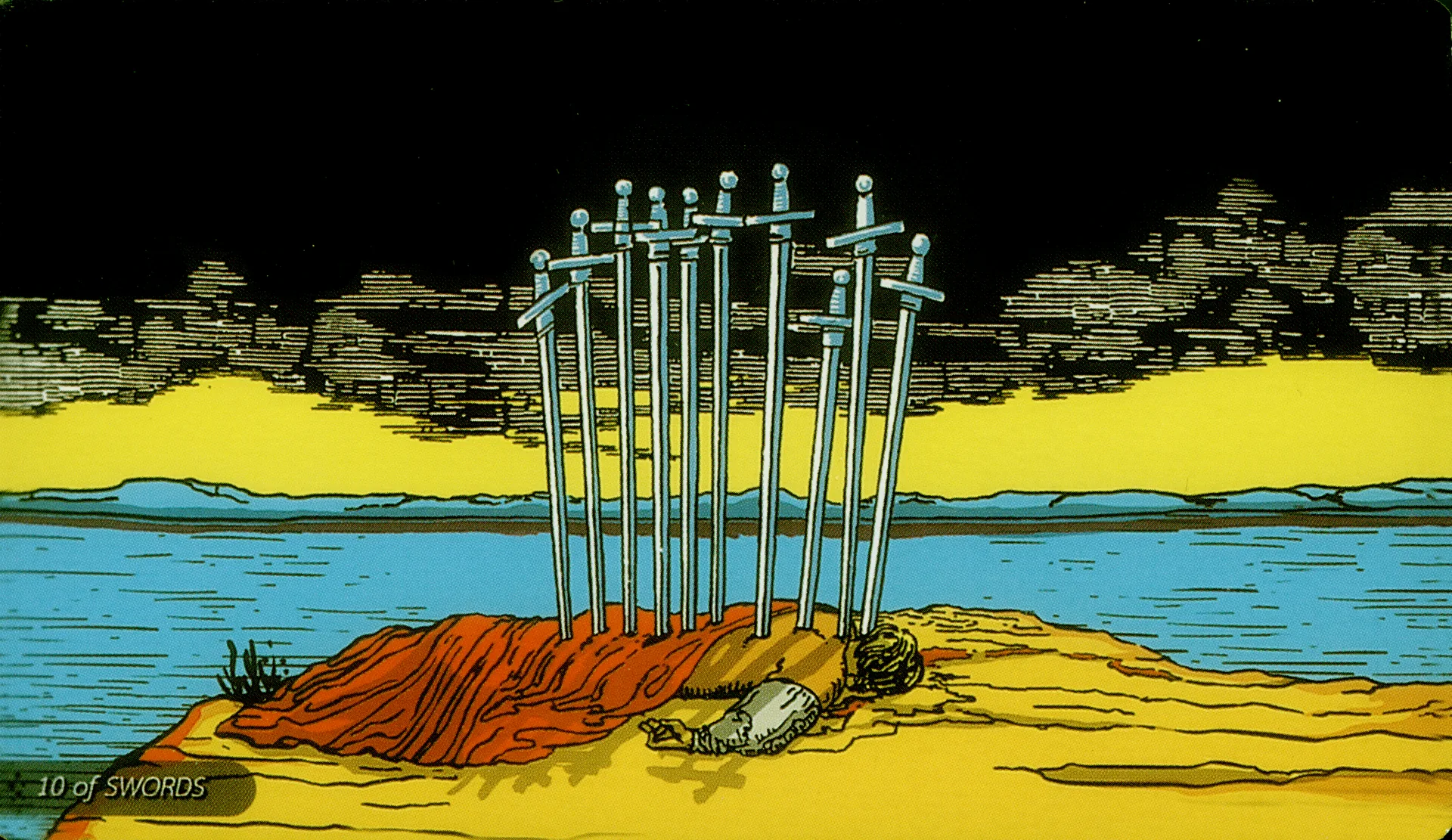

The Six of Swords tarot card meaning centres on transition: moving away from difficulty and finding a calmer way to continue. Upright, the card often suggests accepting help, creating distance from turmoil, or making gradual progress. Reversed, it may invite you to examine resistance to change, unfinished business, or a move that keeps getting delayed.
Leaving something behind can bring a sense of relief and sadness at the same time. You might decide to change a draining commute, step out of an argument, or stop returning to a conversation that goes nowhere. The 6 of Swords gives you a useful question: what would make the next part of this journey more manageable?
This is a reflective interpretation, not a promise that problems will disappear. You can move forward before you feel completely settled. A small practical change, with support where needed, may matter more than a dramatic fresh start.

6 of Swords Tarot Card Meaning at a Glance
- Main keywords: moving on, healing, travel, leaving stress behind
- Upright meaning: support, progress, or a gentler path is becoming possible. In the Swords suit, this connects to thoughts, words, truth, stress, and decisions
- Reversed meaning: old patterns, delays, or support that feels uneven. The reversed meaning asks you to check how you are handling thoughts, words, truth, stress, and decisions
- Yes or no: yes, if you are ready to move away from what hurts
- Best question to ask: What is this card trying to help me understand right now?
Upright Six of Swords meaning: moving toward calmer waters
When the Six of Swords appears upright, many readers see a passage out of difficult times. The mood is often quiet rather than triumphant. There may be a necessary departure, a change of surroundings, or enough distance to think clearly again.
The upright card can suggest purposeful movement. Suppose a noisy workplace leaves you mentally exhausted. Requesting a quieter desk or agreeing on uninterrupted working hours is a change you can test. You can try a smaller change before deciding whether to leave.
Support is part of the image. Let someone help with a task, give you a lift, or talk through the options. Accepting assistance does not remove your own determination; it can make your next step possible.
Clarity may arrive gradually. You can recognise that the present arrangement is not working without knowing every detail of the replacement. Find out what you need for the next decision; the rest can wait until you know more.
Moving away from something is not always avoidance. Sometimes distance helps you respond thoughtfully. Ask whether you are creating room to deal with a problem or merely postponing it while its consequences grow.
Six of Swords in a tarot reading
Read this one card in relation to the question, its position, and the surrounding cards. In a past position, it may prompt reflection on a departure or transition. In the present, consider the support and choices available. In a future position, use the theme to prepare for change; it does not establish that travel or separation will happen.
In a tarot card reading with the Five of Swords, you might explore what follows a draining conflict. With the Four of Swords, consider rest alongside a change of circumstances. Beside the Chariot, compare determined direction with the slower pace of this crossing. These combinations are possible interpretations, not fixed rules.
Six of Swords in love and relationships
In a love tarot spread, the Six of Swords can invite a shift toward peace. That may mean repairing the way you disagree, taking a temporary pause, or recognising that a relationship no longer works. The card alone cannot choose between those possibilities.
For a couple who repeatedly argue late at night, a calmer arrangement might be to discuss one issue after breakfast rather than when both are tired. Agree on what the pause means and when you will return to the conversation. Silence without an agreement can leave the other person in limbo.
If you are single, a past relationship may still influence what you expect from a new relationship. Notice whether you compare every new person with someone who hurt you. Let go of one unhelpful assumption while keeping boundaries grounded in actual behaviour.
A reading cannot reveal another person's private feelings or confirm that an ex is returning. Ask directly where appropriate and safe. If you face threats or coercion, prioritise real support and a safety plan rather than treating a peaceful-looking card as evidence that the danger has passed.
Career, money, and school: make the transition workable
For work, the Six of Swords suggests considering a less stressful process, a transfer, further training, or a planned departure. Before committing, check the practical details: responsibilities, travel time, notice requirements, and what support you would need.
A student struggling with an unfamiliar subject might ask a tutor to explain the first step, then practise it before adding the next. Progress can be steady without being quick. If the exercise keeps leaving you confused, ask someone to show you a different method.
In money matters, a logical plan is more useful than hoping a move will solve everything. List regular bills and any one-off costs of a change. If debt or contracts are involved, seek qualified advice. Tarot does not forecast returns or establish that an investment is safe.
If the reading suggests leaving a difficult role, distinguish fear from recklessness. Fear may keep you from asking about a suitable opening; recklessness may push you to quit without checking the terms. You can explore a possibility before making an irreversible decision.
Six of Swords reversed meaning: what is holding up the crossing?
The reversed meaning often concerns a transition that feels blocked or incomplete. You may want to move on while still returning to an unresolved issue. Some readers interpret the reverse orientation as resistance to change; others see an inward shift that has not yet become visible outward action.
Identify the actual obstacle. A missing document, an unaffordable deposit, or a family responsibility is different from reluctance to let go. Practical difficulty needs a practical response, not a judgment that you lack courage.
Emotional baggage may also travel with you. Changing your address will not automatically change an old habit of expecting rejection or keeping every disagreement in your head. Consider which habit you can work on, and whether trusted or professional support would help.
Running away from something can provide temporary relief while leaving the necessary conversation undone. If it is safe, confront the specific issue: name the boundary, ask the question, or arrange the appointment. If contact is unsafe, distance and appropriate support may be the responsible choice.
The Six of Swords reversed can be a reminder to review the route, not abandon it. If you feel stuck in stagnation, choose a manageable task that reduces uncertainty. You might gather information this week even if the larger move cannot happen yet.
Six of Swords yes or no meaning
Many readers lean toward a conditional yes for the upright card, especially when the question concerns accepting help or moving toward a calmer arrangement. Reversed may suggest a delay or a need to resolve an obstacle first. Neither orientation guarantees an outcome.
Ask what your proposed action changes and what remains your responsibility. Consent, urgent medical care, and legal obligations need real information; they cannot be settled by a yes-or-no tarot reading.
Advice: choose a next step you can carry out
Make the transition specific. Instead of writing "leave the stress behind," choose a task such as booking a conversation with your manager, sorting the paperwork, or asking a friend to help you compare options. Choose something that makes the next decision easier.
Notice what you still carry. Experience can help you avoid repeating a mistake, but a painful memory does not need to become your permanent defense against every new possibility. Separate a lesson worth keeping from a prediction you cannot verify.
You might feel emotionally unsettled while your plan is sensible. Check the plan against the facts and give yourself time to adjust. You can check a plan carefully without pretending you know how it will feel.
Healing, wellbeing, and a calmer pace
Here, healing is a reflective theme of recovering steadiness after stress, not a medical claim. The card can prompt you to notice rest, companionship, or routines that help you feel less overwhelmed. It cannot diagnose illness, confirm pregnancy, or promise a cure.
If your days exhaust you, consider what could change in the actual schedule. A shorter commitment or help with an errand may leave some room to breathe. Persistent symptoms or distress deserve qualified care, even when a reading feels reassuring.
Serenity is not a requirement for progress. You can feel uncertain and still make a careful choice. Look for a direction you can manage, even if you still feel unsettled.
One archetype, four perspectives
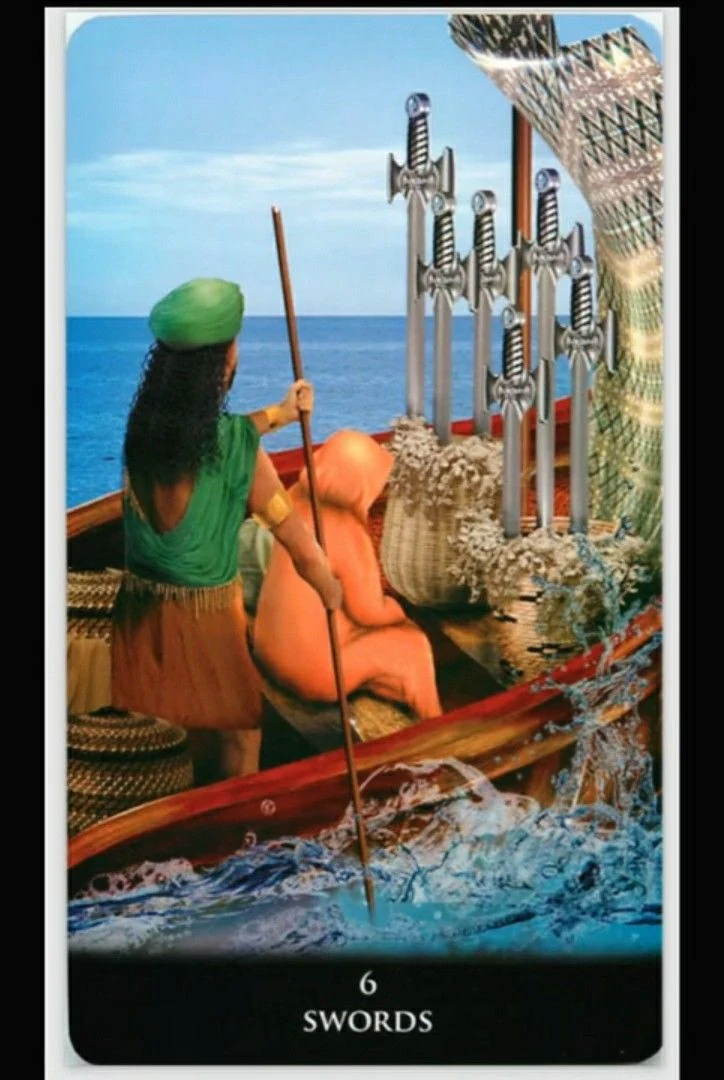
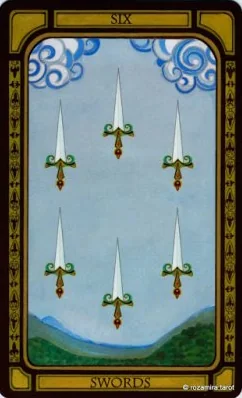
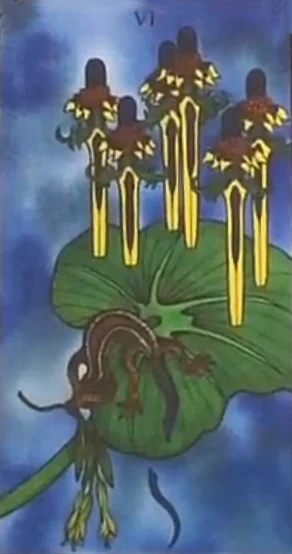
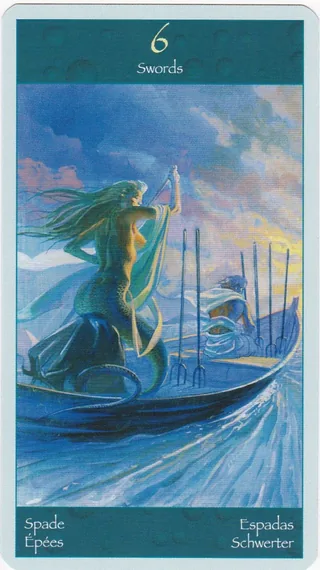
Six of Swords Across Four Tarot Decks
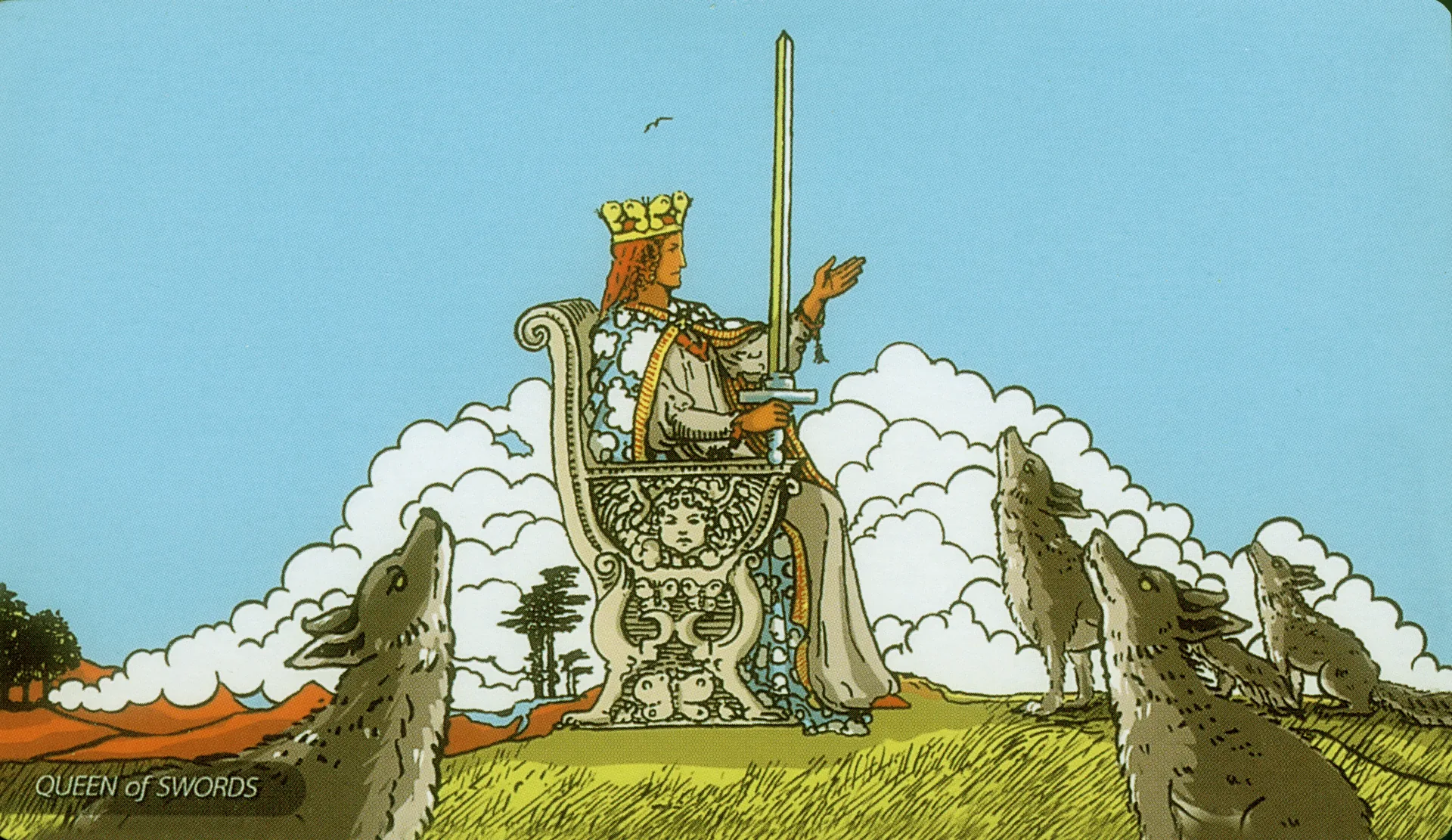
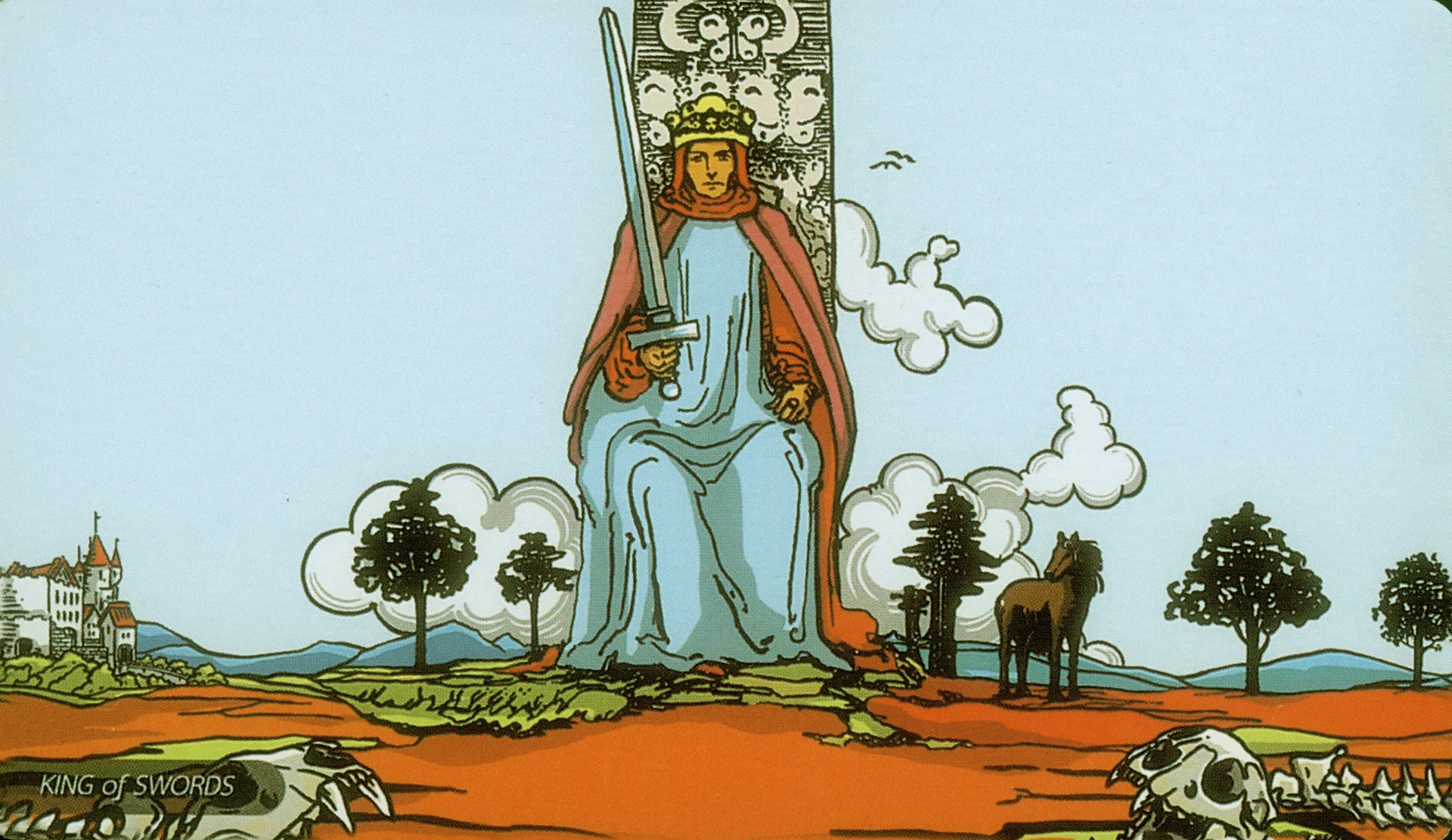
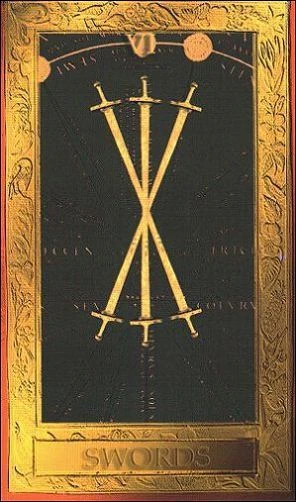
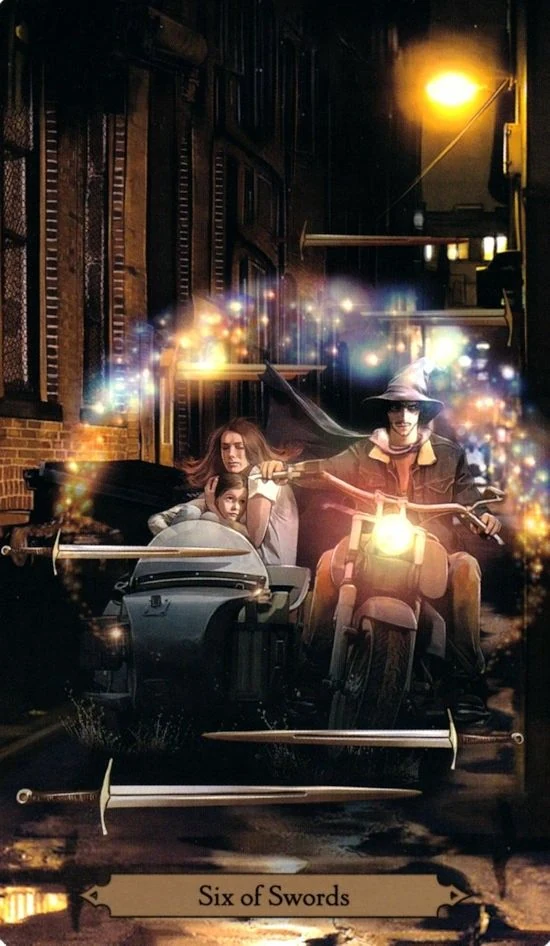
Compare the familiar Rider-Waite-Smith card with the moments before, behind and after the classic scene in three Lo Scarabeo decks.
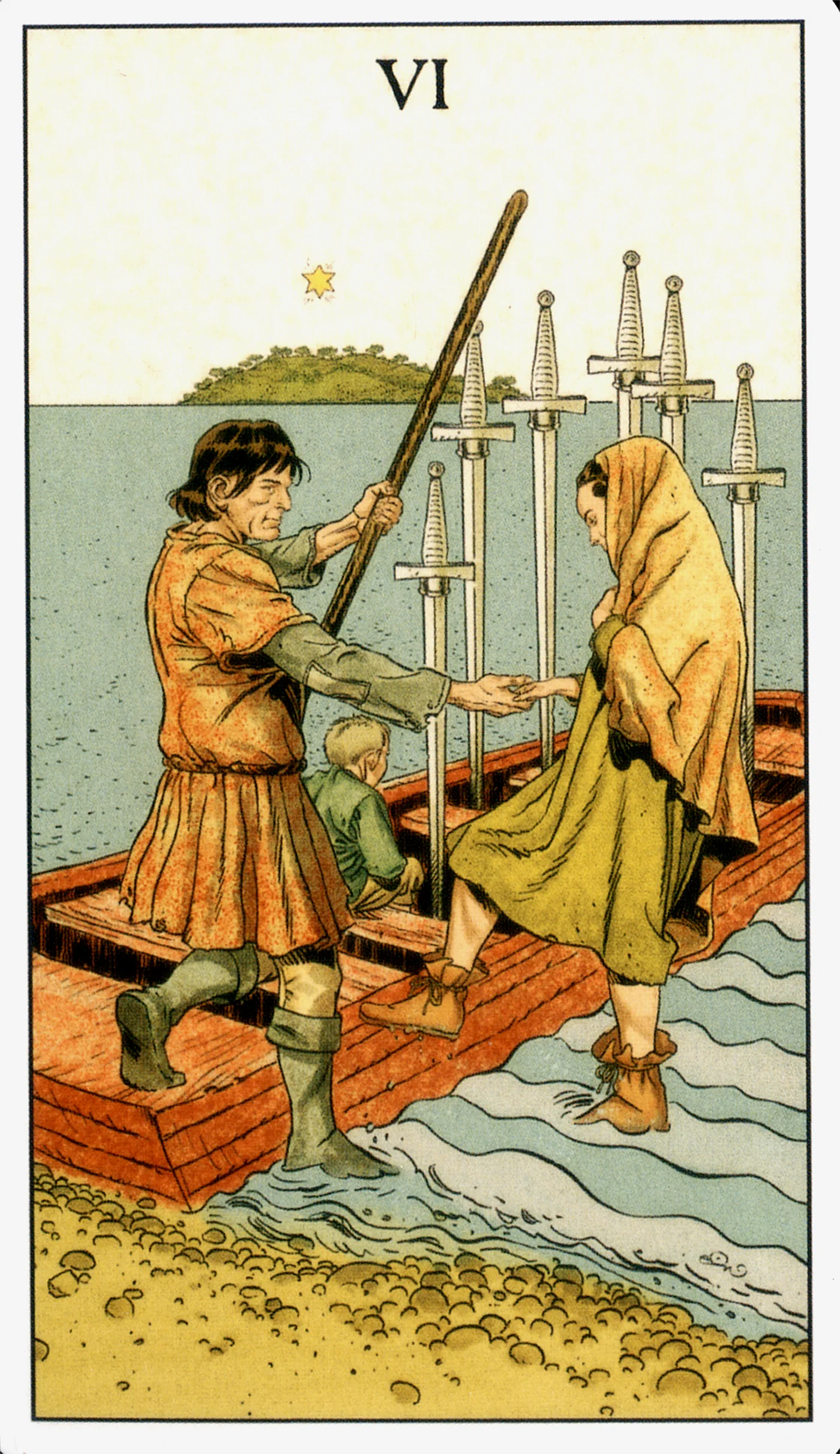
What apparently happens just before
What actually happened
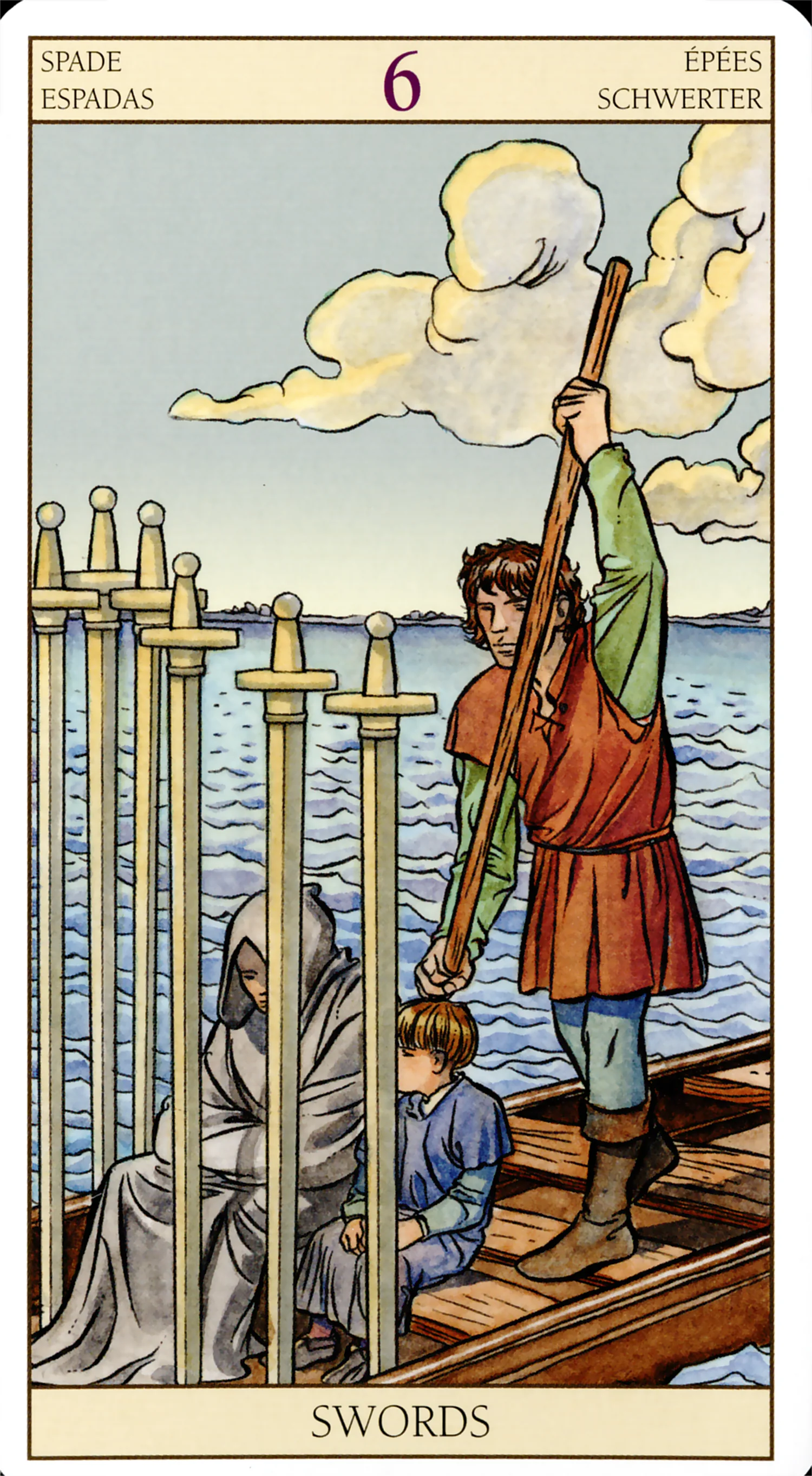
What happened on the opposite side
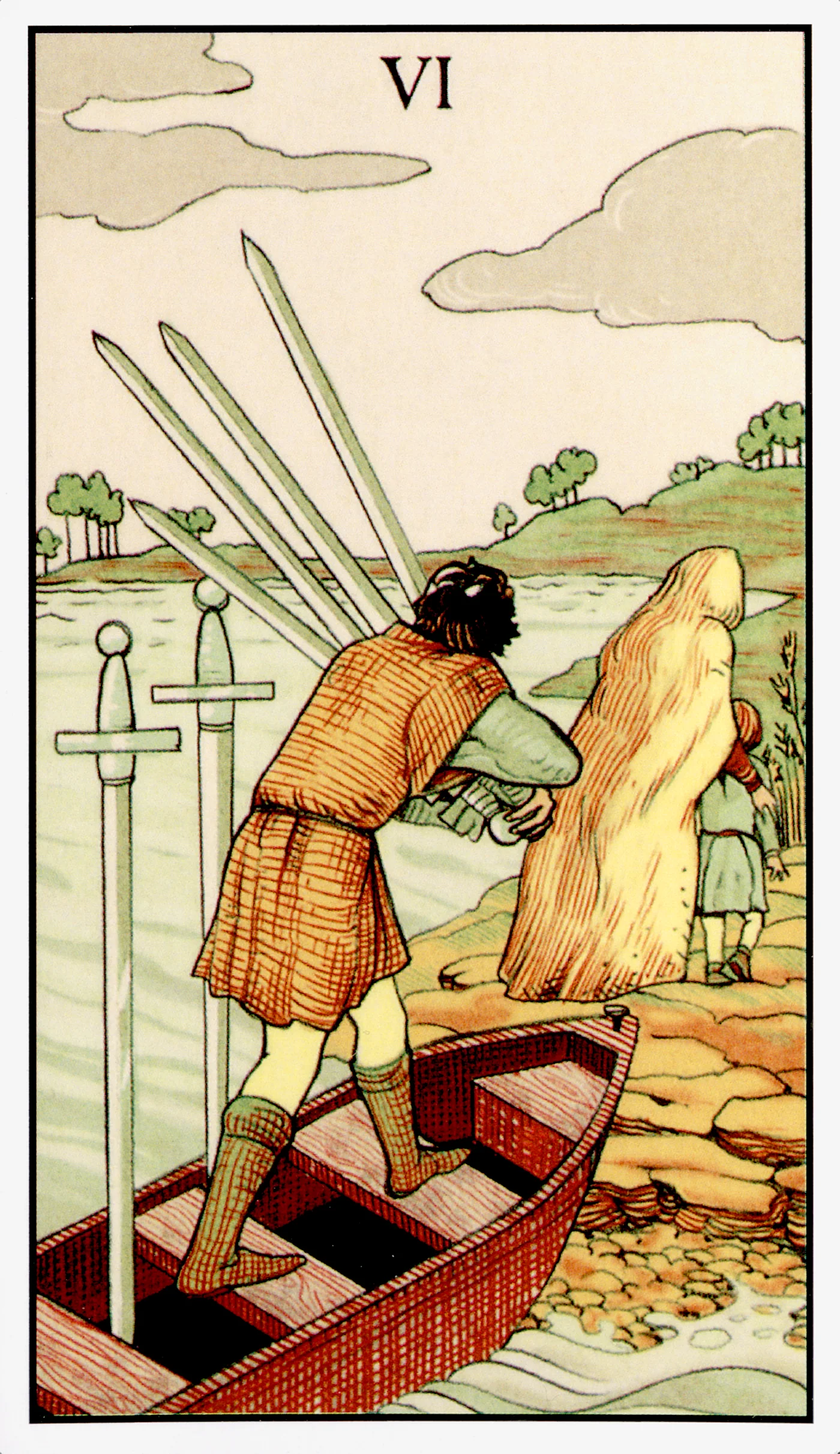
What apparently happened afterwards
Symbols in the Six of Swords tarot card
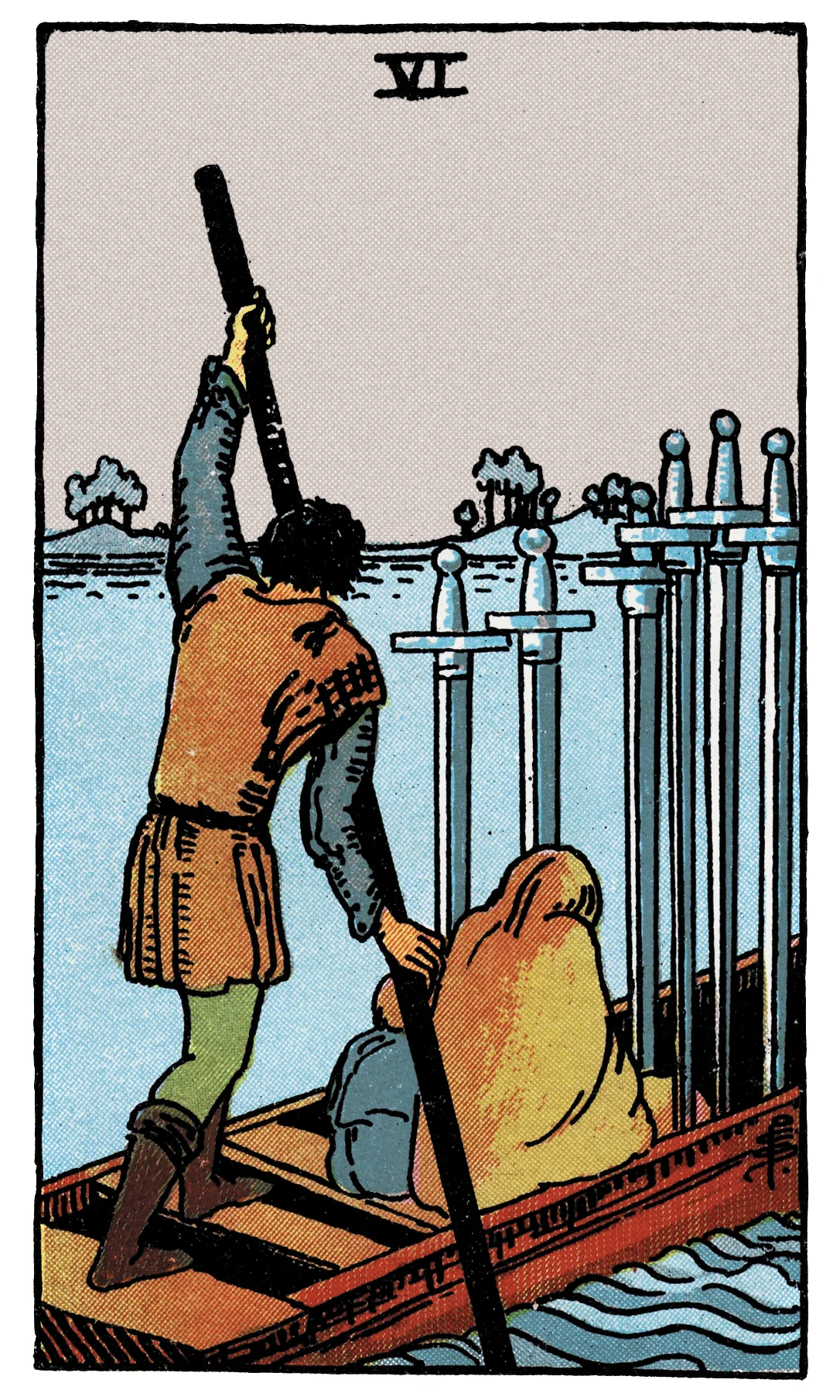
The verified Rider-Waite-Smith portrait has the numeral VI at the top. A standing figure uses a long pole to guide a boat. A cloaked adult and a smaller seated figure face away from the viewer. Six swords stand upright in the boat, with distant land and trees beyond the water.
The foreground water is visibly rippled, while the farther water looks smoother. Many modern readers connect that contrast with leaving turbulent conditions for calmer waters. The seated figures remain turned away, so their exact feelings are a mystery rather than something the image proves.
The six swords are carried along instead of left behind. One interpretation is that knowledge, memories, and unresolved concerns accompany a change. The image invites you to consider what is useful baggage and what needs attention; it does not identify a particular person as the problem.
The hero is an expanded panorama. Use the separately retained RWS portrait for observations about Pamela Colman Smith's composition. The four-deck module and gallery offer other visual perspectives, but unclear inherited lettering is not evidence for a new symbolism claim.
The Six rank, Swords suit, and Waite's interpretation
This is a numbered Minor Arcana card of the Swords suit, not the sixth Major Arcana trump. Many modern systems associate Swords with thought, communication, and the element Air. Golden Dawn-influenced correspondences associate this Six with Mercury in Aquarius; other tarot traditions may use different systems.
In The Pictorial Key to the Tarot, A. E. Waite describes a ferryman carrying passengers to the farther shore. His divinatory meanings include a journey by water, a route, and an expedient. His reversed meanings include declaration and confession. Those historical words differ from the modern emphasis on resistance or recovery; they are not a universal prediction.
Among tarot meanings, the number six is often read as adjustment or harmony after the disruption associated with five. The Six of Swords represents an attempt to find a workable passage. The Six of Cups more often concerns memory and familiarity, while the Six of Wands is commonly read through recognition or success. Sharing a number does not make their messages interchangeable.
In some playing-card correspondences, spades is associated with Swords. That does not turn every six of spades into this tarot image. Check the system and tarot deck you are actually using before borrowing an interpretation.
Reflection: what do the 6 of Swords mean for this question?
Try a short meditation with the image: follow the boat's direction, then name one circumstance you want to change. You need not settle the mystery of the destination. Write down what you know, what needs checking, and whom you could ask for help.
If a reading feels energetic or urgent, slow down enough to check its relevance. Intuition can suggest a question, but facts should inform the decision. A tie to the past can be meaningful without becoming a trap that determines your future.
Look for a small change you can sustain steadily. A peaceful routine, a clearer agreement, or a better source of information can support the transition. The Six of Swords indicates a theme worth exploring, not an instruction to abandon everything familiar.
One card, many perspectives
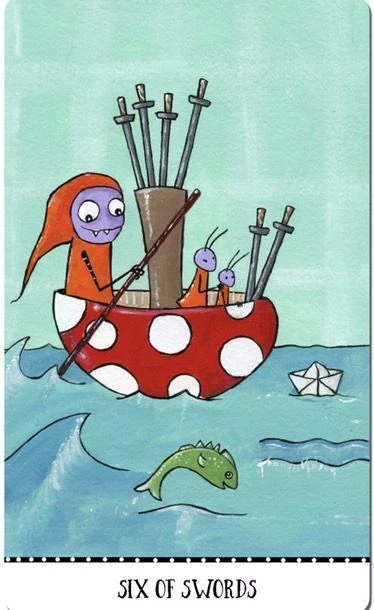
See Six of Swords Card from Other Decks
Discover how other tarot decks interpret this card. Select a deck to explore its full review and gallery.








Six of Swords FAQ
What does the Six of Swords mean upright and reversed?
Upright, it often concerns transition, accepting support, and moving away from difficulty. Reversed, it may suggest resistance, delays, or unfinished business. Read it alongside the question and the practical circumstances.
Does the Six of Swords mean a relationship will end?
No. It can prompt reflection on distance, repair, or a calmer way to relate, but it cannot establish a breakup or another person's private feelings. Base decisions on communication, safety, and actual behaviour.
Is the Six of Swords a yes or no card?
Many readers lean toward a conditional yes upright, particularly for accepting help or changing an unhelpful arrangement. Reversed may invite further preparation. Neither orientation guarantees an answer or replaces consent.
What should I do after pulling the Six of Swords?
Identify what you want to move away from, what you still need to address, and who can help. Choose a practical next step such as checking a cost, arranging a conversation, or gathering a missing document.