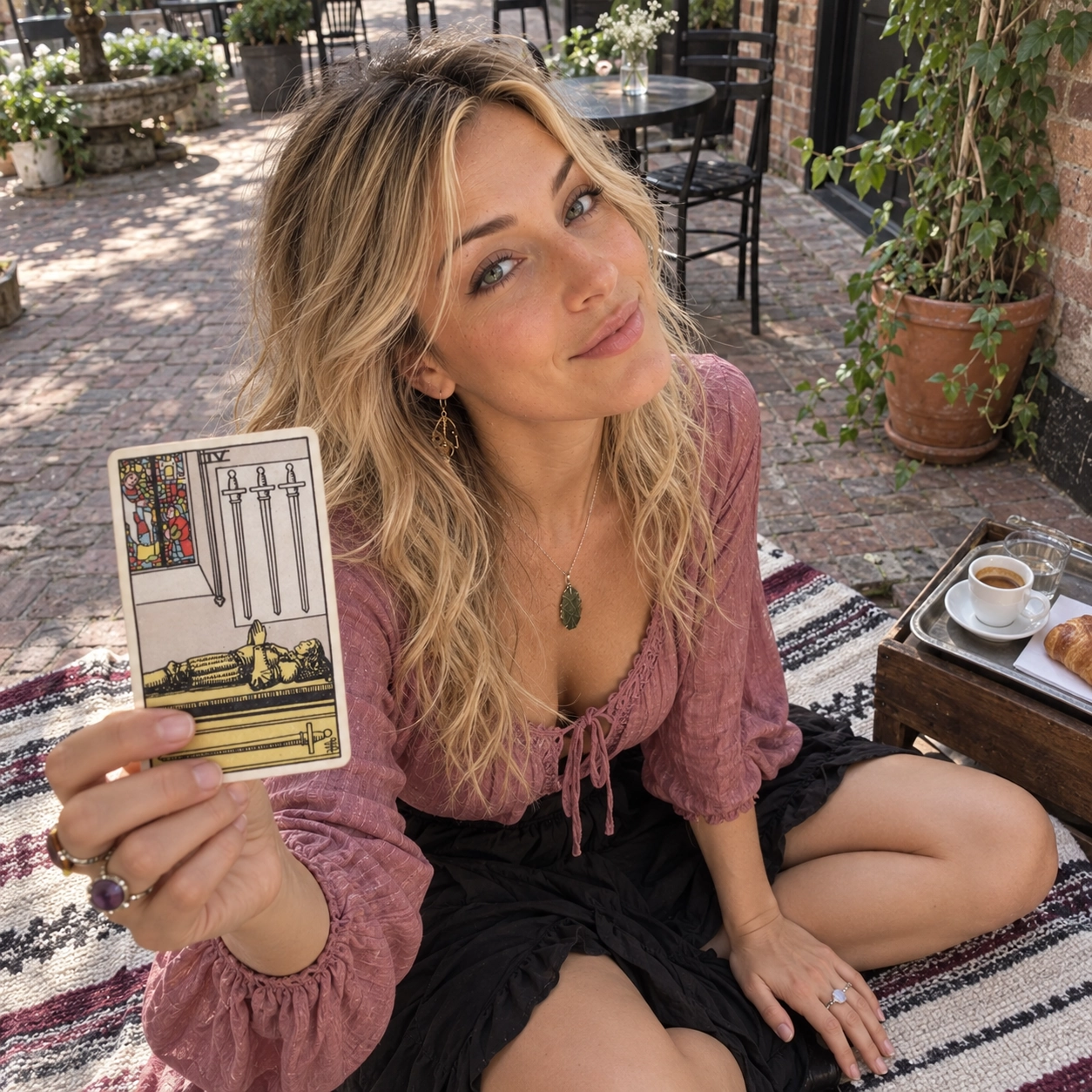
The Four of Swords tarot card meaning centres on rest, a purposeful retreat, and space to gather your thoughts. Upright, it often suggests stepping back after strain. Reversed, it may describe restlessness, a return to activity, or the uncomfortable discovery that you need rest but keep pushing through.
Imagine finishing a difficult week and opening your laptop again on Sunday because sitting still feels wasteful. This card invites you to ask what the extra hour will actually achieve. Sometimes preparing for a new challenge means closing the screen, eating something, and letting the question wait until morning.
A pause does not have to be a silent retreat or an extended period away from everything. Ten minutes without notifications can be a useful start. Choose a kind of rest that fits your circumstances, then decide when you will return to what needs attention.
4 of Swords Tarot Card Meaning at a Glance
- Main keywords: rest, recovery, mental space, quiet healing
- Upright meaning: you are building safety, rest, or structure before the next stage. In the Swords suit, this connects to thoughts, words, truth, stress, and decisions
- Reversed meaning: stagnation, boredom, or clinging too tightly to what feels safe. The reversed meaning asks you to check how you are handling thoughts, words, truth, stress, and decisions
- Yes or no: not now; rest and reset first
- Best question to ask: What is this card trying to help me understand right now?
Upright Four of Swords: time to rest and recover
The upright Four of Swords suggests a quieter interval after effort, conflict, or emotional strain. Rest and recovery are common modern interpretations. You may need less stimulation, a temporary break from an argument, or time to think without immediately explaining yourself to everyone else.
Solitude can help when it is freely chosen and still leaves room for support. For example, you might decline one social invitation while keeping a check-in with a friend. Taking time alone is different from feeling unable to reach anyone.
The card's stillness can also prompt contemplation. Put the problem on paper, leave it for a while, and return with one question rather than ten. Let the quiet afternoon be quiet. The bigger questions can wait until you have more room to think.
Recuperation is an interpretive theme, not a prediction that an illness will improve. The useful question is practical: what would reduce the demands on you today? A postponed nonessential task, a meal someone else prepares, or a protected lunch break may help more than another ambitious self-care plan.
In the upright position, a pause works best when you know its purpose. Rest before an important conversation, recover after a demanding project, or give yourself time for rest and reflection. If you are avoiding something urgent, arrange support rather than hoping it will disappear.
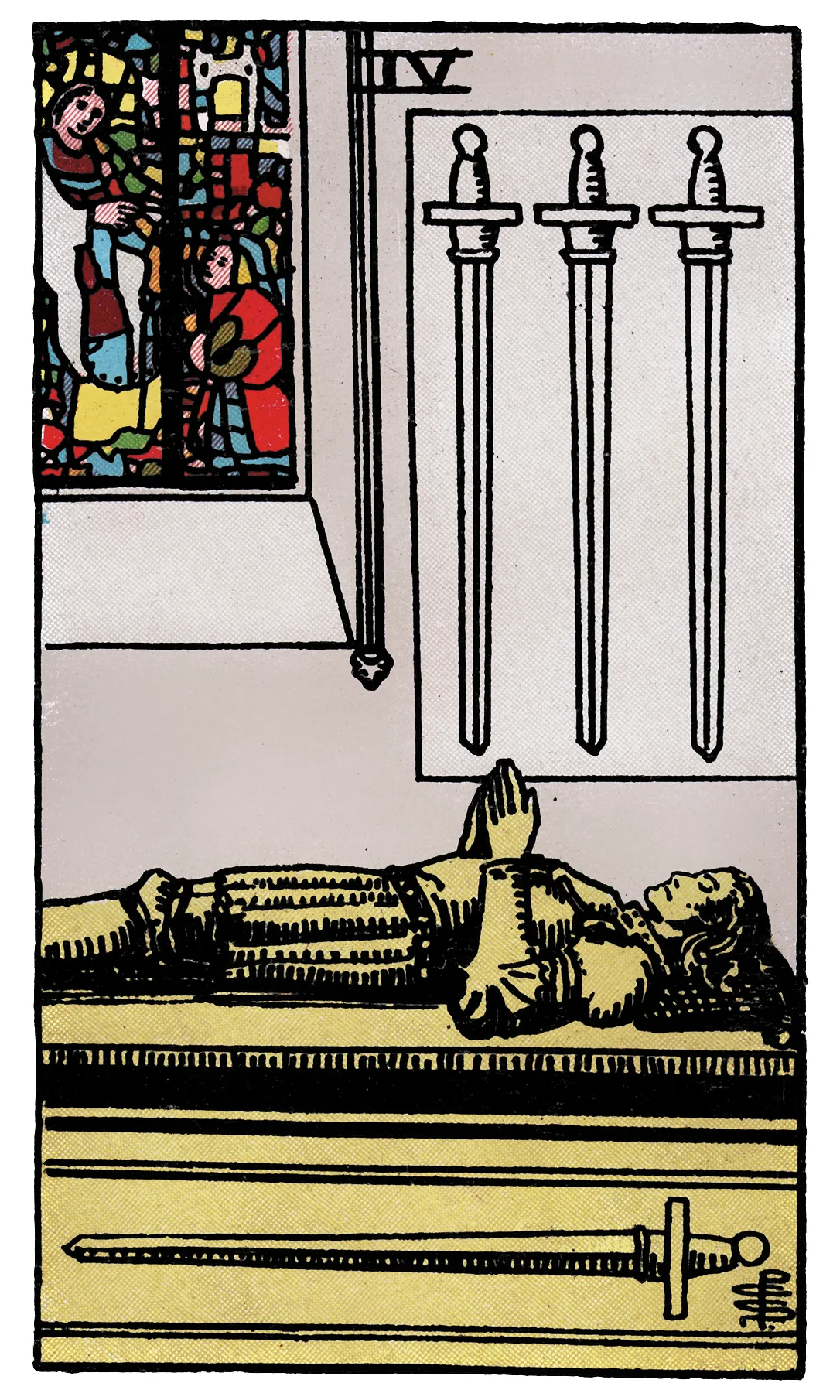
The Four of Swords in a tarot reading
A tarot reader considers the question and the card's position. In the past, this card may invite reflection on a period of recovery. In the present, ask where overload is making it harder to think. In a future position, plan breathing room around a demanding commitment; the image does not establish that an illness or loss will happen.
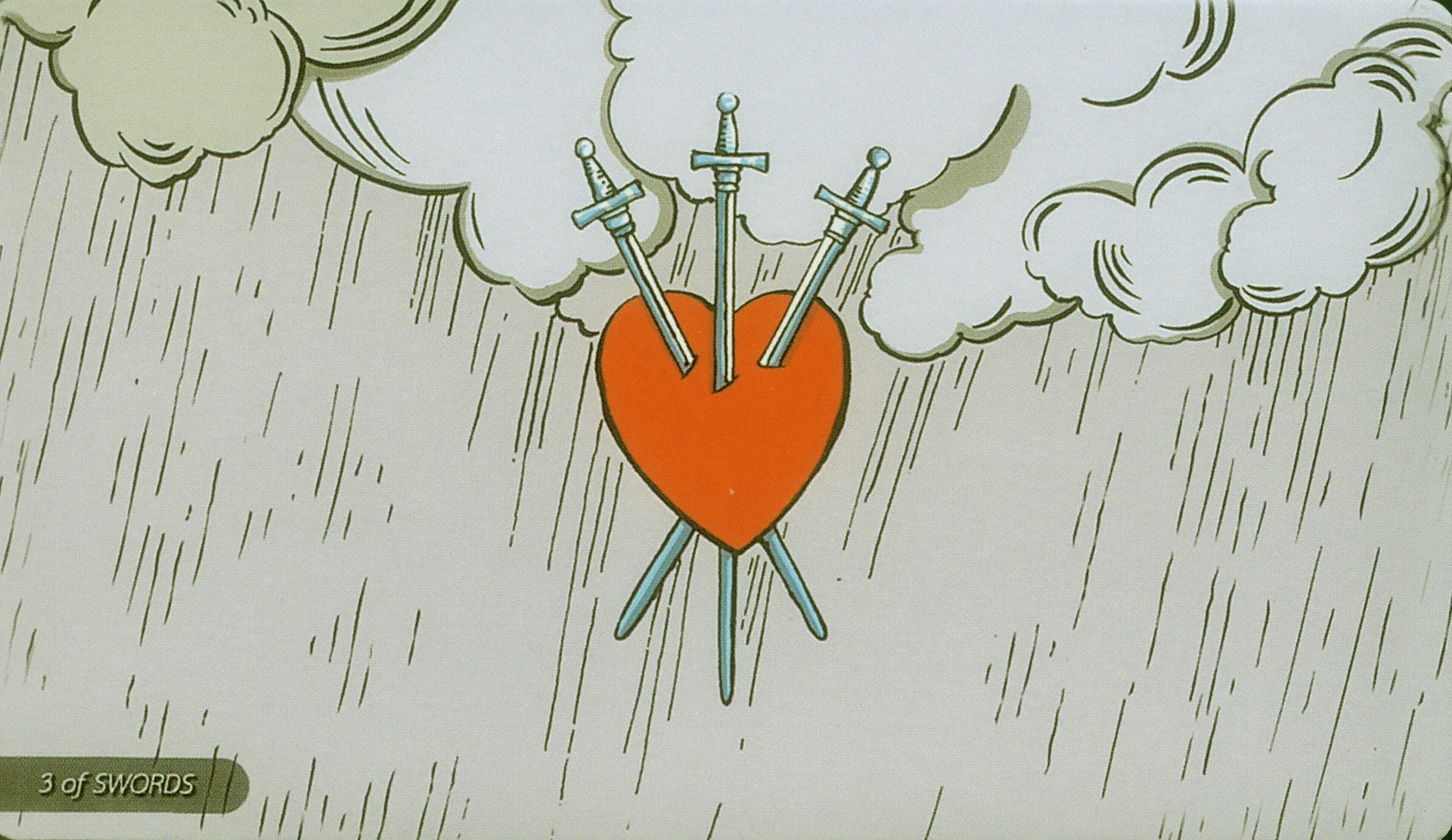
Beside the Three of Swords, it can suggest allowing space after hurt rather than forcing an immediate explanation. Beside a Pentacles card, consider the practical conditions of rest: money, working hours, or help with daily responsibilities. A Wand card may put enthusiasm beside limited energy; ask which project can wait. These are examples of tarot meanings in context, not fixed combinations.
If you use an oracle deck alongside tarot, keep each system's language separate. An oracle message can offer another reflection, but it does not turn this card into evidence about an event. The same care applies to a free tarot reading: a short answer needs your circumstances to become useful.
Love and relationships: a pause with clear boundaries
In love, this card can invite a break from repeated arguments or a little more personal space. Perhaps a conversation has gone round in circles all evening. Agree to stop, sleep, and return to one specific issue the next day. A pause with an agreed return time feels different from disappearing without explanation.
If you are single, time away from dating may help you notice what you enjoy and what you want to change. You can rest and recharge without deciding that you must stay alone forever. Quiet can be welcome after a busy run of dates or a difficult breakup.
The Four of Swords can indicate withdrawal as a theme, but it cannot reveal another person's private feelings or promise that an ex will return. Ask directly about their intentions where appropriate, respect a request for space, and judge the relationship by communication and behaviour.
Rest is not a reason to tolerate mistreatment. If a relationship makes you unsafe, seek practical support. A card's invitation to stop fighting should never mean giving up your boundaries or consent.
Career, money, and school: leave room to think
At work, the Four of Swords indicates the value of a pause in many modern readings. After a long project, schedule a review before volunteering for the next one. Mental strength can mean admitting that concentration is slipping and asking someone to share the load.
If you are feeling overwhelmed, identify the smallest useful adjustment. Ask which deadline is genuinely fixed, turn off nonessential alerts for an hour, or tell a manager which tasks cannot all fit into the available time. You do not have to earn rest by finishing an impossible list.
For money questions, avoid major decisions when you are too tired to check the figures. Set aside a time to review a bill, read the terms, or seek qualified financial advice. The card does not promise investment returns or tell you to ignore debts and deadlines.
For study, a planned break can be more useful than reading the same paragraph repeatedly. Rest and relax, then try a short recall exercise or a different explanation. Re-evaluate the timetable if every session ends in exhaustion rather than learning.
Four of Swords reversed: restlessness or returning to activity
The Four of Swords reversed often raises a question about the pause itself. Are you ready to re-engage, or are you hurrying back because stillness feels uncomfortable? The reversed Four of Swords can also suggest that you have kept going beyond your limits and need to change the pace.
A reversed card is not automatically a bad sign. You may be ready to restart a project after time away. Try a smaller first session, check how it feels, and leave space to adjust. Returning gradually is different from immediately recreating the schedule that wore you down.
Restlessness can make a break feel unproductive. If you keep checking messages while trying to recharge, choose a clearer boundary: put the phone in another room during dinner, or agree on when you will reply. You may still feel distracted at first; a break can help without making every thought disappear.
Some readers connect this orientation with burn-out. Treat that as a prompt to examine demands and support, not as a diagnosis. Stress and anxiety, persistent exhaustion, or concerns about your health deserve appropriate professional advice; the card cannot explain their cause.
At the other extreme, a comfortable pause may have become stagnation. If you have enough support and capacity, choose one manageable action: answer one email, book an appointment, or spend fifteen minutes on a paused task. You can take it easy while still making a start.
Four of Swords yes or no meaning
Many readers interpret this card as "not yet" when a question calls for a quick yes or no. The emphasis is on waiting, checking your capacity, or getting clearer before acting. Other methods read it as a yes to rest and a no to unnecessary pressure. State which method you are using rather than treating either answer as universal.
For an urgent medical, legal, or financial matter, follow the relevant advice and deadlines. A symbolic pause does not replace care, evidence, or another person's freely given agreement.
Advice: give the pause a purpose
Choose one demand you can reduce and one task that still needs attention. If you have a difficult call tomorrow, prepare a short note today, then stop rehearsing every possible reply. If the house is busy, a quiet walk may offer more relief than trying to make everyone silent.
Ask what helps you rejuvenate without turning rest into another performance. Reading for pleasure, sitting outdoors, or doing very little may suit you better than a complicated routine. Notice what changes your stress levels rather than copying someone else's ideal day.
An affirmation you might use is: "I can pause, ask for support, and return at a pace I can sustain." It is a reminder for self-reflection, not a promise that circumstances will resolve themselves.
Health and wellbeing: reflection, not diagnosis
This card can prompt questions about daily strain and the support you need. It cannot diagnose a condition, confirm pregnancy, predict death, or promise a cure. If symptoms persist or you are concerned about treatment, contact a qualified clinician rather than extending a break from care.
For spiritual growth, a little quiet may help you hear your own preferences. Prayer, meditation, or journaling can be optional practices, not obligations. Inner wisdom here means paying attention to your experience while staying open to evidence and appropriate help.
One archetype, four perspectives
Four of Swords Across Four Tarot Decks
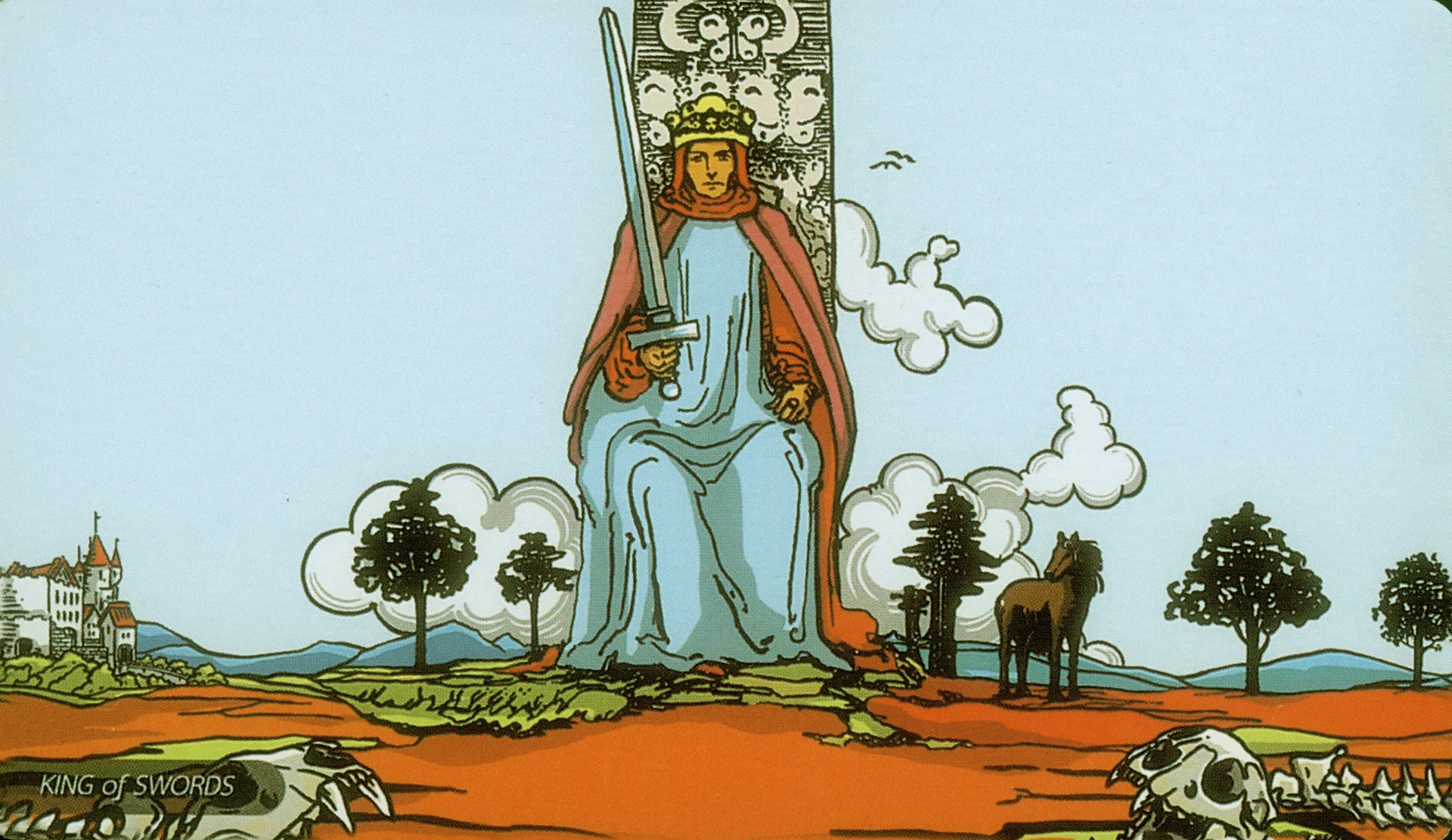
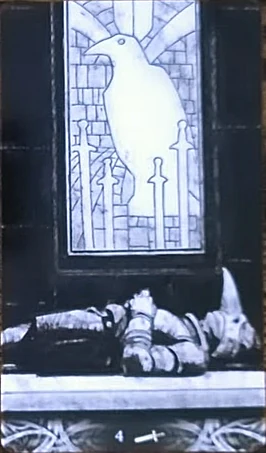
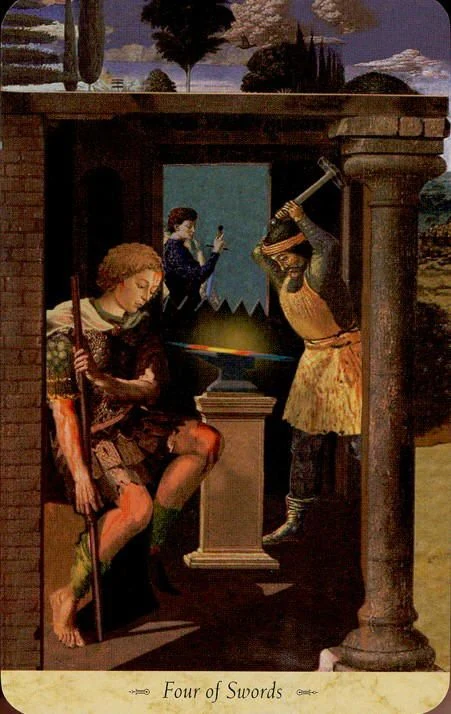
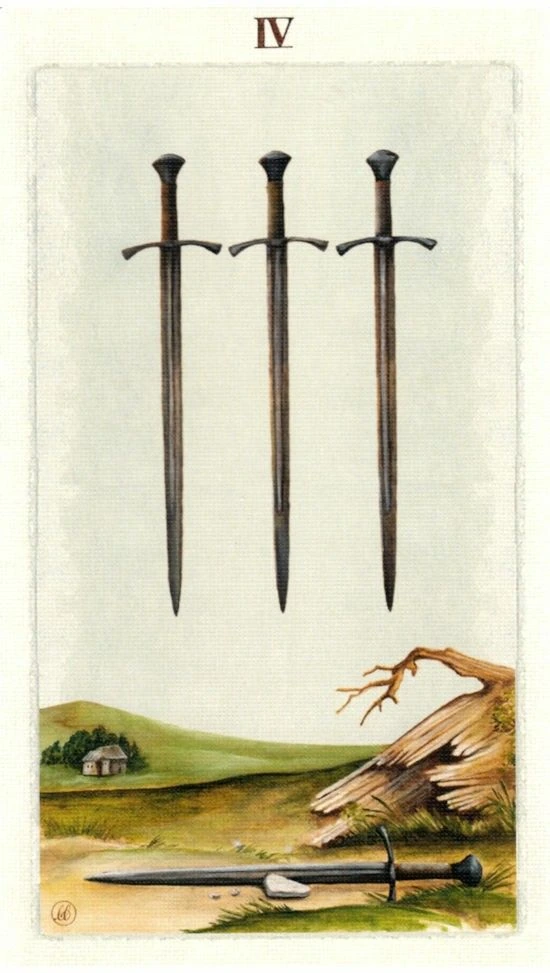
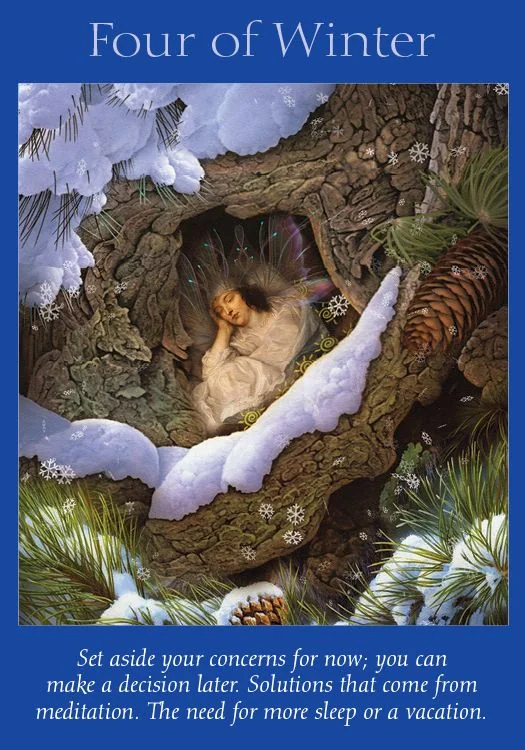
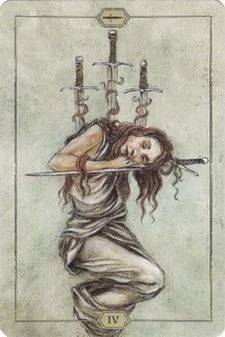
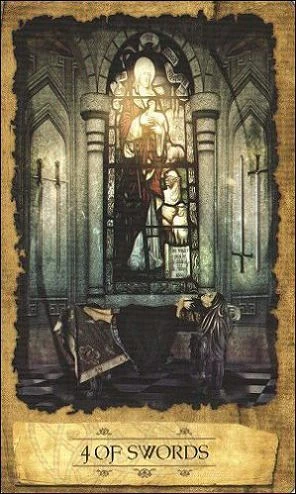
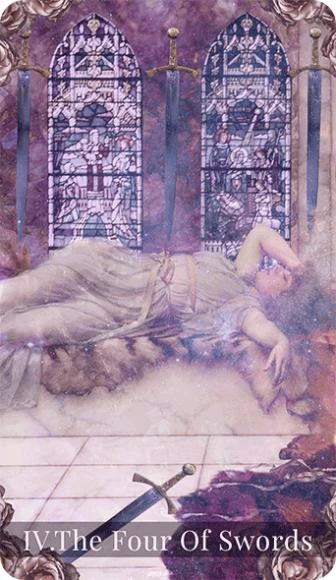
Compare the familiar Rider-Waite-Smith card with the moments before, behind and after the classic scene in three Lo Scarabeo decks.
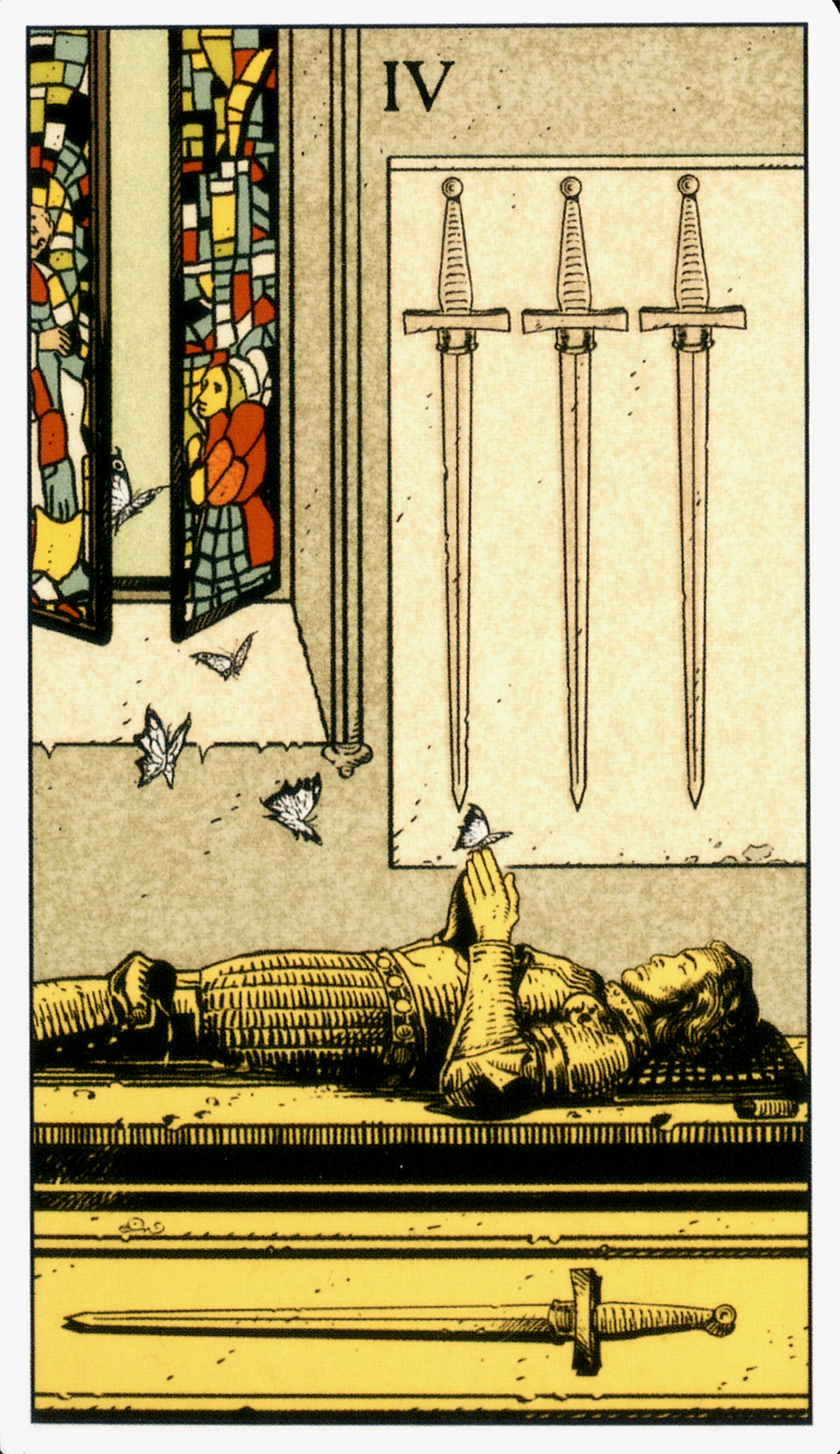
What apparently happens just before
What actually happened
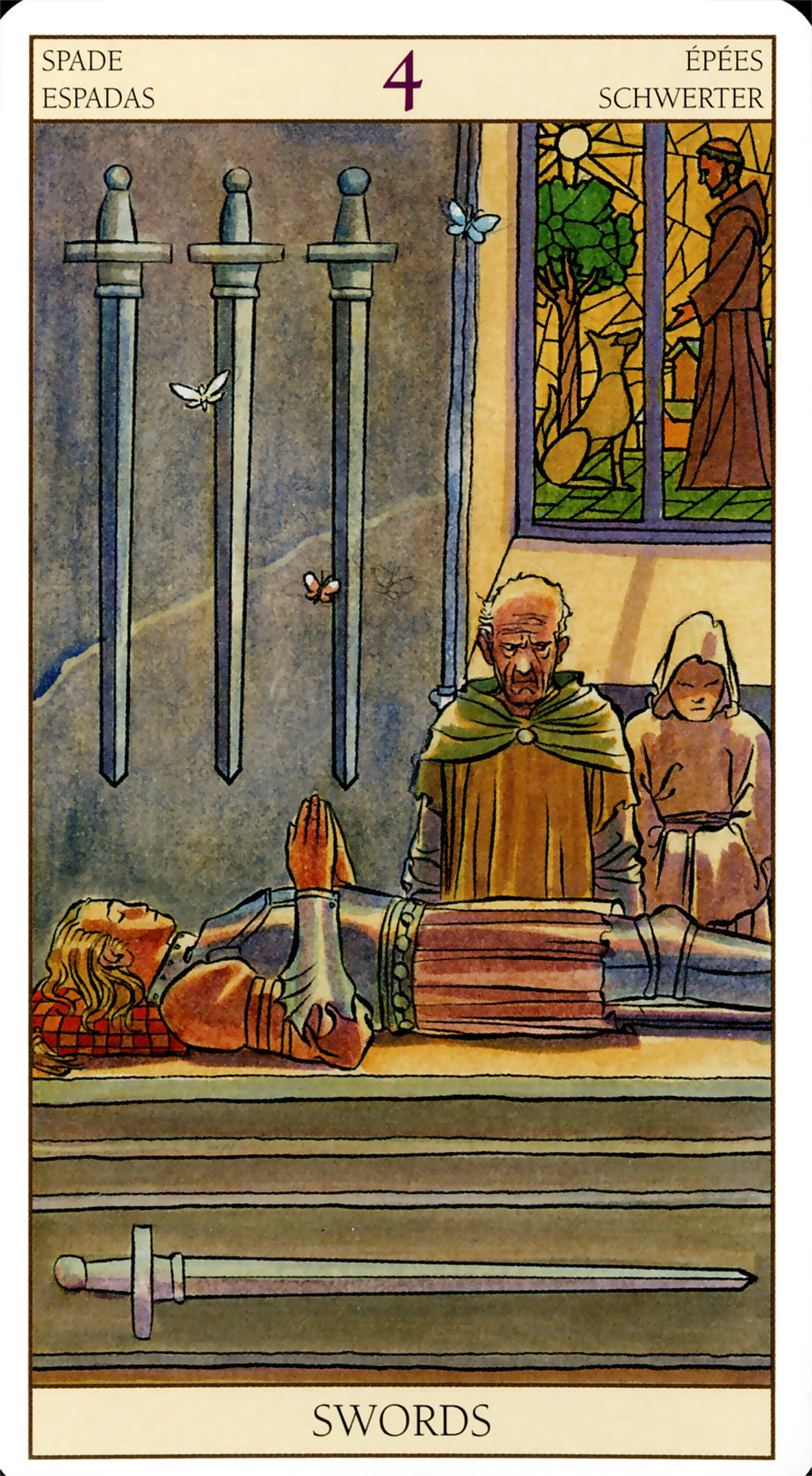
What happened on the opposite side
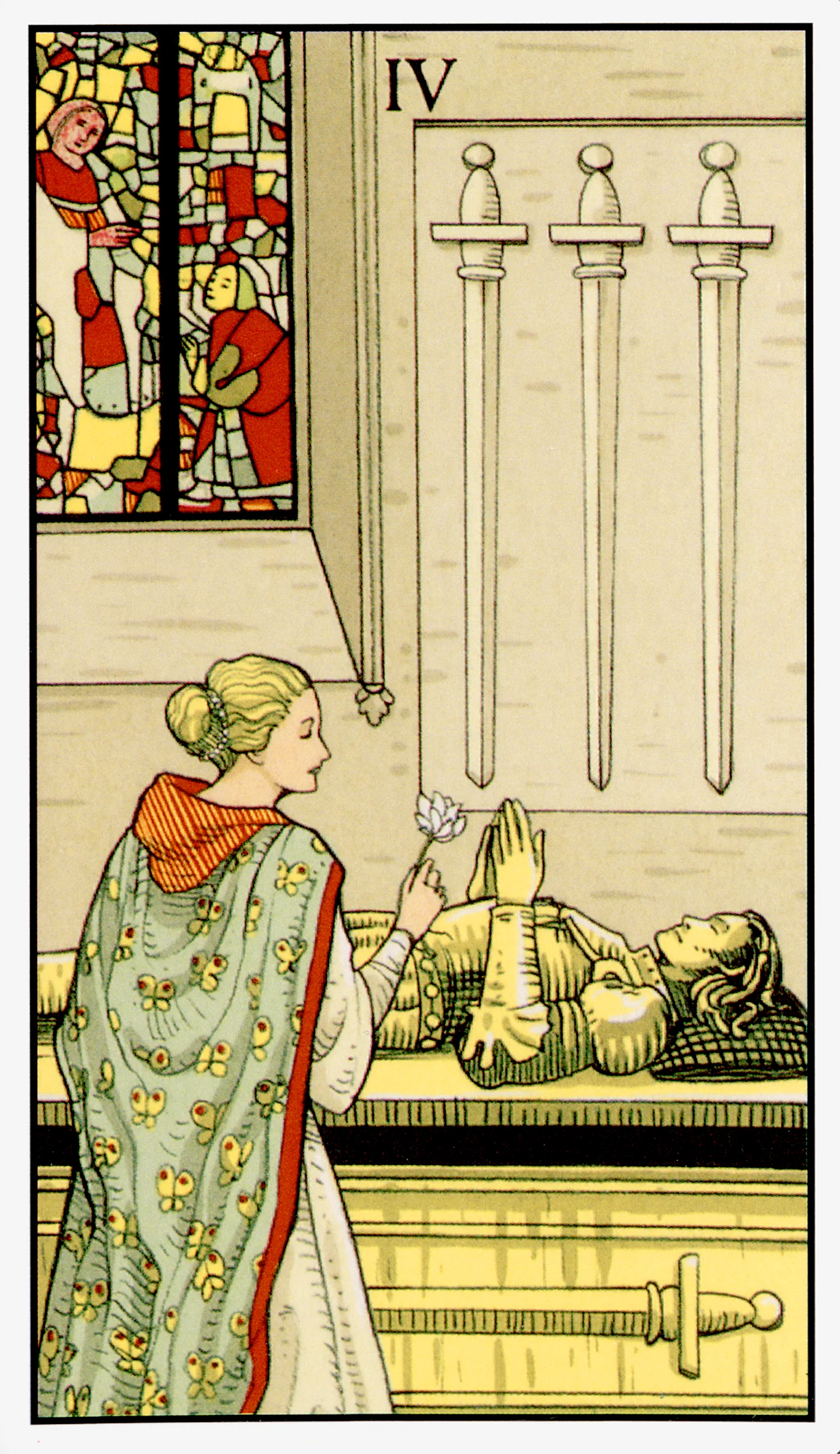
What apparently happened afterwards
Card description: four swords and a figure at rest
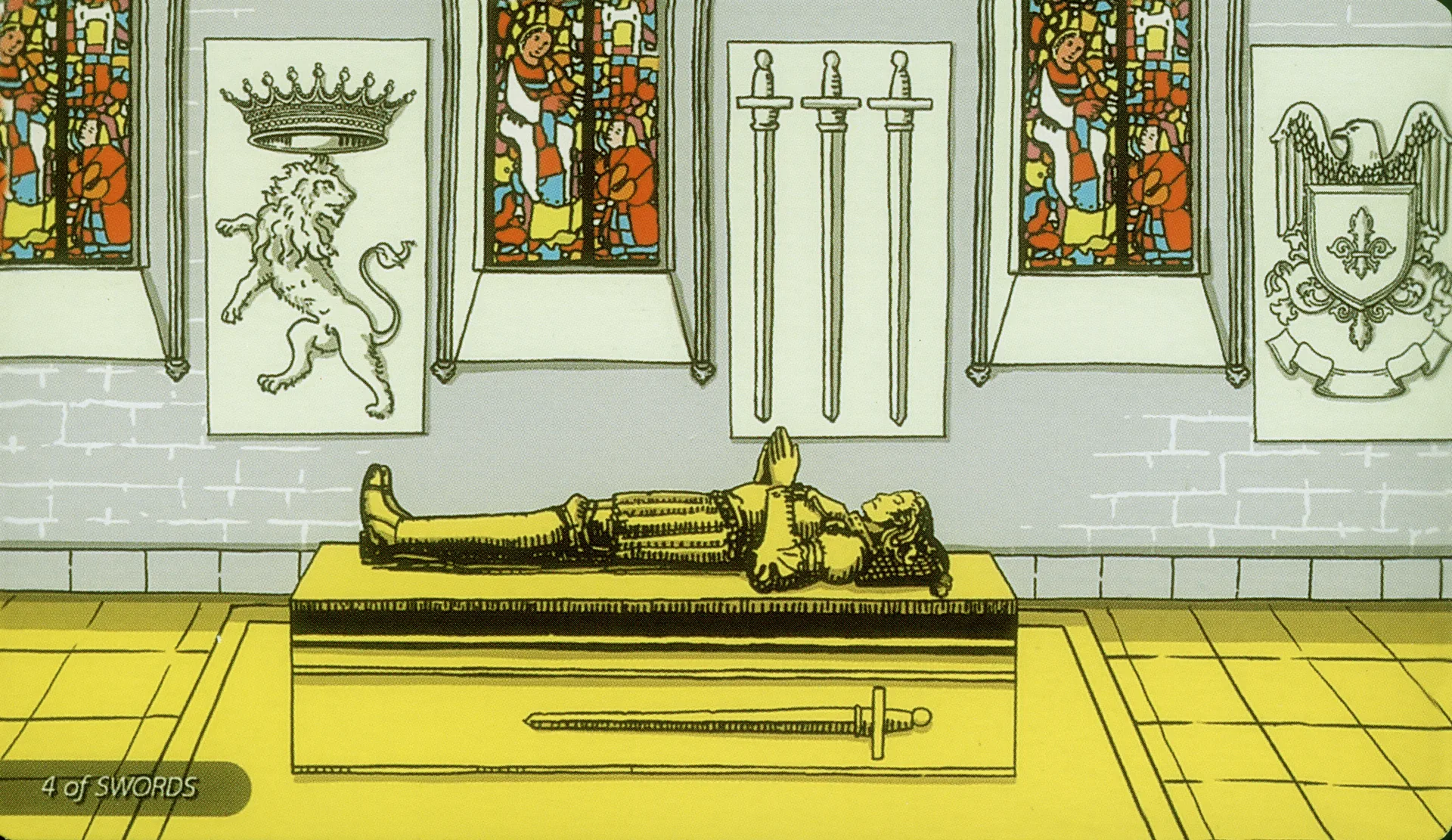
The verified Rider-Waite-Smith portrait bears the numeral IV. It shows the golden effigy of an armoured figure lying at full length on a tomb, with hands together in a position of prayer. Three swords hang vertically on the wall, their points downward. One sword lies horizontally along the lower part of the tomb.
The phrase "knight lying on a coffin" is a common shorthand, but the picture is an effigy on a tomb, not evidence of a living person's condition. A stained-glass window appears at the upper left. These visible details belong to this portrait; the decorative hero panorama is an expanded illustration.
The three swords overhead can suggest thoughts or pressures that remain present during a break. The lower blade may invite you to concentrate on one issue when you return. Those are metaphorical readings of the arrangement, not a literal instruction or proof of what the depicted figure feels.
The stained glass and prayerful hands give the scene a chapel-like atmosphere. Modern readers often connect it with repose, contemplation, and a place removed from daily noise. You can enjoy looking closely at the image without assuming that every artistic detail predicts something about you.
The Four rank, Swords suit, and traditional tarot card meanings
This is the Four of the Swords suit, a Minor Arcana card in a standard tarot deck of 78 cards. It is not the fourth Major Arcana trump. The numerical title 4 of Swords names the same rank; a 4 of Swords tarot interpretation still needs the question and surrounding cards.
In many modern systems, Swords relates to thought, communication, and the element Air. Golden Dawn-influenced traditions associate this card with Jupiter in Libra. These correspondences belong to particular systems rather than universal facts about a person's future.
In The Pictorial Key to the Tarot, A. E. Waite describes "the effigy of a knight in the attitude of prayer" and includes vigilance, retreat, solitude, and "hermit's repose" among the upright meanings. His reversed list includes wise administration, circumspection, economy, and precaution. The popular modern emphasis on exhaustion or emerging from rest should not be presented as his exact reversed wording.
Waite's references to a tomb and coffin describe the design and his historical divinatory vocabulary; they are not a basis for predicting death. When learning the swords tarot card meaning, separate what the image shows, what an author actually wrote, and what you find useful in a modern reading.
Helpful questions after pulling this card
Where would a short pause help you think more clearly? What still needs a timely response? Who could make room for you to rest? If you have already withdrawn for a while, what would a supported return look like?
The Four of Swords card offers a way to reflect on your pace. Let the answer be specific enough to try: a protected evening, a revised deadline, or one calm conversation. You can return to the reading later and see whether that choice helped.
One card, many perspectives
See Four of Swords Card from Other Decks
Discover how other tarot decks interpret this card. Select a deck to explore its full review and gallery.






Four of Swords FAQ
What does the Four of Swords mean upright and reversed?
Upright, it often suggests rest, a purposeful retreat, or time to reflect. Reversed, it may suggest restlessness, a gradual return to activity, or a need to change an exhausting pace. Read it in the context of your question.
Does the Four of Swords mean someone will return?
No card can establish another person's intentions or promise their return. This one can prompt reflection on space and communication. Respect their boundaries and use direct conversation where appropriate.
Is the Four of Swords a yes or no card?
Many readers lean toward not yet, or a yes to rest and a no to pressure. These are reading conventions, not guaranteed answers. Check the facts, timing, and capacity relevant to your decision.
What should I do after pulling the Four of Swords?
Identify a demand you can reduce, protect a realistic pause, and decide what still needs attention. If you have already rested, try one manageable step back into activity and adjust the pace as needed.