
The Eight of Swords tarot card meaning often concerns restriction, uncertainty, and the belief that you have no workable choice. Upright, it asks you to distinguish a real obstacle from an assumption. Reversed, it may suggest release, a change in perspective, or a need to recognise how deeply a limiting pattern has taken hold.
Perhaps you have ruled out applying for a job because you do not meet every desirable requirement. Reading the actual criteria, asking a question, or drafting an application can reveal possibilities that worrying alone cannot. You can check the facts while you are still unsure of yourself.
This is also the 8 of Swords. Its invitation is thoughtful rather than forceful: find out what is possible, respect genuine constraints, and choose a next step you can manage. A difficult situation does not mean you caused it. You can ask for help before deciding what to do.
8 of Swords Tarot Card Meaning at a Glance
- Main keywords: feeling trapped, overthinking, fear, limiting beliefs
- Upright meaning: things move when you practice, commit, or respond quickly. In the Swords suit, this connects to thoughts, words, truth, stress, and decisions
- Reversed meaning: burnout, delay, or scattered effort. The reversed meaning asks you to check how you are handling thoughts, words, truth, stress, and decisions
- Yes or no: not yet; the block may be more mental than permanent
- Best question to ask: What is this card trying to help me understand right now?
The retained quick-reference panel above needs a card-specific correction: its phrase "things move when you practice, commit, or respond quickly" is not the usual upright Eight interpretation, and "burnout, delay, or scattered effort" is not a reliable summary of its reverse. This card more commonly concerns restricted choices and limiting beliefs; reversed, readers often explore release or intensified restriction. It does not advise rushing or treating every obstacle as imaginary.
Eight of Swords upright: distinguish fear from a real limit
The eight of swords upright can reflect a moment when you feel trapped and cannot see a useful option. A rule, a lack of money, or another person's conduct may genuinely limit what you can do. An untested expectation can narrow the picture further: "They will say no," or "I have already left it too late."
Self-imposed limitations are one possible interpretation, not an explanation for all suffering. If you lack safe housing, face discrimination, or depend on someone who controls resources, positive thinking does not remove that constraint. Start with what is true and what help is available.
When uncertainty creates decision paralysis, reduce the size of the decision. You might not be ready to choose a whole course of study, but you can request the timetable. Find out one thing you need to know. The rest of the decision can wait until you have that answer.
Fear and recklessness are different problems. Fear can make you avoid a manageable conversation; recklessness can make you act without checking the consequences. The card invites a clearer view before action, rather than endless waiting or a sudden leap.
Give yourself an honest test: is there a step you can try safely and undo if necessary? Asking for information, making a draft, or speaking with someone trustworthy can help you assess the situation without pretending the outcome is certain.
Reading the Eight of Swords in context
In a tarot reading, the question and position matter. In the past, consider a period when you had little freedom or information. In the present, identify what is blocking you now. A future position can help you plan for uncertainty; it does not establish that entrapment will happen.
In a tarot spread, neighbouring cards offer different perspectives. With the Two of Swords, ask what decision or information you are avoiding. With the Nine of Swords, consider how worry affects your view. Beside the Six of Swords, explore a supported transition. With Justice, check the actual rules and evidence. These are reading possibilities, not fixed combinations that predict events.
Love and relationships: make room for an honest choice
In love, this card can invite you to notice where you feel voiceless. Perhaps you want an evening alone but expect your partner to be upset, so you say yes and become resentful. Where it is safe, a plain request lets you test that expectation: "I would like some quiet time tonight. Can we make plans for tomorrow?"
A card cannot reveal someone's private feelings, establish betrayal, or promise that an ex will return. Ask directly and consider observable behaviour. If you feel powerless because someone threatens you, monitors you, or controls your money, seek appropriate support rather than assuming the problem is your mindset.
If you are single, notice whether a past disappointment has become a rule about every new relationship. You can proceed slowly and keep your boundaries while remaining curious about an individual person. You do not need to disclose everything or make a commitment to try a conversation.
Reversed in love, the image may encourage a clearer boundary or an honest discussion about what each person wants. Liberation does not have to mean separation; it may mean being able to express a preference without rehearsing every possible reaction. It also does not guarantee reconciliation or a safe response.
Career, money, and school: find the missing information
For work, identify the difference between "I cannot do this" and "I do not know how to do this yet." If a task feels impossible, ask for an example, a deadline, or a short explanation. Self-confidence often grows from useful information and practice, not from waiting until all doubt disappears.
A new career may seem out of reach while you are balancing bills or caring responsibilities. You need not resign to explore it. Compare training costs, speak with someone doing the work, and check whether a small trial fits your circumstances. The reading cannot promise employment or tell you to ignore financial risk.
With money, open the statement you have been avoiding and write down the amounts and due dates. A qualified debt adviser can help with choices that are hard to weigh alone. The Eight is not an investment signal or a guarantee of returns; real figures should guide financial decisions.
At school, an unclear assignment can feel much larger than it is. Send a specific question about the instructions or complete one paragraph before judging the entire project. Interactive tools such as a checklist or shared planning document can help you organise the task, but they do not substitute for asking about requirements you do not understand.
Eight of Swords reversed meaning: release or a tighter pattern
The reversed eight of swords often invites an exploration of breaking free from a belief or arrangement that has kept your choices narrow. You may recognise that a rule was negotiable, ask for help, or stop treating one setback as a verdict on your ability.
Some readers interpret the reverse as deeper restriction instead. You might dismiss an available option before investigating it, or find that a real barrier has become harder to manage. Read the position and circumstances rather than assuming reversal automatically means freedom.
New perspectives are useful when they change what you can check or do. If you believe nobody will listen, choose one person and ask for a short conversation. If they cannot help, that is information about this attempt, not proof that every avenue is closed.
Optimism can support effort, but you cannot manifest an outcome by thinking correctly. A realistic plan includes uncertainty, resources, and the possibility of needing more time. You can reclaim your power through a choice within your reach without claiming control over everything.
Notice a modest sign of change: you ask a question, name a preference, or accept support that you previously refused. Small steps count because they give you evidence about your options. You do not need a dramatic breakthrough for the reading to be useful.
Eight of Swords yes or no meaning
Many readers lean toward "not yet" or a cautious no when the question involves a choice made under pressure or with missing information. Reversed, the emphasis may shift toward a possible opening, but neither orientation guarantees an answer.
Try a more useful question: "What information would help me decide?" or "What can I change safely?" Consent, legal duties, and urgent medical decisions require real-world facts and appropriate advice rather than a yes-or-no card.
Advice: check one assumption before accepting it
Write down what you know, what you are assuming, and what you need to ask. For example, "The course costs more than I have saved" is a fact. "There is no funding" is an assumption until you have checked. You still have to pay for the course, but checking may uncover a way to afford it.
You can reframe a harsh conclusion into a question you can investigate. "I always fail" becomes "What was difficult last time, and what support would change the attempt?" You do not have to feel cheerful about it. A specific question simply gives you something you can work on.
If several people advise you differently, compare the evidence and their knowledge of your circumstances. Your perception of reality may change as you learn more, but that does not mean your concerns were foolish. Allow yourself to revise a decision when the facts change.
Wellbeing: respond to distress with support
The picture can convey helplessness or mental imprisonment as metaphors for a difficult experience. It cannot diagnose anxiety, physical paralysis, or any illness; nor can it confirm pregnancy or promise a cure. Seek qualified care for symptoms or persistent distress.
Labels such as "victim mentality" can blame someone for harm done to them. Feeling victimized may reflect actual mistreatment. If you feel stuck, begin with safety and support, then consider any thought patterns that you can usefully change. Nobody earns abuse by being afraid.
One archetype, four perspectives
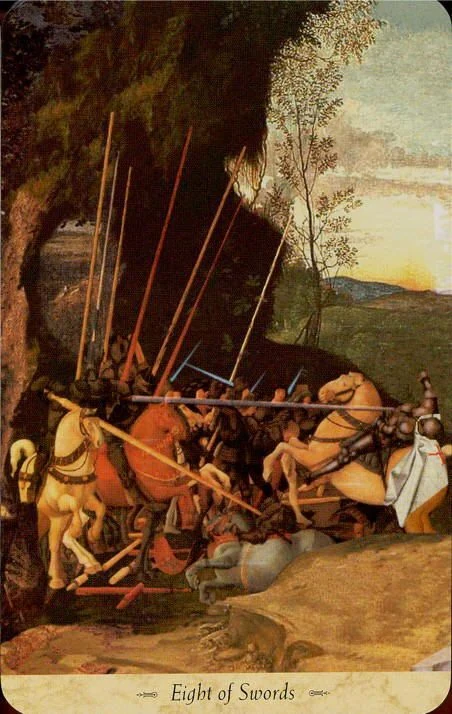
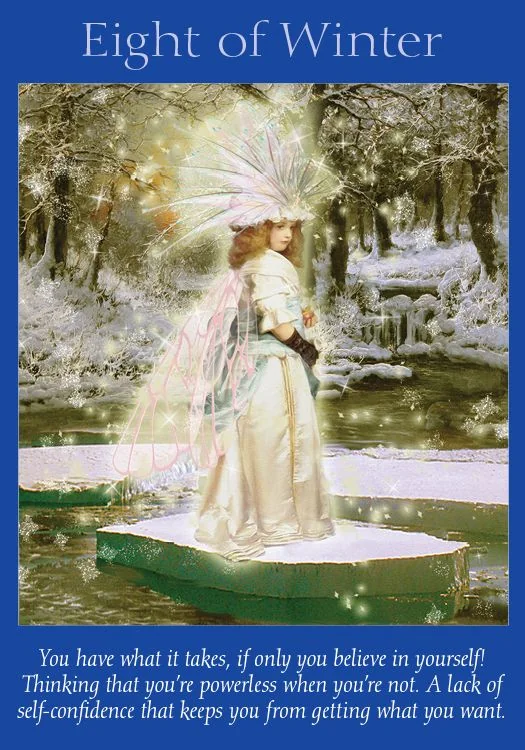
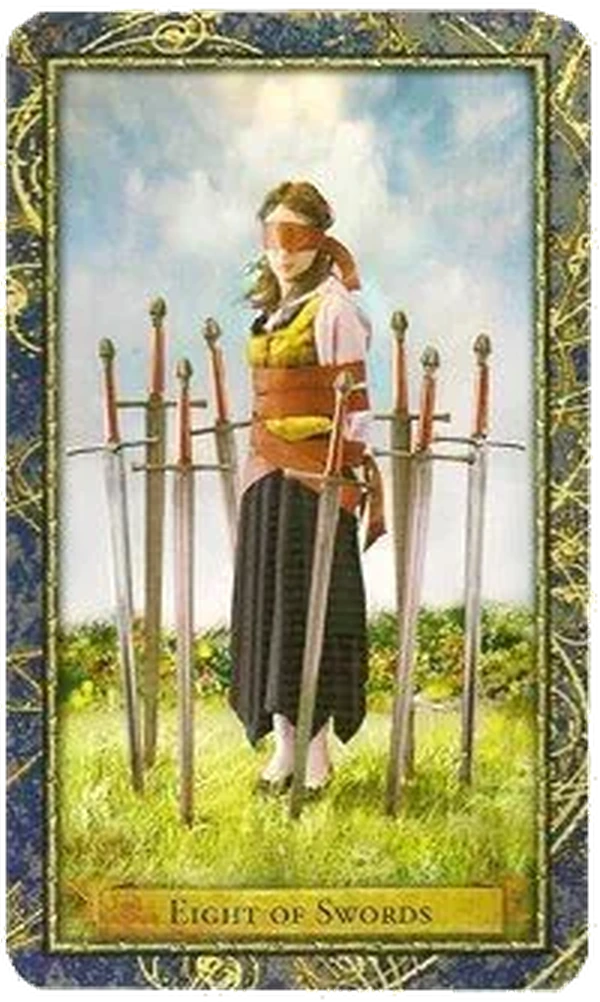
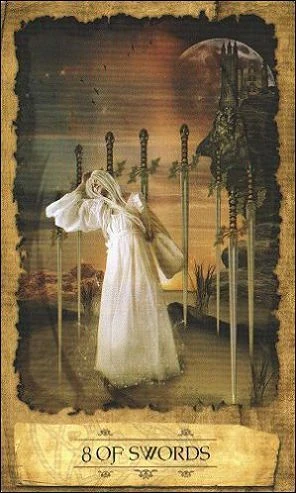
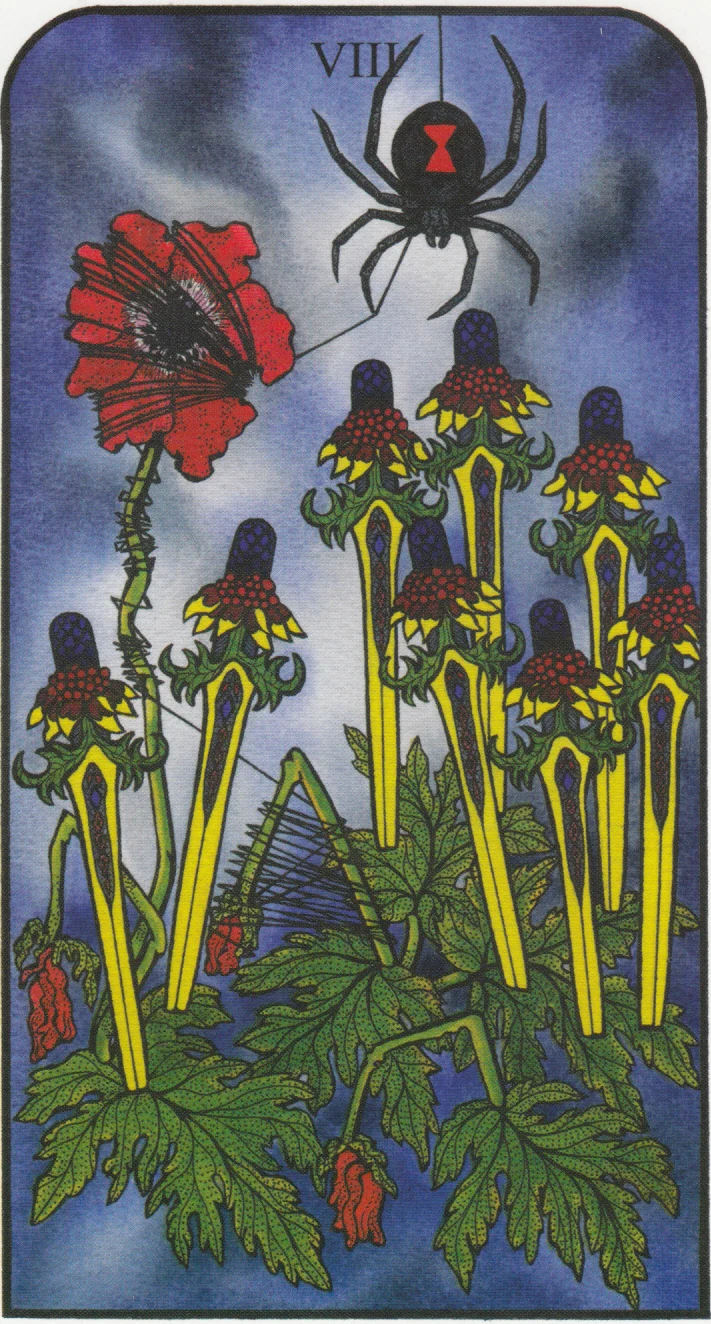
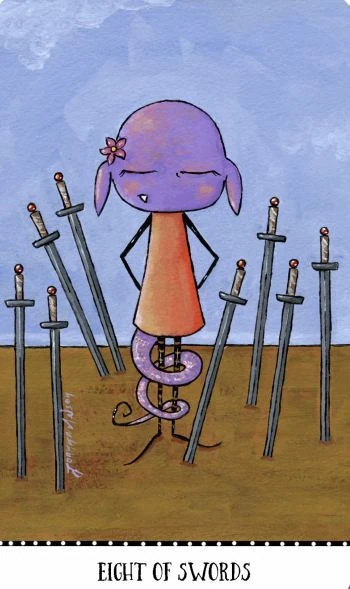
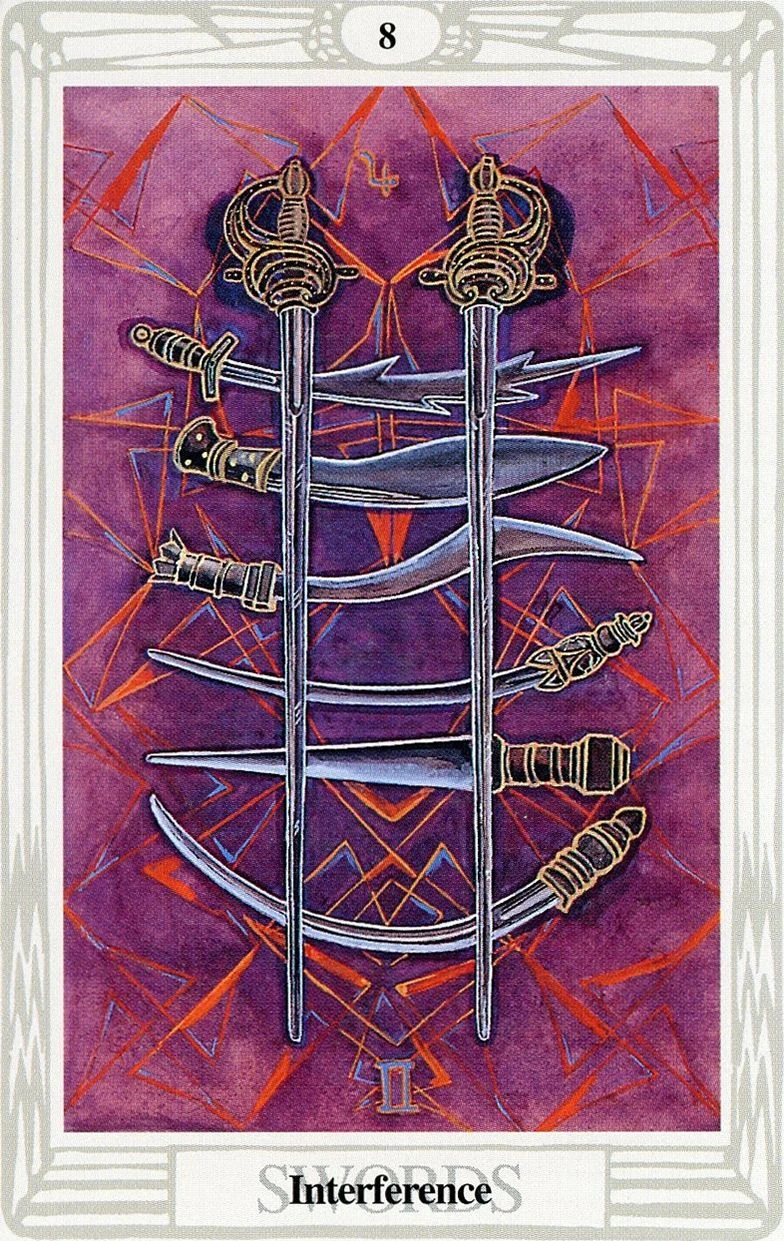
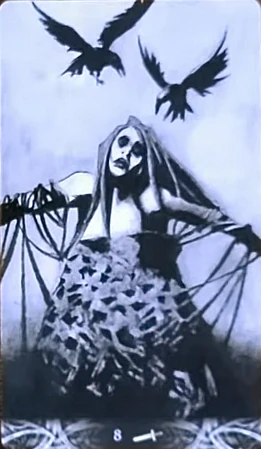
Eight of Swords Across Four Tarot Decks
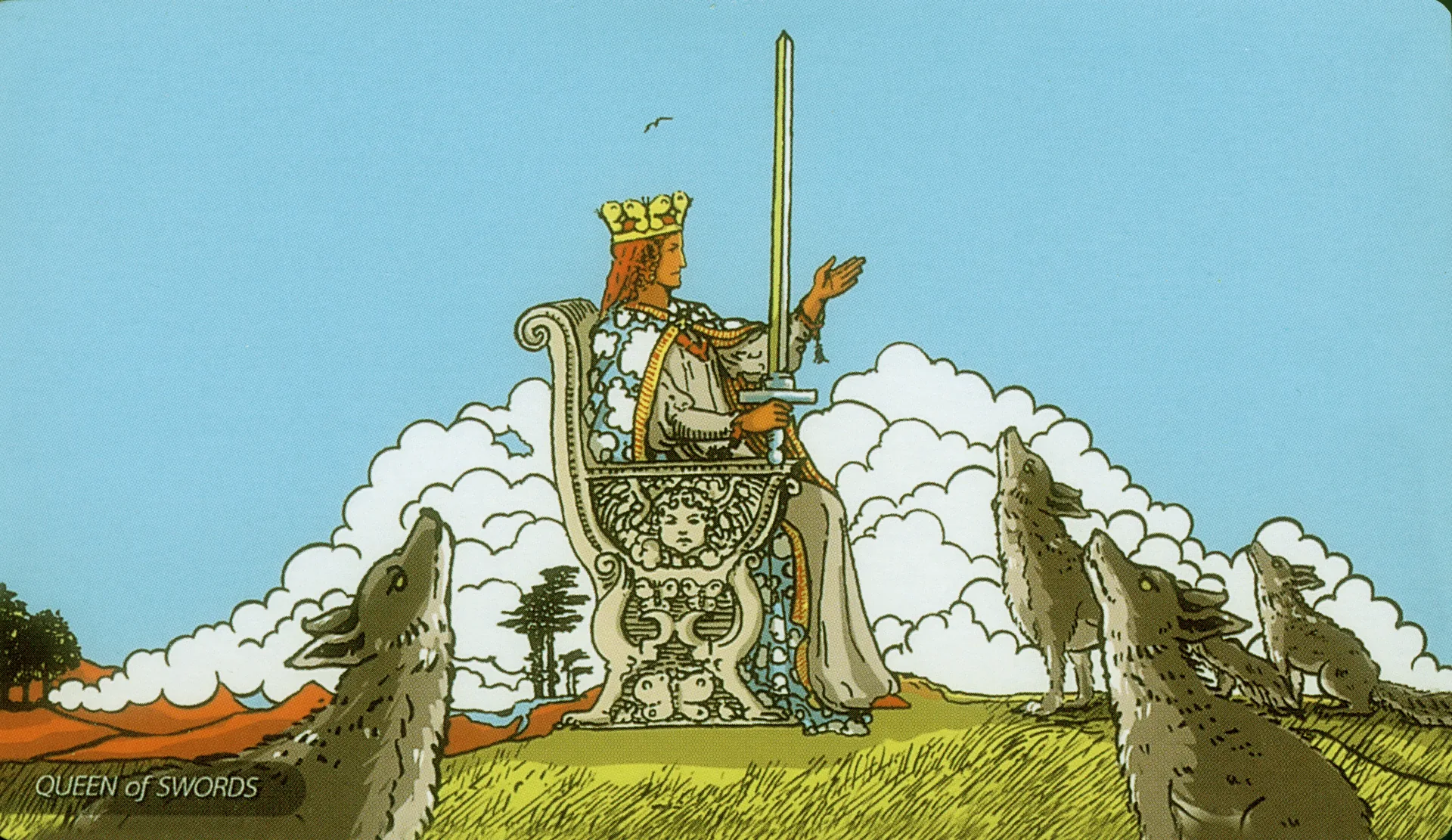
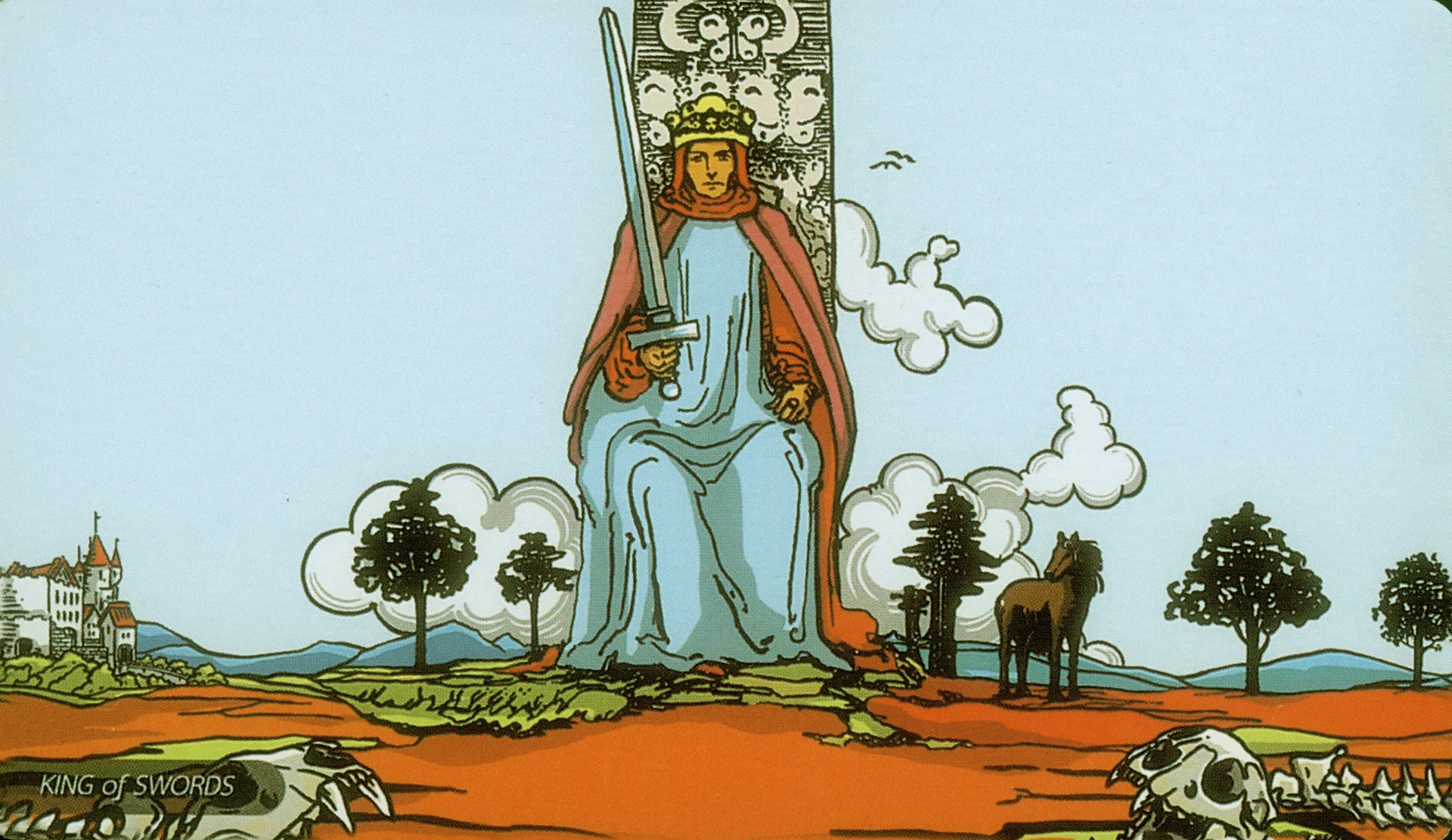
Compare the familiar Rider-Waite-Smith card with the moments before, behind and after the classic scene in three Lo Scarabeo decks.
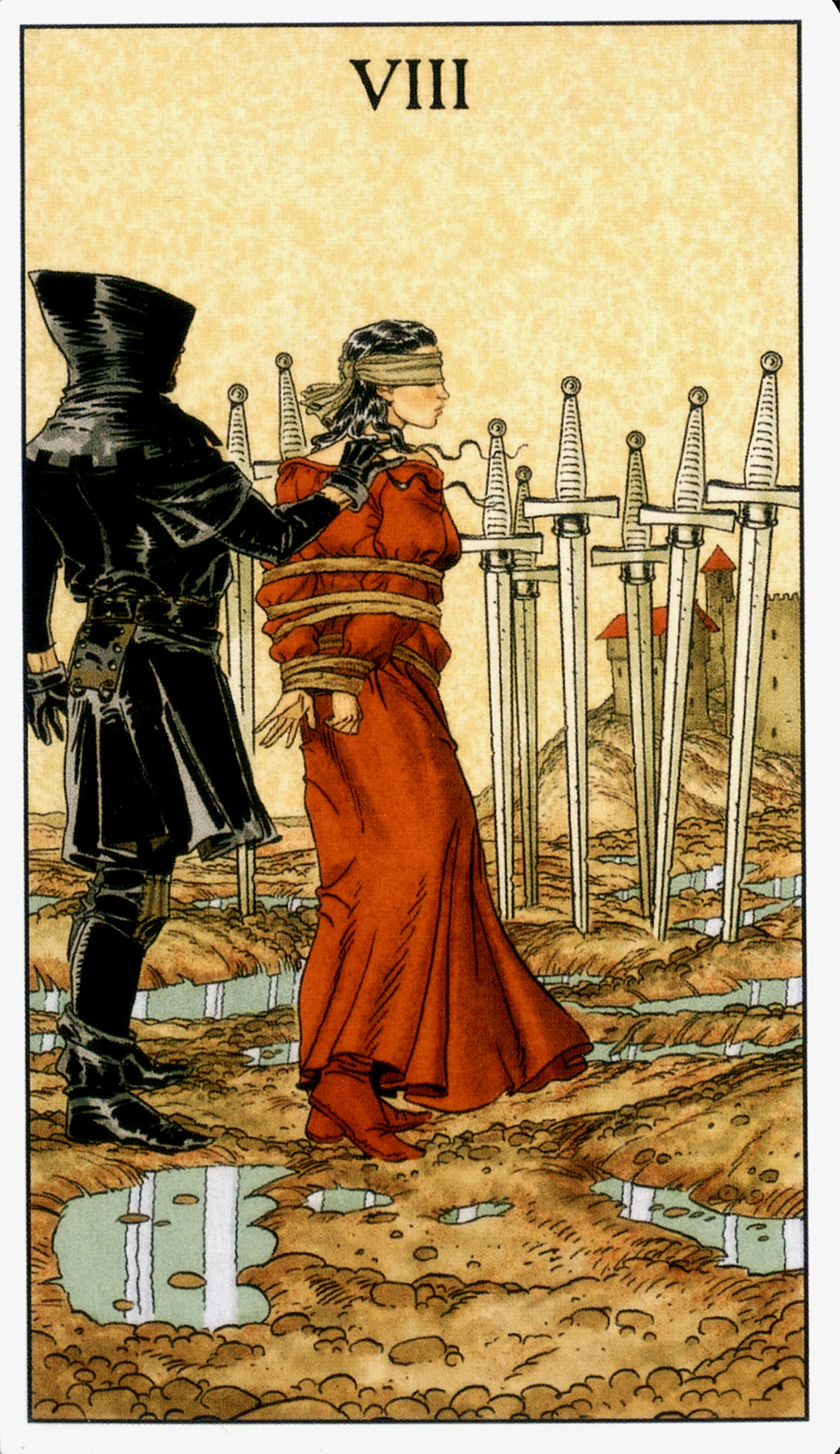
What apparently happens just before
What actually happened
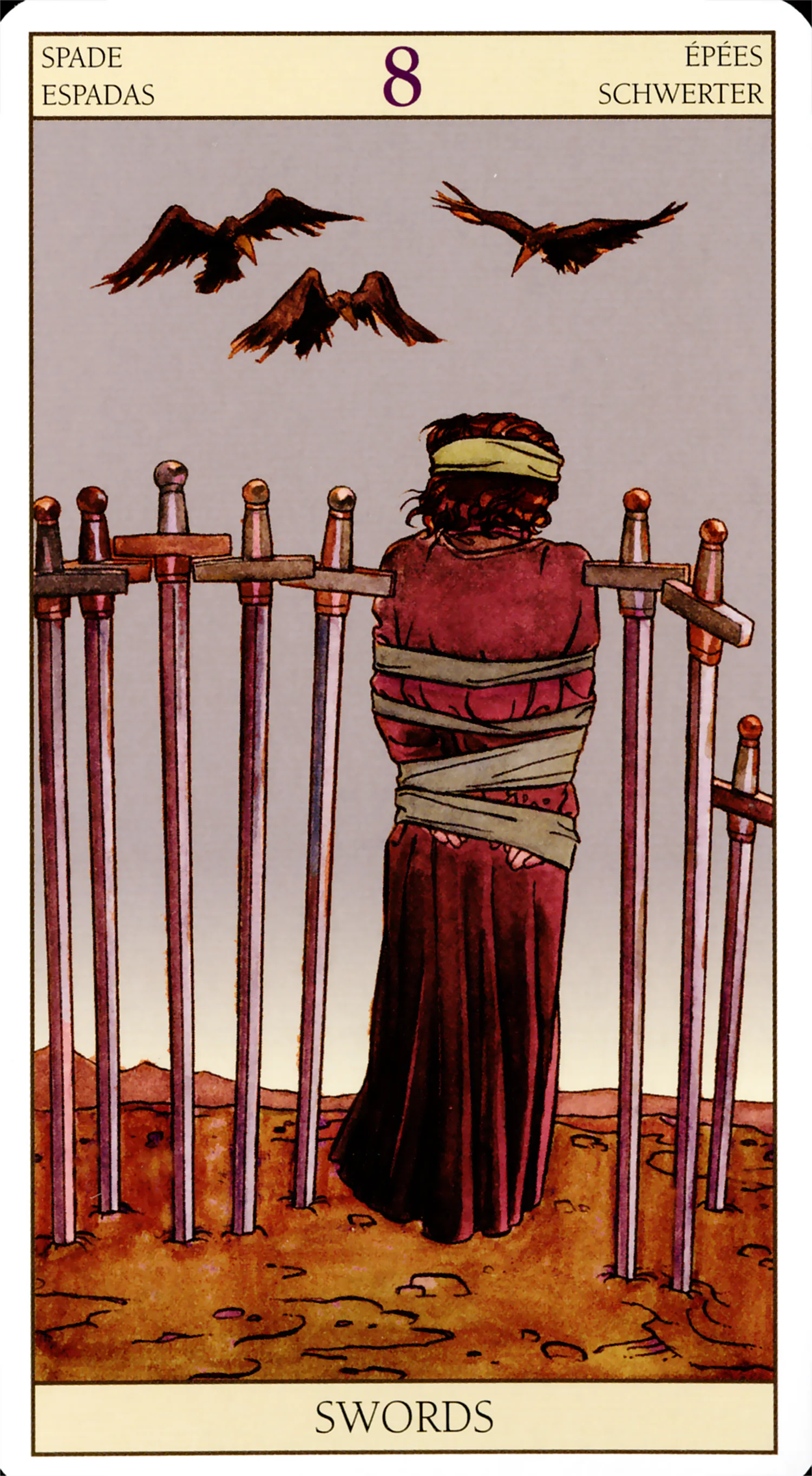
What happened on the opposite side
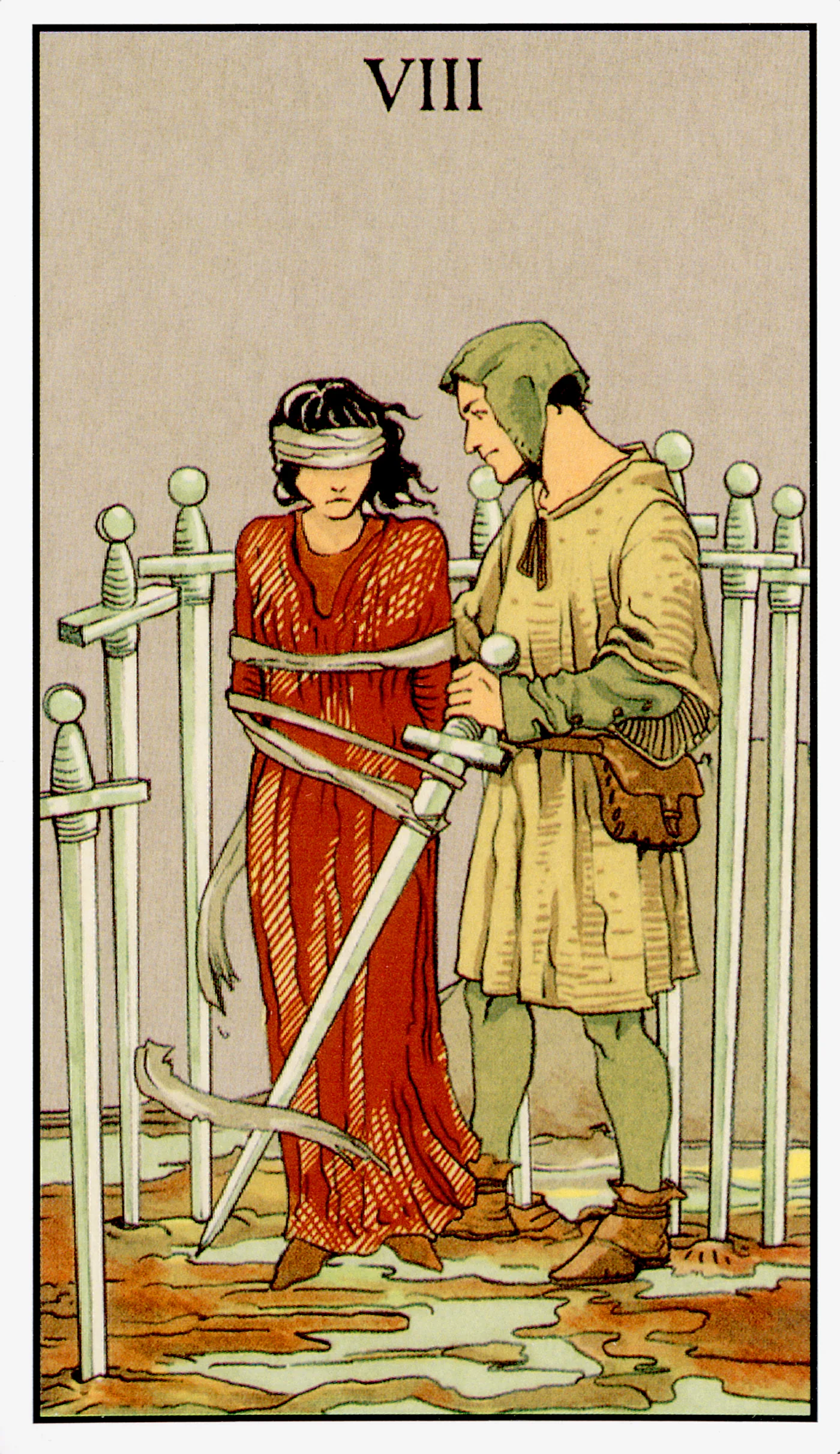
What apparently happened afterwards
Symbols in the Eight of Swords tarot card
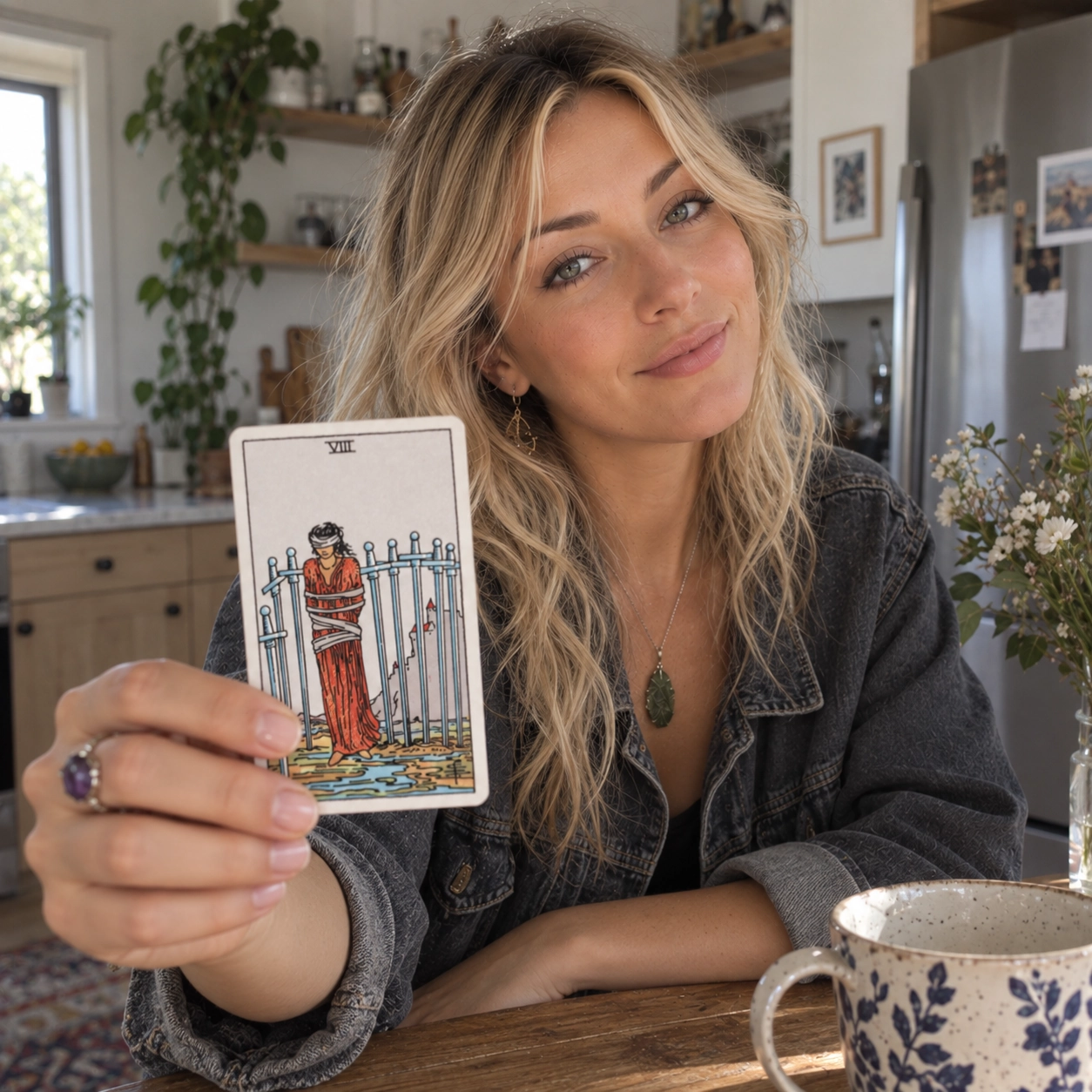
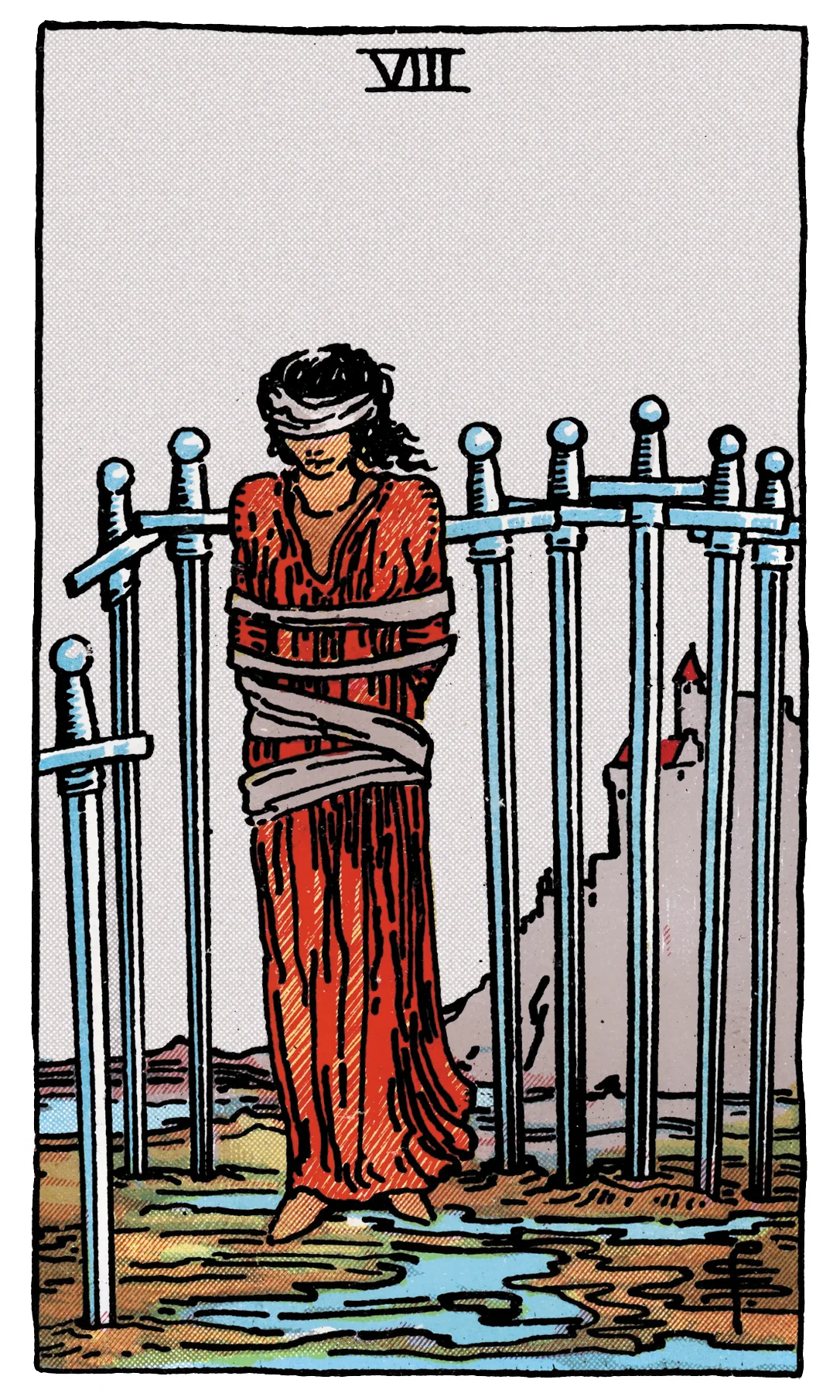
The verified Rider-Waite-Smith portrait, often called the Rider Waite card, bears the numeral VIII. A red-robed figure is blindfolded and bound around the torso. Eight swords stand in the ground, with three to the viewer's left and five to the right. Water crosses the muddy foreground, and buildings stand on a rocky rise behind.
The swords do not form an unbroken wall across the foreground. Modern readers often use this opening to explore perceived limitations and a possibility that the figure cannot yet see. It does not establish that escaping a real situation is easy, safe, or entirely a matter of attitude.
The blindfold can symbolize incomplete information; the bindings can signify restriction. "Remove the blindfold" is an interpretive invitation to seek a clearer view, not a claim about blindness or the abilities of people with visual impairments. The desolate landscape contributes to the mood, but it does not predict isolation.
Use this separate portrait for observations about Pamela Colman Smith's composition. The wider hero is an expanded panorama. Other cards in the preserved comparison and gallery may arrange the scene differently; a tarot deck can explore the same subject without copying every object.
Minor Arcana, numerology, and astrology
This is a numbered Minor Arcana card in the suit of Swords, not Major Arcana VIII. The Swords suit commonly relates to thought and language. In modern numerology, eight may suggest power, structure, or repeated effort, but the particular picture makes restriction more relevant here than speed or guaranteed achievement.
Golden Dawn-influenced astrology associates this Eight with Jupiter in Gemini. The wider Air family includes Gemini, Libra, and Aquarius; that does not make all three this card's specific correspondence. A horoscope and a card interpretation are different systems, and neither determines a person's character or future.
In The Pictorial Key to the Tarot, A. E. Waite describes the figure as bound and hoodwinked, and calls the confinement temporary rather than irretrievable. His divinatory list includes crisis, censure, and constrained power; his reversed list is not simply a promise of liberation. These historical interpretations are not predictions of illness or disaster.
Reflection: what is actually within reach?
Tarot's imagery can help you put a difficult feeling into words. Try describing the obstacle without using "always" or "never." Then identify one fact you could check and one person who might help. The main message is to examine the situation closely enough to recognise an available choice, while respecting a genuine barrier.
A belief can immobilize a decision: if every attempt seems pointless, you may stop before finding out what is possible. Ask what evidence would change your perspective, rather than forcing yourself to believe the opposite. Sometimes freedom comes through practical support, not through a solitary act of will.
Use the Eight of Swords card as a prompt for curiosity. You might discover that you need permission, information, a skill, or company for the next step. That is a more useful result than deciding you are either completely powerless or responsible for every circumstance.
One card, many perspectives
See Eight of Swords Card from Other Decks
Discover how other tarot decks interpret this card. Select a deck to explore its full review and gallery.





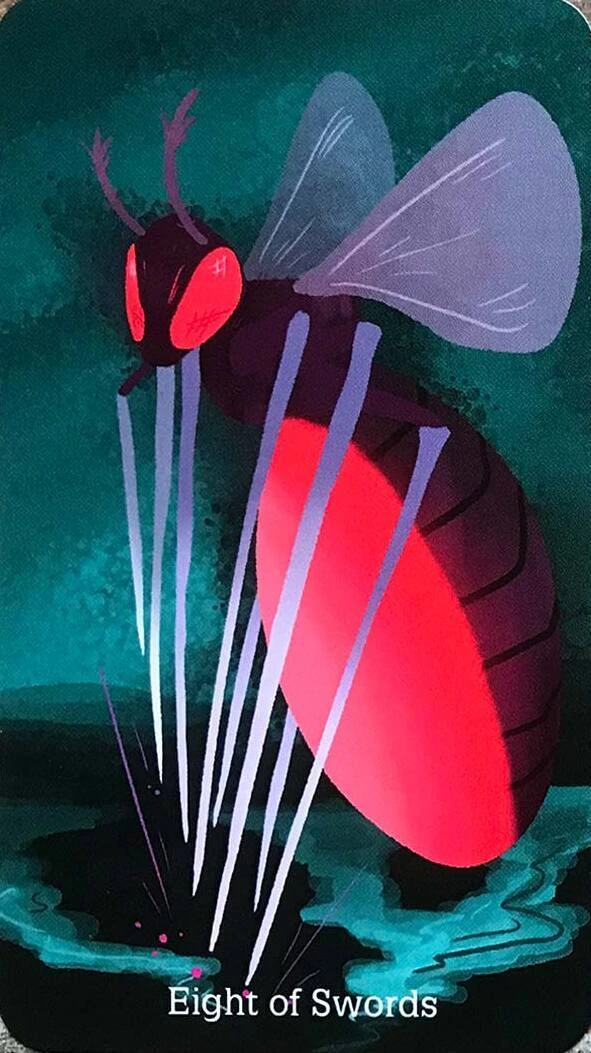
Eight of Swords FAQ
What does the Eight of Swords mean upright and reversed?
Upright, it often concerns restriction and uncertainty about your options. Reversed, readers may explore release or a more deeply established pattern. Check what is actually blocking you before deciding which interpretation fits.
Does the Eight of Swords mean my problems are imaginary?
No. Some obstacles are real, including lack of resources, discrimination, or another person's harmful behaviour. The card can invite you to examine assumptions without blaming yourself for circumstances you did not create.
Is the Eight of Swords a yes or no card?
Many readers lean toward not yet or a cautious no when information is missing or pressure is narrowing the choice. Reversed may suggest an opening, but neither orientation guarantees an outcome or replaces consent.
What should I do after pulling the Eight of Swords?
Separate facts from assumptions, identify one question you can check, and consider who can help. Choose a manageable and safe step rather than waiting for complete confidence or rushing into a major decision.