Explore the Infinite Visions Tarot Cards
Browse 74 verified Infinite Visions Tarot card fronts in deck order: 69 recovered from the authorized 80-pin Pinterest section plus five matching card fronts retained from the existing TarotFans walkthrough gallery. Gloria Jean produced this self-published deck in several handmade or small-run formats, so these scans are not assigned to a numbered production edition. The unavailable cards are Two of Cups, Ten of Cups, Page of Cups, Eight of Swords, King of Swords, and Three of Pentacles. Tap any card to open a larger carousel view.
Infinite Visions Tarot Review: Aurica’s Quick Take
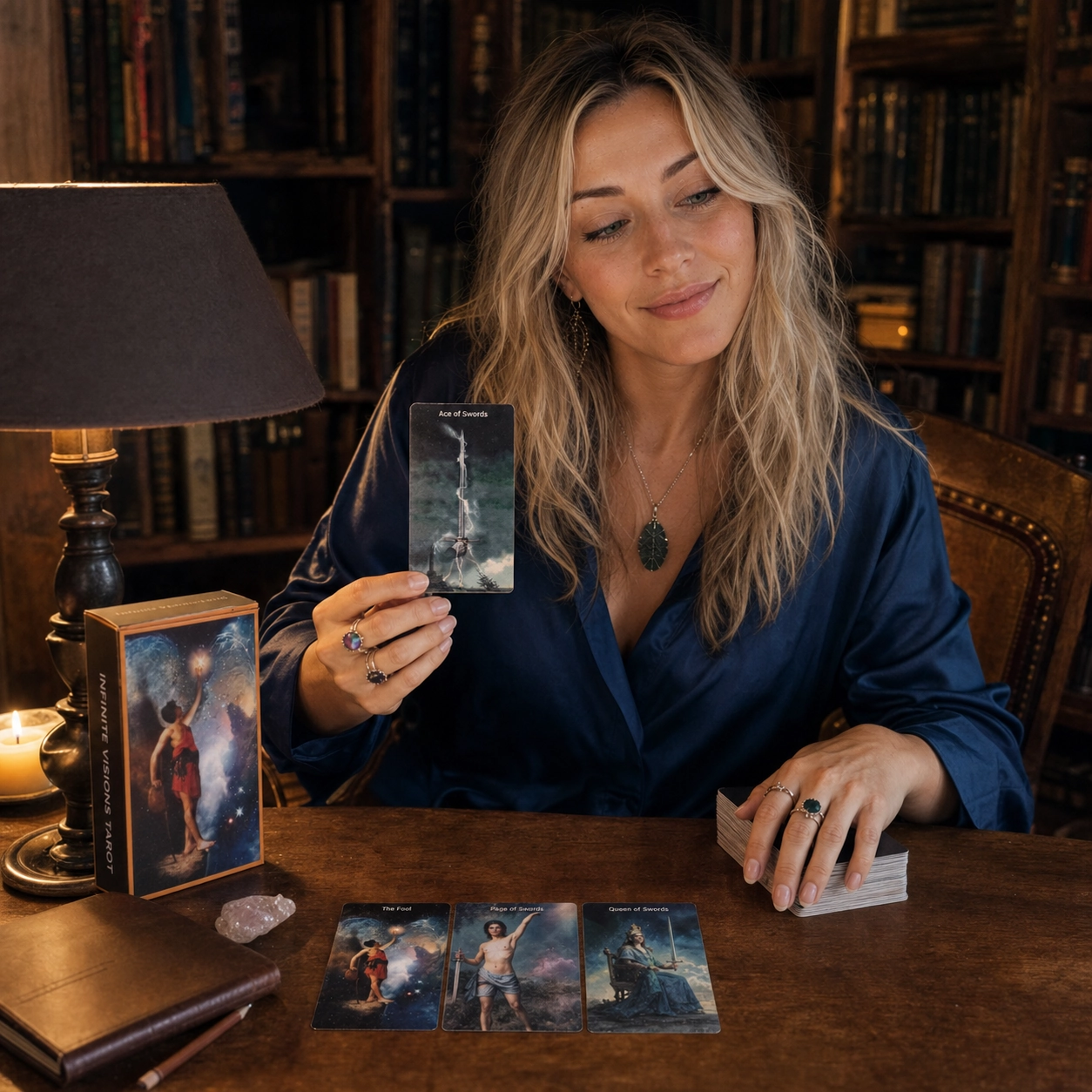
Infinite Visions Tarot is Gloria Jean’s handmade collage deck, where European paintings open into stormy rooms and half-remembered myths. I love how familiar Rider–Waite–Smith meanings are present, but never allowed to feel flat.
When I read with it, I notice the first gesture, colour or shaft of light that catches my eye. Then I compare that feeling with the card’s traditional role and test it against the cards nearby. The result stays intuitive, but it also stays grounded.
I reach for this deck when a question needs atmosphere, motive or emotional nuance. It suits visually led readers and journalers more than anyone wanting crisp modern symbols or a detailed manual. For health or financial questions, I use tarot for reflection while leaving diagnosis and professional advice to qualified experts.
Most of all, these storm-lit collages remind me that even a tangled question can contain one bright, honest thread; follow that thread gently, and the next step can begin to glow.
What makes Infinite Visions Tarot distinctive?
Most collage decks announce their seams. Infinite Visions often does the opposite: Gloria Jean blends familiar fine-art figures into dreamlike scenes where scale, weather and architecture create a new psychological space. The result is recognisably traditional tarot, but with an uncanny, theatrical mood.
This is an 80-card deck. Alongside the usual 78-card structure are the Dark Magician and Dark Priestess, shadow counterparts that invite a second look at power, knowledge and intention. The recovered Gallery above is partial, so it is presented as a source-backed view rather than as a claim of complete coverage.
Card study
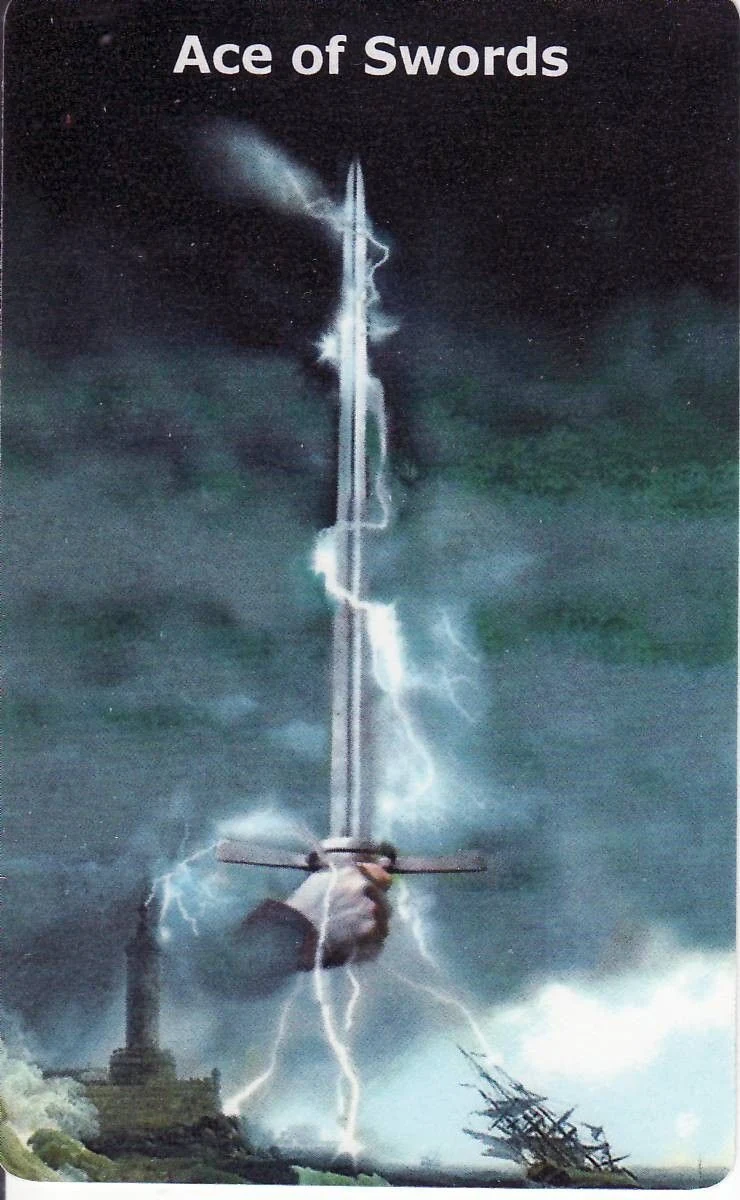
Ace of Swords: clarity in the storm
A hand grips a long upright blade while white lightning coils around the steel. Dark clouds press in from every side; a lighthouse anchors the lower-left horizon and a sailing ship leans into the weather at lower right. The sword does not wait for the sky to clear—it becomes the brightest line inside it.
In a reading, this Ace can mark the instant a difficult truth becomes impossible to avoid. Upright, it offers clean language, a firm decision and the courage to separate fact from fear. In shadow, its sharpness can become cruelty: being technically correct while forgetting the human heart receiving the words.
How the deck reads in practice
Infinite Visions works best when you combine the traditional card with direct observation. Name the first visible detail that affects you, then ask what it changes about the conventional meaning. A soft expression may temper a difficult card; an unstable sky may make a normally confident card feel provisional.
The deck is especially strong for questions about motive, atmosphere and hidden emotional dynamics. It is less interested in giving a blunt verdict than in showing the scene around a decision.
Four-card moment
Choice, devotion and balance
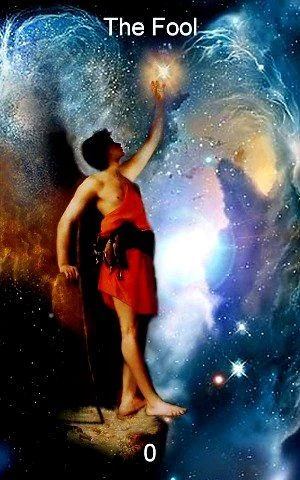
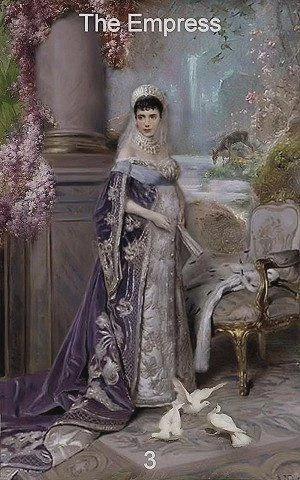
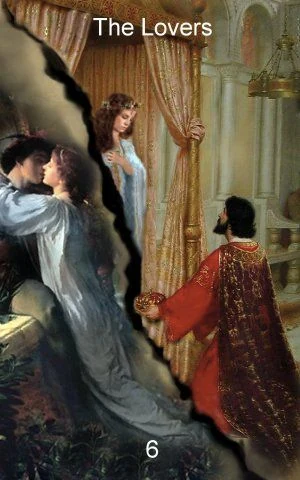
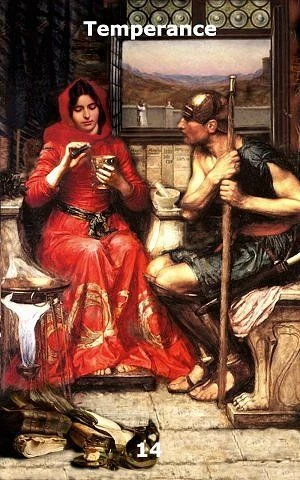
The Fool, The Empress, The Lovers and Temperance move from brave openness into creation, heartfelt choice and the patient art of blending a life that can hold them all.
Is Infinite Visions Tarot beginner-friendly?
It follows Rider–Waite–Smith structure closely enough for a beginner to recognise the framework, but the fine-art collage asks for more active looking than a simple clone. There is no full companion guidebook to do that visual work for you.
A useful practice is a one-card journal: write the traditional meaning, three details you can actually see, and one sentence about the emotional weather. This keeps intuition anchored to evidence rather than turning every impression into a free association.
Easy, medium and deep prompts
- Easy: What deserves my attention today?
- Medium: What atmosphere am I creating around this decision?
- Deep: Which part of the story am I projecting onto someone else?
Because the imagery is theatrical, questions about perspective and projection are particularly revealing. Ask what belongs to the scene—and what you may be adding to it.
Card study
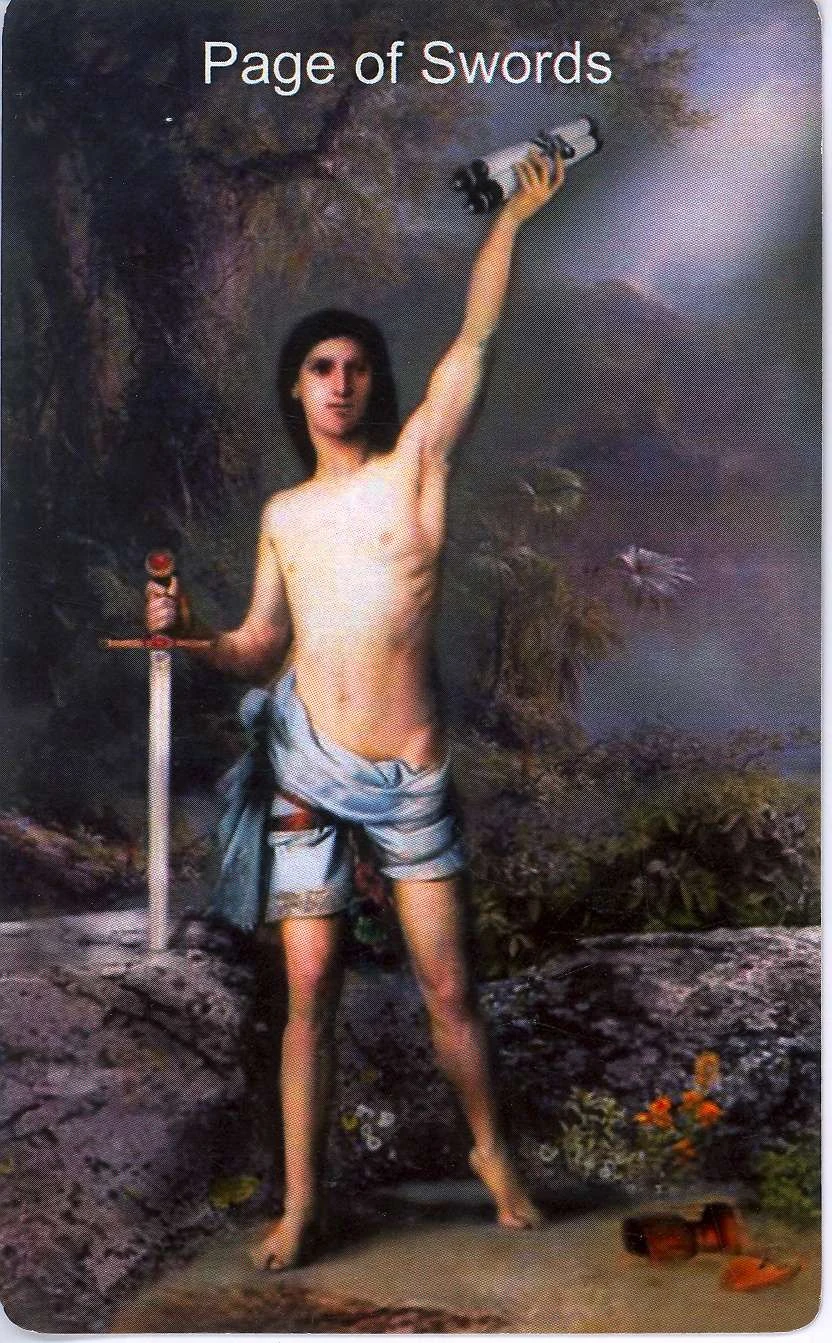
Page of Swords: curiosity held aloft
A young figure stands barefoot among rocks and dark vegetation. One hand rests on an upright sword while the other lifts a pale rolled object toward the sky; a bird crosses the brooding landscape behind him. His open stance feels alert and experimental, as though an idea has arrived before its instructions.
This Page brings questions, messages and restless observation into a reading. Upright, he encourages careful research and the bravery to ask what everyone else is avoiding. His shadow is information without grounding—rumour, nervous overthinking or a clever answer raised before the question has been fully heard.
Art style, personality and audience fit
The palette moves between smoky violets, storm blues, warm reds and old-master flesh tones. Figures often appear caught between ordinary rooms and impossible skies. That gives the deck a romantic, psychological personality—serious without becoming uniformly bleak.
Collectors of independently produced decks, fine-art collage and older self-published tarot will find the most to appreciate. Readers who need high-resolution modern printing, a consistent visual era or an extensive manual should know those are not this deck’s priorities.
Four-card moment
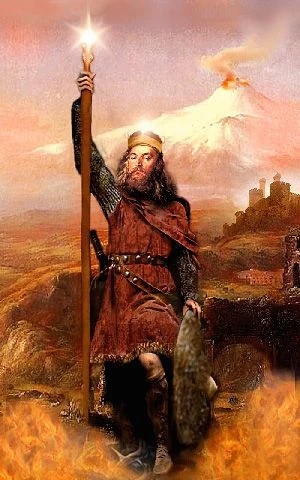
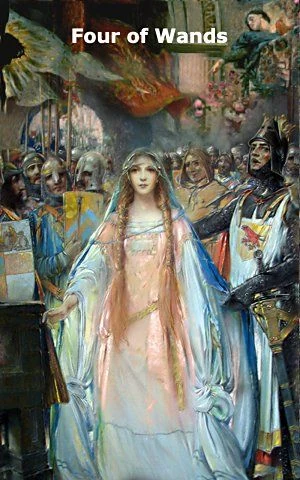
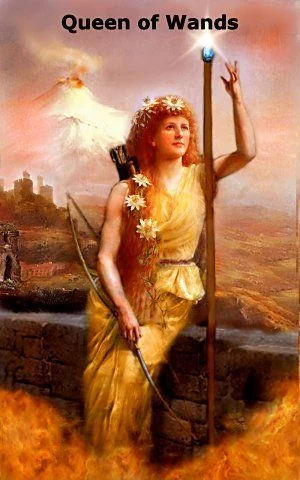
Fire becoming direction
Ace, Four, Eight and Queen of Wands show inspiration maturing from its first spark into a shared foundation, swift movement and embodied confidence.

Love, work and creative readings
For love readings, focus on posture, distance and who appears to hold the emotional centre of the scene. The deck is good at showing attraction and vulnerability, but it is most useful when the question concerns patterns, boundaries and honest participation rather than a simple yes or no.
For work and creative questions, look for motion, tools, thresholds and changes of scale. The collages can make a practical situation feel mythic; bring the answer back to one concrete decision before ending the reading.
Card study
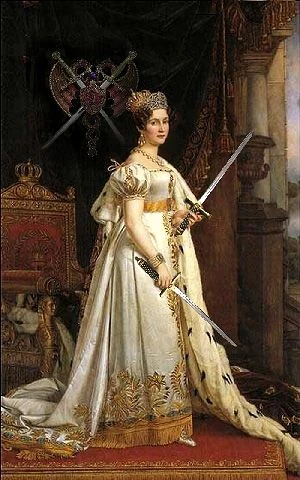
Queen of Swords: grace with an edge
A crowned woman in an ivory-and-gold gown stands beside an ornate throne. She carries one sword upright and another lowered across her body, while a dark crest of crossed blades rises behind her. The pale fabric and courtly setting soften the scene, but nothing about her steady posture feels unguarded.
In a reading, this Queen asks for truth delivered with dignity. Upright, she supports wise boundaries, precise judgment and independence earned through experience. In shadow, protection can harden into distance, leaving the sword ready long after the danger has passed.
What to know before buying
Infinite Visions Tarot was handmade and home-published by Gloria Jean rather than issued as a mass-market deck. Copies are scarce and are most often encountered through collectors or pre-owned listings. Condition, card count and edition therefore matter more than they would with a current retail release.
Before buying, ask for clear photographs of the complete deck and any additional Dark Magician or Dark Priestess cards. Avoid assuming that a listing is complete from the box or title alone.
Four-card moment
Water, choice and emotional authority
Ace, Seven, Eight and King of Cups trace an emotional current from openness through many tempting possibilities, the courage to leave and a steadier command of the heart.
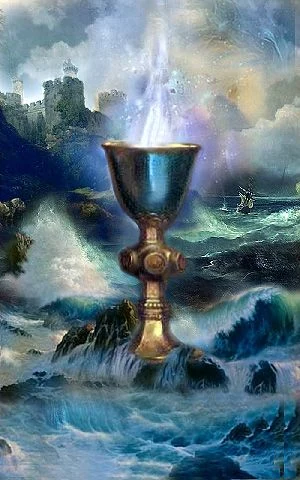



Aurica’s golden rule for Infinite Visions Tarot
That rule keeps the deck specific. It stops a reading from becoming a recitation of memorised meanings and turns each image into a relationship between figures, settings and atmosphere.
Final thoughts
Infinite Visions Tarot rewards the reader who likes to look twice. Its Old Master collage, handmade character and shadow counterparts give familiar tarot structure an unusual psychological depth.
It is not the easiest deck to replace or the simplest one to learn from, but that scarcity is not its only appeal. The deck remains memorable because its images feel assembled around a question: what changes when familiar symbols are placed inside a stranger dream?

Infinite Visions Tarot FAQ
Who created Infinite Visions Tarot?
Infinite Visions Tarot was created by Gloria Jean as a handmade, home-published collage tarot.
How many cards are in Infinite Visions Tarot?
The complete deck has 80 cards: the standard tarot structure plus the Dark Magician and Dark Priestess.
Does it follow Rider–Waite–Smith meanings?
Yes. Its structure and card identities are Rider–Waite–Smith based, while the fine-art collage adds its own atmosphere and visual emphasis.
Is Infinite Visions Tarot suitable for beginners?
It can be, especially for a visually curious beginner, but it asks for close observation and does not provide a full modern companion guidebook.
What are the Dark Magician and Dark Priestess?
They are additional shadow counterparts to The Magician and The High Priestess, expanding the deck’s treatment of agency, knowledge and hidden motive.
Where can I buy Infinite Visions Tarot?
The original edition is scarce and usually appears through collectors or pre-owned listings. Verify the condition and full card count before purchasing.


