Explore the Pagan Otherworlds Tarot Cards
Explore the cards in tarot order, with imagery by Linnea Gits and hand-lettering by Peter Dunham. The Ninth Edition also includes The Seeker and five Luna Cards.
Explore the card gallery.
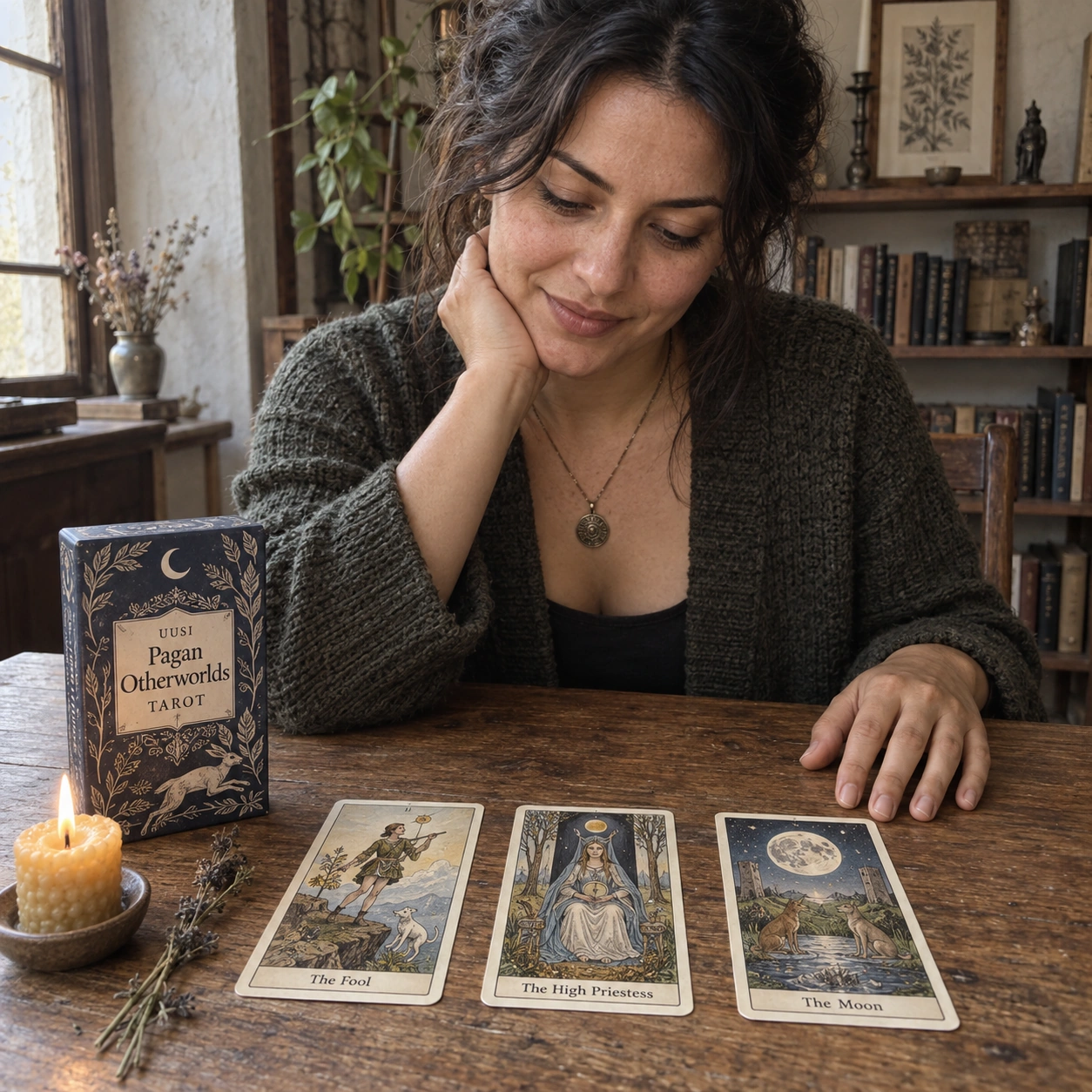
A deck that speaks best when you give it room
“Pagan Otherworlds doesn’t rush to explain itself. I like to begin with three cards, name the first detail that catches my eye in each painting, and only then bring in the traditional meanings. The Seeker is especially useful when the real question is still taking shape.”
— Aurica, TarotFans reader
Pagan Otherworlds Tarot feels like a deck discovered in an old cabinet rather than designed for a modern shelf. Linnea Gits painted its imagery in traditional oils; Peter Dunham supplied the hand-lettering and copy; their Uusi studio publishes the deck. The current Ninth Edition contains 84 cards: the familiar 78-card tarot structure, the additional Major Arcana card The Seeker, and five holographic Luna Cards.
Its figures inhabit a pre-industrial landscape of bare branches, courtly dress, animals, weather, and ritual objects. The deck follows recognizable tarot architecture without flattening every card into an obvious keyword. That balance makes it readable for experienced readers while leaving enough silence for intuition.
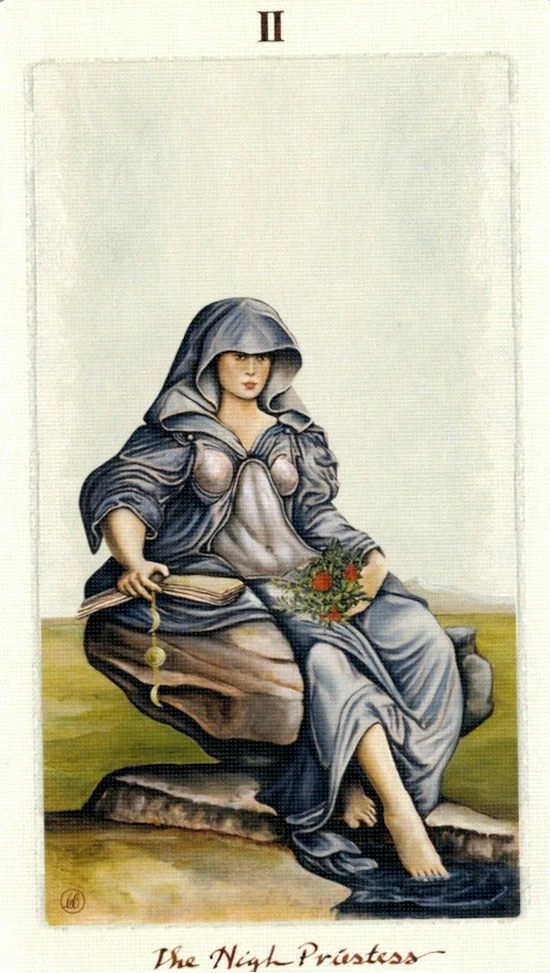
The High Priestess
The High Priestess demonstrates the deck’s restrained drama. Her stillness is not empty; it asks the reader to notice what is withheld, what is sensed, and what becomes clear only after the noise settles.
Artwork, symbolism, and reading style
Gits’s oil paintings borrow the atmosphere of Northern European portraiture and botanical illustration. Muted earth, bone, wine, and forest tones make the occasional flash of red or gold feel consequential. Familiar symbols remain present, but the scenes rarely over-explain themselves.
In practice, Pagan Otherworlds suits reflective readings, seasonal work, shadow inquiry, and questions where emotional texture matters more than a quick yes or no. Beginners can still follow the Rider–Waite–Smith sequence, though the separate companion book is useful when the deck’s private visual language feels elusive.
At the threshold
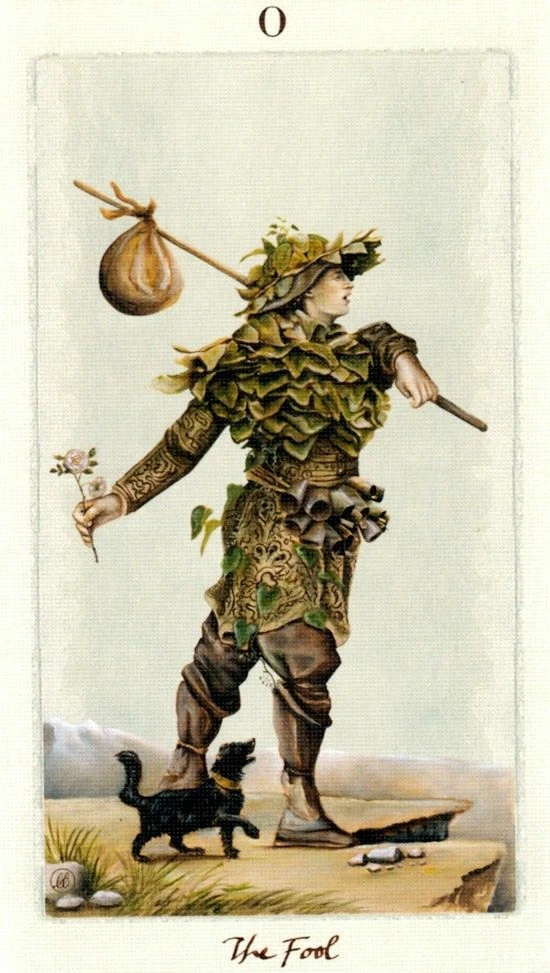
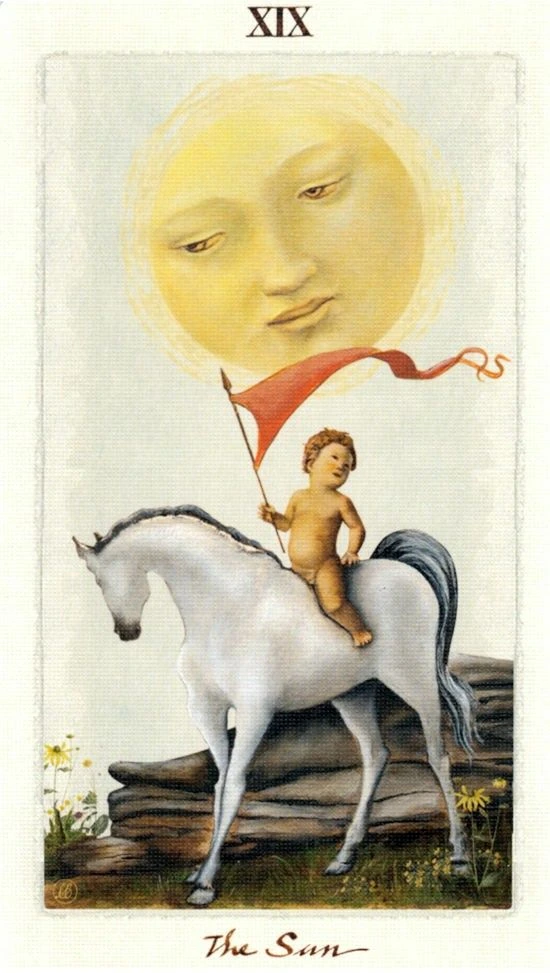
The Fool opens the path, Death clears what has ended, The Moon complicates perception, and The Sun returns the reading to direct illumination. Read together, they describe change as a cycle rather than a single event.


The Seeker and the Luna Cards
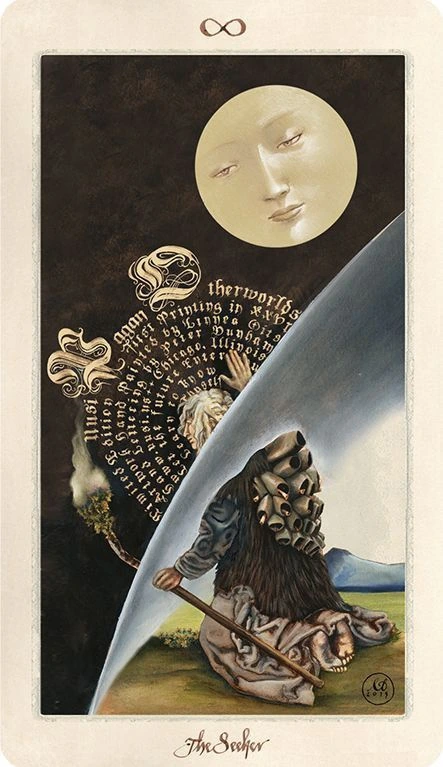
The Seeker is the deck’s defining addition: an unnumbered Major Arcana card marked by an infinity symbol. It can represent the person entering the reading, the impulse behind a quest, or a moment when identity is still being formed.
The five physical Luna Cards extend the deck into lunar timing. New Moon and Full Moon form clear endpoints; the Crescent, Quarter, and Gibbous designs can describe waxing or waning movement by orientation. They work especially well as a final card that answers when, how quickly, or what phase is this in?
The Seeker
The Seeker turns attention back toward the reader. Its infinity mark suggests an ongoing path: curiosity matters here, but so does the willingness to be changed by what the search reveals.
The four elemental beginnings
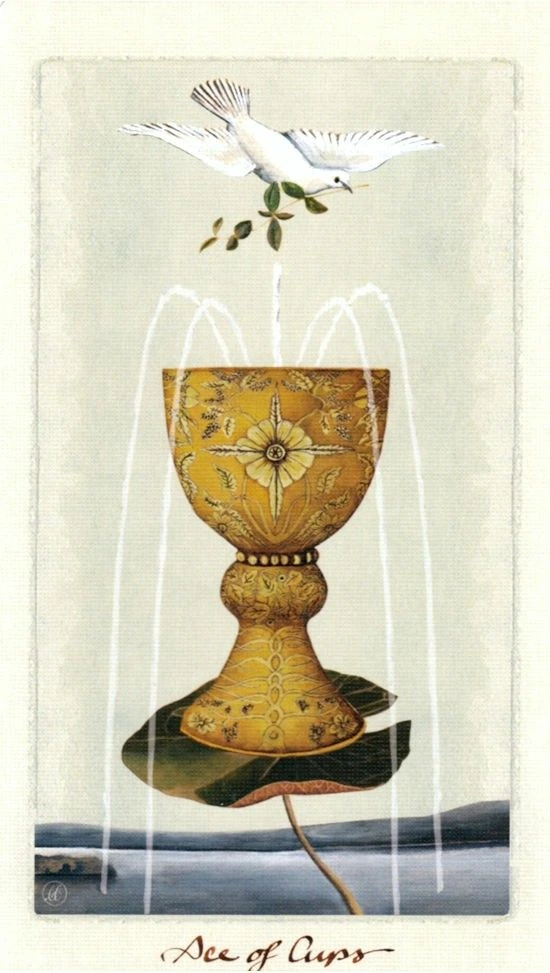
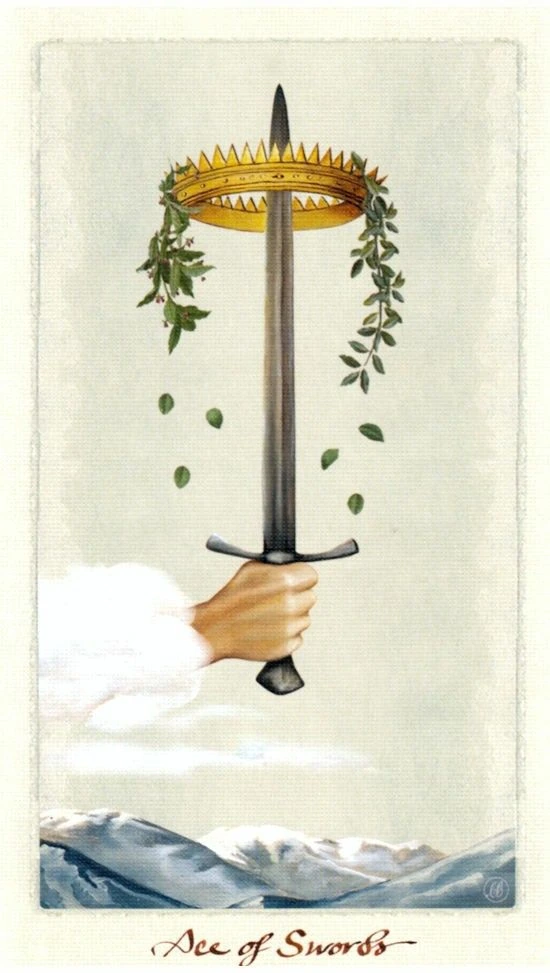
The four Aces separate a situation into motive, feeling, decision, and material reality. Use them to identify which element is available now—and which one still needs to be invited into the work.


Card quality and presentation
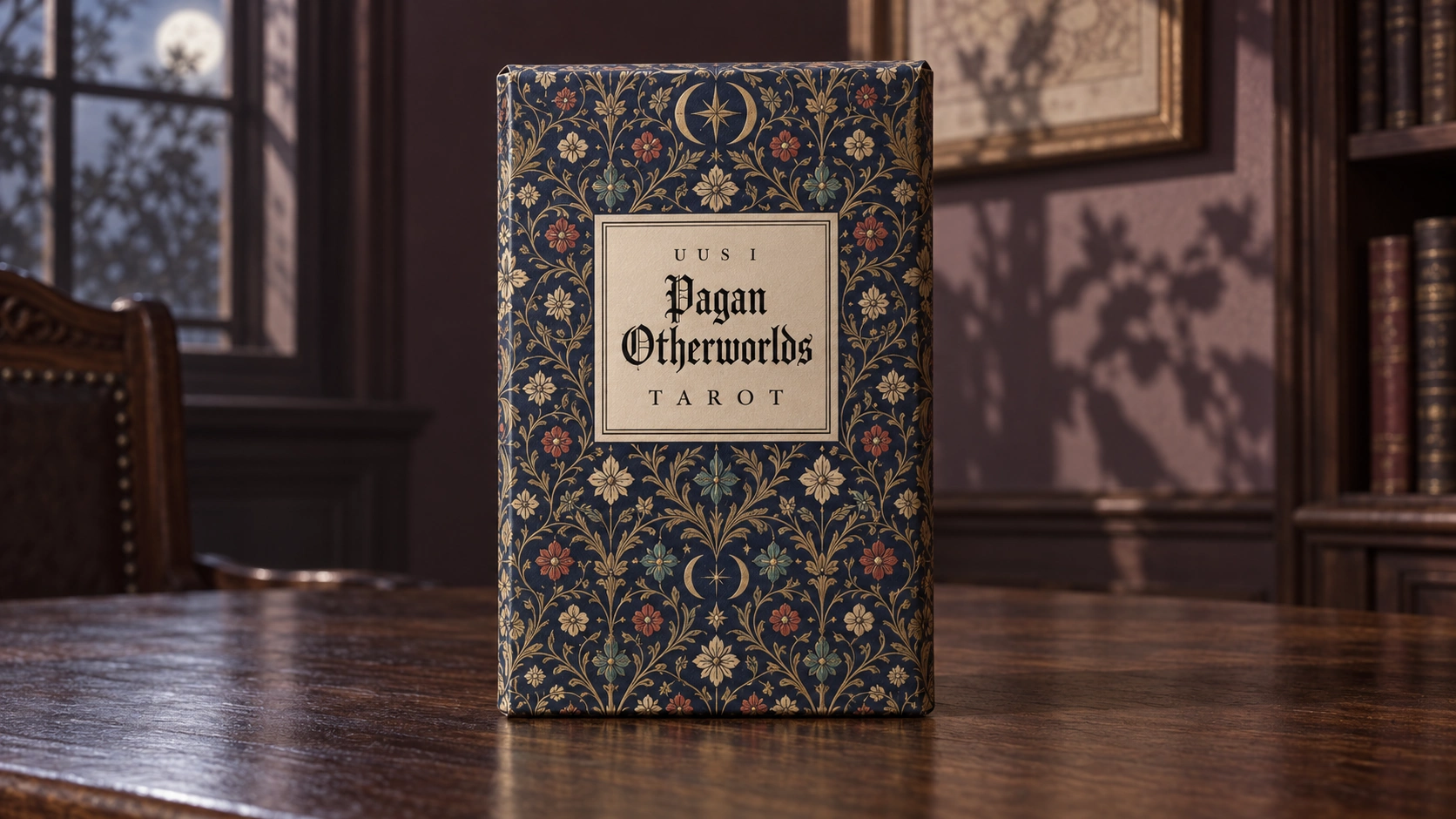
The Ninth Edition is a premium 84-card production with linen-textured stock, rounded corners, a decorative back, and silver holographic Luna Cards. The tuck box repeats the deck’s navy botanical pattern and old-world label. It feels cohesive rather than ornamental for its own sake.
Because the guidebook is sold separately, buyers who want creator-authored explanations should factor that into the purchase. Readers comfortable with visual interpretation may prefer to begin with the cards alone and consult the book after forming an initial relationship with the deck.

Queen of Pentacles
The Queen of Pentacles grounds the deck’s mysticism in stewardship. Her message is practical: protect the body, tend the home, keep promises, and let devotion become visible through repeated acts of care.
How the courts move
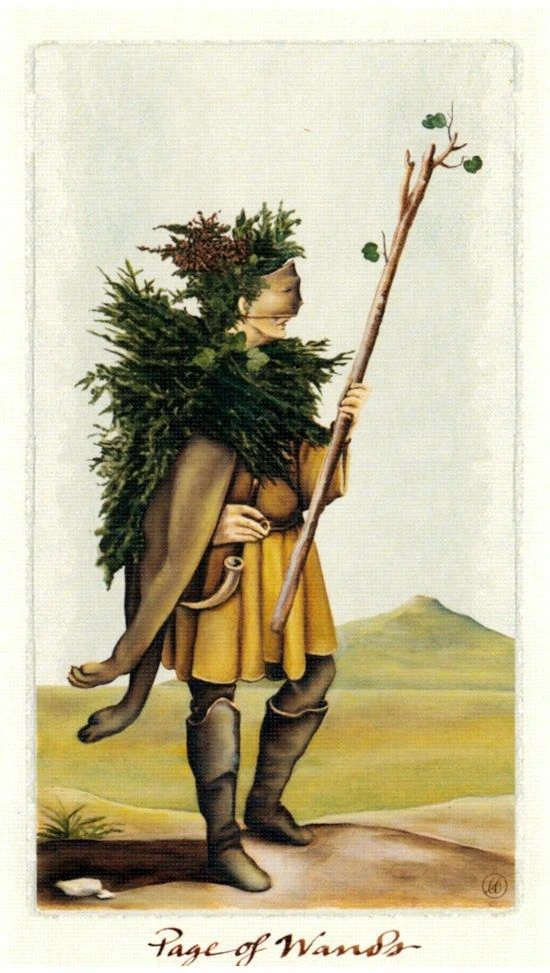
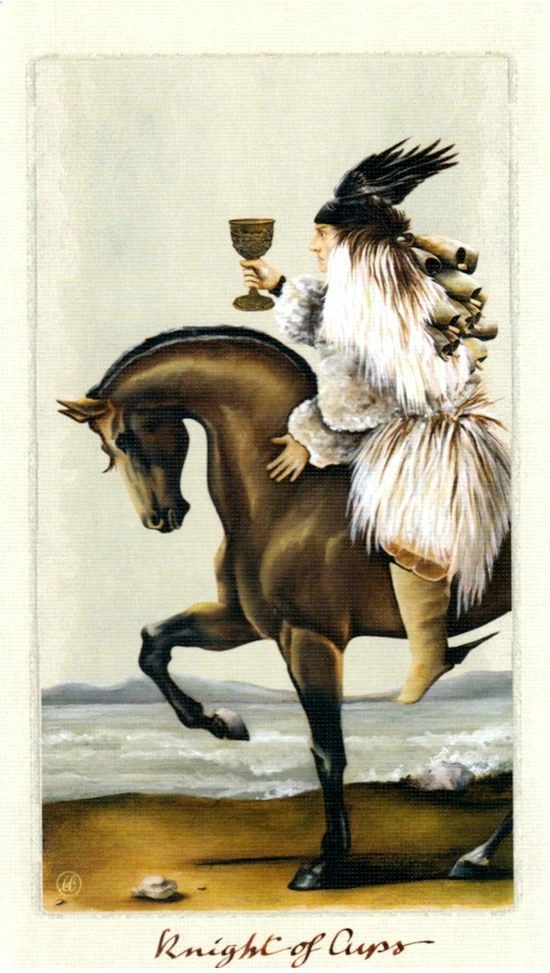
A Page tests the spark, a Knight carries feeling forward, a Queen stabilizes the material world, and a King brings thought to a decisive edge. The mixed suits reveal style as clearly as status.

Who will connect with this deck?
This is a strong match for readers who like historical atmosphere, nature-based symbolism, independent publishing, and cards that reward a slow gaze. It is less suited to anyone wanting bright modern scenes, explicit keywords, or a guidebook inside the box.
The imagery can be solemn, but it is not uniformly bleak. Humor, sensuality, abundance, and warmth arrive in measured doses, which gives them more weight. Used regularly, the deck develops a distinctive voice: formal, observant, and surprisingly intimate.
Pagan Otherworlds Tarot: Pros & Cons
Pros
- Original oil-painted artwork with a cohesive old-world atmosphere
- Useful expanded system with The Seeker and five Luna Cards
- Readable tarot structure without overly literal scenes
- Distinctive premium production and packaging
Cons
- The creator-authored companion book is sold separately
- Muted, solemn imagery will not suit every reader
- The expanded 84-card system takes time to personalize
- Premium independent pricing may exceed mass-market decks
Final Thoughts
Pagan Otherworlds Tarot rewards a slower gaze: its painted scenes leave space for memory, intuition, and the questions that appear between cards. If you prefer clear printed keywords, the separate companion book may help; if you enjoy following image and atmosphere, the cards invite you to find your own way through them.
A haunting, beautifully made deck for readers who prefer mystery to instruction
Frequently Asked Questions
How many cards are in Pagan Otherworlds Tarot?
The current Uusi Ninth Edition contains 84 cards: 22 traditional Major Arcana, 56 Minor Arcana, The Seeker, and five holographic Luna Cards.
Who created Pagan Otherworlds Tarot?
Linnea Gits painted all imagery in traditional oils. Peter Dunham created the copy and hand-lettering. Their Uusi studio publishes the deck.
What is The Seeker card?
The Seeker is an additional Major Arcana card bearing an infinity symbol. It can represent the querent, the search itself, or the identity being formed through a journey.
How do the five Luna Cards work?
They represent the lunar cycle. The Crescent, Quarter, and Gibbous cards can indicate waxing or waning movement by orientation, while New Moon and Full Moon mark the cycle’s endpoints.
Does the deck include a guidebook?
The full creator-authored companion, Notes From the Pagan Otherworlds, is sold separately by Uusi.
Is Pagan Otherworlds Tarot beginner-friendly?
Readers familiar with standard tarot structure can use it, but the restrained symbolism and expanded cards reward patience. Beginners who prefer explicit keywords may want the companion book.