
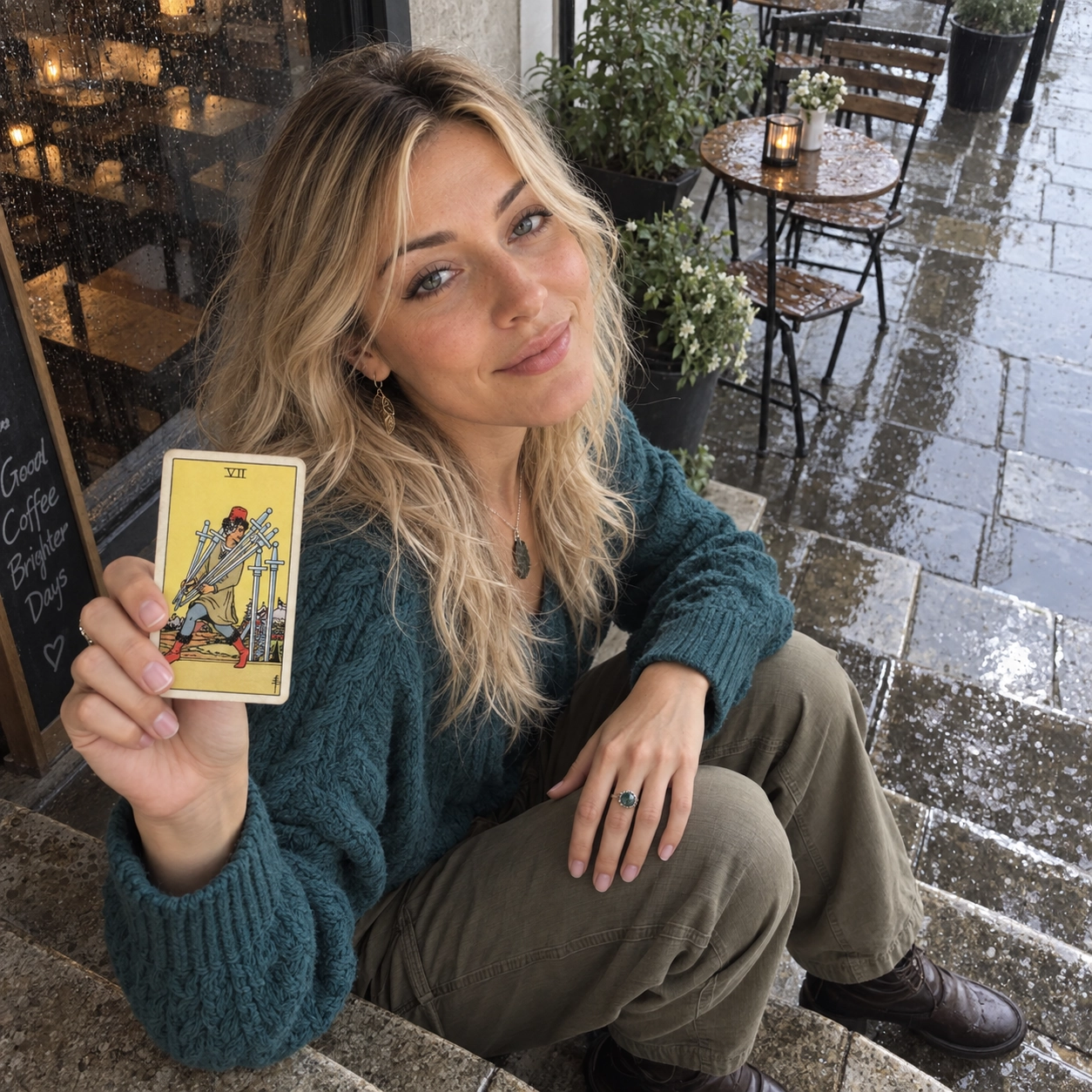
The Seven of Swords tarot card meaning often concerns strategy, secrecy, or acting alone. It can invite a useful look at resourcefulness, but also at deception and dishonesty. Upright, consider how you are pursuing your aim. Reversed, examine what needs acknowledging, correcting, or discussing openly.
Perhaps you have quietly drafted a proposal before showing your team. That can be sensible preparation. Promising a client the time of your colleagues without asking them is another matter. This card helps you examine the difference between keeping a plan private and withholding information someone needs.
You may know it as the 7 of Swords. When it appears in a reading, resist jumping straight to an accusation. A symbol can help you ask a better question; it cannot uncover a hidden fact by itself.
7 of Swords Tarot Card Meaning at a Glance
- Main keywords: secrets, strategy, avoidance, acting carefully
- Upright meaning: you need patience, honesty, and a smart plan instead of panic. In the Swords suit, this connects to thoughts, words, truth, stress, and decisions
- Reversed meaning: doubt, shortcuts, or finally seeing what needs to change. The reversed meaning asks you to check how you are handling thoughts, words, truth, stress, and decisions
- Yes or no: no or be careful; something may not be fully honest
- Best question to ask: What is this card trying to help me understand right now?
Seven of Swords upright meaning: strategy with a cost
The Seven of Swords upright often asks whether your approach is workable and fair. Strategic thinking may mean choosing the right moment, testing an idea quietly, or finding an unconventional solution. A scheme becomes harder to defend when it depends on someone misunderstanding what you are doing.
Cunning and mental agility are not automatically bad qualities. If a meeting is getting nowhere, a written proposal may work better than another argument. Think strategically about the problem without turning the people involved into obstacles to trick.
A familiar interpretation is theft, deceit, or trying to get away with something. The picture can symbolize those themes, but it does not prove a crime has happened. Before calling someone dishonest or unscrupulous, identify the actual evidence and consider other explanations.
Look at your own shortcuts too. You might have omitted a detail because admitting it felt awkward. Ask who relies on that detail, what they would decide differently if they knew, and whether you are prepared to explain your choice.
Privacy can be necessary, particularly when you need safety or time to think. You do not owe everyone every thought. The practical distinction is whether secrecy protects a legitimate boundary or removes another person's informed choice.
Reading the Seven of Swords with surrounding cards
In a tarot reading, begin with the question and position. A past position may invite reflection on an evasive choice. In the present, check what information is missing. In a future position, consider how you would handle pressure to take a shortcut rather than assuming betrayal is coming.
Surrounding cards can change the emphasis. With the High Priestess, distinguish intuition and patient observation from suspicion. With Justice, check evidence and accountability. Beside the Magician, consider skill and how it is being used; with the Moon, allow for uncertainty rather than inventing hidden motives. These are interpretive examples, not fixed combinations that establish events.
Seven of Swords in love and relationships
In a love reading, this card can prompt a conversation about openness, privacy, and avoidance. Perhaps you say you are fine with a shared plan while hoping it will fall through. Your partner can respond to a clear request more easily than a hope you have not shared.
For example, if you need an evening alone, say so instead of inventing a work emergency. An honest boundary may feel uncomfortable for a few minutes; a misleading explanation can create distrust long after the evening has passed.
The card cannot reveal another person's private feelings or prove cheating. A pattern of broken agreements deserves attention, but the evidence comes from behaviour, not the draw. Where safe, ask a direct question and listen without treating your interpretation as a confession.
If you are single, notice whether you hide preferences to seem more appealing. You can share at your own pace while being truthful about what matters. There is no need to disclose sensitive personal details to somebody you barely know.
If someone threatens you, monitors you, or punishes honest disagreement, safety takes priority over greater disclosure. Seek appropriate support. Do not use a card to diagnose someone as manipulative or to pressure a person into revealing private information.
Work, money, and school: check the shortcut
At work, distinguish an efficient workaround from deceptive behavior. Keeping a draft confidential until it is ready can be reasonable. Hiding a missed deadline while colleagues make plans around it shifts the problem onto them. Tell them where things stand and suggest what you can finish next.
For a group assignment, the temptation may be to borrow a paragraph and assume nobody will notice. Trickery is not a substitute for preparation. Credit sources, agree who owns each task, and ask for an extension or help if you cannot finish your part.
With money, check terms, fees, and permissions rather than trusting a clever pitch. A rushed offer or an unexplained charge is a reason to inspect the facts, not proof supplied by the card. Use qualified advice for important financial decisions; this reading cannot guarantee returns or predict fraud.
Resourcefulness can still be enjoyable. Try a small experiment, simplify a process, or explore a different route. Would you feel comfortable explaining the method to the people affected by it?
Seven of Swords reversed meaning: coming clean or continued avoidance
The reversed Seven of Swords may invite honesty, a change of plan, or an admission that a shortcut is not working. Some readers see the reversed position as continued evasion or fear of being found out. Consider the situation before deciding which interpretation fits.
When the Seven of Swords appears reversed, coming clean can mean correcting one concrete omission: "I said the figures were checked, but I had only checked the first page. I will finish the rest before we send them." Name the issue and the repair instead of offering a vague promise to do better.
Rebuilding trust takes more than disclosure. Follow through, answer reasonable questions, and allow the other person time to respond. Honesty and transparency do not entitle you to immediate forgiveness or renewed access to somebody's life.
You may need to face the consequences of a choice, but shame need not dictate the next one. If your approach failed, ask what advice you ignored and who can help you find a workable alternative.
Alternatively, the reverse may invite you to stop hiding a harmless need. You can admit you are unsure, ask for clarification, or decline something you cannot honestly agree to. That is different from confessing to wrongdoing that has not happened.
Seven of Swords yes or no meaning
Many readers lean toward no, or "check the method first," for the upright card. The question is whether the proposed action depends on missing information or an unfair shortcut. Reversed, the emphasis may move toward repair, but neither orientation guarantees a result.
For a useful follow-up, ask what you would need to explain before proceeding. A reading cannot replace consent, a contract, or an urgent medical decision.
Advice: make the plan easier to explain honestly
Write down the action you are considering and who it affects. If you keep relying on "they do not need to know," ask whether that is a fair boundary or an excuse. Choose one change that would make the plan clearer to those involved.
If you suspect manipulation, separate what you observed from what you inferred. "The amount changed after I agreed" is more useful than "the cards say you are deceiving me." Keep records where appropriate and seek independent advice when the stakes are high.
Be curious about a better route. You might ask a colleague to check your proposal, practise a difficult conversation, or admit that a deadline needs renegotiating. You may learn more from correcting a small omission than making a dramatic confession.
Wellbeing and spiritual reflection
If you keep pretending you are coping when you need help, this card can prompt a more truthful check-in. Tell a trusted person what would help, such as company at an appointment or a quieter evening. It cannot diagnose illness, confirm pregnancy, or promise a cure; consult qualified care for symptoms or persistent distress.
On a spiritual journey, notice when you use an interpretation to avoid a practical responsibility. Reflection is useful when it helps you respond more honestly. Repeated divination cannot establish whether someone is lying or remove the need to have a conversation.
One archetype, four perspectives
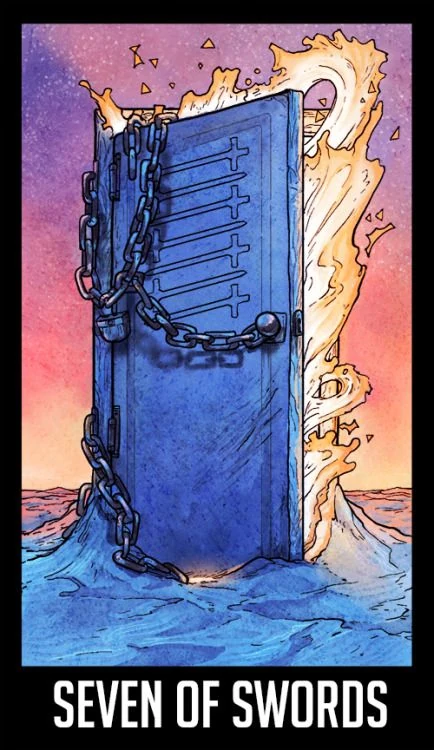
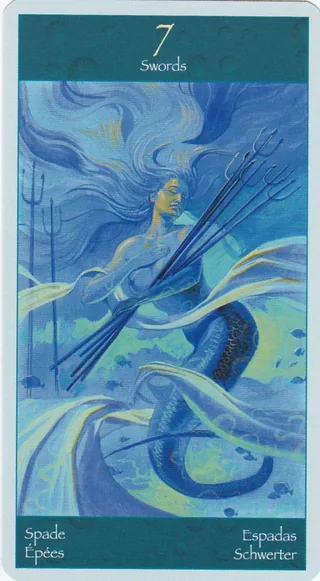
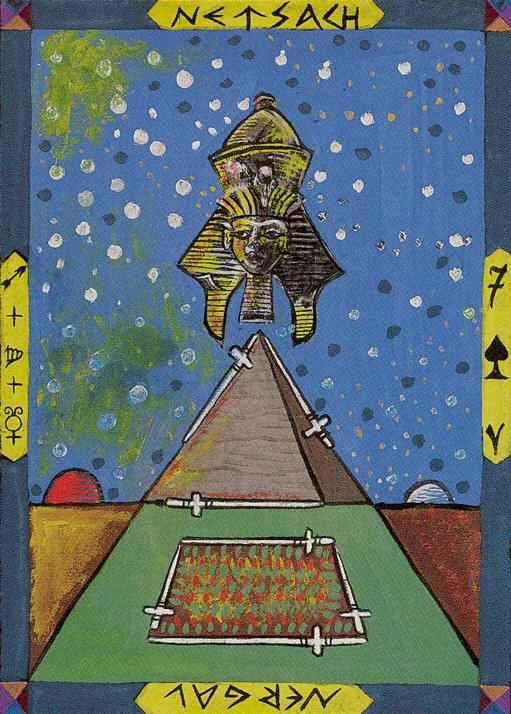
Seven of Swords Across Four Tarot Decks
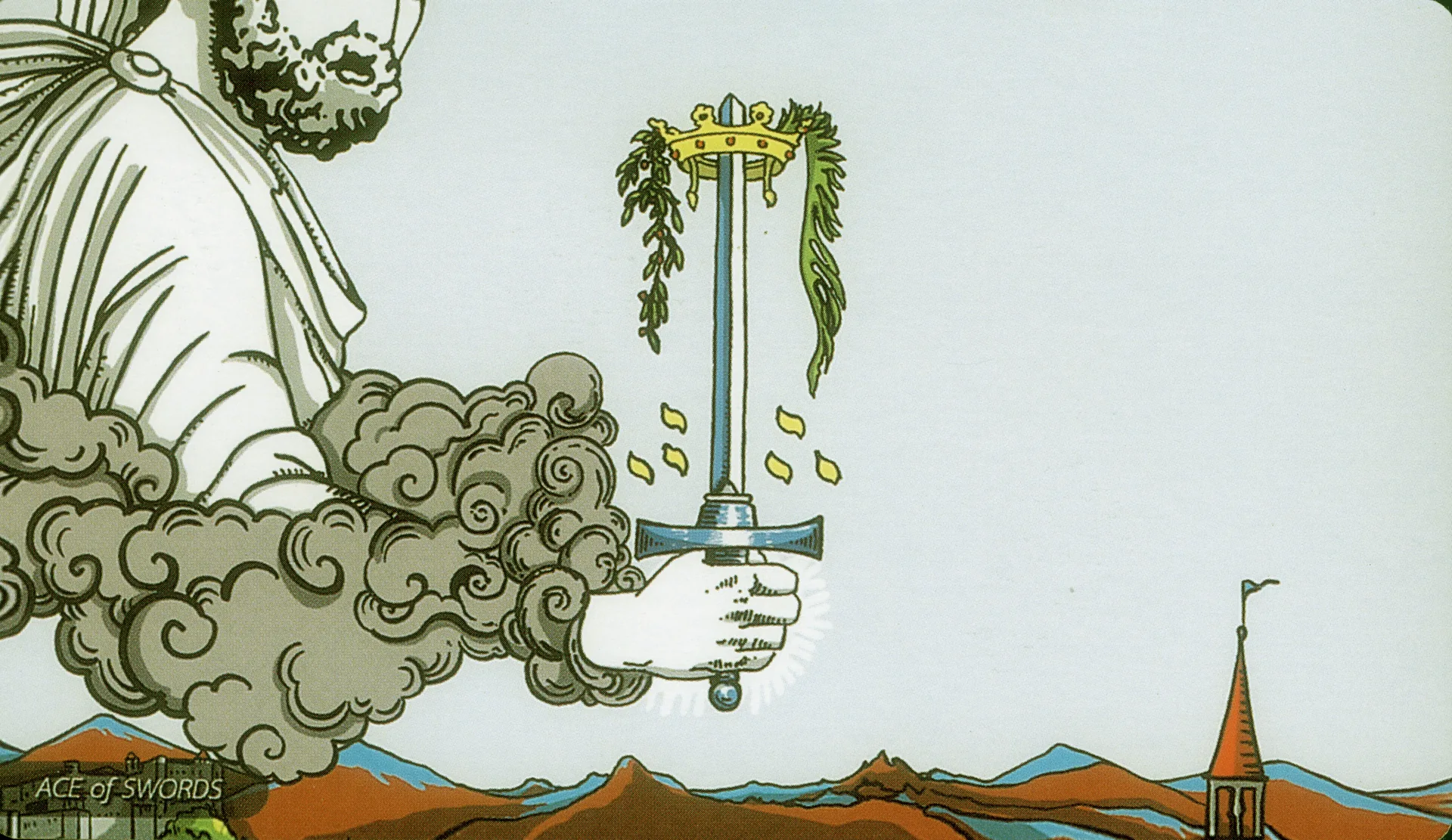
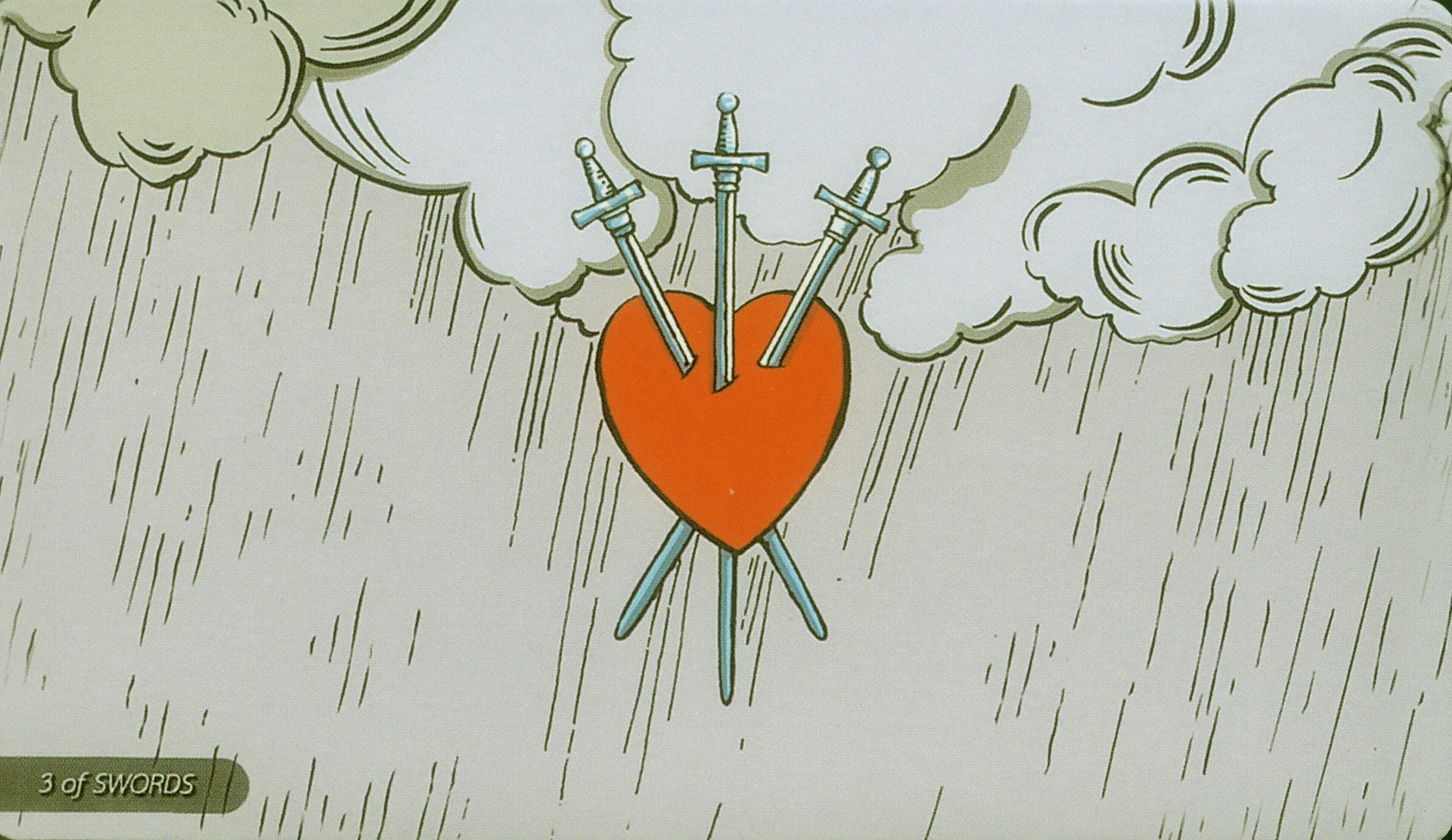
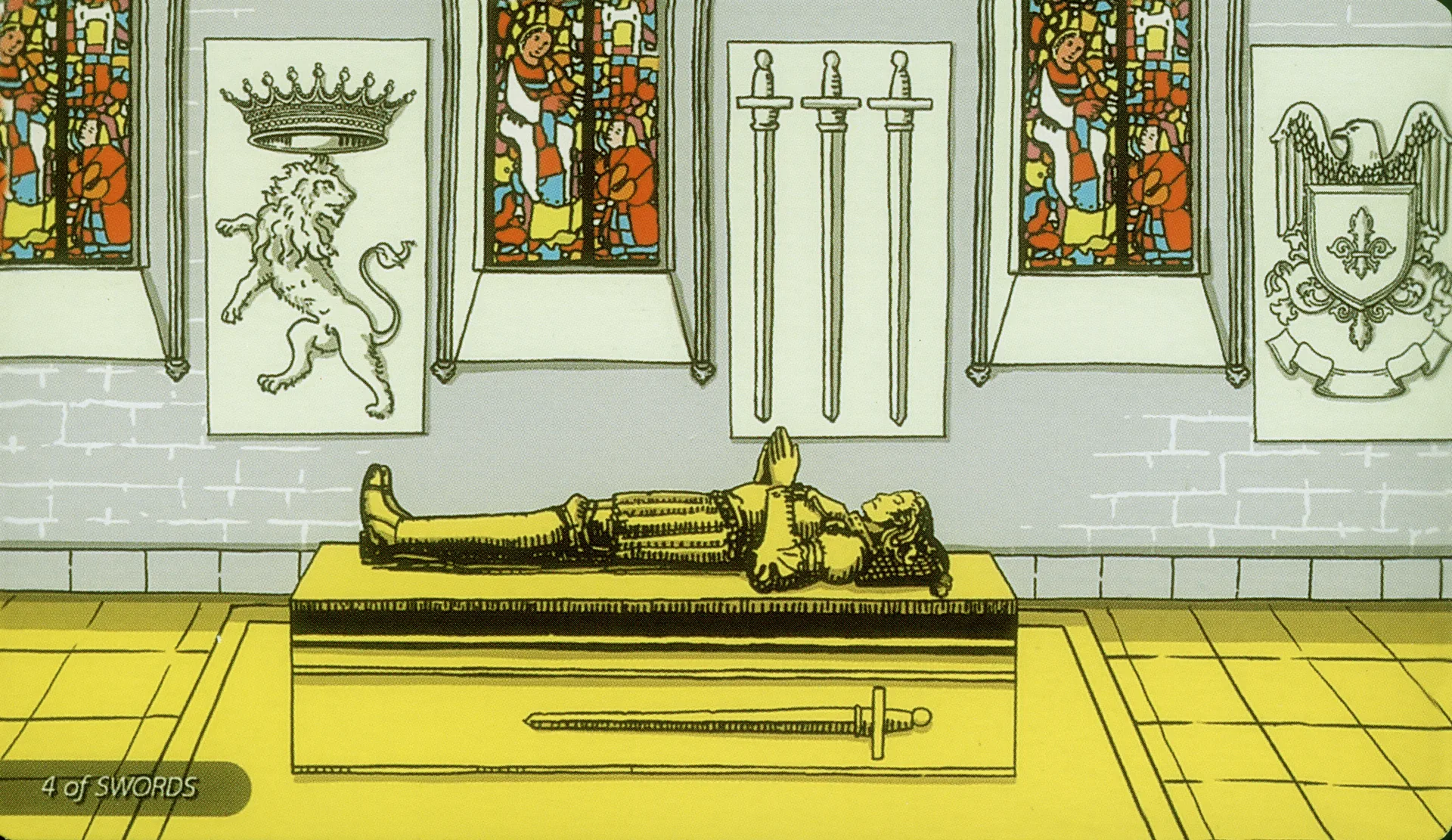
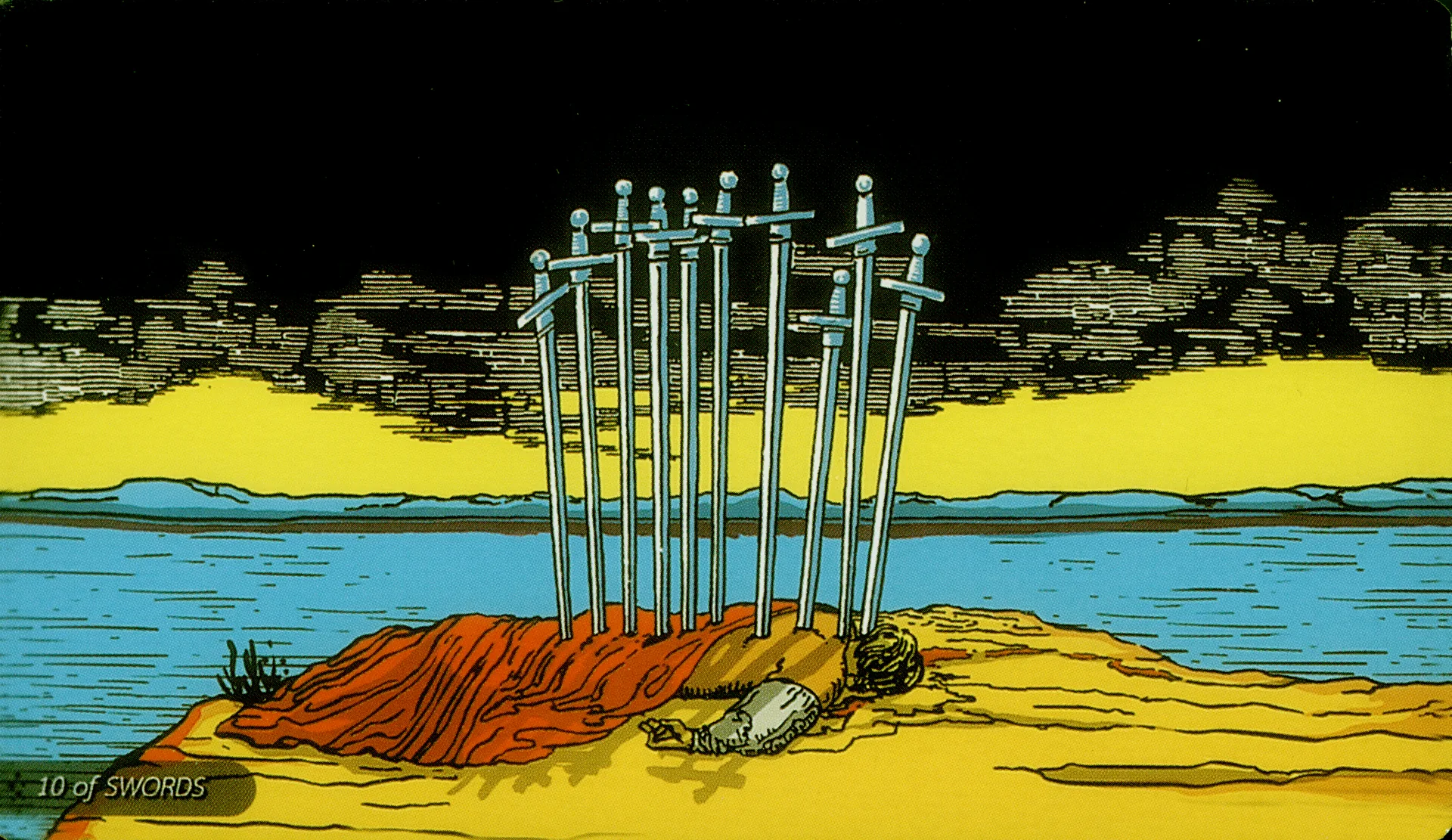
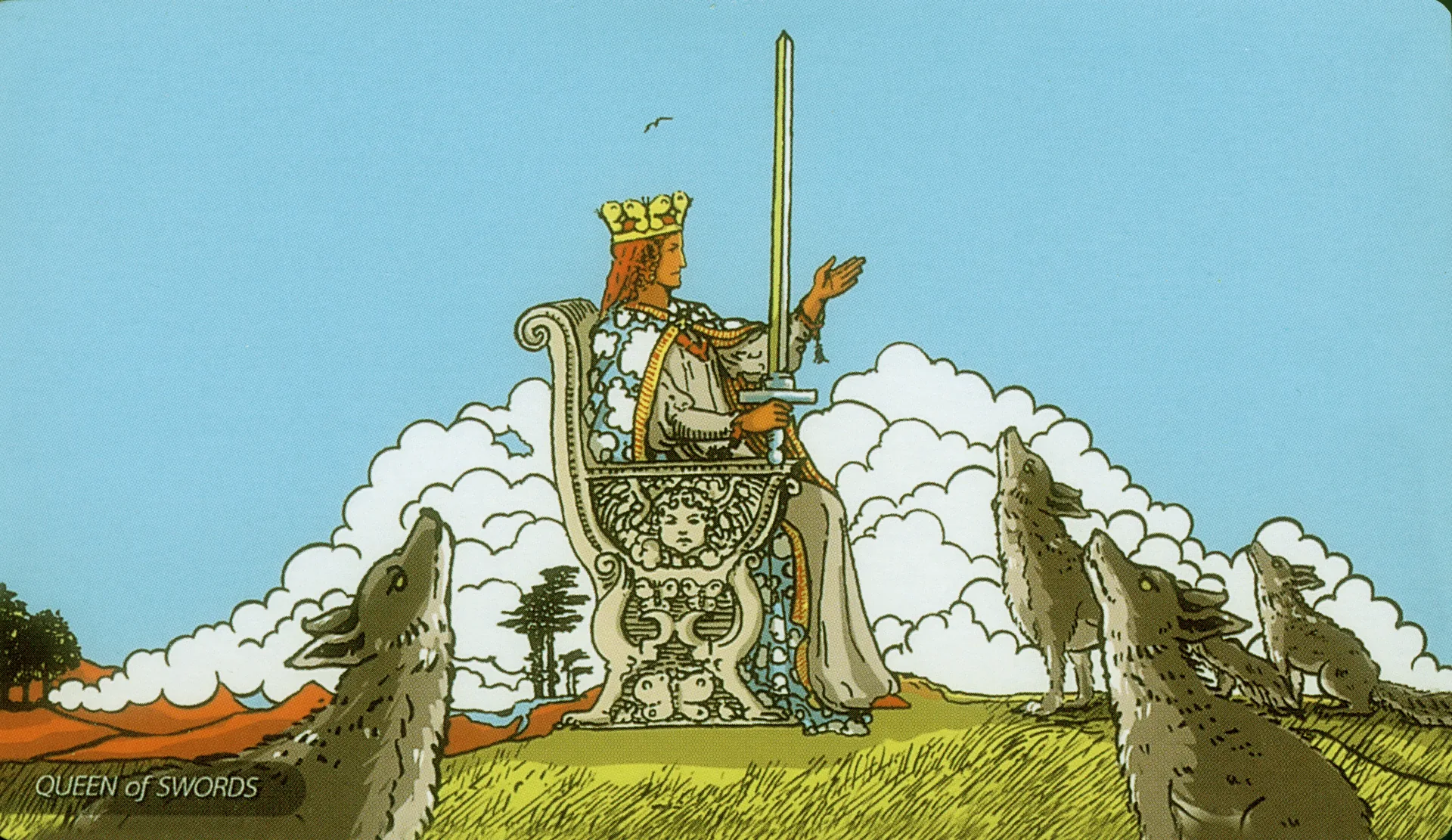
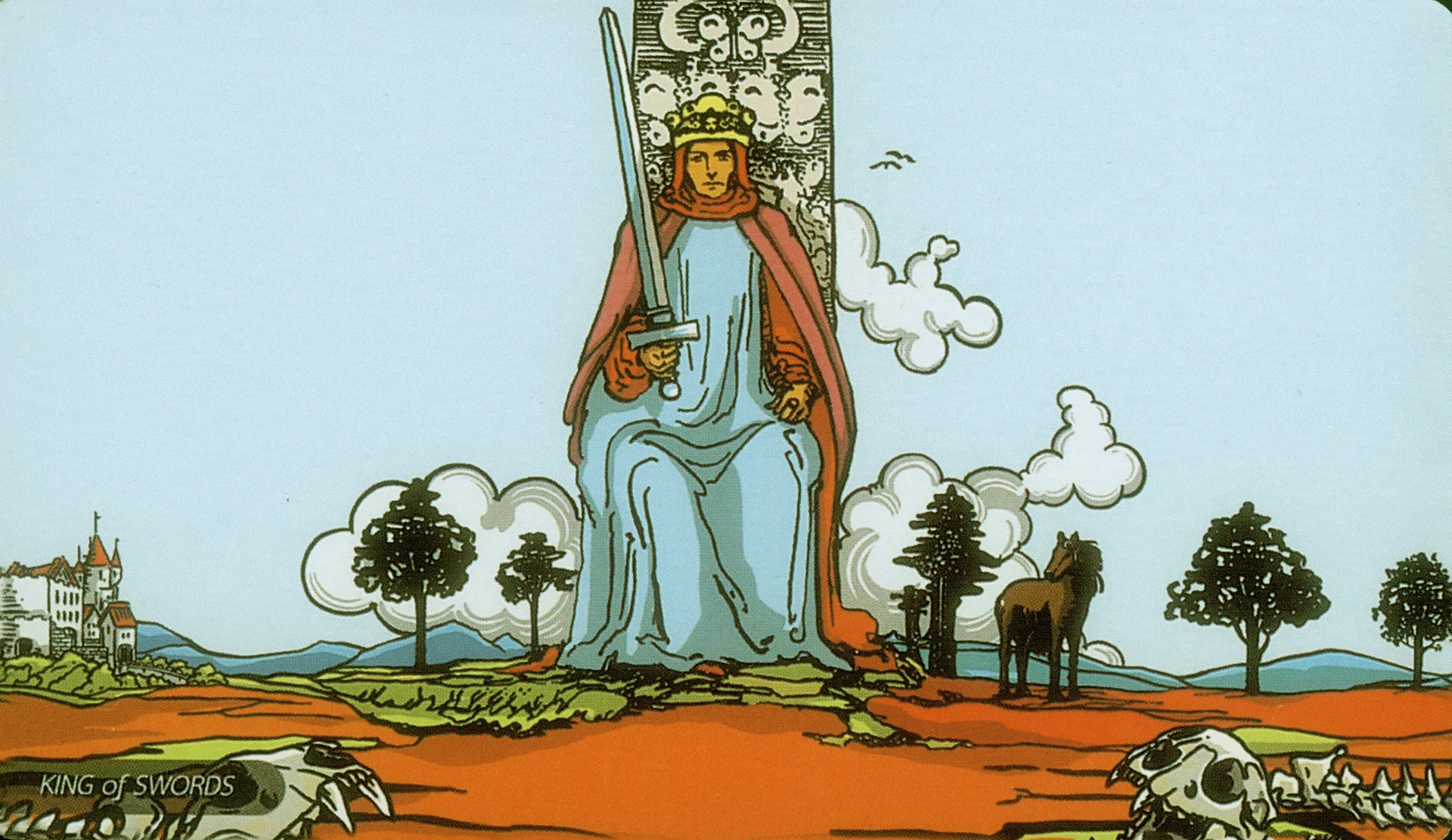
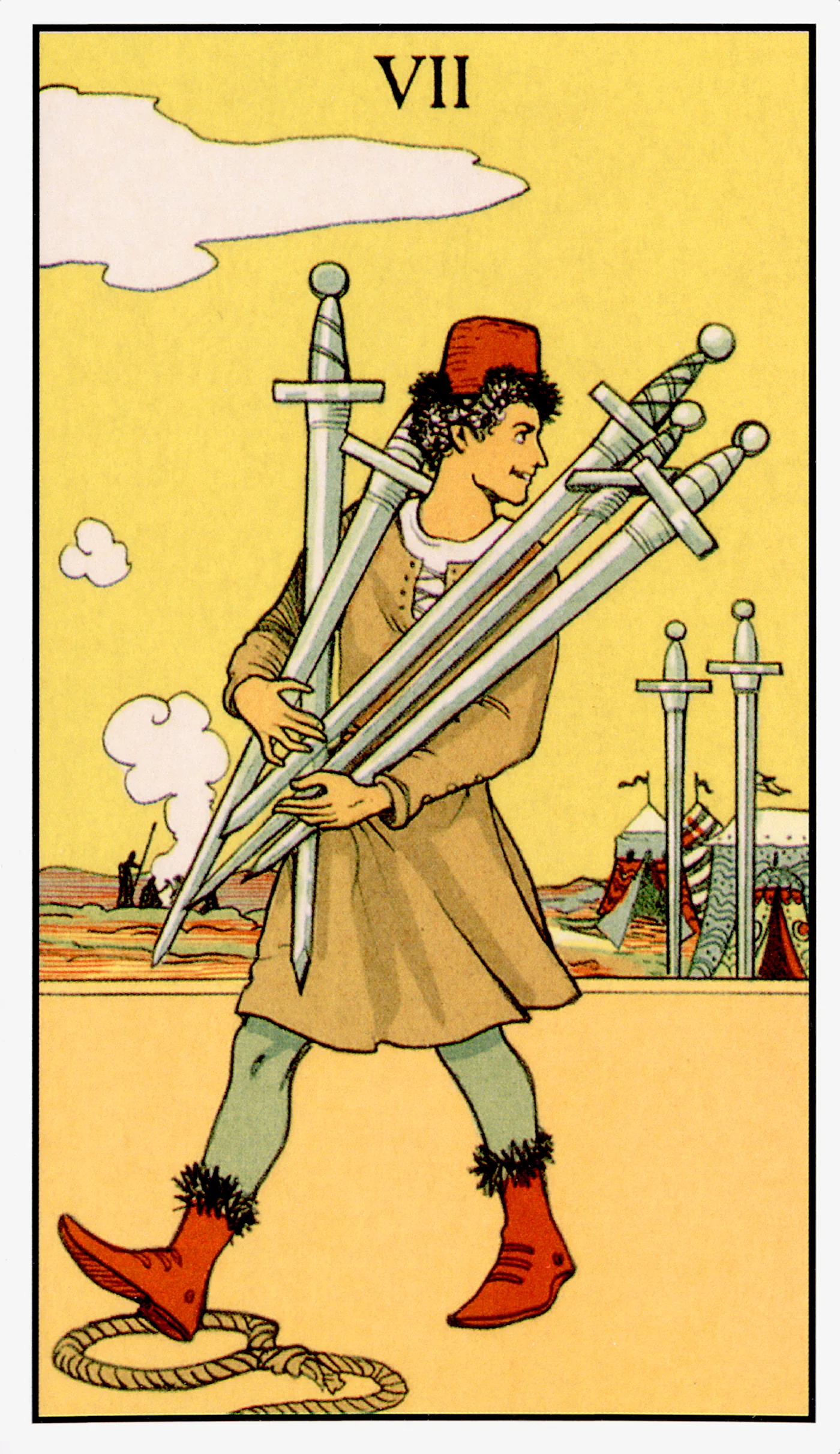
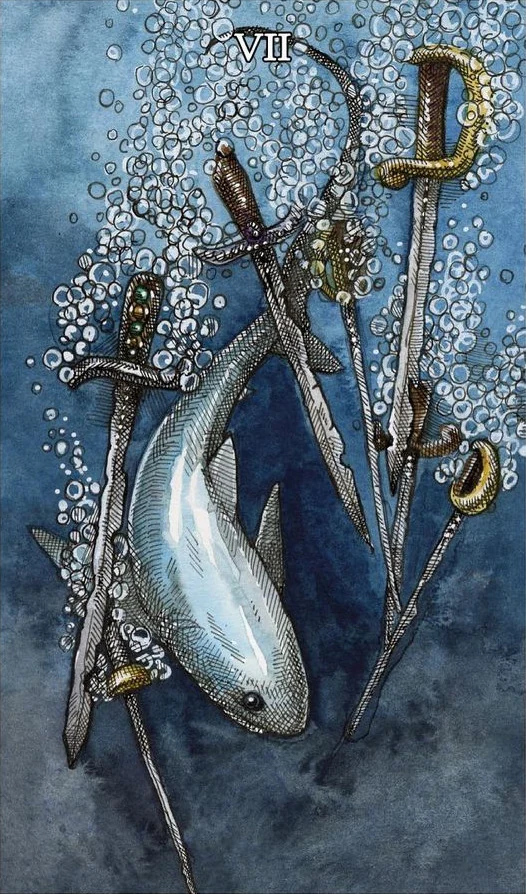
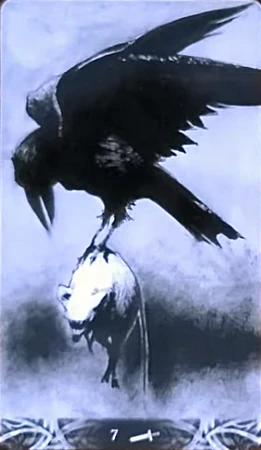
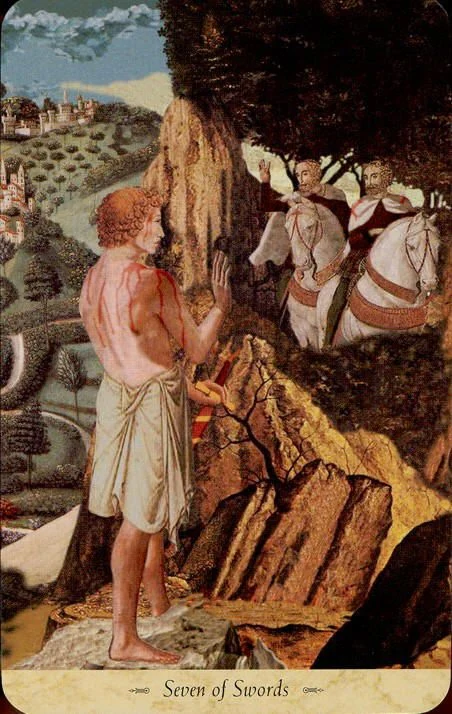
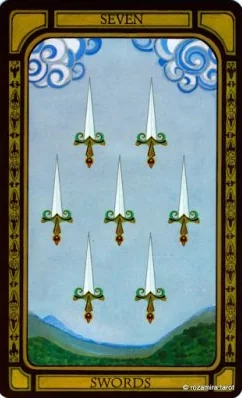
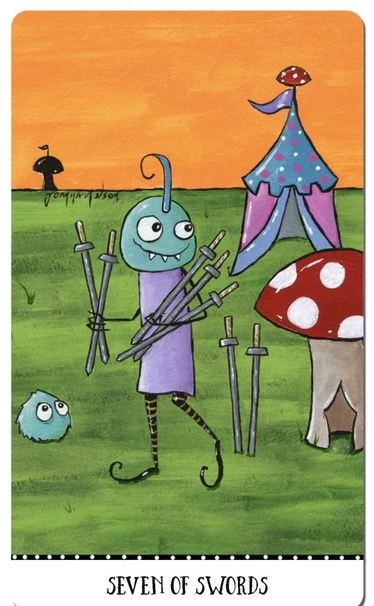
Compare the familiar Rider-Waite-Smith card with the moments before, behind and after the classic scene in three Lo Scarabeo decks.
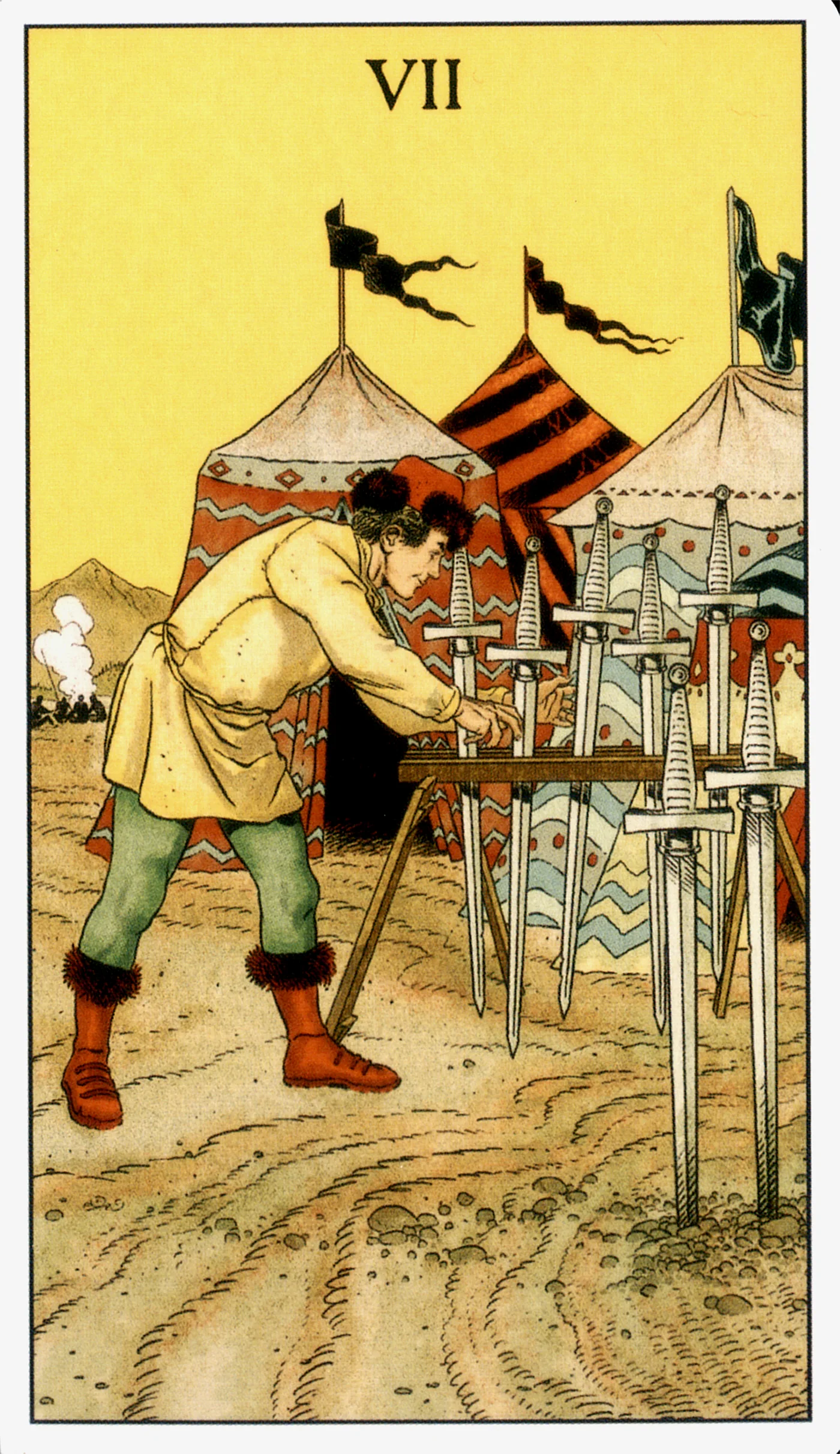
What apparently happens just before
What actually happened
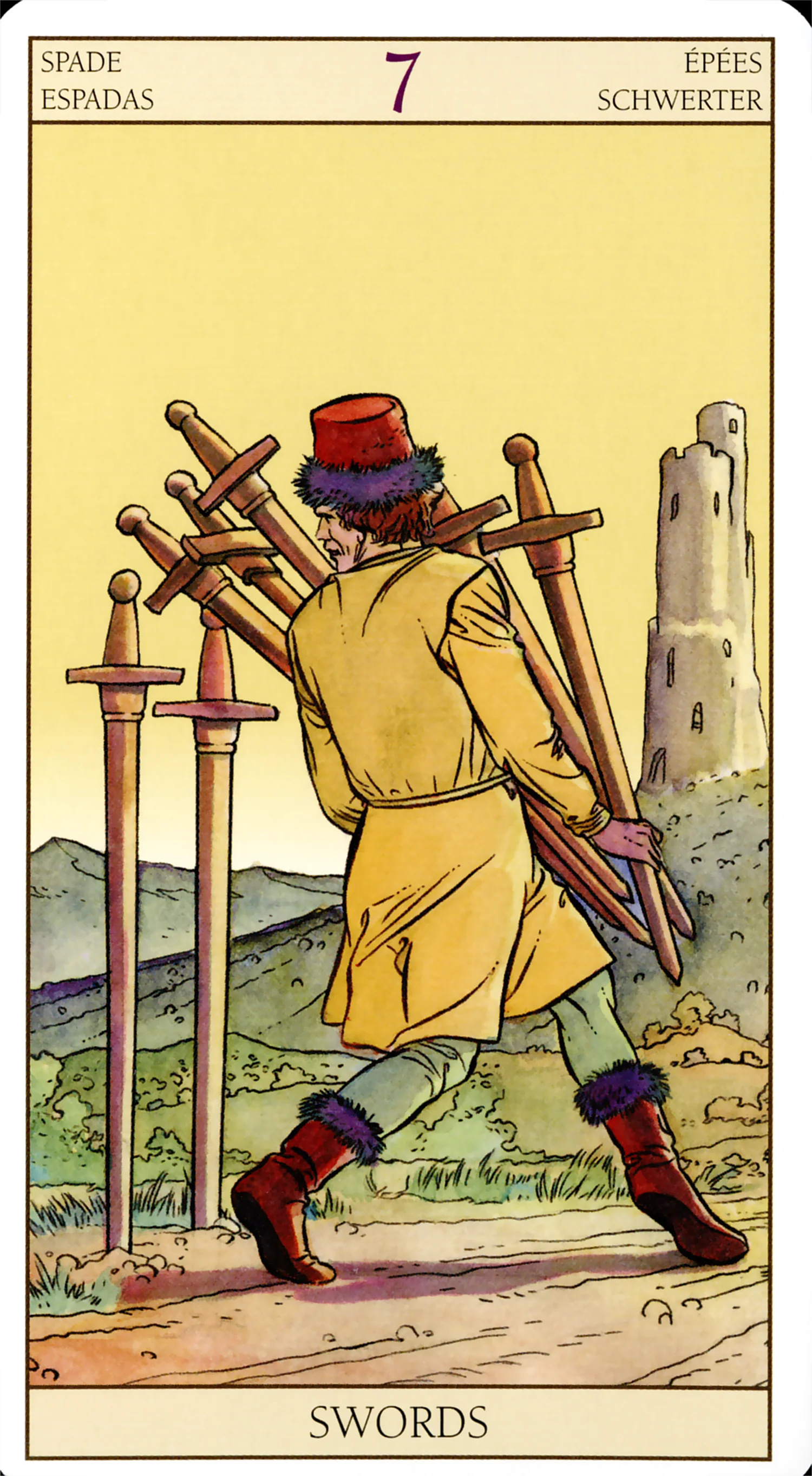
What happened on the opposite side
What apparently happened afterwards
Symbols in the Seven of Swords tarot card
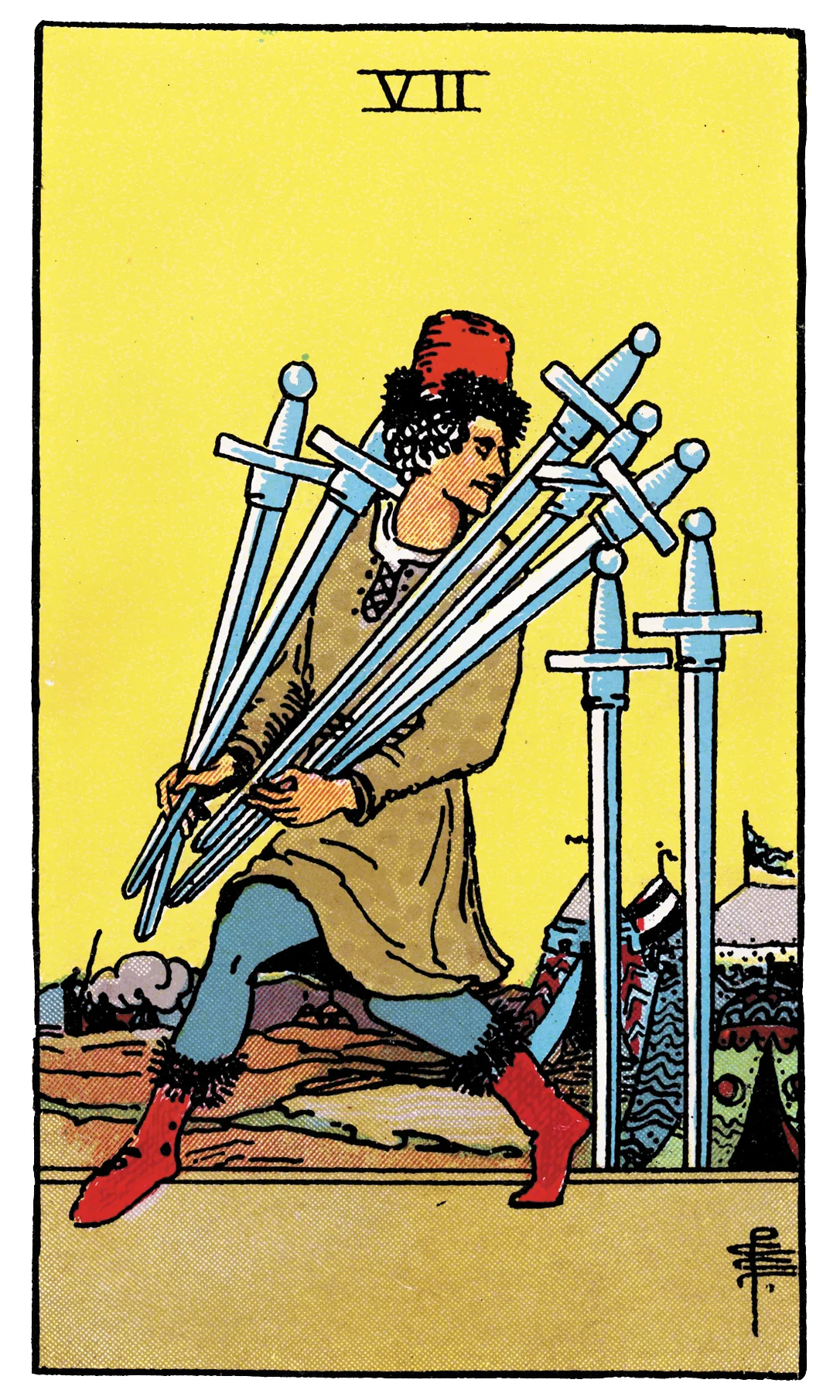
The verified Rider-Waite-Smith portrait bears the numeral VII. A figure carries five swords while two swords remain upright in the ground. Tents stand behind the figure, with a small group farther away. The figure looks back while moving away from the camp.
Those five swords and the two left behind account for the number seven. The partial load can prompt a question about what a plan overlooks or leaves unfinished. The backward glance may suggest caution or concern about being noticed; that is interpretation, not knowledge of the figure's thoughts.
Use the separate portrait for observations about Pamela Colman Smith's composition. The wide hero is an expanded panorama. The inherited comparison and gallery offer other artistic perspectives, but unclear labels are not evidence for new symbolism claims.
The Swords suit, Seven rank, and astrology
This card belongs to the Swords suit of the Minor Arcana, not the seventh Major Arcana trump. Some books use the word arcanum for an individual card. In many modern systems, Swords relates to thought, communication, and the element Air.
Golden Dawn-influenced astrological correspondences associate this Seven with the Moon in Aquarius. Astrology here is a symbolic reading tradition, not a claim about somebody's birth chart or a cause of their behaviour. Other systems organise correspondences differently.
In The Pictorial Key to the Tarot, A. E. Waite describes five swords being carried away while two remain in the ground near a camp. His divinatory wording includes design, attempt, hope, and a plan that may fail, and he explicitly notes conflicting interpretations. His reversed meanings include good advice and counsel alongside slander and babbling. This historical passage is broader than the modern keyword "deception."
Reflection: what is being left out?
For a short tarot meditation inspired by the picture, look at the two remaining swords. Ask what your current plan has not accounted for: a person's agreement, a missing fact, or a task you hoped to avoid. Then choose one thing to check in ordinary life.
If you keep a tarot card meanings cheatsheet, record the upright and reversed meanings in your own words, with one example of a fair strategy and one of an unfair shortcut. When comparing notes in a tarot forum, explain the question and position; a label such as "sneaky" or "sneakiness" can obscure the difference between discretion and deception.
Tarot card meanings are most useful when they leave room for context. This tarot meaning may signify a need for greater honesty, or invite more careful planning. You do not have to turn every private choice into a warning about betrayal.
One card, many perspectives
See Seven of Swords Card from Other Decks
Discover how other tarot decks interpret this card. Select a deck to explore its full review and gallery.







Seven of Swords FAQ
What does the Seven of Swords mean upright and reversed?
Upright, it often concerns strategy, secrecy, acting alone, or an unfair shortcut. Reversed, it may invite honesty and repair or point to continued avoidance. Consider what information is missing and who needs it.
Does the Seven of Swords prove someone is lying?
No. It can prompt reflection on deception, but it cannot establish dishonesty, prove cheating, or reveal private feelings. Check actual evidence and ask a direct question where safe.
Is the Seven of Swords a yes or no card?
Many readers lean toward no or check the method first, particularly upright. Reversed may shift attention toward repair. Neither orientation guarantees an outcome or replaces consent.
What should I do after pulling the Seven of Swords?
Identify what your plan leaves out, distinguish privacy from withholding necessary information, and choose one honest next step. That might be checking a fact, correcting an omission, or asking for advice.