Card gallery Browse the recovered cards in the deck’s own sequence, with Celtic names such as The Mother, The Druid, The Merlin, Cauldrons and Shields. Select any card for the larger accessible carousel.Explore the Celtic Tarot Cards
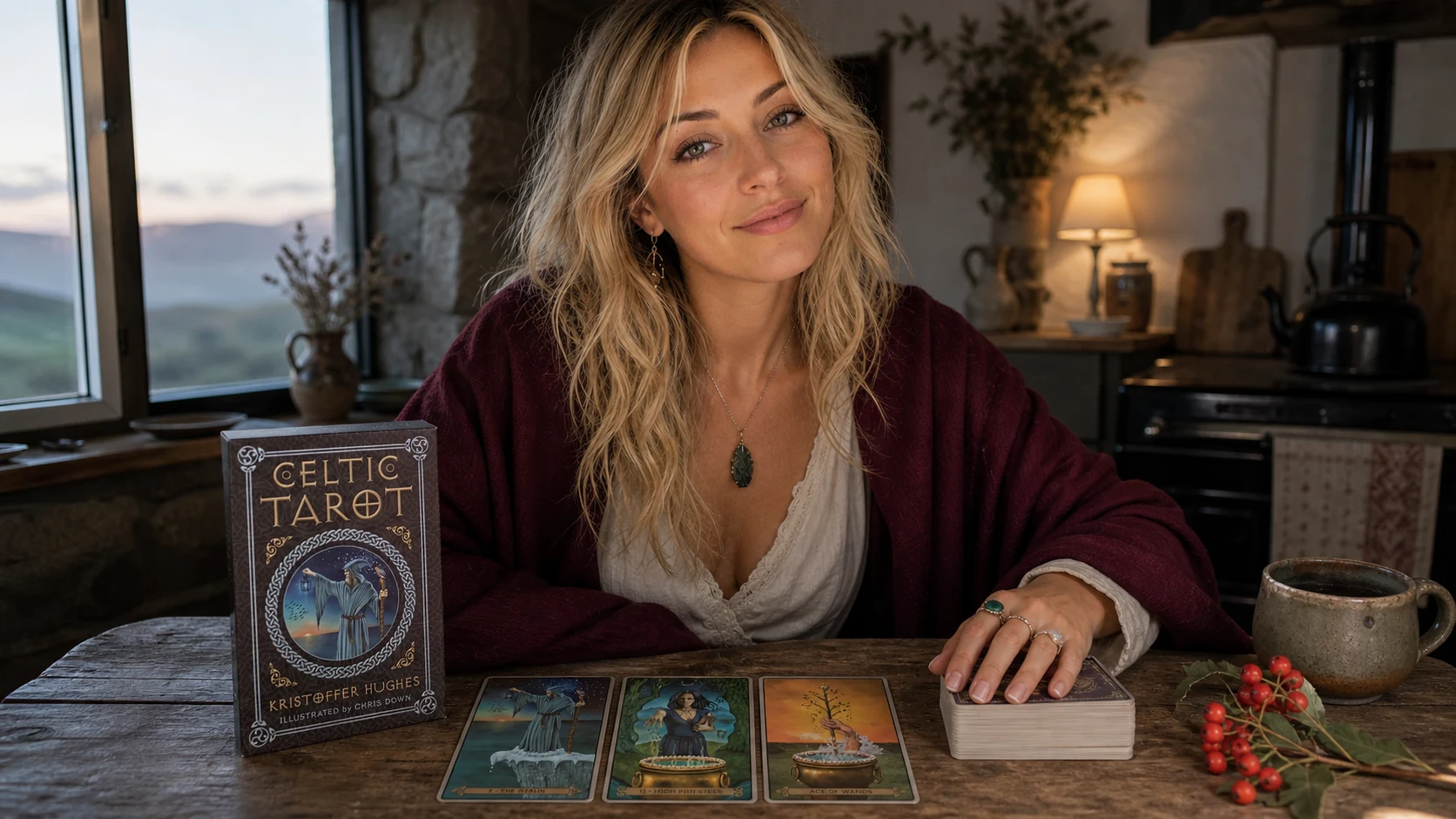
Celtic Tarot review — Aurica’s quick take
Celtic Tarot was created by Welsh author, Druid and death specialist Kristoffer Hughes, with its cards illustrated by Chris Down. Their collaboration gives the deck an unusually coherent identity: familiar tarot architecture is translated through Celtic landscape, seasonal memory, folklore and modern Druidic symbolism rather than decorated with knots as an afterthought.
Aurica’s verdict: this is an excellent choice for readers who want a complete working tarot with a strong Celtic worldview. Its renamed archetypes and suits are approachable once you understand the vocabulary, while the scenes offer enough emotional clarity for intuitive reading. Readers who want an exact Rider–Waite–Smith clone or contemporary urban imagery may prefer a different deck.
I feel this deck before I explain it: cold sea air around The Merlin, moonlight caught between the trees of The High Priestess, and the clean blue sky behind The Sun. Those landscapes are not decoration. I notice where a figure stands, what the weather seems to hold, and whether the scene opens a path or closes one, then test that first feeling against the card’s familiar tarot role and its neighbours.
The renamed suits give the readings their own texture. Cauldrons carry emotion and relationship like water held close to the body, while Shields bring me back to work, resources, health and home. When several Celtic images gather in a spread, I let the repeated land, flame, vessel or boundary show me where the question is asking for courage, patience or honest protection.
I reach for Celtic Tarot when someone wants myth without losing practical footing. Its old paths still lead somewhere useful, and The Sun reminds me that even after a misty stretch, we can meet the next turning with warmth, clarity and a brave open heart.
Who created the Celtic Tarot?
Kristoffer Hughes designed the deck’s spiritual and divinatory framework. His background in Welsh Druidry shapes the way the cards treat ancestors, sacred land, sovereignty, transition and the relationship between human life and the more-than-human world. Chris Down’s illustrations turn that framework into a consistent visual journey filled with dragons, standing stones, cauldrons, shields, woodland clearings and figures who feel rooted in a specific mythic landscape.
The set was published by Llewellyn in 2017 under ISBN 978-0-7387-4476-6. It contains the standard seventy-eight-card tarot structure, but several names make its Celtic emphasis explicit. The Empress becomes The Mother, the Emperor becomes The Father, the Hierophant becomes The Druid, the Hermit becomes The Merlin, Temperance becomes Equilibrium, and Judgement becomes Rebirth. Cups are called Cauldrons, while Pentacles become Shields.
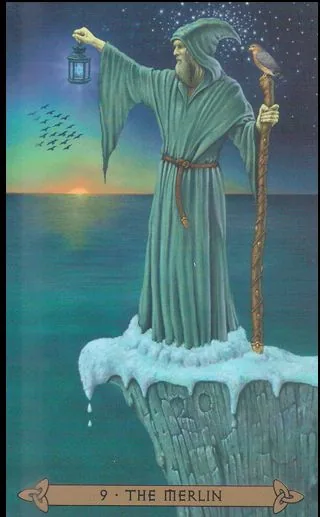
The Merlin — wisdom at the edge of the known
A grey-robed guide stands on an icy threshold above dark water. He holds a lantern outward and carries a staff while an owl perches nearby. Dawn glows at the horizon, but the foreground remains cold and uncertain. The traditional Hermit’s lamp becomes an invitation to cross into knowledge without pretending the whole path is already visible.
In a reading, The Merlin can describe study, retreat, mature guidance or the moment when experience must become service. Its shadow is isolation that has stopped being purposeful. Ask whether solitude is sharpening your inner light—or merely keeping that light away from people who need it.
How the Celtic Tarot reads in practice
Begin with the action in the scene before translating the card into a memorized keyword. Notice who is moving, who is waiting, what the landscape permits, and whether the weather supports or resists the figure. The deck repeatedly uses coastlines, snow, woodland, stone and open sky as active parts of the message.
The renamed cards are not barriers; they are interpretive cues. A Cauldron holds, mixes and transforms experience, so it gives the emotional suit a stronger sense of ritual and nourishment. A Shield protects but can also become defensive, which adds a useful tension to material and practical readings.
Four guides into the Celtic world
These cards trace a movement from open possibility to focused will, inherited wisdom and conscious relationship.

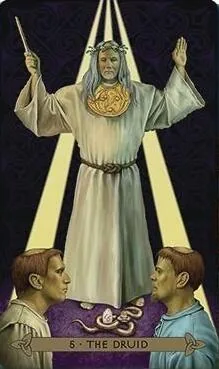
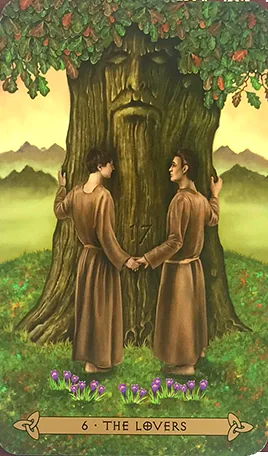
Read together, they ask what calls you forward, which skill you can use, whose wisdom you trust, and what commitment turns possibility into a path.
Is Celtic Tarot beginner-friendly?
Yes, especially for beginners attracted to the art and mythology. The underlying structure remains close enough to traditional tarot that a standard reference book is useful, while the renamed cards encourage you to think about function rather than repeat labels mechanically. The deck is easiest to learn when you compare each image with its traditional counterpart and write down what the Celtic version adds.
Easy reading
What quality will support me today? Pull one card, name the strongest visible action and choose one practical way to embody it.
Medium reading
What is changing around me? Read three cards as roots, present threshold and the direction now opening.
Deep reading
What relationship needs rebalancing? Use one Major, one Cauldron and one Shield to explore spirit, feeling and material responsibility.
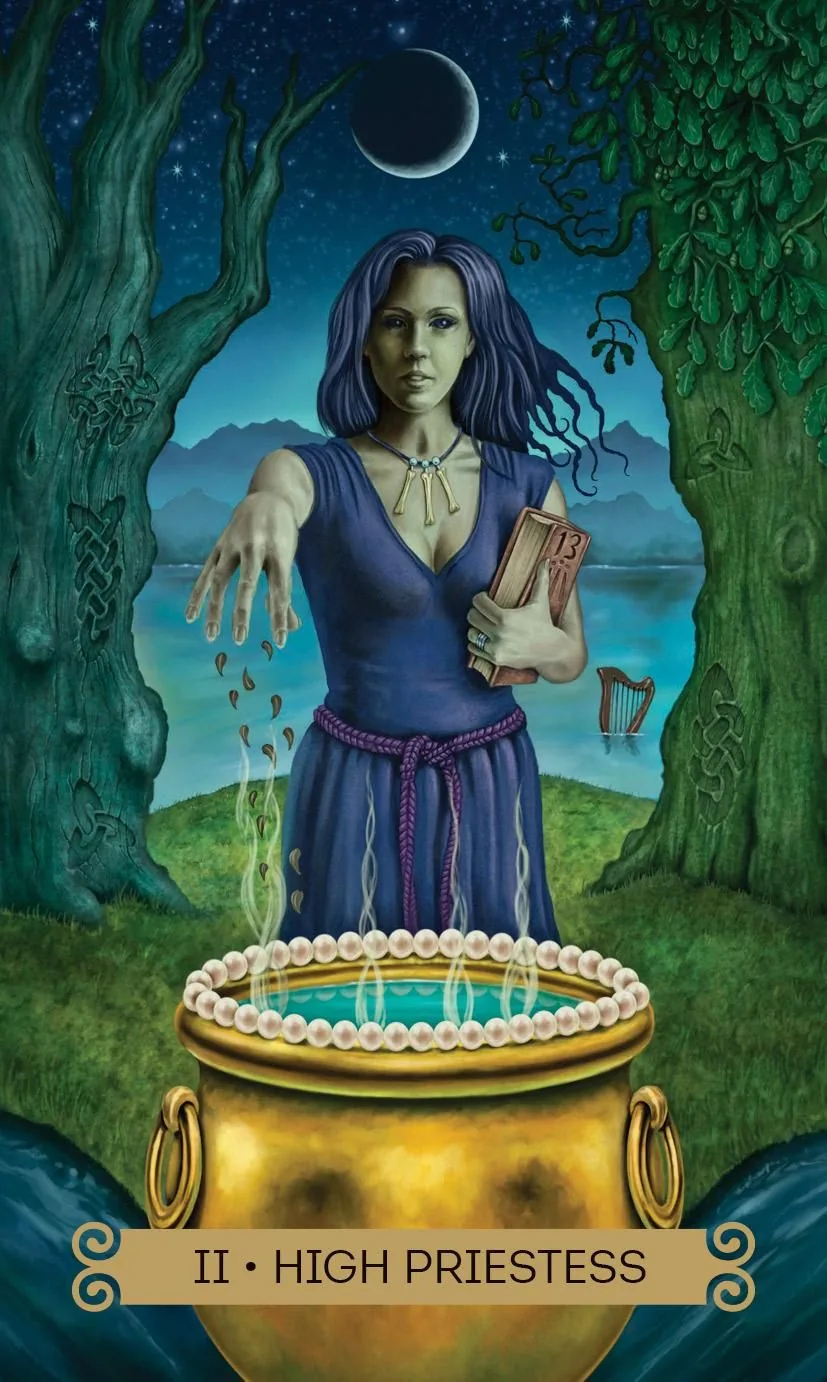
The High Priestess — memory rising from the cauldron
Under a dark moon, the High Priestess reaches over a gold cauldron encircled by white beads. Droplets fall from her fingers while a closed book rests against her body. The image holds oral, embodied and written knowledge together: intuition is not vague feeling, but attention refined through memory and practice.
Upright, the card favors listening, incubation and information not yet ready for public use. In shadow, secrecy can become avoidance. In an actual reading, ask what you already sense but have not yet given language—and what evidence would help you trust it responsibly.
Cauldrons, Shields, Swords and Wands
The four suits make the deck’s reading grammar especially clear. Cauldrons describe emotion, relationship, imagination and the containers that hold experience. Shields concern resources, labor, health, home and protection. Swords bring discernment, conflict and truth, while Wands animate desire, creativity and momentum.
Chris Down varies landscape and temperature across these suits. Snowy Shields often feel concerned with survival, reciprocity and tangible support. Cauldrons repeatedly return to water, shorelines and vessels. Wands burn with ochre light, dragons and growing branches, whereas Swords tend toward sea air, exposed stone and hard decisions.
The four elemental invitations
Each Ace introduces its suit through a single emblem and a distinct kind of beginning.
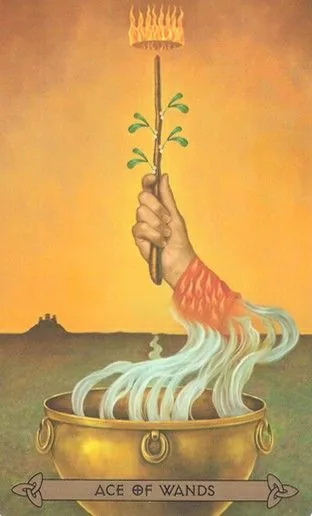
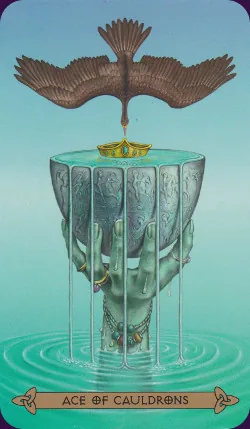
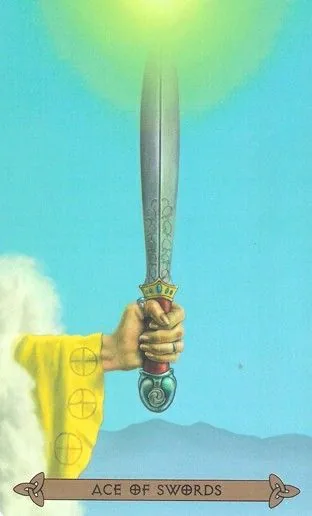
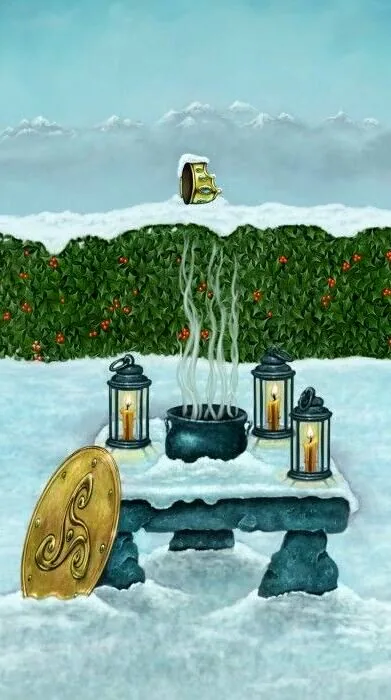
Fire asks for action, water for receptivity, air for a clean decision and earth for something that can be built and sustained.
Who will connect with this deck?
- Druid and pagan readers wanting a tarot grounded in Celtic spiritual language.
- Mythology lovers who enjoy renamed archetypes and symbolic landscapes.
- Nature-based readers who notice season, weather, animals and place.
- Developing readers who want traditional structure without visually repeating Rider–Waite–Smith scenes.
- Collectors interested in a complete author-and-illustrator collaboration rather than a loosely themed deck.
Buying and edition guidance
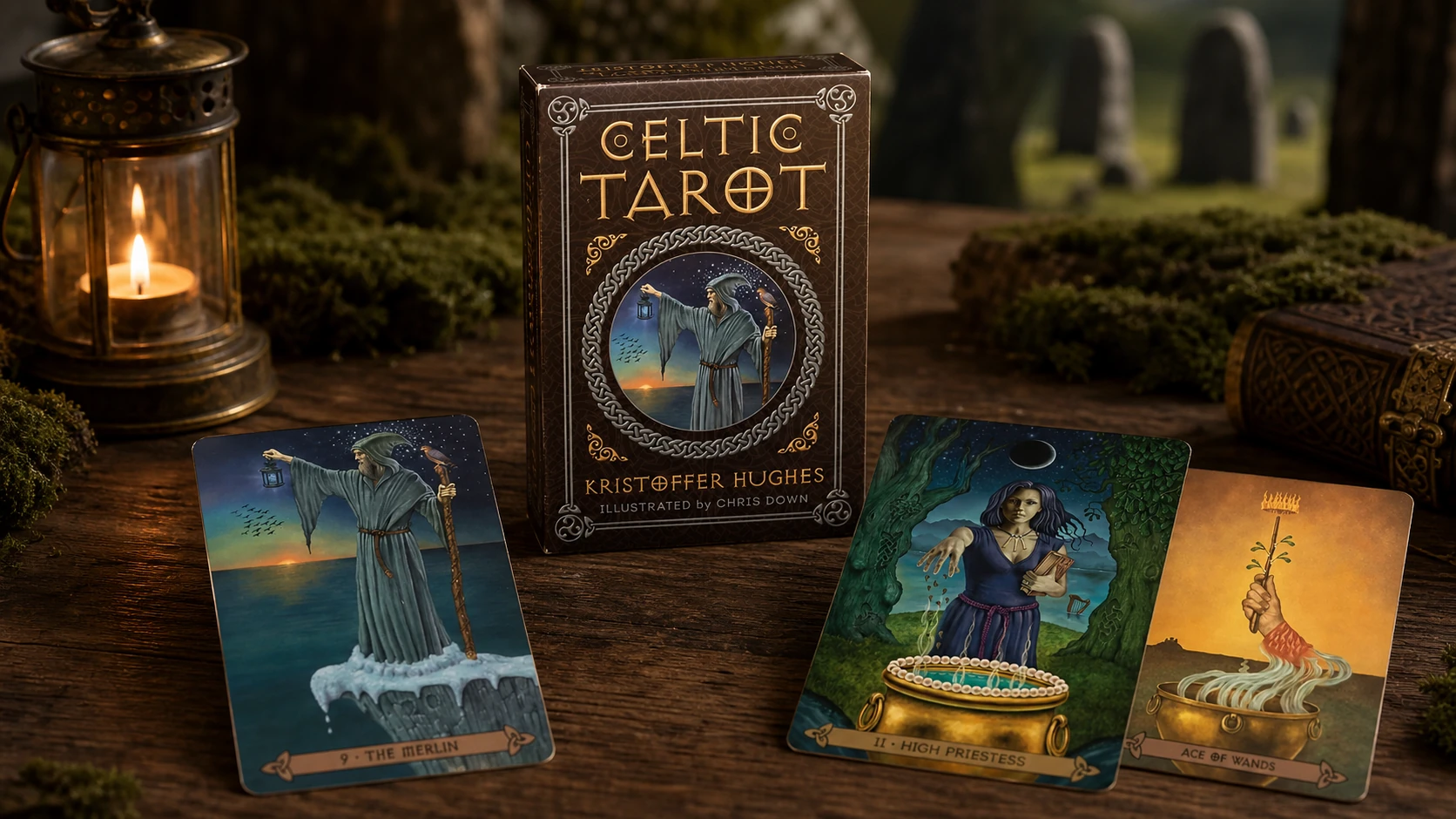
The Llewellyn edition pairs the seventy-eight cards with Kristoffer Hughes’s guidebook. Check listings for ISBN 9780738744766 so you receive the intended Hughes and Down set rather than another product also called “Celtic Tarot.” The front of the correct brown box names Kristoffer Hughes and states that it is illustrated by Chris Down.
Because several unrelated decks share this broad title, the creator name is essential when comparing listings, reviews or replacement cards. This review concerns the 2017 Llewellyn edition shown in the product image.
Final thoughts
Celtic Tarot succeeds because its worldview reaches beyond surface decoration. Kristoffer Hughes gives the deck a thoughtful symbolic structure, and Chris Down makes that structure visible through expressive figures, dragons, vessels, shields and changing land. The result feels suitable for practical readings while still offering a rich path for study.
If its renamed archetypes and elemental vocabulary draw you in, this is a deck that can grow with repeated use. Spend time with the court cards and minors as well as the dramatic Majors; they reveal how well the Celtic perspective handles ordinary work, relationships, conflict and care.
Celtic Tarot FAQ


Who created the Celtic Tarot?
Welsh author and Druid Kristoffer Hughes created and wrote this seventy-eight-card deck. Chris Down illustrated the cards, and Llewellyn published the set in 2017.
How do the renamed cards work in a reading?
They keep the usual tarot structure but express it through Celtic and Druidic language. The Mother corresponds to the Empress, The Father to the Emperor, The Druid to the Hierophant, The Merlin to the Hermit, Equilibrium to Temperance, and Rebirth to Judgement. You can begin with the familiar tarot meaning, then use the new title and artwork to refine it.
What do Cauldrons and Shields mean?
Cauldrons replace Cups and usually concern feelings, relationships, intuition, and emotional change. Shields replace Pentacles and usually concern work, money, health, home, and practical security. Wands and Swords keep their familiar suit names.
Is Celtic Tarot suitable for beginners?
Yes, especially if Celtic mythology or nature-based spirituality already interests you. The scenes are readable, but the renamed cards may take a little practice. Keep the guidebook nearby until names such as The Merlin and Equilibrium feel familiar.
How can I read the Celtic Tarot more clearly?
Start with a clear question. Notice the figure’s action, the landscape, the direction of movement, and where the light falls. Connect those details to the card’s traditional tarot role, then check whether the surrounding cards support your first idea. This gives intuition a structure instead of treating every detail as a separate sign.
How can I identify this edition?
Look for the brown Llewellyn box naming Kristoffer Hughes and Chris Down, with a robed Merlin figure inside a Celtic-knot border. The ISBN is 9780738744766. Checking the creator names and ISBN helps avoid confusing it with other decks called Celtic Tarot.