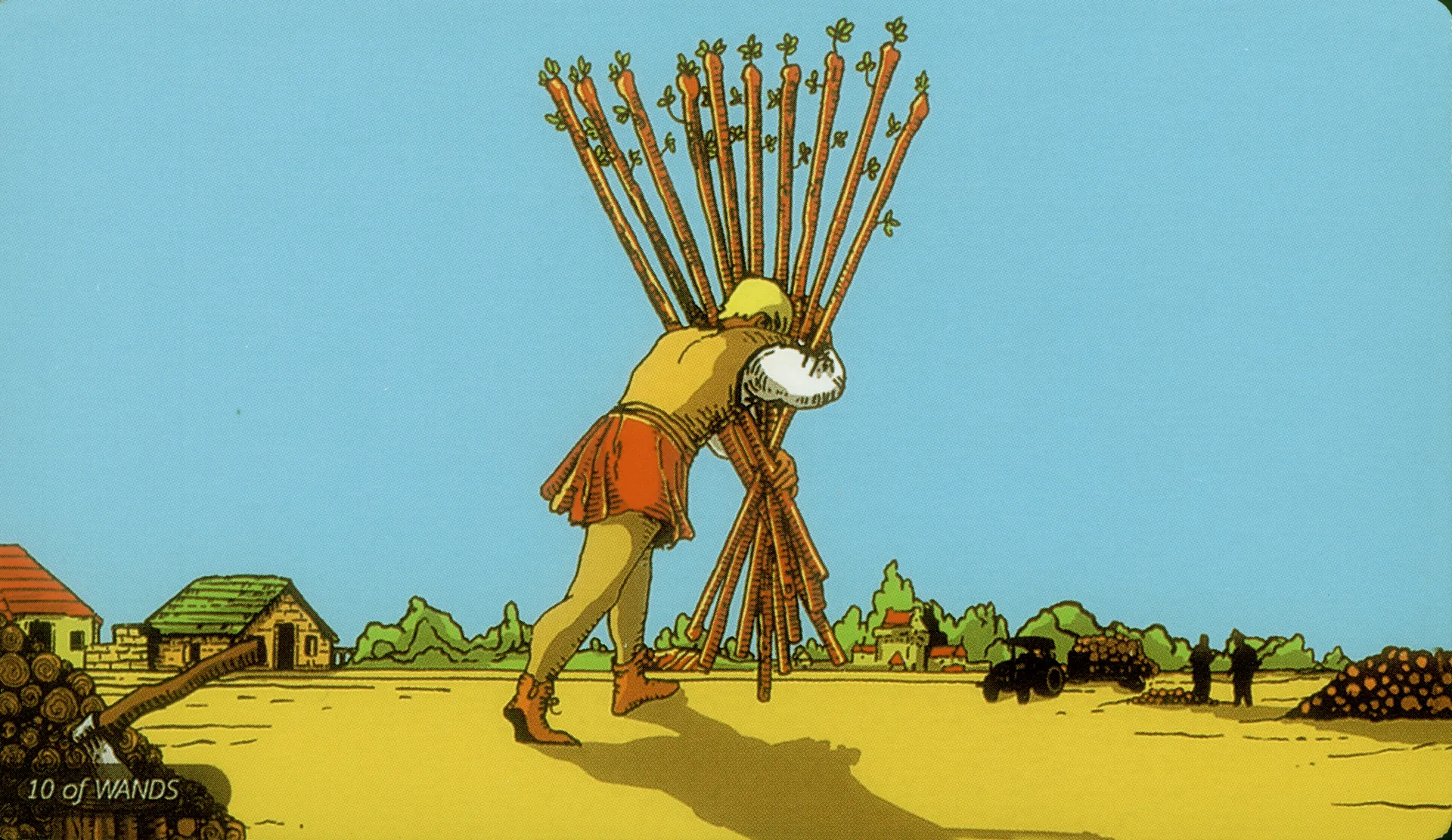
The Ten of Wands tarot card meaning commonly centres on responsibility that has become a heavy burden. Upright, it can prompt you to examine overwork, pressure, and the cost of keeping everything going. Reversed, it may invite release or delegation, though it can also suggest avoiding a task that still needs attention.
You might recognise the feeling in a project that keeps growing, a household where you arrange every appointment, or a hobby that has become another deadline. You can care deeply about the result and still need someone else to handle the shopping.
Read these upright and reversed meanings against your actual circumstances. A tarot reading can help you sort your priorities; it cannot establish a diagnosis, reveal someone else's private feelings, or promise that a difficult period is about to end.

10 of Wands Tarot Card Meaning at a Glance
- Main keywords: burden, pressure, responsibility, too much work
- Upright meaning: a cycle is reaching its peak and showing what it has created. In the Wands suit, this connects to energy, passion, creativity, confidence, and action
- Reversed meaning: release, overwhelm easing, or a family/group pattern that needs repair. The reversed meaning asks you to check how you are handling energy, passion, creativity, confidence, and action
- Yes or no: no unless the load becomes lighter or better shared
- Best question to ask: What is this card trying to help me understand right now?
Ten of Wands upright meaning: responsibility with a cost
The Ten of Wands upright often suggests taking on too much, even when the work matters to you. You may be reliable, capable, and close to finishing something, yet still need a different arrangement. Achievement and exhaustion can coexist.
The upright meaning asks you to notice the full weight of a commitment. A promotion can bring interesting work alongside more meetings. A much-wanted home can involve repairs and financial obligations. Enjoying what you have built does not mean pretending the upkeep is effortless.
If you are feeling overwhelmed, write down the tasks rather than judging your character. Which have a real deadline? Which belong to someone else? Which did you volunteer for before you knew the time involved? Seeing the list makes a practical conversation possible.
You do not have to stop working on a goal simply because it is demanding. Distinguish a brief, agreed final push from a workload that grows every week. If the arrangement is unsustainable, completing today's list will not fix tomorrow's expectations.
Ten of Wands tarot meaning in a reading
When the Ten of Wands appears, look at its position in the spread. In the past, it can help you reflect on a responsibility you carried for too long. In the present, examine what is weighing heavily now. In a future position, use it to plan support before agreeing to more, rather than predicting hardship.
The Nine of Wands is commonly read as persistence after difficulty. This Ten brings attention to the accumulated load. The distinction is useful: protecting a worthwhile effort is one question; whether you should do everything alone is another.
A small reading can be quite practical. Before volunteering to organise a family event, list the shopping, transport, invitations, and cleanup. Ask who will own each task. An enjoyable occasion can become a burden when one person quietly absorbs all the work.
Love and relationships: share the work, not just the intention
In a love reading, this card can draw attention to relationship burdens and unequal effort. One person might manage the bills, remember birthdays, make plans, and notice when supplies run out. Being told “just ask” can still leave that person doing the planning.
Try discussing a complete responsibility rather than a single favour. Agree who will plan dinner, check ingredients, cook, and tidy up on a particular evening. The aim is a workable arrangement both people understand, not a scorecard for every kind gesture.
For someone dating, carrying too much may mean fitting every meeting around the other person's availability. Ask whether the current pattern gives you room for your own friendships and interests. A card does not prove that someone cares less; their words and actions give you information you can discuss.
Reversed in love, the image can prompt relief through honest communication or a review of an avoided issue. It does not tell you whether a partner will leave, return, or change. If you feel unsafe, seek appropriate support rather than interpreting endurance as a duty.
Career, money, and school: make the load visible
In a career reading, the Ten often fits a situation with many responsibilities and too little capacity. You may be covering an absent colleague, finishing several projects, or doing a role that has quietly expanded. Reliability should not require permanent overcommitment.
Before another deadline slips, show your manager the actual tasks and estimated time. Ask which takes priority and what can move. If you can delegate responsibilities, agree the expected result, resources, and check-in point. Delegation is harder when you hand over work but keep all the decisions to yourself.
Reversed in career, the card may help you consider a lighter schedule or a clearer role. It can also raise the question of work being left unfinished. Identify the next responsible action: renegotiate, hand over with notes, or finish a bounded task. Do not assume a resignation or dismissal is inevitable.
For students, a difficult week may need a revised study plan and a conversation about extensions. Divide a large assignment into smaller steps, but also check whether the number of commitments is realistic.
With money, review financial burdens using actual figures. List repayments, essential costs, and dates before deciding what to change. Financial responsibilities can feel isolating; appropriate debt or financial advice may help you understand options. The card cannot guarantee income, predict losses, or choose an investment.
Ten of Wands reversed meaning: release, avoidance, or a better division
The Ten of Wands reversed can suggest putting down some of the load. That might mean asking for help, changing an agreement, or admitting that you cannot keep a promise in its original form. Relief is more useful when the handover is clear and the remaining work has an owner.
The reversed Ten of Wands can also describe the wish to escape pressure without addressing its cause. If you ignore a bill or stop answering a colleague, the responsibility may remain. Ask what would resolve the issue rather than merely move it out of view.
When the Ten of Wands appears reversed, reassess why you keep taking charge. Perhaps it is genuinely your role. Perhaps you find it hard to trust others, or you fear disappointing someone. Those possibilities need different responses; do not assume one explanation fits everyone.
Reading this Wands tarot card reversed can be an invitation to practise a small handover. Let someone manage a routine task from start to finish. Explain any essential constraints, then allow them to do it differently from you.
The reversed meaning is not automatically happier than the upright one. A lighter load can be welcome, but an avoided commitment still needs an honest conversation. Look for an arrangement you can sustain rather than waiting for pressure to disappear by itself.
Ten of Wands yes or no meaning
Some readers lean toward no, or “not at this cost,” when the question would add more responsibility to an already full schedule. Others read a conditional yes for a finite task with enough support. Reversed, consider what would need to change before accepting.
If you are deciding whether to organise another event, check your calendar and who will help. If the question concerns health, legal rights, finances, or another person's consent, use facts and appropriate advice. Yes-or-no conventions are not reliable forecasts.
Advice: choose one thing to hand over
Start with the weight of responsibility you can actually name. Write “I arrange all the transport for our group” rather than “I do everything.” Ask for a specific change: someone else books next week's journey, with the information they need.
Notice the work nobody sees. Keeping a list, remembering deadlines, and checking whether tasks happened are tasks too. If you delegate but remain the reminder service, you may still be carrying most of the burden.
Leave room for enjoyment. A creative project can lose its appeal when every spare moment becomes a production target. Decide what is enough for this week and protect some time that does not need a finished result.
Health and spirituality: support matters
For a health-related reflection, consider rest, practical help, and the effect of an overloaded routine. Burnout is not something a card can diagnose, and persistent symptoms deserve qualified care. The image cannot predict pregnancy, recovery, or a cure.
In spirituality, check whether a practice supports you or has become another obligation you fear failing. You might shorten a routine or reconsider a group commitment. A demanding belief does not become healthier just because you try harder to meet it.
One archetype, four perspectives
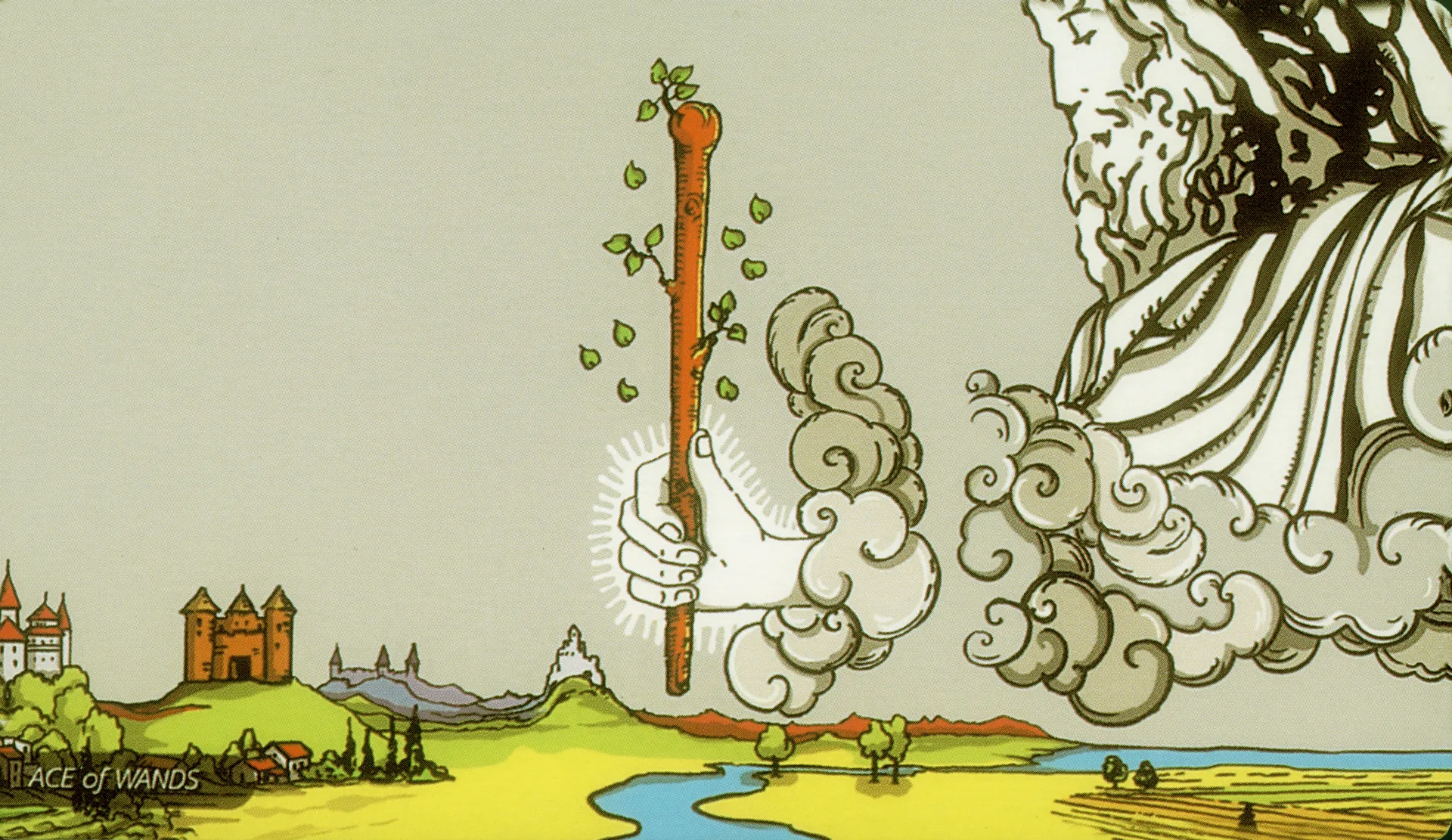
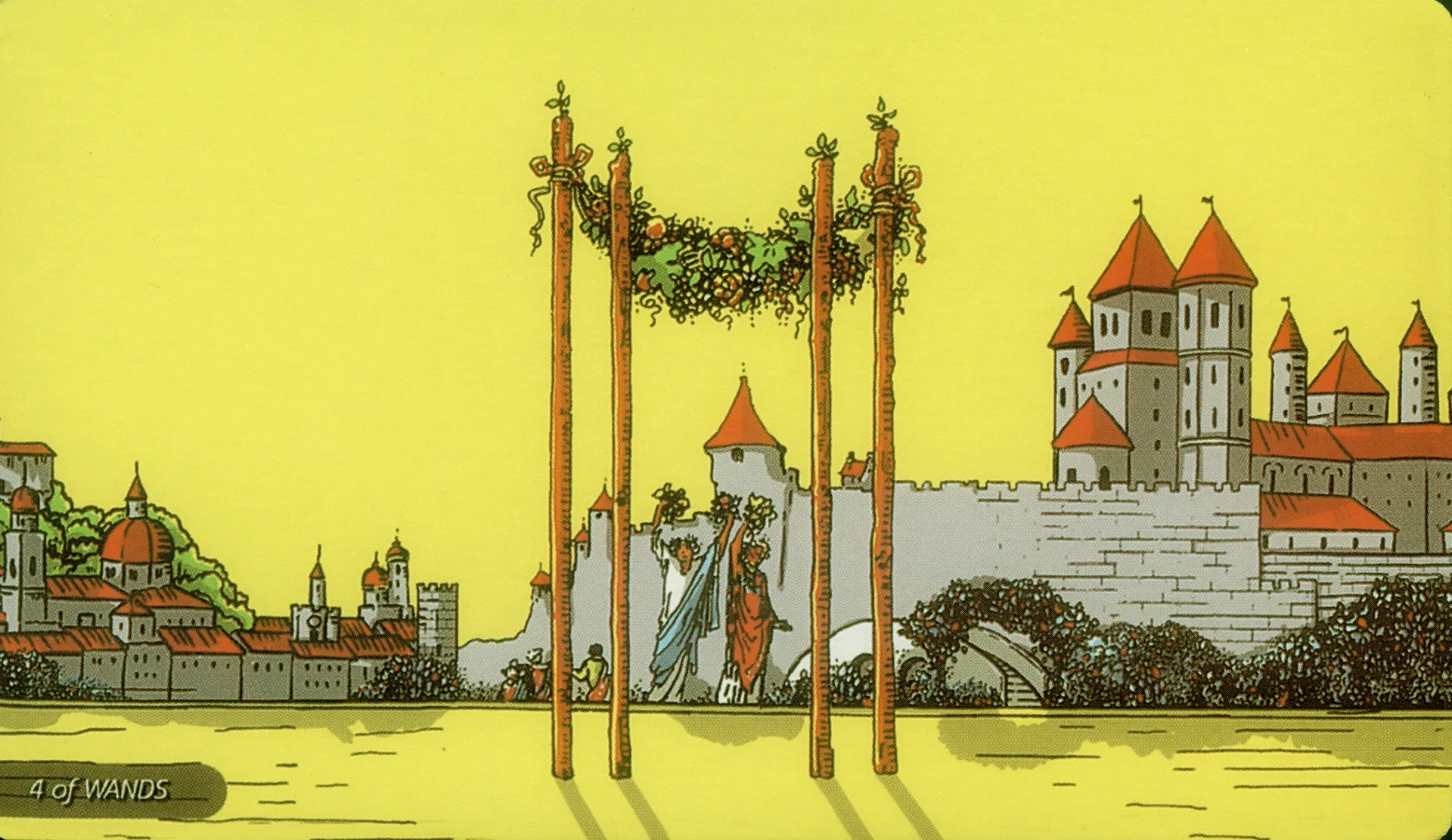
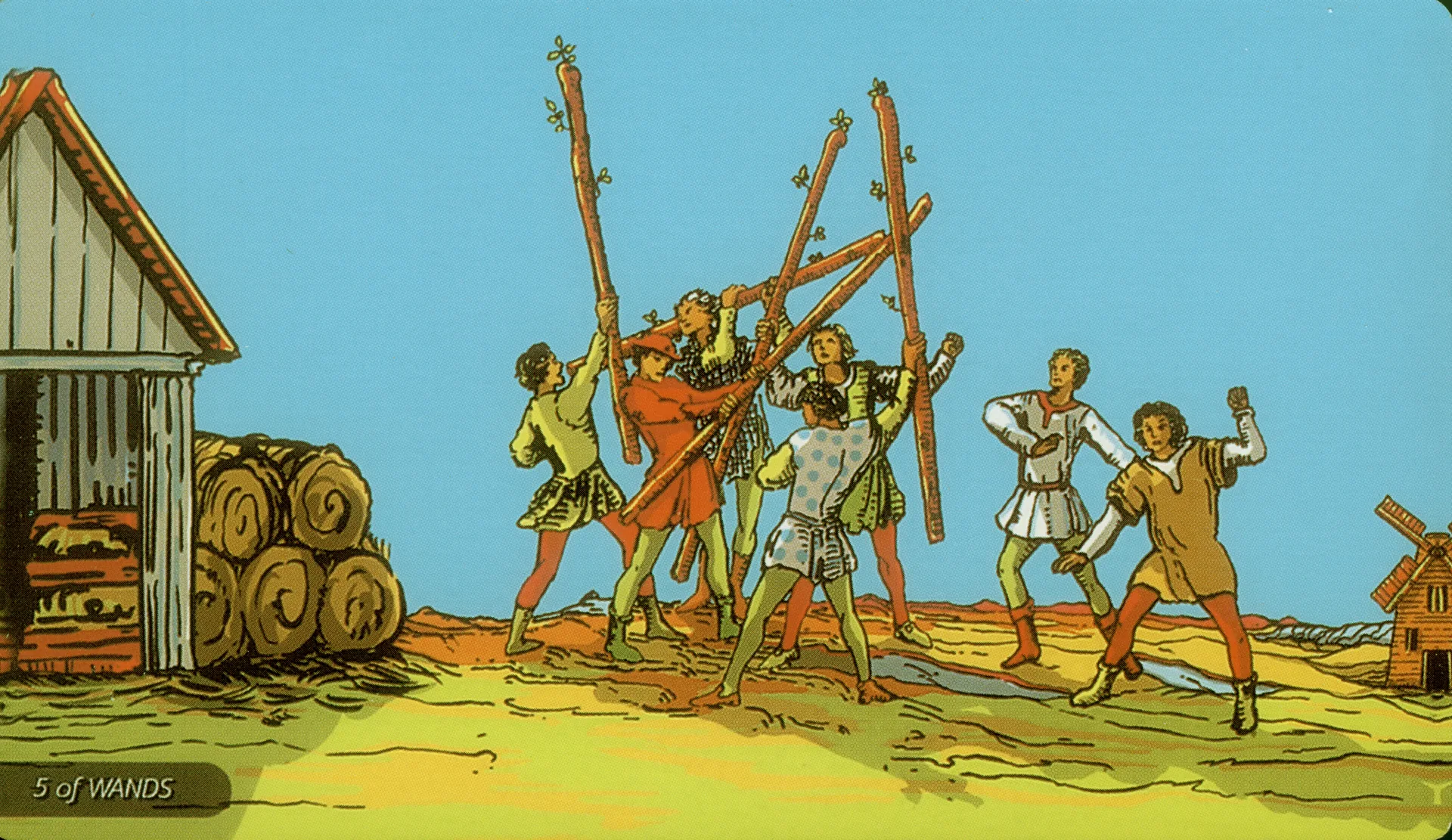
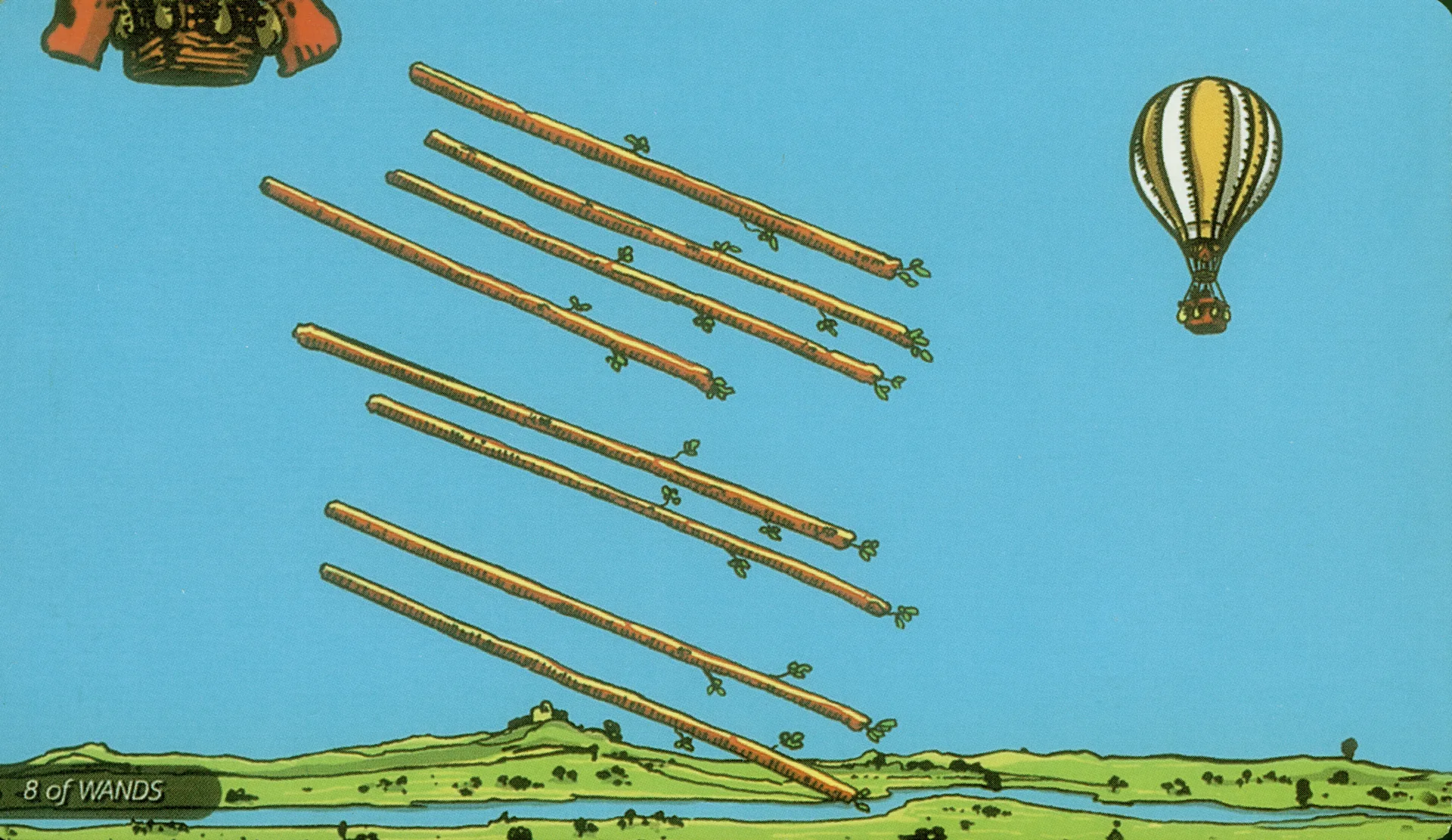
Ten of Wands Across Four Tarot Decks
Compare the familiar Rider-Waite-Smith card with the moments before, behind and after the classic scene in three Lo Scarabeo decks.
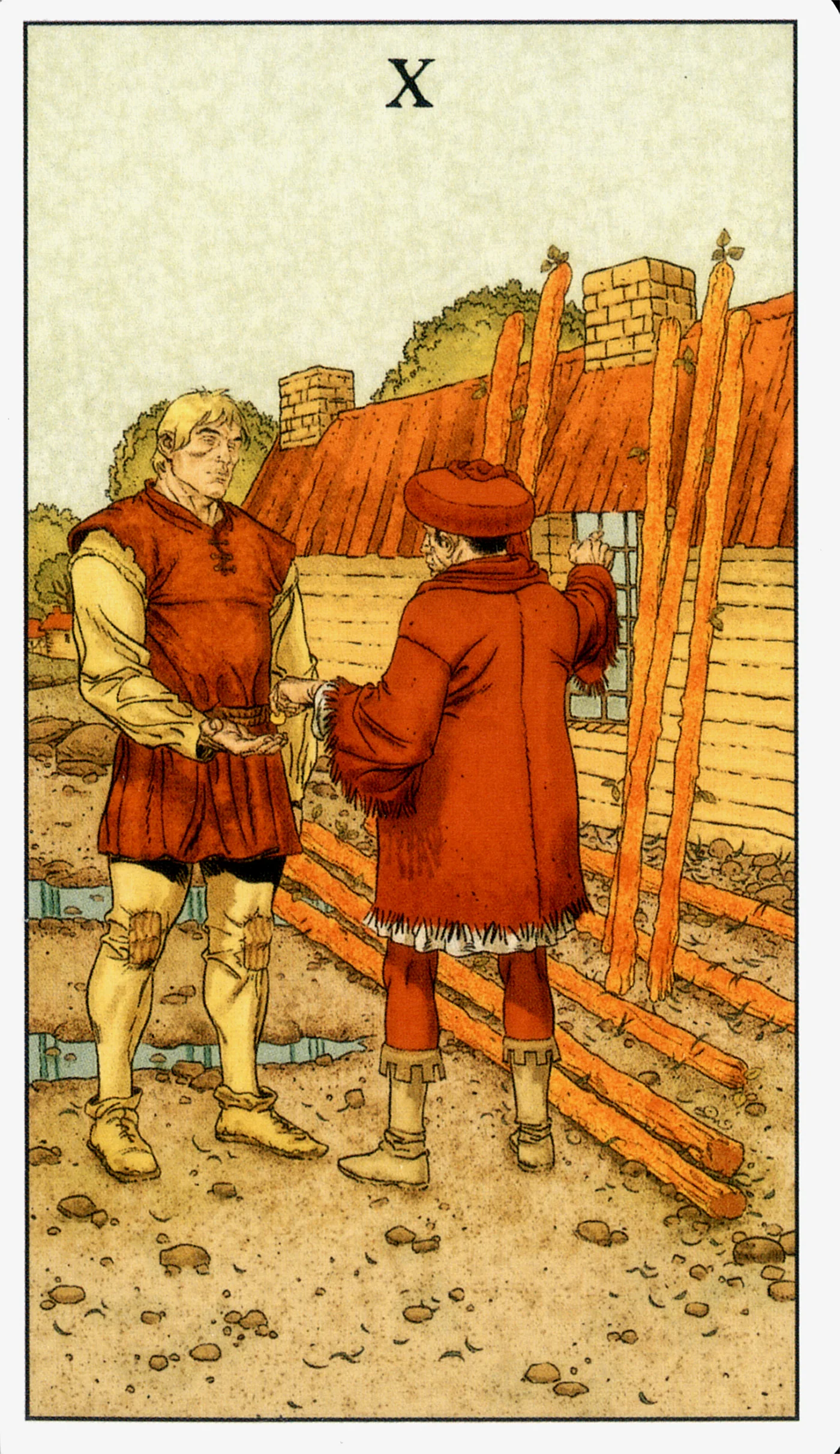
What apparently happens just before
What actually happened
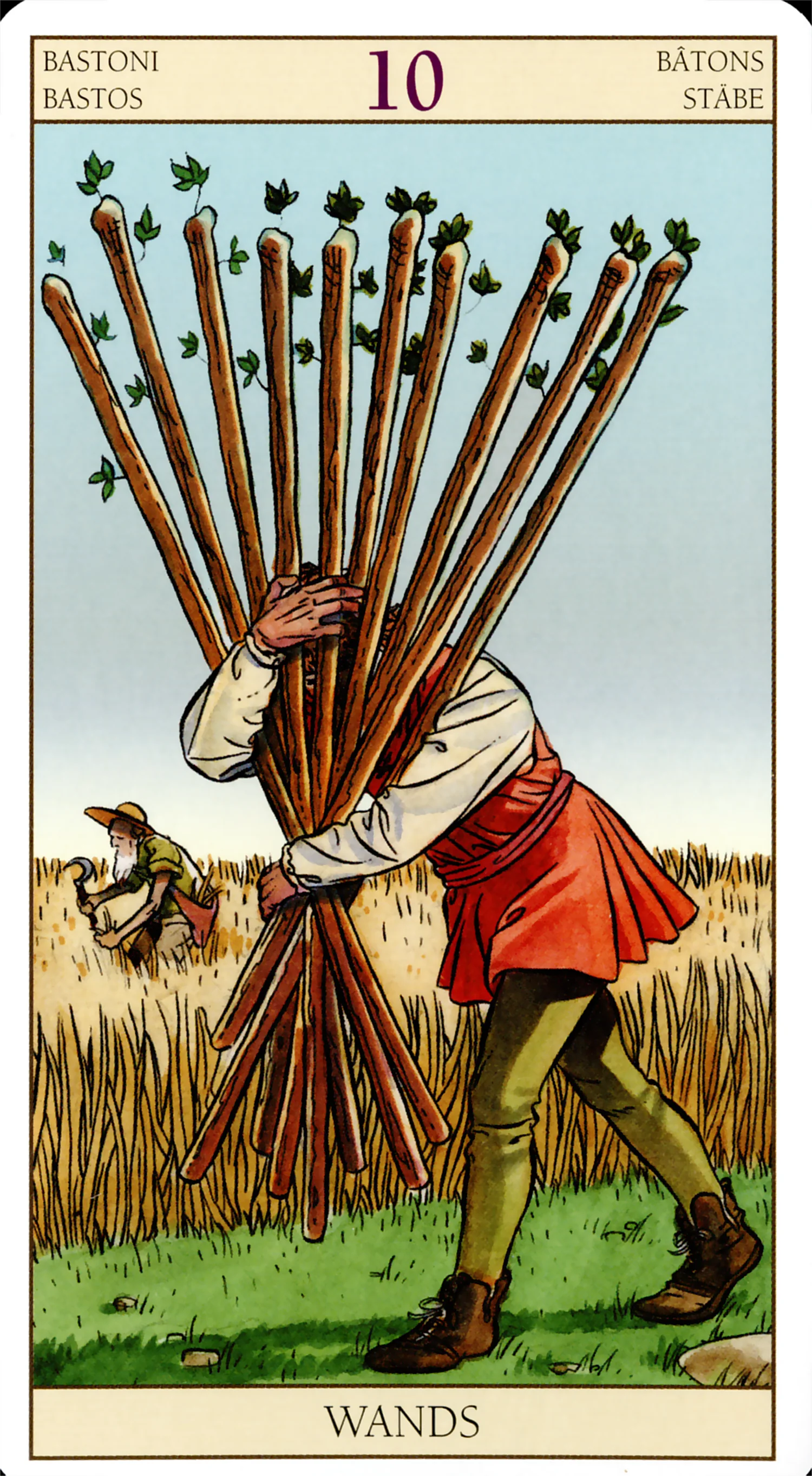
What happened on the opposite side
What apparently happened afterwards
Ten of Wands symbolism: a bundle that blocks the view
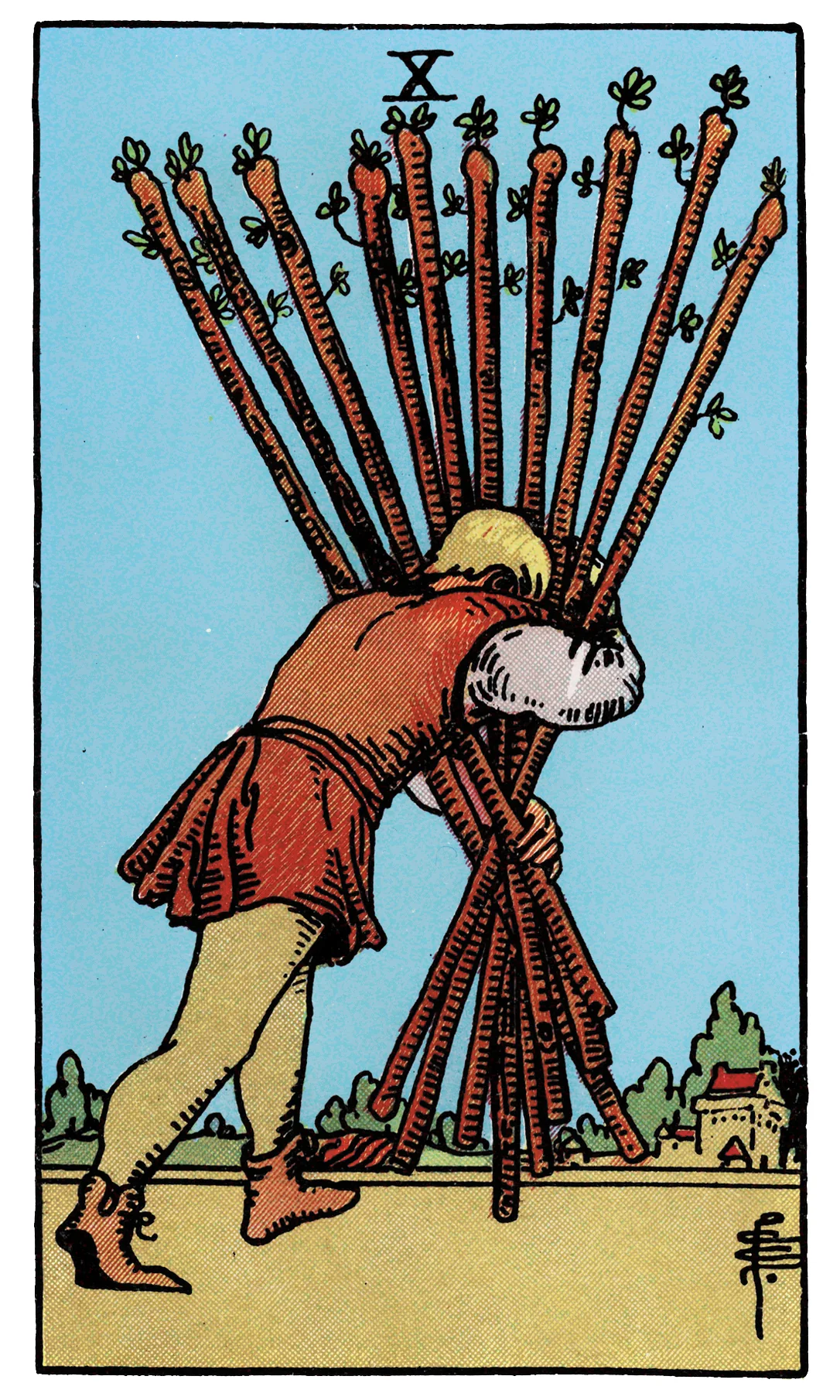
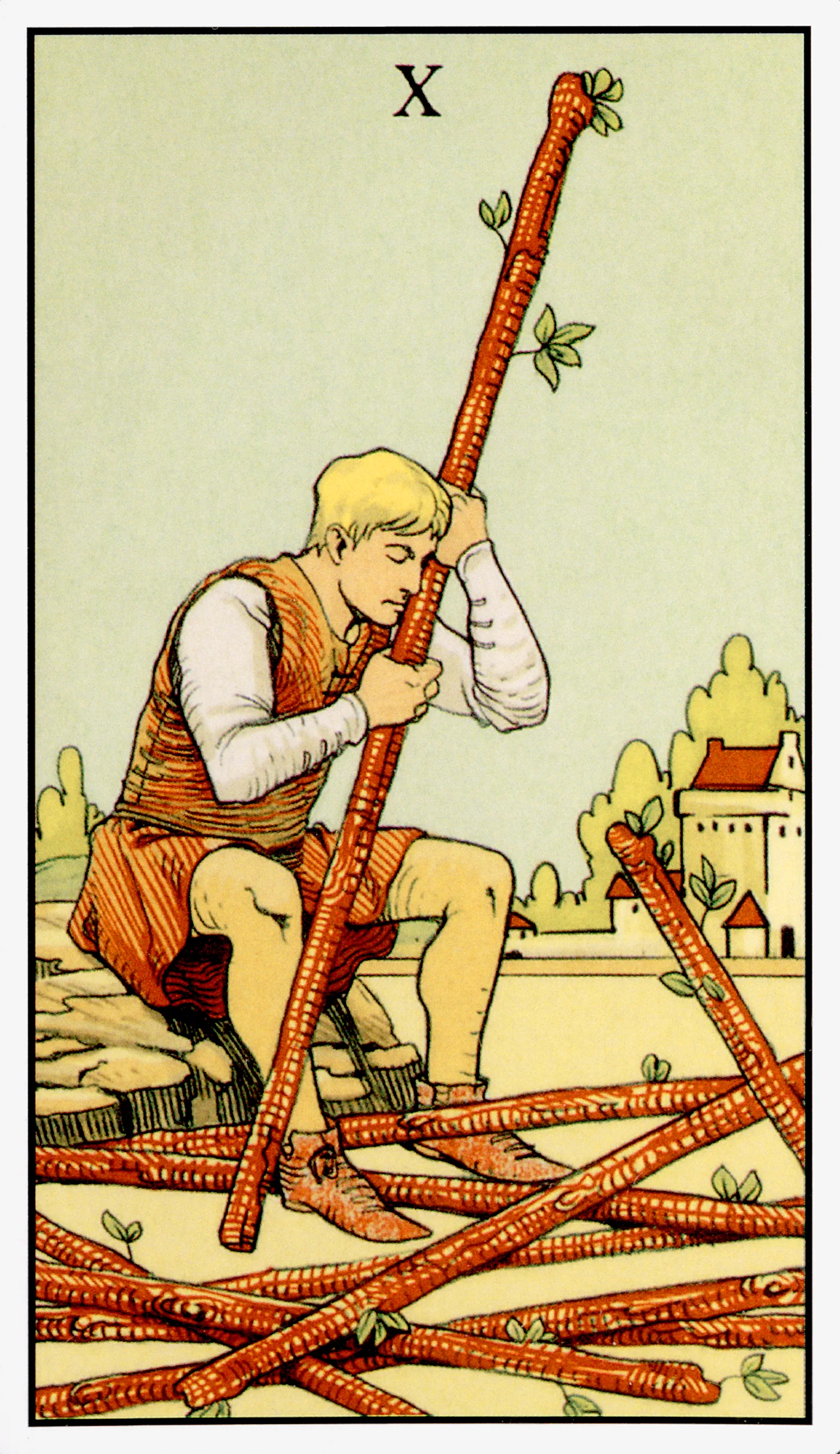
In the Rider-Waite-Smith portrait beside these meaning sections, a figure bends forward while carrying ten wands. The leafy staffs fan upward in front of the head. The figure wears a reddish tunic over a pale sleeve, yellowish leggings, and brown footwear. The numeral at the top is X.
A small cluster of buildings and trees sits ahead on the right. The destination is visible to the viewer, but the bundle obscures much of the carrier's view. Readers often connect that detail with concentrating so hard on a task that the wider path ahead becomes difficult to see.
The ten large wands suggest accumulated effort rather than a single small demand. Their greenery can remind a reader that even something alive and worthwhile can become too heavy to manage in this way. The picture does not tell us whether the figure chose the load or how far remains to travel.
If you read the distant buildings as an end in sight, keep that as an interpretation of the scene. Saying the destination is close does not establish a timetable for your own problem. Describe the artwork in your tarot deck before borrowing these associations.
Ten of Wands tarot card keywords, astrology, and numerology
Useful Wands tarot card keywords here include responsibility, burden, overload, and release. Turn each keyword into a question. Are you doing too much, or does a difficult but limited task need better support? The weight of carrying several obligations can look similar while having different causes.
The Ten belongs to the Minor Arcana and the suit of Wands. You may also encounter the term minor arcanum for an individual card. Many modern readers associate the Wands suit with fire, initiative, and creative energy; this Ten asks what those efforts now require.
In the Golden Dawn-derived correspondence used in Thoth tarot astrology, the Ten of Wands is associated with Saturn in Sagittarius. This can serve as a symbolic way to consider limits and expansion together. Correspondences vary, and a tarot card is not a personal horoscope.
In numerology-based readings, ten often represents completion of a numbered sequence and a possible transition. Completion does not necessarily feel restful: a finished project still needs a handover. Wands then continues into court cards, whose roles are read differently from the numbered cards.
A historical note on this Ten
In The Pictorial Key to the Tarot, Arthur Edward Waite describes a man oppressed by the weight of ten staves. He notes that the card has several meanings that do not all fit together, including success that brings its own pressure. His reversed list includes difficulties and contrarieties.
That is useful context for modern readings about easing a load: release is not the only historical reversed interpretation. Treat Waite's divinatory claims as part of a tarot tradition, not evidence that a card can determine a lawsuit or reveal deception.
Surrounding cards and practical reading questions
With the Two of Pentacles, you might compare a flexible schedule with one that has become overcrowded. With the Three of Pentacles, explore cooperation and a clearer division of work. These are possible reading exercises, not fixed outcomes.
With the Four of Swords, ask what a genuine break would require: cover for essential tasks, a paused deadline, or fewer commitments. Another card does not erase the Ten's practical question of who will carry the work.
For a short journal entry, choose one responsibility you want to keep, one you need to share, and one you can stop accepting. Then write the conversation or action that would make the change real. If you ask someone to handle Tuesday’s transport, agree who books it and when. That is easier to follow than a general promise to help more.
One card, many perspectives
See Ten of Wands Card from Other Decks
Discover how other tarot decks interpret this card. Select a deck to explore its full review and gallery.
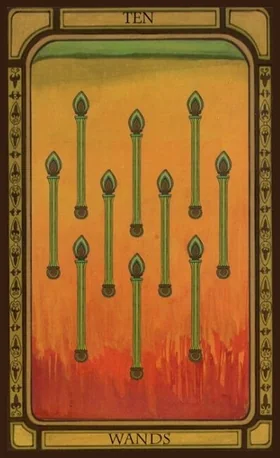
The Golden Tarot 
Joie De Vivre Tarot 
Infinite Visions Tarot 
Ferret Tarot 
Sinking Wasteland Tarot 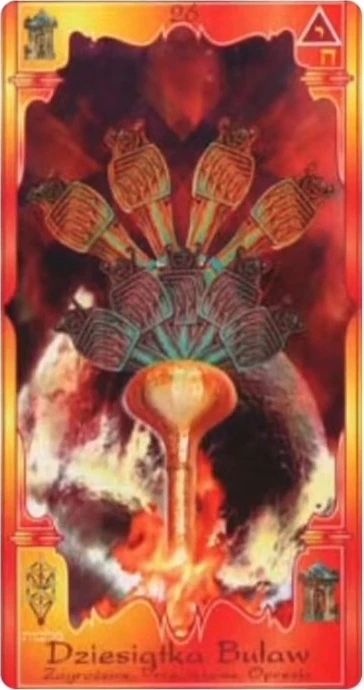
Soul Mandala Tarot 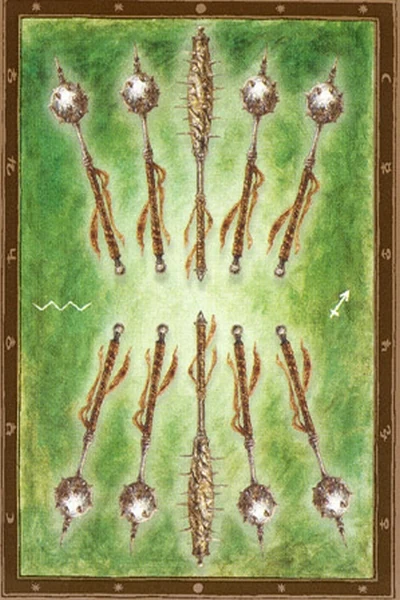
The Labyrinth Tarot 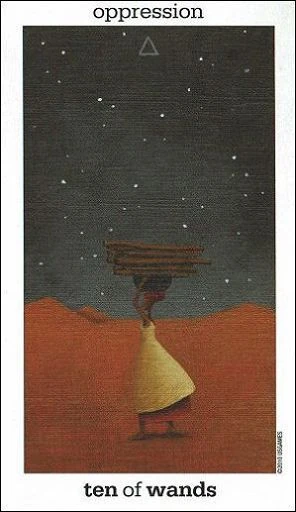
Sun and Moon Tarot 
The Celtic Tarot 
Golden Tarot by Kat Black Tarot 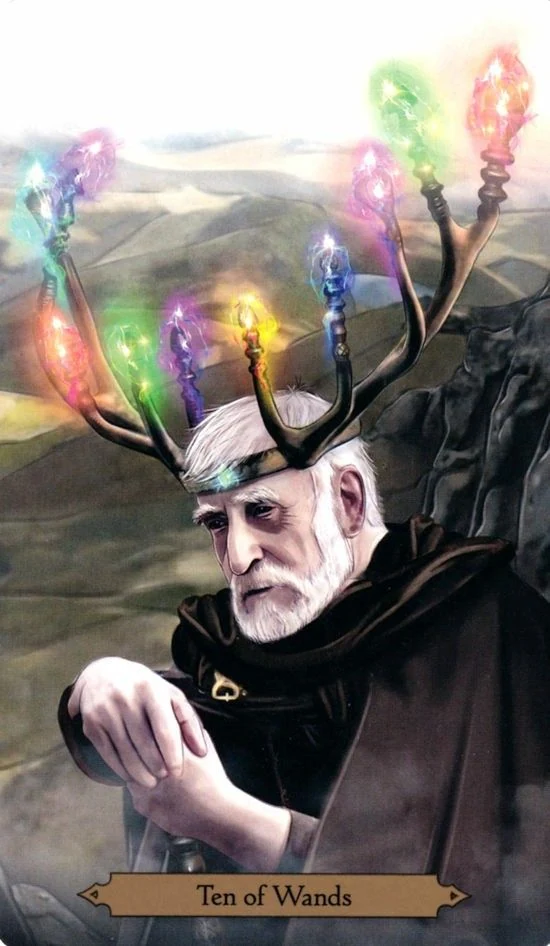
Wizards Tarot 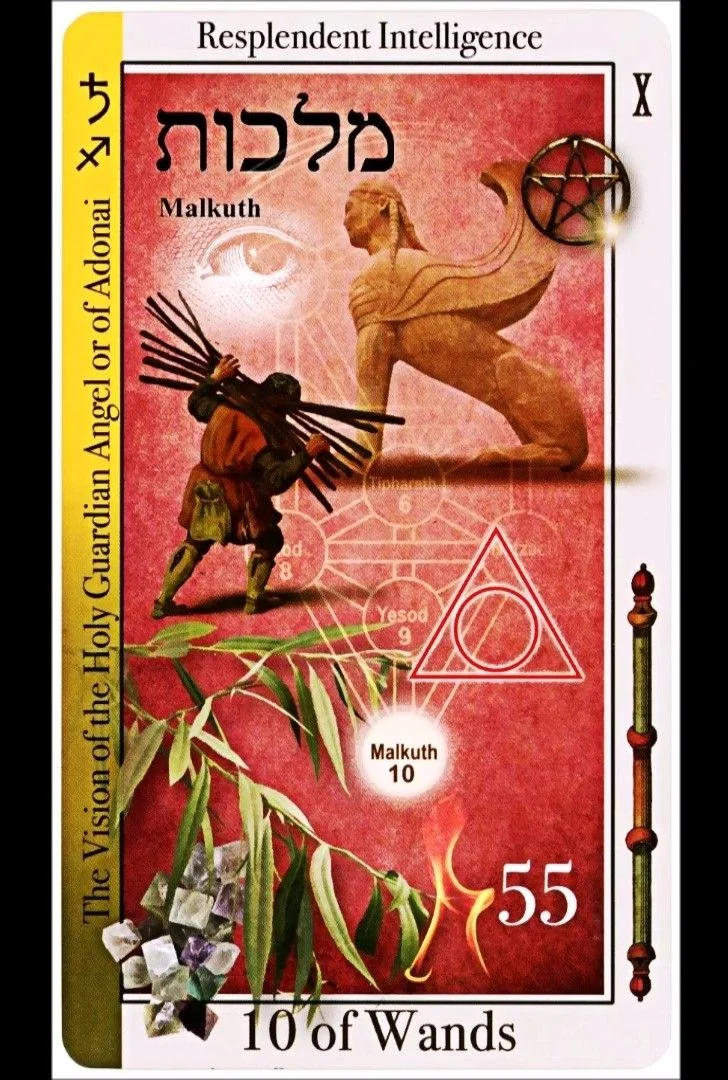
Tarot of Magical Correspondences 
Ethereal Visions Tarot 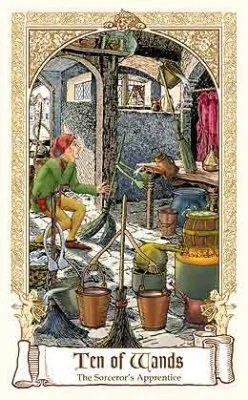
The Fairytale Tarot — Karen Mahony 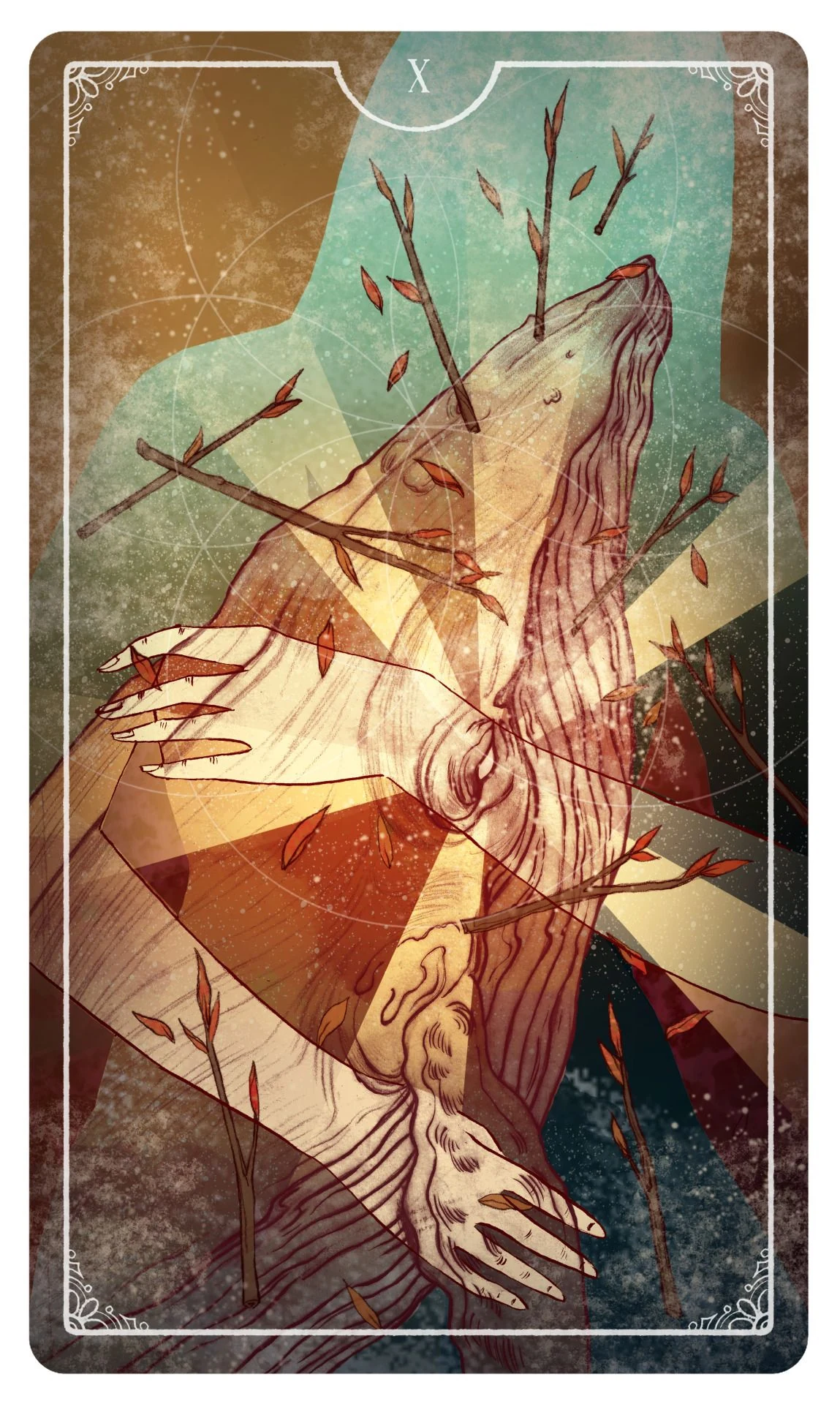
Ostara Tarot
Ten of Wands frequently asked questions
What does the Ten of Wands mean upright and reversed?
Upright, it commonly points to responsibility, pressure, and carrying more than you can comfortably manage. Reversed, it may invite release or sharing the load, but it can also raise questions about avoidance. Use your question and observable circumstances to choose the interpretation.
Is the Ten of Wands a bad card?
It can describe a demanding situation without predicting disaster. Even a worthwhile achievement can require too much from one person. Look at capacity, support, and what can change rather than treating the card as a judgment of your choices.
Does the Ten of Wands reveal someone's feelings?
No. It can prompt you to consider pressure and unequal effort in a relationship, but it cannot establish another person's private thoughts. Discuss what you have noticed and listen to what they say.
What should I do after pulling the Ten of Wands?
List your actual commitments and choose one practical adjustment. You could hand over a complete task, renegotiate a deadline, or decline a new request. Seek appropriate professional help when the issue involves health, debt, safety, or legal obligations.