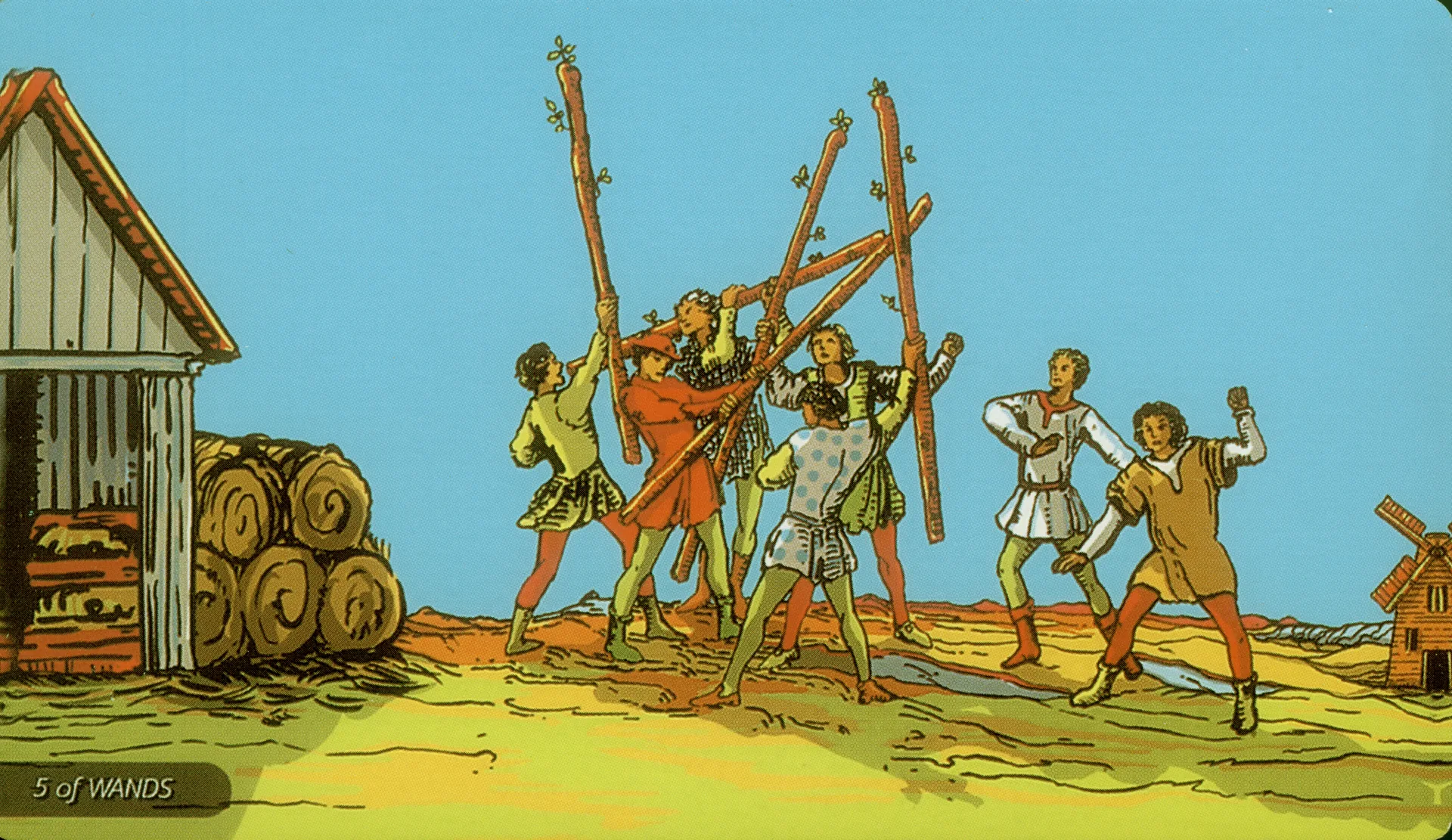
The Five of Wands tarot card usually points to conflict and competition: people have different ideas, want the same opportunity, or struggle to coordinate their efforts. The tension can be tiring, but it may also help you practise a skill or find a better solution.
Its upright and reversed meanings depend on how that tension is being handled. Upright, the disagreement is often out in the open. Reversed, it may be settling down, staying unspoken, or becoming an internal struggle. Read the card alongside your question and the facts of the situation rather than treating it as a forecast of a fight.

5 of Wands Tarot Card Meaning at a Glance
- Main keywords: competition, tension, different opinions, practice
- Upright meaning: a problem is asking for courage, honesty, and a better response. In the Wands suit, this connects to energy, passion, creativity, confidence, and action
- Reversed meaning: recovery, letting go of conflict, or learning from a hard moment. The reversed meaning asks you to check how you are handling energy, passion, creativity, confidence, and action
- Yes or no: maybe; success needs teamwork and less ego
- Best question to ask: What is this card trying to help me understand right now?
Five of Wands upright meaning: competing ideas
The upright Five of Wands can describe a lively group in which everyone wants to make their case. At a meeting, one person wants a quick launch while another wants more testing. Neither has to be the villain; the difficulty is finding a way to work together.
Healthy competition can sharpen your skills. A friendly match, audition, or debate asks you to prepare and respond to other people. Notice whether everyone understands the rules and has room to participate. Challenge can be enjoyable when it is fair.
Rivalry becomes tiring when people forget what they came together to do. If colleagues interrupt, friends turn every story into a contest, or a discussion becomes personal, name the issue rather than matching the volume. You can disagree without making someone an enemy.
In the upright position, ask what would turn scattered effort into a shared task. A clear agenda, agreed roles, or a chance for each person to speak may do more than another forceful argument.
Five of Wands tarot reading: positions and questions
As advice, this card asks you to participate without letting ego run the conversation. In an obstacle position, it can suggest friction and competition that consume energy without producing much. As a possible outcome, it may indicate further negotiation rather than a settled agreement.
The Five of Wands often fits a situation with many voices and no clear process. A tarot reader might ask what keeps the discussion stuck. Are the priorities genuinely different, has someone misunderstood the task, or is nobody responsible for the decision? The answer changes what you do next. Do not assume that every challenging card means someone is deliberately working against you.
Love and relationships: disagree without competing
In a love reading, the card can reflect arguments, mixed expectations, or a habit of trying to win instead of trying to understand. Perhaps you both want time together, but one wants a quiet evening and the other wants to go out. Name the actual difference before it becomes an argument about who cares more.
If you are dating, you may feel pressure to impress or compare yourself with other people. That does not prove someone has other partners. Ask what kind of relationship they want, and decide whether it suits you. Your love life does not have to become a contest for someone else's attention.
For questions about feelings or reconciliation, tarot cards cannot disclose private thoughts or guarantee an ex will return. Use the reading to examine what you can observe: how conversations go, whether boundaries are respected, and whether both people want contact.
A spirited disagreement is different from intimidation or coercion. You do not need to fight harder to earn safety or affection. If you feel unsafe, seek practical support rather than interpreting harm as a relationship lesson.
Career, money, and school: organise the effort
At work, this card may describe competing proposals, overlapping responsibilities, or a crowded field of applicants. In industries such as sales, visible performance targets can make comparison hard to avoid. Focus on improving your own preparation and agreeing fair expectations.
For a group assignment, five people producing five separate plans can create more work than progress. Decide who owns each part, how you will review it, and when to ask for help. Brainstorming works better when the group listens before judging ideas.
With money, think about demands competing for your attention: bills, a shared budget, or different priorities in a household. Compare actual figures and discuss what is affordable. The card does not predict a loss, promise a profitable risk, or replace qualified financial advice.
Five of Wands reversed meaning: peace or avoidance?
The Five of Wands reversed suggests, in one common reading, that people are ready to stop sparring and cooperate. A meeting finally ends with a decision, or an apology makes room for a calmer conversation. Look for a practical change rather than assuming the conflict has vanished.
Another reversed meaning is avoidance. Everyone says they are fine, yet resentment grows because nobody mentions the problem. With the reversed Five of Wands, notice whether people can speak honestly. A quiet room can mean agreement, but it can also mean everyone is avoiding an awkward subject.
The reversed card can also describe inner conflict. You want to volunteer for an opportunity but keep comparing yourself with more experienced people. Separate a useful concern, such as needing practice, from an assumption that you have nothing to offer.
Reversed in relationships, consider a respectful conversation about the unresolved issue. Reversed at work, clarify expectations before returning to the same task. Resolution does not require agreeing on everything; it requires a way to act without constantly restarting the argument.
Five of Wands yes or no meaning
This is often read as maybe, not yet, or a qualified no when cooperation is missing. It is not a reliable yes or no card for predicting an outcome. If you are asking whether a project will work, check whether the people involved can agree on roles and next steps.
A reversal can suggest that resistance is easing, though some readers see hidden tension instead. For an important decision, use the reading to identify what needs discussion; use evidence, professional advice, and other people's stated choices to decide what to do.
Five of Wands advice: how to deal with conflict
Choose one decision you can make together. Give each person a turn to explain their concern, then repeat back what you heard before answering. Separate a clash over the goal from a disagreement about how to reach it. If everyone wants the same result, compare the options against a shared limit, such as the deadline or budget. Agree who will try the next step and when you will review it. If tempers rise, pause and arrange a time to return; nobody should have to accept intimidation to keep the discussion going.
Wellbeing and spiritual reflection
Chaotic energy can feel like several obligations pulling in different directions. Consider reducing one avoidable demand or taking a break from constant comparison. If stress or physical symptoms persist, speak with a qualified clinician; a card cannot diagnose illness, confirm pregnancy, or promise a cure.
In spiritual practice, conflicting advice from books, teachers, or an oracle deck can become another contest over who is right. Try one manageable practice and see whether it helps you act with more patience. You do not have to turn every difference of belief into a debate.
One archetype, four perspectives
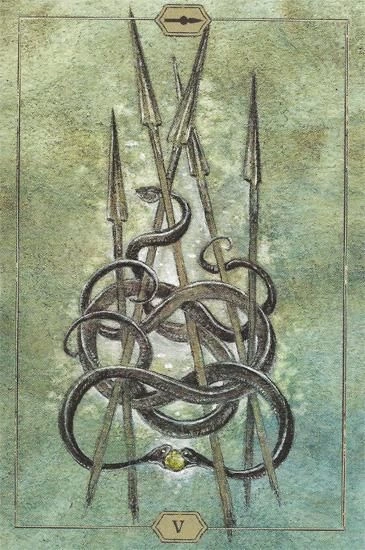
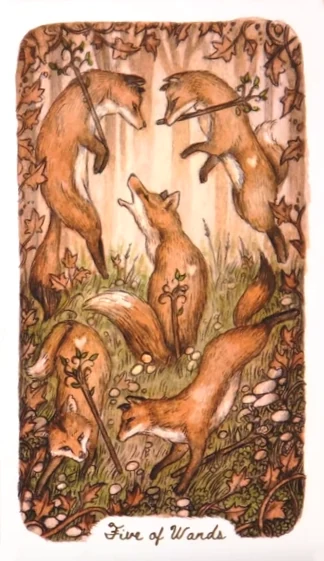
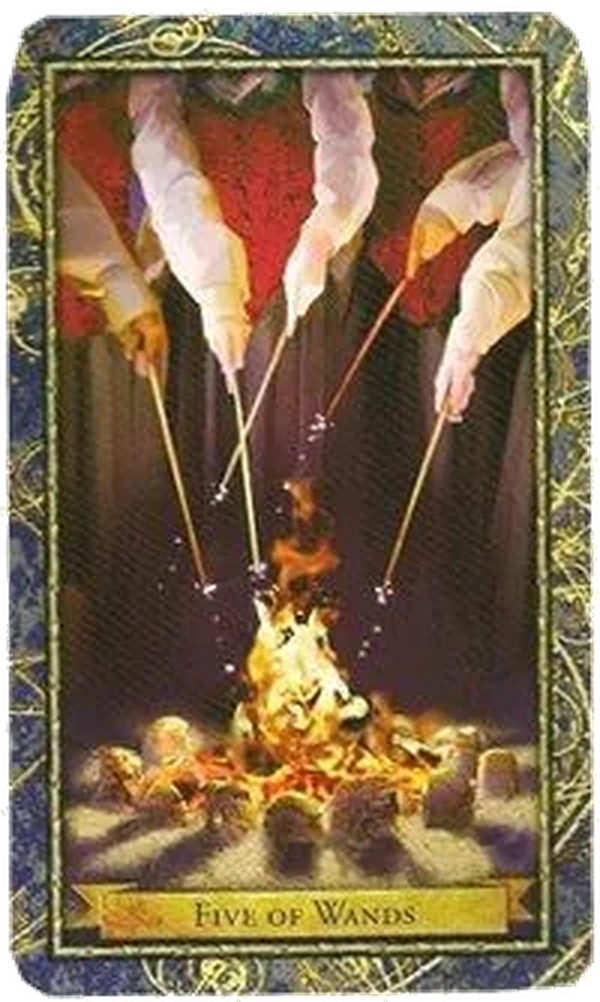
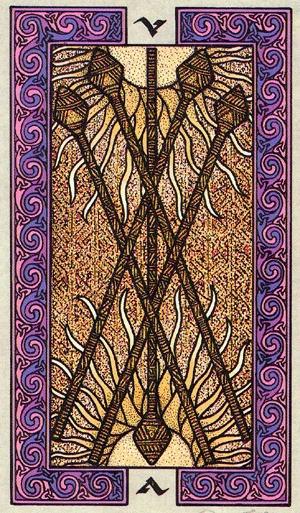
Five of Wands Across Four Tarot Decks
Compare the familiar Rider-Waite-Smith card with the moments before, behind and after the classic scene in three Lo Scarabeo decks.
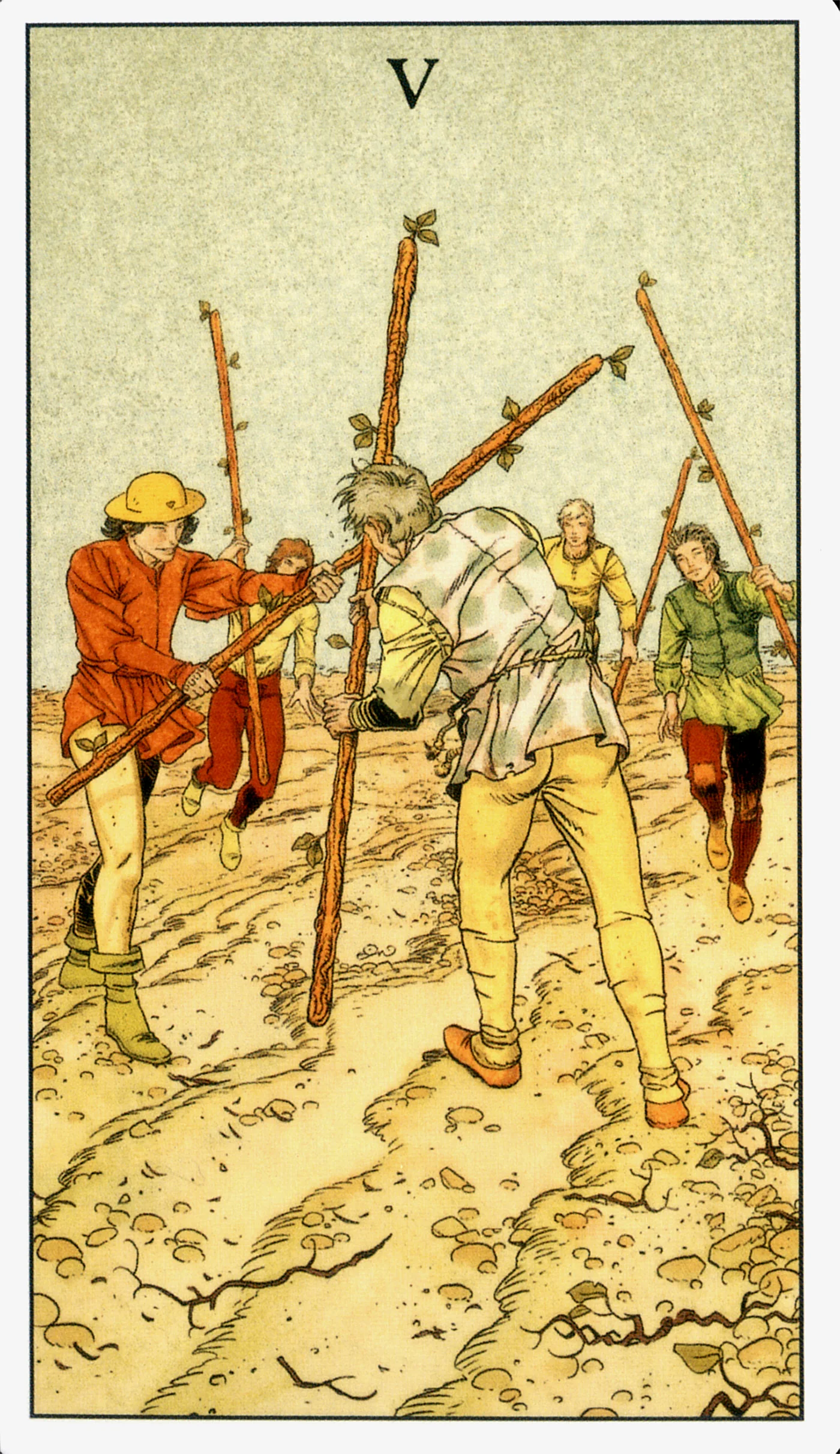
What apparently happens just before
What actually happened
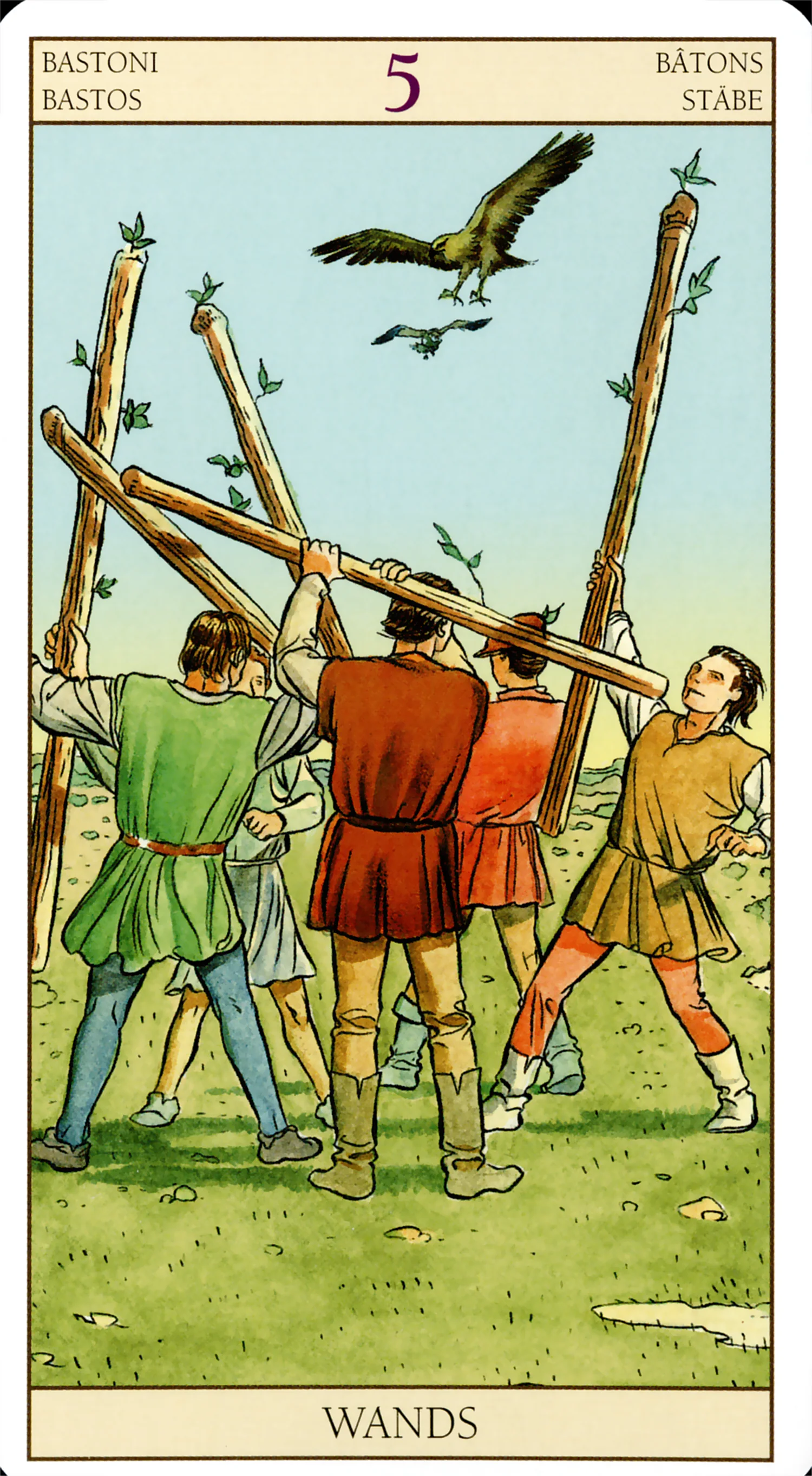
What happened on the opposite side
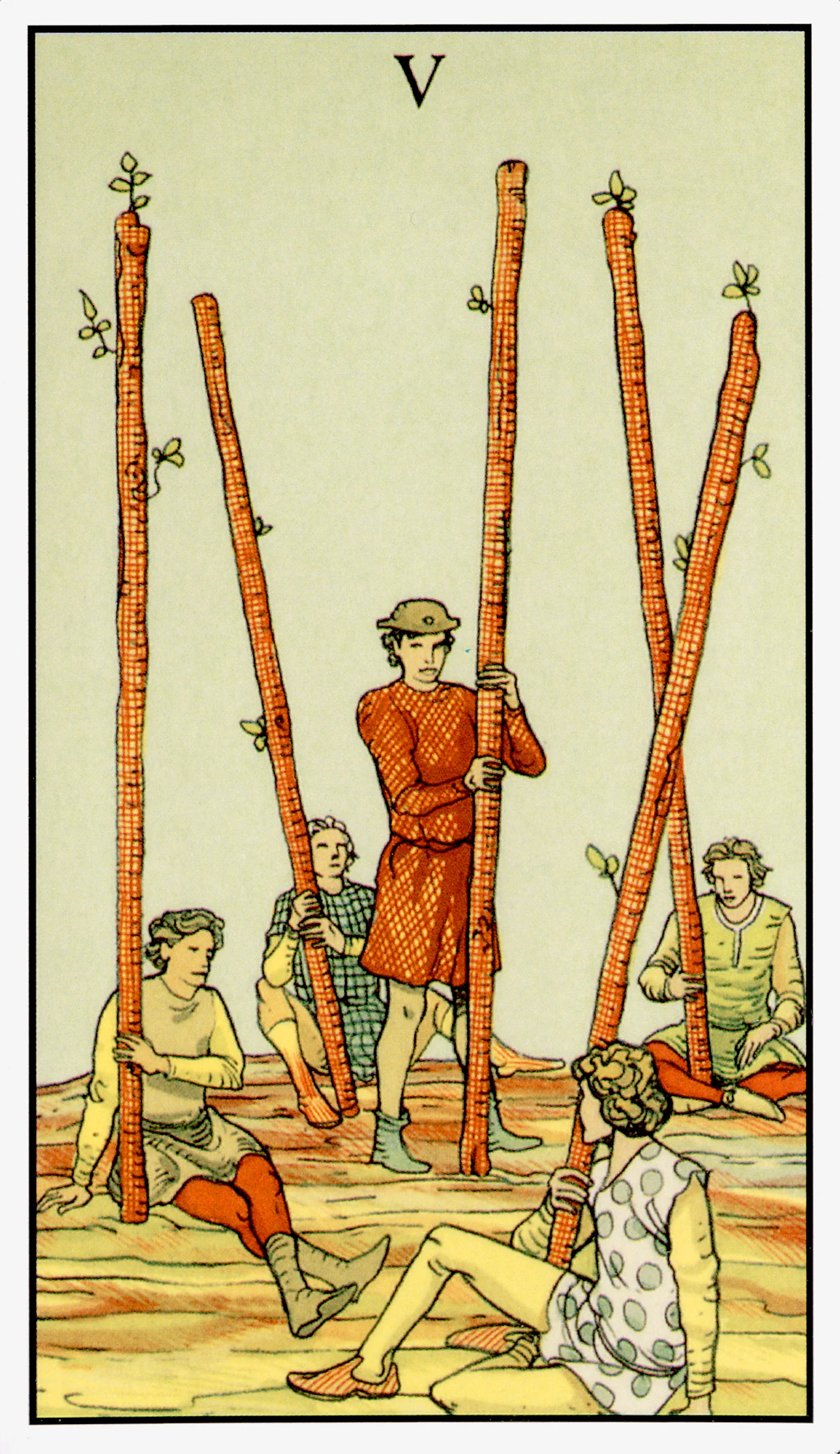
What apparently happened afterwards
Five of Wands card description and symbols
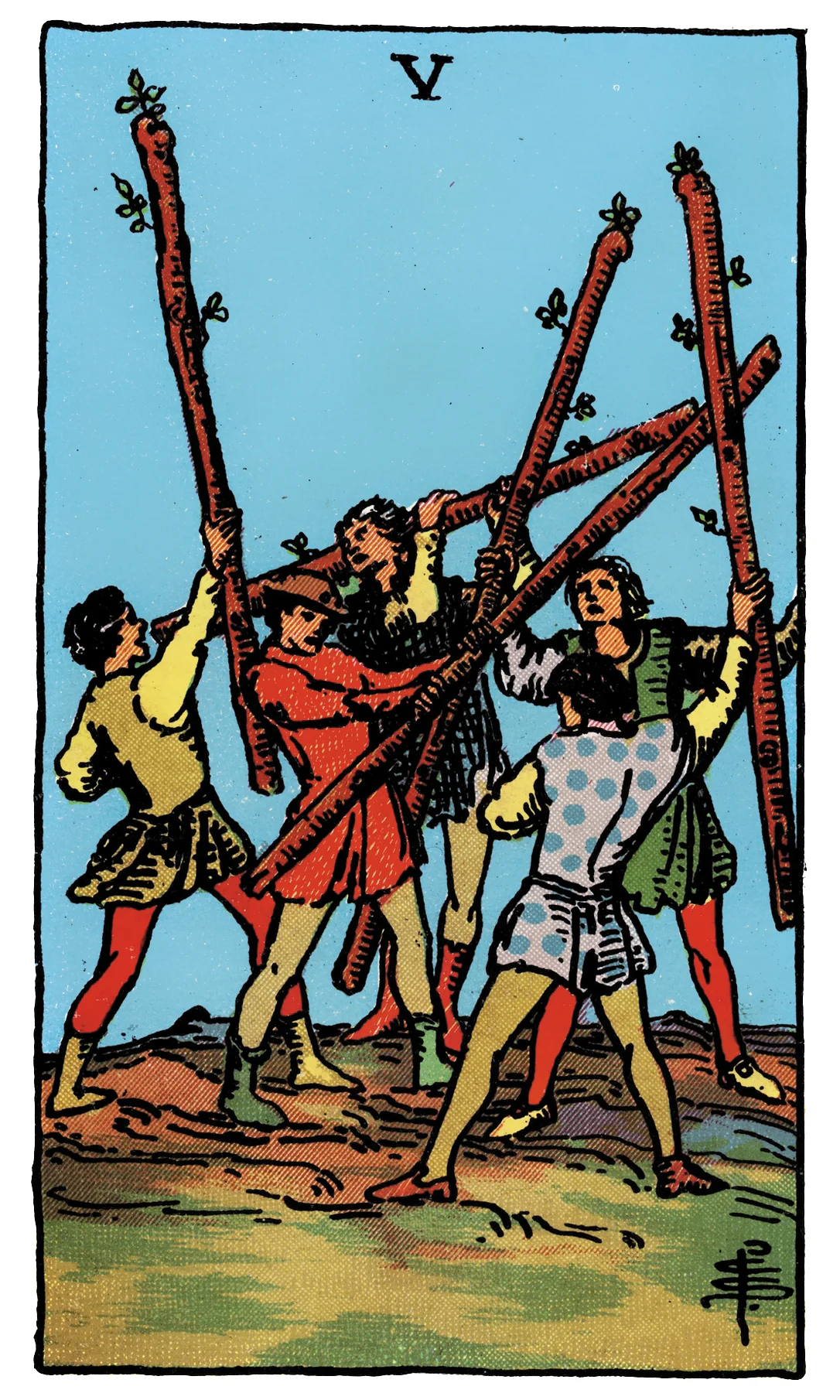
The verified Rider-Waite-Smith portrait has V at the top and five figures holding five wands. Often described as five young men, they wear different colors and styles of clothing. Their leafy staffs cross at several angles above uneven ground beneath a blue sky.
The Five of Wands shows activity without an obvious shared formation. With a wand raised by each participant, the scene can look like a contest, practice, or a confused attempt to coordinate. It does not show enough to tell us what each person intends. Read the tension as a visual prompt rather than proof of violence.
The figures in the card have different stances and face different ways. Their wands are raised, but the image has no clearly established winner. That is why readers often connect it with competing effort rather than the recognition shown in the Six of Wands.
Five of Wands astrology, rank, and suit
This is rank five of the Wands suit in the Minor Arcana, one of the 78 cards in a standard tarot deck. V is its suit numeral, not a Major Arcana number. Fives are often read as disruption or adjustment; here, the celebration of the Four of Wands gives way to people working out their differences.
Wands is commonly associated with Fire, initiative, creativity, and action. In Golden Dawn-derived correspondences, Saturn in Leo connects limits and discipline with pride and self-expression. That is a traditional interpretive framework, not a personal horoscope. Other systems use different correspondences.
A Marseille-style pip card may arrange staffs without these people. Look at the artwork in your own deck before borrowing details from this scene. The preserved four-deck comparison offers different perspectives, not evidence of what will literally happen next.
Five of Wands keywords and nearby tarot cards
With the Seven of Wands, consider whether you need to defend a position or whether the group needs a fairer process. With the Five of Swords, ask whether winning is starting to matter more than trust. The Five of Cups can shift attention toward disappointment after a disagreement. These are possible combinations, not fixed outcomes.
For a quick tarot cheat sheet, start with friction as the main keyword. Ask: What are we disagreeing about? Who has not had a chance to speak? Which part is useful practice, and which part is wasting energy? A free tarot exercise is to write one concrete answer to each question before drawing another card.
One card, many perspectives
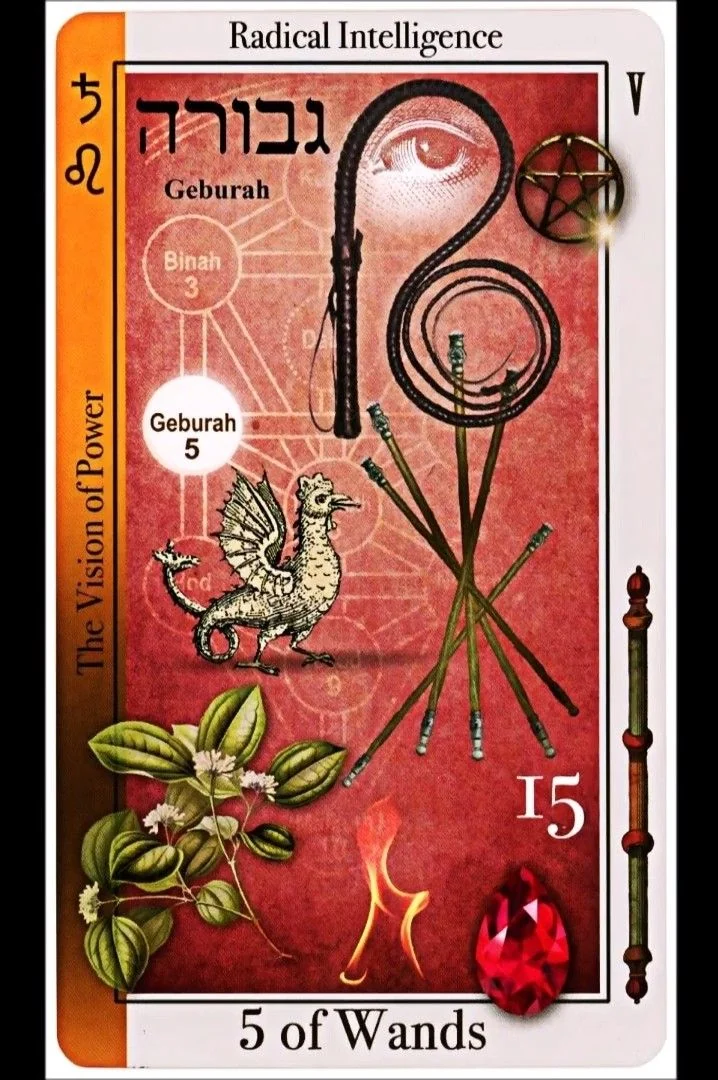
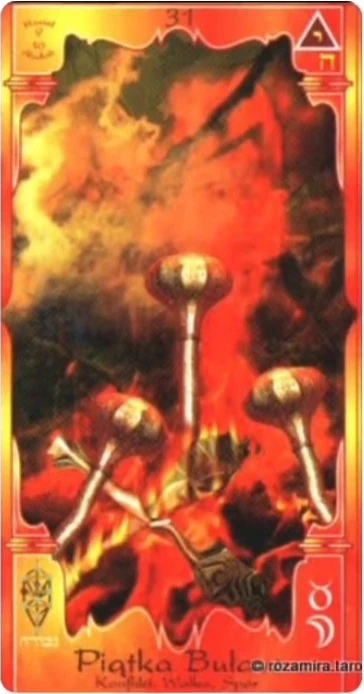
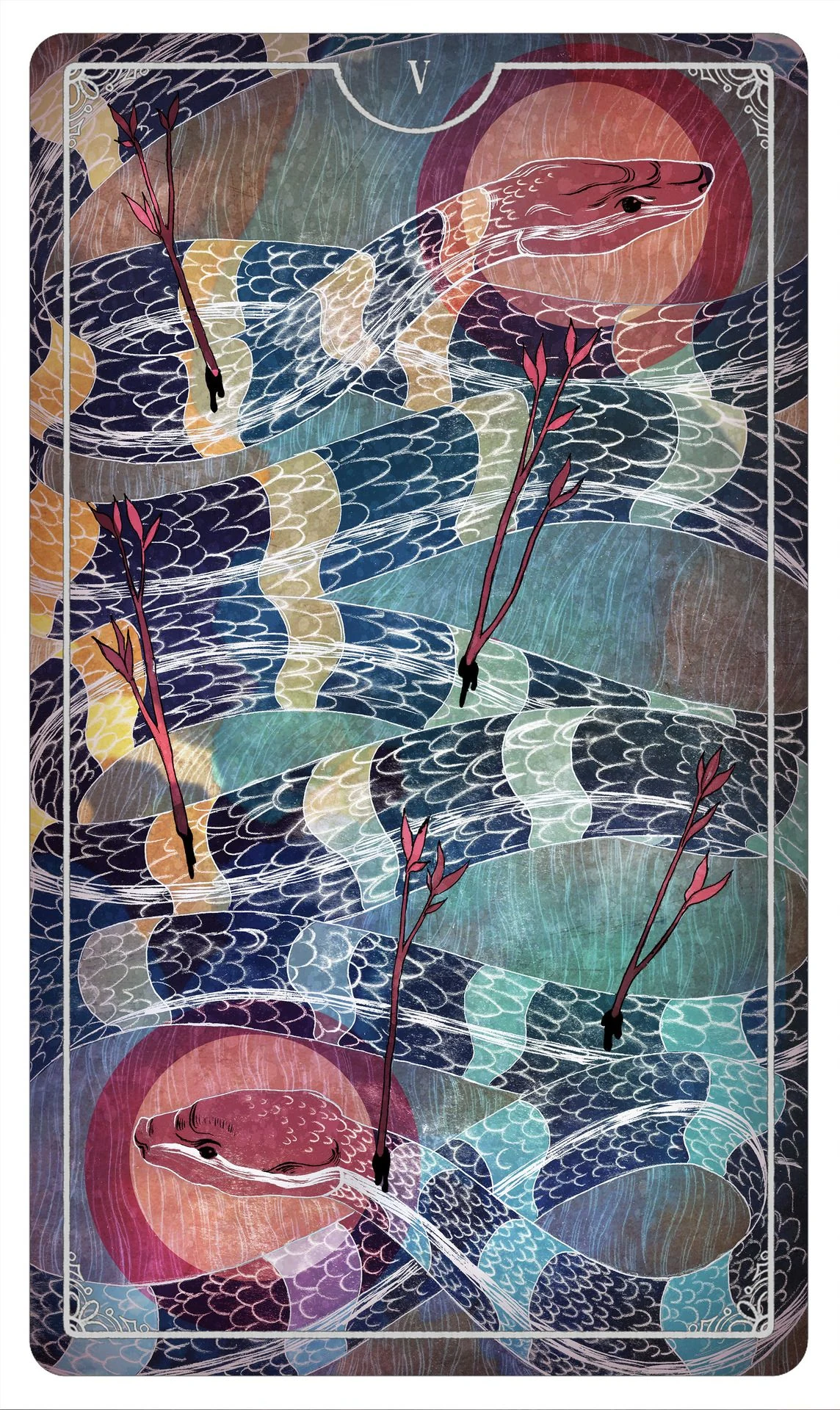
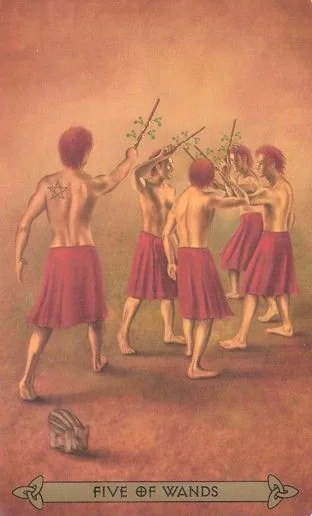
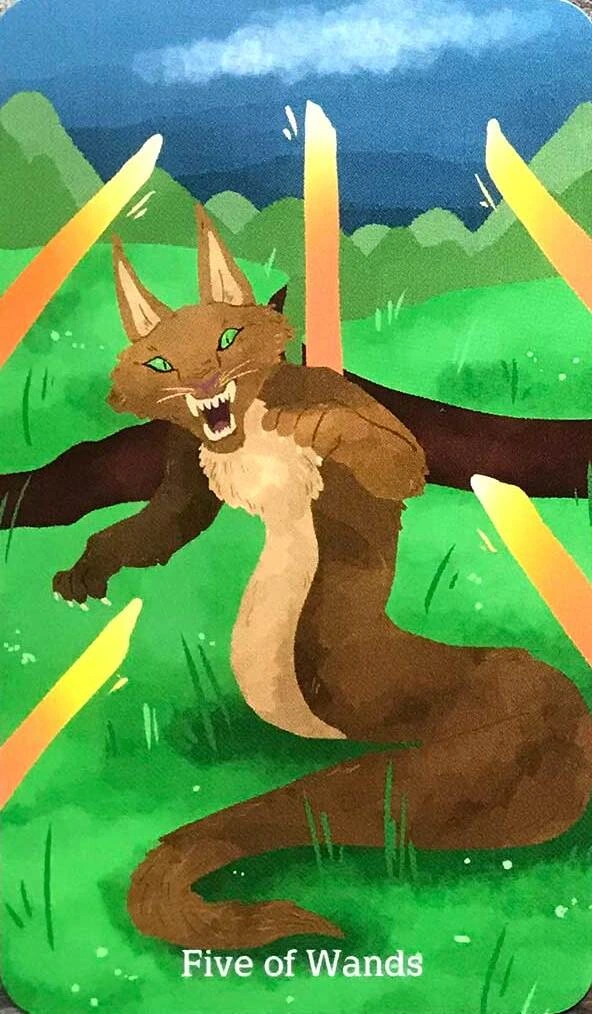
See Five of Wands Card from Other Decks
Discover how other tarot decks interpret this card. Select a deck to explore its full review and gallery.






Five of Wands FAQ
What does the Five of Wands mean upright and reversed?
Upright, it commonly describes competing ideas, tension, or useful practice. Reversed, it can suggest cooperation, avoided disagreement, or inner conflict. The question and observable situation help you decide which reading fits.
Does the Five of Wands mean my partner is seeing someone else?
No. Competition is one interpretation, but the card is not evidence of another relationship or someone's private feelings. Discuss your expectations directly and pay attention to actual behaviour.
Can the Five of Wands be positive?
Yes. Fair competition, lively discussion, and practice can help people improve. It is more constructive when everyone understands the rules, listens, and can disagree without being threatened or belittled.
What should I do after pulling the Five of Wands?
Identify the real point of disagreement and the result you need. Invite a clear conversation, agree responsibilities, or take a pause if the exchange is getting heated. Choose a response that fits the situation rather than arguing by reflex.