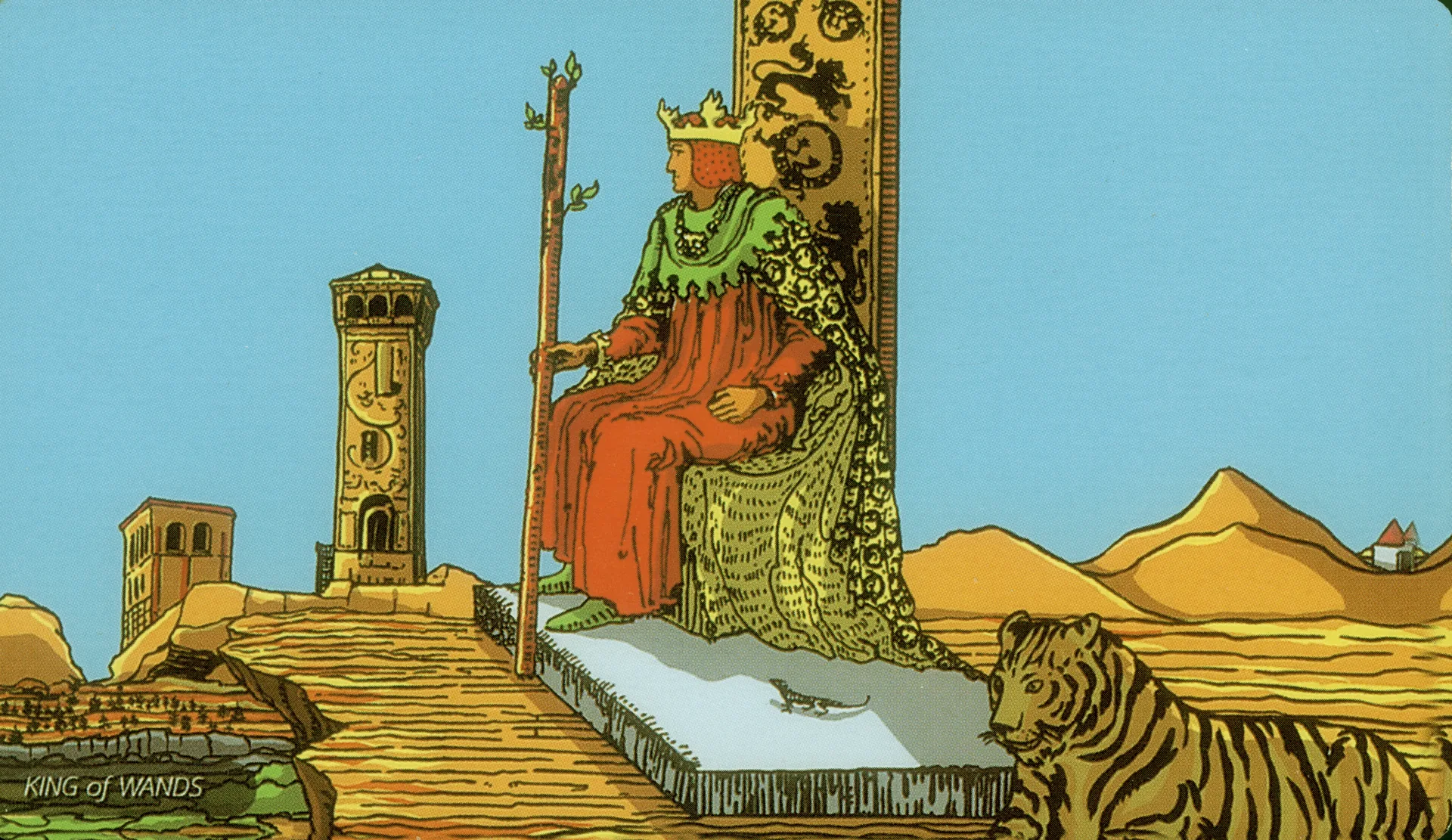
The King of Wands tarot card meaning often centres on creative leadership: knowing what you want to build and helping other people take part. This is the confidence to propose a direction, make a decision, and accept responsibility for the result. It might be relevant to a work project, a shared adventure, or something you have wanted to make for years.
Upright, the card commonly suggests vision, initiative, and generous leadership. Reversed, it may describe controlling behaviour, impatient decisions, or confidence that has become difficult to question. Use these tarot card meanings for self-reflection rather than as a verdict on someone else's character. The question is how you are using your influence in the situation before you.

King of Wands Tarot Card Meaning at a Glance
- Main keywords: vision, leadership, bold action, entrepreneurship
- Upright meaning: responsible action, strong judgment, and mature control of this suit. In the Wands suit, this connects to energy, passion, creativity, confidence, and action
- Reversed meaning: control issues, stubbornness, or leadership without empathy. The reversed meaning asks you to check how you are handling energy, passion, creativity, confidence, and action
- Yes or no: yes if you lead with purpose and courage
- Best question to ask: What is this card trying to help me understand right now?
King of Wands upright meaning: lead with a clear purpose
The upright King of Wands represents the ability to turn a creative vision into a direction other people can understand. A visionary leader makes the idea usable. If you want to organise an exhibition, decide what you can show, find a space, and ask the artists what they need. Their answers may change the plan.
If you have been waiting for permission to begin, this card can encourage decisive action. Draft the proposal, book the rehearsal space, or ask whether your team wants to try a different approach. Be specific enough that someone can answer you. Enthusiasm is easier to share when people know what they are agreeing to.
Confidence and charisma may help you gather support, but leadership skills also include listening and keeping promises. If you are taking a leadership role, agree on responsibilities and deadlines. Give someone else credit when their idea improves yours. You do not need to be the best at every task to help a project succeed.
This King can also describe a person in your life whose initiative you admire. Notice what they actually do: perhaps they make decisions calmly, encourage others, or take responsibility when a plan fails. The court role can apply to anyone; gender, age, appearance, and job title do not decide who gets to embody it.
King of Wands in a tarot reading
In a tarot spread, position changes the emphasis. As advice, the King invites you to take ownership of a plan. As an obstacle, it can ask whether one person's wishes are dominating the discussion. In an outcome position, it offers a possible theme of responsibility and initiative, not a guaranteed promotion or success.
When you see the King of Wands in a reading, connect the interpretation with observable facts. Who has the authority to decide? Who will do the work? Who gets to question the plan? Those details make a more useful reading than assuming that confidence alone will fix the situation.
Love and relationships: enthusiasm with room for two
In a love tarot reading, this King may suggest attraction, warmth, and someone willing to make a clear invitation. If you are dating, propose something you would genuinely enjoy and ask what the other person wants. A confident approach leaves room for a different suggestion or a refusal.
In an established relationship, the card can encourage shared plans and passionate energy. Perhaps you want to organise a trip or support each other's creative work. Check that the plan belongs to both of you. Taking initiative is helpful; deciding what your partner should want is not.
If you are asking about feelings, an ex, or reconciliation, a card cannot reveal private thoughts or promise contact. Look at what has been communicated, whether contact is welcome, and whether behaviour matches stated intentions. Attraction does not establish commitment, and a vivid reading cannot replace a conversation.
Reversed in love, the King may prompt a look at impatience or unequal decision-making. Describe the specific behaviour: plans repeatedly changed without asking, criticism dismissed, or pressure to agree. You can ask for a clearer agreement without diagnosing someone from a card. If you feel unsafe, seek practical support rather than waiting for a reading to change their behaviour.
Career, money, and school: make the plan usable
In a career question, the King often points toward taking responsibility for direction. You might be ready to present a proposal, coordinate a team, or ask for more autonomy. If you want a leadership position, show how you would handle the work, not only why you deserve the title.
An entrepreneur can use this card to question whether a business idea has become a workable plan. Who is the customer? What will the first version cost? How will you know whether it helps anyone? Share an early sample with someone who can give honest feedback before committing your savings.
For money, confidence needs a budget. A persuasive pitch is not evidence that an investment is safe. Check fees, risks, and contractual obligations, and seek qualified advice for consequential decisions. The card cannot guarantee profit, inheritance, or financial recovery.
In school or a group project, leadership may mean organising the first meeting and making sure each person understands their part. Ask quieter teammates for input without putting them on the spot. When a deadline slips, agree on a revised plan instead of turning frustration into blame.
King of Wands reversed: when direction becomes control
The reversed King of Wands can describe an ambitious plan that leaves too little room for anyone else's judgment. You might be rushing a decision, rejecting feedback, or taking disagreement personally. Pause long enough to hear the objection before deciding whether it is useful.
The King of Wands reversed suggests checking how you respond when a plan does not work. An impulsive promise may have created a deadline nobody can meet. Own the mistake, revise the commitment, and tell the people affected. Accountability is more useful than trying to preserve an image of certainty.
A description such as natural born leader is also an interpretive shorthand; leadership can be learned. Some readings use words such as egotistical or domineering for this reversed card. Those are interpretive shortcuts, not personality diagnoses. Identify the action that needs to change: interrupting, withholding information, demanding agreement, or blaming someone for a decision they did not make.
Reversal can also describe reluctance to use your authority. You may have a good idea but fear the responsibility that comes with leading it. Start with a decision you can explain and review. Ask for support where your knowledge is limited, rather than pretending you must know everything first.
King of Wands yes or no meaning
Many readers lean toward yes for an upright King when the question concerns initiative or a plan you can responsibly lead. Reversed, they may read not yet or revise the approach. These conventions are not reliable predictions and cannot establish what another person will choose.
For a question such as whether to lead a community event, check your available time, budget, and support. If those fit, a small first event may be worth trying. A yes-or-no reading is most useful when it helps you examine a decision you actually control.
King of Wands advice: be clear, then listen
Name the result you want and explain why it matters. Invite the people involved to say what they need and what might go wrong. In practical terms, leadership could mean writing a one-page plan, setting a realistic deadline, and asking one experienced person to challenge your assumptions.
You can enjoy having a bold idea without treating every suggestion as a threat to it. Let someone else's contribution make the project more interesting. When the first excitement fades, notice which part still makes you want to return. You can revise a project without treating every change as a failure.
Wellbeing and spirituality
For wellbeing, this card can prompt you to take responsibility for a manageable routine rather than chase an extreme overhaul. Choose activity suited to your current abilities. Tarot cannot diagnose illness, confirm pregnancy, or promise a cure; ask a qualified clinician about symptoms or treatment.
In spirituality, consider how you use influence in a group or practice. A confident teacher should allow questions and personal boundaries. Tarot and oracle cards can support reflection, but neither makes someone an unquestionable authority over your life.
One archetype, four perspectives
King of Wands Across Four Tarot Decks
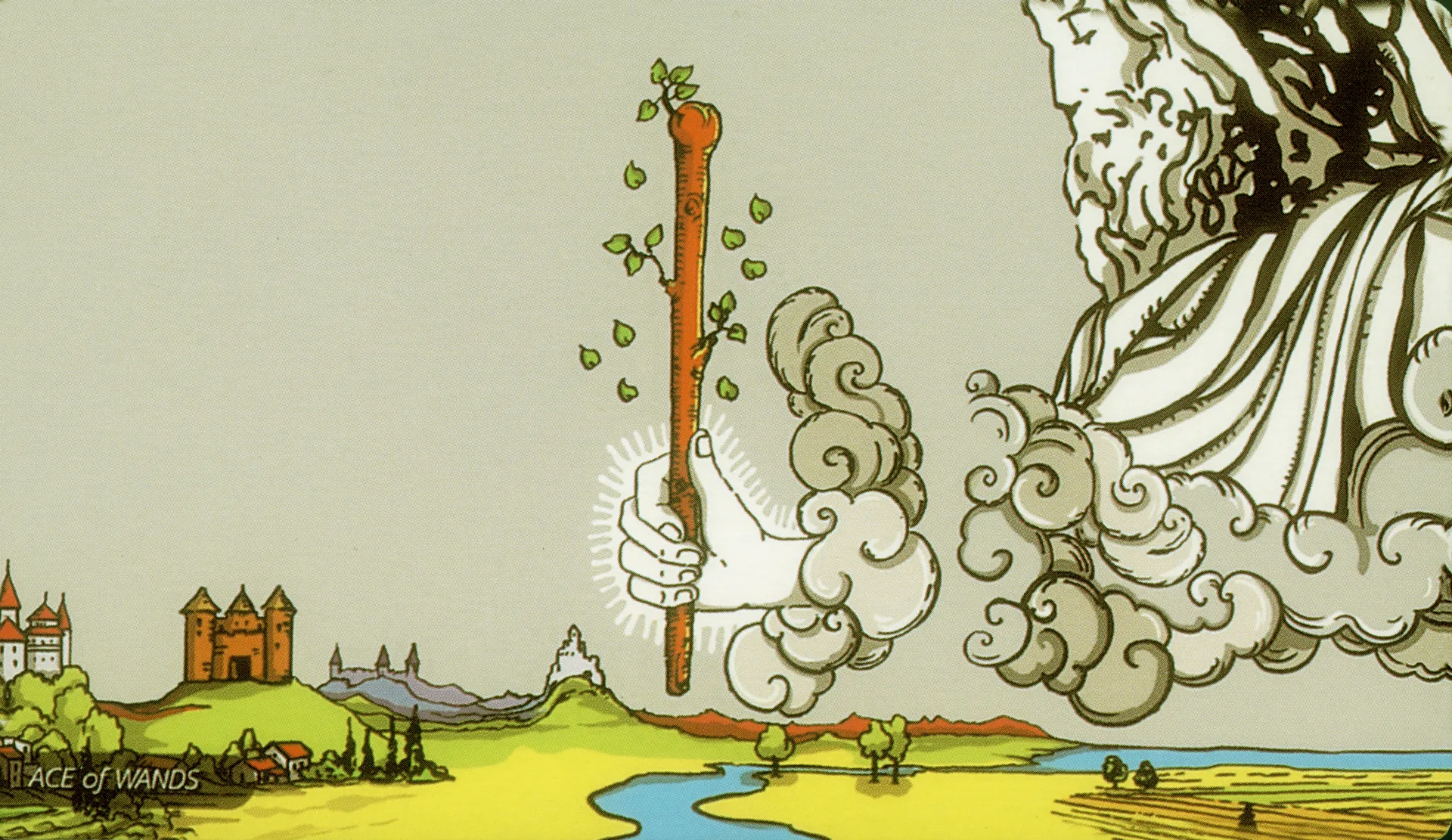
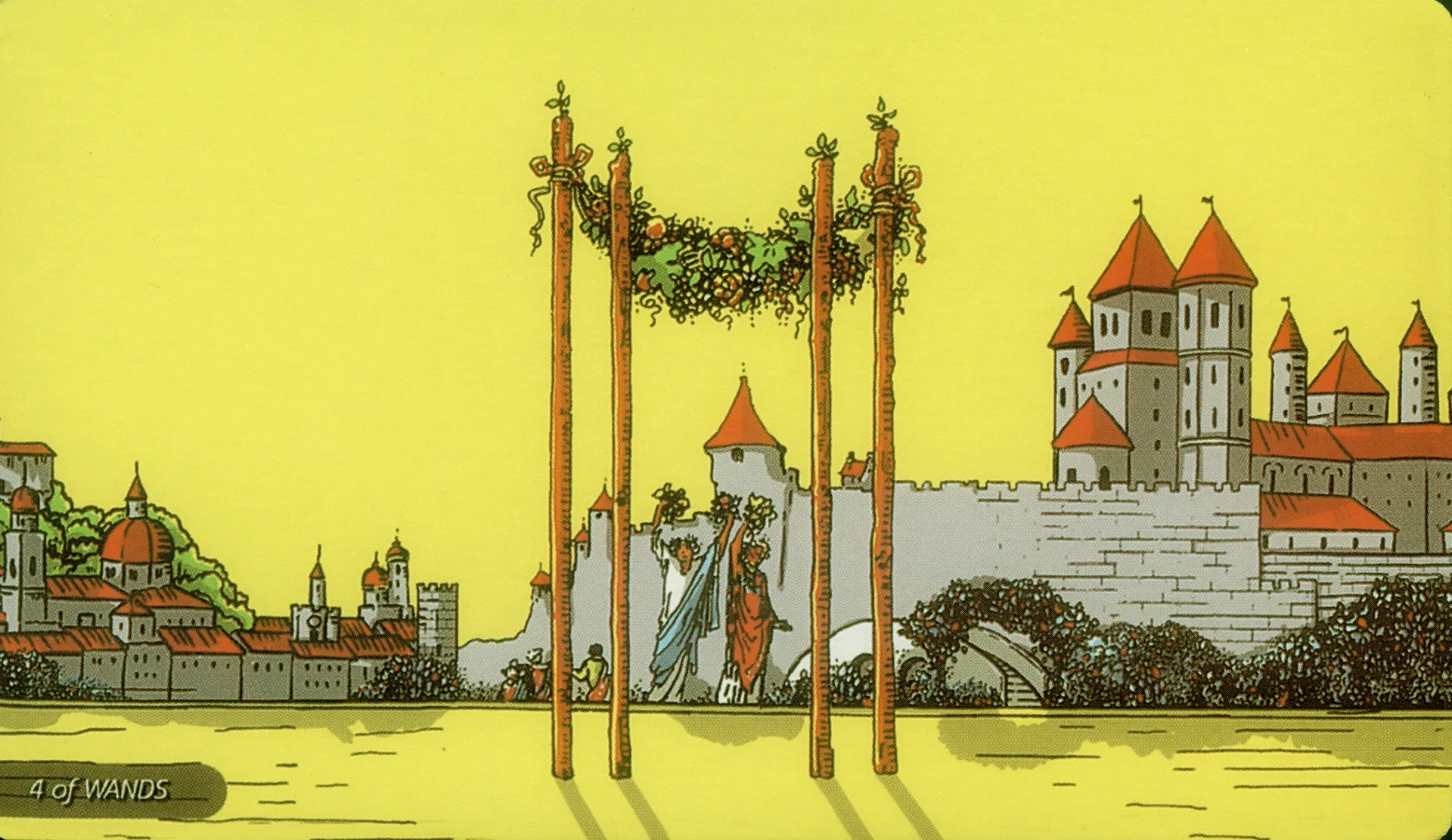
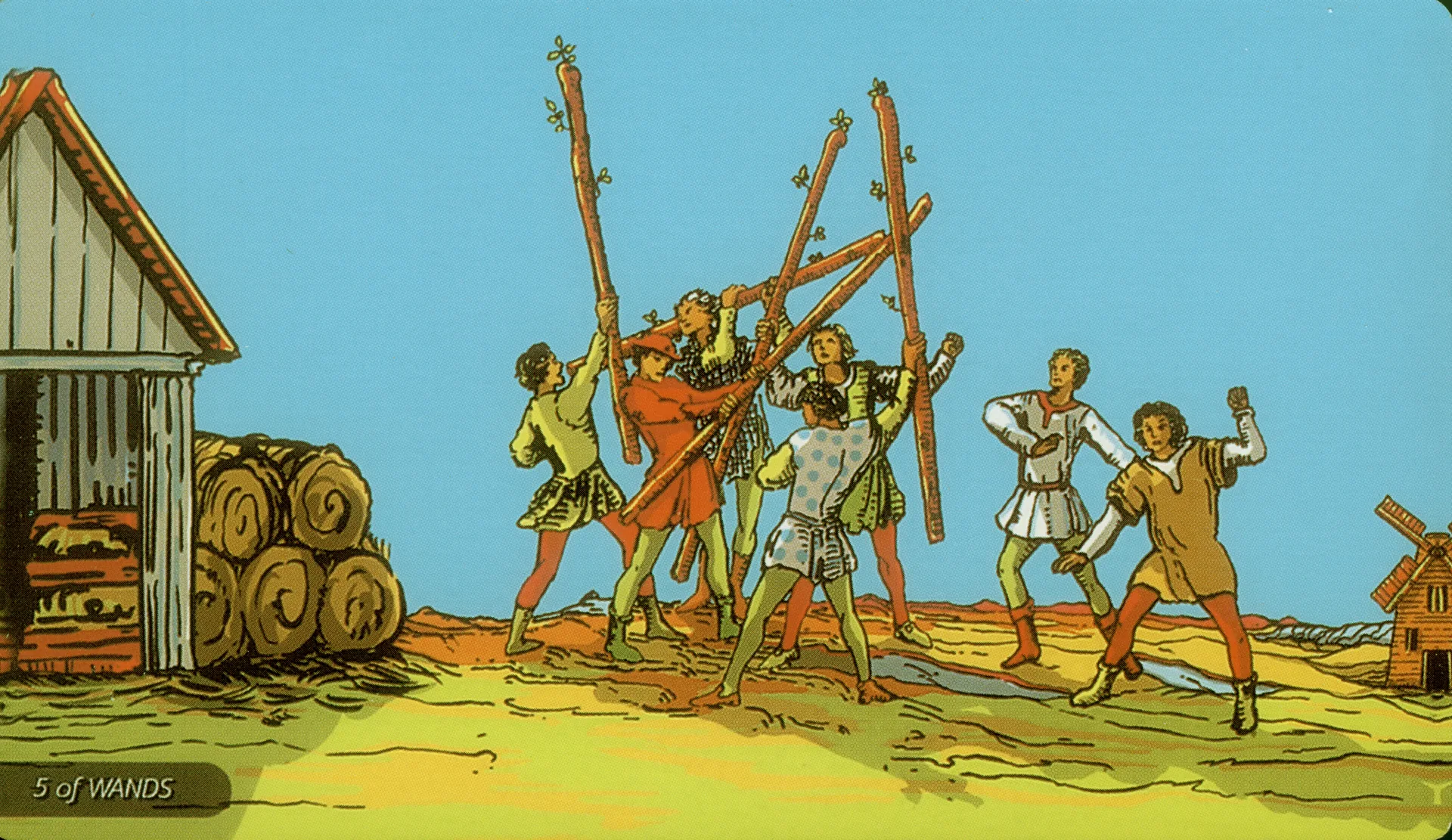
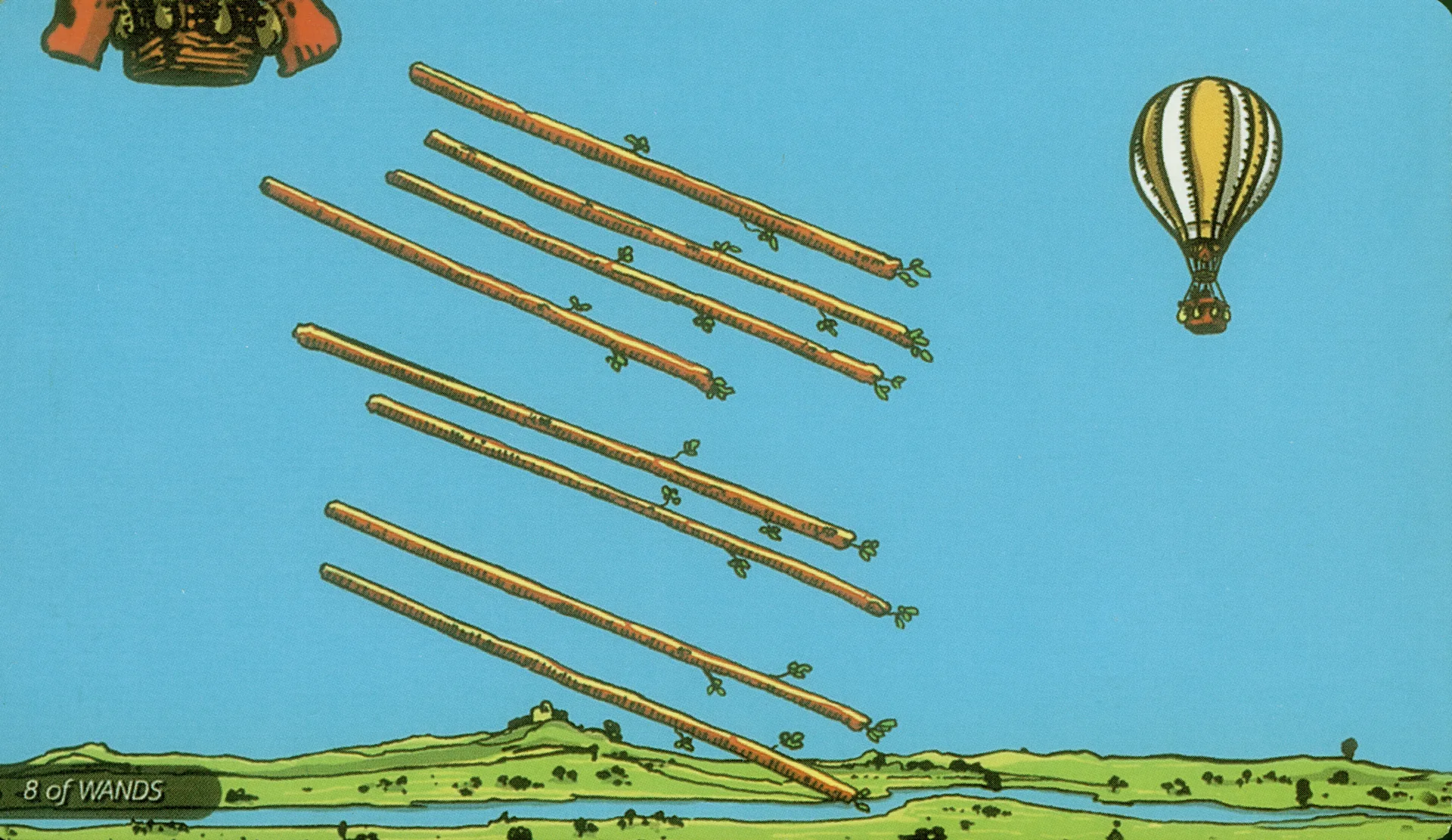
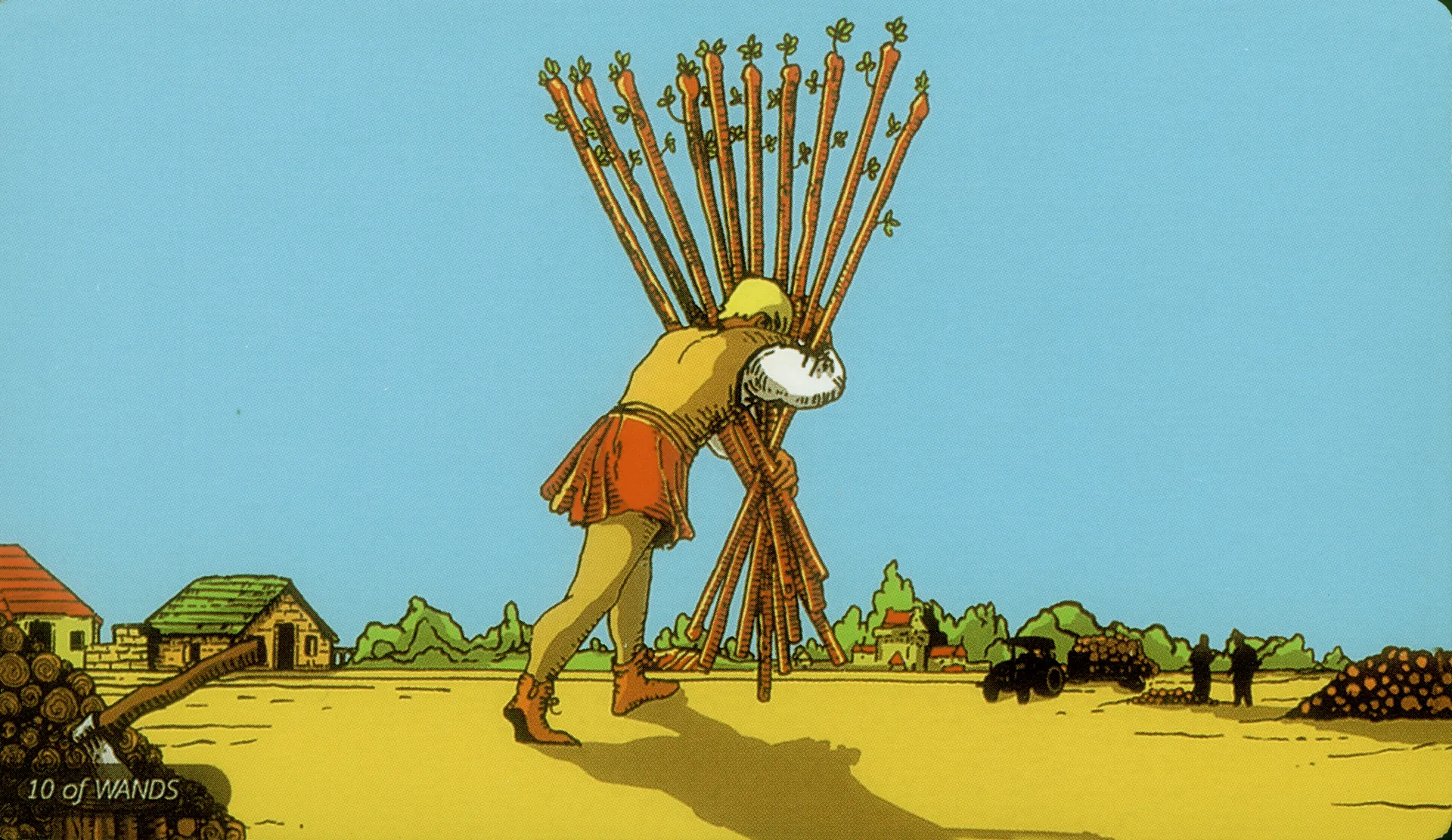
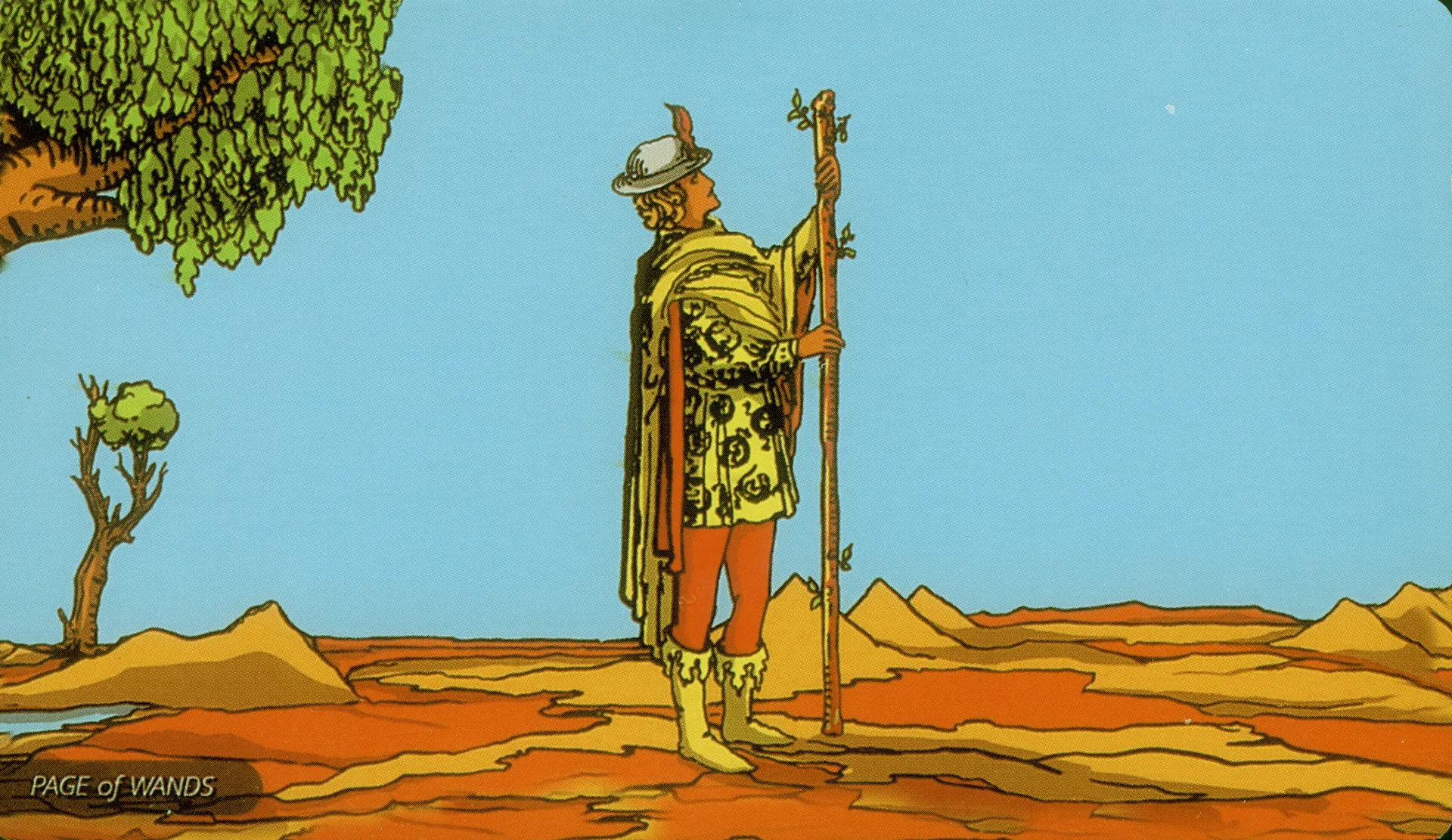
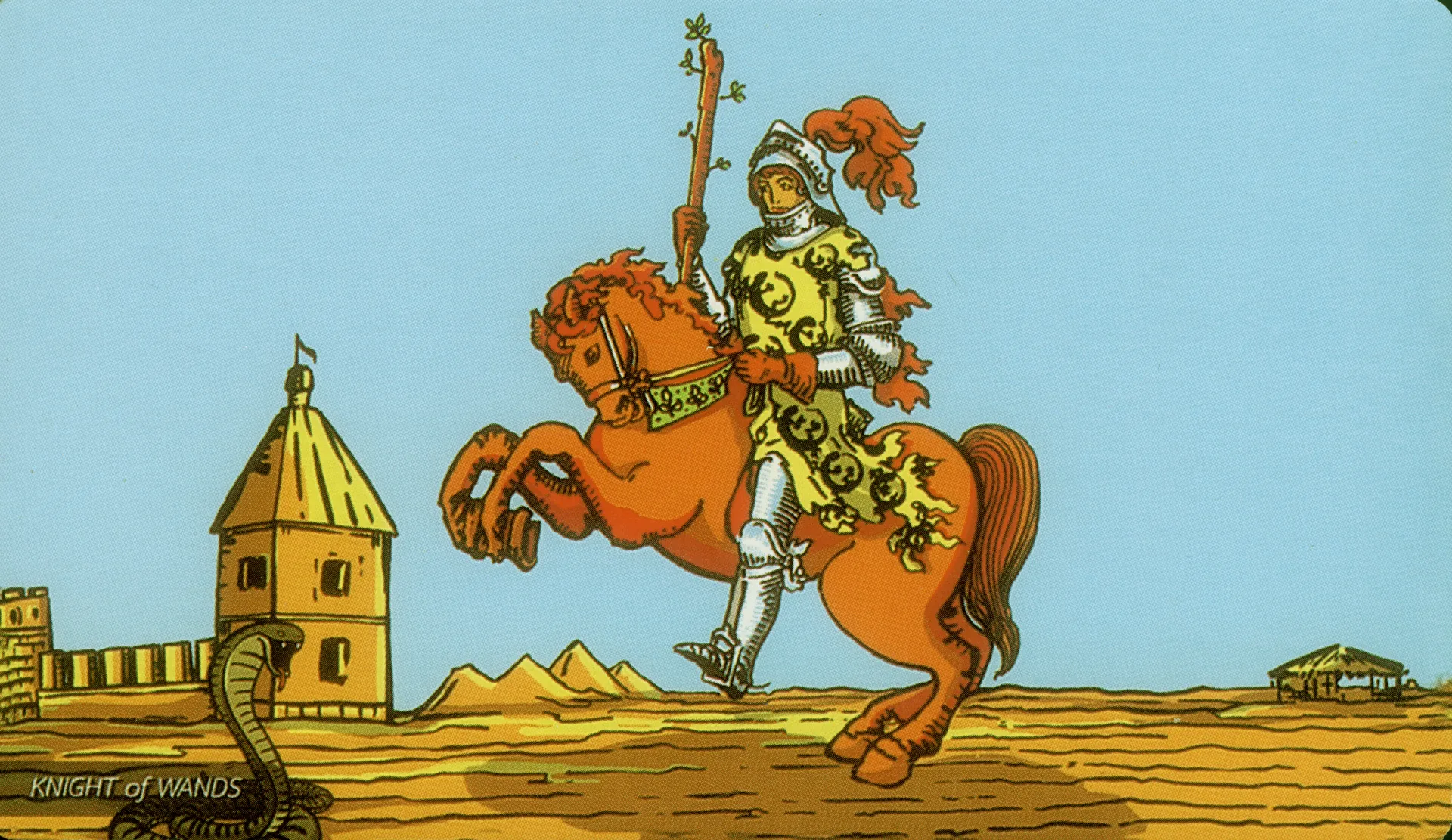
Compare the familiar Rider-Waite-Smith card with the moments before, behind and after the classic scene in three Lo Scarabeo decks.
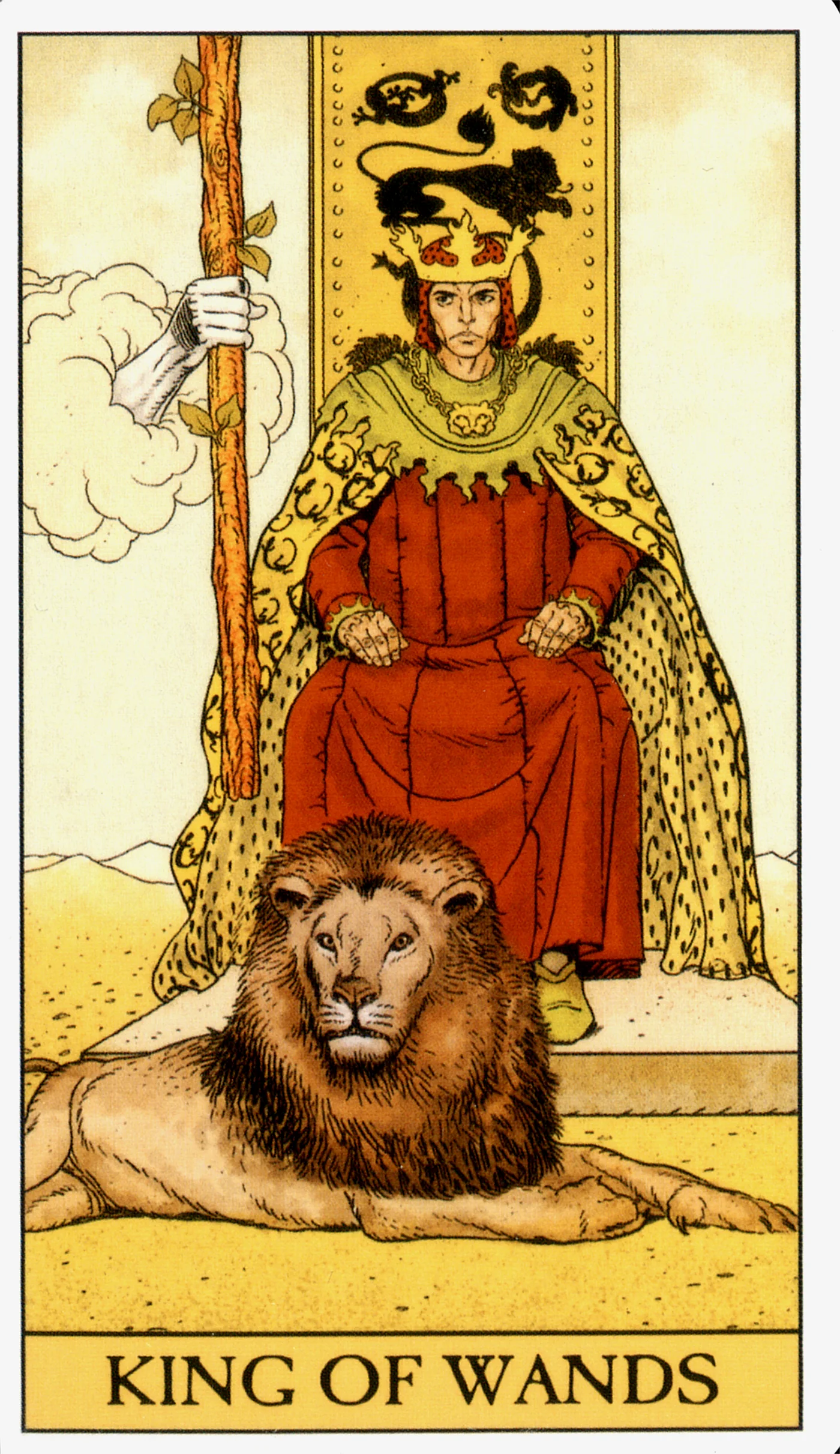
What apparently happens just before
What actually happened
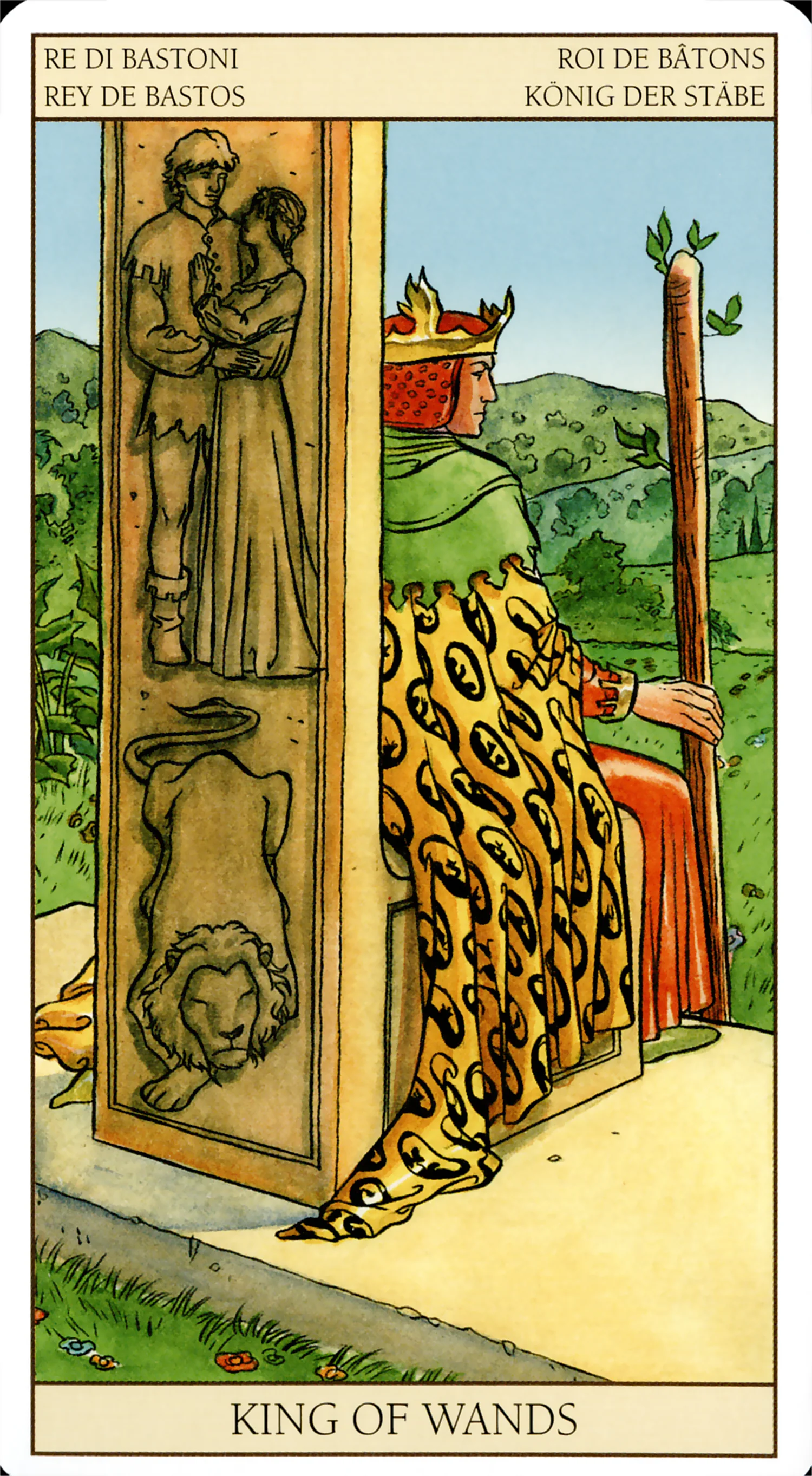
What happened on the opposite side
What apparently happened afterwards
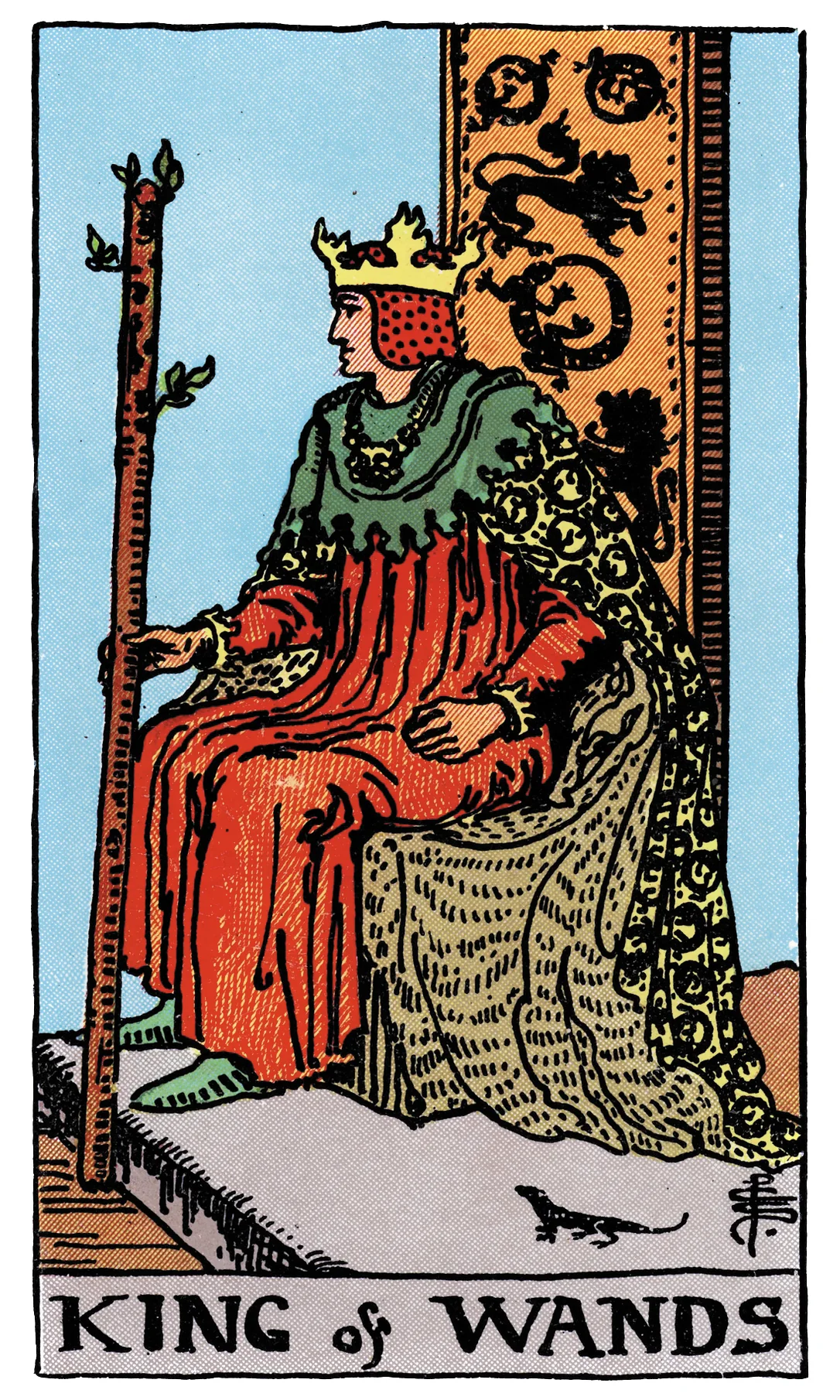
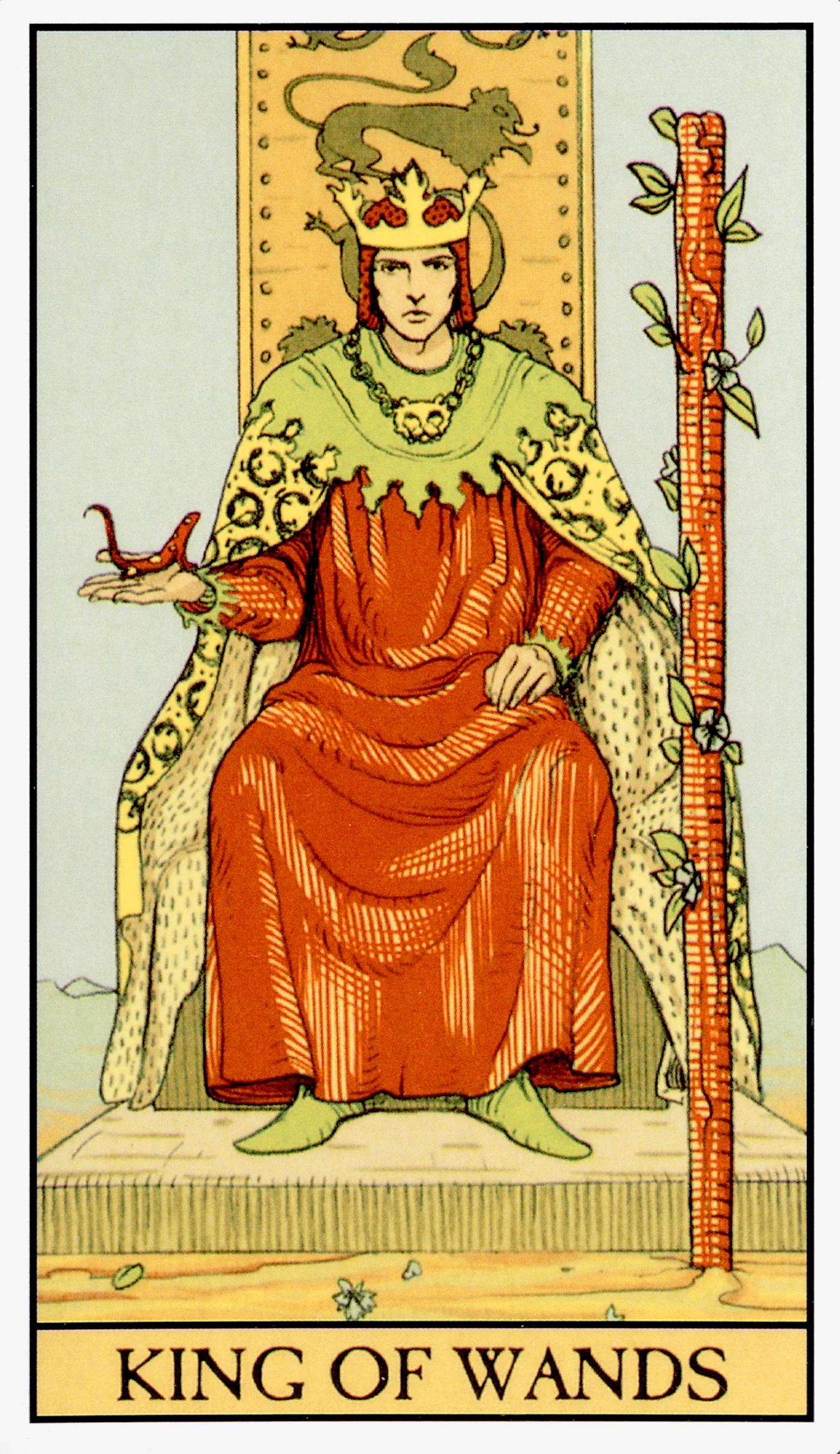
King of Wands card description: the Rider-Waite-Smith portrait
The verified portrait is labelled KING of WANDS. A crowned figure sits in profile on a tall throne, holding a leafy staff upright. The King wears a red robe beneath a green shoulder covering and patterned outer garment. Lion and curled salamander motifs decorate the throne, and a small dark salamander appears near its foot.
The blossoming wand is commonly read as living potential directed toward a purpose. The lions can suggest courage and authority, while the salamander belongs to Western esoteric associations with the element of fire. Readers sometimes interpret the curled motifs through infinity or enduring fire. These are symbolic interpretations, not evidence that the image produces a force or predicts events.
This card is often described through fire and strength, but the seated posture makes a useful contrast with the Knight's moving horse. The King can suggest directing sustained effort rather than chasing every fresh opportunity. That distinction is a reading convention grounded in the different portraits, not a rule that every deck follows.
What A. E. Waite wrote about this King
In The Pictorial Key to the Tarot, A. E. Waite describes a flowering wand and the lion on the throne. His divinatory list includes honesty and conscientiousness, while the reversed description is "Good, but severe; austere, yet tolerant." Modern interpretations of creative leadership and controlling behaviour are not quotations from that reversed list.
Waite also included period-specific appearance and marital descriptions, and a prediction about unexpected heritage. Those historical claims do not establish who this card must represent or what money you will receive. A present-day reading can use the archetype without carrying forward those assumptions.
A court card in the Minor Arcana: suit and traditions
The King belongs to the Wands suit, one of the four suits in a standard tarot deck of 78 cards. It is a court rank, not a numbered Major Arcanum. The Major Arcana and the numbered Wands cards serve different reading roles; no invented Roman numeral belongs to this King. The King is one of the unnumbered cards in the deck, so rank and suit are the useful identifiers.
Among the court cards, the Page is often read as exploration, the Knight as movement, the Queen as confident cultivation, and the King as direction and responsibility. These are flexible archetypes, not a ladder of human worth. The Queen of Wands can offer a useful comparison when you want to distinguish encouraging growth from setting a shared direction.
Many modern systems associate the suit of Wands with fire energy and the zodiac signs Aries, Leo, and Sagittarius. Individual court correspondences vary between decks and schools. Kings are sometimes described as masculine or as Fire of their suit; those symbolic conventions do not restrict the role to men. Follow your deck's own guide if it uses a different system.
Reading the King beside other cards
Beside the Three of Pentacles, the King may invite you to turn your vision into collaboration: let skilled people shape how the work gets done. Beside the Four of Swords, consider whether a pause would improve your judgment. These are examples of reading cards together, not fixed outcomes.
Beside the Queen of Wands, a reader might explore how encouragement and direction work together. The pair need not represent a couple or two people of particular genders. Ask whether the situation needs a stronger sense of purpose, more space for contribution, or both.
Journal prompts and a tarot cheat sheet
If leadership is your chosen keyword, ask where you are already taking responsibility and where you are merely taking control. What feedback have you avoided? What part of your creative vision would you still want to pursue without applause? Write one concrete action that fits the answer.
You can keep a simple workbook entry: the question, the card position, your interpretation, and what you later observed. When reading tarot, this helps you notice assumptions rather than recast every event as an omen. A tarot cheat sheet is a starting point, not proof that a reading is correct.
If you use free tarot meanings or a free tarot app, compare the advice with your actual situation and the guide for your deck. An oracle may use different images and meanings from tarot. Choose interpretations that help you think clearly, and leave claims about certainty aside.
One card, many perspectives
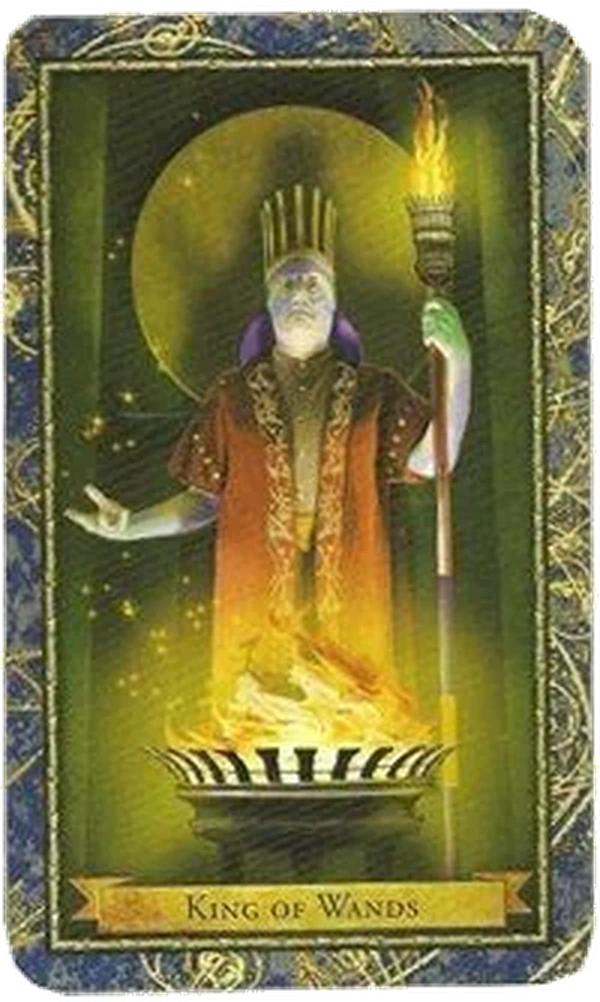
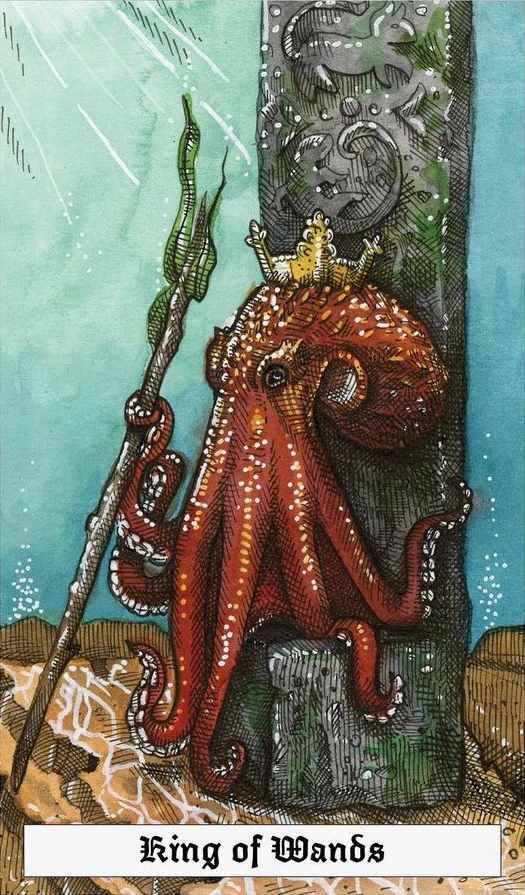
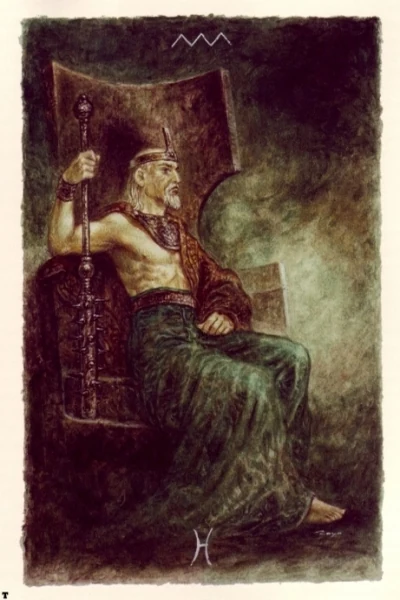
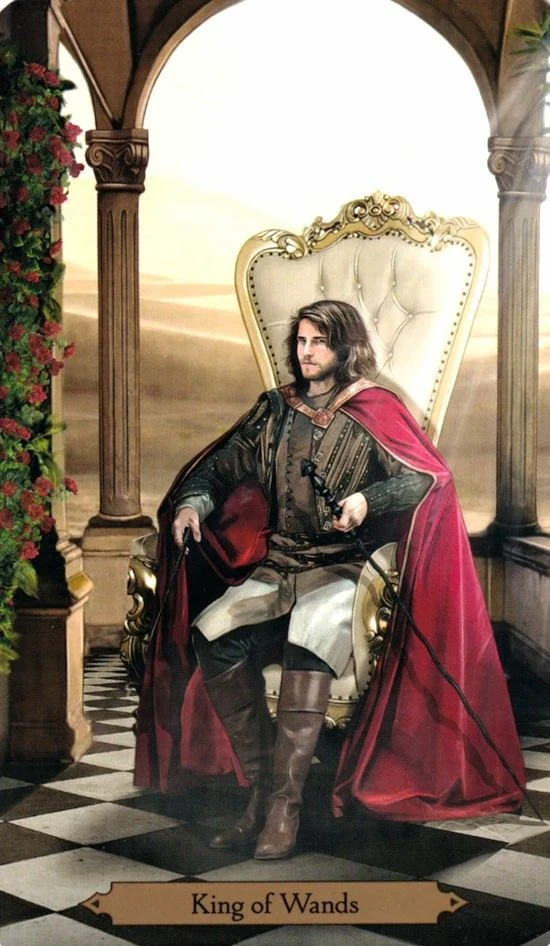
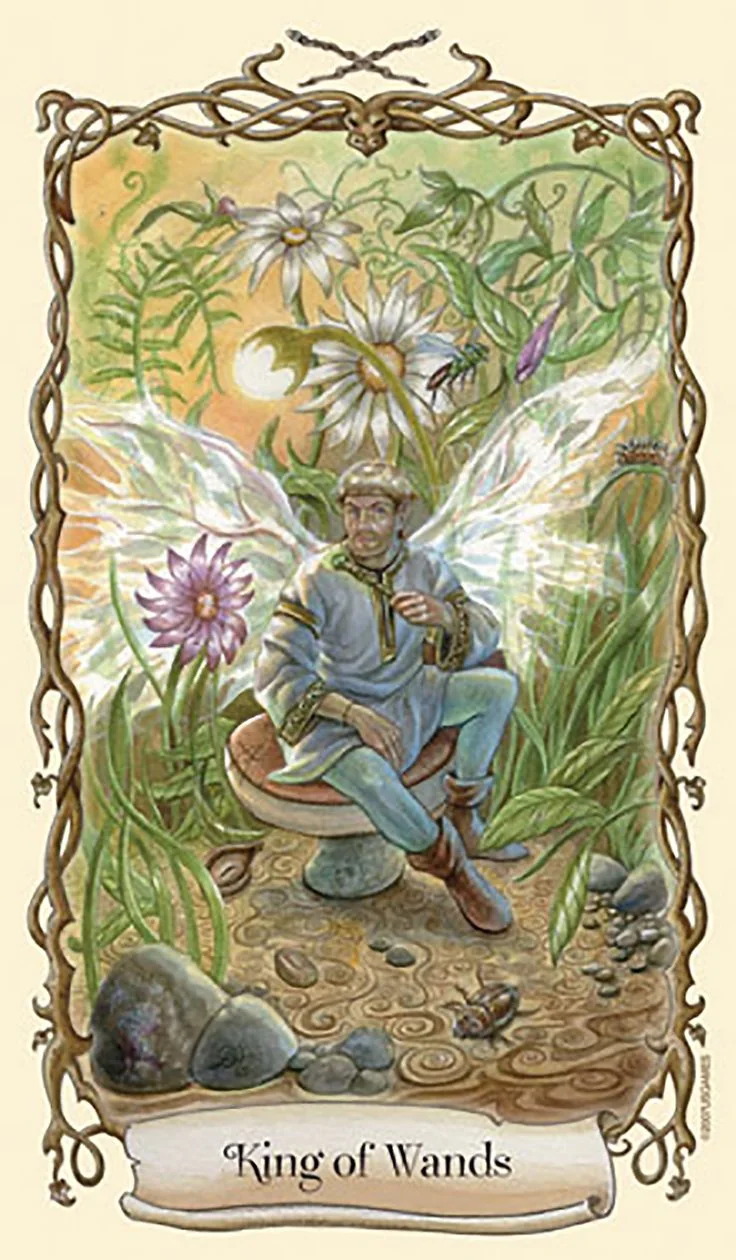
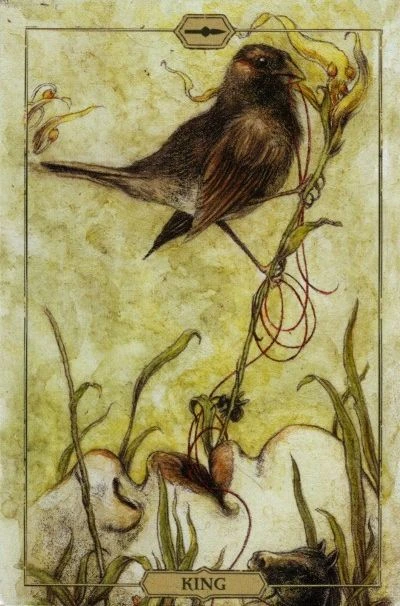
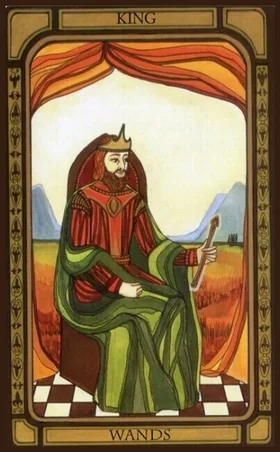
See King of Wands Card from Other Decks
Discover how other tarot decks interpret this card. Select a deck to explore its full review and gallery.







King of Wands FAQ
What does the King of Wands mean upright and reversed?
Upright, it commonly suggests creative leadership, confidence, and taking responsibility for a plan. Reversed, it can describe controlling behaviour, impatience, or reluctance to lead. Connect the interpretation with your question and observable actions.
Does the King of Wands reveal someone's feelings?
No. The card can prompt reflection on attraction, initiative, and shared decision-making, but it cannot reveal private thoughts or guarantee commitment. Use communication and behaviour to assess a relationship.
Does the King of Wands have to represent a man?
No. The illustration uses a crowned male figure, but the court archetype can apply to any gender or age. It may describe your approach, a situation, or a person rather than a fixed personality type.
What should I do after pulling the King of Wands?
Choose a clear, realistic next step and take responsibility for it. Ask for useful feedback and agree on roles if others are involved. If the reading feels reversed, check whether impatience or control is making the plan harder to share.