The Seven of Pentacles tarot card meaning is about patience, progress, and reviewing what your work is producing. Upright, it often suggests giving something worthwhile time to grow. Reversed, it can highlight frustration, wasted effort, or a plan that needs changing. Waiting is useful only when there is a reason to keep waiting.
Think of learning a language. After several weeks, you may still struggle to hold a conversation, yet understand far more than you did at the start. That is different from repeating an exercise that never helps. This card asks you to notice the difference between slow growth and standing still.
The card gives you a moment to review the work, rather than promising that hard work always pays off. Look at what has changed, what the work costs you, and what you would like to try next.

7 of Pentacles Tarot Card Meaning at a Glance
- Main keywords: patience, waiting, long-term effort, review
- Upright meaning: you need patience, honesty, and a smart plan instead of panic. In the Pentacles suit, this connects to money, school, work, health routines, home, and real-world results
- Reversed meaning: doubt, shortcuts, or finally seeing what needs to change. The reversed meaning asks you to check how you are handling money, school, work, health routines, home, and real-world results
- Yes or no: yes, but it will take time
- Best question to ask: What is this card trying to help me understand right now?
Seven of Pentacles upright meaning: notice what is growing
The upright card commonly concerns sustained effort and the rewards that develop over time. A garden needs regular care before there is anything to harvest. Learning, saving, and building trust also have stages that are easy to miss if you only count the finished result.
Patience involves care: water the plants, check the conditions, and adjust what is not working. In everyday life, that might mean reviewing a study plan or asking whether a project has the support it needs. You can keep a steady pace without ignoring useful feedback.
If you have worked hard, allow yourself to admire a small improvement. Perhaps the task that used to take an hour now takes twenty minutes. That does not settle every question about the work ahead, but it gives you something concrete to assess.
Taking a break may help before you decide what to do next. Rest may help you distinguish tiredness from a genuine wish to change direction. A difficult afternoon is not necessarily failure; repeated evidence that a plan is harming you deserves more attention.

Seven of Pentacles in a tarot reading
In tarot spreads, position matters. In the past, this card may invite you to acknowledge the time you have already invested. In the present, it often asks for a review. In the future, read it as a possible need for patience or reassessment, rather than a guaranteed reward or a fixed date.
Use the surrounding tarot cards to refine the question. Beside the Eight of Pentacles, you might focus on improving a skill. Beside the Six of Pentacles, consider whether the support and resources available are fair. An Ace of Swords can invite a clear decision about what to continue. These are reading examples, not universal combinations that predict events.
Love and relationships: is the connection developing?
In a love reading, the Seven of Pentacles often concerns the time and care you put into a relationship. For an established couple, it may be a useful moment to discuss what is getting better and what keeps causing tension. Notice actions as well as intentions: are you both making room for the changes you agreed on?
If you are dating, a slower pace can give you a chance to discover whether you enjoy each other's company. You do not have to push for an instant answer. Equally, patience does not require accepting endless uncertainty when you need a clearer agreement.
As a feelings card, it can prompt reflection on investment, hope, or hesitation. It cannot establish what someone privately feels or whether an ex will get back in touch. If you want clarity, ask a respectful question and allow the other person to answer for themselves.
Reversed in relationships, it may describe disappointment when one person keeps doing the work while the other makes little effort. Explain what you need and watch what actually changes. Time already spent together is not, by itself, a reason to stay in an unsafe or persistently unhappy situation.
Career, money, and school: review the return
At work, this Pentacles card can indicate a project that needs time before results become visible. Agree on milestones so that "be patient" has a practical meaning. A new service might need a trial period, but you should know what evidence would justify continuing it.
For study, compare your method with the goal. If rereading notes feels familiar but you cannot answer practice questions, change the method before adding more hours. A setback can be information about how you learn rather than a verdict on your ability.
With money, consider the return on your investment in terms of actual costs, fees, risk, and affordability. The card cannot predict profit, promise abundance, or tell you when a market will rise. Check reliable financial information and seek qualified advice for consequential decisions.
Investing your time also has a cost. If an unpaid project is taking every evening, ask what you reasonably expect to gain and what you are giving up. Enjoyment or useful experience may satisfy you more than money, but that should be your choice rather than an unspoken obligation.
Seven of Pentacles reversed meaning: change an unhelpful plan
Seven of Pentacles reversed can suggest impatience, poor results, or doubts about whether continued work is worthwhile. Start by separating a normal waiting period from a pattern of wasted time. A seed does not become a plant overnight; a broken process does not improve simply because you wait longer.
You may feel impatient because the reward is smaller than you expected. Check whether the expectations were realistic and whether the conditions have changed. A project can make progress and still fail to meet the needs you now have.
The reversal can signify a need to stop pouring resources into something because you have already spent so much on it. You cannot recover that past cost by wishing. Ask whether you would choose the same next step if you were starting today.
Sometimes the problem is a shortcut. Skipping preparation may create more toil later, especially if work has to be done twice. If you have rushed, identify the missing step and deal with it directly. More hard labor is not always the answer; a better method may be.
Reversed advice can also be gentler: reduce the workload, ask for feedback, or set a review date. You need not abandon everything at the first disappointment. Decide what evidence would persuade you to continue, change course, or finish.
Seven of Pentacles yes or no meaning
Many readers lean toward a cautious yes for a question about patient, well-supported work. The answer often carries a condition: allow time and keep reviewing the situation. Reversed, it may lean toward not yet, or no to continuing an ineffective approach. Neither position guarantees success, consent, or a financial result.
Ask what a workable next step would look like. If the question concerns another person, their answer matters more than a card's suggested yes or no.
Advice: take stock before doing more
Choose one thing you are trying to develop and compare it with an earlier point. What has improved? What has not? Take the time to write down a concrete observation instead of judging the whole project by today's mood.
Then choose a manageable adjustment. You might practise a different technique, reduce the scope, or ask for a clearer deadline. Leave yourself some time to reflect before committing more money or effort.
There is room for enjoyment, too. You can appreciate the first fruit on a plant without turning gardening into a test of productivity. A hobby does not need to become a business to be worthwhile.
For health and wellbeing, use this guidance to review routines or prepare questions for a clinician. Tarot is a reflective tool, not a diagnosis, a pregnancy test, or a cure. Symptoms and treatment decisions need qualified care.
One archetype, four perspectives
Seven of Pentacles Across Four Tarot Decks
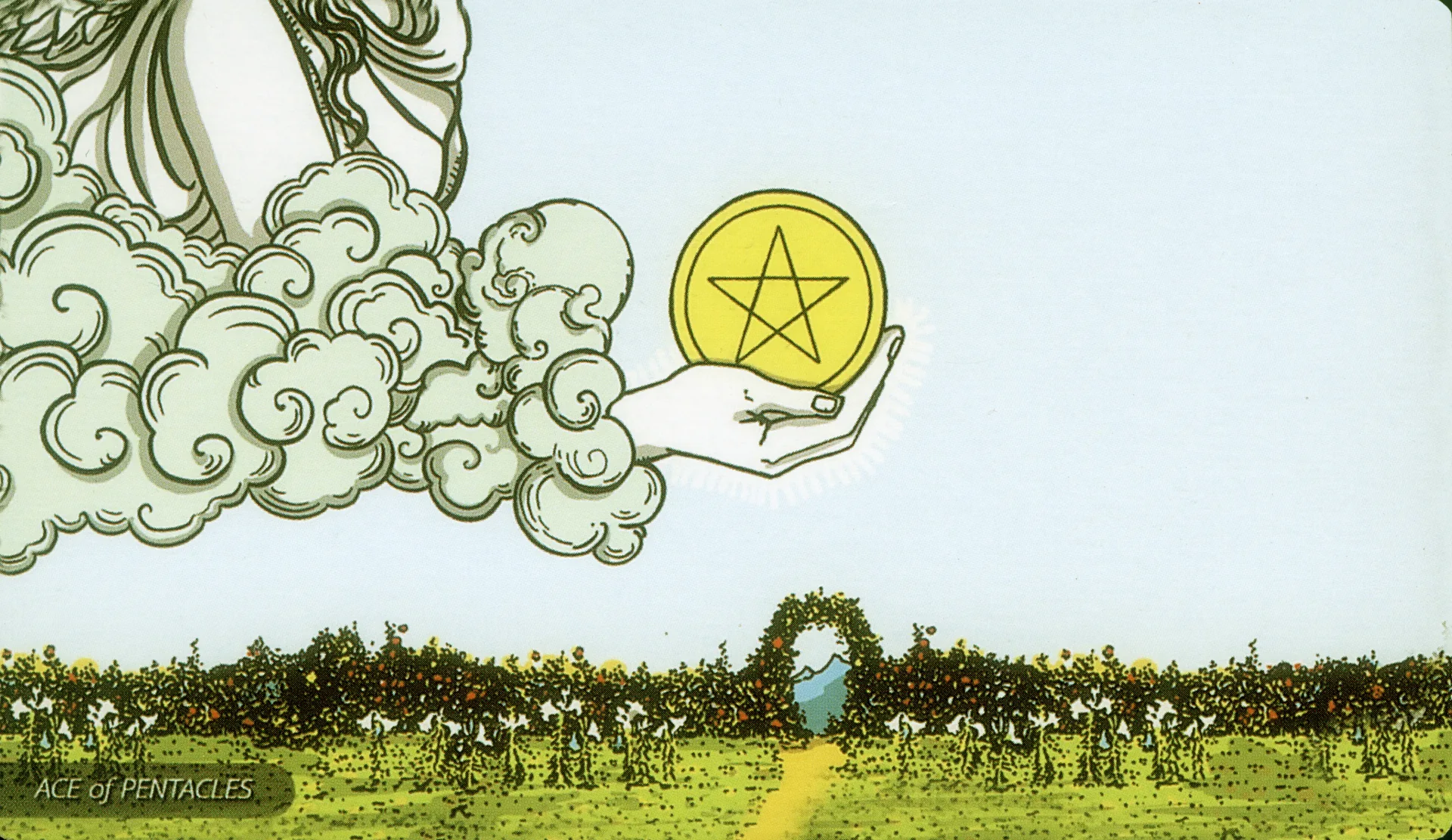
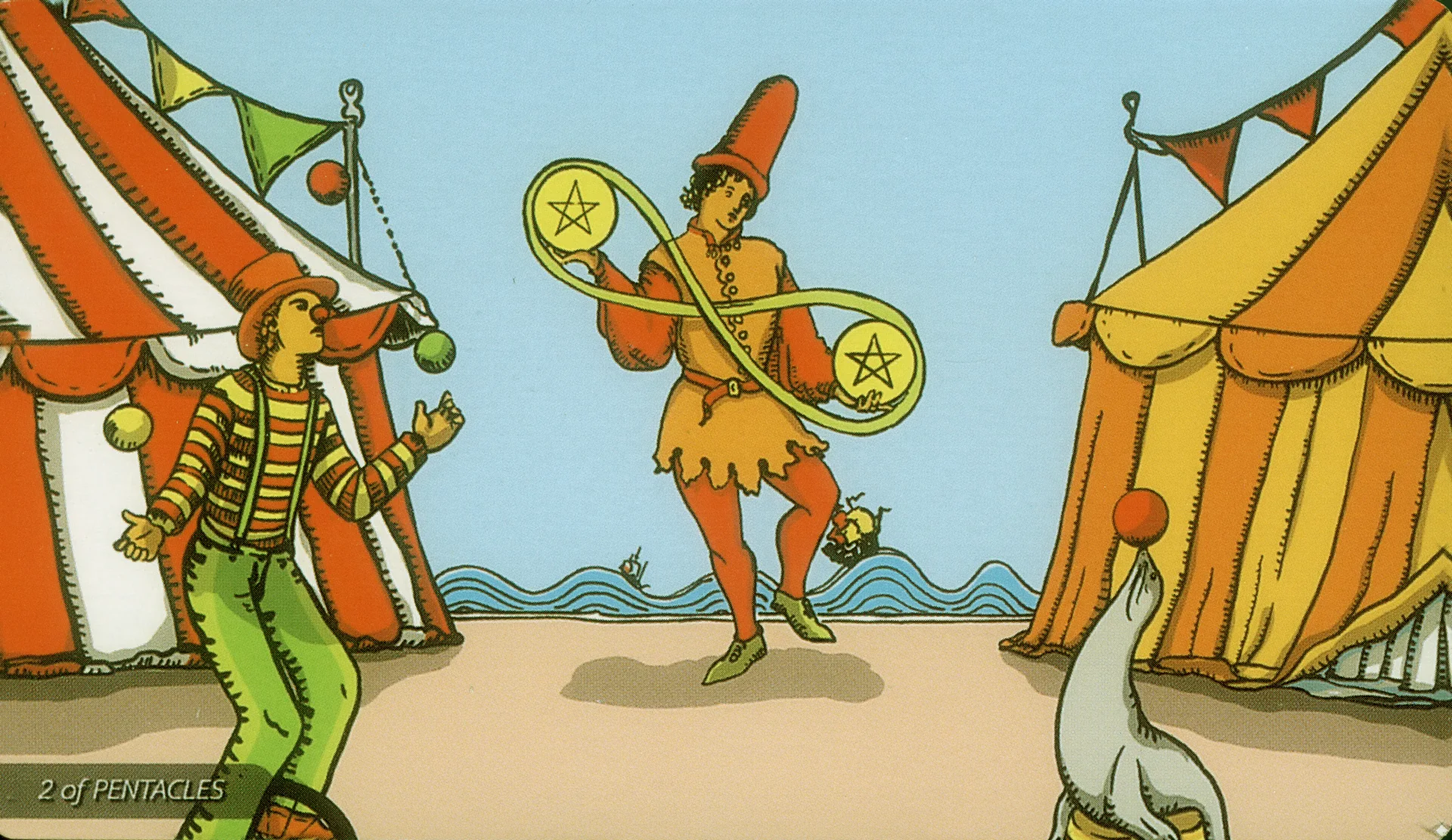
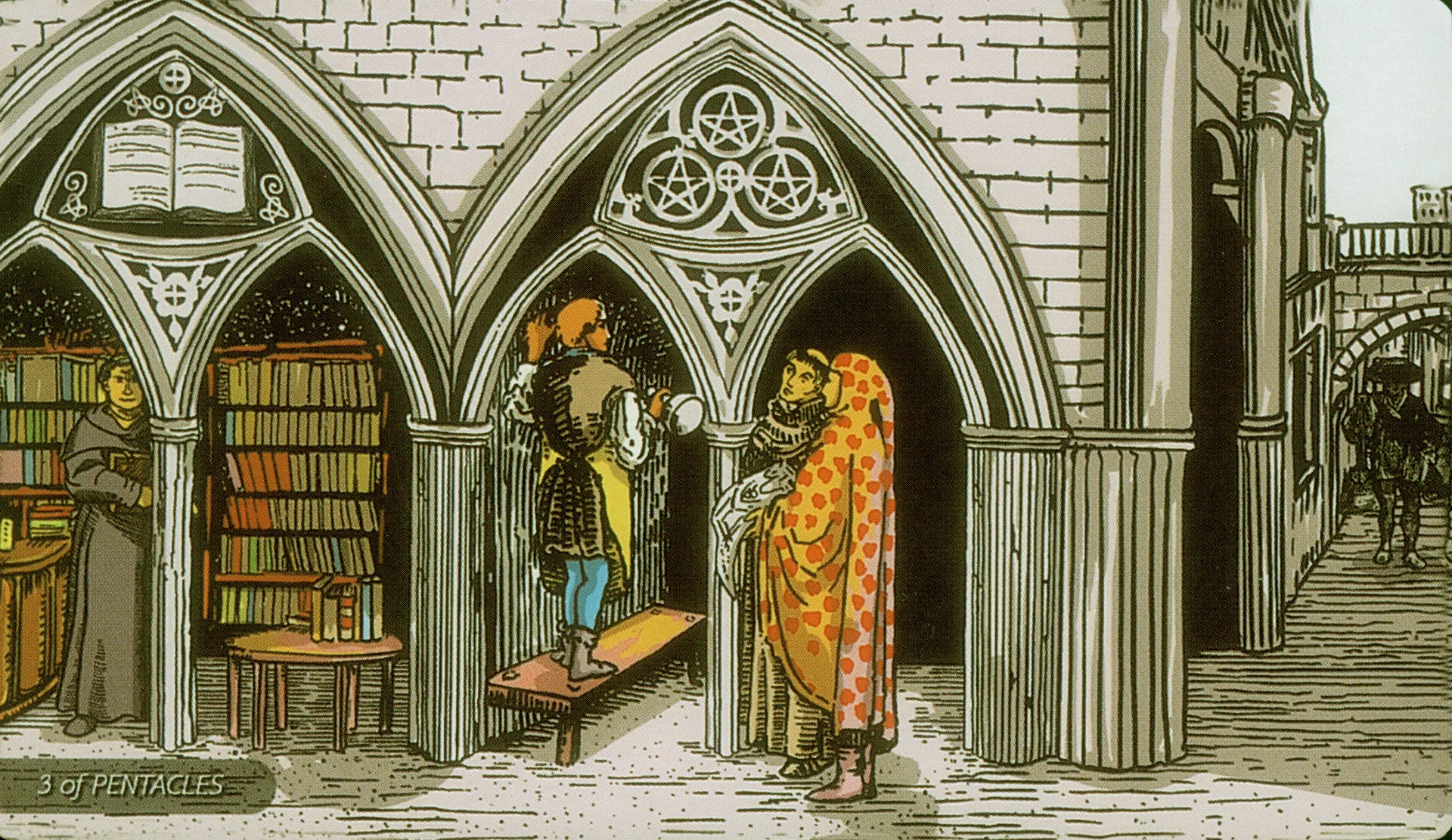
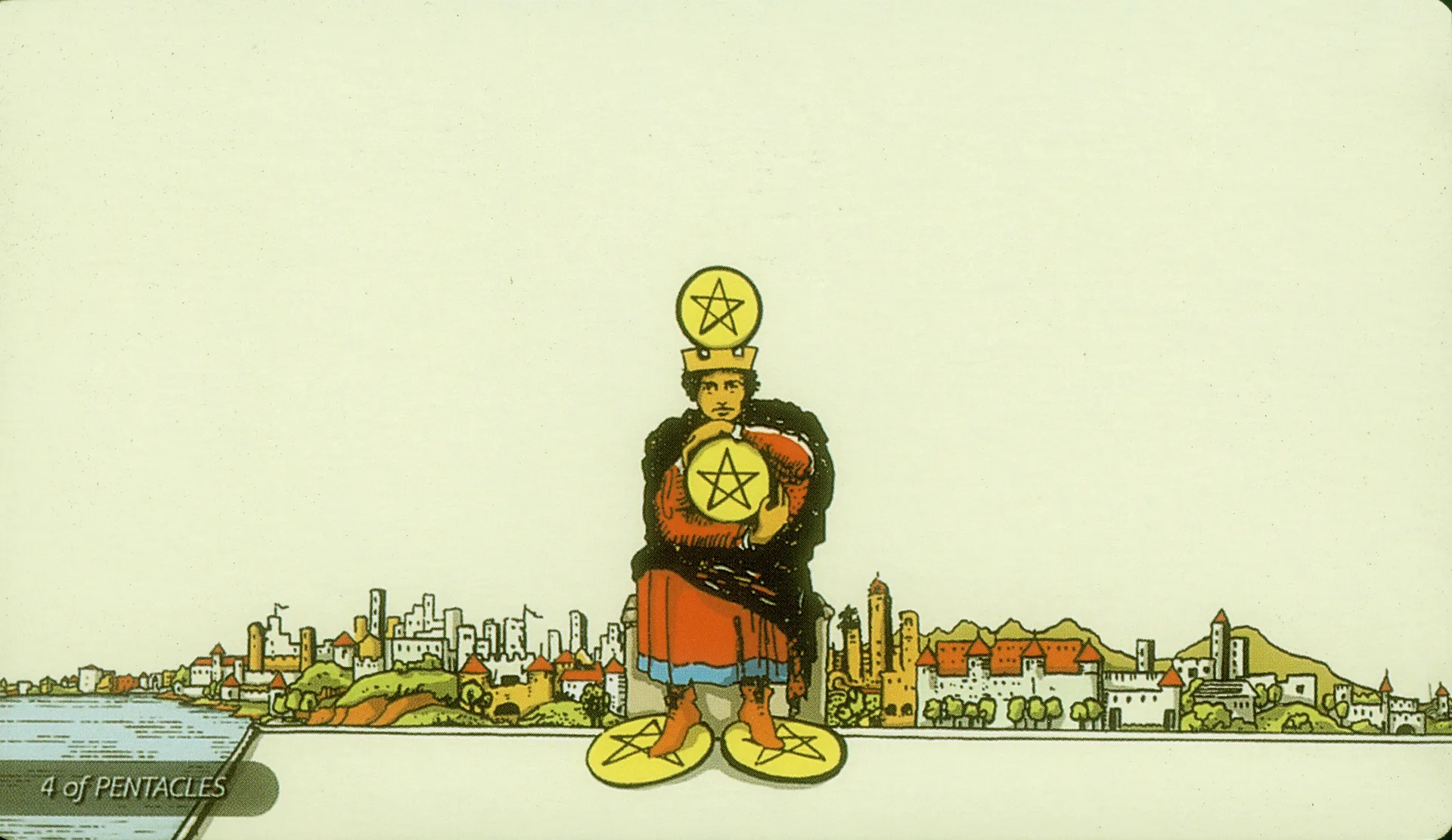
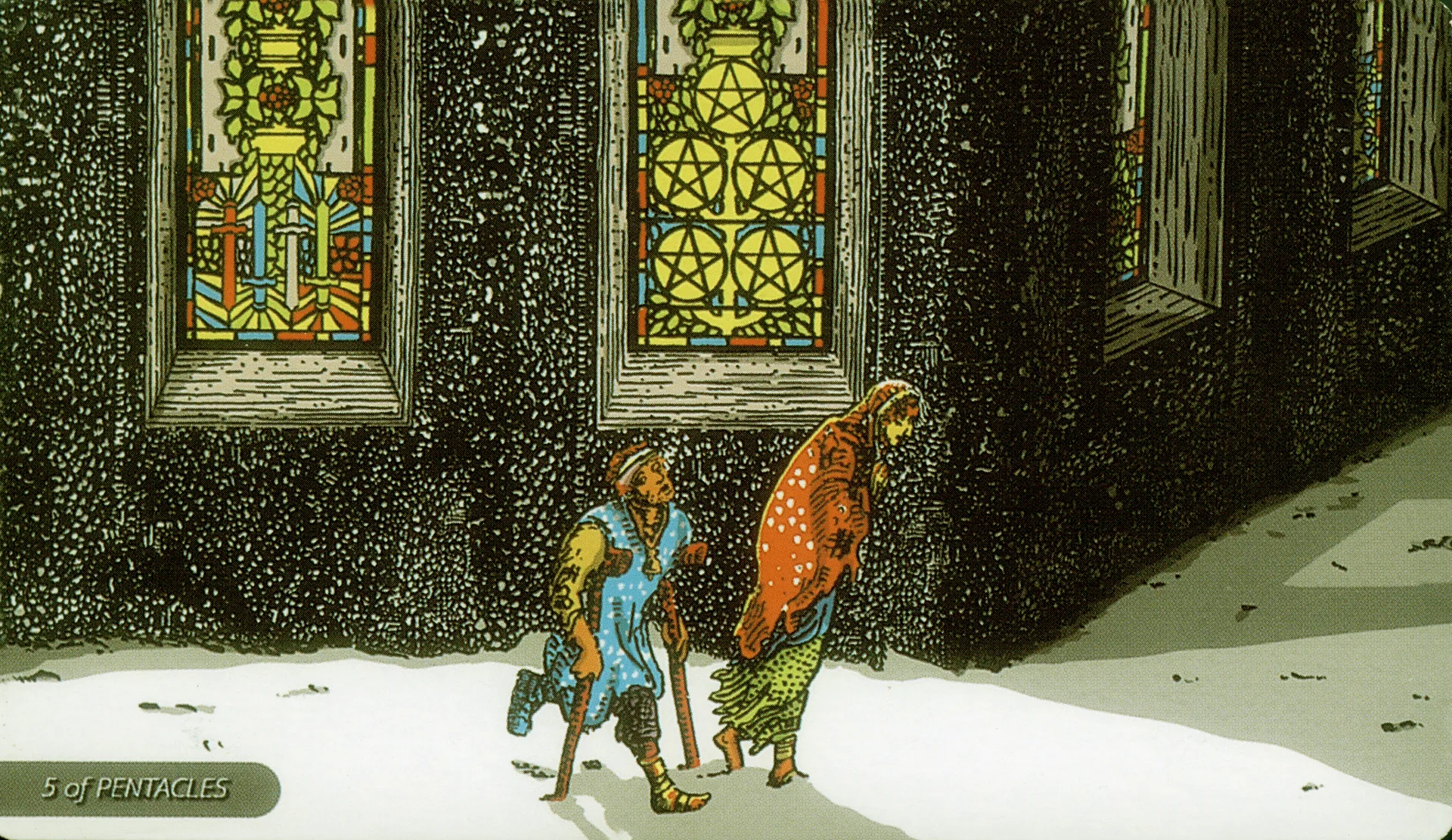
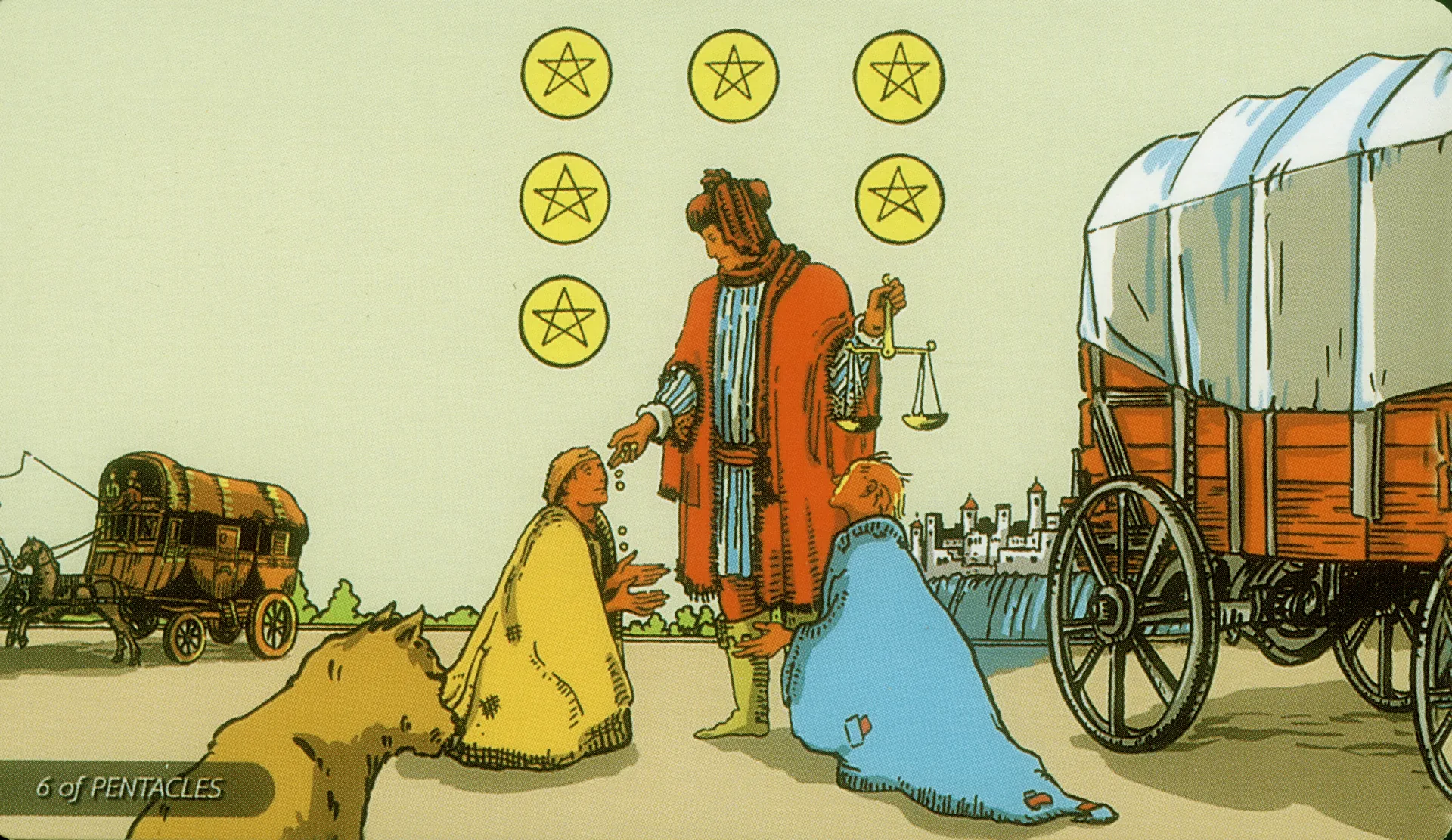
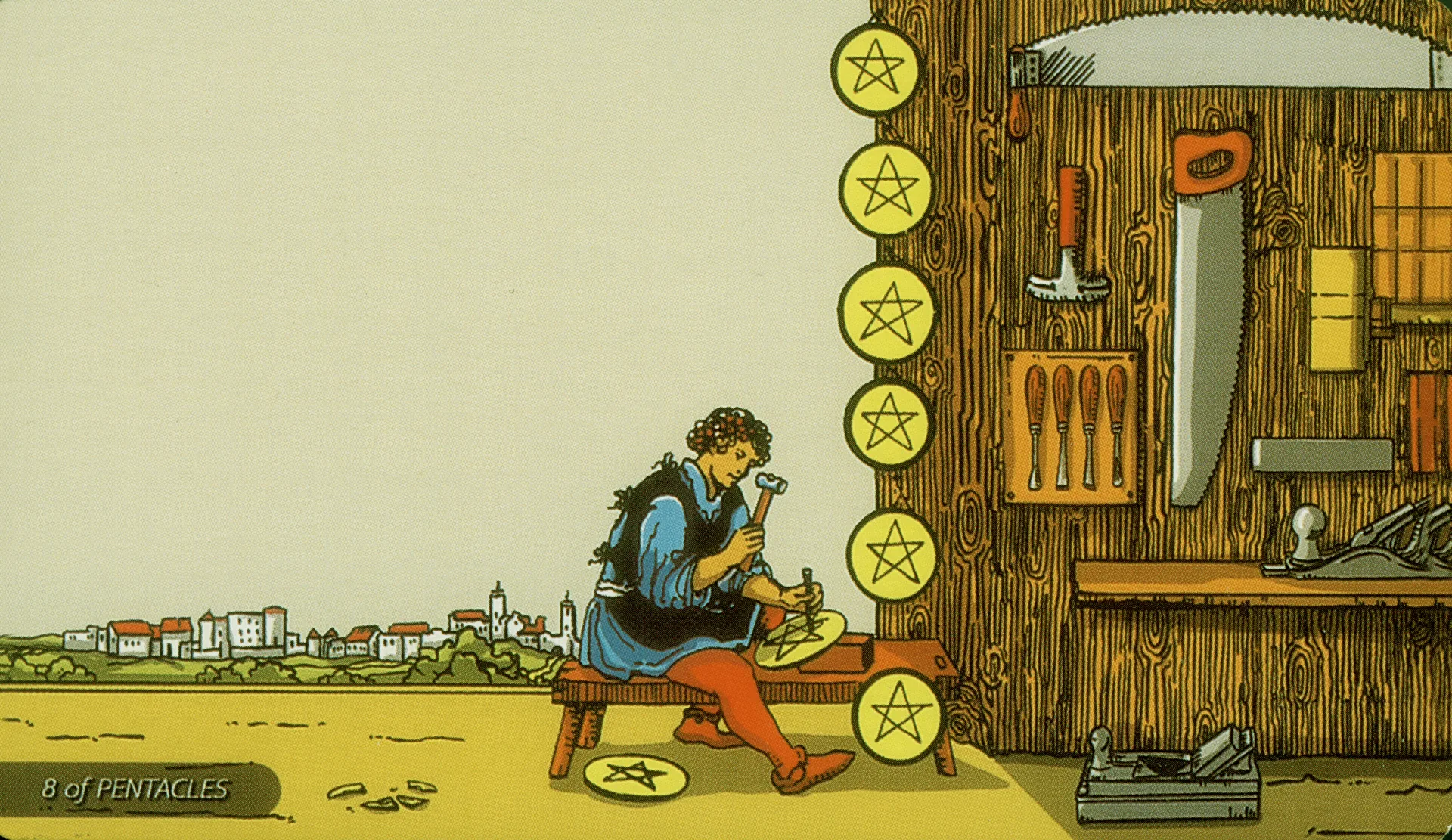
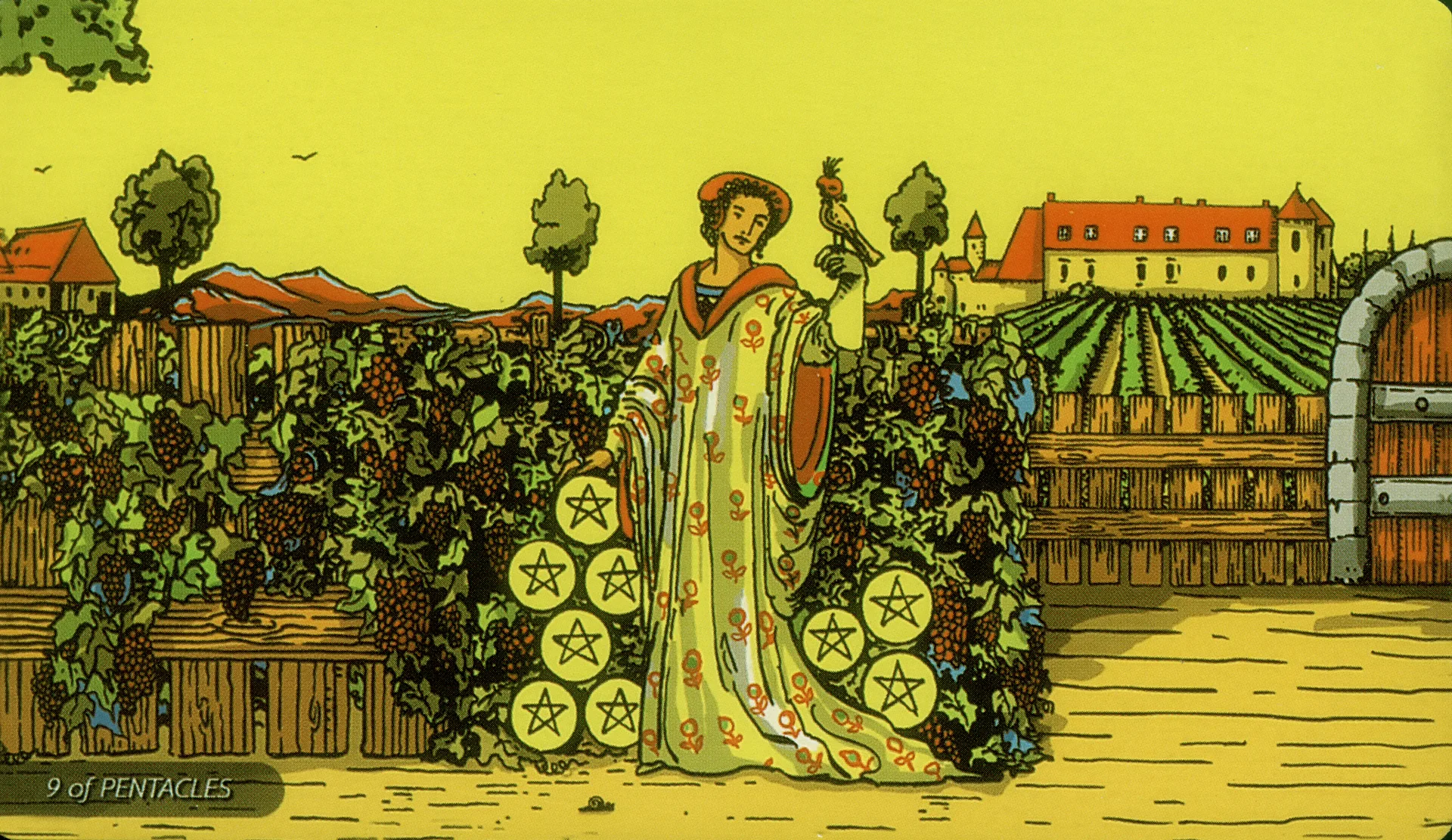
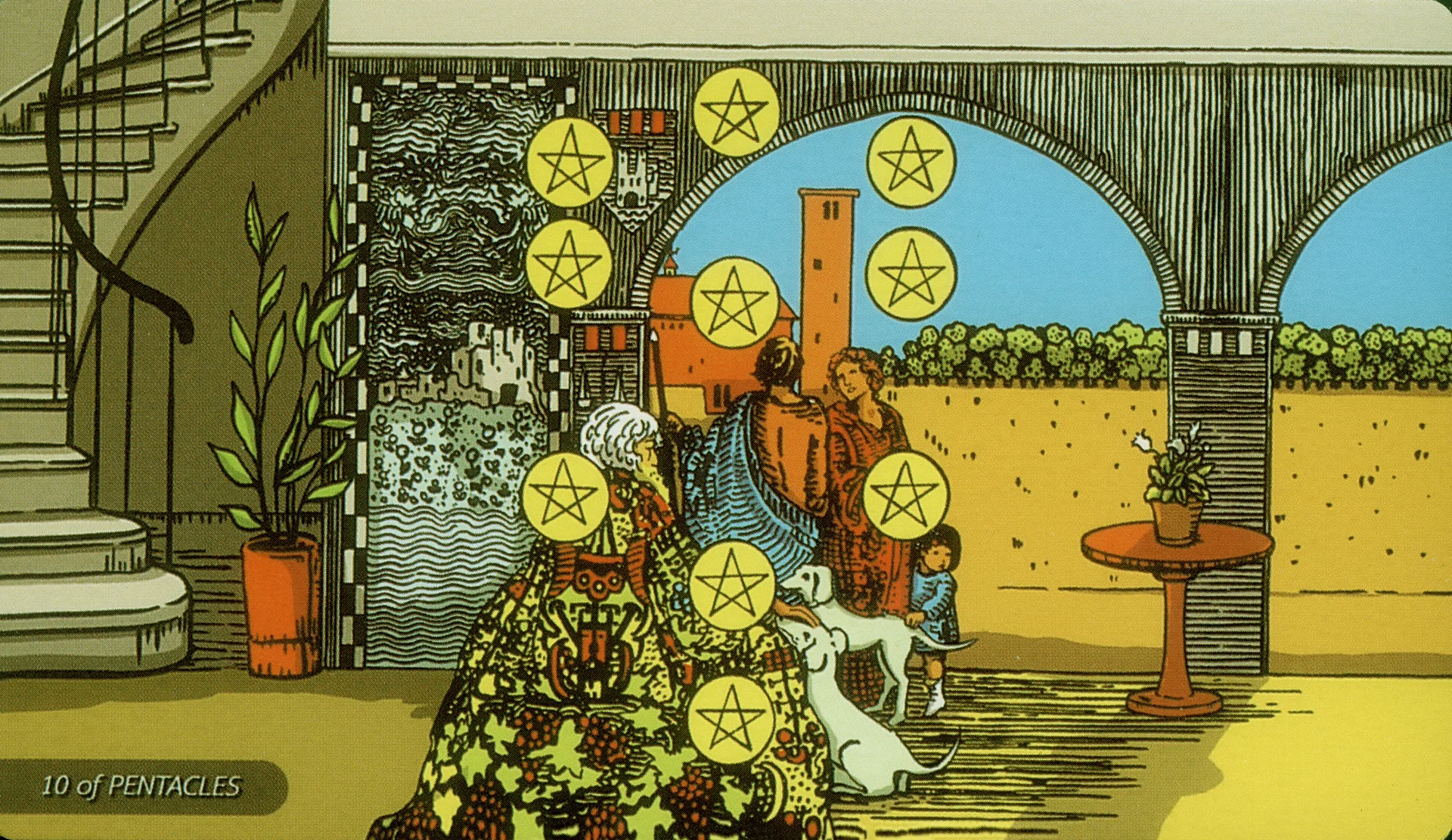
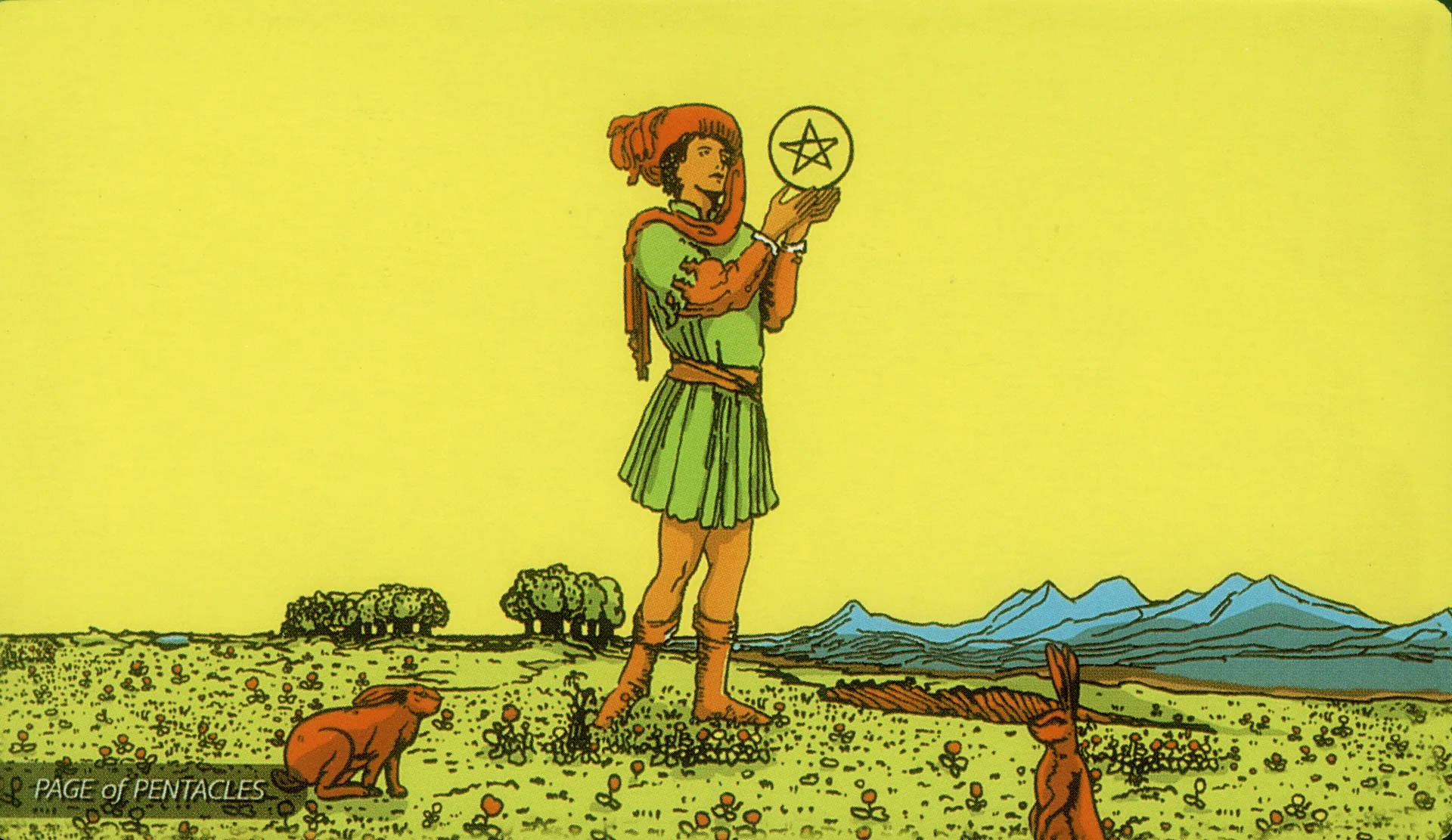
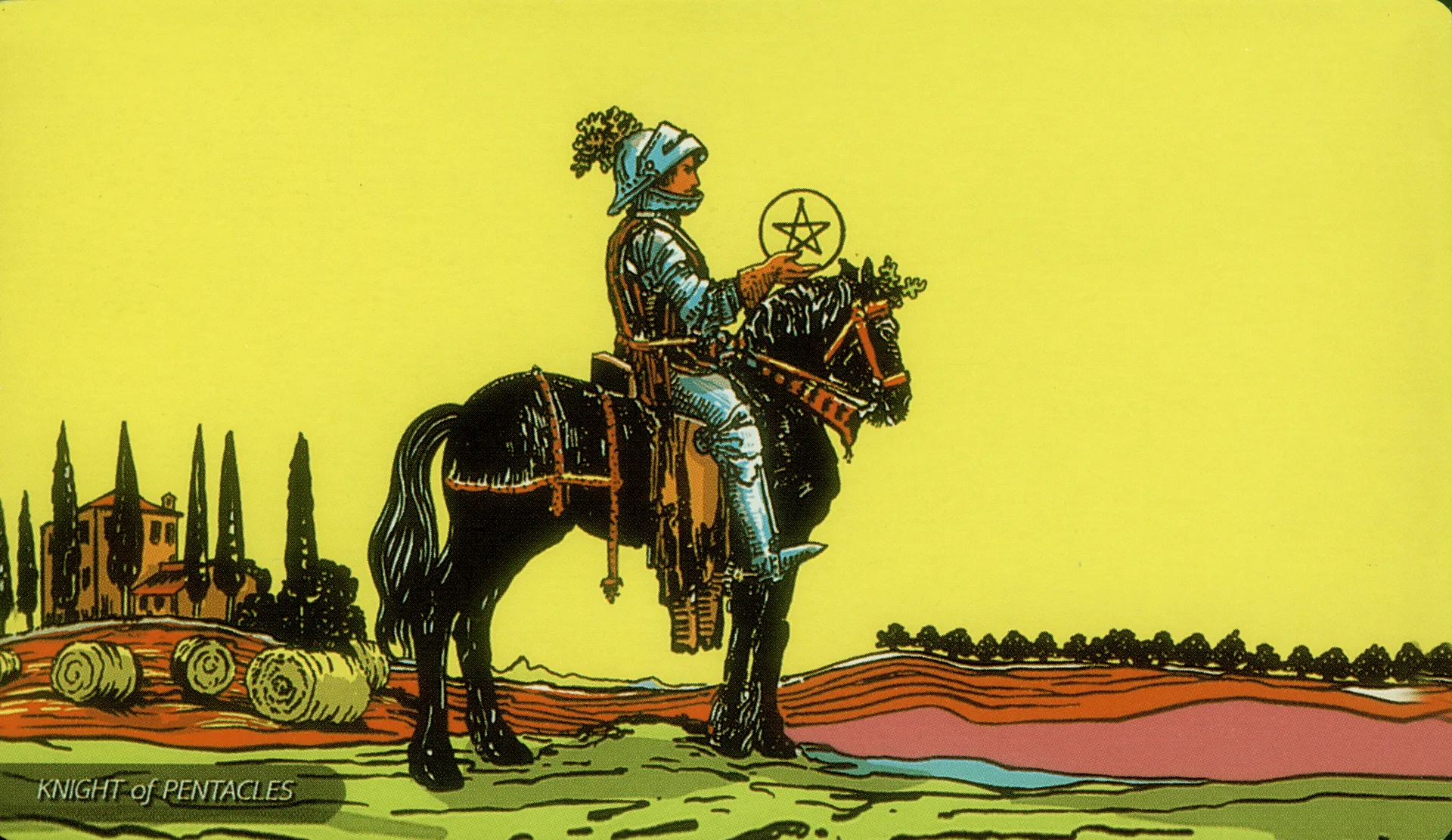
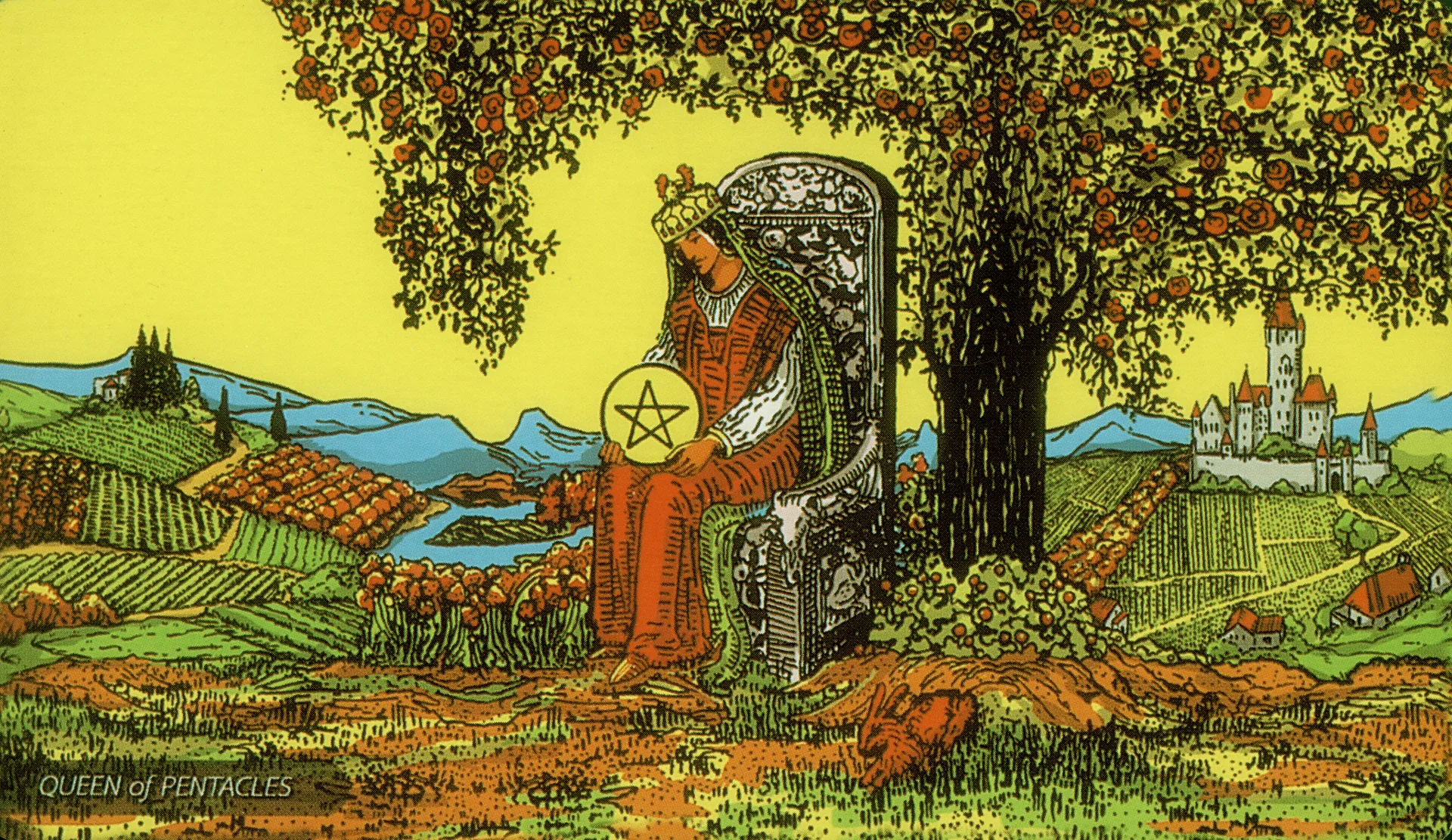
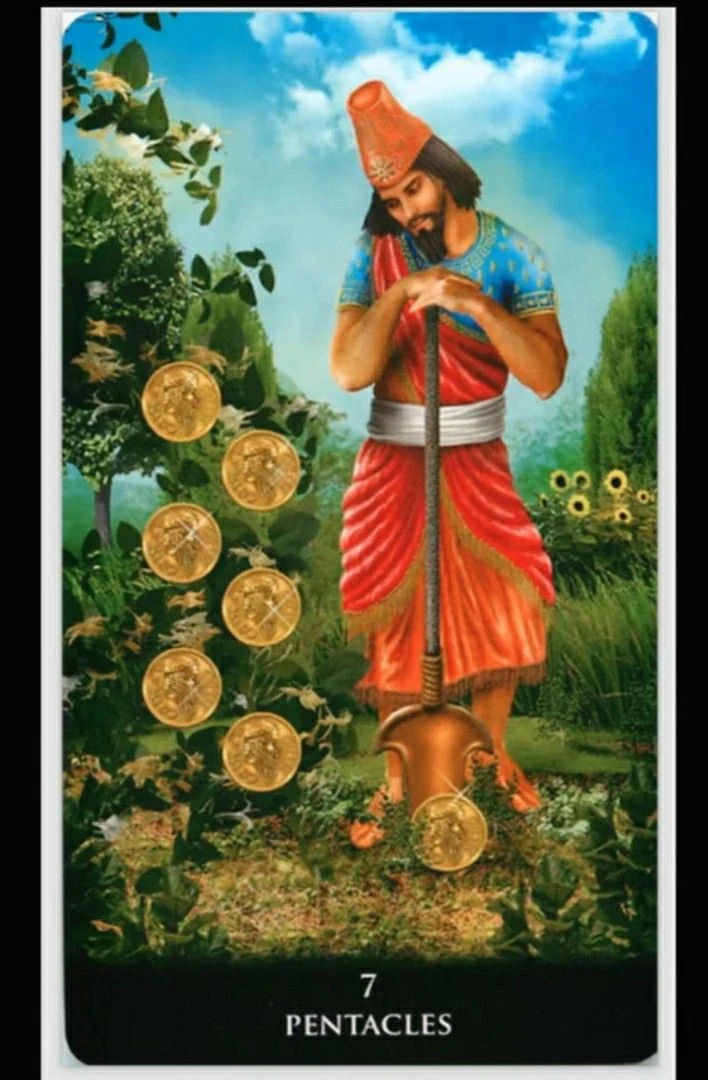
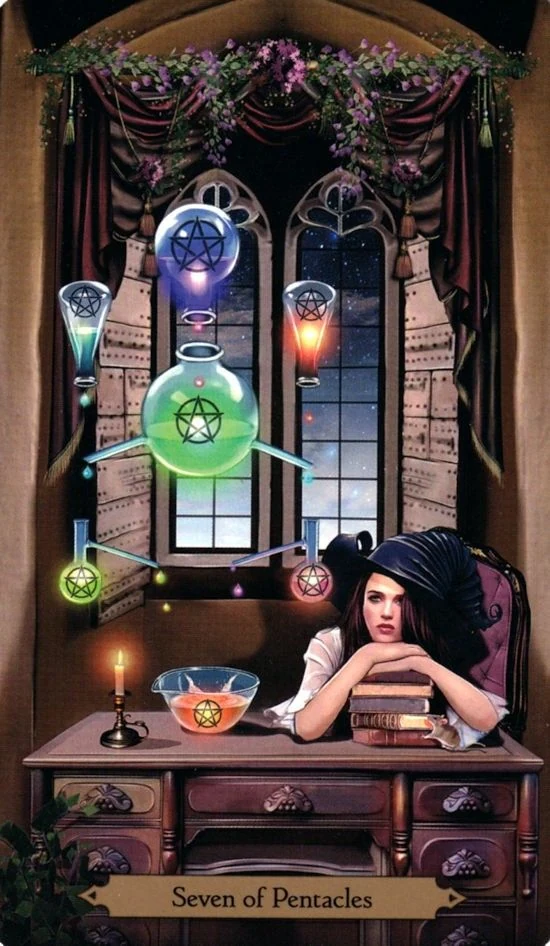
Compare the familiar Rider-Waite-Smith card with the moments before, behind and after the classic scene in three Lo Scarabeo decks.

What apparently happens just before
What actually happened

What happened on the opposite side

What apparently happened afterwards
Card description and symbolism: a pause beside the plants
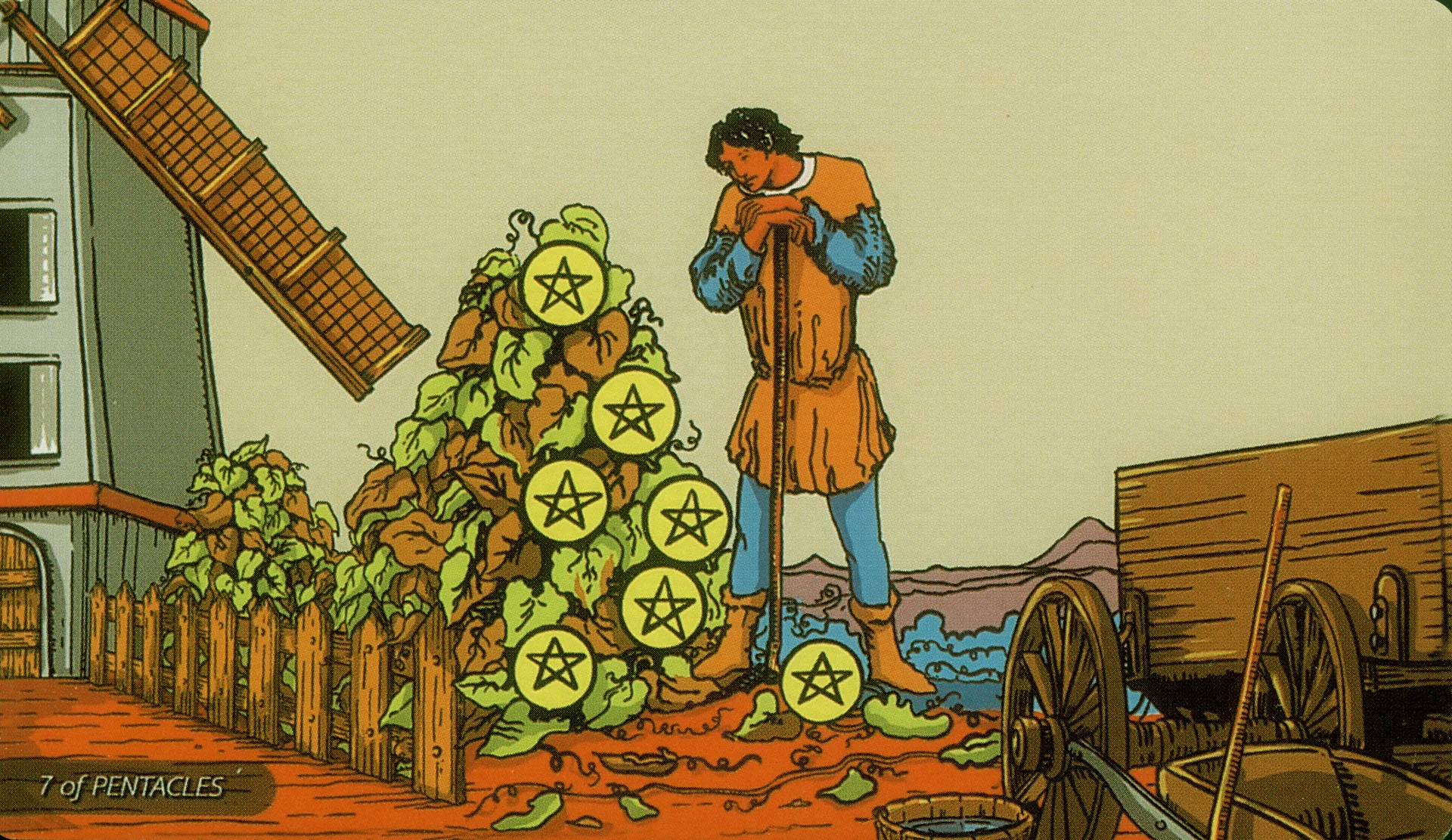
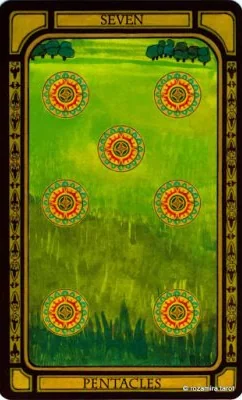
The labelled Rider-Waite-Smith portrait shows a figure leaning forward with both hands resting on a long-handled tool. The figure looks toward leafy greenery on the viewer's left. Six pentacles sit among the leaves; a seventh is lower down beside the tool and the figure's feet. The numeral VII appears at the top.
The stance gives readers a basis for thinking about a pause in work. It does not prove whether the person feels proud, exhausted, or disappointed. You can contemplate those possibilities without treating one expression as a fact about every reading.
The pentacles take the place of a crop in the picture, making resources and the fruits of labor useful themes. Study the portrait for these details. The wider hero panorama is an expanded illustration, not an exact reproduction of Pamela Colman Smith's composition.
Seven rank, the Pentacles suit, and traditional associations
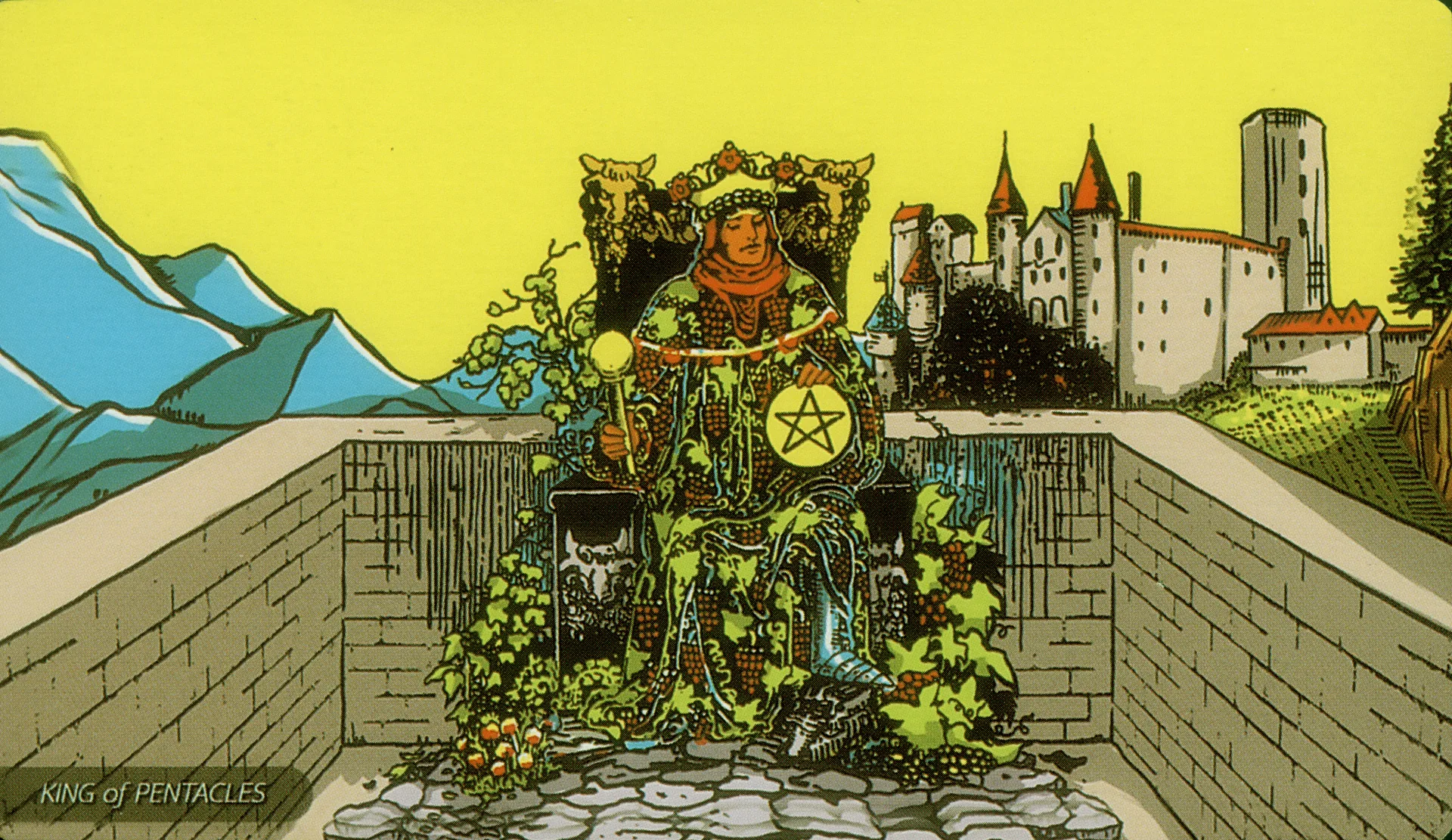
This is the Seven of the Pentacles suit in the Minor Arcana, also commonly called the Seven of Coins. It belongs to a standard tarot deck of 78 cards; it is not the seventh Major Arcana trump. Tarot card meanings vary with the deck and the reader's approach.
Many modern traditions associate Pentacles with earth and practical resources. Golden Dawn-influenced systems commonly assign Saturn in Taurus to this card. These correspondences are tradition-specific, not a universal zodiac rule or a prediction about a particular person.
In The Pictorial Key to the Tarot, A. E. Waite describes a young man leaning on a staff and looking at seven pentacles attached to greenery. He calls the divinatory meanings contradictory, mentioning money, business, and barter among several alternatives. His reversed entry concerns anxiety about money proposed as a loan. The familiar modern focus on patient growth should not be presented as a direct quotation of that passage.
Some readers connect the Seven with testing and reflection, but there is no single compulsory numerology. Use the artwork and your question before reaching for a fixed formula. If the High Priestess appears nearby, one possible reading is to give inner reflection some space alongside practical evidence; intuition should not replace checking the facts.
One card, many perspectives
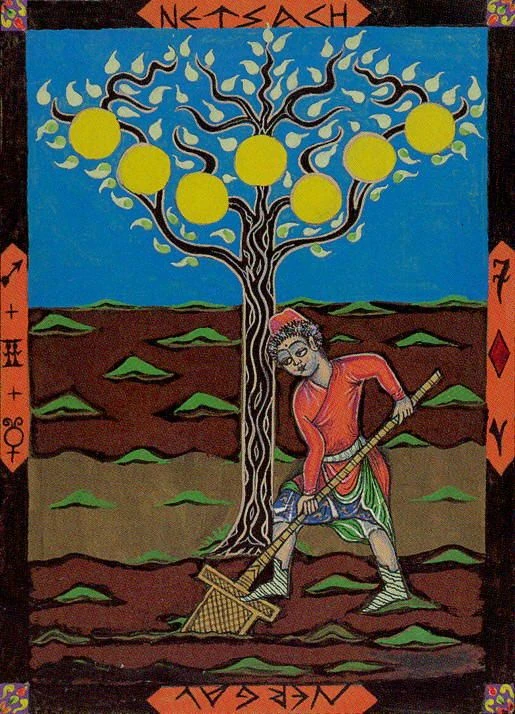
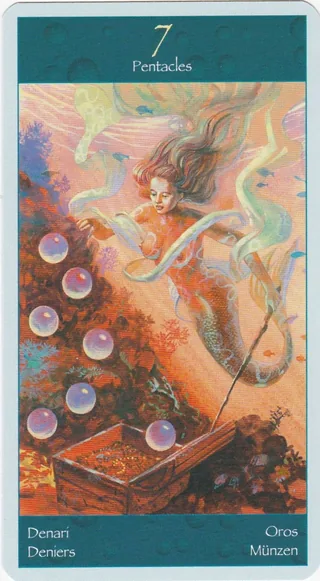
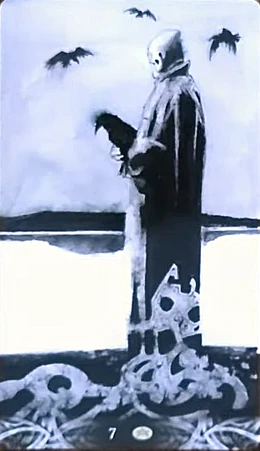
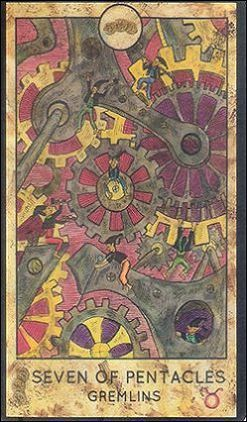
See Seven of Pentacles Card from Other Decks
Discover how other tarot decks interpret this card. Select a deck to explore its full review and gallery.








Seven of Pentacles FAQ
What does the Seven of Pentacles mean upright and reversed?
Upright, it commonly concerns patience, sustained effort, and reviewing progress. Reversed, it can suggest impatience, disappointing results, or a plan that needs changing. Look for evidence of what is working before deciding whether to continue.
Does the Seven of Pentacles mean waiting for someone?
It can invite reflection on the time you invest in a connection, but it cannot confirm another person's private feelings or promise their return. Consider mutual effort, your own needs, and what the person actually says and does.
Is the 7 of Pentacles tarot card a yes or no?
Some readers lean toward a conditional yes for patient, well-supported work. Reversed, they may suggest not yet or a change of approach. Treat that as a prompt to review conditions, not a guaranteed outcome.
What should I do after pulling the Seven of Pentacles?
Review one project or relationship, notice a concrete change, and decide what to keep doing or adjust. Set a sensible review point so that patience does not become indefinite waiting.