The Page of Pentacles tarot card meaning centres on learning, practical new beginnings, and giving an idea a fair chance. Upright, it often describes someone eager to learn or a useful opportunity that needs attention. Reversed, it can suggest a lack of focus, avoidable delays, or enthusiasm that has not yet become a workable plan.
Imagine signing up for a course of study because the subject genuinely interests you. Buying the notebook feels exciting; making room to practise is the part that helps. This card asks what you would enjoy learning and how you could begin without expecting yourself to know everything already.
The Page is a court-card archetype that anyone can use, regardless of gender or age. It may describe your approach, another person's observable role, or an early stage in a project. Read it alongside the question and surrounding cards rather than assigning it to a particular person on sight.

Page of Pentacles Tarot Card Meaning at a Glance
- Main keywords: study, goals, new skills, practical messages
- Upright meaning: beginner energy, messages, study, and trying something new. In the Pentacles suit, this connects to money, school, work, health routines, home, and real-world results
- Reversed meaning: immaturity, distraction, or needing to listen before acting. The reversed meaning asks you to check how you are handling money, school, work, health routines, home, and real-world results
- Yes or no: yes if you are ready to learn and be consistent
- Best question to ask: What is this card trying to help me understand right now?
Page of Pentacles upright meaning: learn by doing
The upright Page of Pentacles represents curiosity with a practical purpose. There is something to study, handle, test, or care for. You can begin with what is within reach, even while you are still learning.
Being studious need not mean hours at a desk. You might learn to cook one meal, ask a colleague to demonstrate a task, or find out how a bill is calculated. Small experiments can teach you more than collecting advice you never use.
The Page of Pentacles suggests keeping your feet firmly on the ground while you try something new. If you are starting a new project, decide what the first attempt will cost and what you hope to learn. You can take risks in a bounded way without staking your savings or self-worth on the result.
This Page can also represent a message or offer connected with the material world: a course place, a work assignment, or financial news. Check the details rather than assuming every offer is good news. A useful opportunity still needs suitable conditions.
There is pleasure in being a beginner. You can be happy and content with an imperfect first attempt because it taught you something. Future success is uncertain, but today's practice can still be satisfying.
Page of Pentacles in a tarot reading
When the Page of Pentacles appears in tarot spreads, look at its position. In the past, it may concern training or an earlier opportunity. In the present, it can invite a practical beginning. In the future, treat it as a possible need for preparation, not a promise of a job, windfall, or particular date.
In an advice position, the Page of Pentacles tarot meaning often comes down to finding a solution you can test. In a challenge position, ask whether you are still gathering information when it is time to try something. One card cannot settle every part of a complicated decision.
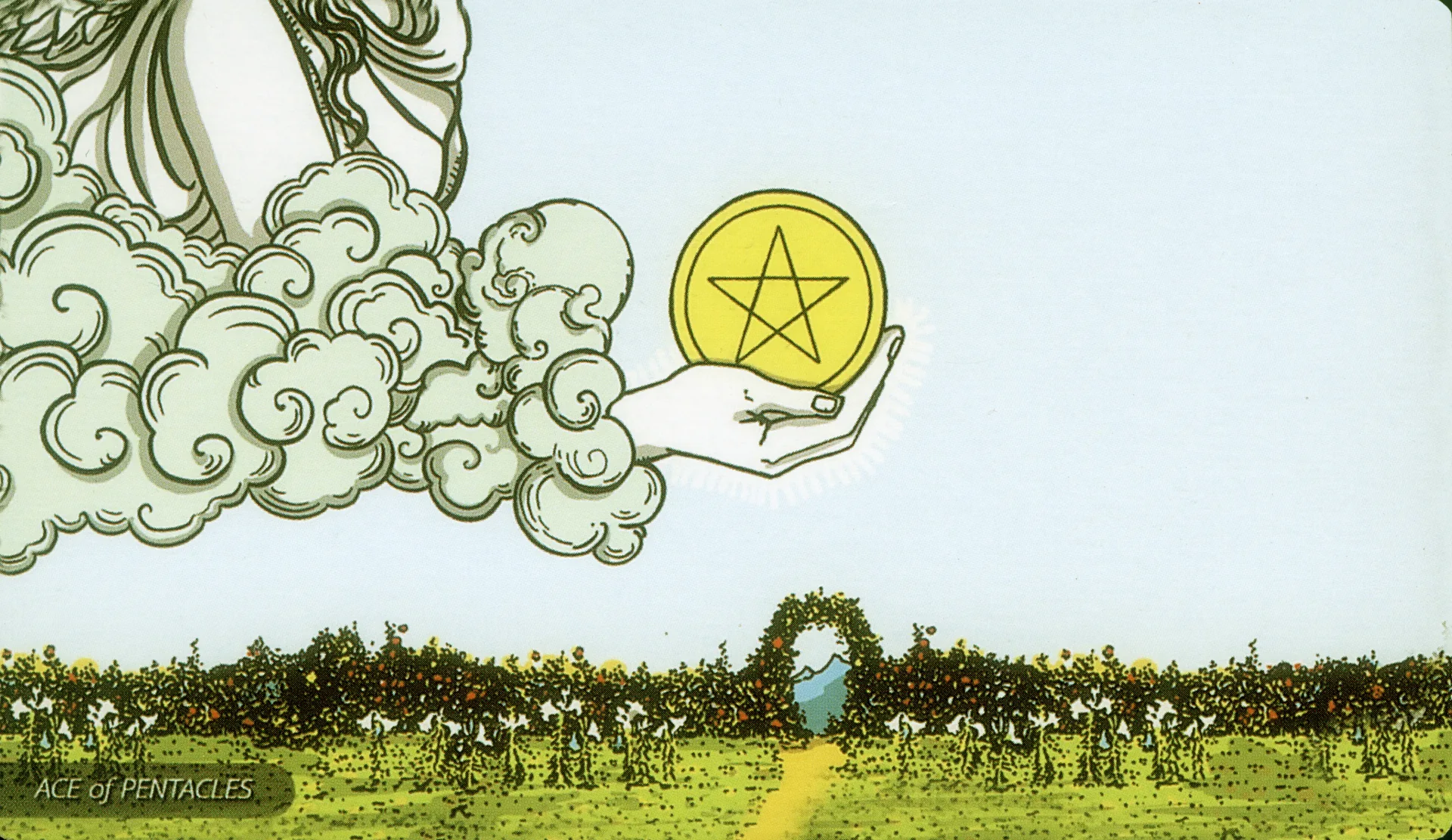
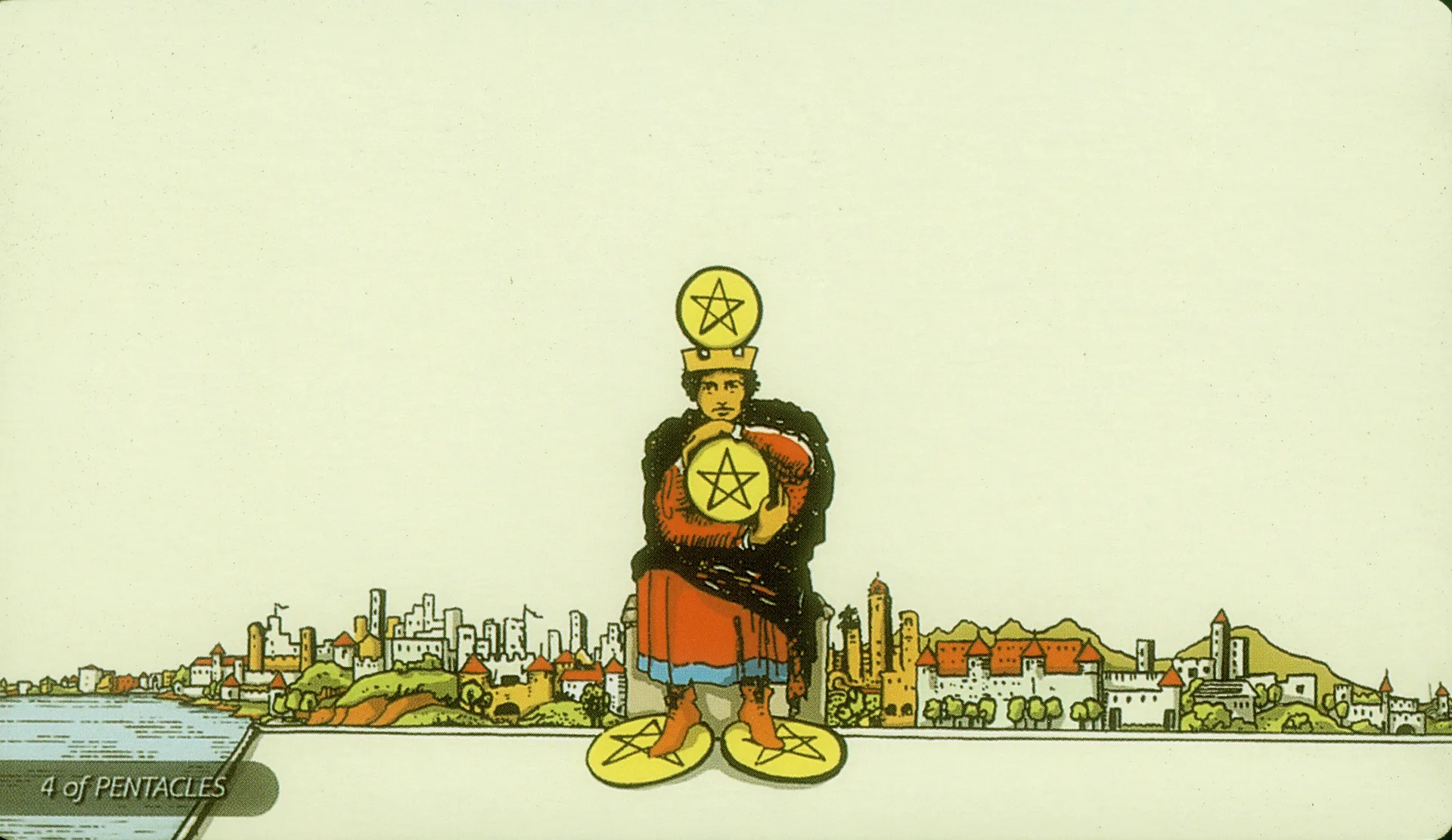
Surrounding tarot cards help refine the reading. Beside the Eight of Pentacles, practise a skill deliberately. Beside the Ace of Pentacles, examine an opportunity and what it needs to make it grow. With the Four of Pentacles, check whether caution is useful or keeping you from a manageable experiment. These are examples, not fixed predictions.
Love and relationships: let interest become consistent care
In a love reading, this Page often invites patient attention. A new connection may be at an early stage, with people learning each other's habits and interests. Enjoy that discovery without turning every conversation into a test of commitment.
If you are single, try a realistic step: suggest a low-pressure meeting or make space for an activity you like. The card cannot guarantee romance. It can help you notice whether your choices give a connection room to develop.
For an established couple, practical care matters. Remembering an agreement or making time to listen may be more useful than a grand promise. Ask what each of you would like to learn about living well together, especially if daily responsibilities have changed.
As a feelings card, it may prompt questions about interest, willingness, or caution. It does not reveal someone's private thoughts, prove loyalty, or promise that an ex will return. Their words, actions, and consent are the evidence you need.
Reversed in relationships, it can suggest inconsistency or promises that do not become action. Explain what you need and watch whether the pattern changes. Avoid labelling someone immature or disloyal because of a card; name the specific behaviour that is troubling you.
Career, money, and school: make the next step workable
For work, the Page of Pentacles may appear when you are learning a role, applying for training, or considering a new business idea. You may be at the beginning of your journey in one skill even if you are experienced elsewhere. Ask a clear question and find someone who can give useful feedback.
Reading the Page of Pentacles in a business context can prompt a small trial before a larger commitment. Test demand, estimate costs, and put in place a way to review results. Excitement about a project or venture is helpful; numbers and practical support matter too.
In school, a realistic timetable can help you achieve your goals. Put in the necessary practice, but check whether your method works. If you are easily sidetracked, try a shorter study session with one task and a clear stopping point. A setback may call for a different method rather than a lot of effort doing the same thing.
For money, Pentacles also directs attention to resources, bills, and useful skills. Some readers connect this Page with news regarding finances or good news regarding an application. Wait for actual confirmation and read the terms before spending money you have not received.
Neither position promises financial rewards. If a lack of money is limiting your options, compare costs and seek qualified financial help where needed. A reversed card is not a forecast that your plans will amount to nothing; it can be a prompt to check assumptions before committing more.
Reversed Page of Pentacles: bring the plan back into reach
The reversed Page of Pentacles can describe a gap between wanting something and making time for it. You may be carried away by the idea, collecting equipment or making promises while avoiding the less exciting first lesson.
Start by asking what gets in the way. Work pressure, limited money, missing information, or an overambitious schedule can all make progress difficult. That is different from a permanent flaw in your character. Choose a smaller task or ask for the support you actually need.
Sometimes the reversal concerns careless spending or an offer that needs scrutiny. Check fees, deadlines, and obligations. Traditional readers may associate it with disappointing news, but do not anticipate disaster before you know the facts.
If practice feels dull, reconnect with what interested you in the first place. A personal goal is easier to return to when it still means something to you. You can also decide that an old goal no longer fits, rather than treating every change as failure.
Reversed advice may simply be to finish one useful step before starting another. Keep the plan pragmatic: prepare a question, complete a short exercise, or review the budget. You do not have to prove your seriousness by exhausting yourself.
Page of Pentacles yes or no meaning
Many readers lean toward a conditional yes for learning, preparation, or a realistic beginning. The condition is that you put in the effort and check the details. Reversed, it may mean not yet: the plan needs attention before you proceed.
This is a reading convention, not permission to override another person's answer or ignore professional advice. For a complex question, ask what information would help you make the decision rather than relying on yes or no alone.
Advice: choose something small enough to practise
Pick one skill or task you want to develop. Give it a short, specific practice period and notice what happens. For example, if you want to learn photography, try taking the same subject in different light before buying another lens.
Ask for feedback that you can use: what worked, what needs adjusting, and what should you try next? Fulfilment can come from noticing improvement rather than comparing your beginning with someone else's finished work.
You need not turn every interest into paid work. Gardening, drawing, or learning a language can be worthwhile because you enjoy it. Curiosity deserves some space even when it brings no financial return.
For health and wellbeing, use the card to reflect on routines or prepare questions for a clinician. It cannot diagnose an illness, confirm pregnancy, or promise a cure. Symptoms and treatment decisions need qualified care.
One archetype, four perspectives
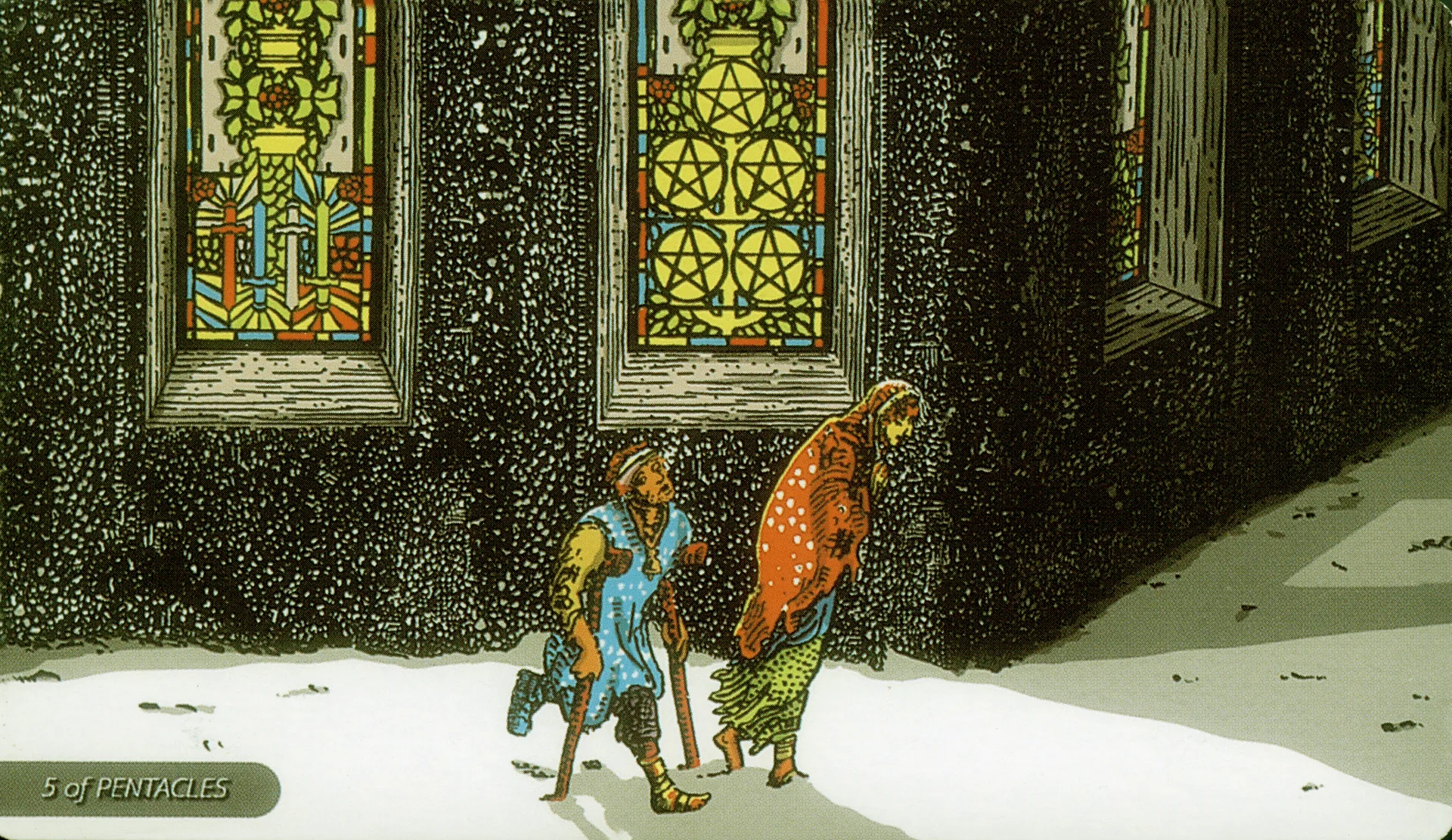
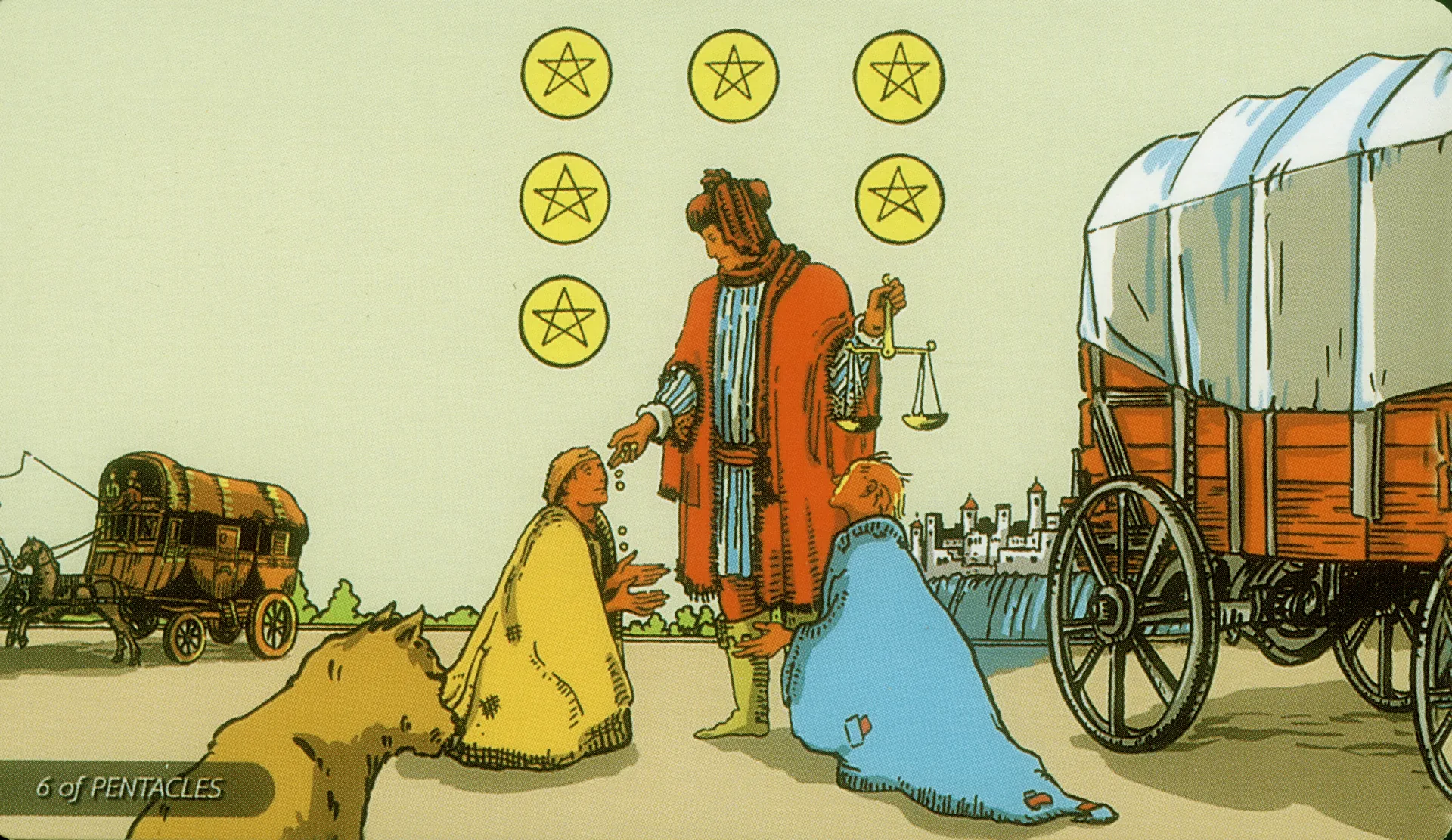
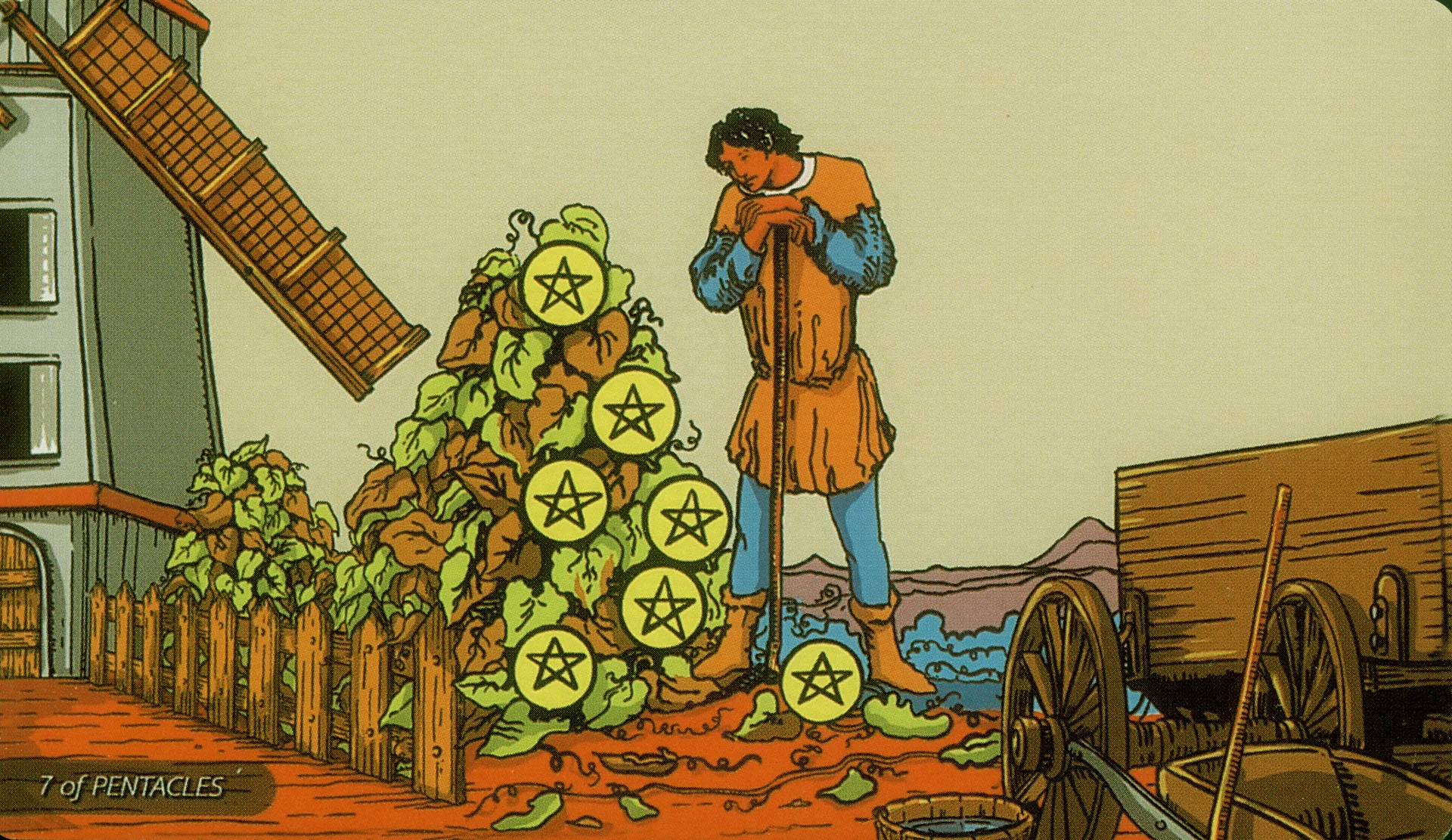
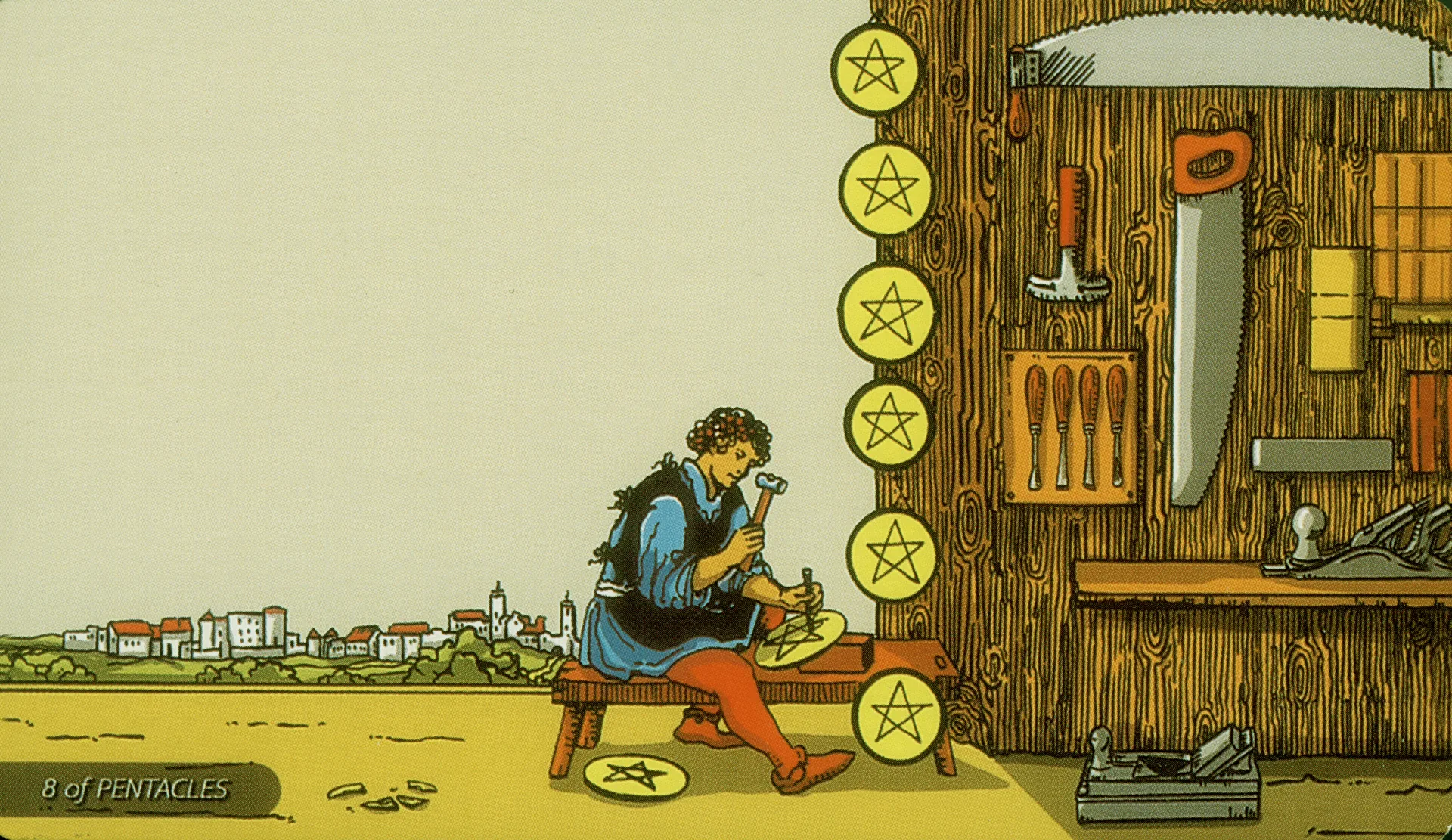
Page of Pentacles Across Four Tarot Decks
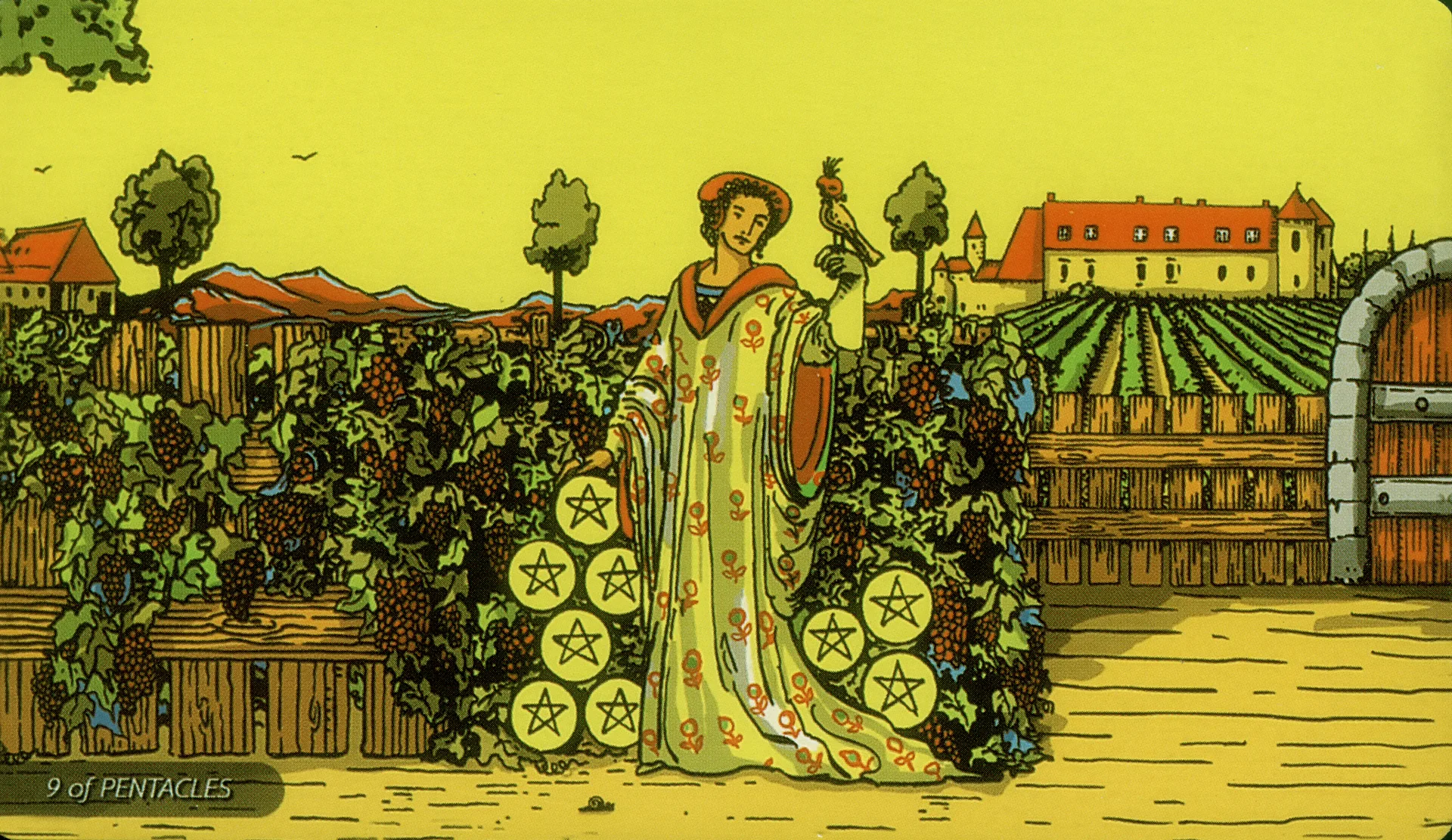
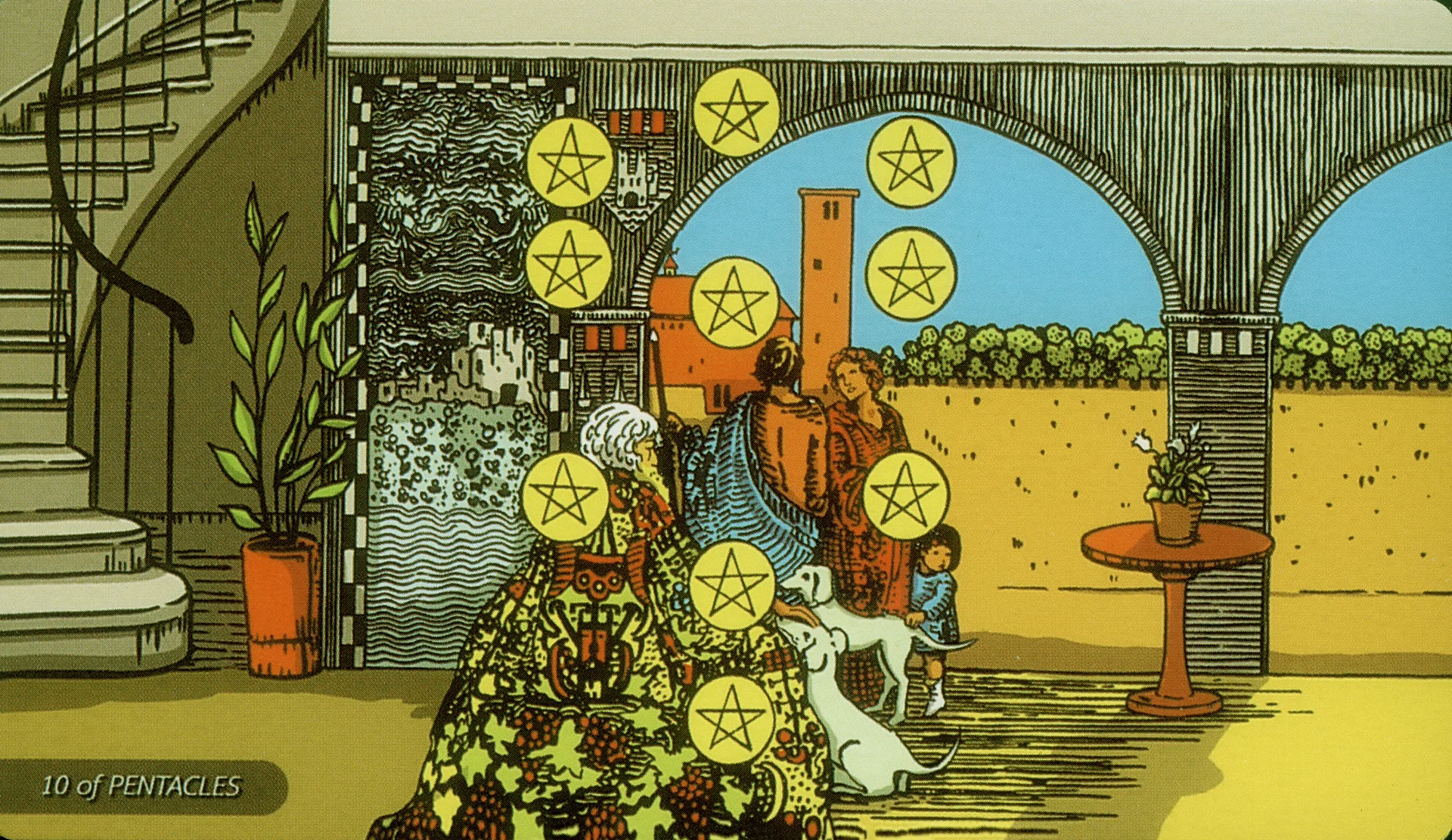
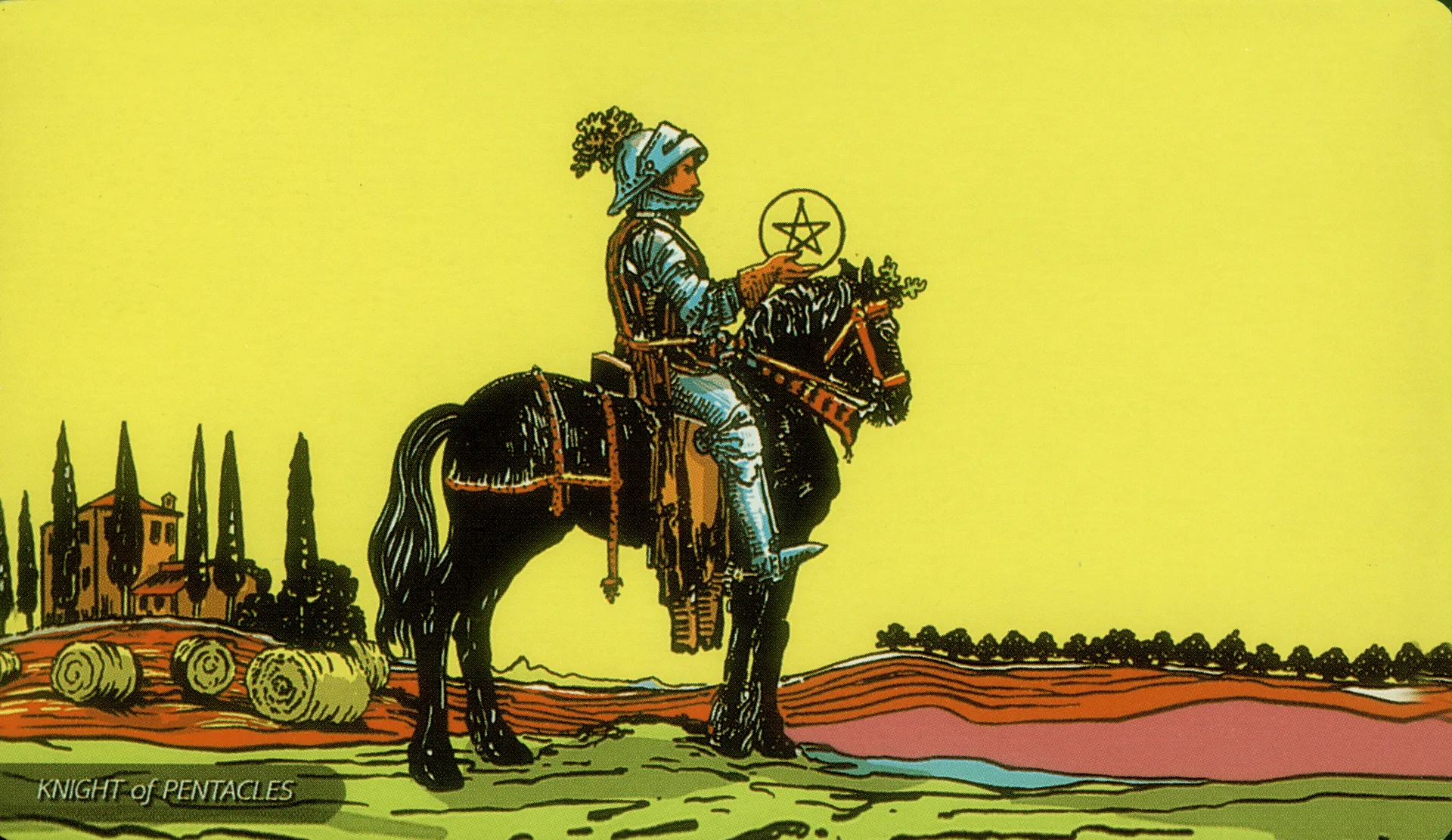
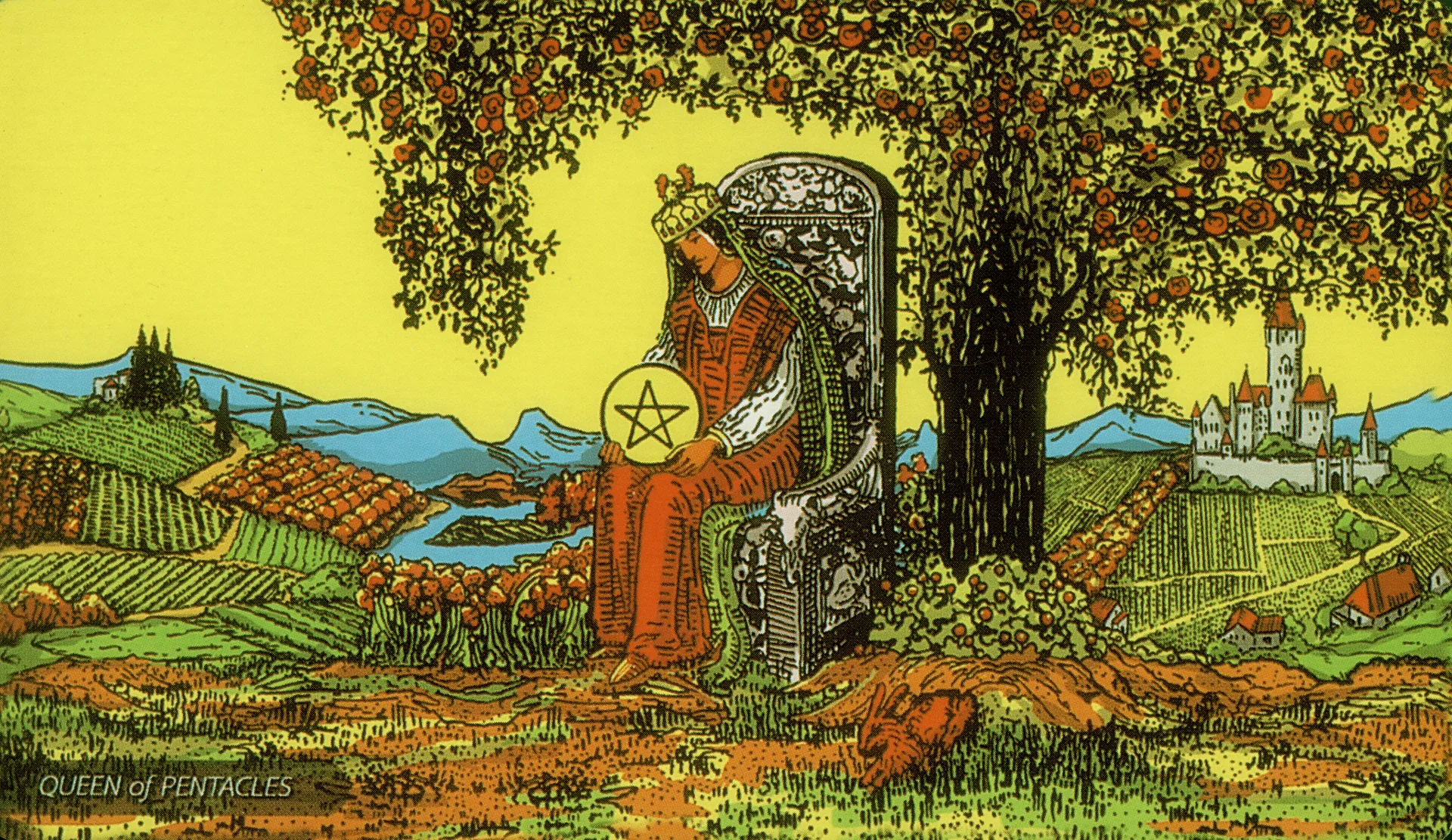
Compare the familiar Rider-Waite-Smith card with the moments before, behind and after the classic scene in three Lo Scarabeo decks.
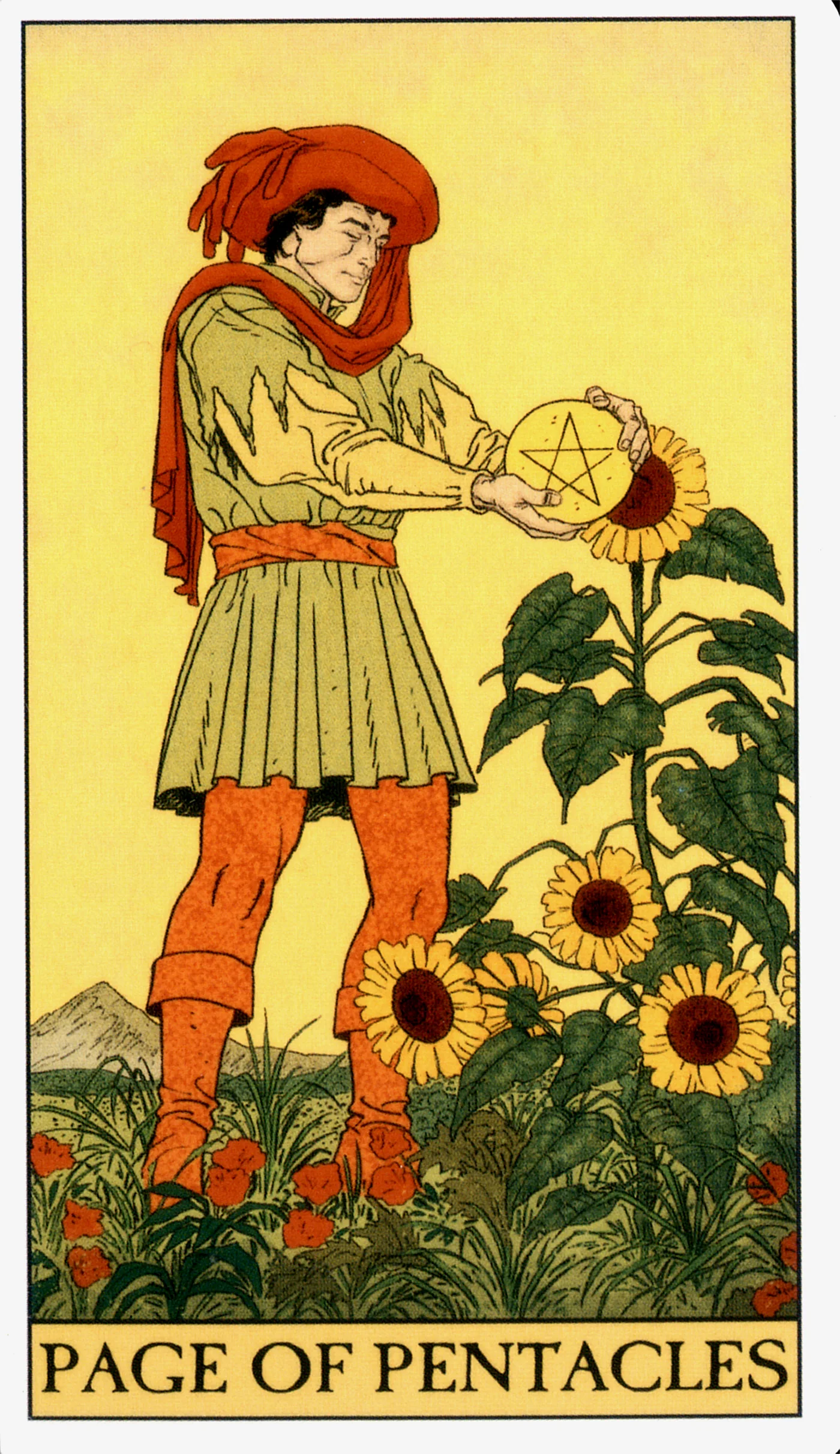
What apparently happens just before
What actually happened
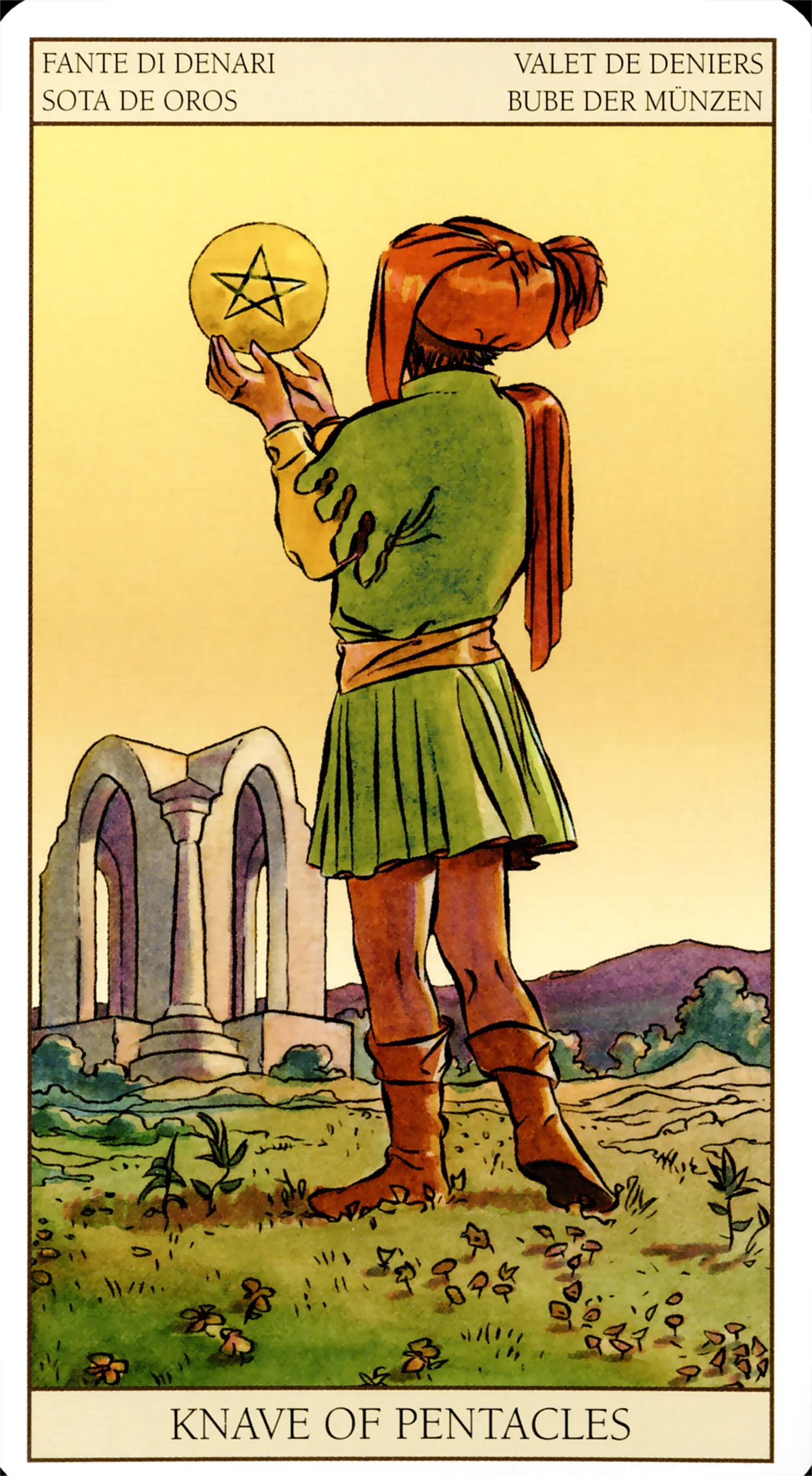
What happened on the opposite side
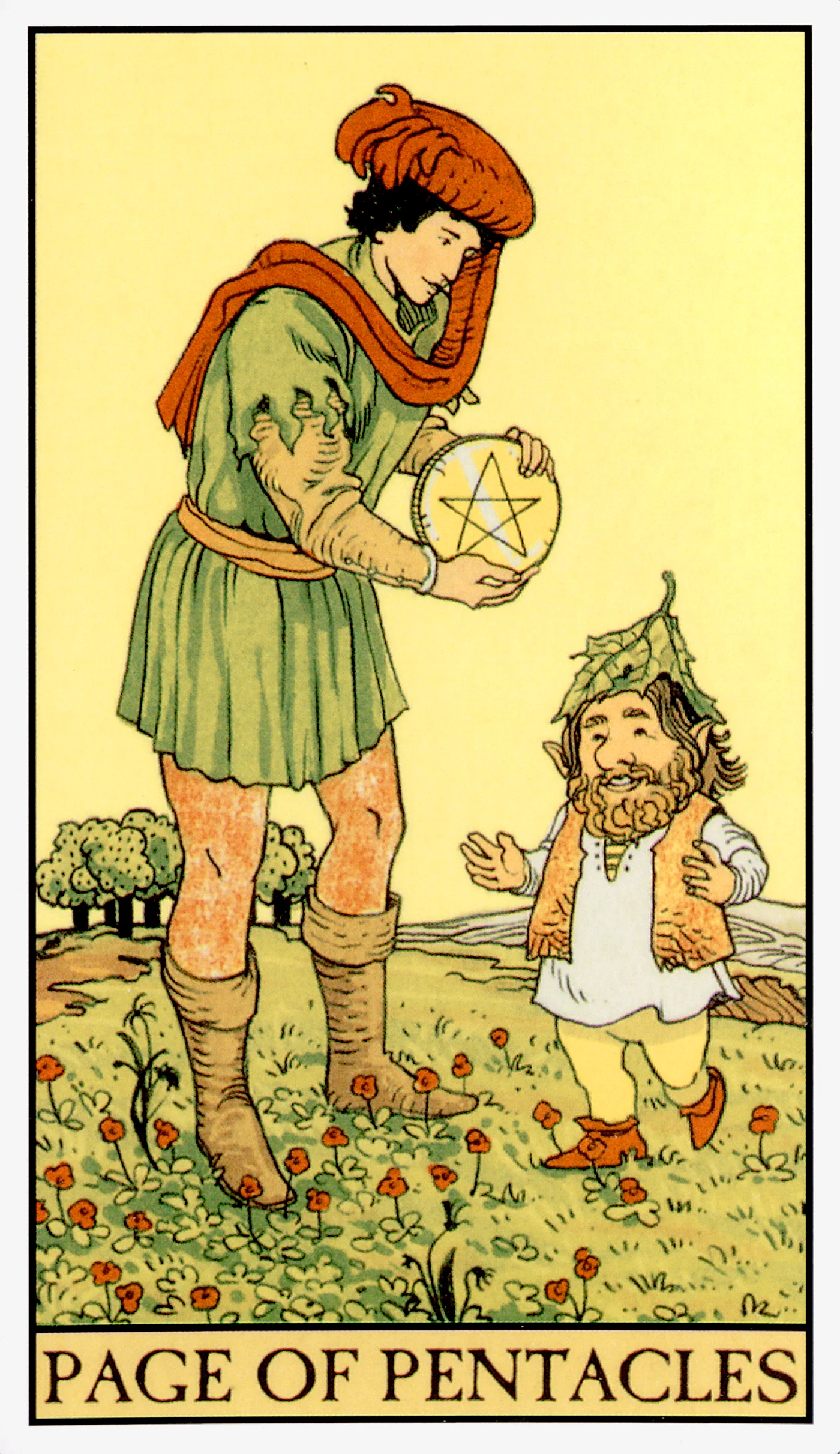
What apparently happened afterwards
Card description and symbolism: attention to one pentacle
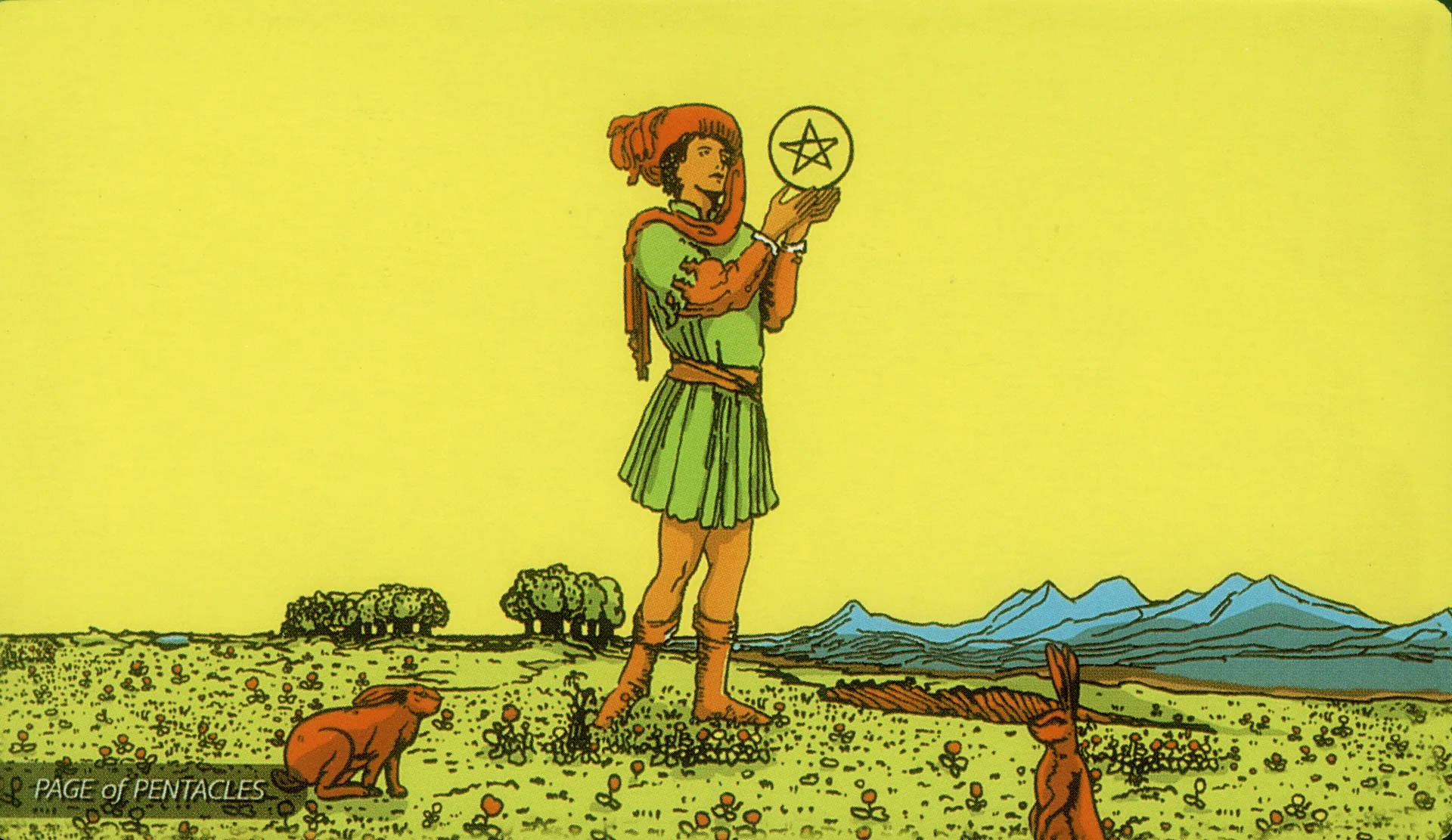
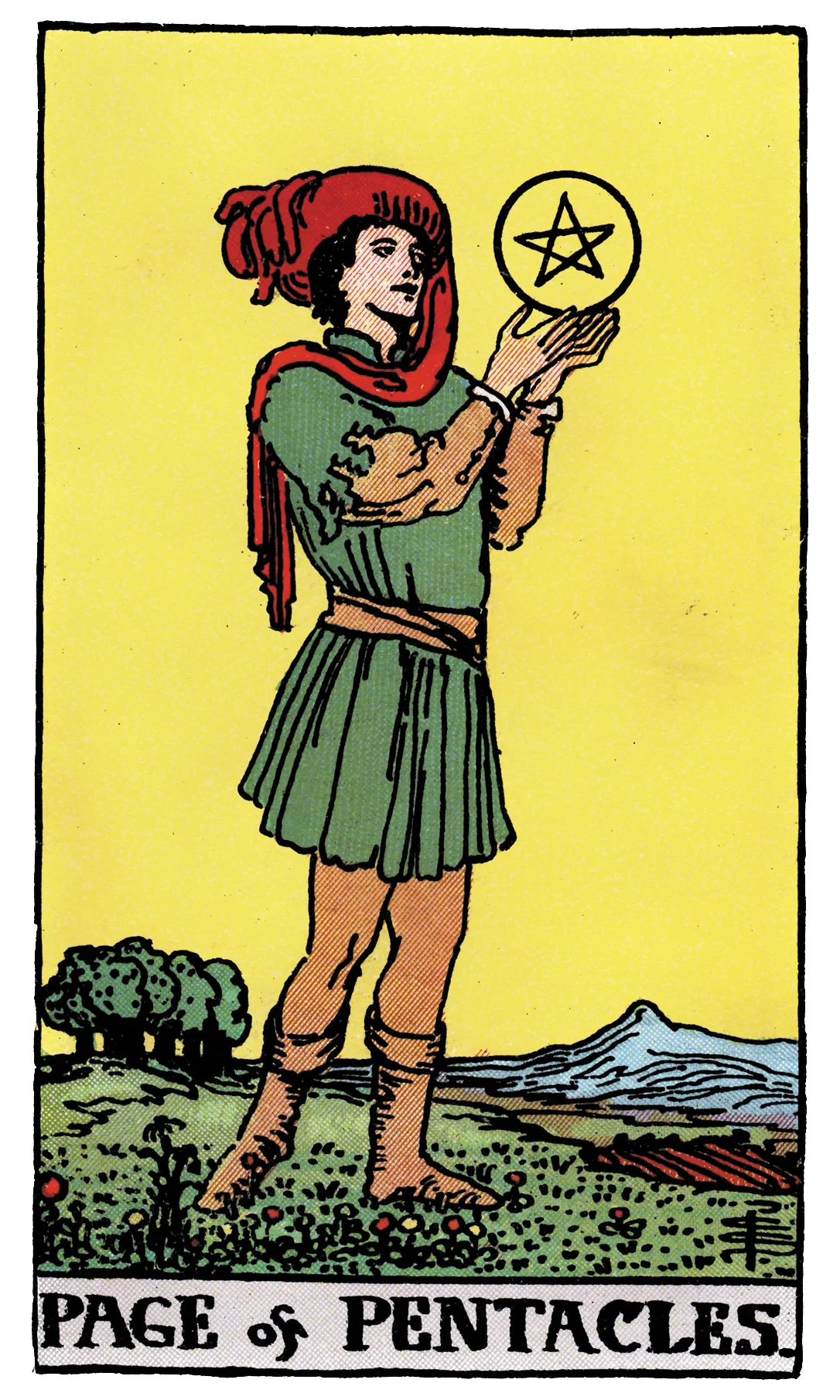
The verified Rider-Waite-Smith portrait is labelled PAGE of PENTACLES. It shows a standing figure in a green tunic and red headwear, looking toward a single pentacle held above raised hands. Trees, a field, and distant mountains appear in the background.
The gold coin is a useful image for something tangible that deserves attention. Its five-pointed star marks it as a pentacle, rather than an ordinary coin. Readers may take the figure's focus as an invitation to study something closely before deciding what to do with it.
The stance is often read as grounded: the figure's feet are firmly planted on the ground. That can symbolise steady attention without proving anything about the figure's emotions or personality. Keep these observations tied to the portrait. The wider decorative panorama is expanded art, not an exact reproduction of Pamela Colman Smith's composition.
Page court rank, the Pentacles suit, and other Pages
The Page of Pentacles is a card in the Minor Arcana, also called the Page of Coins. In a standard 78-card tarot deck, Pages belong to the court cards alongside Knights, Queens and Kings. This Page is not a numbered pip or a Major Arcana trump.
Older descriptions may refer to a child or young person. You can read that as beginner energy rather than a literal age, gender, appearance, or family role. An experienced adult can be a beginner in a new subject; the individual represented is not identified by a card alone.
Many modern systems associate Pentacles with the element of earth and practical resources. In Golden Dawn-influenced approaches, Pages may be read as the earth aspect of their suit. Other decks rename or arrange the courts differently. An earth element association is an interpretive tradition, not a universal personality test or fixed zodiac assignment.
Compared with the Page of Wands, whose wand commonly suggests experimentation and enthusiasm, this Page asks how an idea will work in practice. The Page of Swords, often linked with the element of air, may invite questions or investigation. These contrasts help a reading without making one Page better than another.
In The Pictorial Key to the Tarot, A. E. Waite describes a youthful figure looking intently at a pentacle above raised hands. His divinatory entry includes application, study, scholarship, reflection, and news or messages. The reversed entry mentions prodigality, dissipation, liberality, luxury, and unfavourable news. Modern advice about scattered attention is an interpretation of these themes, not a direct quotation from Waite.
Helpful questions for upright and reversed readings
What are you eager to learn? What would help you remain grounded while trying it? What practical support would make the next step possible? If you are not yet ready to act, identify the missing information rather than waiting for complete certainty.
After a reading, write down a small action and a sensible review point. Notice what you learned, including whether the goal still interests you. That gives the positive message somewhere to go without turning tarot into a promise about the future.
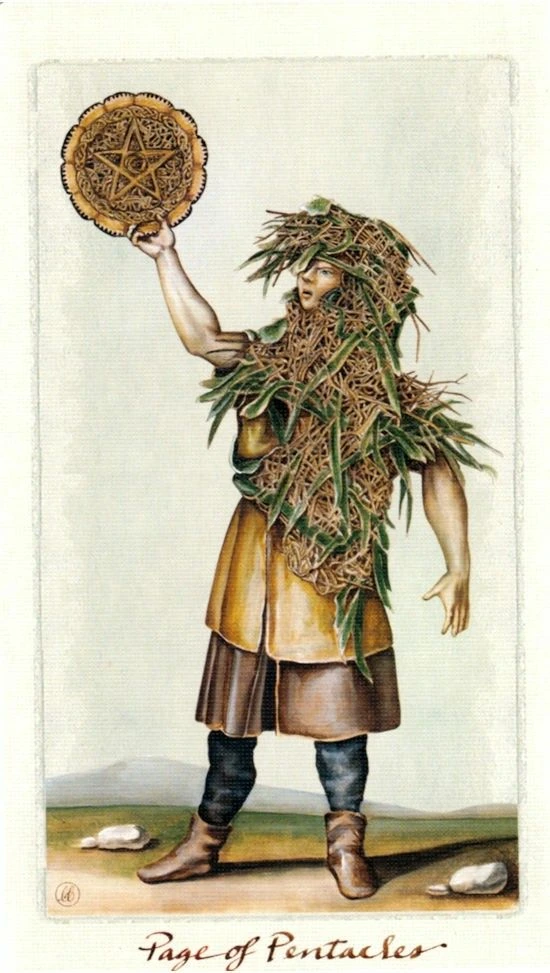
One card, many perspectives
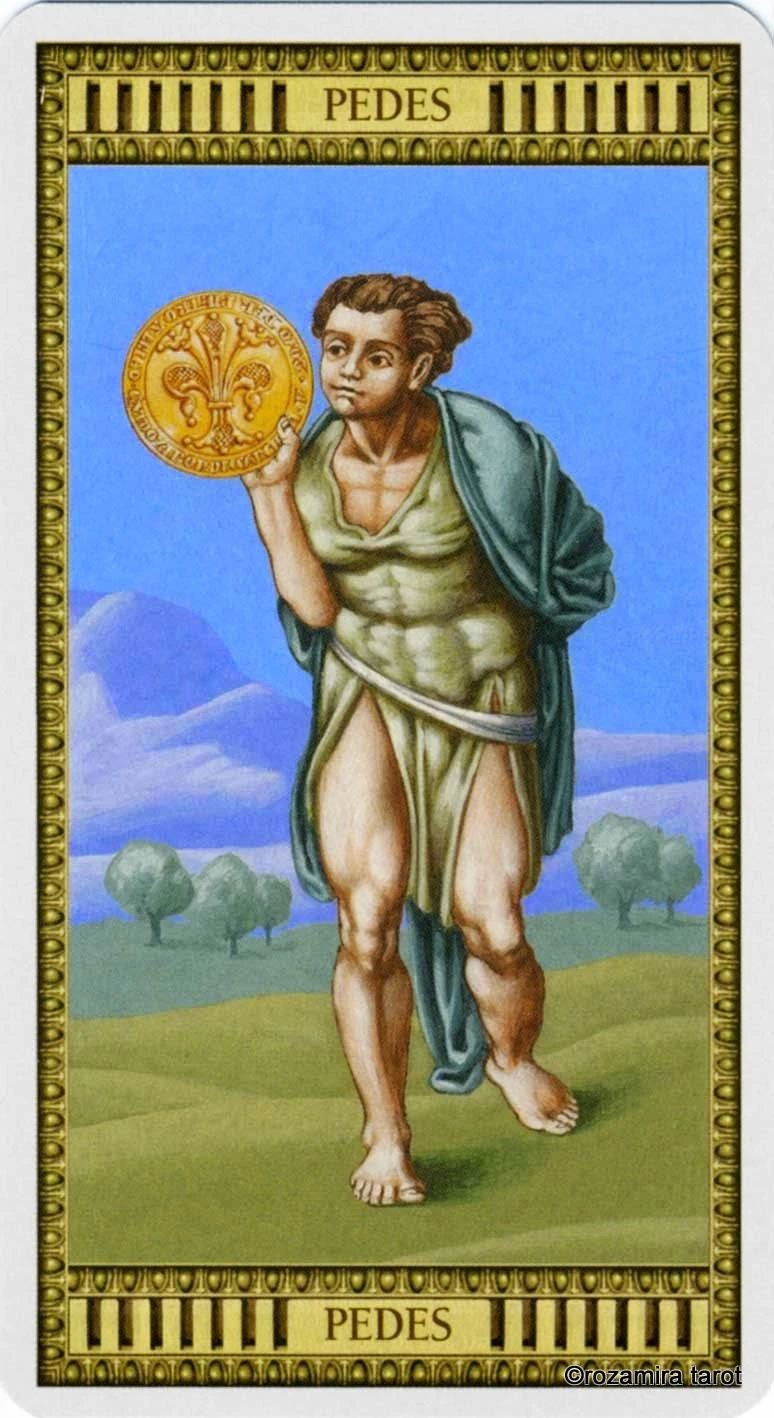
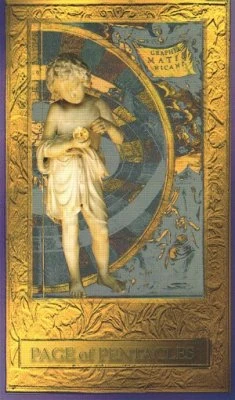
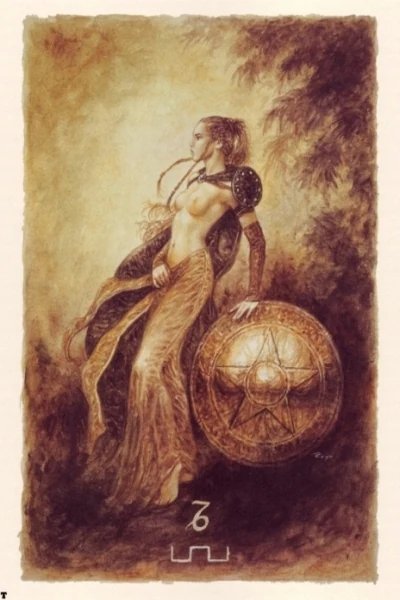
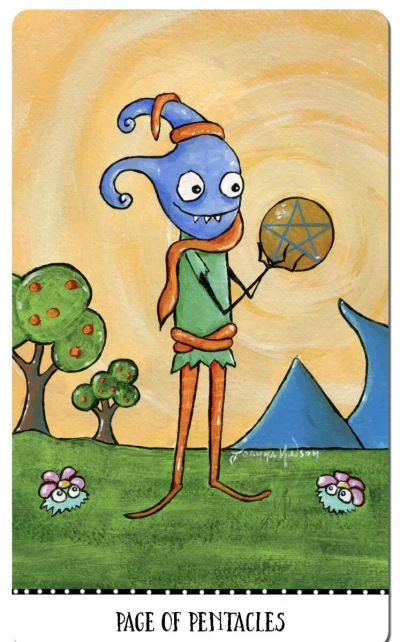
See Page of Pentacles Card from Other Decks
Discover how other tarot decks interpret this card. Select a deck to explore its full review and gallery.








Page of Pentacles FAQ
What does the Page of Pentacles mean upright and reversed?
Upright, it commonly concerns learning, practical opportunities, and patient beginnings. Reversed, it can suggest distraction, avoidable delays, or a plan that needs adjusting. Use the question and surrounding cards to decide which interpretation fits.
Does the Page of Pentacles represent a person?
It can represent a learner, a messenger, or an approach to a situation. People of any gender or age can use the archetype. A card does not identify someone's appearance, diagnose them, or reveal their private feelings.
Is the Page of Pentacles a yes or no card?
Some readers lean toward a conditional yes for a realistic beginning supported by effort. Reversed, they may suggest not yet while you check the details. Neither answer guarantees a result or substitutes for another person's consent.
What should I do after pulling the Page of Pentacles?
Choose one practical step you can try, make time for it, and review what you learn. Ask for useful feedback rather than expecting a perfect first attempt. If resources are tight, reduce the scope or seek support before committing more.