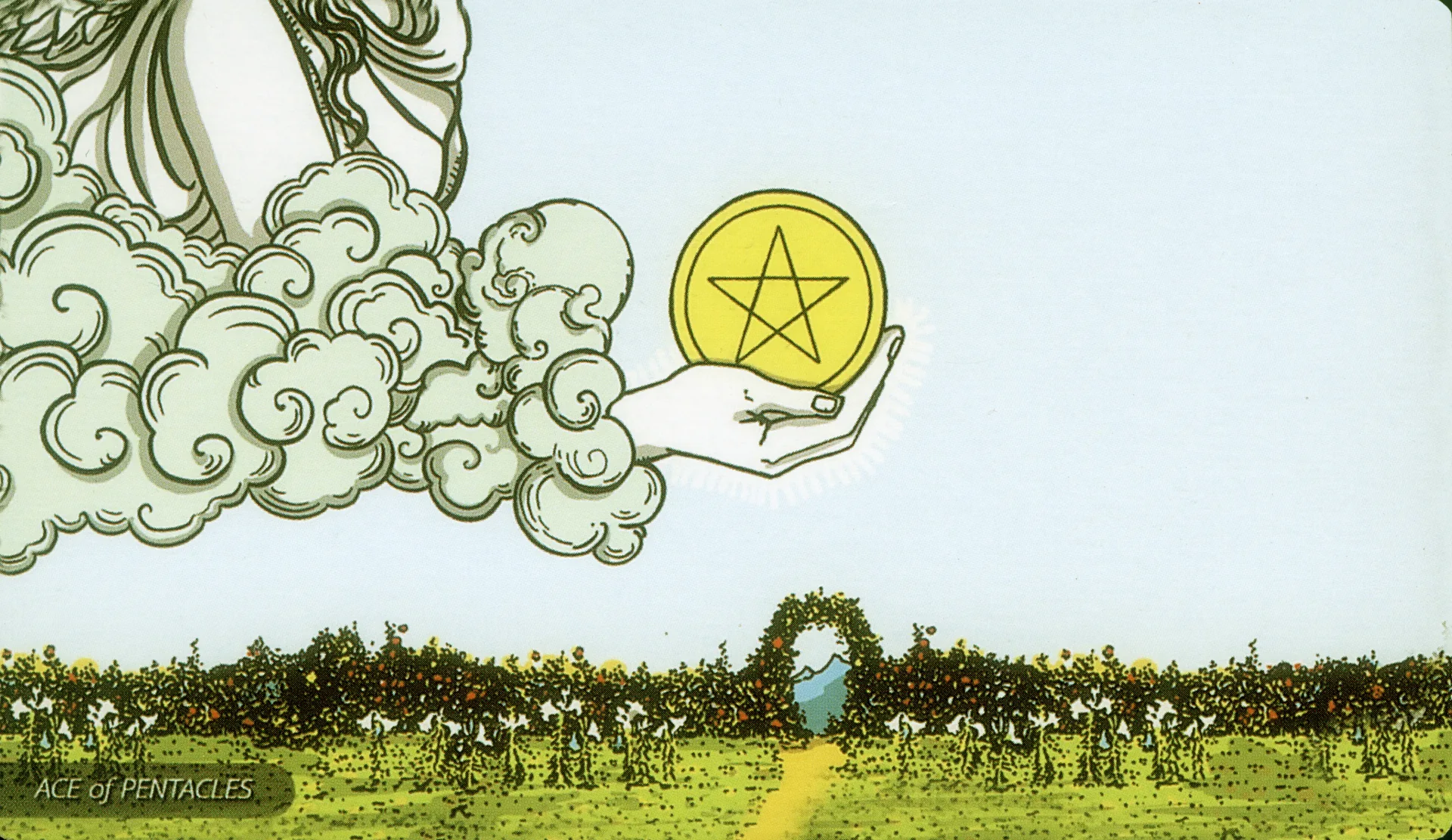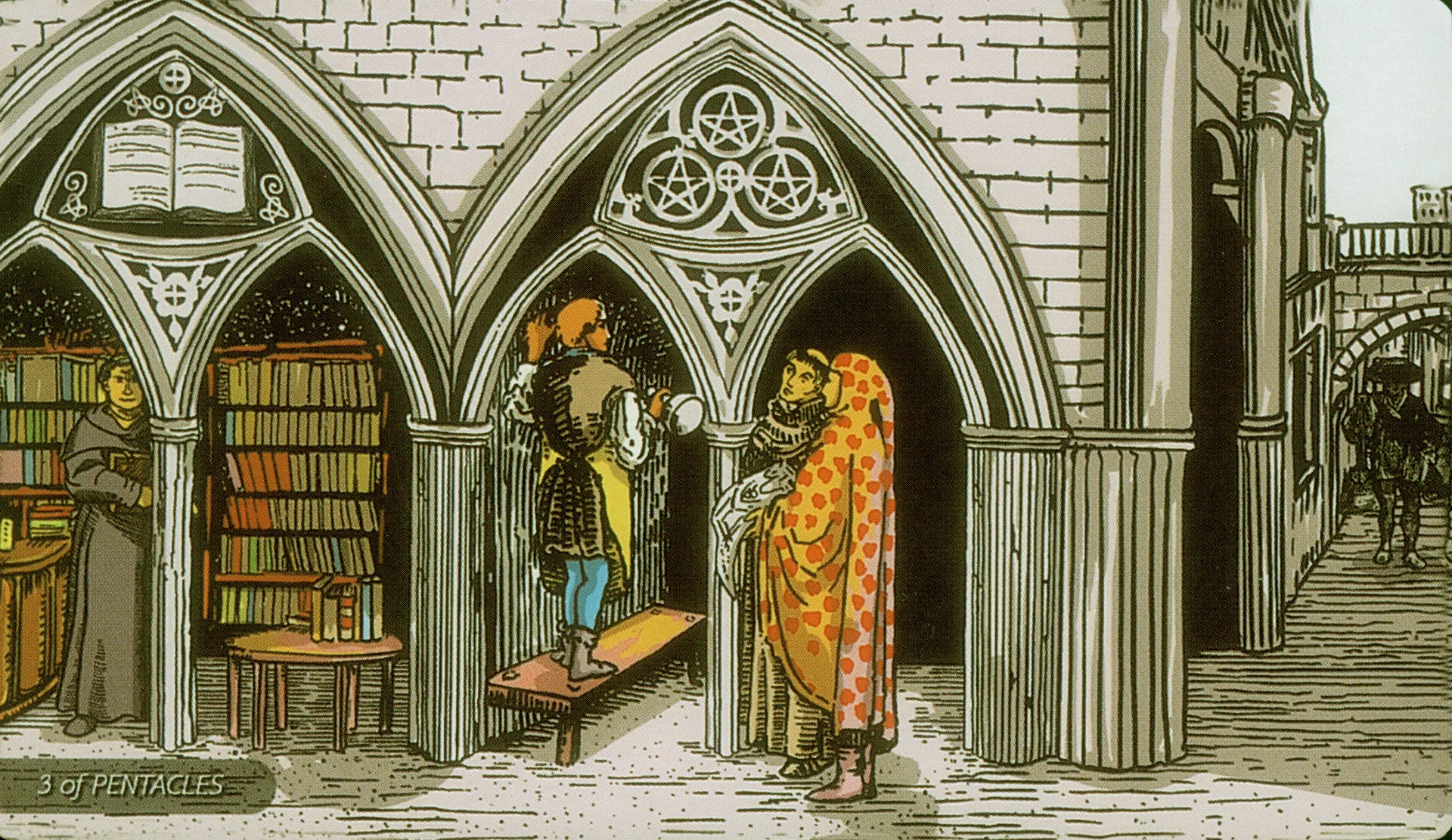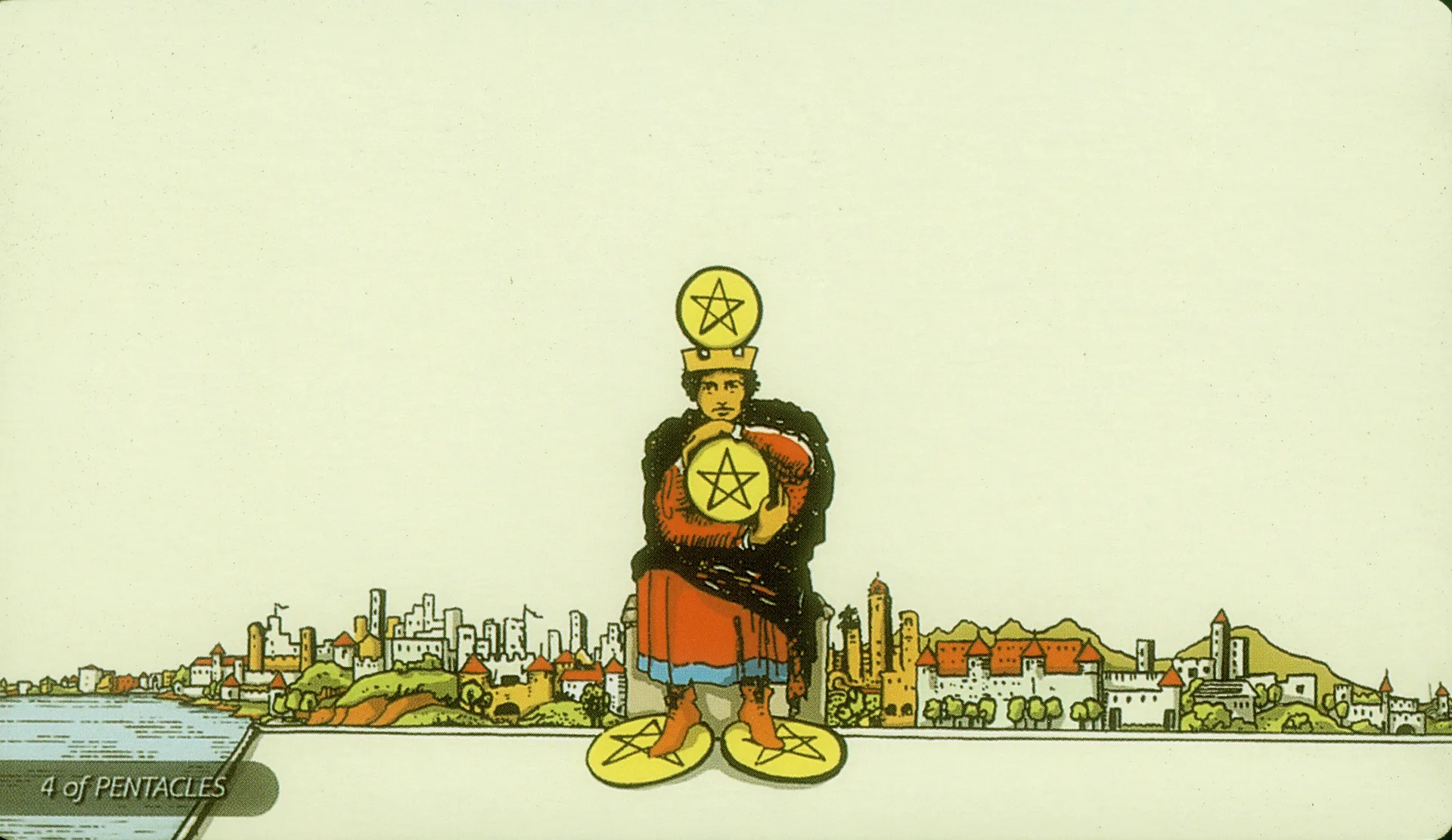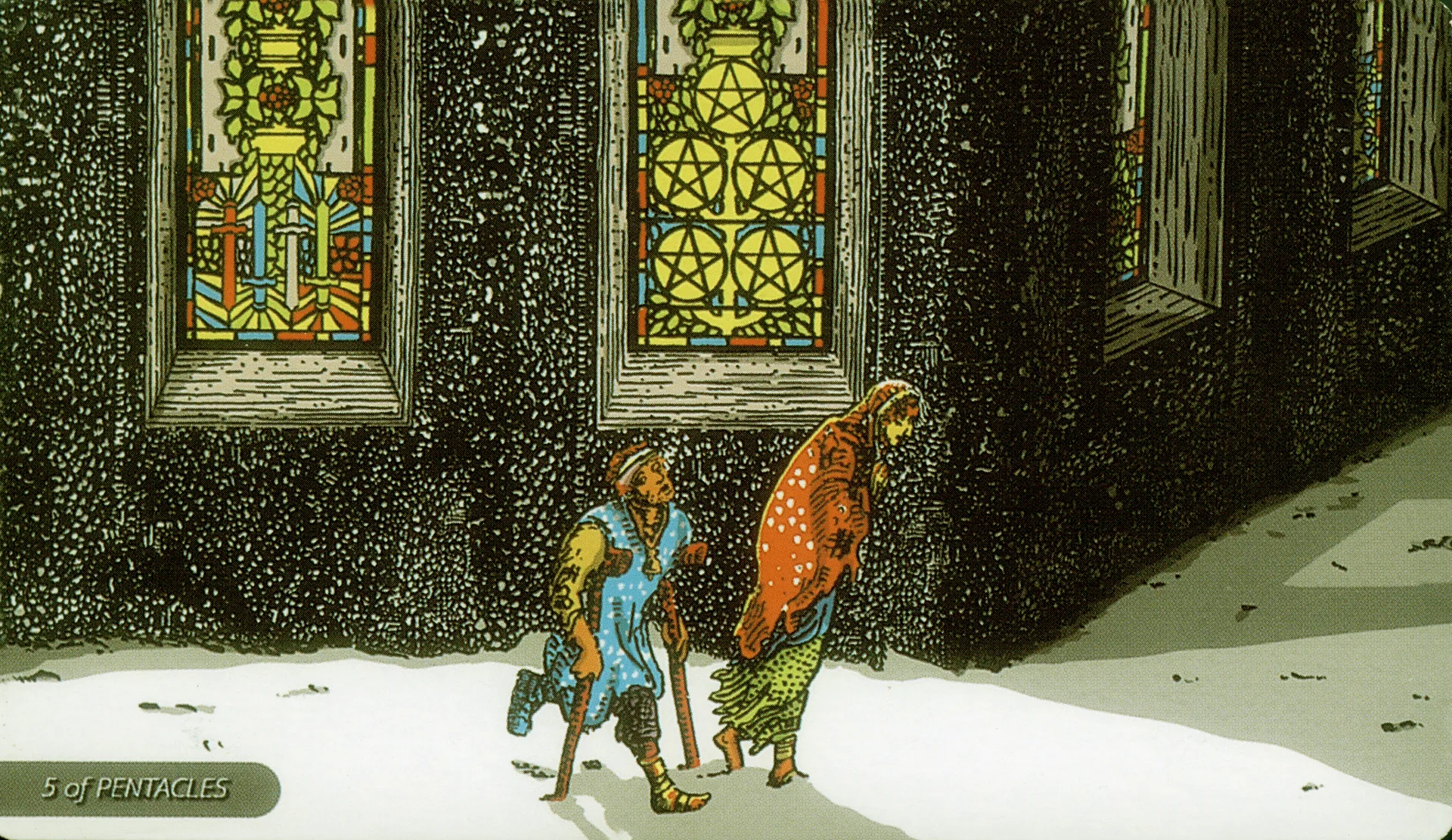
The Eight of Pentacles tarot card commonly points to practice, craftsmanship, and learning through repeated effort. It asks you to pay attention to the task in front of you: what is getting better, what still needs work, and whether the method suits the result you want.
Upright, it often encourages dedication and commitment to a useful skill. Reversed, it can raise questions about boredom, rushed work, perfectionism, or effort spent in the wrong place. These upright and reversed tarot card meanings offer a way to reflect, not a guarantee of success or a verdict on your worth.

8 of Pentacles Tarot Card Meaning at a Glance
- Main keywords: practice, study, dedication, improving skills
- Upright meaning: things move when you practice, commit, or respond quickly. In the Pentacles suit, this connects to money, school, work, health routines, home, and real-world results
- Reversed meaning: burnout, delay, or scattered effort. The reversed meaning asks you to check how you are handling money, school, work, health routines, home, and real-world results
- Yes or no: yes if you are ready to put in the work
- Best question to ask: What is this card trying to help me understand right now?
Eight of Pentacles upright meaning: practice with purpose
The upright Eight of Pentacles suggests steady attention to a craft, a course, or a responsibility. You might be learning a new software tool, preparing for an exam, or practising a difficult conversation. The useful question is what you can do a little more accurately next time.
It is often called the card of apprenticeship. That does not mean you must be a beginner: an experienced cook can still improve a technique, and a confident manager can learn to give clearer feedback. Mastery involves being willing to notice mistakes without turning every mistake into a personal failure.
To hone your skills, choose something specific enough to practise. Instead of deciding to become better at writing, revise one paragraph for clarity and ask someone what they understood. A small task with feedback gives you more information than another hour of repeating the same approach.
Enjoyment matters too. A passion project may be rewarding even when it never becomes paid work. Making something for the pleasure of learning can be a sound use of your time; every hobby does not need a business plan.
Eight of Pentacles in a tarot reading
When this card appears in a tarot spread, read its position before deciding what it asks of you. As advice, it can encourage diligent work and learning. As an obstacle, it may describe getting so absorbed in details that you lose sight of the purpose. As an outcome, consider what sustained practice could make possible rather than treating achievement as certain.
A tarot reader can also ask whether the task needs more effort or a different method. If you have repeated the same exercise for weeks without understanding it, another explanation or a teacher's feedback may help more than simply adding hours.
Love and relationships: care you can practise
In a love reading, this card can point to the everyday habits that make a relationship work. Remembering an agreed plan, listening without interrupting, or sharing chores fairly can matter more than a dramatic declaration. Look for care that both people can recognise.
You might decide to set aside twenty minutes each week to discuss how things are going. Choose one issue and one change to try, then return to it. A conversation becomes useful when the agreement is specific enough for both of you to know what it means.
For someone who is single, the card may encourage learning about your own preferences and boundaries. Your love life is not an exam you pass by improving yourself enough. You can practise introducing yourself or saying what you want without assuming that every interaction must lead to a relationship.
Another reading is that a focus on work leaves little room for connection. Check the pattern rather than labelling someone uncaring. The card cannot reveal another person's private feelings, prove loyalty, or promise that effort will bring them back. Respect their stated choices, and do not treat coercion or abuse as a relationship skill you need to master.
Career, money, and school: build a useful skill
In work or education, the Eight of Pentacles may fit an apprenticeship, professional training, or a period of improving your skills. Before paying for a course, check what it teaches, who provides feedback, and whether its qualification is recognised where you need it.
At work, careful checking can improve the result. Compare a finished report with the brief, test a repair before returning it, or ask a colleague to review an unfamiliar calculation. Being disciplined and focused is useful when it helps you notice what matters; it is less useful when you polish details that nobody asked for.
Financially, the card invites attention to repeatable habits rather than a promised windfall. Check invoices, understand fees, and compare a budget with actual spending. Material things cost money to make and maintain, so allow for tools, materials, and time when pricing a project.
If financial insecurity is pushing you to work every available hour, the answer may involve support, fairer pay, or a different plan rather than more self-improvement. Tarot cannot forecast income or replace qualified financial advice. Check the real terms before borrowing, investing, or leaving a job.
Eight of Pentacles reversed meaning: review the method
The reversed Eight of Pentacles can describe effort that has become rushed, repetitive, or disconnected from the goal. You may be finishing assignments without understanding them, taking shortcuts you later have to repair, or spending hours on a detail because you are afraid to show the work.
Sometimes the issue is perfectionism. Decide what a good enough result needs to include and when you will stop. If a short email already says what the reader needs, another half-hour of rewriting may not improve it.
Sometimes it is boredom or a lack of feedback. Before abandoning the task, ask whether a harder exercise, a clearer explanation, or a different setting would make learning useful again. Keep learning does not have to mean keeping the same routine.
The card can also prompt a check on overwork. The label workaholic may capture a familiar pattern, but a card cannot diagnose you. Notice whether work is crowding out sleep, meals, friendships, or time you wanted for yourself. A realistic workload and support may matter more than another productivity technique.
Eight of Pentacles yes or no meaning
For a question about learning or completing a task, this card is often read as a conditional yes: progress depends on practice, resources, and a workable method. It does not promise that dedication alone can overcome every barrier.
Reversed, it may suggest not yet, especially if the plan lacks preparation or you are too tired to do it well. For decisions about another person's choices, health, or major financial commitments, use real information rather than treating a yes or no reading as evidence.
Eight of Pentacles advice: make practice useful
Choose one small task and a way to check the result. Record a short piece of music and listen for timing, solve a problem without looking at the answer, or try one new recipe before changing the whole menu. Focus and patience work best when you know what you are practising.
If you want to achieve your goals, make the routine fit your actual week. Two short sessions you can keep may be more useful than an ambitious schedule you abandon. Rest belongs in that plan too.
Health, well-being, and spiritual practice
For well-being, the card can prompt reflection on manageable routines and access to support. Follow medical guidance for exercise, medication, or rehabilitation rather than using a reading to set treatment. Tarot cannot diagnose illness, confirm pregnancy, or promise a cure.
In spiritual practice, repetition may help you pay attention: a few minutes of journaling, meditation, or reading can be enough. An oracle or tarot deck can invite reflection, but it does not test whether you are spiritually advanced. Notice whether the practice supports your life rather than becoming another obligation.
One archetype, four perspectives
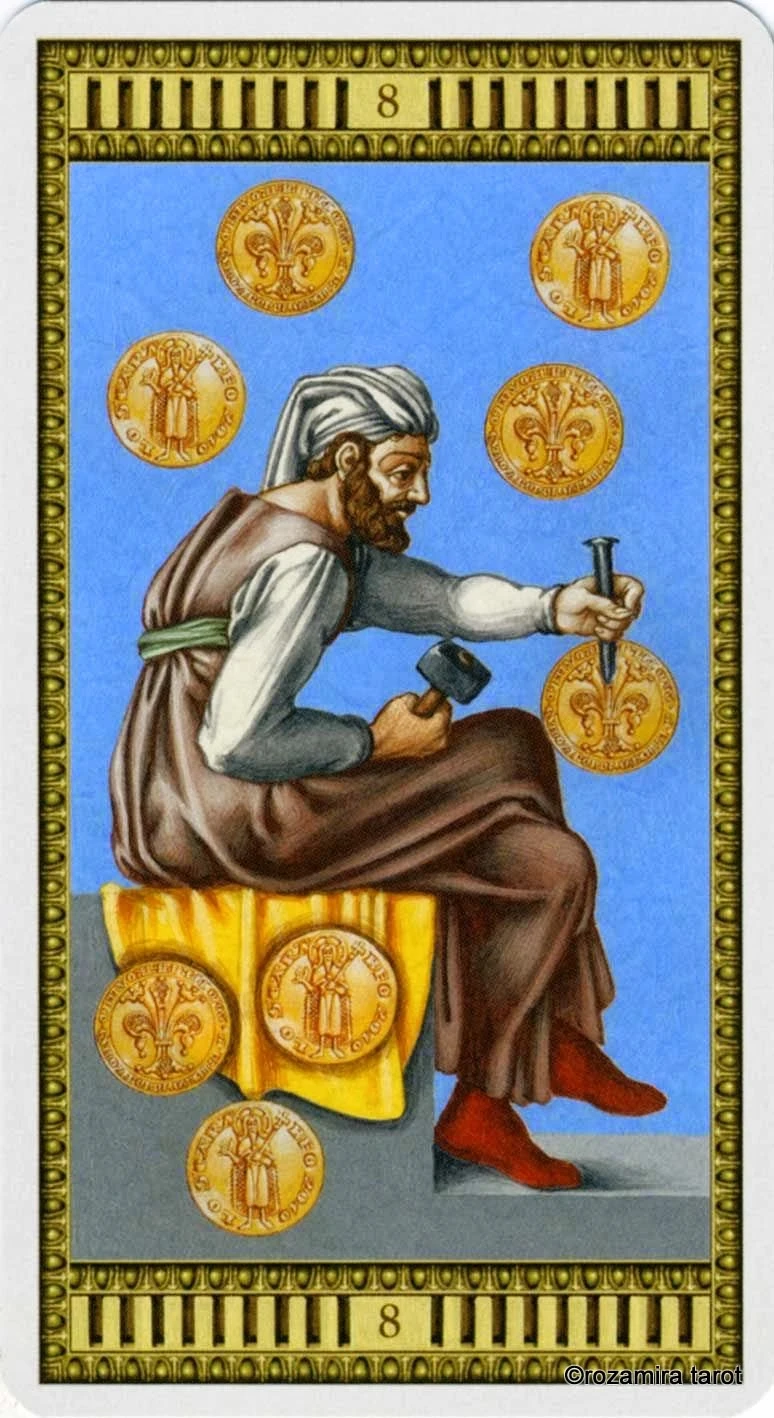
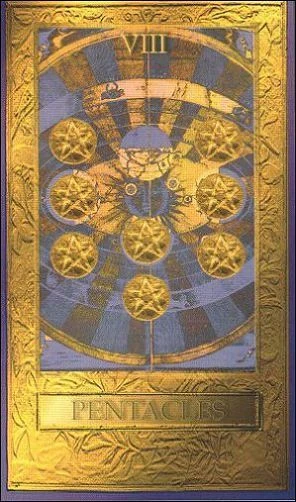
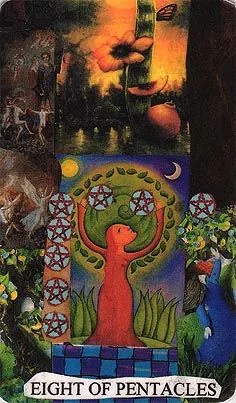
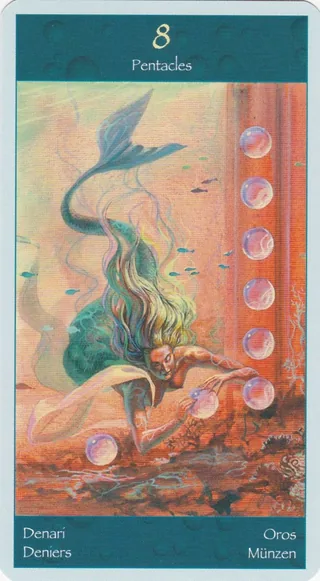
Eight of Pentacles Across Four Tarot Decks
Compare the familiar Rider-Waite-Smith card with the moments before, behind and after the classic scene in three Lo Scarabeo decks.
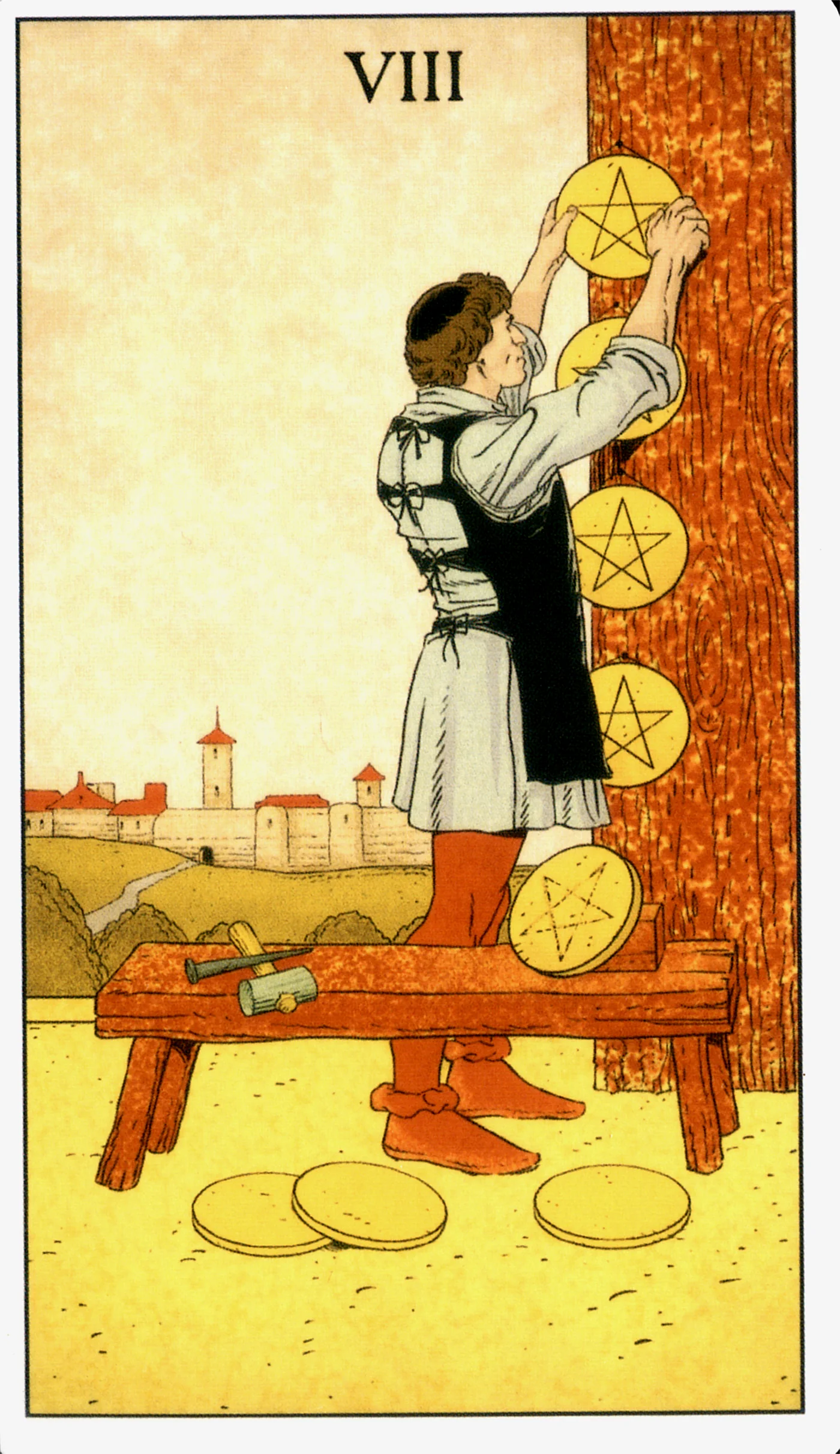
What apparently happens just before
What actually happened
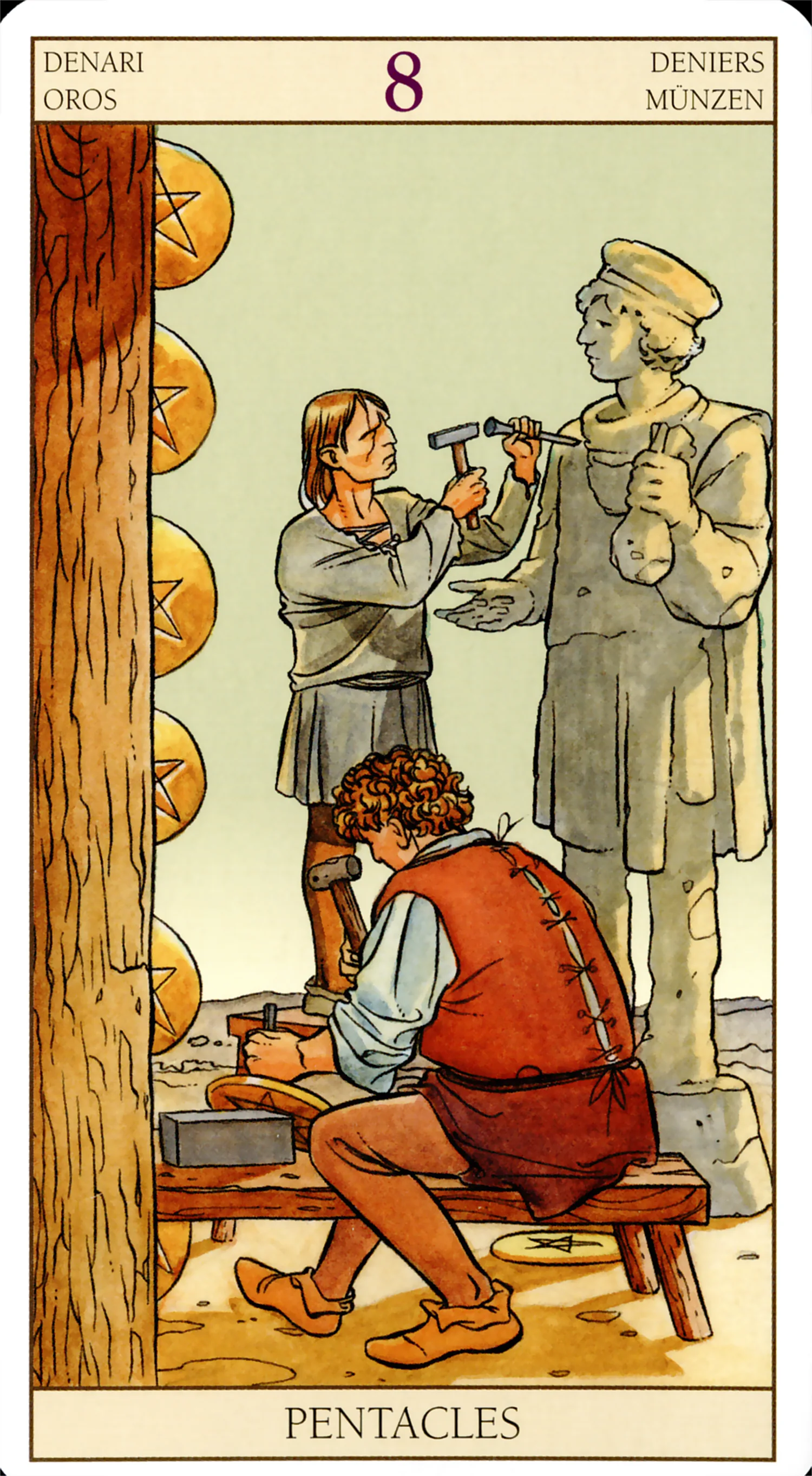
What happened on the opposite side

What apparently happened afterwards
Eight of Pentacles card description and symbolism
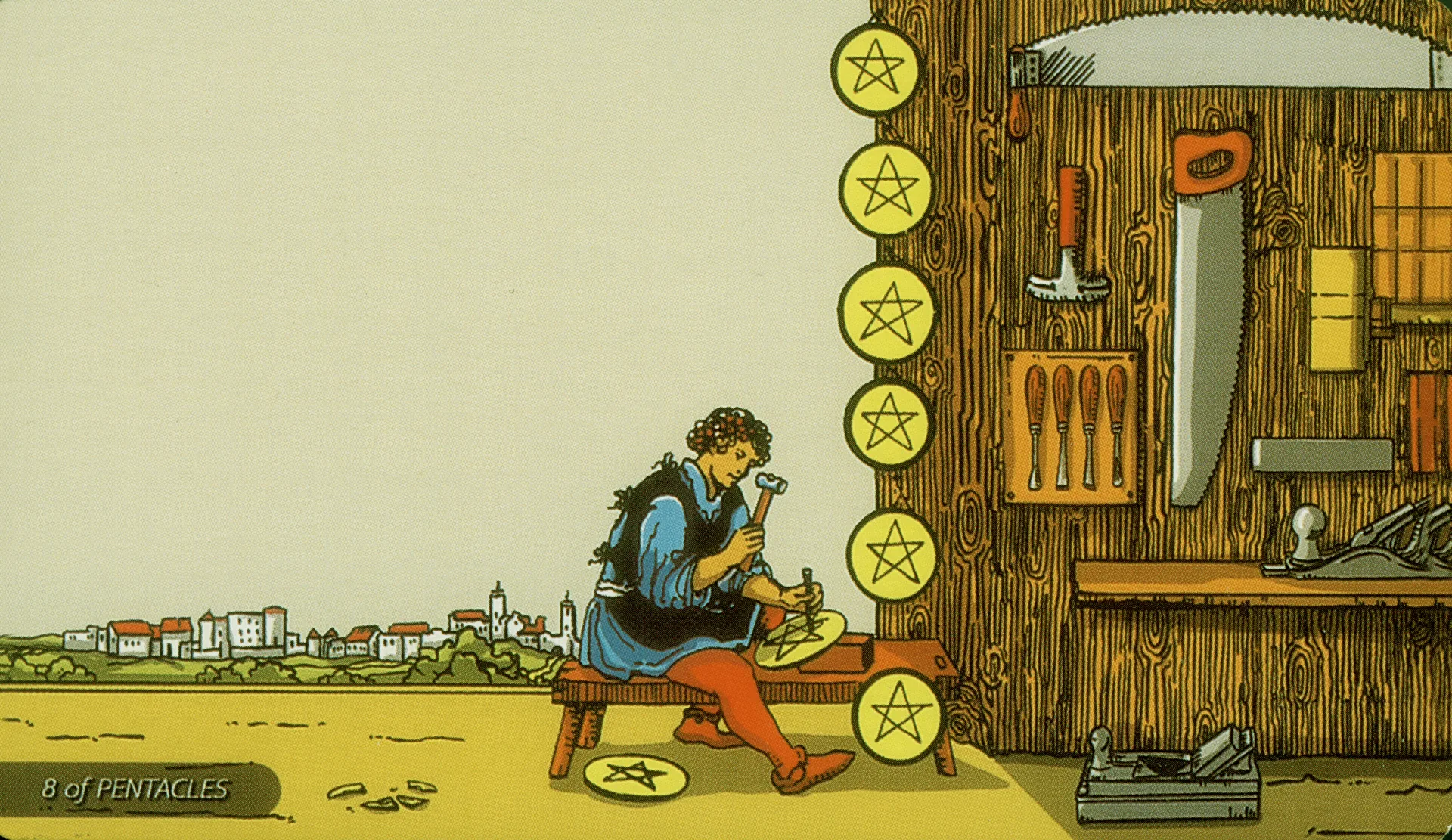
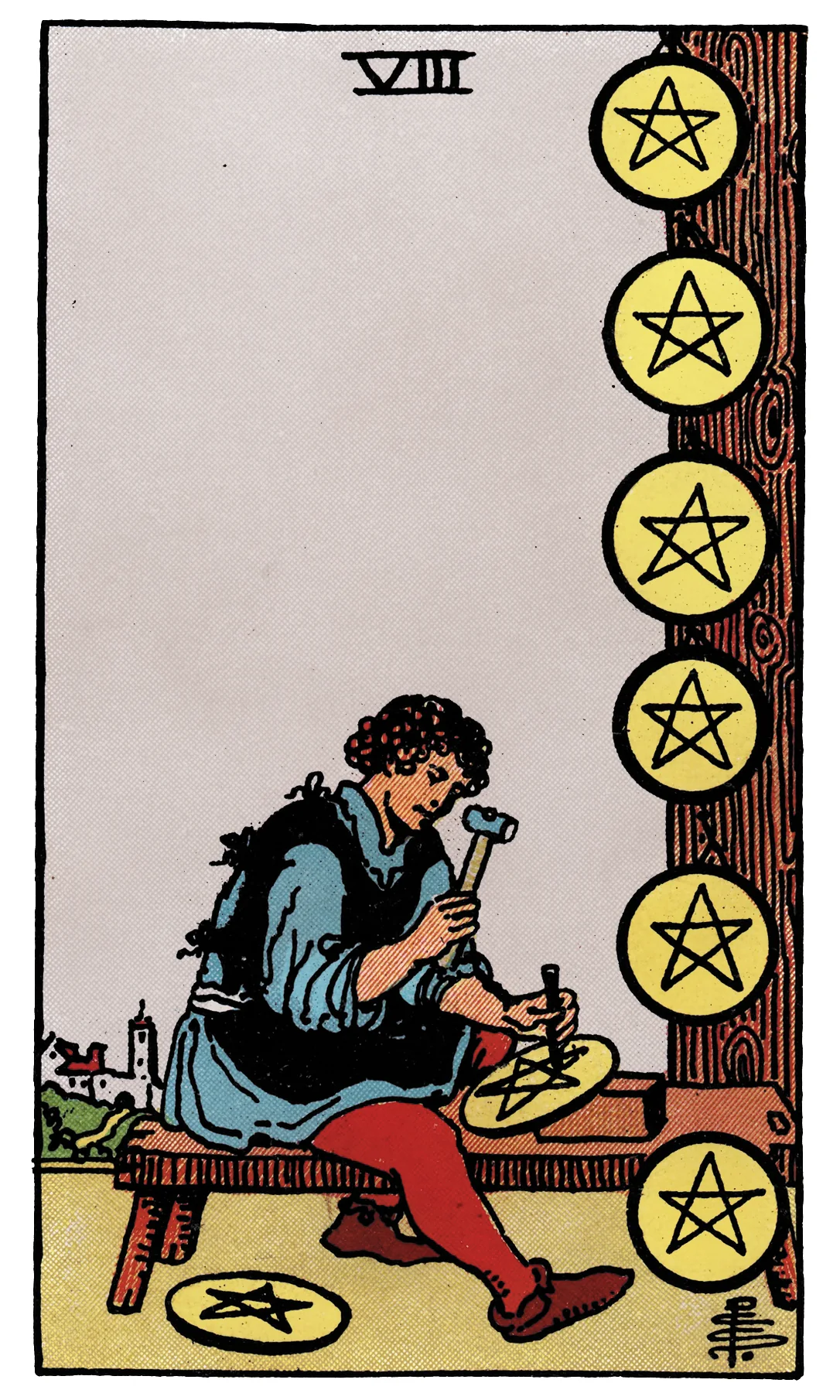
The verified Rider-Waite-Smith portrait shows a seated craftsperson working on a pentacle with a hammer and a small tool held against the disk. Six finished disks hang along a vertical wooden support, one rests on the ground, and one is being worked on. The Roman numeral VIII appears at the top.
Each pentacle shape contains a five-pointed star within a circle. The figure bends toward the work on a bench, while buildings appear in the distance at the left. The repeated disks make the theme of practice easy to see, though the picture does not tell us how long the task has taken or whether the worker is happy.
The Eight of Pentacles shows attention directed at a particular object. Readers often associate the distant town with a temporary separation from distractions, but solitude is an interpretation, not proof that learning must happen alone. Feedback and company can be part of a good practice routine.
Rank, suit, and astrology traditions
The 8 of Pentacles is a rank-eight Minor Arcana card in the suit of Pentacles, also called Coins. In a standard tarot deck of 78 cards, it is not the numbered VIII Major Arcana card. Pentacles commonly relate to Earth, everyday resources, and practical skills.
Golden Dawn-derived correspondences associate this card with the Sun in Virgo. Readers may use that tradition to explore careful attention and craft, but astrology is an interpretive system rather than a scientific explanation. Other decks and traditions can differ.
If you are looking up the 8 of Pentacles tarot meaning in another deck, compare the actual image with the guidebook. A wand, cup, or sword elsewhere in a spread may change the emphasis, but it does not change this card's suit.
Waite's historical account and modern readings
In The Pictorial Key to the Tarot, A. E. Waite describes an artist in stone at work, exhibiting the results as trophies. His meanings include work, employment, commission, craftsmanship, and skill in craft and business, possibly in a preparatory stage.
His reversed list includes voided ambition, vanity, cupidity, exaction, usury, and skill turned toward cunning or intrigue. Modern readings often focus instead on poor preparation, boredom, perfectionism, or overwork. Those are later interpretations, not a verbatim summary of Waite.
Surrounding cards and practical questions
With the Three of Pentacles, this card can invite a comparison between independent practice and learning with a team. Who can give useful feedback? With the Seven of Pentacles, consider the difference between doing the work and reviewing whether the investment is worthwhile.
With the Eight of Swords, you might explore a belief that you are incapable before checking what instruction you need. With the Ten of Wands, achieving goals may be competing with an unsustainable workload. These combinations are prompts for discussion rather than rules that fix an outcome.
Ask what one skill needs attention, how you will recognise improvement, and what would make the practice enjoyable enough to continue. A free tarot exercise can be as simple as drawing this card and writing one checkable action beneath it; you do not need to turn reflection into another large project.
One card, many perspectives
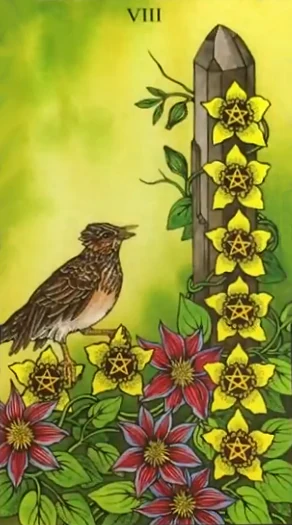
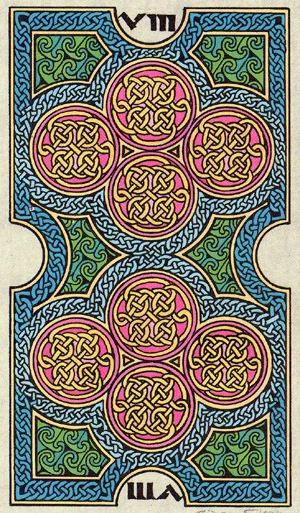
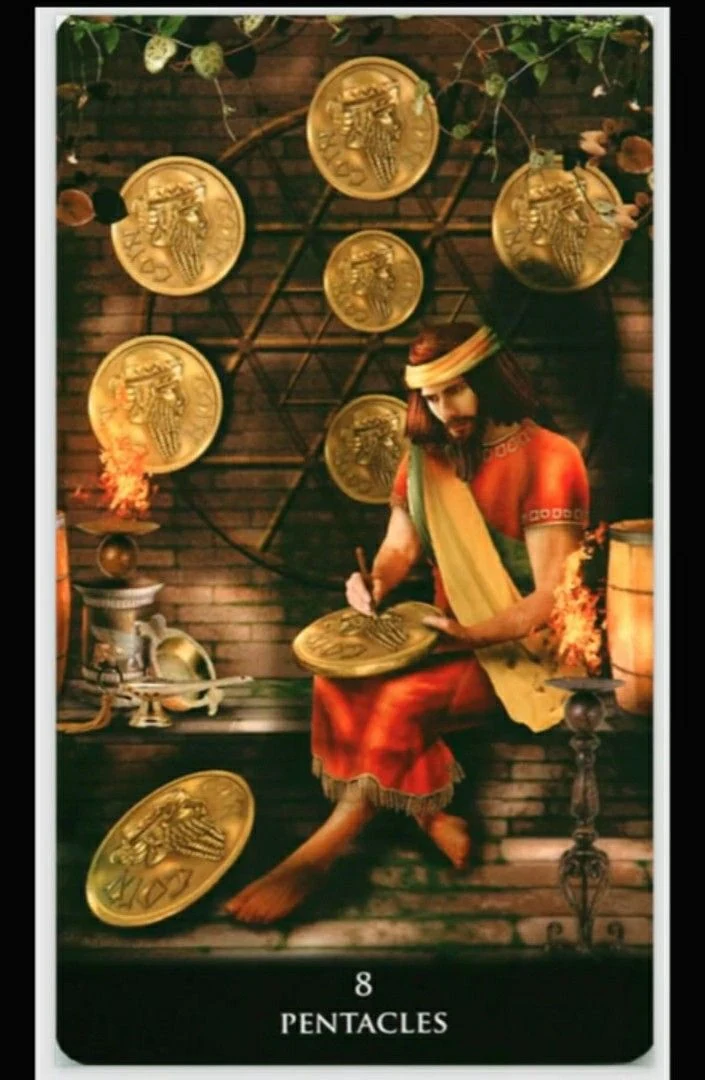
See Eight of Pentacles Card from Other Decks
Discover how other tarot decks interpret this card. Select a deck to explore its full review and gallery.






Eight of Pentacles FAQ
What does the Eight of Pentacles mean upright and reversed?
Upright, it commonly encourages practice, craftsmanship, and learning through effort. Reversed, it can raise questions about rushed work, boredom, perfectionism, or overwork. Check which interpretation fits the question and your actual circumstances.
Is the Eight of Pentacles a good card?
It can be encouraging for study or practical learning, but it does not guarantee success. It is useful when it helps you choose a task, find feedback, and recognise progress without demanding perfection.
Does the Eight of Pentacles mean someone wants to work on a relationship?
It can prompt reflection on everyday care and shared effort, but it cannot establish another person's private intentions. Ask them directly and consider whether their actions match what they say.
What should I do after pulling the Eight of Pentacles?
Choose one skill or task, practise a manageable part of it, and check the result. If effort is not helping, seek feedback or change the method. Allow time for rest rather than assuming that more hours always mean better work.