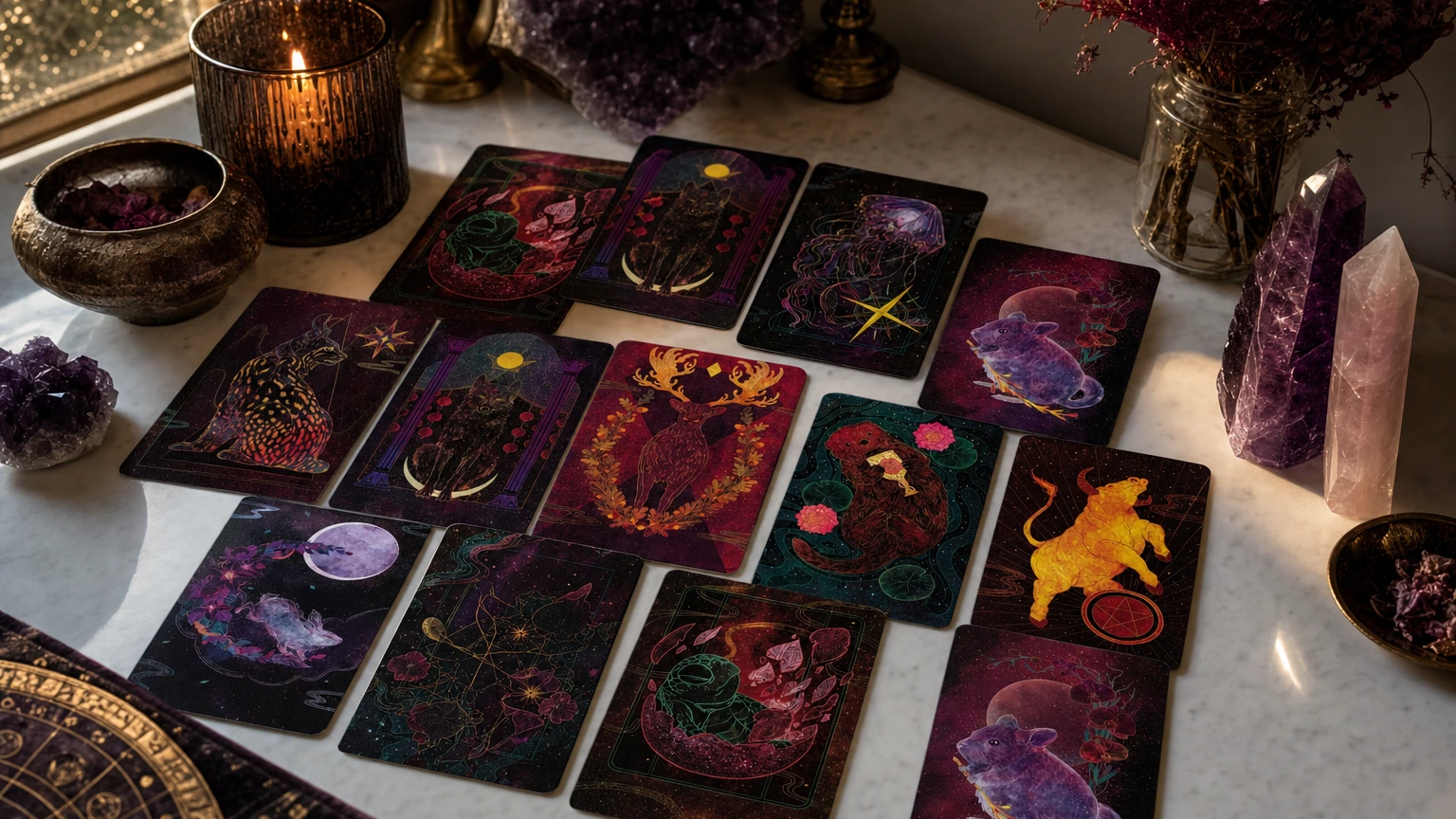
Ancient Minchiate Etruria Tarot is not an expanded Rider–Waite–Smith deck. It reproduces a Florentine minchiate pack dated 1725, with 97 cards and a sequence that belongs to a different historical card-game tradition. The edition discussed here is the Lo Scarabeo reproduction, listed as a 1995 publication by contemporary deck catalogues. Its original eighteenth-century artist is not identified in the sources consulted. Crediting a modern tarot author with drawing those historical cards would confuse a reprint with its source.
The first thing to notice is the scale of the pack: 41 trumps, counting the Fool, alongside the familiar 56 cards in four suits. The extra trumps bring zodiac signs, elements and additional virtues into the picture. They are not bonus oracle cards pasted onto a modern 78-card tarot; they are part of the minchiate system. A short independent flip-through gives a look at a deck titled Antiche Minchiate Etruria. The video’s title identifies the deck, but the video alone does not establish which printing or box a seller currently has.
Ancient Minchiate Etruria Tarot Gallery
Verified exact-edition card images from the Damataro source board, named from the supplied pin titles. The gallery is a clean partial view of the documented 97-card pack; no missing cards are inferred.
Which Ancient Minchiate Etruria edition is this?
The reference catalogue identifies a Lo Scarabeo publication distributed in the United States by Llewellyn, copyright 1995, reproducing a source deck the publisher dates to 1725. A specialist dealer entry independently calls it a 1995 Italian publication by Lo Scarabeo and describes it as a photo-reproduction of a 97-card Florentine deck. That is the identifiable edition meant by this review, rather than every later product called Minchiate Etruria.
There is an important wrinkle for collectors: that dealer entry’s brief configuration field says “78 cards,” yet its own detailed description calls the same edition a 97-card reproduction. The detailed description agrees with the dedicated deck catalogue and independent review, so the isolated 78-card field should not be used as an inventory. Confirm the actual count and packaging with an individual seller. A different Lo Scarabeo Minchiate Tarot reprint and other Etruria-year reproductions should not be silently treated as the same 1995 issue.
Who made the original cards?
The source pack is described as Florentine and dated 1725, but the reviewed catalogues do not establish a named engraver or individual artist for its images. Lo Scarabeo is the publisher of the modern photo-reproduction, not the eighteenth-century illustrator. Likewise, a name appearing as an author on a reseller listing is not enough evidence to assign the original artwork to that person. The honest credit is an unidentified historical Florentine artist or workshop; reproduced by Lo Scarabeo.
Reproduction has its own character. One independent appraisal describes etched and hand-coloured source images and notes that some numbered banners look cropped in the published cards. That is a report about the reviewed copy, not a claim that every surviving original was cut in the same way. If a flag seems to run out at the edge, resist filling in its missing detail from a different edition’s image.
How the 97-card structure changes a reading
The pack has 56 suit cards, but the trump sequence does not match the usual 22-card Major Arcana. The added twelve zodiac signs and four elements can bring a question about temperament or conditions into sharper focus. Faith, Hope, Charity and Prudence also have places within the expanded sequence. These are historical card subjects, not a requirement to make predictive claims about a person’s birth chart.
More startling is what you will not find where a modern tarot reader expects it. The Papess or High Priestess, the Empress and the Pope or Hierophant are absent under those familiar titles; the early sequence instead includes a Grand Duke and eastern and western emperors. An owner’s detailed review warns that the included folded instruction list gives misleading conventional names for some cards. Before attaching a familiar Major Arcana interpretation to a numeral, check the pictured figure and a minchiate-specific order.
A useful first exercise
Lay out a small number of cards and write down what each actually shows or names before reaching for a standard tarot keyword. Separate a trump from a suit card; then ask whether a zodiac, virtue or element is describing the situation, a quality to cultivate or a tension in the question. If a printed numeral and a booklet’s title disagree, note both and investigate rather than forcing the pack into a modern sequence.
The suits and the image language
The four suits are described as clubs, chalices, swords and pentacles in the card inventory. The numbered suit cards are chiefly suit-symbol or pip designs rather than scenic Waite–Smith illustrations. Some court cards have features unlike a standard modern deck: the catalogue notes hybrid man-and-beast knights, and valets depicted differently across the suits. These differences reward looking closely at the actual image rather than assuming every card tells a ready-made story.
Pips can feel spare if you learned to read by recognising illustrated scenes. Try comparing the arrangement and density of suit marks with the emotional tone of neighboring cards. A chalice card need not come with a painted domestic vignette to invite a question about feeling and relationship. The visual restraint may give an experienced reader more room to interpret, while asking a newer reader to bring a sound understanding of number and suit.
Is Ancient Minchiate Etruria suitable for beginners?
It is a fascinating historical study deck, but probably not the gentlest first deck for someone expecting the common 78-card, 22-trump structure. The unfamiliar early trumps, enlarged sequence and pip-style minors ask for some orientation. A reader who already knows a standard tarot can start by comparing the shared suits, then work through the unfamiliar trump figures one at a time rather than memorising all 97 positions before the first reading.
It is especially appealing if you enjoy old printed images, historical card games or the meeting of virtues, elements and astrology in a single visual sequence. If your main wish is a large modern interpretive guide and scenic illustrations on every pip, look carefully at the documented fold-out rather than expecting a contemporary teaching system in the box.
What to check before buying a copy
Ask for clear photographs of the box, a sampling of trumps and suits, the card backs and the complete card count. Make sure the seller identifies the 1995 Lo Scarabeo reproduction of the 1725 Florentine pack rather than another minchiate release. Check the folded instruction sheet if it matters to you, but do not rely on its card list as an infallible naming authority; the independent review records errors. The specialist dealer labels this edition out of print, which says something about its catalogue status, not a guarantee about any particular seller’s stock or asking price.
This review deliberately offers no gallery, shopping link or endorsement of a currently listed copy. The worksheet’s pin total is not a verified card inventory. A gallery and product recommendation would require exact-edition image and listing checks beyond the text evidence here.
Final Thoughts
Ancient Minchiate Etruria Tarot opens a different doorway into tarot history. Its 97 cards ask you to set aside the familiar Major Arcana checklist and pay attention to a Florentine sequence with its own logic: virtues, elements and zodiac figures alongside the suits. The Lo Scarabeo reproduction makes that old design accessible, though an imperfect instruction list means patient comparison matters. For the curious reader, the pleasure is not in pretending this pack is a modern deck with extra cards; it is in letting its unfamiliar structure teach you to look again.
Ancient Minchiate Etruria Tarot FAQ
How many cards are in the deck?
The documented minchiate pack has 97 cards: 41 trumps including the Fool and 56 suit cards. A dealer’s stray 78-card configuration field conflicts with its own 97-card description and other deck references; check a physical copy rather than adopting that field.
Who is the artist?
The original Florentine artist is not established in the sources checked. Lo Scarabeo published the 1995 reproduction of the historical 1725 pack; it is not a credit for drawing the originals.
Is it a Rider–Waite–Smith tarot?
No. It belongs to the Florentine minchiate tradition, with a different trump order and pip-style suit cards. Familiar tarot knowledge can help with comparisons, but cannot substitute for identifying each card in this pack.
Are there really zodiac and element cards?
Yes. The expanded trump series includes twelve zodiac signs and four elements, along with virtues and other distinctive figures. They form part of the 97-card system, not an optional modern add-on.
Is the included card list reliable?
An independent reviewer documented incorrect conventional labels in the fold-out instruction sheet, including names assigned to figures not actually present under those titles. Compare the image and minchiate-specific references before treating a label as definitive.
Sources and scope
The edition and card-system catalogue records the Lo Scarabeo release, the 1725 source attribution and 97-card structure. The specialist retailer entry corroborates publisher, year and reproduction, despite an inconsistent short configuration field. An independent review archive supplies firsthand reports of the reproduction and booklet, and the deck-named flip-through provides a visual supplement. This is source-based commentary, not a claim of personal handling, an authentication of a particular sale listing or proof of a named eighteenth-century artist.