Leonardo Da Vinci Tarot Card Gallery
Browse the Leonardo Da Vinci Tarot cards in tarot order. Tap any card to open a larger carousel view.

A note from Aurica
Leonardo Da Vinci Tarot feels like opening an old portfolio and discovering that the sketches have been quietly dreaming while the room slept. I love its soft ivory borders and smoke-green shadows: familiar faces appear beside impossible machines, and every card seems to hold both a finished thought and the first restless line of the next one.
The Star draws my eye because her lifted arms make hope look active rather than distant. Beside her, The High Priestess wears stillness almost like a tall white crown. Together they ask a beautiful question in a reading: which possibility needs my hands, and which mystery needs enough silence to reveal its own shape?
I read these images slowly. First I notice the gesture or fragment that feels alive, then I return to the card’s traditional role and listen for how the surrounding cards alter its mood. A wheel, a wing, or a watchful face may become practical advice when it points toward movement, patience, curiosity, or the courage to revise a plan that no longer fits.
This is a deck I would reach for when a question needs imagination without losing its footing. Its Renaissance figures remind me that insight rarely arrives perfectly complete; sometimes it begins as a faint line worth following. Let these cards encourage you to trust your curious mind, keep refining what you see, and give your next bright idea room to become real.

Leonardo Da Vinci Tarot Deck Review
Leonardo Da Vinci Tarot feels like a tarot deck found inside a Renaissance notebook: soft figures, architectural lines, inventions, symbols, and quiet scenes that reward slow looking. It is not a loud deck. It works best when you let the image ask you a question before you rush to the keyword.
The live gallery here shows 61 verified card images, so I am treating it as an honest partial visual review rather than pretending every card is present. That still gives you enough to feel the deck’s personality: study, craft, movement, beauty, and the strange calm of old drawings.
Quick take: should you explore Leonardo Da Vinci Tarot?
Choose this deck if you enjoy Renaissance art, Leonardo-inspired symbolism, soft sepia palettes, and readings that feel reflective rather than flashy. It suits journaling, creative questions, relationship reflection, and readings about craft or long-term learning.
Skip it if you need bold modern color, highly obvious beginner keywords, or a full visual preview of all 78 cards before buying. This page is strongest as an art-and-reading guide to the verified cards we can show.

Major arcana mood
High Priestess-style stillness
This card shows why the deck is good for quiet readings. The figure is composed, the background feels spacious, and the whole image asks you to slow down. In a reading, I would use this kind of card to talk about hidden knowledge, observation, and the wisdom that appears when you stop forcing an answer.
Artwork, tone, and first impressions
The Leonardo Da Vinci Tarot look is pale, architectural, and museum-like. Many cards feel as if they are halfway between tarot scene and study drawing: a hand gesture, a tool, a horse, a wing, a column, or a measured line becomes part of the meaning.
That makes the deck especially good for readers who like symbolic detail. It does not shout. It asks you to notice posture, direction, proportion, and the way a figure relates to the empty space around them.
Renaissance majors
Knowledge, movement, judgment, and balance

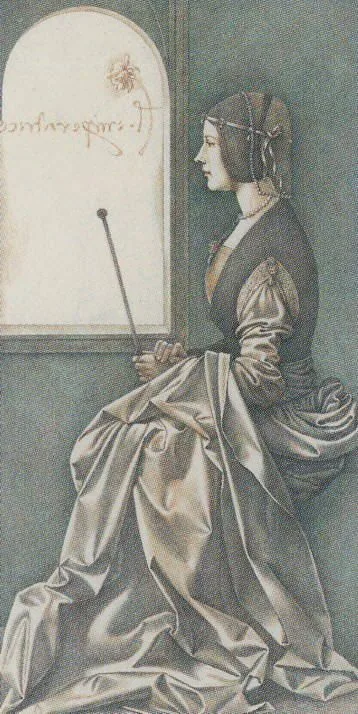

This four-card group shows the deck at its clearest: formal figures, measured space, and classical body language. Use it for questions about discipline, choice, authority, and whether the answer needs patience rather than speed.
How readable is Leonardo Da Vinci Tarot?
Leonardo Da Vinci Tarot is readable if you already know basic tarot structure or you like image-led interpretation. Some cards are easy because the suit signs are visible. Others are subtler, so you may need to read mood and composition before the card title fully clicks.
For beginners, I would pair it with a standard tarot meaning source. Pull the card, name the traditional meaning, then ask what the Renaissance image changes: does it make the message softer, more intellectual, more physical, or more spiritual?

Court-card motion
Rider, cup, and controlled momentum
The mounted figure gives this card a practical sense of motion. It can speak about taking action without rushing, carrying emotion carefully, or moving toward a goal while still keeping the reins in your hand. This is the deck’s strength: it turns familiar tarot ideas into visual behavior.
Best reading uses
This deck shines for reflective spreads: creative blocks, study plans, artistic practice, relationship patterns, and life decisions that need craft rather than drama. It is also strong for daily journaling because one small visual detail can become the prompt for the whole entry.
I would not use it when someone wants a super-fast yes/no answer. Leonardo Da Vinci Tarot wants space. It rewards the reader who can sit with a symbol and let it unfold.
Cups and feeling
Tenderness, care, memory, and emotional exchange


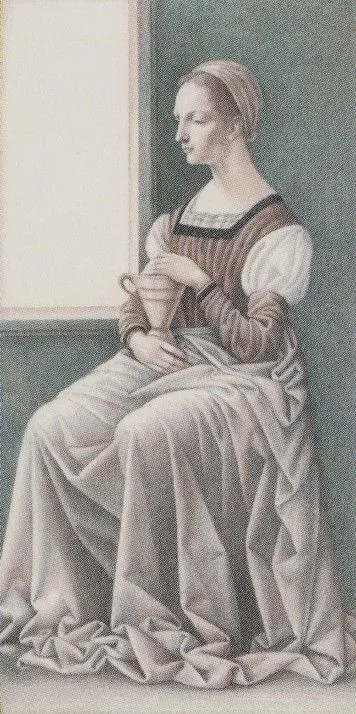

These softer cards show the deck’s emotional side. The figures are gentle and devotional, so relationship readings can feel caring rather than dramatic. The imagery is useful for questions about trust, comfort, old stories, and how love is actually being expressed.
Who Leonardo Da Vinci Tarot is best for
Leonardo Da Vinci Tarot is best for art lovers, history-minded readers, collectors, journaling readers, and anyone who enjoys slow symbolic decks. It also works nicely for creative people because the artwork constantly points back to study, design, invention, and craft.
If your favorite decks are bright, modern, or cartoon-simple, this may feel too quiet. But if you like the feeling of a sketchbook, chapel wall, workshop, and old library all blended into one tarot mood, it is very easy to love.
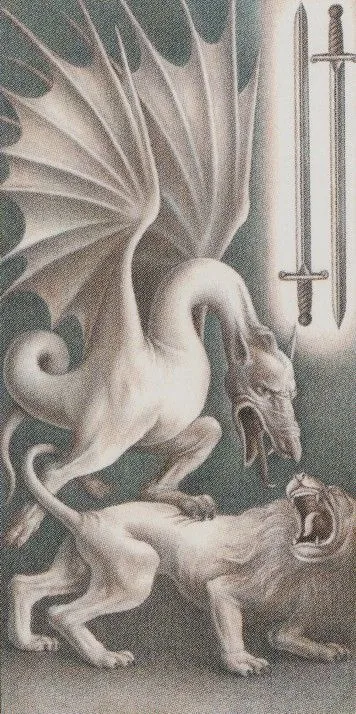
Shadow and invention
Dragon, wing, and the strange machine
The dragon-like image gives the deck a more mythic edge. It reminds me that Leonardo Da Vinci Tarot is not only pretty Renaissance art; it also has invention, danger, and imagination. In readings, this kind of card can point to a problem that needs clever design instead of brute force.
Who should skip this deck?
Skip Leonardo Da Vinci Tarot if you want high-contrast modern colors, crystal-clear printed keywords, or a deck where every scene instantly explains itself. The art is beautiful, but it can be visually soft, and some details need a second look.
Also skip it if a partial preview bothers you. The current TarotFans gallery is honest about the verified card images available here, and I would rather keep that clean than invent a full-card claim.
Swords and conflict
Pressure, aim, defense, and decisive movement

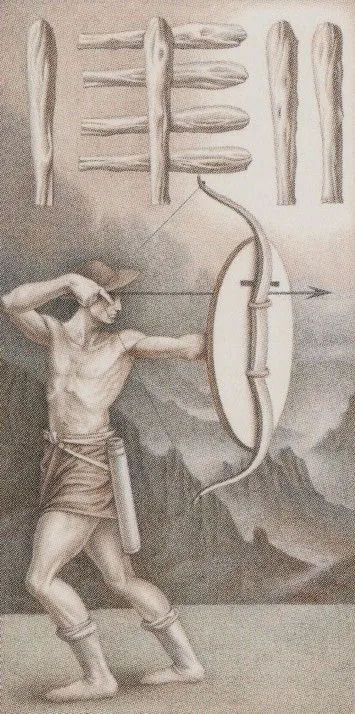
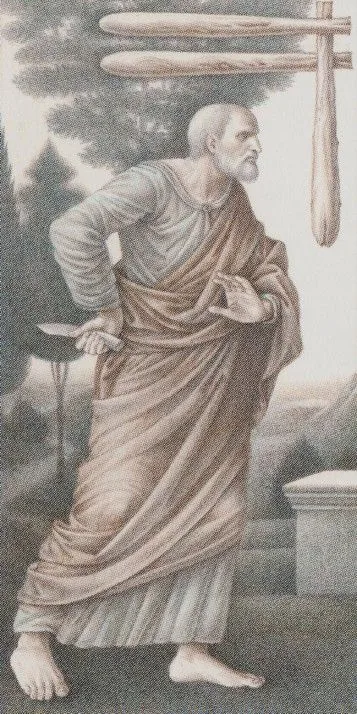
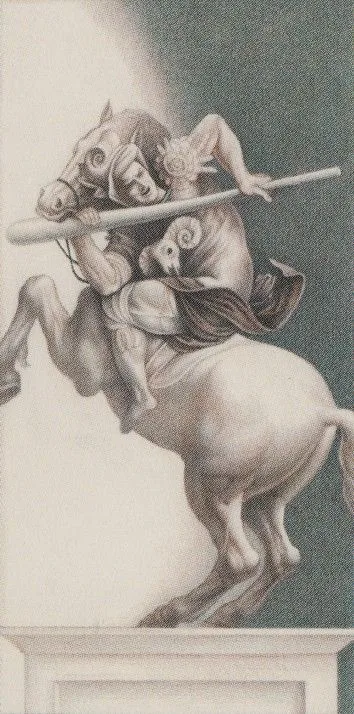
The sword cards bring more tension into the page. They are useful for questions about conflict, focus, boundaries, and difficult timing. The Renaissance styling keeps the mood elegant, but the suit still feels sharp and direct.
How to use Leonardo Da Vinci Tarot in readings
Start with one question and a small spread. Because the art is subtle, three cards often work better than a large spread. Ask: what is being studied, what is being built, and what needs more patience?
For creative work, try a simple studio spread: the idea, the obstacle, the tool, and the next experiment. Leonardo Da Vinci Tarot is especially good at turning a vague creative feeling into one practical action.
Pentacles and craft
Work, effort, learning, and embodied skill
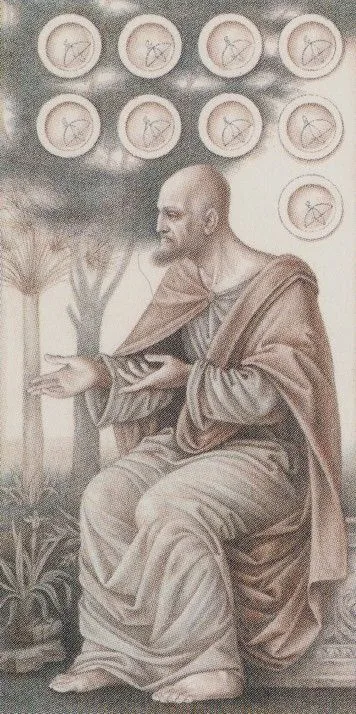


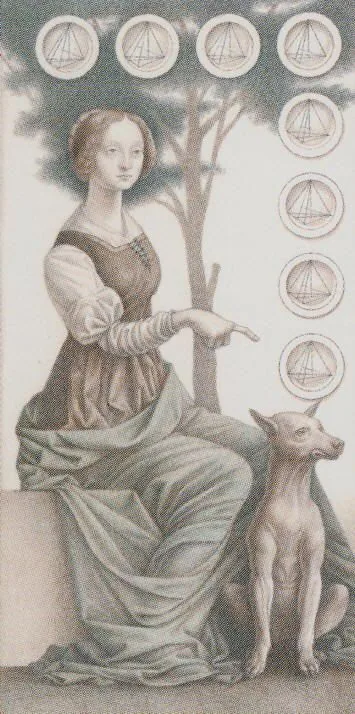
These cards show the grounded side of the deck. Coins, workers, tools, and measured action make the reading feel practical. Use this group for money, study, health routines, and anything that grows through repeated effort.
Pros and cons
| Pros | Cons |
|---|---|
| Elegant Renaissance-inspired artwork with a thoughtful, museum-like atmosphere. | Soft contrast means some card details take time to read. |
| Excellent for journaling, creativity, study, and reflective readings. | The current TarotFans gallery is a verified partial gallery, not all 78 cards. |
| Works well when you enjoy symbolism, posture, architecture, and visual clues. | Less ideal for readers who want bold modern color or instant keyword clarity. |
Final thoughts on Leonardo Da Vinci Tarot
Leonardo Da Vinci Tarot is a beautiful choice when you want tarot to feel like observation, craft, and quiet discovery. It is not trying to be the loudest deck on the shelf. Its charm is in the measured figures, soft textures, and Renaissance sense that every object might mean something.
If you like decks that invite patient study, this one is worth exploring. The 61-card gallery gives a strong sense of the art direction, and the GPT Image 2 tabletop spread above shows how naturally the cards fit a modern reading table.

Leonardo Da Vinci Tarot FAQ
Is Leonardo Da Vinci Tarot beginner friendly?
It can work for beginners who are willing to use a guidebook or meaning source beside it. The images are readable, but the soft Renaissance style is quieter than many modern beginner decks.
Is the TarotFans gallery complete?
No. The gallery is clearly presented as a verified partial set and makes no complete-deck claim.
What kind of readings suit Leonardo Da Vinci Tarot best?
It is strongest for journaling, creative questions, study plans, relationship reflection, and slow symbolic readings where details matter.
Is Leonardo Da Vinci Tarot based on Rider-Waite-Smith meanings?
It can be read with familiar tarot structure, but the artwork asks you to add visual observation: posture, tools, direction, balance, and the mood of each scene.
Who will enjoy this deck most?
Art lovers, Renaissance history fans, collectors, and reflective readers who enjoy patient symbolic decks are the best fit.
Who should skip Leonardo Da Vinci Tarot?
Skip it if you want bright modern colors, obvious keywords, or a deck that explains every card instantly at first glance.