Ancient Egyptian Tarot Cards
Explore the verified Ancient Egyptian Tarot artwork in a native TarotFans Gallery. Choose a group below, then open any card for a larger carousel view.
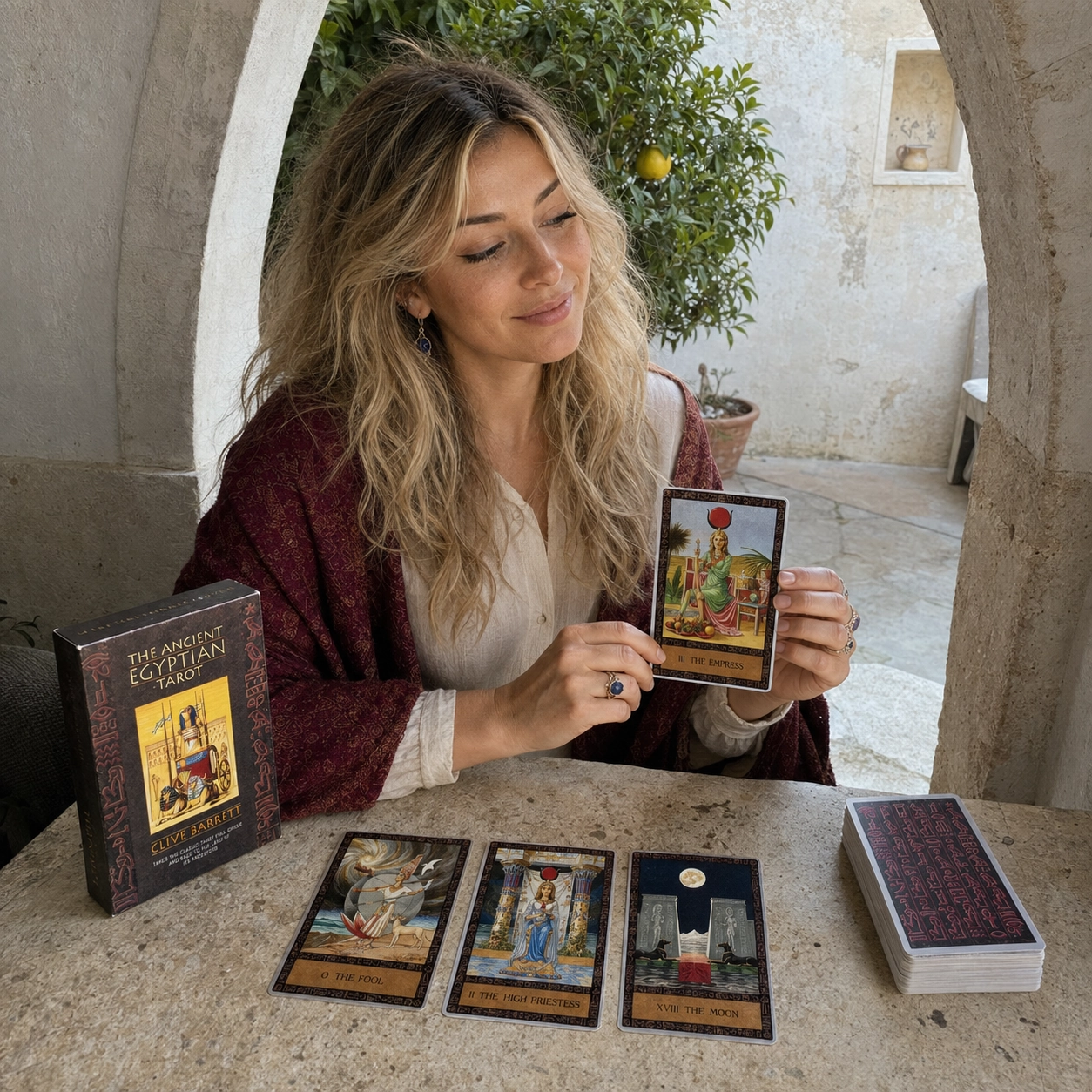
A note from Aurica
Ancient Egyptian Tarot feels like opening a carved temple door and finding the old stories still warm inside. I love how the dark hieroglyph borders hold each painted scene like a threshold. The colours are rich without being noisy, and the figures often seem to pause between ceremony and ordinary human feeling.
The Empress catches me with her red sun, green drapery, and table of earthly gifts. Beside the Fool’s wind-blown step, the High Priestess’s steady gaze, and the Moon’s pale path between dark pillars, she asks a beautiful question: what could grow if insight were given a real place to land?
I read this deck slowly. First I notice the gesture, animal, offering, or patch of colour that pulls at me; then I return to the card’s traditional tarot role and let the surrounding cards test that first impression. Its Egyptian symbolism adds atmosphere and depth, but it should sharpen the message rather than turn every reading into a history lesson.
This is a rewarding companion for study, shadow work, creative decisions, and readings about power, inheritance, or change. Beginners may want the guidebook close by, while experienced readers can enjoy how familiar tarot patterns take on a more ceremonial voice. The deck responds best when I leave a little silence around the question.
My favourite way to begin is with three cards: what is awakening, what must be honoured, and what is ready to become visible. Ancient Egyptian Tarot reminds me that wisdom is not locked in the past; it becomes living guidance each time we meet it with patience, courage, and an open heart.
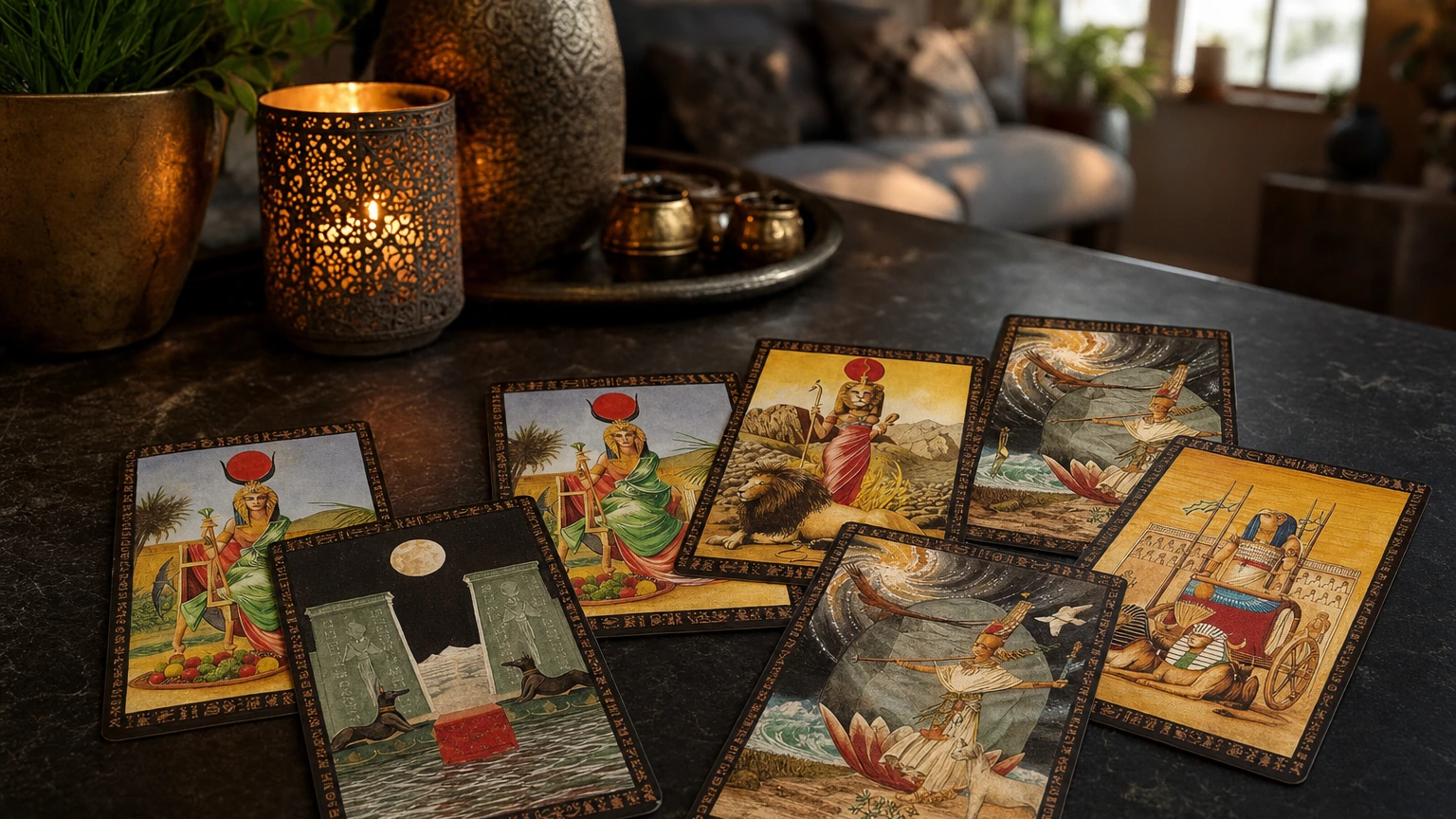
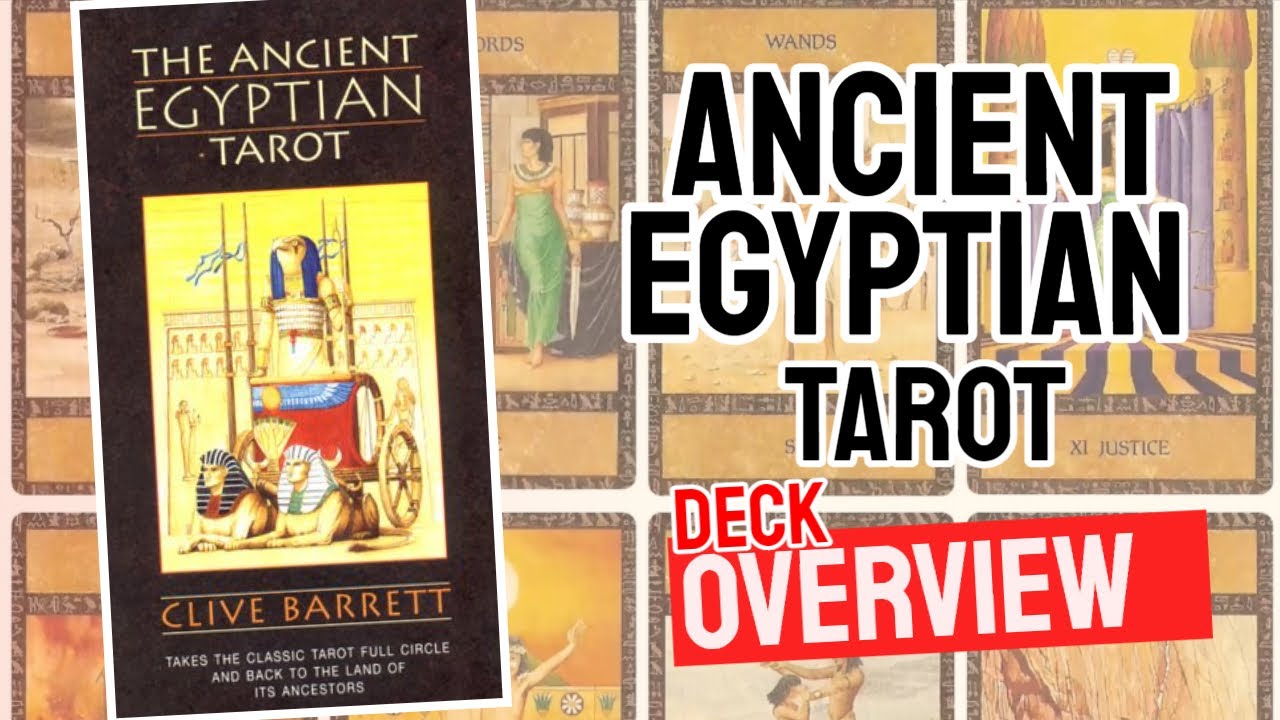
Ancient Egyptian Tarot is a moody, ceremonial deck by Clive Barrett that brings classic tarot structure into an Egyptian visual world. It is a full 78-card tarot, but the tone is very different from a bright modern beginner deck. The images feel like temple walls, ritual objects, museum cases, and old stories that still know how to speak.
Aeclectic Tarot describes the deck as a blend of tarot structure and Egyptology, drawing on Egyptian history, mythology, and daily life. That is exactly how it feels in use: classic meanings, but with extra layers of authority, sacred order, ancestry, and initiation. The recovered TarotFans gallery is partial at 59 verified card images, so this review keeps the count honest while still showing the deck’s real voice.
What makes Ancient Egyptian Tarot different?
The first difference is pace. Ancient Egyptian Tarot does not feel like a deck that wants to answer in one quick sentence. Even a simple card can look formal, symbolic, and slightly distant. That is not a weakness. It means the deck rewards a reader who is willing to pause, look at posture and setting, and ask why the scene has been staged this way.
The second difference is its mix of myth and daily life. Some cards feel grand and sacred, while others show work, offering, travel, conflict, or courtly power. It is not only Egyptian decoration; it turns ordinary choices into scenes with ritual weight.
Major Arcana art study
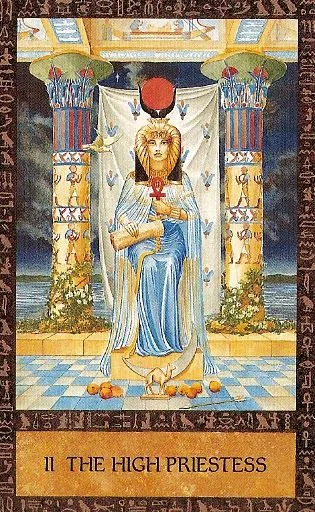
The High Priestess: sacred knowledge behind the veil
The High Priestess is one of the best cards for understanding this deck. The image feels guarded and quiet, with a temple-like seriousness that turns intuition into something disciplined. Instead of reading the card as a vague “trust your gut,” I would read it as sacred listening: knowledge exists, but it should not be forced open before the right moment.
Compared with a softer modern High Priestess, this version feels less cozy and more initiatory. She asks the reader to respect silence, privacy, and timing. In a reading about school, family, relationships, or creative work, she can suggest that the answer is already forming behind the curtain, but you need patience before naming it.
How it reads in practice
In a real spread, Ancient Egyptian Tarot is best when the question has depth. It is strong for “what pattern am I repeating?”, “what does this situation ask me to learn?”, “where do I need discipline?”, or “what is hidden beneath the surface?” The cards can be direct, but their directness feels ceremonial rather than casual.
The deck also keeps one foot in a familiar tarot system. The suits are Cups, Swords, Wands, and Disks, and the court cards use Princess, Prince, Queen, and King. That makes the deck easier to approach than it might first appear. You can still use your normal tarot foundation, then let the Egyptian imagery sharpen the message.
Four-card moment: temple threshold
Entering the temple
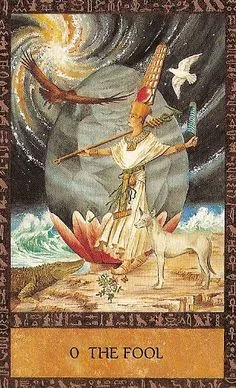
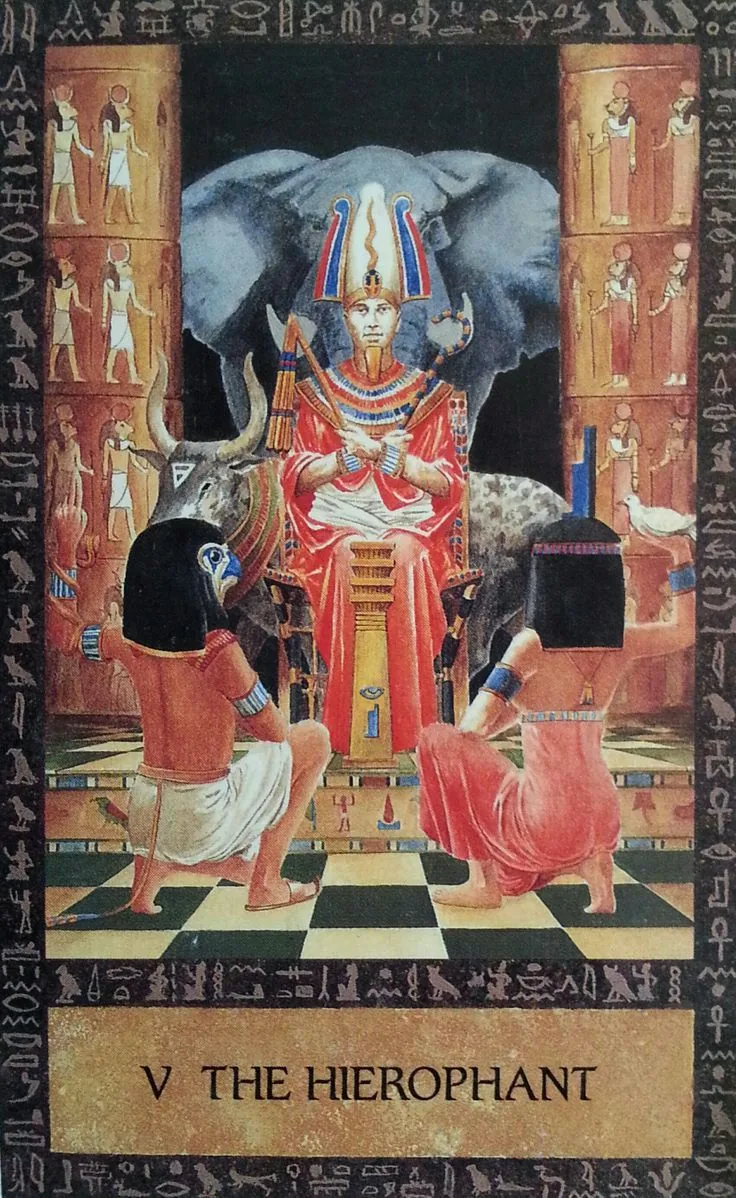
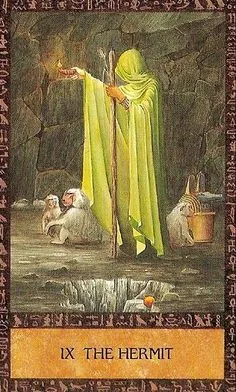
This row reads like initiation. The Fool steps toward the unknown, The High Priestess protects mystery, The Hierophant teaches sacred structure, and The Hermit asks what wisdom can only be found in quiet.
Artwork, symbolism, and first impression
The artwork has a deliberately old-world feel. Figures often stand or sit in profile, objects are arranged with symbolic clarity, and the backgrounds can feel like painted scenes from a tomb or temple. The result is not glossy fantasy Egypt. It is more like tarot translated through papyrus, ritual costume, carved posture, and mythic storytelling.
Because the images are formal, the reader has to pay attention to small details. A staff, a throne, a winged shape, a cup, a disk, or a guarded doorway can do a lot of interpretive work. The deck becomes especially interesting when you stop asking “what is the keyword?” and start asking “what kind of sacred scene is this card showing me?”
Major Arcana art study
The Chariot: willpower under sacred command
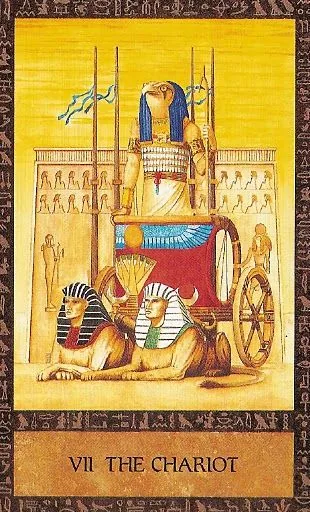
The Chariot is a perfect example of the deck’s strength. In many decks, this card can feel like speed, ambition, or victory. Here it feels more official. The Egyptian setting adds command, ceremony, and responsibility. Movement is not random. The driver must know the route and understand the power being handled.
That makes this Chariot useful for questions about goals, leadership, and self-control. It does not simply say “push ahead.” It says to choose a direction, hold the reins, and remember that power needs discipline. If pride is driving, the card becomes a warning. If purpose is driving, it becomes encouragement.
Best uses for this deck
I would reach for Ancient Egyptian Tarot when a reading needs more weight. It is excellent for spiritual planning, shadow work, ancestor questions, creative blocks, long-term decisions, and situations where someone needs to understand the deeper pattern behind an event. It also works well as a study deck because the art invites comparison with traditional Rider-Waite-Smith meanings.
For beginners, I would not call it the easiest first deck, but I also would not scare people away from it. If Egyptian mythology, temple art, or historical symbolism already excites you, the deck may keep you engaged. The key is to use the guidebook and let the image speak before forcing a memorized meaning onto it.
Four-card moment: sacred authority
Choosing power wisely
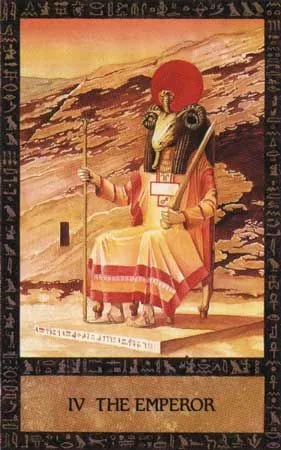
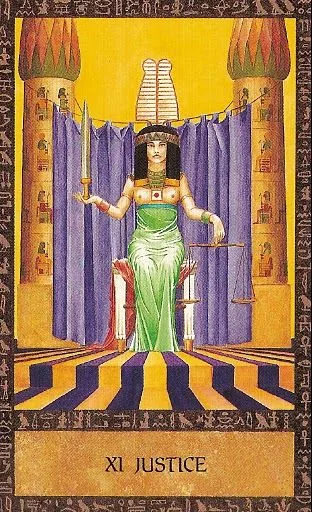
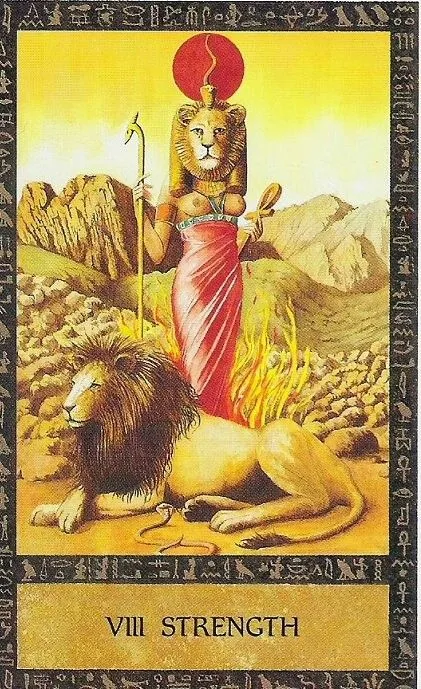
This group is about power with restraint. The Emperor gives structure, The Chariot gives direction, Justice asks for balance, and Strength reminds the reader that true control is not the same as domination.
Love, emotion, and everyday questions
Although the deck looks serious, it can still answer emotional questions. The Cups cards soften the atmosphere and make the Egyptian setting feel more human. They show affection, memory, maturity, and feeling as something offered and held, not just something shouted. That can be helpful when a relationship reading needs calm instead of drama.
For everyday questions, I would keep the spreads small. Ask one clear question, pull a few cards, and write down what visual detail grabs you first: a gesture, a tool, a color, or the way a figure is positioned.
Major Arcana art study
The Moon: dream signs and half-seen truth
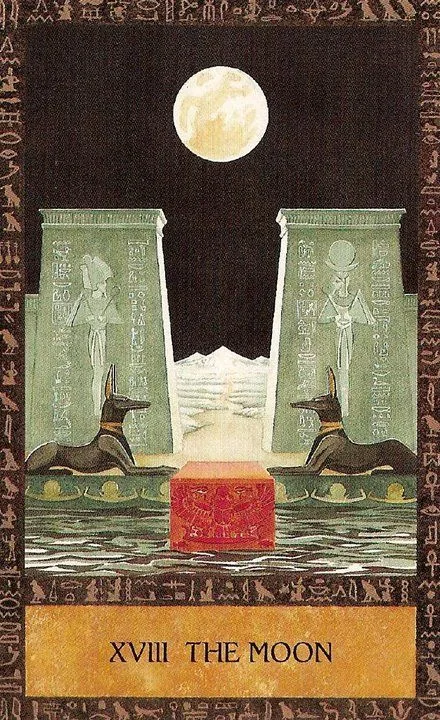
The Moon becomes especially atmospheric in Ancient Egyptian Tarot. The card feels like a threshold between fact and dream, with enough darkness to make the reader slow down. I would not read it as instant disaster. I would read it as a warning that the full scene is not visible yet.
This is where the deck’s mythic style helps. The Moon does not just say “confusion.” It says the path is sacred but not fully lit. Wait for clearer evidence, respect your instincts, and do not let fear invent a story before the truth has arrived.
Letting feeling enter the temple
The Moon leaves a hush behind it, and that pause makes room for the Cups to speak. Here I look for the tender offering beneath the ceremony: what is remembered, what can be received, and which feeling needs a gentler vessel before it can be understood.
Four-card moment: emotional offering
Cups as feeling, memory, and care
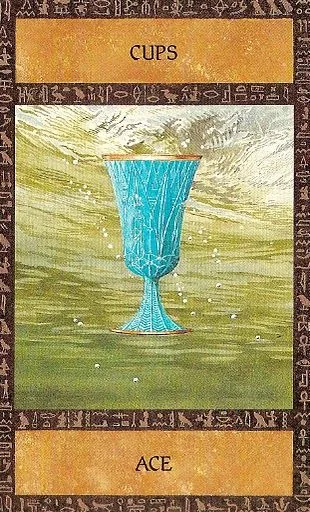
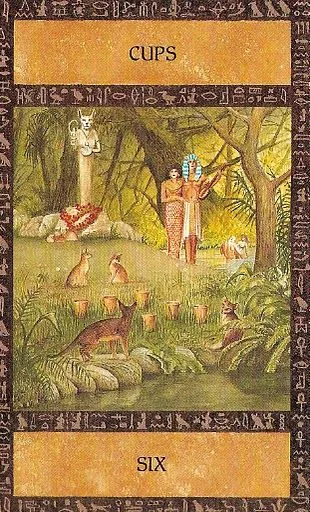
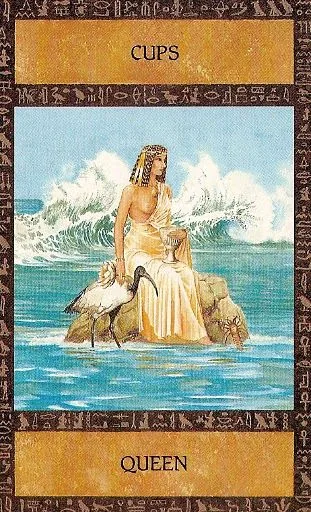
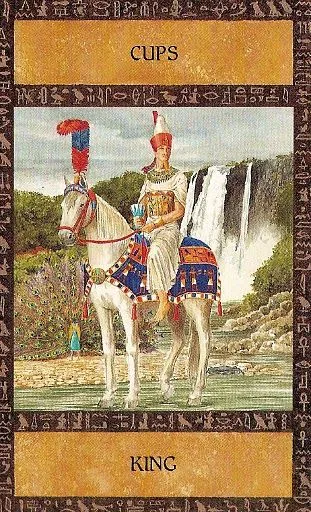
This set shows the softer side of the deck. The Ace opens the emotional channel, Six of Cups brings memory, the Queen holds feeling with wisdom, and the King gives emotional steadiness.
Pros, limits, and who will love it
The biggest strength of Ancient Egyptian Tarot is identity. It knows exactly what it wants to be: a tarot deck filtered through Egyptian sacred atmosphere. It is distinctive, readable, and serious without becoming cold. It gives traditional readers enough structure to work with, while giving visual readers a strong symbolic world to explore.
The main limit is accessibility. Some cards are not as instantly emotional as a modern illustrated deck, and the surviving online imagery for this review is partial. On TarotFans, that means the gallery is useful but not complete. If you need every image before deciding, remember that the original deck is a full 78-card deck, while this page currently displays 59 verified available images.
Four-card moment: hard message, gentle repair
From blocked vision to balance
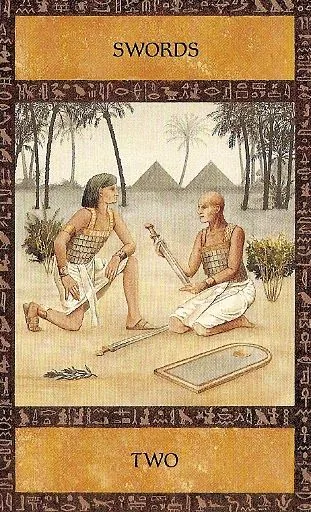


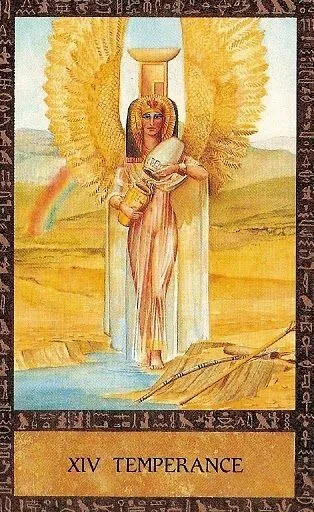
This group is for difficult questions. Two of Swords begins with avoidance, Eight of Swords shows pressure, Ten of Swords marks an ending, and Temperance brings the medicine: patience, proportion, and recovery.
Final thoughts
Ancient Egyptian Tarot is a strong pick for readers who like myth, formal symbolism, and decks that feel like they belong in a candlelit study. It is not the easiest casual deck, but it has a memorable voice. The best way to read it is slowly: look at the scene, identify the familiar tarot structure, then ask what the Egyptian setting adds.
If you want a deck with historical flavor, ceremonial mood, and a clear connection to classic tarot, this one is worth exploring. Just treat it as a study companion rather than a quick oracle. Its best messages arrive when you give the cards enough time to open.
Ancient Egyptian Tarot FAQ
Is Ancient Egyptian Tarot beginner-friendly?
It can be beginner-friendly if you already like symbols, myth, and slower reading. Absolute beginners may need the guidebook because the deck is less instant than a very modern picture deck.
How many Ancient Egyptian Tarot cards are shown here?
This TarotFans gallery currently shows 59 verified same-deck card images. The original deck is a 78-card tarot, but this page does not pretend to have images that were not recovered.
Who created The Ancient Egyptian Tarot?
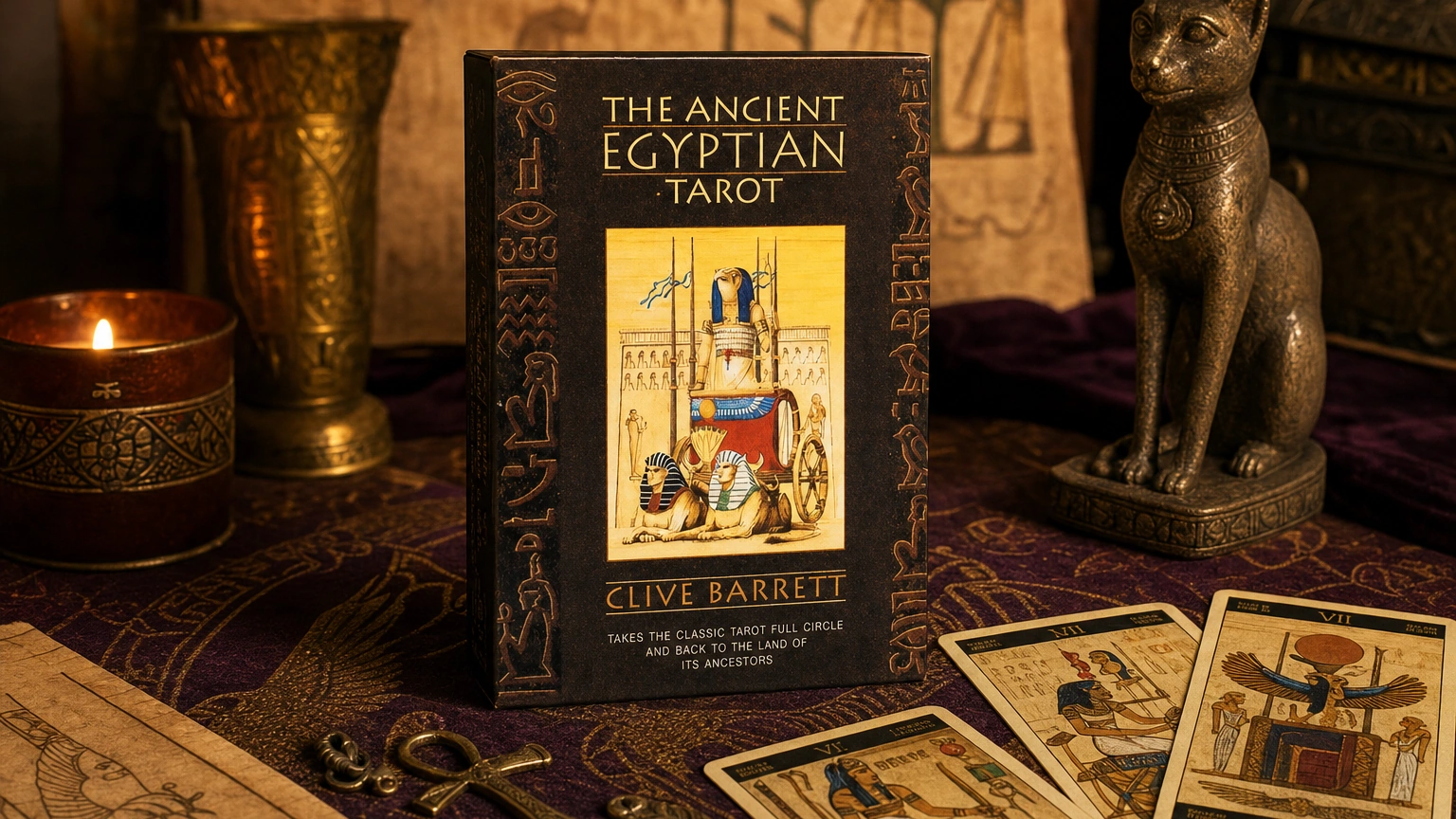
The deck is by Clive Barrett and has been published by Thorsons and Element Books. It blends tarot structure with Egyptian mythology, history, and daily-life imagery.
What system does the deck use?
It broadly follows a Rider-Waite-Smith tarot structure, with 22 Major Arcana and 56 Minor Arcana. The suits are Cups, Swords, Wands, and Disks, with Princess, Prince, Queen, and King court cards.
What readings suit this deck best?
It works beautifully for reflective spreads, spiritual questions, symbol study, shadow work, and patient readings where atmosphere matters as much as the quick keyword.
Does the deck feel historical or fantasy-based?
It feels mythic rather than textbook-historical. The art borrows from Egyptian temples, gods, ritual poses, and everyday scenes, then uses those images to express classic tarot meanings.