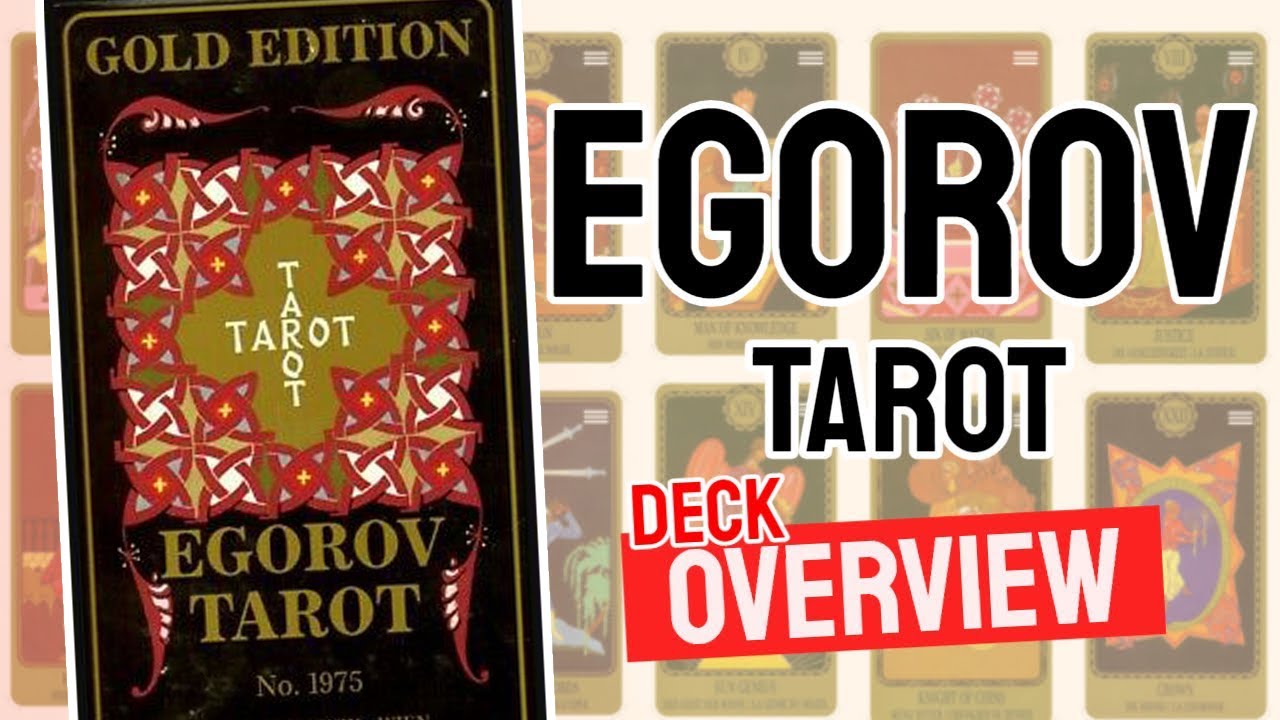
Egorov Tarot Card Gallery
Browse the complete verified Egorov Tarot Gallery. Choose a group or open any card for a larger view.
Quick take: who will love Egorov Tarot?
You will probably enjoy Egorov Tarot if you like traditional tarot structure but want artwork with more personality than a standard learning deck. The cards feel serious, romantic, and slightly old-world. They are not soft pastel comfort cards, and they are not clean minimalist flashcards. They ask you to look closely, which is exactly why many visual readers will love them.
I would recommend it most to readers who already know the basic tarot meanings, or beginners who are comfortable learning slowly. If you are brand new, keep a simple Rider-Waite-Smith keyword guide nearby. Let the guide give you the bones of the meaning, then let the Egorov artwork show you the mood, tension, and human detail.
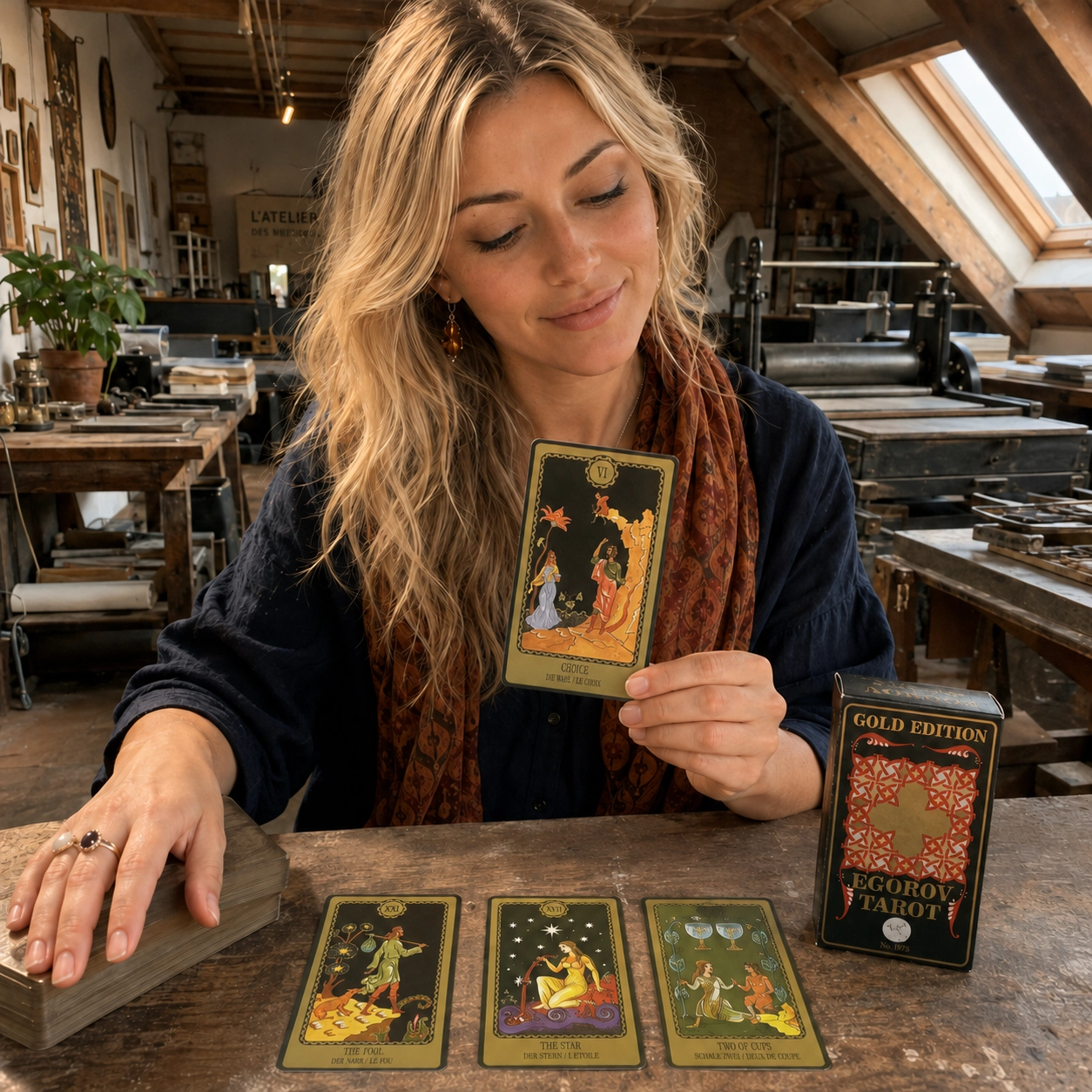
I love the feeling that these figures have been caught halfway through a private story. Choice does not merely announce a crossroads; the turned bodies, distance, and bright flower make me wonder who is being welcomed and who is still holding back. I begin with that first emotional pull, then test it against the card’s traditional role and the question on the table.
The deck’s renamed majors slow me down in a useful way. The Fool feels less like a slogan and more like a traveller stepping into a strange landscape, while The Star brings a quieter patch of hope. When either appears beside Two of Cups, I watch where the figures look and ask whether connection is opening naturally or being hurried before trust has formed.
I reach for Egorov Tarot when a reading needs atmosphere as well as direction. Three cards are enough: what is visible, what feeling sits underneath it, and what small honest action comes next. Even its most dramatic figures seem to whisper that honest attention can turn uncertainty into one clear, hopeful step forward.
Egorov Tarot is one of those decks I would not rush through. The artwork has a painted, storybook feeling, with expressive faces, theatrical clothing, and scenes that look like they were caught in the middle of a private drama. If you enjoy decks that make you pause and ask, u201cWhat is really happening here?u201d, this one has a lot to offer.
What I like most is that the deck still feels readable. It is ornate and a little mysterious, but it is not random. You can connect many cards back to familiar tarot themes, then add the extra emotional detail from the image. That makes Egorov Tarot especially useful for journaling, relationship questions, creative blocks, and readings where you want more than a quick yes-or-no answer.

Card study: Choice
Choice is a good example of the decku2019s personality. Instead of feeling like a flat keyword, it feels like a real human crossroads. In a love reading, I would ask whether the choice is being made from honesty, fear, attraction, duty, or avoidance. In a career reading, I would ask which option matches your values, not just which one looks easiest.
Deck details at a glance
- Deck: Egorov Tarot
- Style: Russian-inspired illustration, classical storytelling, expressive figures
- Structure: Full 78-card tarot system with some renamed major arcana cards
- Best for: art lovers, intuitive readers, journaling, love readings, shadow work, and creative reflection
- Learning curve: moderate u2014 familiar tarot patterns are there, but the details deserve time
- Watch for: renamed majors such as The Science, Fertility, Crown, Choice, Wheel, Selflessness, Rebirth, Sun Genius, and Inspiration
The renamed cards are not a problem, but they do change the rhythm of a reading. If you pull a card called Fertility or Selflessness, you may need to pause before translating it into the older tarot system. I actually think that pause is helpful. It stops the reading from becoming automatic and invites you to read what is in front of you.
Artwork and first impression
The first impression is rich and dramatic. Egorov Tarot does not whisper. It gives you costumes, glances, gestures, and background details that all seem to matter. Some decks are easy because they simplify everything. This deck is rewarding because it gives you more clues than you can use at once.
That can be wonderful for personal readings. When you pull one card, you can choose one visible detail and turn it into a practical question. Is the figure moving or waiting? Are they looking at someone, looking away, or lost in thought? Is the card asking for action, patience, honesty, or a change in perspective? This is where the deck becomes genuinely useful instead of just beautiful.
Four-card art moment
The decku2019s major-arcana mood


These four cards show why the majors feel distinctive: familiar tarot bones, but with a more philosophical and theatrical vocabulary.
How Egorov Tarot reads in practice
In practice, I would read this deck in layers. First, name the traditional card meaning if you know it. Second, describe the scene as plainly as possible. Third, ask what emotion or pressure the picture adds. That three-step method keeps the reading grounded while still honoring the decku2019s art.
For daily pulls, I would keep the question small: u201cWhat needs my attention today?u201d or u201cWhat pattern am I repeating?u201d Then choose one detail from the card and turn it into one action. If a figure looks guarded, maybe your action is to protect your time. If a figure looks ready to speak, maybe your action is to send the message you have been postponing.

Card study: 2 of Cups
2 of Cups is naturally a relationship card, but this version asks you to read body language as much as symbolism. Does the exchange feel balanced, shy, performative, sincere, or uncertain? That small visual question can make a love reading more honest and less generic.
Beginner friendliness
Egorov Tarot can work for beginners, but I would not call it the easiest first deck. The images are detailed, and the renamed majors can slow you down if you expect every title to match a beginner book. Still, a beginner who loves art may learn beautifully with it, because memorable images are easier to remember than abstract keywords.
My advice is to practice with one card at a time. Write down three things you see before you look up the meaning. Then compare your notes with a guidebook or keyword list. Over time, you will start to notice how the deck speaks. That is a much better way to build confidence than trying to memorize all 78 cards in one weekend.
Love, relationship, and emotional readings
This deck is very strong for love and relationship questions because the people in the cards often look emotionally involved. You can read distance, posture, expression, hesitation, and tension. That makes it helpful for questions about trust, communication, attraction, boundaries, and what someone is not saying out loud.
I would not use it to obsess over another personu2019s private thoughts. Instead, I would ask healthier questions: u201cWhat dynamic needs more honesty?u201d u201cWhere am I giving away my power?u201d u201cWhat is the next respectful step?u201d Egorov Tarot is at its best when it helps you understand a pattern, not when it is used to chase certainty.
Career, money, and creative readings
For career and money, Egorov Tarot works best when the issue has a human story behind it. It can show ambition, pride, patience, pressure, burnout, or the need to make a more values-based decision. If you want a purely practical budget answer, use a spreadsheet. If you want to understand why a situation feels heavy or complicated, this deck can help.
Creative readers may especially enjoy it. Pull a card when you feel blocked and describe it like a scene from a novel. Who has power? Who is waiting? What is hidden? What wants to move? Those answers can become writing prompts, project clues, or a gentle nudge back into your own imagination.
Four-card reading moment
Work, focus, and pressure


This little group shows the decku2019s practical side: planning, endurance, balance, and long-term results all have clear visual anchors.
Pros and cons
| Pros | Cons |
|---|---|
|
|
The biggest strength is also the biggest caution: Egorov Tarot gives you a lot to look at. If you enjoy visual depth, that is a gift. If you feel easily overwhelmed by busy art, you may want to use it for slower weekend readings rather than every morning.

Card study: The Star
The Star is a useful test card for this deck. If the image feels restorative, meaningful, or quietly hopeful to you, Egorov Tarot may be a strong match. If it feels too formal or distant, you may prefer a softer healing deck for comfort readings.
Best spreads to try with Egorov Tarot
Because this deck is so image-driven, small spreads work better than huge spreads. Try a three-card u201cscene readingu201d: what is visible, what is hidden, what changes next. For each card, write one sentence based only on what you see before adding the traditional meaning.
For a deeper journal session, try four cards: my role, the challenge, the wisdom, the next action. This spread suits Egorov Tarot because it gives each image enough space to breathe. You are not trying to force a quick answer. You are letting the story unfold card by card.
Final thoughts on Egorov Tarot
Egorov Tarot is worth exploring if you want a deck that feels classical, expressive, and a little mysterious without leaving tarot tradition behind. Its best feature is not simply that the cards are pretty. It is that the pictures give you something to read.
Use the full gallery above as your real test. If several cards make you pause, zoom in, and wonder what story is unfolding, this deck may have the depth you want. If the images feel too heavy or ornate, that is useful information too. The right deck should make you want to return to it, and Egorov Tarot is best for readers who enjoy that slow return.

FAQ
Is Egorov Tarot good for beginners?
It can be, especially for beginners who enjoy detailed art. New readers should keep a simple keyword guide nearby because a few renamed cards may take practice.
Does Egorov Tarot follow traditional tarot meanings?
Yes, it has a traditional tarot foundation, but its titles and artwork give some cards a distinctive voice. Read the image and the classic meaning together.
What readings is Egorov Tarot best for?
It works well for journaling, love readings, shadow work, creative questions, and any reading where visual details matter.
Who should skip Egorov Tarot?
Skip it if you want a very minimal, modern, or keyword-heavy beginner deck. Egorov Tarot is more detailed, atmospheric, and slow-reading.
Can Egorov Tarot be used for serious readings?
Yes. Its artistic style does not make it less serious. Clear questions, grounded interpretation, and careful card study matter more than whether a deck looks ornate or simple.