Explore the Ibis Tarot Cards
Browse the recovered Ibis Tarot card fronts in deck order. Every source image was individually verified and given a descriptive filename; missing positions are not filled with duplicates or uncertain substitutes. Tap any card to open the larger carousel view.
Aurica’s Quick Take
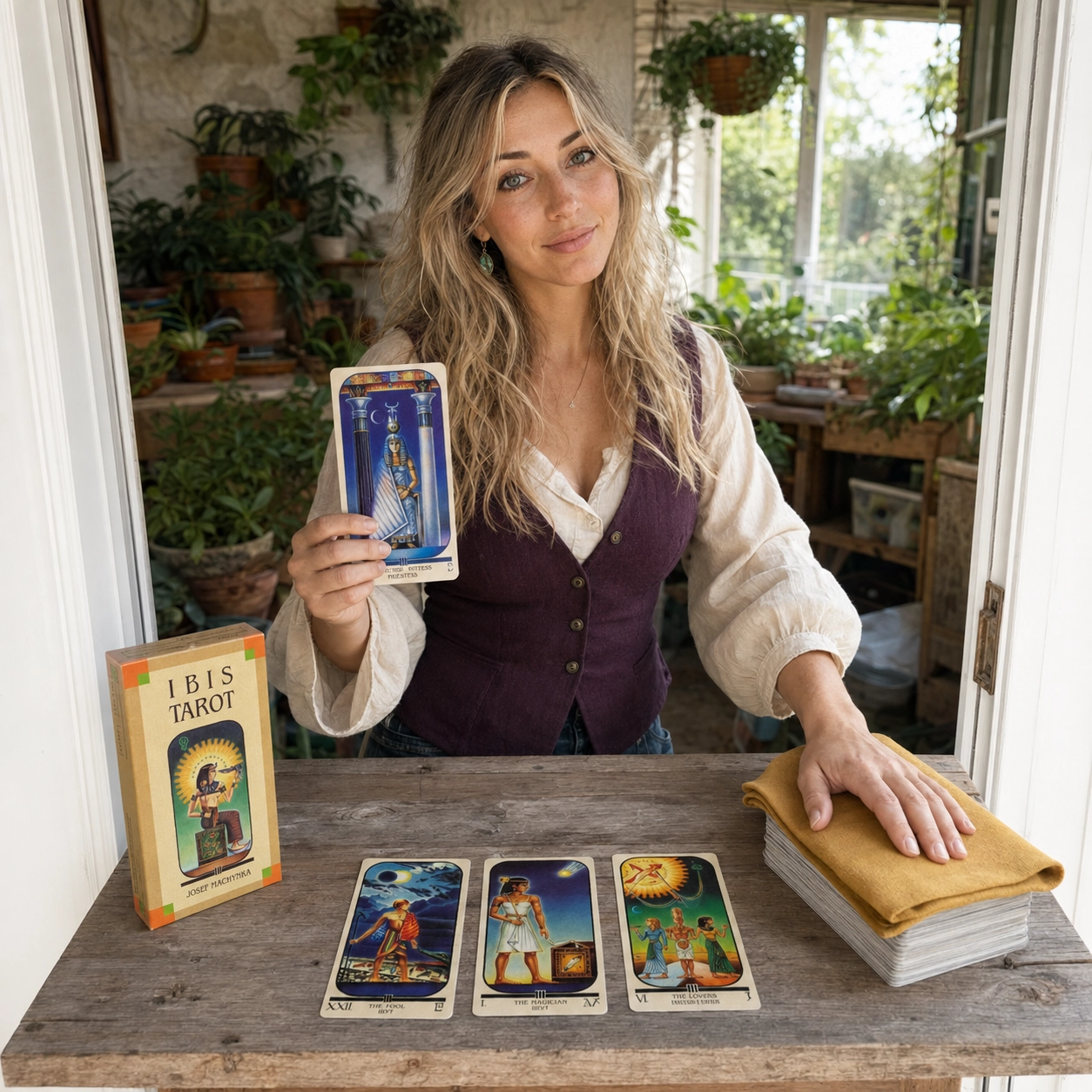
Ibis Tarot is an Egyptian-themed tarot illustrated by Josef Machynka. Its bright lapis blues, solar yellows, desert oranges, black skies, temple architecture, deities, winged figures, ibis birds, scarabs, planetary signs, and geometric suit arrangements make every draw feel like a compact esoteric diagram.
My verdict: choose it if you enjoy Egyptian revival art, astrological correspondences, symbolic pattern-reading, and decks that depart from familiar Rider–Waite–Smith staging. I find that it rewards slow observation. Readers who need modern facial expression and immediately recognizable scenic minors may find its system demanding at first, but patience lets its strange visual grammar begin to sing.
I am especially drawn to the stillness of The High Priestess between those deep blue pillars. She feels less like a gatekeeper offering a tidy answer and more like a quiet chamber where the right question can echo. Beside The Fool, The Magician, and The Lovers, I first notice the bold blocks of colour and the figures’ gestures; then I look again for the tiny glyphs, celestial signs, and breaks in symmetry that change the emotional weather of the spread.
When I read with Ibis Tarot, I begin with the largest shape, compare it with the card’s traditional role, and only then follow the smaller symbols into the neighbouring cards. That keeps its dense imagery from turning into a puzzle for its own sake. If a reading feels crowded, choose one repeated colour or one direction of movement and let it become your thread. This deck asks you to look twice, and each patient second look can open a brighter doorway into your own wise, capable intuition.
What makes Ibis Tarot different?
Josef Machynka created, designed, and illustrated the deck, and wrote its accompanying English booklet, translated by Mascha Rabben. Surviving records variously date the U.S. Games Systems edition to 1988 and the Swiss AGM/AGMüller edition and copyright to 1991. Its system redraws tarot teachings from Practical Astrology, a 1901 work by Edgar de Valcourt-Vermont writing as Comte C. de Saint-Germain. Machynka translated that older occult-Egyptian framework into a brighter, more accessible visual system rather than merely dressing Rider–Waite–Smith scenes in Egyptian clothing.
The card captions visible in this Pinterest source set are multilingual, including English and Russian. The board labels use Rods, Cups, Swords, and Pentacles; historical English-language references call Rods “Sceptres.” The supplied labels use King, Queen, and Page equivalents, while the original system describes the courts as Master, Mistress, Warrior, and Slave. TarotFans preserves the user-requested “Rods” wording and each supplied pin identity in filenames and metadata instead of silently rewriting the source.
The gallery also makes the deck’s alternative Major Arcana structure visible: The Fool is marked XXII, The Magician III, Justice VIII, and Strength XI. The pip cards build meaning through staffs, cups, swords, pentacles, animals, landscapes, and small esoteric glyphs.
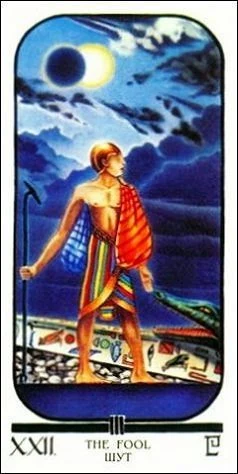
The Fool — stepping beneath an eclipsed sky
A young traveler stands at the edge of a patterned landscape while a darkened sun and bright crescent share the stormy sky. A staff steadies the figure, two black birds cross the upper air, and the card’s XXII marking immediately signals that this is not a conventional Rider–Waite–Smith Fool.
The image makes beginning feel cosmic rather than casual. Upright, it can suggest entering a new cycle with trust while remaining alert to forces larger than the self. In shadow, the same charged sky can describe fascination without preparation—moving because the mystery is compelling, not because the route is understood.
How the Ibis Tarot reads in practice
This deck reads best in layers. Start with the large form: a deity, court figure, blade pattern, cup arrangement, star, wheel, or horizon. Then inspect the tiny marks in the corners. Planetary and zodiacal signs, birds, animals, colors, and geometric constructions often carry the second half of the message.
Because many Minor Arcana are emblematic rather than fully scenic, ask structural questions: Is the arrangement balanced? Is it open or closed? Does the eye move upward, outward, or back toward the center? What changes when one object breaks the symmetry?
An Egyptian initiatory sequence
Four Major Arcana show how the deck moves from personal agency into guarded knowledge, ritual authority, and directed motion.
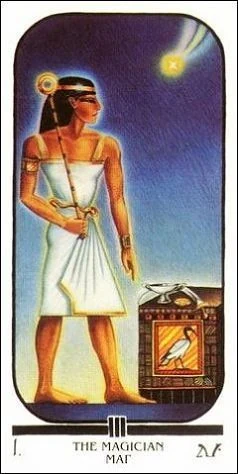
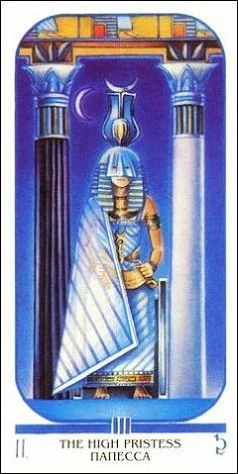
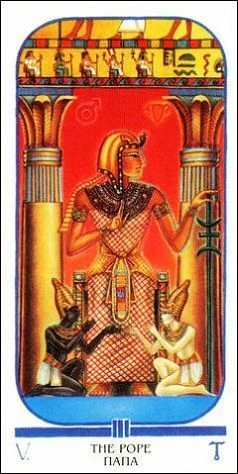
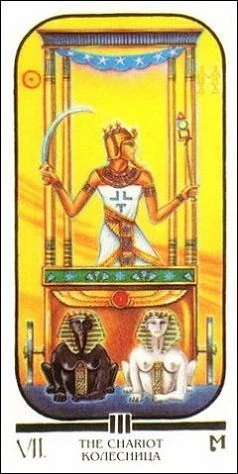
Together they ask: What can I initiate, what must I protect, which teaching shapes my choice, and where will disciplined movement take me?
Is Ibis Tarot beginner-friendly?
It is usable for a determined beginner, but it is not the easiest first deck. The Major Arcana numbering and emblematic pips can conflict with memorized Rider–Waite–Smith expectations. A classic tarot reference and notes on astrological symbolism will help.
A practical learning method is to pull one card, list only what is visibly present, then add the traditional meaning. This prevents the unfamiliar Egyptian imagery from becoming decorative noise and teaches you which details repeatedly carry weight.
Easy reading
What quality should I embody today? Use one Major Arcana and name the clearest visible posture, tool, or celestial sign.
Medium reading
What pattern is forming? Read three cards as structure, pressure, and practical response. Compare their geometry before consulting keywords.
Deep reading
Which inherited belief is shaping this decision? Let Egyptian figures, planetary glyphs, and repeated colors reveal where authority comes from and how it can be revised.
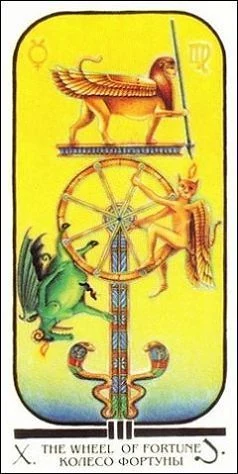
Wheel of Fortune — a mechanism watched by sacred creatures
A vertical wheel rises between a winged scarab-like form, a green serpent, and an ibis figure. The composition feels engineered: symbols are not scenery but parts of a turning apparatus, held together by a bright yellow field.
Upright, this card can show a cycle becoming visible—chance, timing, and consequence moving as one system. In shadow, the wheel becomes an excuse for passivity. The useful question is not only “What is changing?” but “Which part of this mechanism can I actually influence?”
Josef Machynka’s art and symbolic language
The palette is one of the deck’s strongest signatures: saturated ultramarine, turquoise, yellow, orange, scarlet, green, and black. Human figures often stand frontally or in profile like painted temple actors. The pips use large symmetrical constructions, then puncture them with tiny animals, glyphs, clouds, boats, desert trees, or waterways.
This creates two reading speeds. From a distance, each card has a bold emblem. Up close, small correspondences complicate the first impression. That combination makes the deck especially rewarding for journaling, comparative study, and spreads where repeated shapes matter.
The four elemental gates
The Aces strip each suit down to a single charged emblem: flowering rod, overflowing cup, upright sword, and pentacle-star.
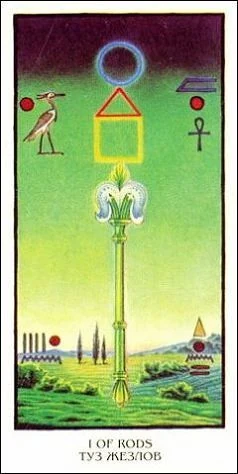

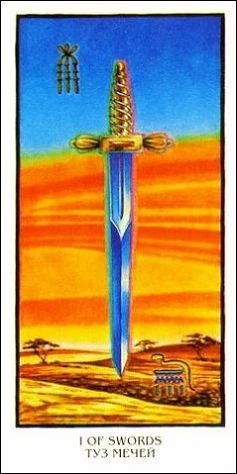
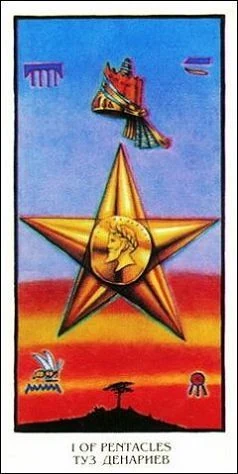
Use them as a diagnostic spread: Where is energy beginning, where is feeling collecting, where is a decision sharpening, and where must value become tangible?
Who will connect with this deck?
- Egyptian-art enthusiasts who want deities, temple forms, sacred animals, and celestial signs throughout the deck.
- Symbol-first readers who enjoy astrology, geometry, color correspondences, and visual repetition.
- Collectors interested in distinctive historical esoteric systems rather than another Rider–Waite–Smith clone.
- Journalers willing to compare a bold central emblem with the card’s smaller peripheral details.
It may be less satisfying for readers who need contemporary emotional scenes, fully illustrated everyday pips, or a familiar Major Arcana order without study.
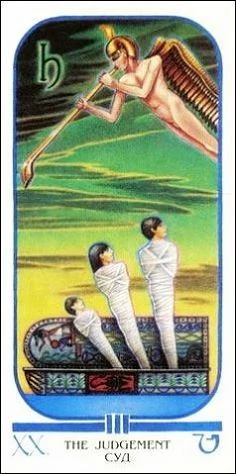
Judgement — awakening as deliberate unwrapping
A winged figure bends down over three wrapped bodies arranged on a decorated platform. Instead of a distant trumpet summoning a crowd, the awakening is intimate and physical: someone reaches into the scene and begins the work of release.
Upright, Judgement becomes a call to uncover what has been preserved, bound, or postponed. In shadow, it can show waiting for an external verdict when the next act of unwrapping is already yours.
Buying and edition guidance
The complete Ibis Tarot is a 78-card deck. Reference listings describe the 1991 edition as 22 Major and 56 Minor Arcana cards, approximately 2.5 × 4.75 inches, and now rare or out of print. The Crown of the Magicians (the World equivalent) and Slave of Pentacles (the Page equivalent) are not present in the recovered source set, so TarotFans does not substitute uncertain images or falsely label the Gallery complete.
When comparing a physical copy, verify the publisher and printing, all 78 cards, booklet language, box condition, and court terminology. Historical sources name AGM/AGMüller and US Games Systems, while resale listings can combine images and descriptions from different editions. Compare the exact card faces rather than relying only on a seller’s title.
Four faces of authority
These courts show how the deck differentiates command through fire, feeling, strategy, and material stewardship.

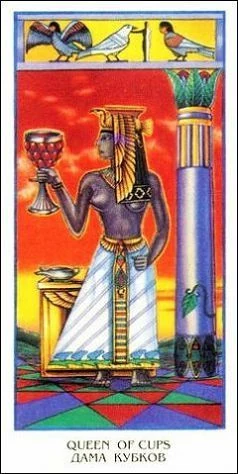
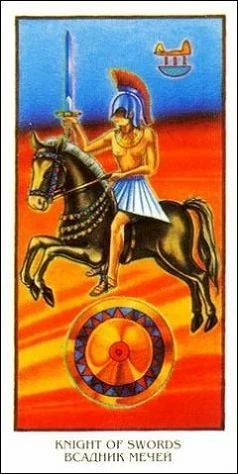
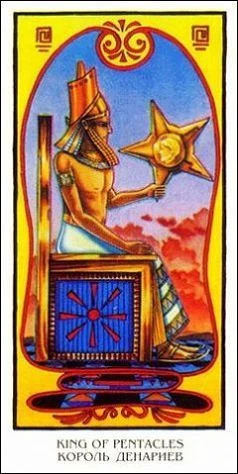
Ask which authority is needed now: catalytic vision, emotional containment, decisive movement, or responsible guardianship.
Final Thoughts
Ibis Tarot is memorable because it commits to a complete symbolic world. Josef Machynka’s saturated Egyptian revival imagery, altered Major Arcana numbering, emblematic pips, and dense corner glyphs make it a deck to study rather than skim.
The gallery below the review video uses every verified card front available from the user-supplied Pinterest board. Each pin was opened individually to recover the highest-resolution original Pinterest exposed, then converted to a descriptive, metadata-rich WebP without enlarging the source.
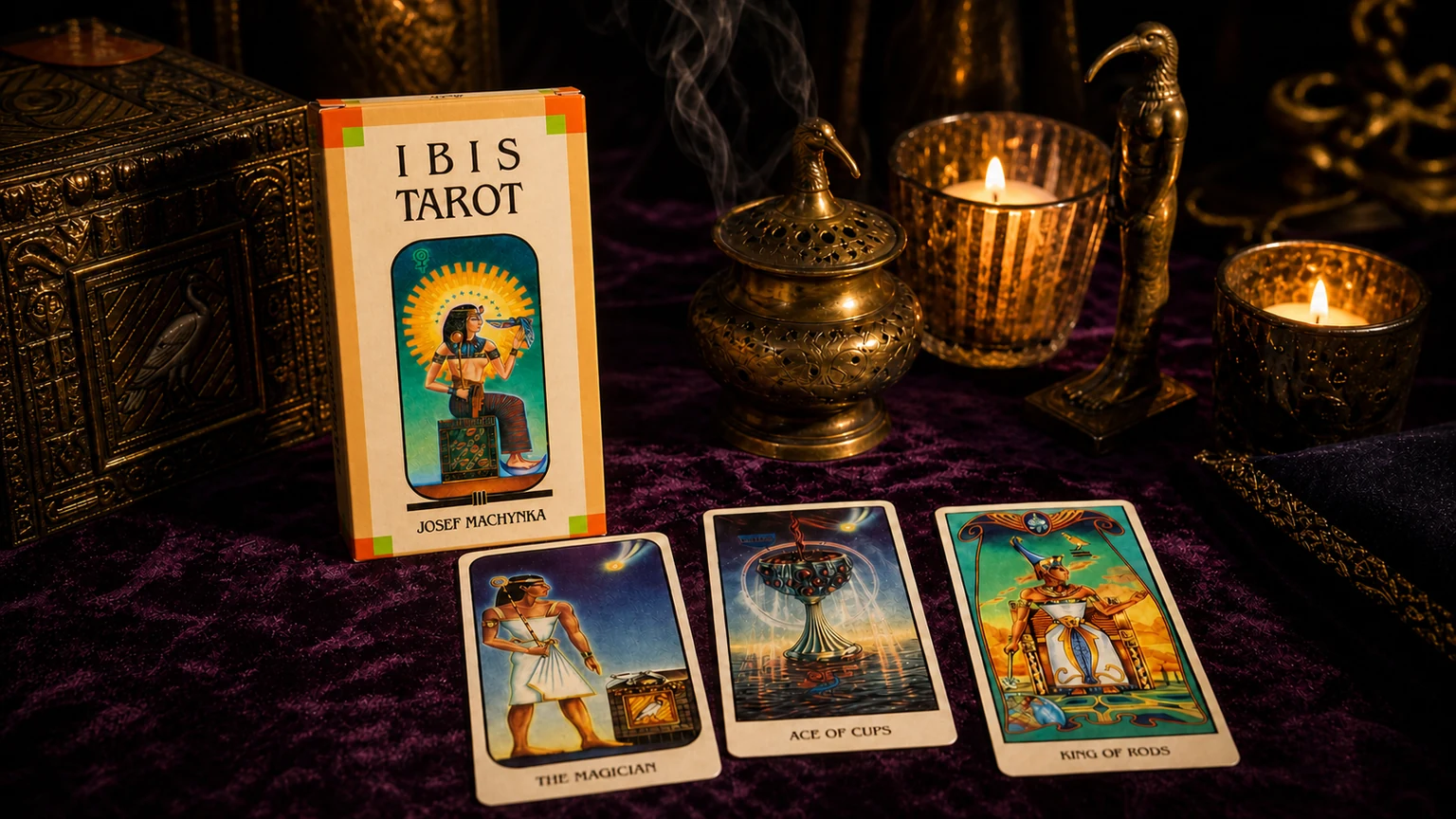
Ibis Tarot FAQ
Who illustrated Ibis Tarot?
The artwork is credited to Josef Machynka. His cards combine Egyptian revival imagery, celestial and astrological glyphs, sacred animals, geometric suit arrangements, and a saturated primary-color palette.
How many cards are in Ibis Tarot?
The complete deck follows a 78-card tarot structure. The Crown of the Magicians (the World equivalent) and Slave of Pentacles (the Page equivalent) are absent from the recovered source set.
Why are some cards absent from the TarotFans Gallery?
TarotFans retained every clearly verified card front recovered from the supplied board and excluded the card back. Missing positions are not filled with duplicates or uncertain substitutes.
Does Ibis Tarot follow Rider–Waite–Smith numbering?
Not exactly. The visible source cards use an alternative esoteric order, including The Fool as XXII, The Magician as III, Justice as VIII, and Strength as XI.
Is Ibis Tarot beginner-friendly?
A committed beginner can learn it, but its altered numbering, emblematic pips, and dense Egyptian and astrological symbolism make it more demanding than a straightforward Rider–Waite–Smith teaching deck.
What are the Ibis Tarot suit and court names?
The supplied cards use Rods, Cups, Swords, and Pentacles. Their visible captions use Knight for Rods and Swords, while Cups and Pentacles use Warrior.


