
Etruscan Tarot Card Gallery
Browse the verified exact-edition card fronts in canonical Major Arcana, Wands, Cups, Swords, and Pentacles order. Choose a group, then open any card for a larger carousel view.
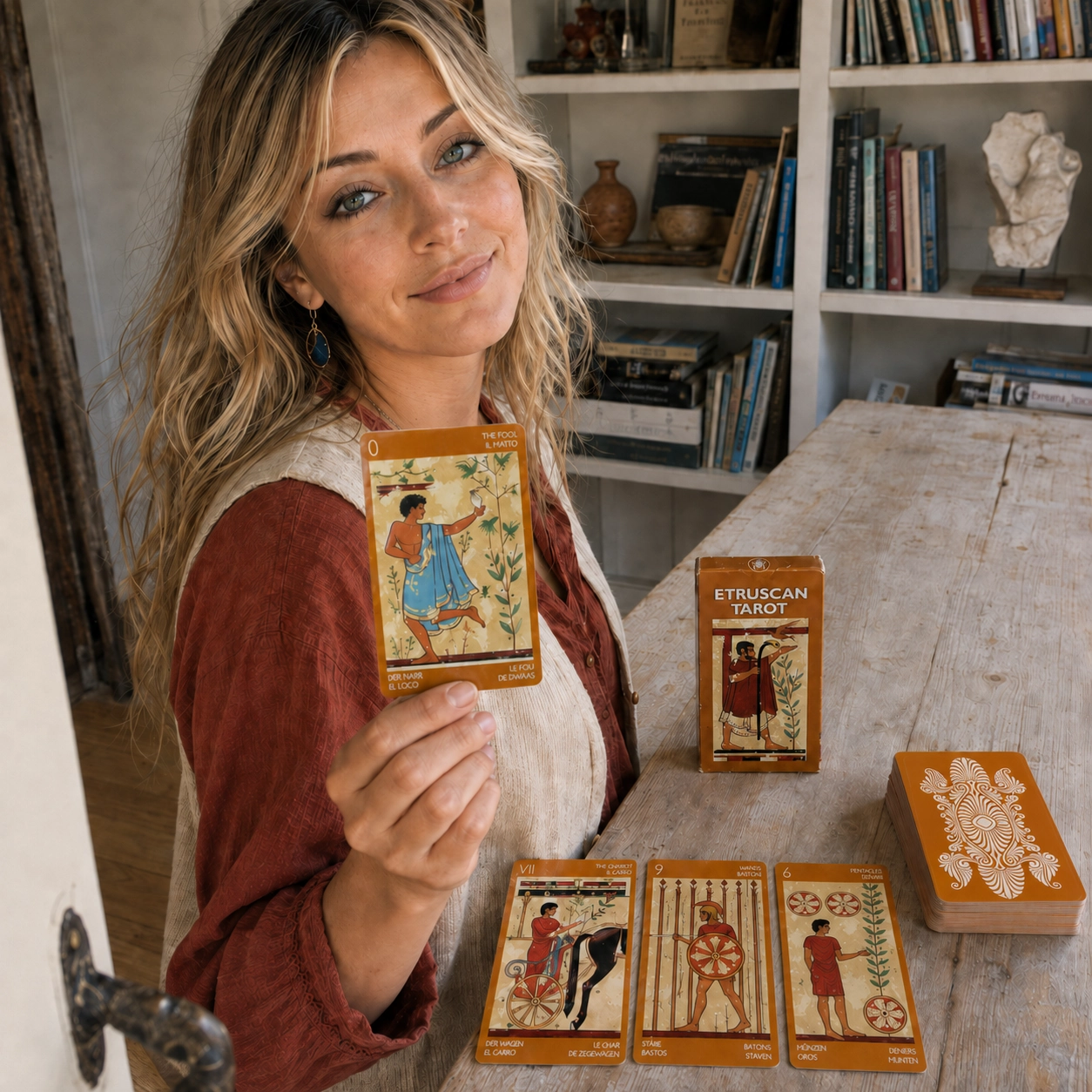
Aurica’s Quick Take
Etruscan Tarot feels like opening a painted tomb wall and finding a reading waiting inside. Silvana Alasia’s earth-toned figures, patterned borders, ritual vessels, horses, shields, branches, and blades give the deck an archaeological presence without making it feel lifeless.
I love the way these images speak through posture before expression. The Fool strides into open space with one hand lifted, while The Chariot gathers its dark horse and red wheel into a single forward pull. When either card catches my eye, I ask whether the reading wants a brave first step or the discipline to give that movement a clear direction.
The Nine of Wands changes the air again: the helmet, spear, round shield, and upright staffs feel like a boundary made visible. Beside the Six of Pentacles, with its measured exchange of coins, that vigilance can become a practical question about what we protect, what we share, and whether an inherited duty still deserves our energy. I notice the strongest shape first, test that feeling against the card’s familiar role, and then let its neighbours show me where the story is moving.
My verdict: this is a distinctive choice for historical-art collectors, experienced visual readers, and anyone exploring ancestry, tradition, duty, craft, or inherited patterns. It asks for more study than a modern Rider–Waite–Smith clone, but the reward is a reading voice that feels ceremonial, grounded, and unusually coherent. Give the pictures time to breathe, and Etruscan Tarot can help you carry old wisdom forward with fresh courage and a steadier heart.
What makes Etruscan Tarot different?
Many decks build emotion through expressive faces and cinematic scenes. Etruscan Tarot works through posture, profile, object, and rhythm. A lifted arm, a stepped horse, a cup held at shoulder height, or a line of upright staffs can carry more meaning than a dramatic expression.
The deck was created by Riccardo Minetti and illustrated by Silvana Alasia for Lo Scarabeo. It follows the familiar 78-card tarot framework, yet its painted figures and mineral palette make the system feel older than its modern divinatory structure. The result is not a reconstruction of Etruscan religion; it is a tarot deck interpreted through an Etruscan-inspired visual language.

Nine of Wands — vigilance becomes a public stance
A helmeted figure advances in profile with a spear held upright and a round shield covering the torso. Eight additional wands rise behind him like a fence or training ground, while leaves interrupt the rigid geometry with small signs of life.
The familiar Nine of Wands theme of endurance becomes visibly embodied: this person is not merely tired but prepared. Upright, it supports watchfulness, boundaries, and carrying experience forward without retreating. In shadow, the shield becomes a permanent posture—defence so habitual that every new situation is treated as an attack.
How the Etruscan Tarot reads in practice
Begin with the card’s tarot function, then read the scene as a piece of social action. Ask who carries the important object, who faces whom, what is being offered or defended, and whether the repeated pattern feels supportive or restrictive.
The deck is especially useful when a question involves systems larger than one person: family expectations, professional roles, cultural inheritance, creative discipline, property, status, and promises that have lasted longer than anyone expected. It tends to turn a private feeling into a question about conduct.
The courts move through duty
These four court cards show authority through movement, bearing, and the object each figure carries.
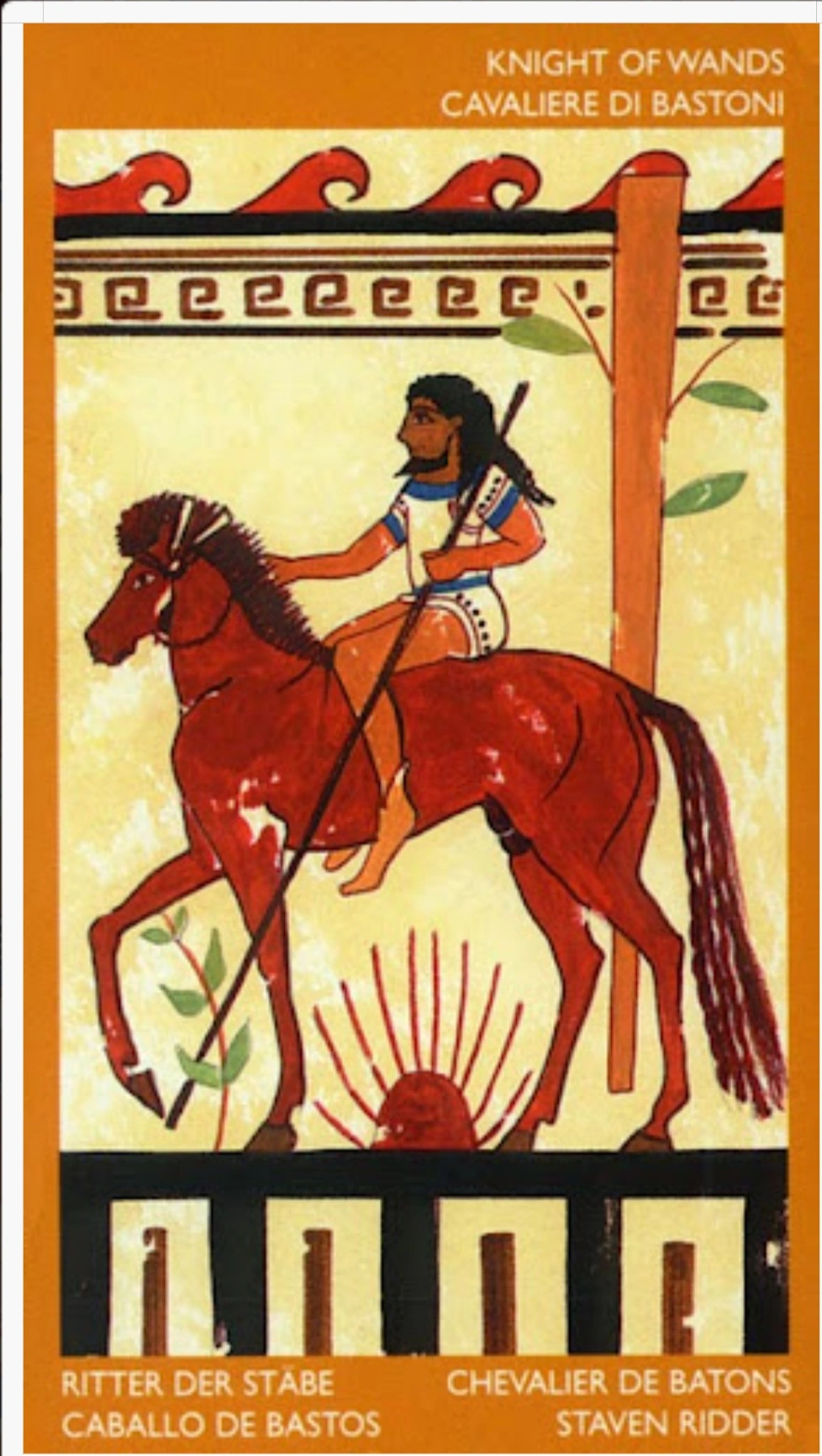
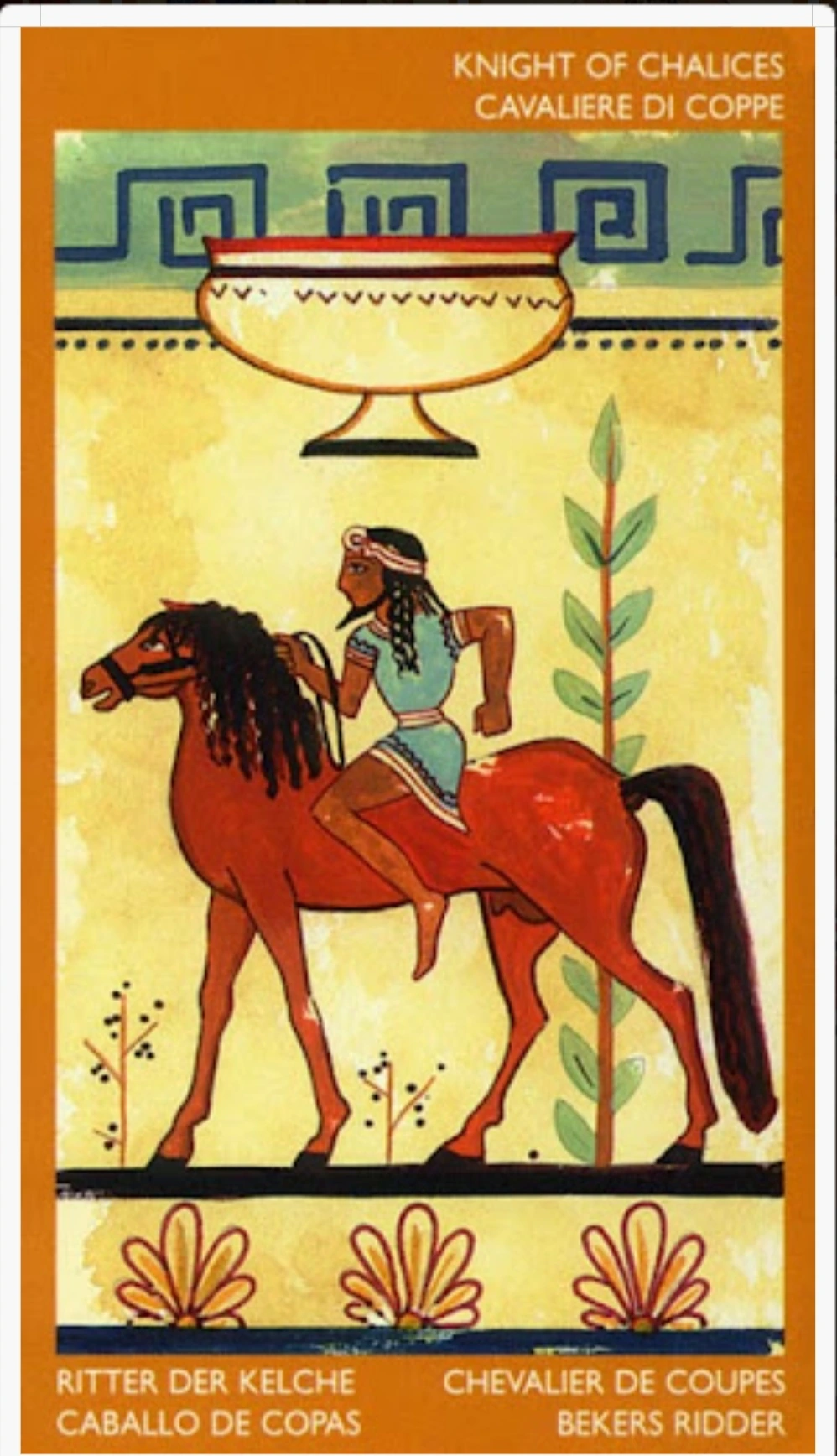
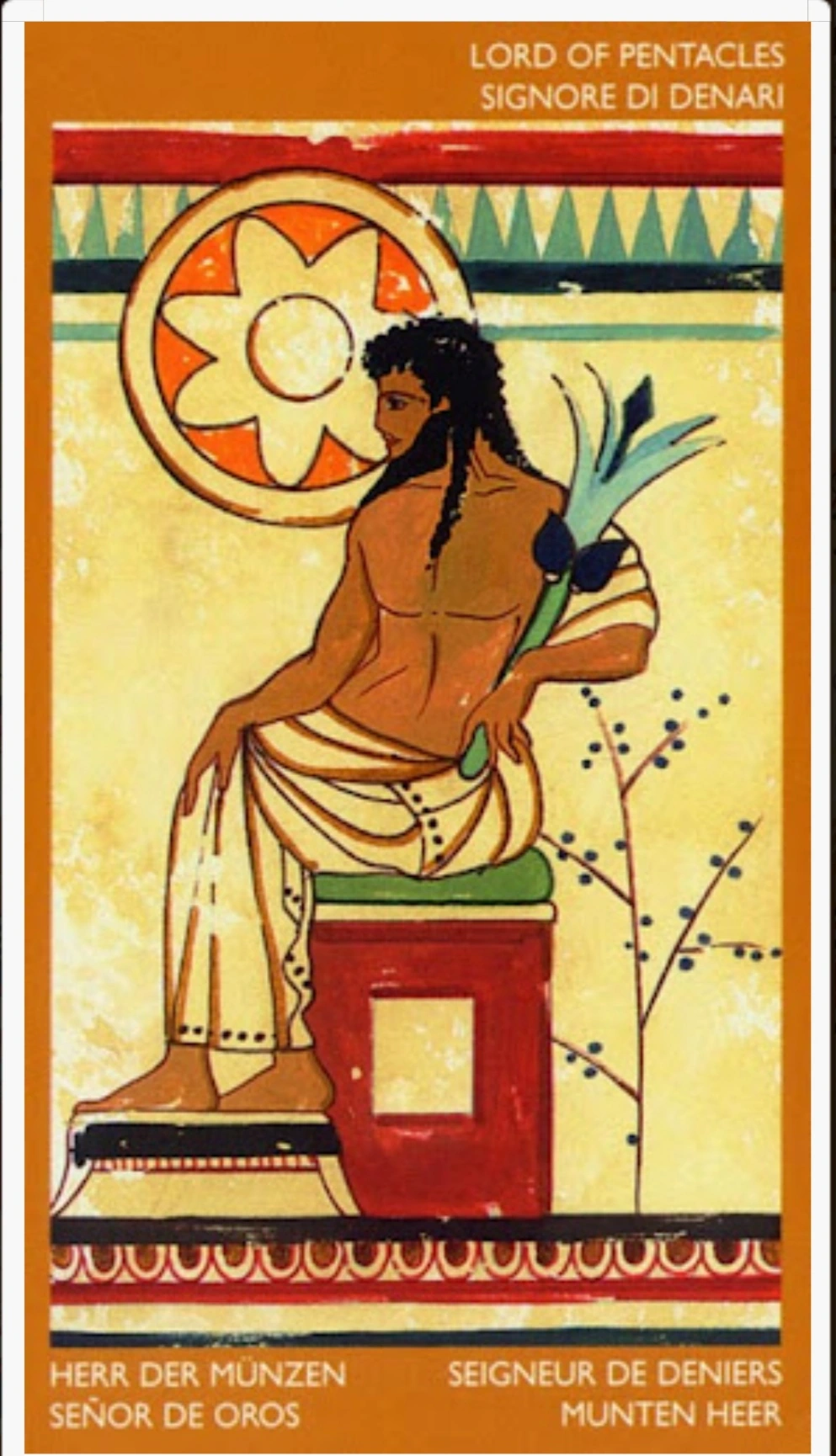

The mounted knights turn intention into direction; the seated kings turn possession into responsibility. Together they ask whether power is moving wisely or merely displaying itself.
Beginner friendliness
I would call this an adventurous beginner deck, not a beginner-proof one. The structure is familiar, but the imagery does not reproduce Pamela Colman Smith’s scenes literally. A guidebook or classic tarot reference helps while you learn how these gestures and objects translate into meaning.
A useful exercise is to write three lines: the traditional card function, the most conspicuous object, and the action the figure appears to take. That keeps the historical atmosphere from becoming a vague keyword and turns visual study into a practical reading method.
Easy, medium, and hard readings
Easy — one card
What role am I being asked to perform today? Notice posture first, then the object or boundary that defines the role.
Medium — three cards
What have I inherited, what still serves me, and what needs a new form? Track repeated colors, tools, and directions across the spread.
Hard — five cards
Which old rule shapes this situation, who benefits from it, what does it protect, what does it restrict, and what wiser tradition can replace it?
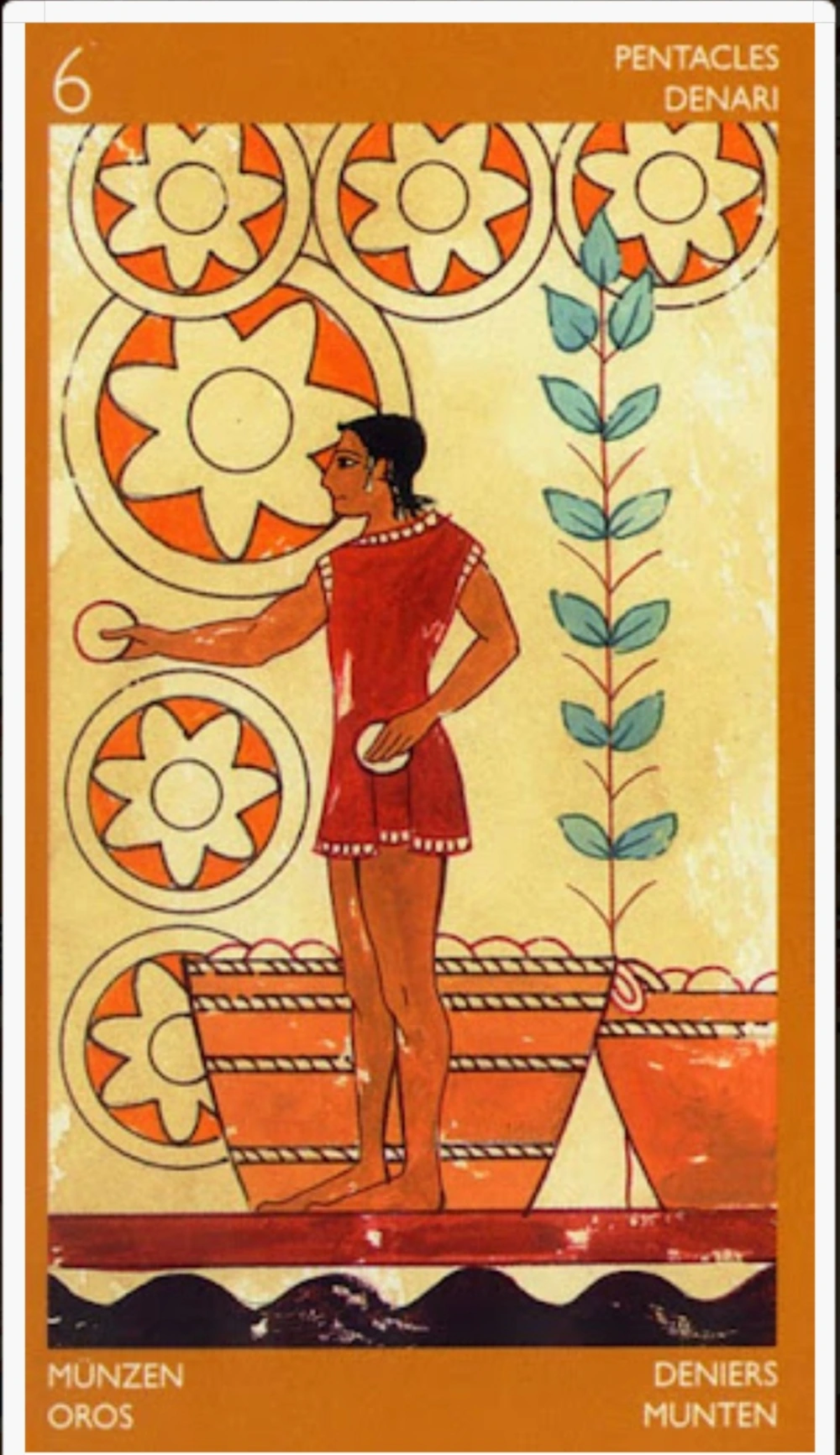
Six of Pentacles — resources arranged into relationship
Six rosette-like coins fill the upper and left side of the card while a standing figure reaches toward one of them. A tall leafy plant rises beside the person, and the low patterned platform makes the exchange feel formal rather than casual.
The card’s usual concern with giving and receiving becomes a question of access: who stands close enough to touch the resource, and who decides how it is arranged? Upright, it can show useful support, circulation, and responsible patronage. In shadow, generosity becomes hierarchy, or help is offered in a form designed to preserve the giver’s status.
Art style and deck personality
Alasia’s illustrations use profile bodies, flat spaces, terracotta red, dry gold, black linework, and bands of geometric ornament. The cards feel like small painted artifacts. Repeated branches, vessels, disks, weapons, horses, and patterned thresholds make the deck easy to read across several cards at once.
Its personality is solemn without being grim. There is movement, sensuality, ceremony, and even tenderness, but very little visual chatter. The deck rewards readers who enjoy composition and repetition more than expressive portraiture.
Land, exchange, and material memory
The Pentacles become flowers, rosettes, trees, and social arrangements rather than isolated coins.
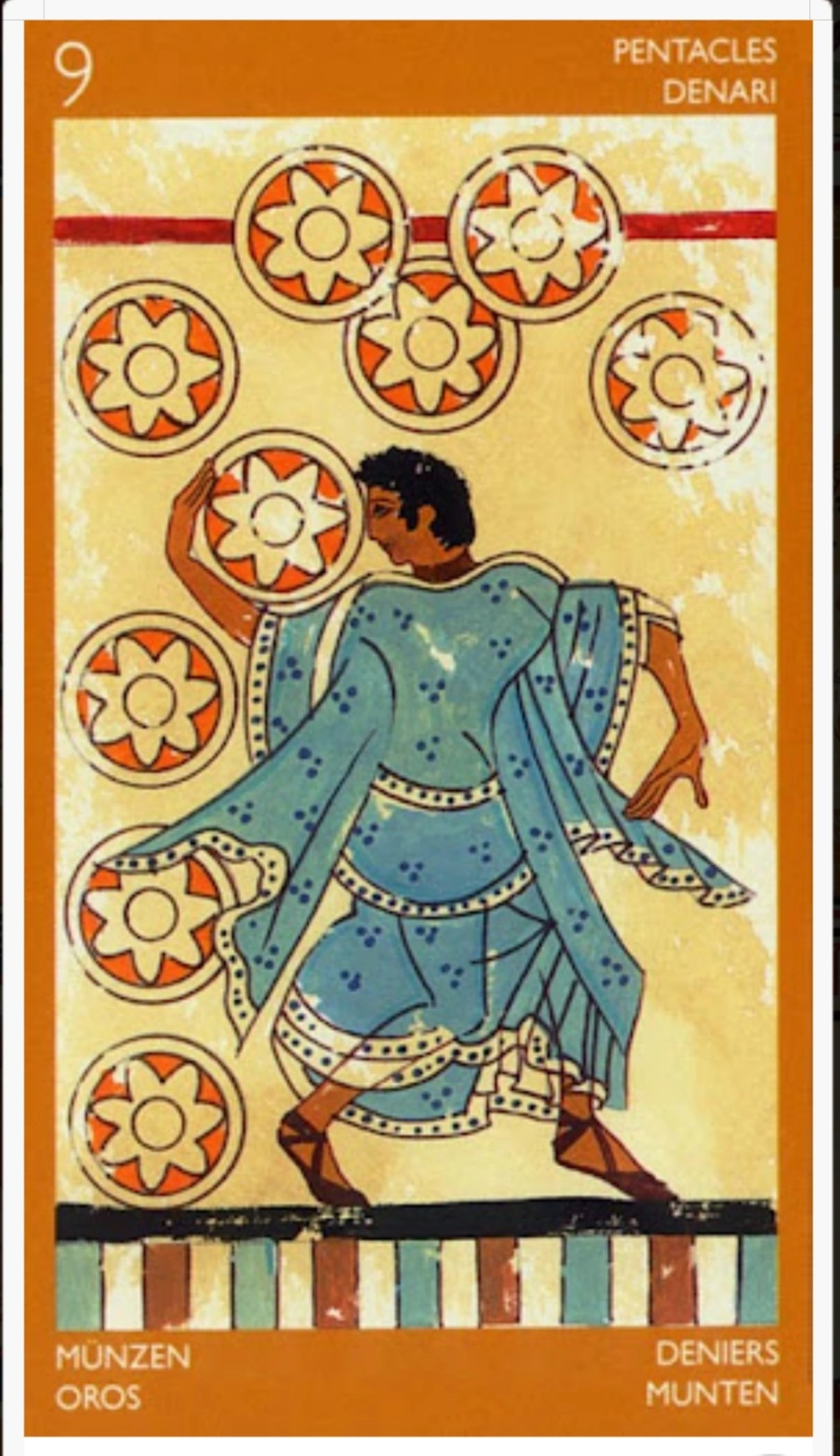
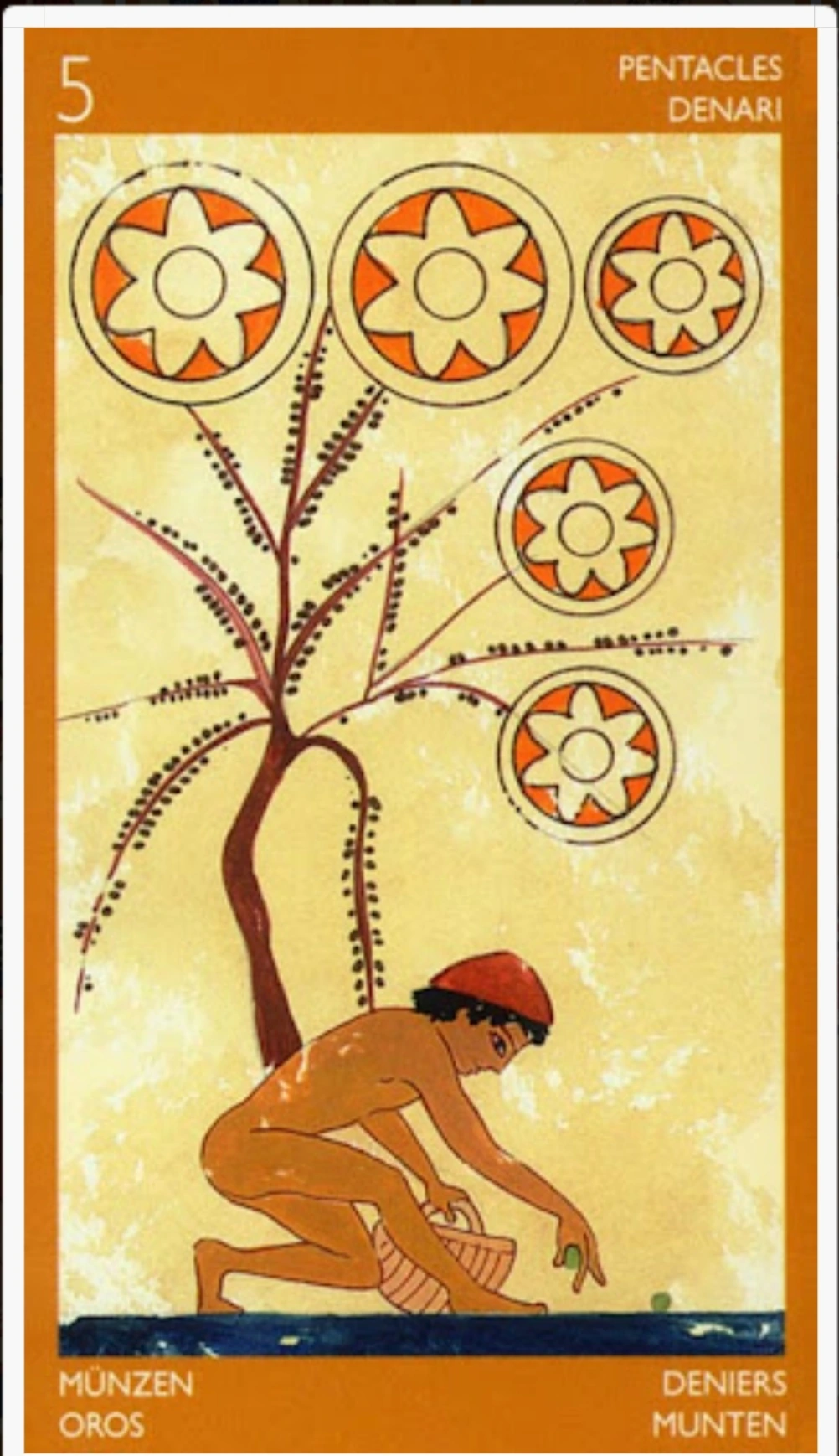
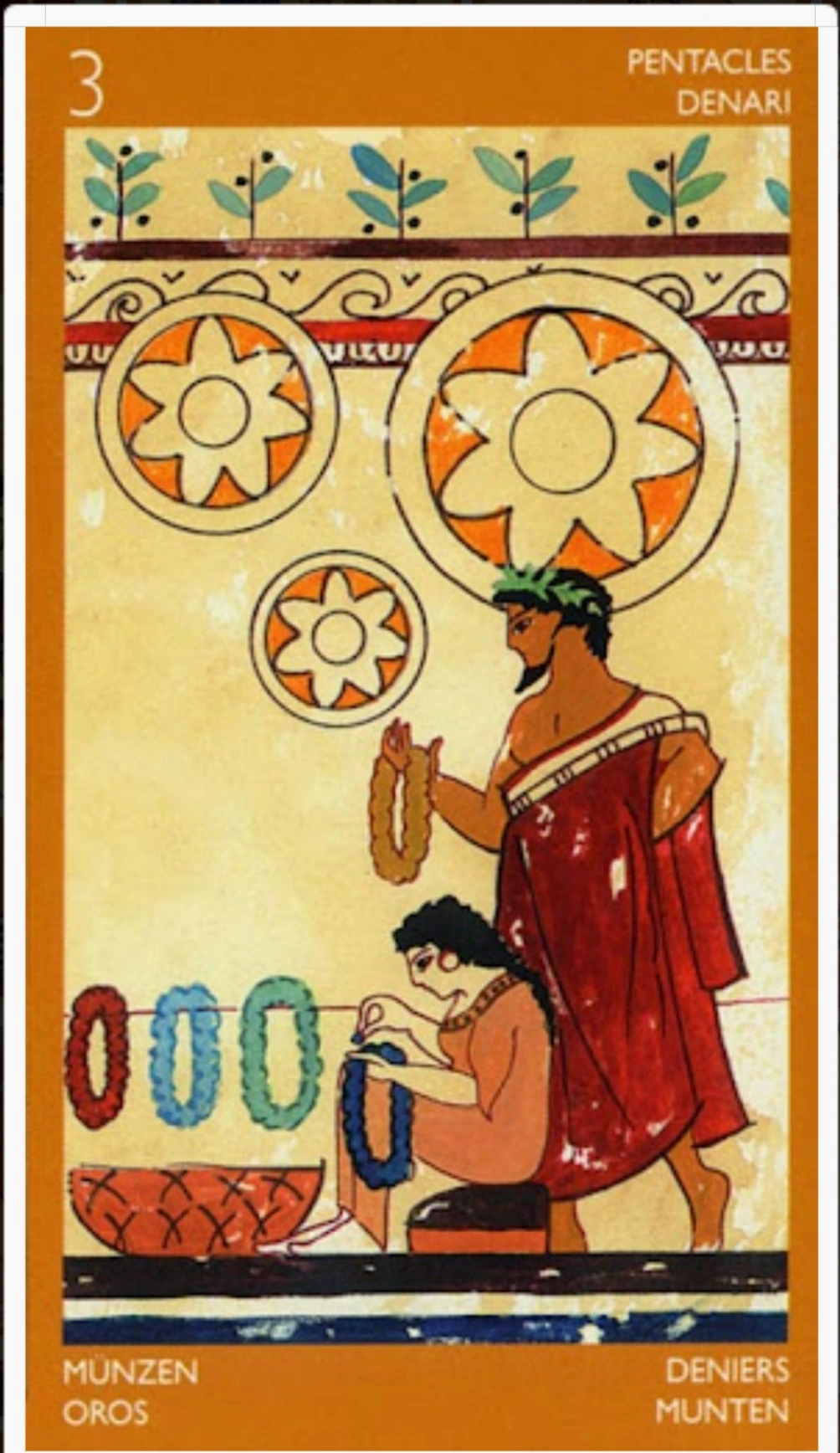
Read together, these cards ask how wealth is cultivated, shared, lost, and made visible. Material security is never separate from the people and customs surrounding it.
Who will love this deck?
Best for: historical-art collectors, Lo Scarabeo fans, visual journalers, intermediate readers, and people drawn to ancestry, institutions, craft, land, or long-term responsibility. It is also a memorable contrast deck for readers surrounded by modern fantasy or photographic tarot.
Think twice if: you need expressive faces, bright contemporary polish, fully illustrated Rider–Waite–Smith scenes, or a deck that gives an immediate emotional answer without study.
What Orica likes most
I like how consistently the deck turns meaning into visible conduct. The figures stand, ride, carry, guard, offer, and receive. Even stillness looks chosen. That makes the cards particularly strong when a reading needs to move beyond “How do I feel?” toward “What am I doing, and what pattern does that action continue?”
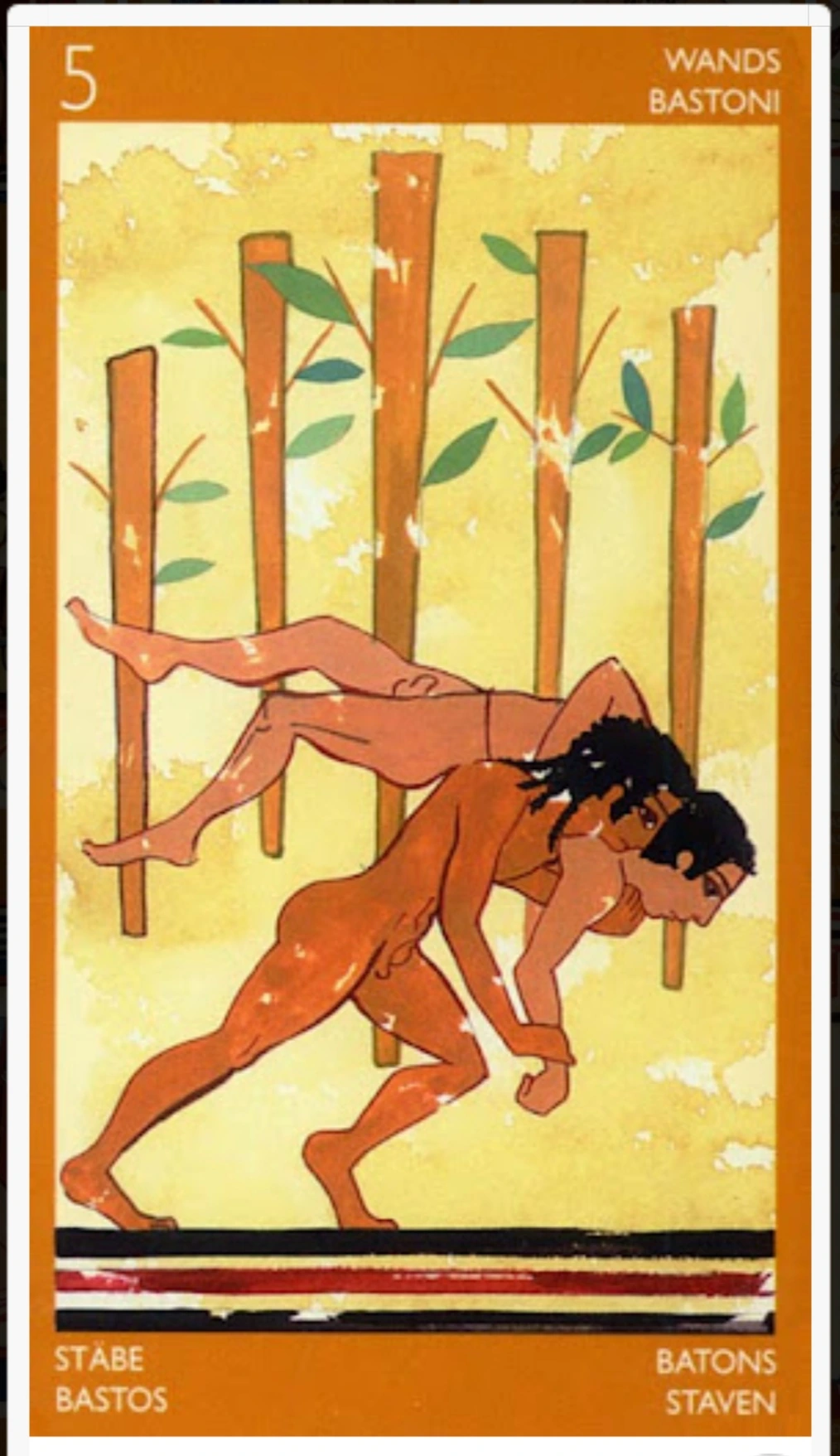
Five of Wands — effort inside a crowded structure
A bent figure pushes forward among upright wooden poles. The body forms a strong diagonal while the wands divide the pale field into narrow passages. There is no theatrical battle; tension comes from trying to move through a space already occupied by competing lines.
Upright, the card can show productive friction, training, and the effort required to find a workable position among other agendas. In shadow, every task becomes a contest and the structure itself goes unquestioned. The useful question is not only “How do I win?” but “Why is the field arranged this way?”
What to know before buying
Etruscan Tarot has appeared in more than one market edition, and older copies may be sold as collector items. Confirm the publisher, card count, guidebook or booklet, box condition, and language mix shown in the exact listing. The direct Amazon link below is useful for checking current availability, but the page does not claim a live price or stock level.
Four tests of the blade
The Swords move from decision through pressure, strategy, and consequence.
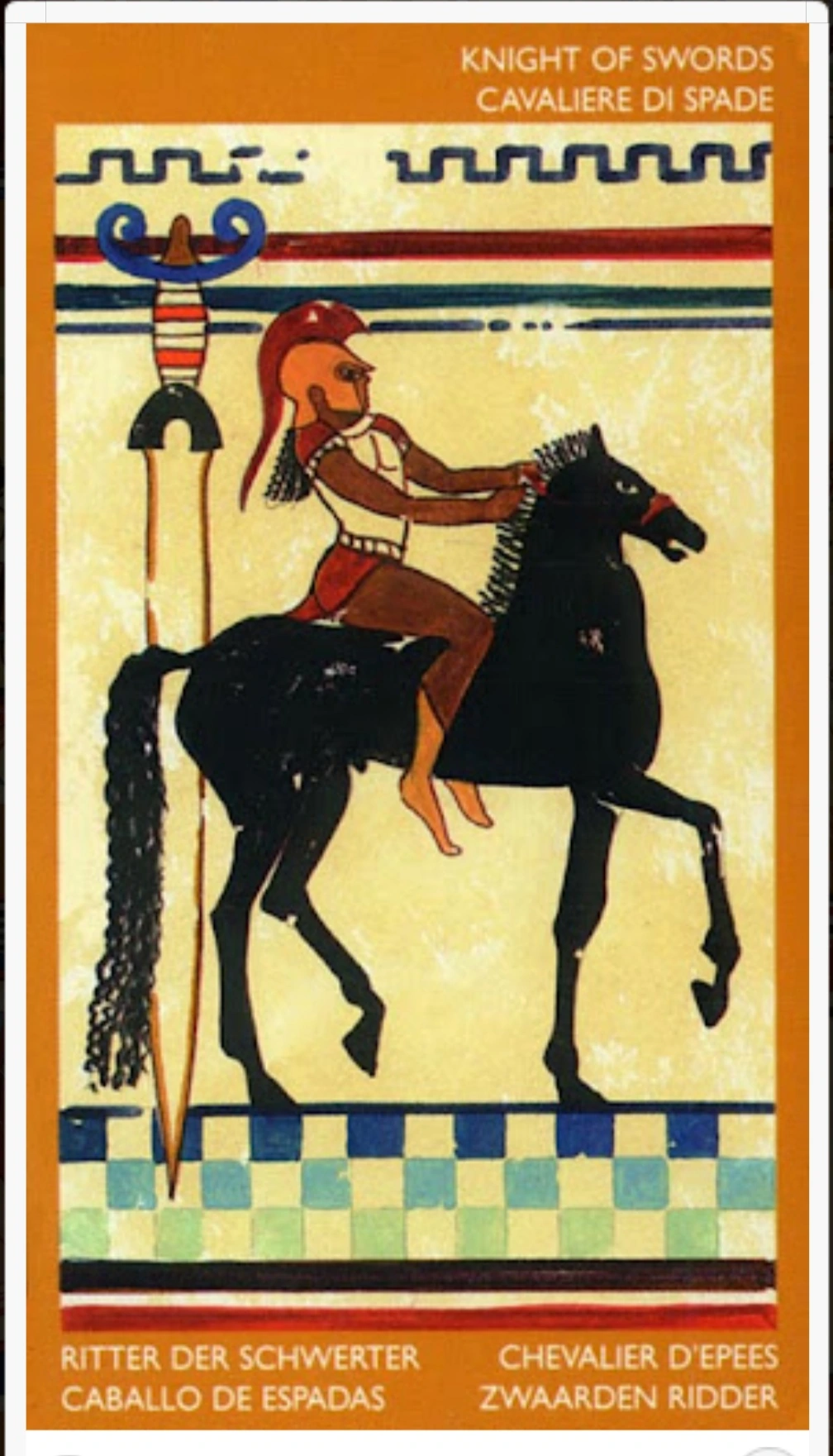
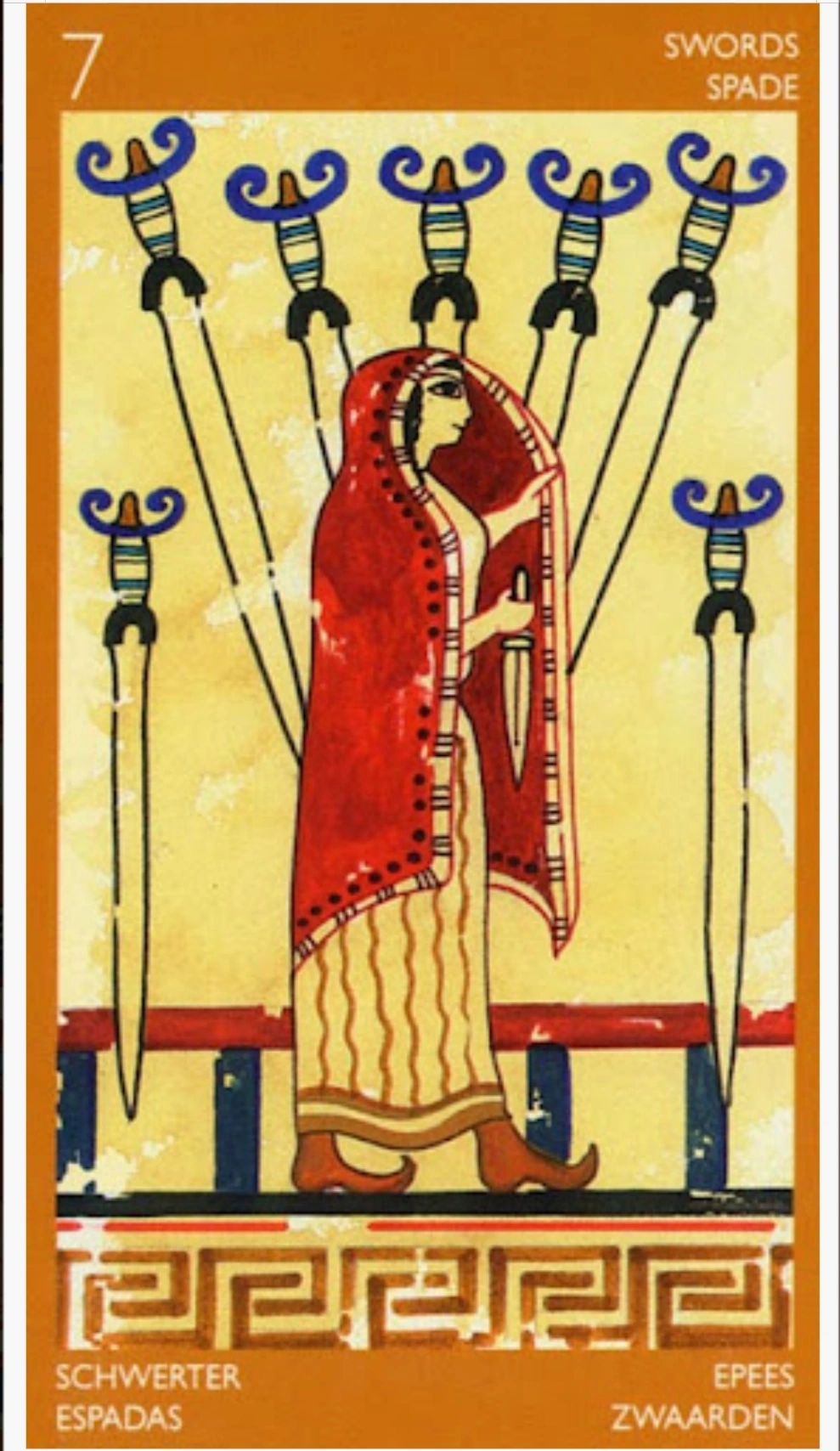
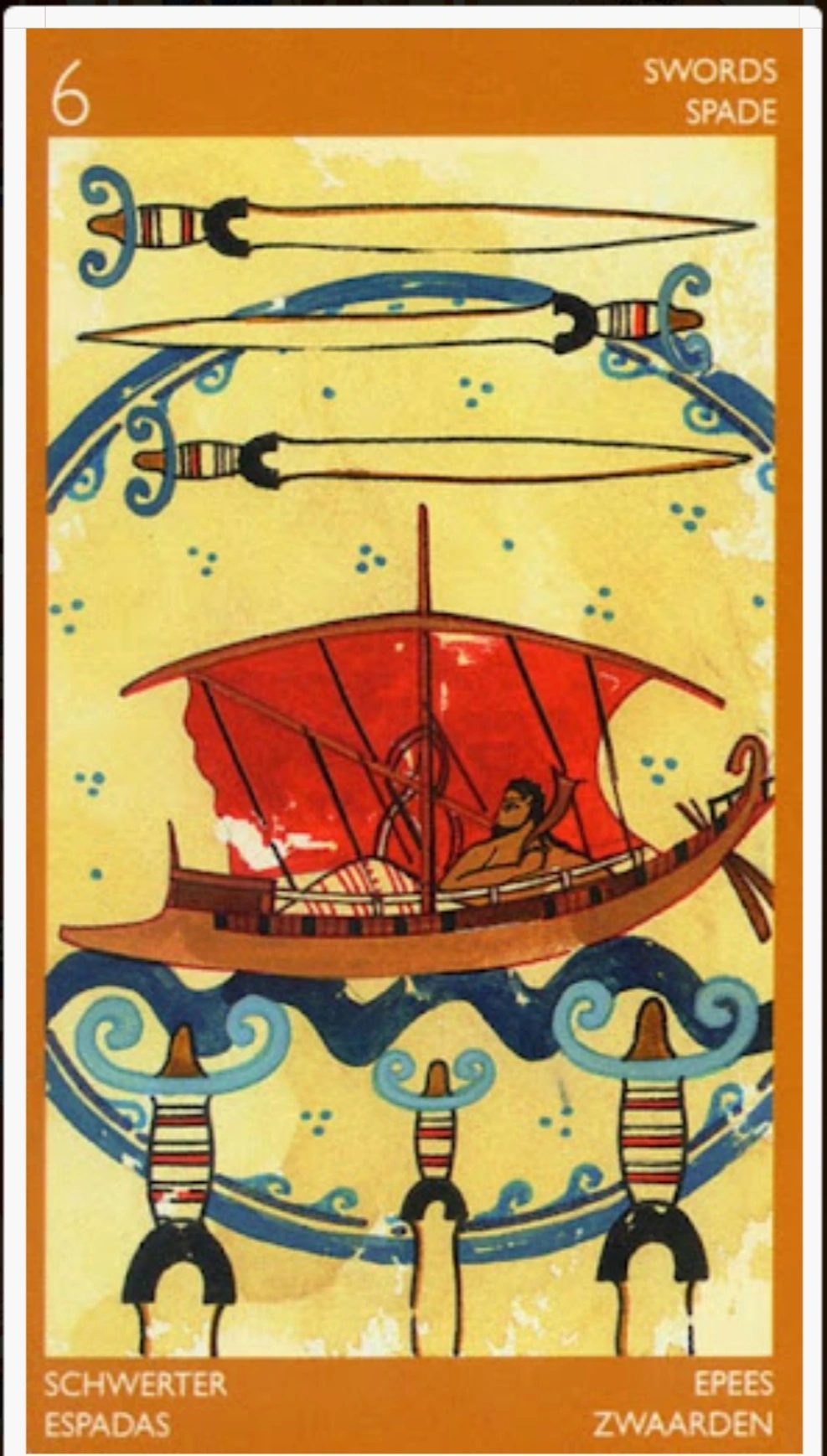
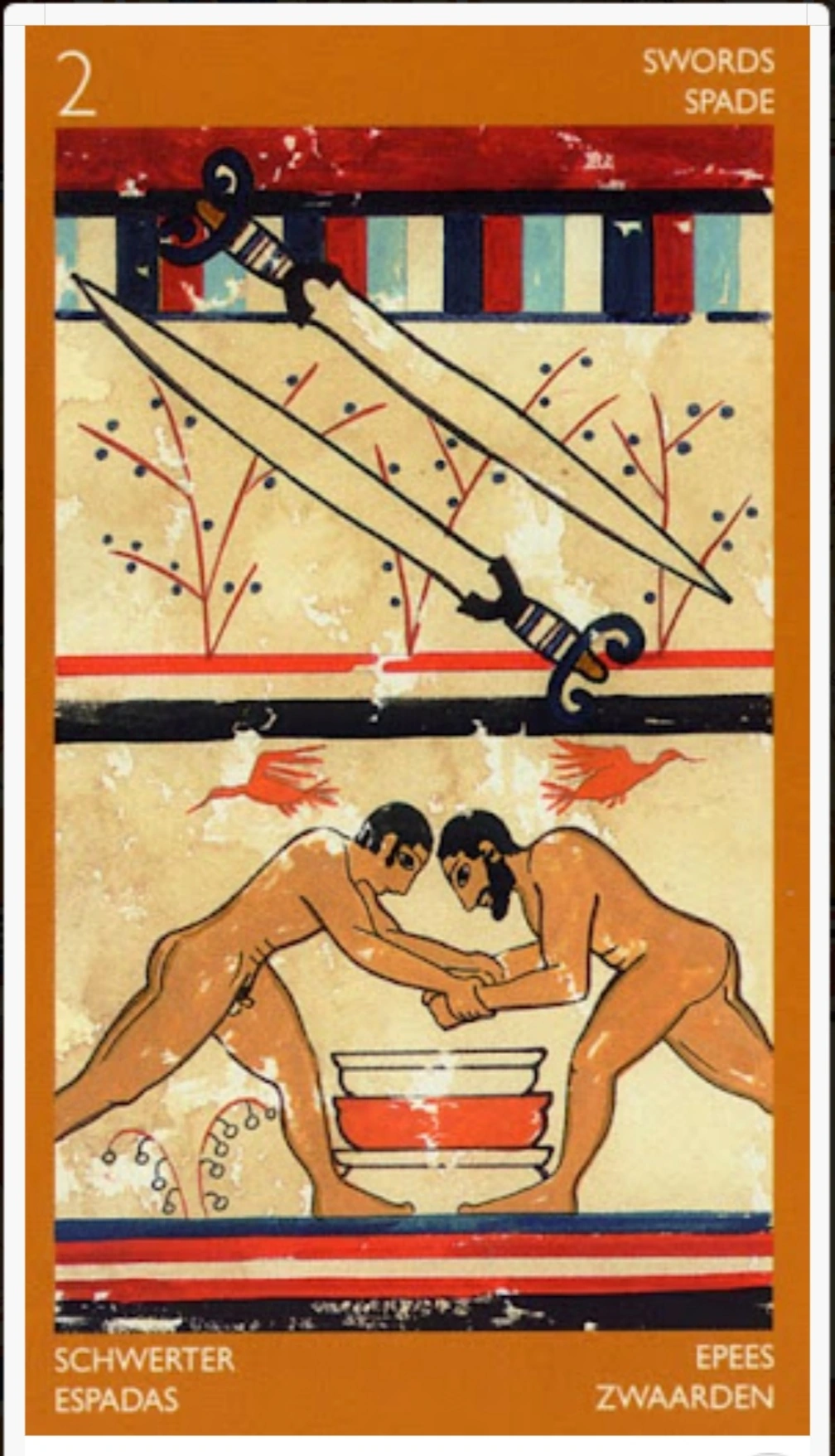
The deck makes intellect physical: a horse accelerates it, a wall of blades narrows it, a burden carries it, and a divided scene asks where choice has stalled.
Aurica’s golden rule
Read the gesture before inventing the story. Name the stance, direction, and object first. Let those visible facts meet the traditional card function before you decide what the ancient atmosphere means.
Final Thoughts
Etruscan Tarot is a strong choice for readers who want tarot to feel ancient, symbolic, and deliberately composed. It is not trying to be trendy or emotionally effortless. Its beauty comes from the discipline of the image: flat color, repeated pattern, and human action held inside ritual space.
For ancestry, social patterns, craft, boundaries, and serious reflection, the deck has real weight. Readers who give it time will find a practical voice beneath the museum-like surface.

Etruscan Tarot FAQ
Who created Etruscan Tarot?
Riccardo Minetti created the deck concept and Silvana Alasia illustrated its Etruscan-inspired world for Lo Scarabeo.
How many cards are in the complete Etruscan Tarot deck?
The complete published deck follows the standard 78-card tarot structure.
Is Etruscan Tarot beginner-friendly?
It suits adventurous beginners and intermediate readers. The structure is familiar, but the historic visual language benefits from a guidebook or classic tarot reference.
Does it follow Rider–Waite–Smith meanings?
Its cards can be read through familiar tarot functions, but the scenes do not reproduce Rider–Waite–Smith imagery literally. Gesture, object, and patterned composition carry much of the meaning.
What readings suit this deck best?
It is especially effective for ancestry, inherited patterns, institutions, work, craft, boundaries, responsibility, and long-term decisions.
What should buyers verify?
Check the exact edition, publisher, card count, guidebook or booklet, box condition, and the language mix shown by the seller.


