Ancient Italians Tarot Cards
Explore the verified Ancient Italians Tarot artwork currently available in this partial Gallery. Choose an official group, then open any card for a larger carousel view.
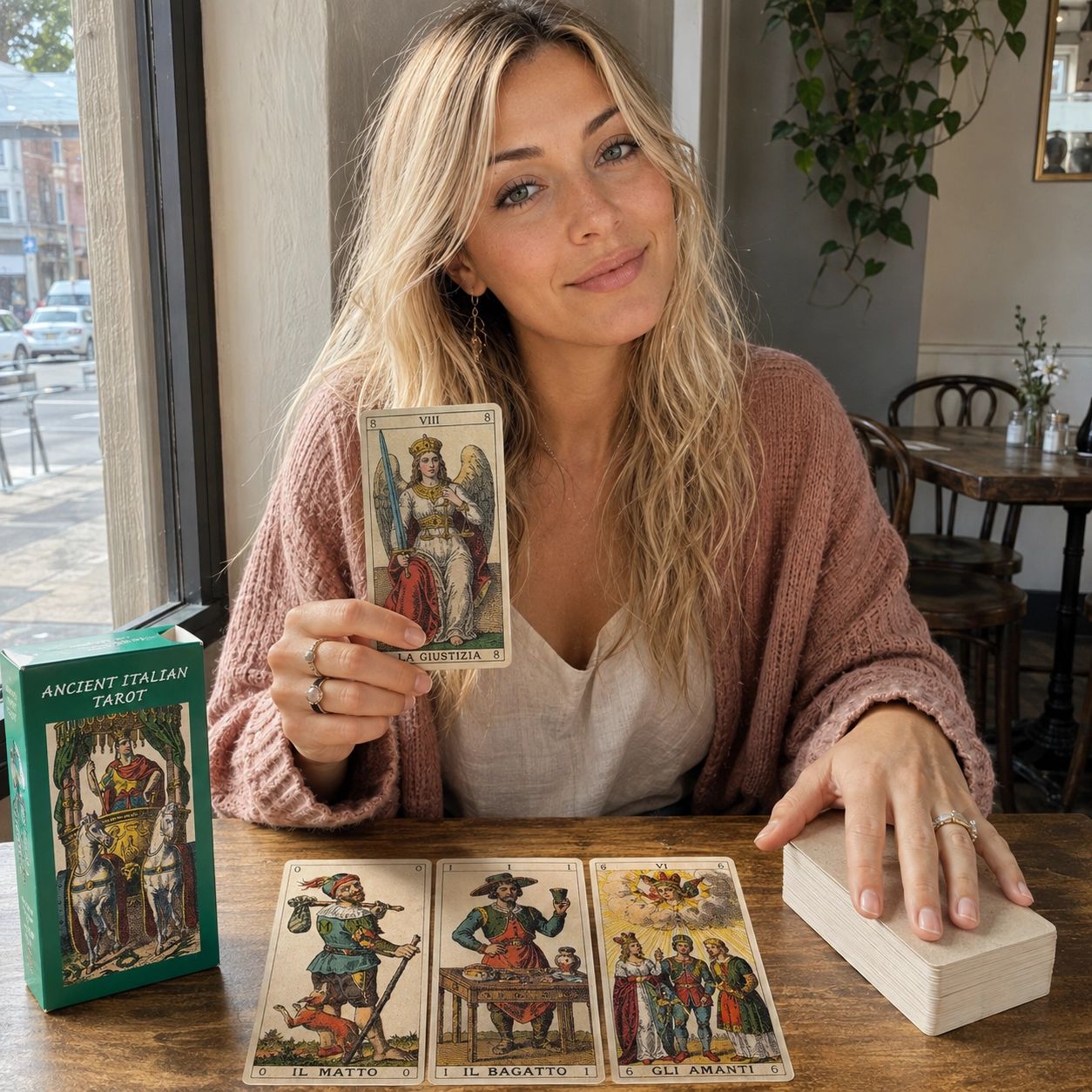
Aurica’s Quick Take
Ancient Italians Tarot has a quiet museum glow: old Italian lines, formal poses, small bright symbols, and the hush of a candlelit archive. It never needs to shout. Instead, it asks me to come closer and let each measured gesture reveal itself slowly.
I find it especially rewarding for readers who enjoy classical tarot, antique art, and uncluttered symbolic prompts. The majors speak with stately confidence, while the pip-style minors ask me to combine suit, number, rank and atmosphere rather than wait for a dramatic scene to explain everything.
I begin with the detail that seems to breathe: Justice holding her balanced pose, the repeating emblems on a pip card, or the direction of a figure’s gaze. Then I set that first feeling beside the card’s traditional task and listen to the surrounding spread before naming one calm, practical next step.
This is the deck I would choose when a question needs dignity rather than drama. Its restrained images leave a little clear space around the answer, so patterns in work, relationships and personal choices can settle into view without being crowded by visual noise.
Ancient Italians Tarot reminds me that quiet wisdom is still living wisdom; with patience and an open heart, its old lines can help you meet the next choice with steadiness and hope.
First look: old-world majors with a quiet ceremonial mood


These opening cards show the deck’s personality right away: spare, old-fashioned, formal, and more symbolic than cinematic.
Art Style and First Impression
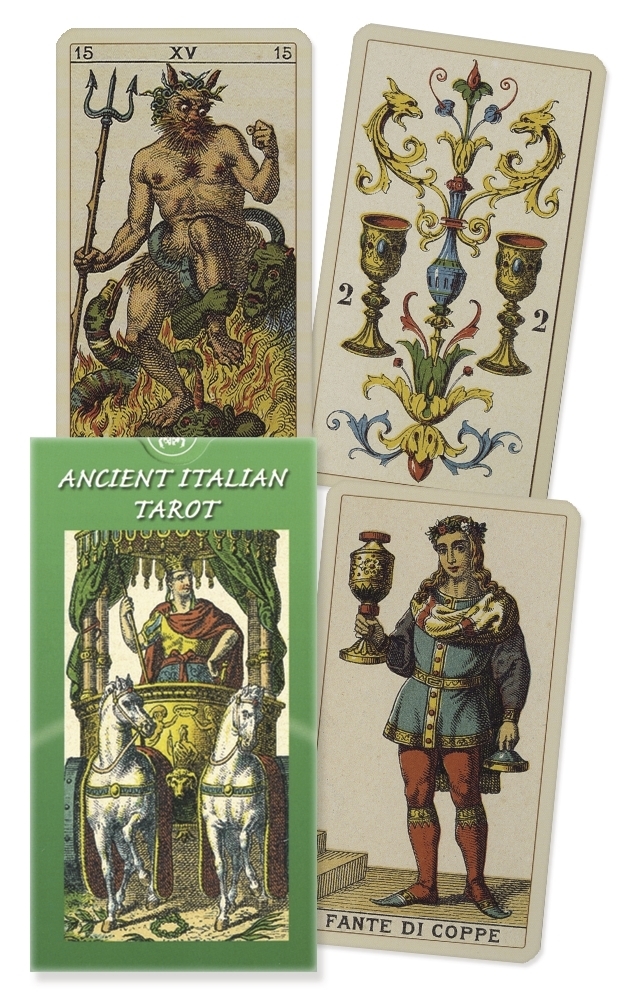
The artwork feels antique in the best way. The figures have a restrained, historical look, and the cards are built from clear forms rather than busy backgrounds. Instead of giving you a modern emotional close-up, the deck gives you a figure, a title, a few objects, and room to listen.
That makes Ancient Italians Tarot feel elegant and slightly distant. I do not mean cold. I mean it has boundaries. It does not explain itself with neon signs. It lets the reader bring knowledge, intuition, and a little patience to the table.
If you love ornate collage decks or hyper-detailed fantasy art, this may feel too plain at first. But if you like historical decks, Marseille-adjacent structure, or cards that look like they belong in an old cabinet of curiosities, the style has real charm.
How It Reads
Ancient Italians Tarot reads best when you begin with the card’s traditional role and then soften into the image. The majors are direct enough for archetype work: The Hermit asks for solitude, Justice asks for balance, Temperance asks for measure, and Death asks for change. The deck does not overcomplicate those messages.
The minors are more old-school. Many of them ask you to read suit, number, rank, and mood rather than a full illustrated story. That can be beautiful for experienced readers because it keeps the reading clean. It can be harder for beginners who depend on scene-based cards to remember meanings.
In practice, I would use this deck for questions that need calm judgment: What is the real pattern? What is the traditional wisdom here? What choice restores order? What is the mature next step?

Hermit: wisdom without performance
The Hermit is one of the cleanest examples of the deck’s voice. In a reading, I would not make this card dramatic. I would read it as a return to privacy, study, and honest inner timing.
For a relationship question, Hermit may say: stop asking the crowd and listen to yourself. For work, it may point to research, apprenticeship, or a quieter path. The advice is simple: step back until the signal becomes clear.
Beginner Friendliness
Ancient Italians Tarot can be used by beginners, but I would not call it the easiest first deck. The majors are approachable because their archetypes are familiar. The court cards are also recognizable. The pip-style minors, however, may feel less obvious if you are used to Rider-Waite-Smith scenes.
A beginner can still learn a lot here. Keep a simple note: Wands are energy and will, Cups are feelings and bonds, Swords are thought and conflict, Pentacles are body, money, and the material world. Then add the number or court rank. That small formula makes the deck much less intimidating.
This is a good deck for someone who wants to build real tarot muscles instead of relying only on pictures. It trains you to read structure, not just illustration.
Fire and movement: the Wands suit


The Wands keep the reading focused on effort, confidence, stamina, and the kind of authority that comes from practiced will.
Best Uses
- Historical tarot study: The deck has an antique temperament that suits readers interested in older tarot styles.
- Clear daily draws: One card can give a clean theme without too much visual noise.
- Decision readings: The formal mood is helpful when you need judgment, balance, and a sober next step.
- Tarot journaling: Because the deck is not over-explained, it invites you to write your own observations.
- Comparing systems: It is useful beside a Rider-Waite-Smith or Marseille-style deck to see how meaning changes through art style.
I would use another deck for very visual storytelling spreads or emotional inner-child work. Ancient Italians Tarot can go deep, but it goes deep by restraint, not by softness.
What I Like Most
What I like most is the deck’s dignity. So many modern decks try to win you over immediately. This one does not. It feels like it trusts tarot enough to stay simple. The result is calm, classic, and surprisingly flexible.
I also like how the court cards feel direct. Pages, Knights, Queens, and Kings can become real people, inner roles, or styles of action without needing a long visual story. For readings about maturity, responsibility, and character, that directness is useful.

Justice: the clean blade of truth
Justice in this deck reads as sober, composed, and exact. It is not here to comfort every feeling. It is here to ask what is fair, what is proven, and what choice restores balance.
In a personal reading, I would ask: where am I avoiding accountability? In a conflict reading, I would look for facts over drama. The practical message is to make the clean choice now so the future does not become more tangled.
What to Know Before Buying
Before buying Ancient Italians Tarot, know that this is a traditional-feeling deck. If you want fully scenic minors, modern diversity, glossy fantasy atmosphere, or a guidebook that does all the interpreting for you, this may not be your most natural match.
If you enjoy historical decks, formal symbolism, and a slower reading pace, it may be exactly the kind of deck that grows on you. It is also a nice choice for collectors who like tarot’s older visual roots and want something that feels more classical than trendy.
One practical note for this local review package: the available TarotFans image set currently contains 68 card files. The article mentions that honestly while keeping the focus on the deck’s actual reading feel.
Water and feeling: the Cups suit


The Cups are useful for emotional questions, but the deck keeps them composed. It asks for sincerity more than sentimentality.
Orica’s Golden Rule
My golden rule for Ancient Italians Tarot is: read the bones first, then the breath. Start with the structure: major, suit, number, or court rank. Then notice the breath of the image: posture, direction, color, and mood.
If you only read the structure, the deck can feel dry. If you only read the mood, you may drift. The magic is in the middle: classical tarot bones with a quiet intuitive breath moving through them.

Ace of Pentacles: the blessing becomes practical
Ace of Pentacles is a lovely card for grounding this deck. It takes the mystical and gives it weight: a seed, an offer, a resource, a body-based yes.
For money, it can suggest a first stable opportunity. For health, it asks for simple physical care. For spiritual work, it says the omen matters most when you make it real through habit, craft, and consistent action.
Bringing the Old Symbols Home
After the Ace of Pentacles grounds the message, I like to pause and ask what can be touched, tended or completed today. The older imagery becomes most generous when it leaves the museum frame and enters ordinary life through one patient, useful action.
Earth and results: the Pentacles suit


The Pentacles make the deck practical. They are good for work, money, body care, patience, and the slow proof of real-world results.
Final Thoughts
Ancient Italians Tarot is not a deck that shouts. It is a deck that waits. Its charm is in the slower gaze: the old-world figures, the formal suits, the sense that tarot can be mystical without being flashy.
I would recommend it to readers who like historical tarot, collectors who enjoy classical imagery, and students who want to practice reading suit and number rather than relying only on illustrated scenes. It may not be the easiest first deck for everyone, but it can become a steady, elegant reading companion if you enjoy its quiet language.

Ancient Italians Tarot FAQ
Is Ancient Italians Tarot good for beginners?
Ancient Italians Tarot can work for beginners who are willing to learn suit, number, and court-card structure. It is not the easiest beginner deck if you want fully illustrated Rider-Waite-Smith-style scenes on every minor card, but it is useful for building strong tarot basics.
What style of art does Ancient Italians Tarot use?
The deck has an antique Italian, historical tarot feeling. The images are formal, restrained, and symbolic rather than modern, flashy, or heavily cinematic. It suits readers who like classical decks and museum-like atmosphere.
Is the Ancient Italians Tarot Gallery complete?
No. This is an honestly labelled partial Gallery built only from the verified card images currently available; no substitute or wrong-edition cards have been added.
Does Ancient Italians Tarot follow Rider-Waite-Smith meanings?
It can be read with standard tarot meanings, but it does not feel like a modern Rider-Waite-Smith clone. The deck leans more traditional and symbolic, so suit, number, rank, and archetype matter a lot when reading it.
What kinds of readings fit Ancient Italians Tarot best?
It is strongest for calm decision readings, historical tarot study, daily draws, spiritual discipline, practical reflection, and questions that need clarity rather than emotional drama. It is less ideal for readers who want very illustrated, story-heavy spreads.
Who will probably enjoy Ancient Italians Tarot most?
Collectors, traditional tarot students, Marseille-curious readers, and anyone who likes antique European art will probably enjoy it most. If you love restrained symbolism and a slower reading pace, this deck has a lot to offer.