ALL TAROT CARDS REVEALED ✦ 8 MIN READ
The Vindur Tarot Cards
Explore the verified The Vindur Tarot v.II card fronts, then use the deck-family filters or open any card in the accessible carousel.
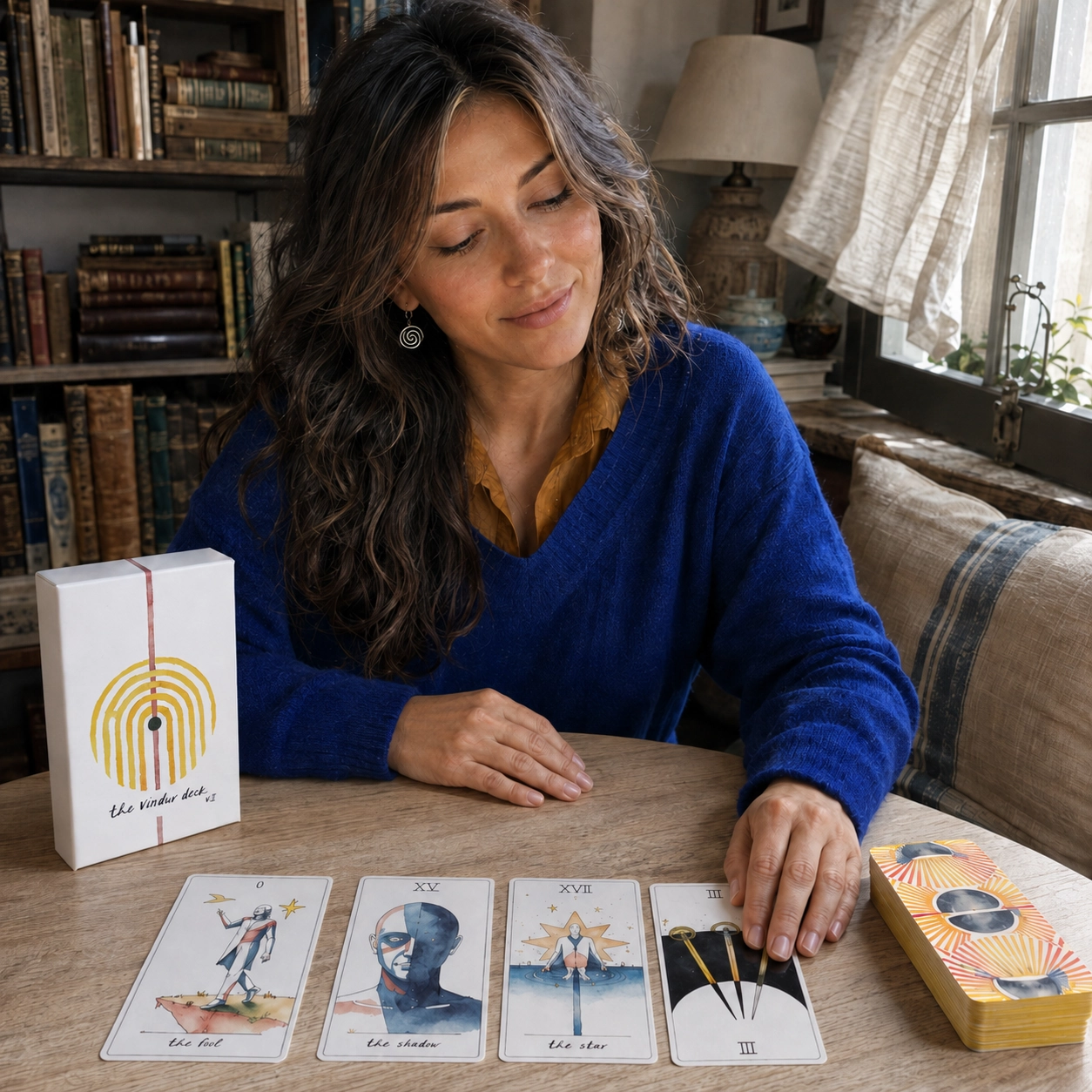
Aurica’s Quick Take
The Vindur Tarot feels airy without ever becoming vague. Leah Pantéa’s figures, arcs, blooms, and open spaces give me just enough structure to enter a card, then leave room for the question to move. I notice direction first: which way a body leans, where a line gathers tension, and whether the eye is drawn outward or back toward the centre.
I especially like the deck’s choice to rename The Devil as The Shadow. That shift changes my reading voice. Instead of treating the card as an outside force, I am invited to ask what has been hidden, disowned, or given too much private power. The split face makes that conversation immediate, but it does not decide the answer for me.
Colour is one of my best guides here. The warm, spare Fool feels ready to test the weather; The Star opens into clear stillness; and the Three of Swords pares grief down to three precise points of pressure. When several cards land together, I read the changing palette almost like wind moving through rooms—where it warms, where it cools, and where it suddenly stops.
This is a deck I would choose for an intuitive reading that still needs a clean visual thread. The number cards are distinctive enough to spark a story, while their restrained compositions keep the spread from becoming noisy. If I feel stuck, I trace one repeated shape or colour across the table before returning to traditional meanings.
What stays with me is Vindur’s trust in movement. A reading does not have to pin every feeling in place; sometimes it only needs to show what is shifting. Let the cards give your uncertainty a direction, and let the next honest breath be enough to begin.
Vindur Tarot review: wind, watercolor, and quiet movement
The Vindur Tarot reads like a deck about motion. Even when a card is still, the figures look wind-touched: cloaks lift, branches bend, cups spill into weather, and the white space around the art feels active. It is a full 78-card tarot with a soft independent-deck personality rather than a mass-market polish.
The artwork is not loud. It is spare, airy, and hand-painted, with each suit carrying a different emotional climate. Wands lean pink and botanical, Cups are cool blue and watery, Swords flash yellow and sharp, and Pentacles move into green-gray earth and architecture. That color map makes spreads easy to scan before you read a single title.
I would choose Vindur for readings about transition, healing after a tense season, creative restlessness, or the feeling that something is shifting before it has a name. I would not choose it when I want heavy symbolism packed into every corner. This deck works because it leaves room to breathe.

Card study
The Star as quiet renewal
The Star is a good doorway into Vindur because it shows hope without shouting. The figure sits in a calm, open space, and the card feels like recovery after movement rather than instant celebration.
In a reading, I would use it for the moment when a person is no longer in crisis but is still learning how to trust gentleness again.
How the deck reads in practice
Vindur works best when you begin with the traditional meaning, then let the weather of the image edit the tone. Is the card moving upward, falling, bending, waiting, or blooming? Is the body open, guarded, held by the landscape, or resisting it?
That makes the deck especially useful for readers who like emotional nuance. It can answer practical questions, but it often does so by showing the state of the nervous system underneath the choice.
A recovery line
This four-card moment moves from rupture to patience, guidance, and a completed circle.


The Death card gives the ending a real shape. Temperance slows the repair. The Star returns light, and The World closes the line with integration. It is a gentle but not passive sequence.

Card study
5 of Pentacles and the architecture of need
The 5 of Pentacles is one of the clearest examples of Vindur’s quiet drama. The image has the feeling of a threshold: need is present, but so is structure. It does not turn hardship into spectacle.
I would read this card as a practical question: where is support available, and what belief keeps you standing outside it?
Creative weather changing
A useful line for projects that need movement, confidence, and a final grounded container.


Who will like The Vindur Tarot?
This deck will appeal to collectors who love independent art, watercolor texture, handmade linework, and decks that feel more like a sketchbook of living symbols than a glossy oracle product. The complete gallery is important here because the minors carry so much of the mood.
Beginners can use it if they are comfortable pairing a keyword guide with visual observation. The figures are expressive enough to teach you, but the deck does not spoon-feed every meaning. That is a strength if you want to develop your own reading voice.

Card study
Queen of Cups and emotional listening
The Queen of Cups feels less like a throne card and more like a listening field. The blue palette and watery openness make the card about receptivity, not performance.
In relationship or self-care readings, I would read her as the instruction to stop explaining the feeling away and actually sit beside it.
When a decision needs clean air
This sequence moves from weighing the choice to insight, pressure, and the courage to act.


Final Thoughts
The Vindur Tarot is a beautiful fit for readers who want atmosphere without clutter. It has enough traditional structure to stay readable, but its real voice comes from movement, negative space, and elemental color.
Because the native TarotFans gallery shows all 78 cards, you can judge the full deck honestly: majors, minors, courts, and suit families. If the images make you pause rather than scroll past, that is the best sign this deck may work for you.
The Vindur Tarot FAQ
Is The Vindur Tarot beginner friendly?
Yes, if you like reading from image, mood, and movement. The deck follows a full tarot structure, but the watercolor scenes are expressive enough to help beginners build intuition.
Does The Vindur Tarot have all 78 cards in the TarotFans gallery?
Yes. The native TarotFans gallery on this page shows all 78 available card-front images, ordered from The Fool through King of Pentacles.
What kind of readings does Vindur suit best?
It is strongest for transition, emotional weather, creative timing, relationships, and nature-minded readings where subtle movement and atmosphere matter.
Where can I learn more about The Vindur Tarot?
The creator’s store documents this exact v.II edition and currently marks it sold out. The links on this page go directly to that edition page; they are non-affiliate and make no availability promise.
What makes the art style different?
The deck uses airy watercolor, slim figures, soft negative space, and elemental color families: pink Wands, blue Cups, yellow Swords, and green-gray Pentacles.