Explore this verified partial archive, choose an official deck group, then open any card for a larger carousel view. Missing cards are never padded or invented.
White Sage Tarot feels like a quiet breath beside an open window. Theresa Hutch’s soft watercolours leave so much clear space around each animal that I notice the smallest gesture first: a curled body, a lifted paw, the direction of a gaze. Nothing shouts for attention, yet every card seems to carry its own gentle pulse.
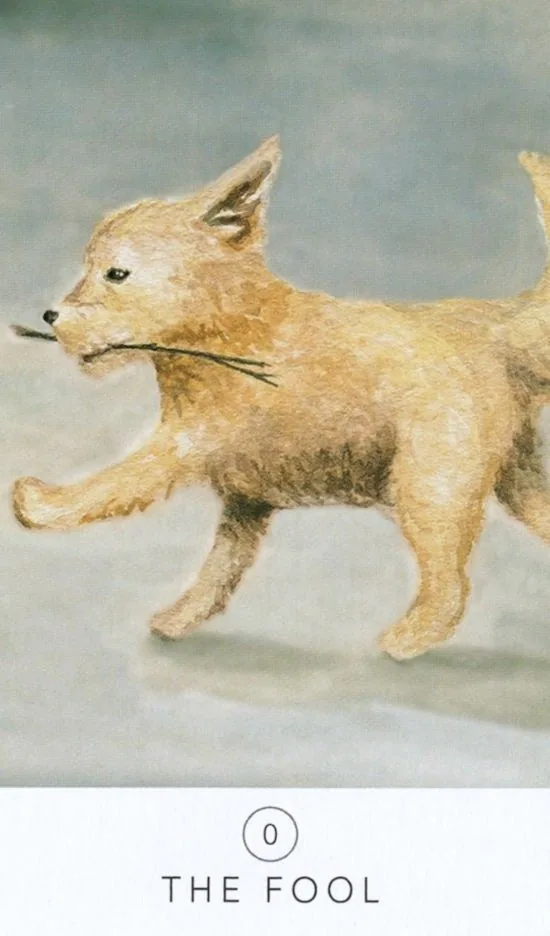
I begin by letting that animal presence meet the question before I reach for a familiar meaning. The Fool’s little dog moves forward with a twig held proudly in its mouth, so I might ask what simple curiosity is ready to lead the way. The High Priestess curls inward like a sleeping cat, reminding me that stillness can be watchful, private, and deeply awake.
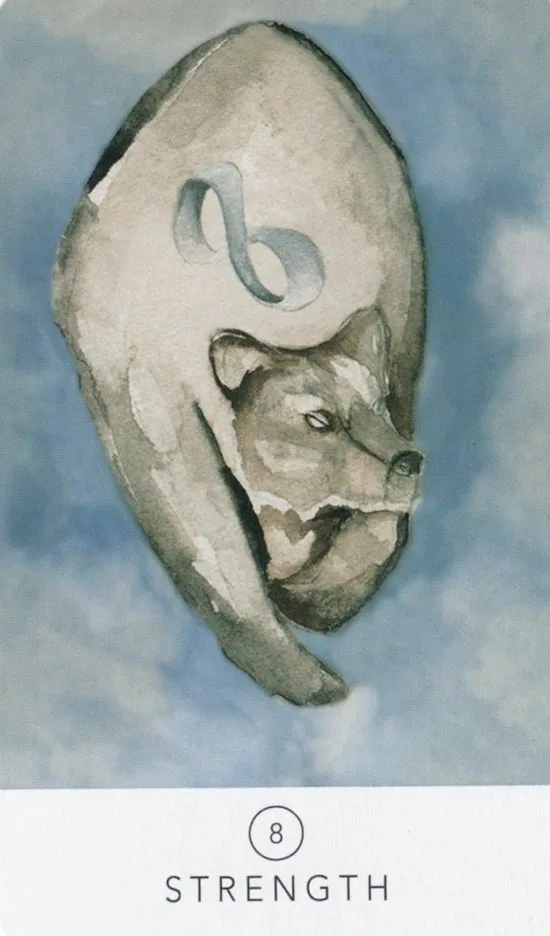
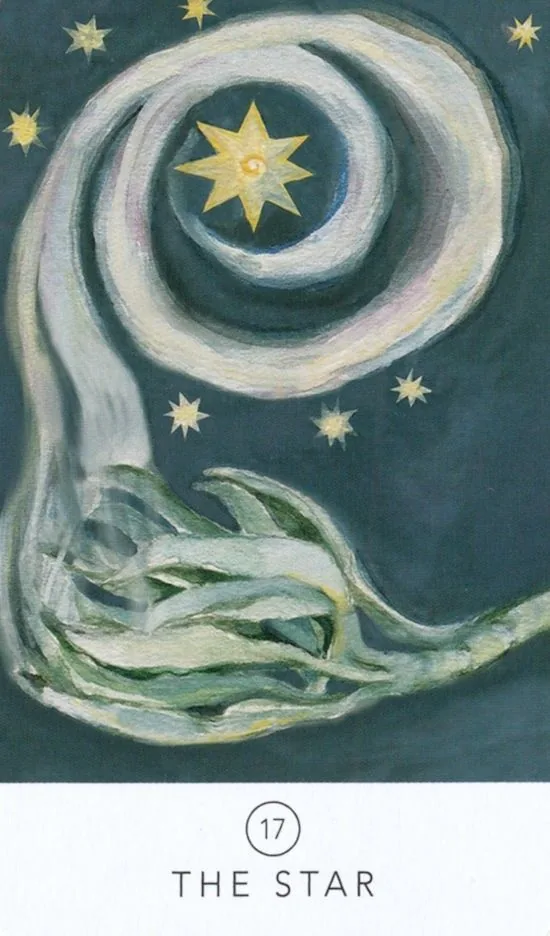
Strength is the card I keep returning to. Its two canines fold into one protective shape beneath the infinity symbol, making courage feel less like force and more like learning how to hold fear without fighting it. Beside The Star, that softness can suggest healing through patience; beside a sharper card, it may ask for a calm boundary rather than a louder response.
The chakra colours running through the minor cards give me another thread to follow, but I do not treat them like a rigid code. I notice which colour warms or cools the spread, compare that feeling with the card’s traditional role, and then listen for what the neighbouring cards confirm. The deck works beautifully when a reading needs clarity without harshness.
What I love most is its trust in small, living signs—the wisdom of an animal resting, moving, guarding, or looking toward the light. Let White Sage Tarot remind you that gentleness can still be strong, and that your next true step may arrive as quietly as a paw touching the earth.
White Sage Tarot Review: animal wisdom, chakras, and 77-card gallery
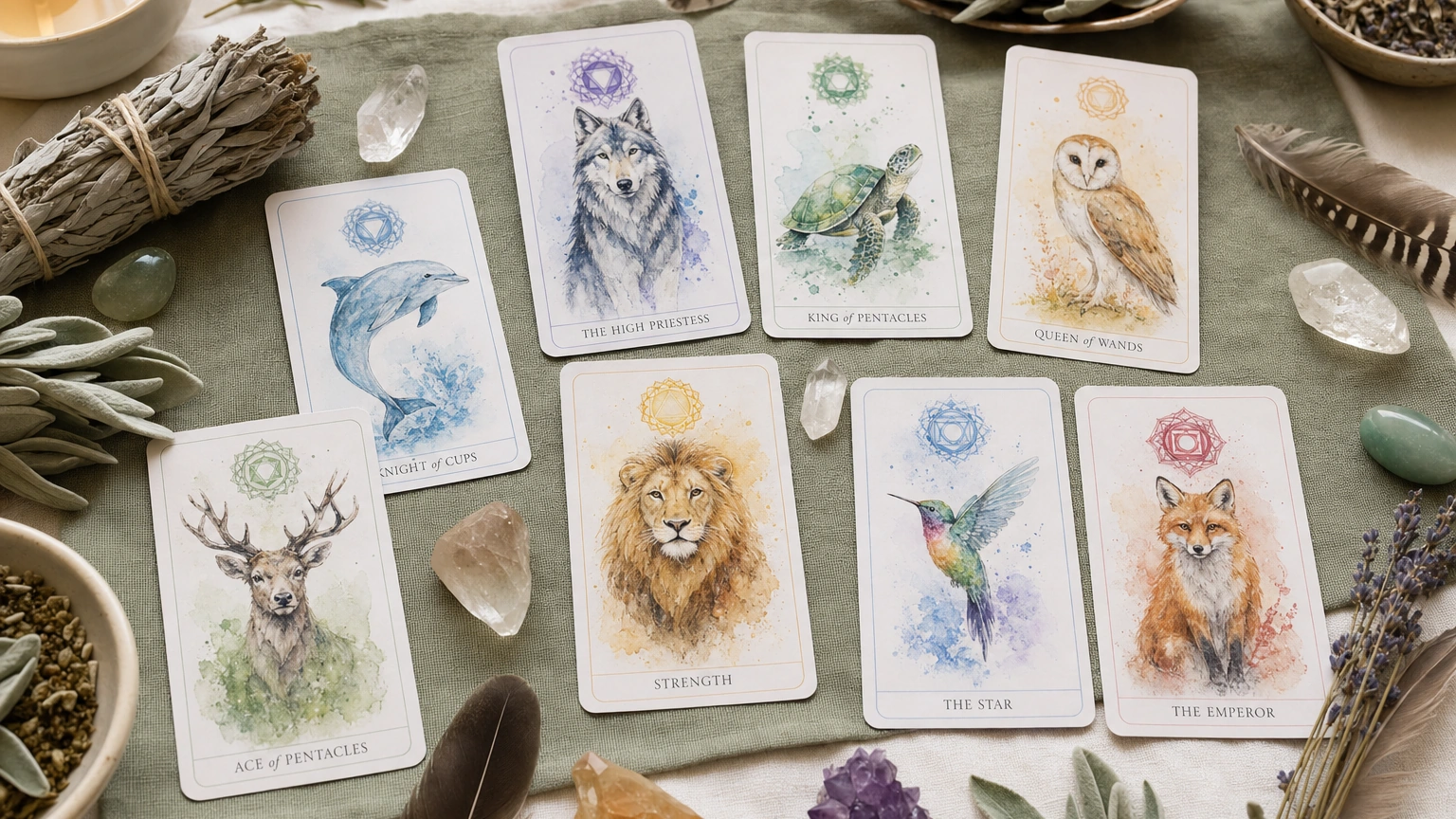
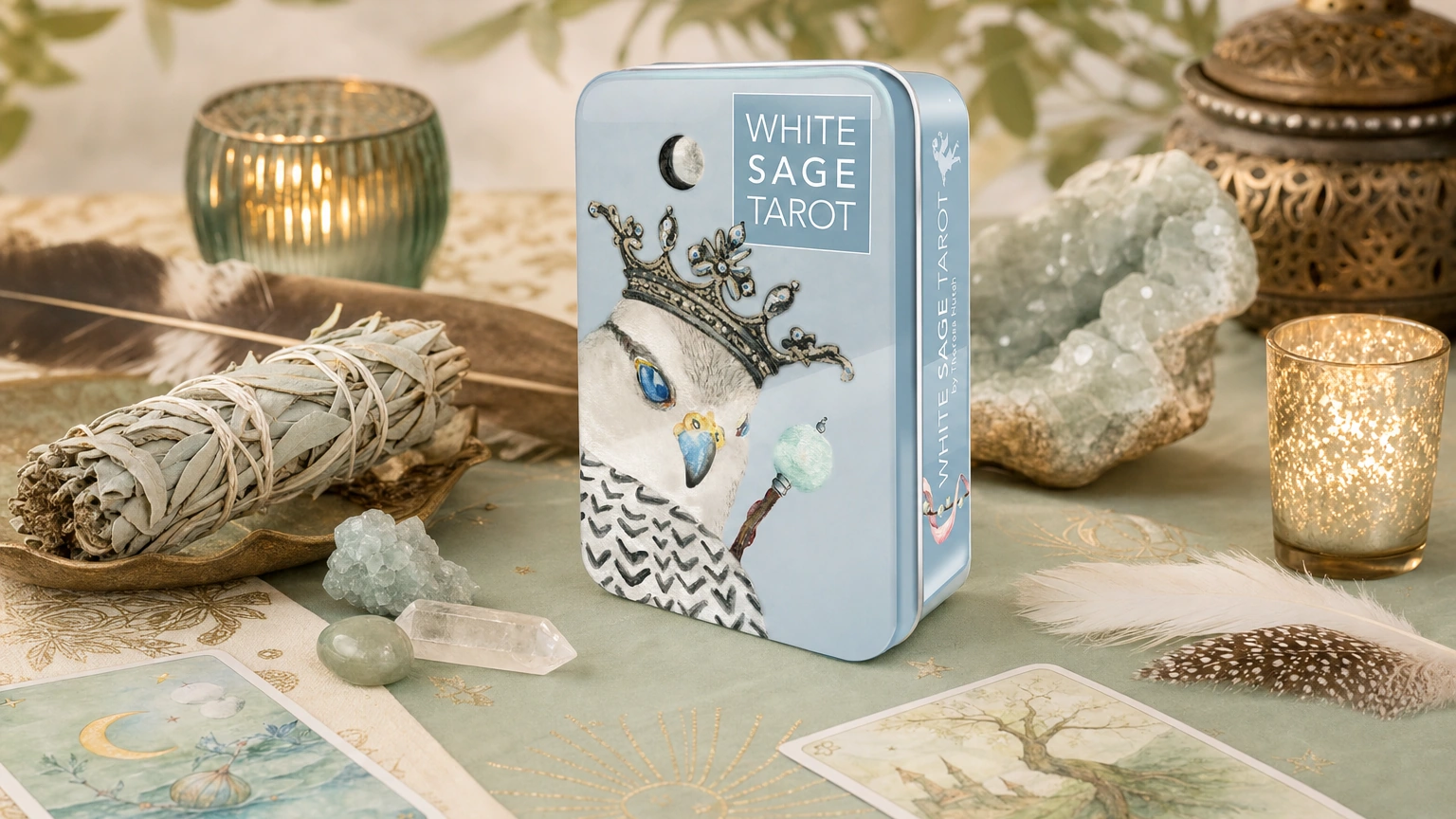
White Sage Tarot is a compact watercolor tarot built around animal medicine, chakra color, gentle plant imagery, and a calm wellness mood. The deck feels airy rather than heavy: foxes, birds, insects, sea creatures, big cats, flowers, ribbons, and soft abstract symbols turn familiar tarot ideas into body-based, nature-centered readings.
Quick answer: choose White Sage Tarot if you want a small, soft deck for daily pulls, gentle self-care readings, chakra journaling, and intuitive animal symbolism. Skip it if you want oversized cards, gothic drama, dense occult systems, or a traditional Rider-Waite-Smith scene on every minor.
This TarotFans page currently shows a 77-card partial gallery. The available set is coherent and sorted in tarot order, but it is missing one card from a full 78-card tarot deck, so the review keeps the count honest.
What is White Sage Tarot?
White Sage Tarot reads like a quiet meeting between tarot, animal symbolism, and energy work. The art is minimal but not empty: a fox becomes The Fool, a feather becomes The Magician, a caterpillar becomes The Hanged Man, and a glowing light bulb becomes Judgement. Instead of packing every card with scenery, the deck gives you one clean symbolic image and asks you to listen carefully.
That makes it especially good for readers who like gentle visual cues. The deck does not shout. It offers a color, animal, plant, object, or chakra note, then leaves enough open space for your intuition to join the reading.
The Magician
Focused intention
The Magician
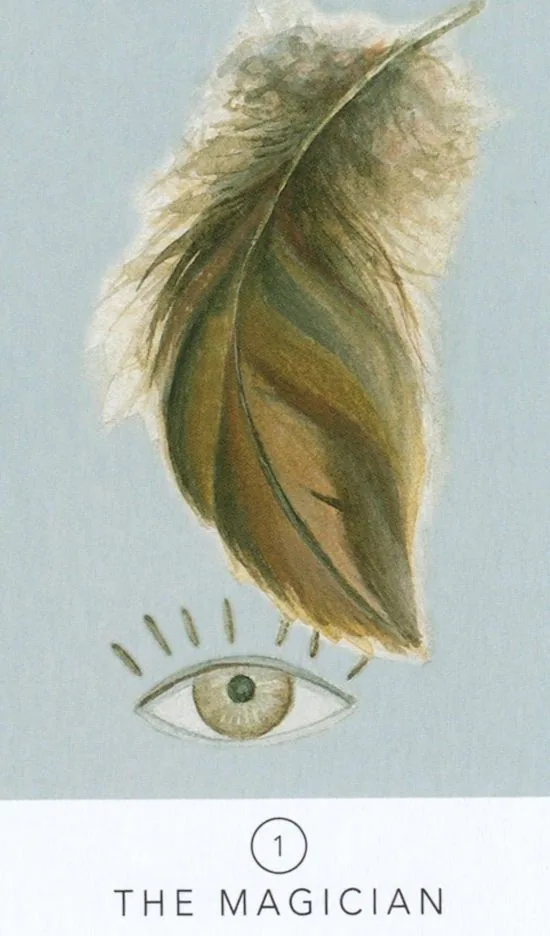
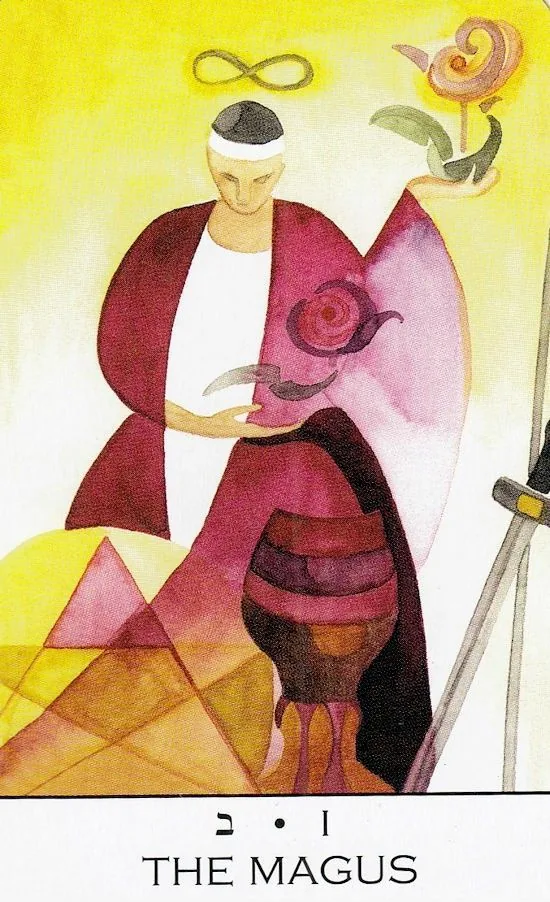
The Magician is a feather with an eye beneath it, which makes this card feel like attention, breath, and lightness. In readings, it says your tools do not need to be loud to be powerful. A small skill, a clear intention, and one careful movement may be enough to begin. This is a lovely example of how White Sage Tarot turns classic tarot into simple body wisdom: notice, focus, and act from the center.
Artwork and first impression
The deck has a pale, airy watercolor style with plenty of white space. Animals and objects are often centered alone, so the emotional tone comes from posture, color, and quiet symbolic details. The chakra influence appears through bright rings, ribbons, colored paths, and subtle body-energy cues rather than heavy textbook explanations.
Because the cards are visually simple, they work best when you slow down. Ask what animal appears, what direction it faces, what color is most alive, and whether the image feels protected, moving, resting, or awakening.
Four Major Arcana animal lessons
This four-card sequence gives the Major Arcana a gentle animal-medicine rhythm. The Fool begins with instinct, The High Priestess turns inward, Strength steadies the body, and The Star restores quiet hope. Read together, the cards describe a healing path: listen first, protect your energy, then move toward confidence without forcing the pace.
The FoolThe High PriestessStrengthThe Star
When gentleness becomes a boundary
After the four animals open the emotional landscape, I pause before Strength and ask where softness needs a firmer edge. The answer often lives in posture: protection can be quiet, steady, and fully awake.
Strength
Soft courage
Strength
Strength uses an animal body rather than a dramatic human scene, so the message feels instinctive and grounded. Courage is not forced; it is held in posture, breath, and quiet presence. In a reading, this card can ask where you are already strong without needing to perform strength for everyone else. It is excellent for self-regulation, confidence, and healing work.
How White Sage Tarot reads in practice
In practice, White Sage Tarot works best for open-ended questions: What needs care? What energy is strongest today? What is my body trying to tell me? Which part of this situation needs gentleness, movement, or protection? The deck can answer practical questions too, but it tends to answer through mood and symbol before direct instruction.
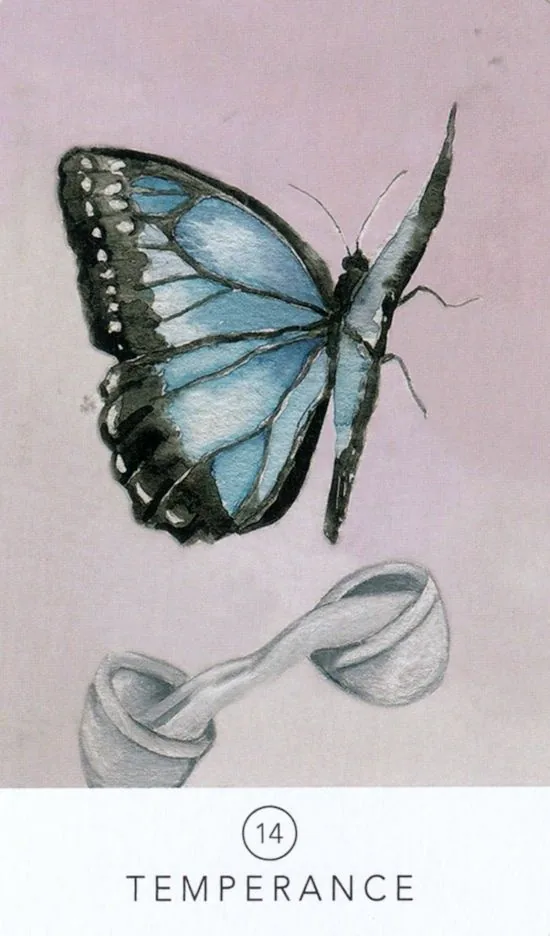
For beginners, that can be helpful. You can start with traditional tarot meaning, then add the animal or chakra clue. A fox Fool is not the same flavor as a human Fool; a butterfly Temperance is not the same as a winged angel. The title gives the structure, and the picture gives the voice.
Temperance
Balanced transformation
Temperance
Temperance appears as a butterfly and infinity loop, which makes balance feel alive, delicate, and in motion. This is not rigid moderation. It is the kind of healing that happens when two energies learn to move together. In readings, Temperance can point to nervous-system balance, emotional blending, chakra work, and the patient process of becoming more whole.
Wands: movement, energy, and creative spark
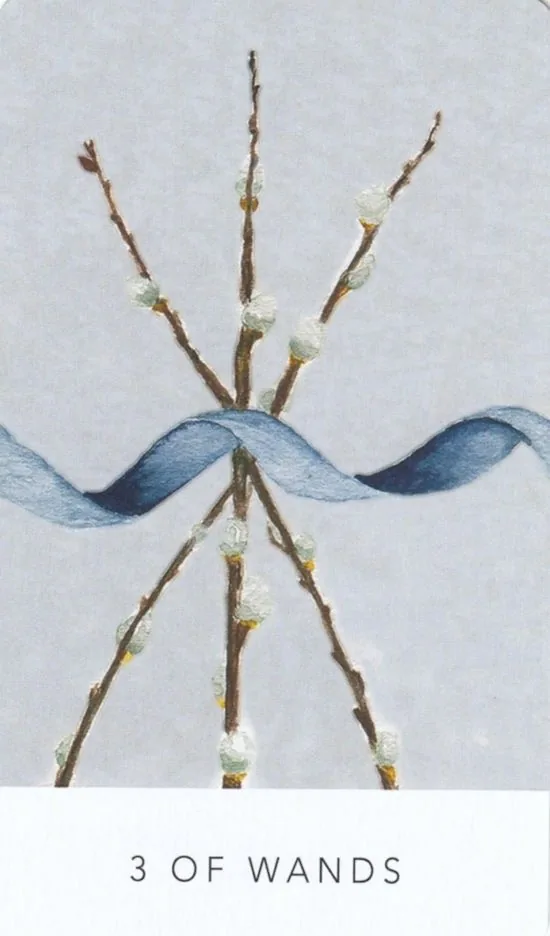
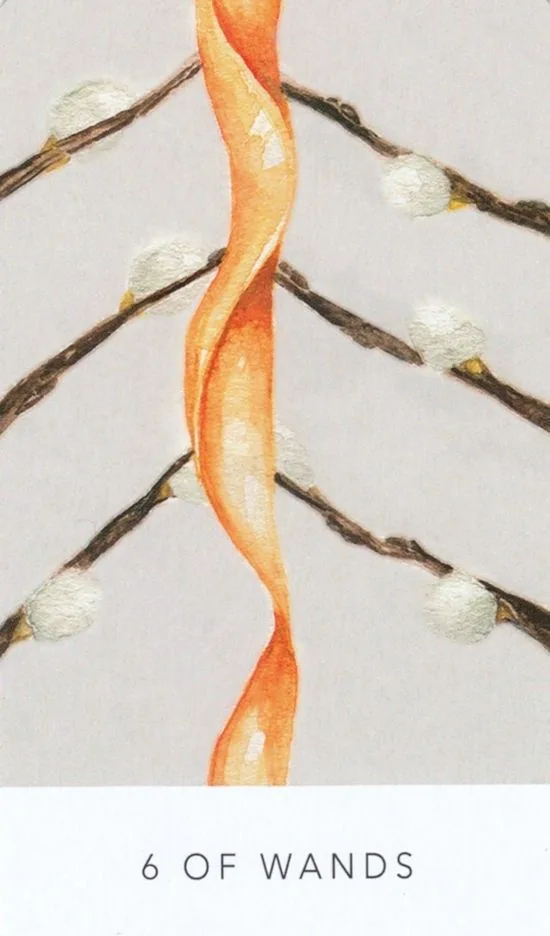
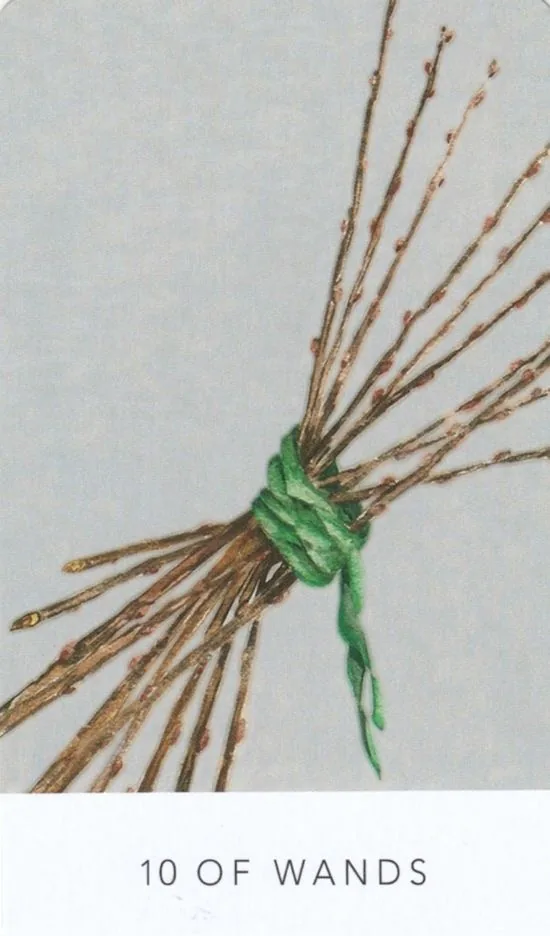
The Wands are especially minimal, often using branches, ribbons, fire color, and birds. They feel like energy moving through the body rather than a dramatic battle scene. This makes the suit useful for motivation, creativity, direction, and burnout checks.
A four-card energy check
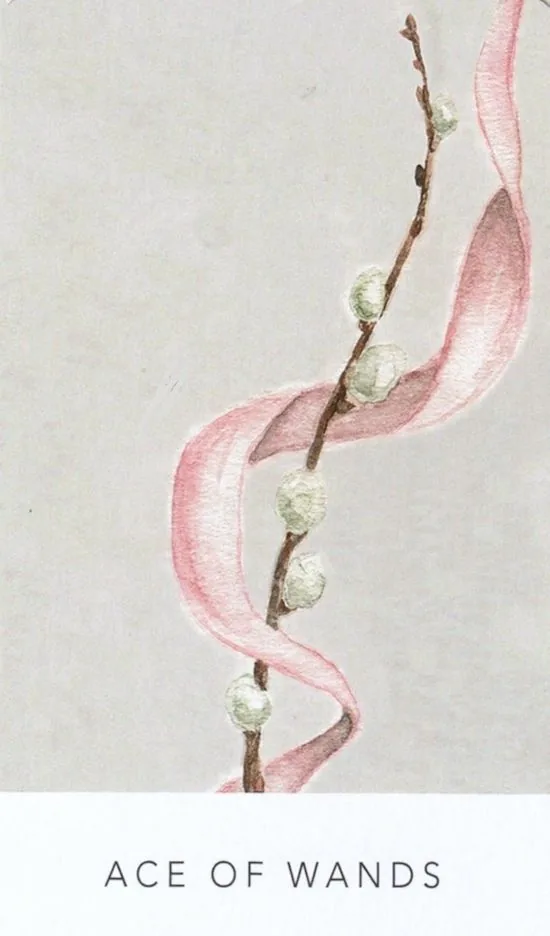
Use this Wands group when a reading is about motivation, burnout, or creative timing. Ace of Wands lights the first spark, Three of Wands looks for the wider path, Six of Wands shows progress, and Ten of Wands names the load that has become too heavy. It turns ambition into a body-aware energy check.
Ace of Wands3 of Wands6 of Wands10 of Wands
Following the first living spark
The Wands line shows energy moving from impulse toward responsibility. Before studying the Ace more closely, I notice which branch seems ready to grow and which burden can be set down so that creative movement feels possible again.
Ace of Wands
First spark
Ace of Wands
Ace of Wands is a single rising branch with a soft ribbon-like movement, so the card feels like life force before it becomes a full plan. It is good for creative questions, spiritual practice, and small beginnings. In this deck, the Ace asks you to protect the first flame instead of demanding instant results. Start with one living action.
Cups: emotion, care, and soft connection
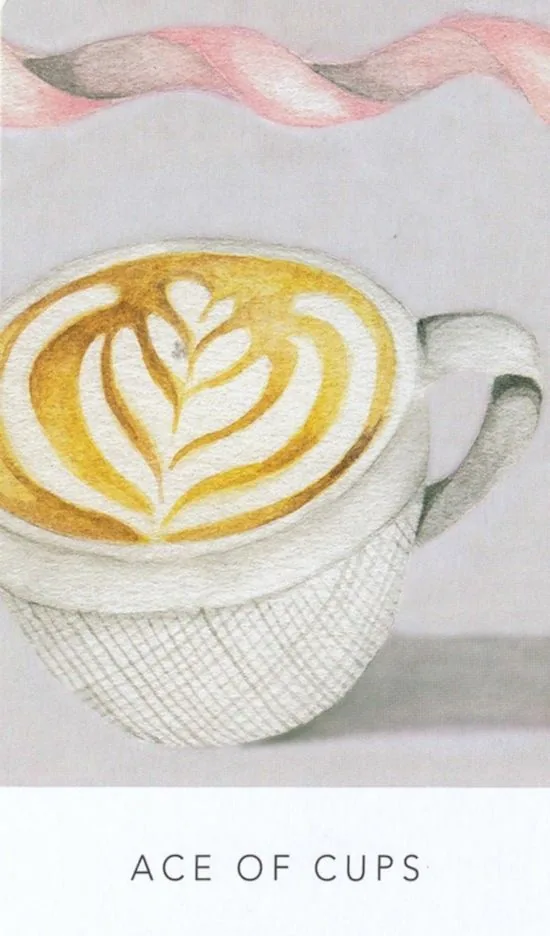
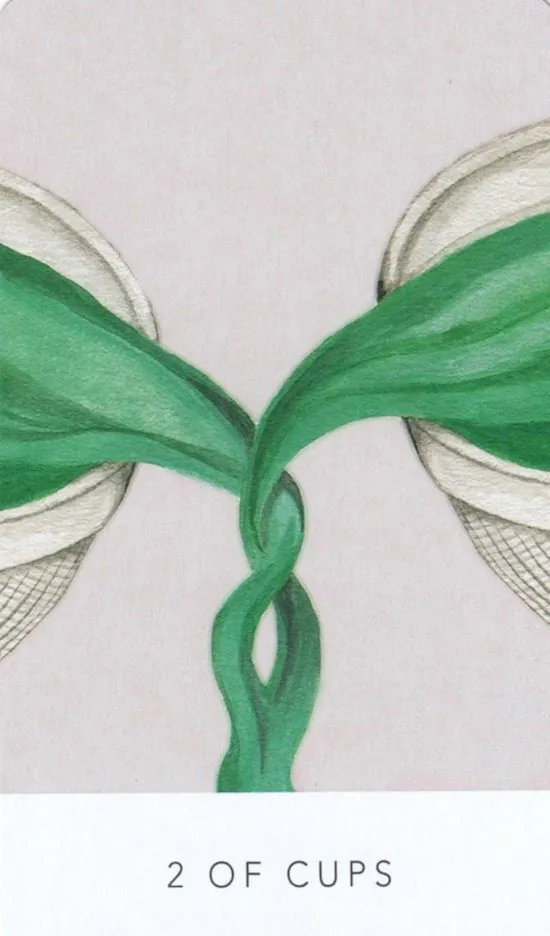
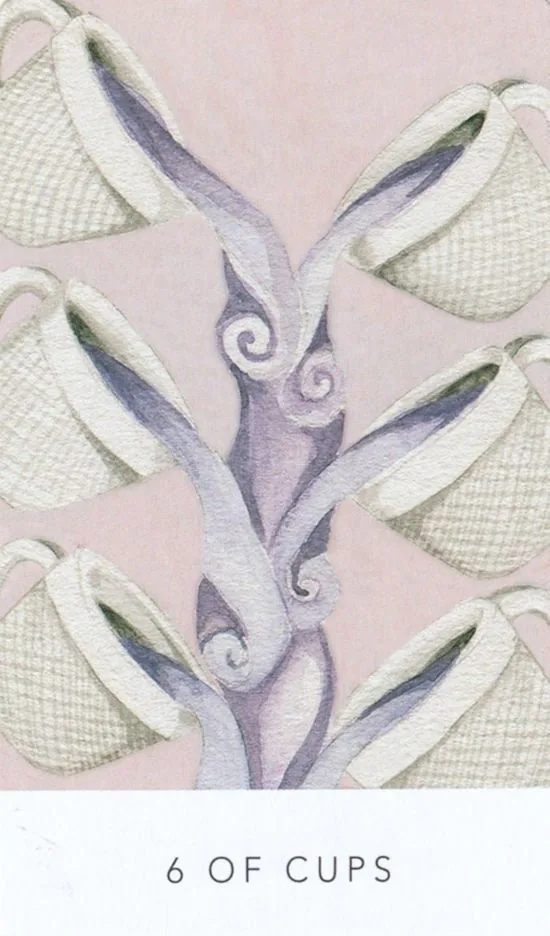
The Cups are pale, tender, and relational. Many cards focus on cups, ribbons, animals, and small gestures rather than crowded scenes. They are good for emotional repair, friendship, family patterns, and gentle love readings where the answer needs compassion more than drama.
A four-card emotional flow
This Cups sequence keeps emotional readings soft but specific. Ace of Cups opens the heart, Two of Cups shows exchange, Six of Cups brings memory, and Nine of Cups asks what real contentment feels like. Use it for love, friendship, family, or self-care questions where the answer needs compassion instead of drama.
Ace of Cups2 of Cups6 of Cups9 of Cups
Making room for a true feeling
The Cups invite a slower breath between connection and contentment. I let their pale ribbons and open vessels show whether a feeling wants to be received, shared, remembered, or gently released before I turn to the Ace.
Ace of Cups
Tender opening
Ace of Cups
Ace of Cups feels especially gentle in this deck. The image is less about overflowing drama and more about a clean emotional beginning. It can point to kindness, forgiveness, creativity, or the first sign that the heart is ready to receive again. In a chakra-style reading, it can also suggest softening the chest and letting care move without forcing it.
Swords: thought, protection, and clear air
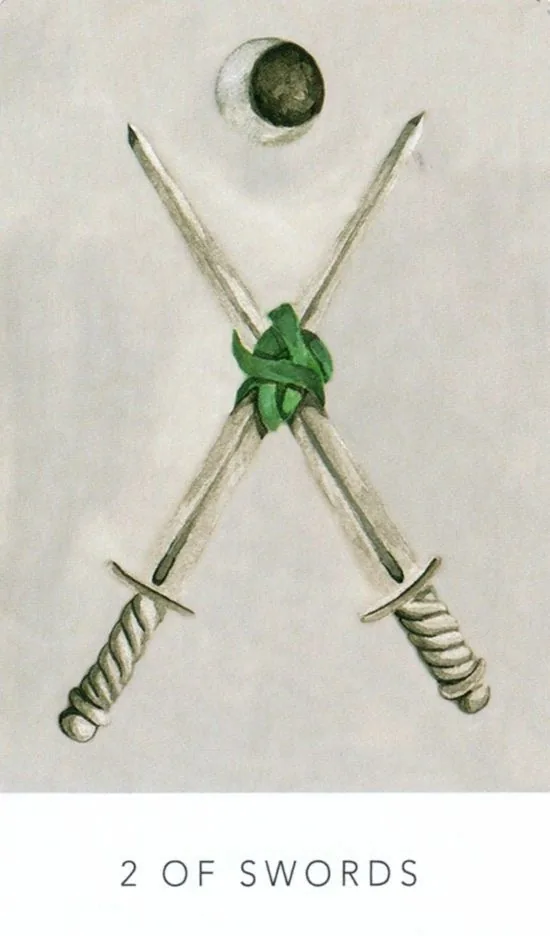
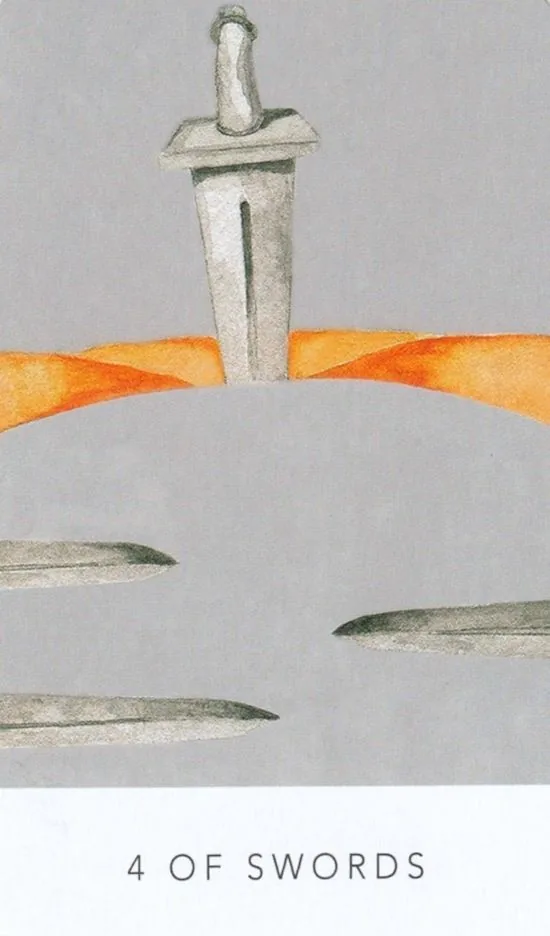
The Swords are cleaner and sharper, but still not harsh. Blades, ribbons, flowers, and animals create a feeling of thought moving through space. This suit is useful for anxiety, truth, decision-making, boundaries, and the places where the mind needs more room to breathe.
A four-card mental weather spread
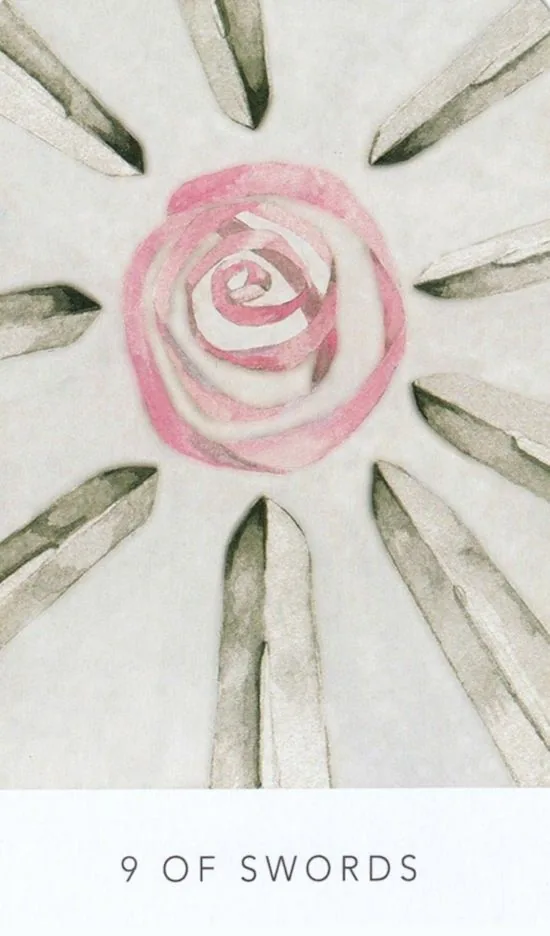
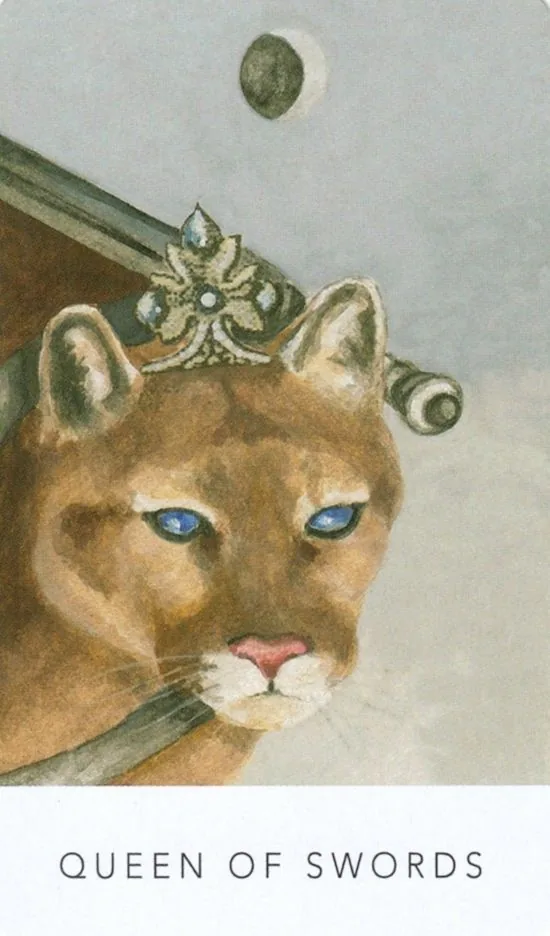
This Swords spread is for anxious weather and decision fatigue. Two of Swords names the pause, Four of Swords asks for recovery, Nine of Swords shows mental pressure, and Queen of Swords restores clear sight. It is a practical sequence for boundaries, nervous thoughts, and choosing what deserves your attention.
2 of Swords4 of Swords9 of SwordsQueen of Swords
Letting the mind find clear air
The Swords become kinder when I read space as carefully as steel. A pause beside the rose can reveal which thought deserves attention and which repeated fear is only circling, ready to be placed outside the spread.
9 of Swords
Anxious pattern
9 of Swords
Nine of Swords appears with a rose and surrounding blades, which softens the card without removing its truth. It can show worry, mental pressure, or a painful thought loop, but the flower suggests the heart is still present. In readings, this card asks what fear is circling, what support is needed, and what thought can be gently put down.
Pentacles: body wisdom, resources, and earth care
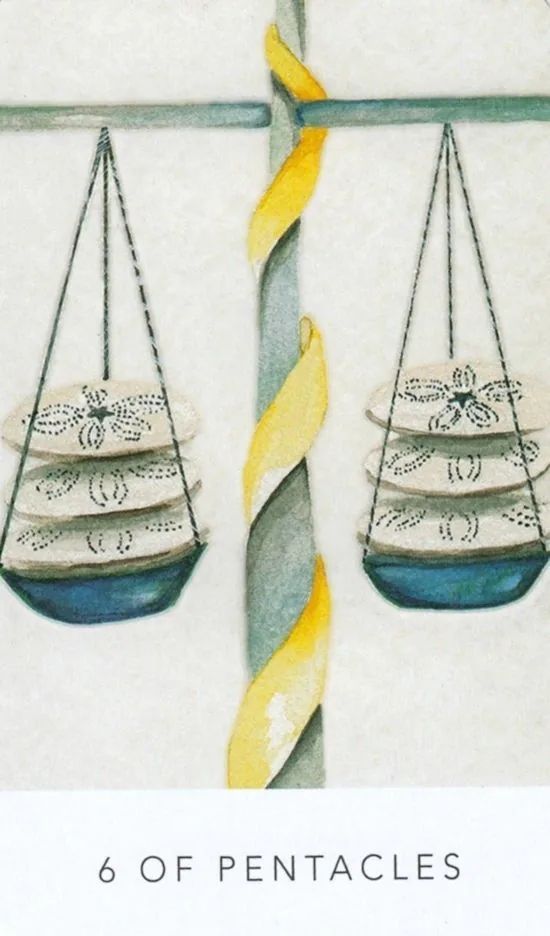
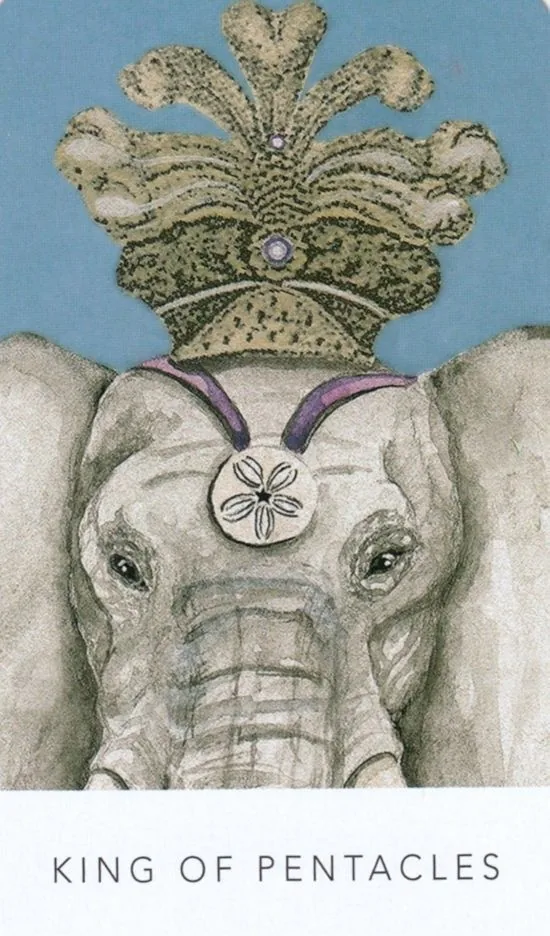
The Pentacles are where the deck becomes most grounded. Sand dollars, animals, flowers, scales, and earth tones point toward resources, the body, money, home, and sustainable care. These cards are good for practical questions, but the answer still arrives in a quiet, embodied way.
A four-card grounding spread
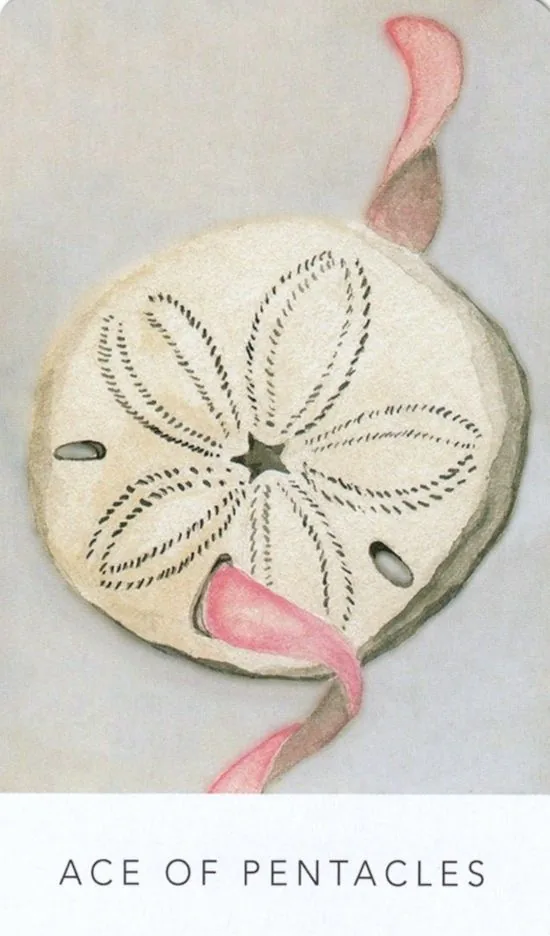
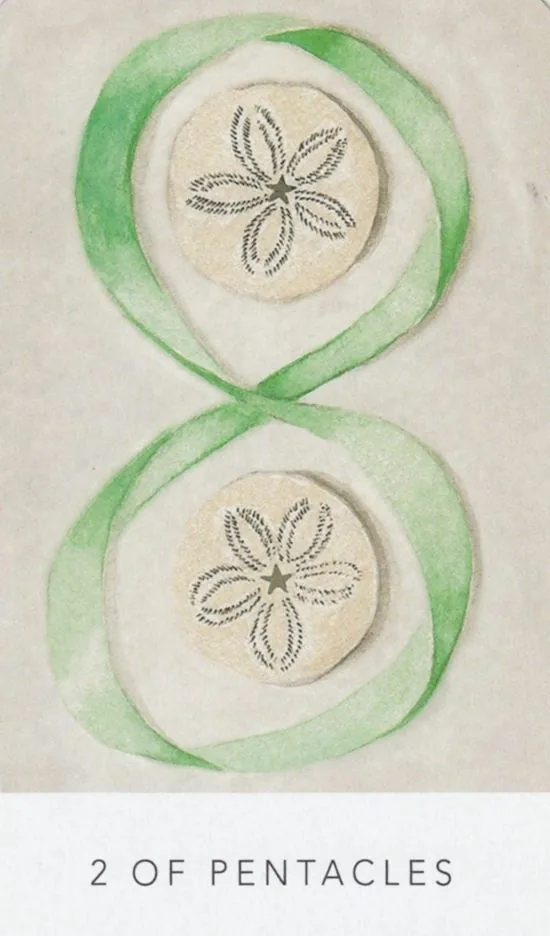
Use this Pentacles group when the reading needs to land in real life. Ace of Pentacles offers a seed, Two of Pentacles asks what can be balanced, Six of Pentacles checks fairness, and King of Pentacles closes with steady stewardship. It is a grounded spread for money, health, home, and sustainable next steps.
Ace of Pentacles2 of Pentacles6 of PentaclesKing of Pentacles
Bringing the message back to earth
The Pentacles ask what can be touched, tended, shared, or sustained. Before the Ace comes forward, I look for the smallest practical promise in the four-card line—the one action sturdy enough to carry into tomorrow.
Ace of Pentacles
Earth seed
Ace of Pentacles
Ace of Pentacles is a simple sand-dollar image, which makes the card feel like a small blessing from the natural world. It can mean money, health, opportunity, or a practical seed that needs care. In White Sage Tarot, this Ace is not flashy. It asks what you can hold, tend, and grow patiently in the real world.
Pros and cons
Pros
Cons
Gentle animal-and-chakra symbolism that feels calming and intuitive.
Minimal scenes may feel too sparse for readers who want detailed storytelling.
Excellent for daily pulls, journaling, wellness readings, and emotional check-ins.
The TarotFans gallery is 77 cards, so one card is not available here.
Soft watercolor art makes difficult cards easier to approach.
Readers who dislike chakra or animal medicine themes may prefer a more traditional deck.
Final thoughts on White Sage Tarot
White Sage Tarot is best when you want a deck that feels clean, kind, and physically calming. It is not the loudest tarot deck on the shelf, but that is part of its value. The art gives you space to breathe, and the animals make big tarot themes feel approachable.
If you like gentle watercolor decks, chakra work, animal symbolism, and small daily readings, this one is worth exploring. Use the 77-card gallery above as your honest test: if several images make you pause, the deck probably has enough voice to work for you.
Yes. White Sage Tarot is beginner-friendly if you like clear single-symbol images, animals, chakra colors, and gentle daily pulls. New readers should pair each card title with one visual clue: the animal, color, posture, object, or direction of movement.
How many White Sage Tarot cards are shown here?
This TarotFans gallery shows 77 available cards. A complete tarot deck has 78 cards, so we keep the gallery count honest and describe this as a 77-card partial gallery.
What makes White Sage Tarot different?
Its personality comes from watercolor animal medicine, chakra-inspired color, white space, and calm wellness symbolism. It feels softer and more meditative than many busy Rider-Waite-Smith clones.
What readings is White Sage Tarot best for?
It works especially well for daily pulls, self-care readings, chakra journaling, gentle love questions, anxiety check-ins, body wisdom, and readings where the answer needs to feel grounded rather than dramatic.
Does White Sage Tarot follow traditional tarot meanings?
Yes, it keeps tarot structure, but the artwork shifts the flavor. Read the traditional title first, then let the animal, plant, color, or chakra clue soften and focus the message.
Who should skip White Sage Tarot?
Skip it if you want dark gothic art, oversized dramatic cards, dense occult symbolism, or fully illustrated narrative scenes on every minor card. This deck is calmer, cleaner, and more spacious.
Keep exploring
More Tarot Decks to Discover
If this deck caught your eye, these other TarotFans deck reviews may help you find your next favorite tarot deck.
We use cookies on our website to give you the most relevant experience by remembering your preferences and repeat visits. By clicking “Accept”, you consent to the use of ALL the cookies.
This website uses cookies to improve your experience while you navigate through the website. Out of these, the cookies that are categorized as necessary are stored on your browser as they are essential for the working of basic functionalities of the website. We also use third-party cookies that help us analyze and understand how you use this website. These cookies will be stored in your browser only with your consent. You also have the option to opt-out of these cookies. But opting out of some of these cookies may affect your browsing experience.
Necessary cookies are absolutely essential for the website to function properly. These cookies ensure basic functionalities and security features of the website, anonymously.
Cookie
Duration
Description
cookielawinfo-checkbox-analytics
11 months
This cookie is set by GDPR Cookie Consent plugin. The cookie is used to store the user consent for the cookies in the category "Analytics".
cookielawinfo-checkbox-functional
11 months
The cookie is set by GDPR cookie consent to record the user consent for the cookies in the category "Functional".
cookielawinfo-checkbox-necessary
11 months
This cookie is set by GDPR Cookie Consent plugin. The cookies is used to store the user consent for the cookies in the category "Necessary".
cookielawinfo-checkbox-others
11 months
This cookie is set by GDPR Cookie Consent plugin. The cookie is used to store the user consent for the cookies in the category "Other.
cookielawinfo-checkbox-performance
11 months
This cookie is set by GDPR Cookie Consent plugin. The cookie is used to store the user consent for the cookies in the category "Performance".
viewed_cookie_policy
11 months
The cookie is set by the GDPR Cookie Consent plugin and is used to store whether or not user has consented to the use of cookies. It does not store any personal data.
Functional cookies help to perform certain functionalities like sharing the content of the website on social media platforms, collect feedbacks, and other third-party features.
Performance cookies are used to understand and analyze the key performance indexes of the website which helps in delivering a better user experience for the visitors.
Analytical cookies are used to understand how visitors interact with the website. These cookies help provide information on metrics the number of visitors, bounce rate, traffic source, etc.
Advertisement cookies are used to provide visitors with relevant ads and marketing campaigns. These cookies track visitors across websites and collect information to provide customized ads.