Explore the Sacred Art Tarot Cards.
Browse verified card artwork from André St. Dryden’s Sacred Art Tarot. Choose an official group to filter the continuous Gallery, or select any card to open the full-size Lightbox and product link.
Showing all verified cards.

Aurica’s Quick Take
Sacred Art Tarot feels like opening a small museum after hours. Each gilded frame holds a borrowed fragment of painting, costume, landscape, or sacred theatre, yet the cards never feel dusty to me. They make familiar archetypes feel newly strange, and that little flicker of surprise is where an honest reading often begins.
I like to pause before naming a card and notice the human gesture first: who reaches, who watches, who turns away, and where the light settles. Then I bring in the tarot structure. The image gives the feeling; the system gives it a path through the question.
This is a deck for readers who enjoy lingering. Give one picture your full attention, and Sacred Art Tarot can turn old beauty into a brave, practical next step.
A gallery of sacred art with a living pulse
André St. Dryden builds this 78-card deck from paintings, devotional imagery, mythic fragments, and richly framed scenes. Published by U.S. Games Systems in 2008, it follows the familiar Major and Minor Arcana while giving every card the atmosphere of an illuminated page.
The structure is reassuringly clear: Fool 0, Strength VIII, Justice XI, then Wands, Cups, Swords, and Coins. Princess and Prince replace Page and Knight in the courts. That balance of familiar bones and unusual surfaces makes the deck approachable, but never bland.
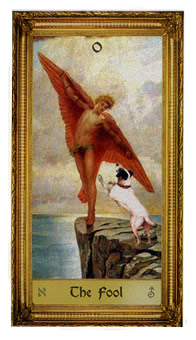
The Fool
A winged figure balances on the very edge of a rock while a smaller companion reaches upward from below. Sea and pale sky open behind them, and the ornate frame holds the moment like a breath that has not yet been released.
In a useful expression, The Fool is trust with awareness: the next step is real, and so is the beauty of beginning. In shadow, the lifted posture can become distance from ordinary consequences. In a reading, ask whether you are ready to move—or only enchanted by the view.
How the deck speaks before the keywords arrive
These cards are strongest when you let the composition speak before you search for a memorised meaning. Notice scale, direction, colour, and the space between figures. A tiny person beneath a vast angel tells a different emotional story from two figures meeting eye to eye.
Try describing one card in a single plain sentence. Then ask what that sentence changes about your question. This keeps the ornate art from becoming decoration and lets it behave like a real reading language.
Four thresholds of inner guidance
Lay these cards for what is stirring, what can nurture it, what tradition offers, and what must be discovered alone.


Read the four as a movement from quiet knowing to embodied care, inherited wisdom, and private discernment. The card that feels least comfortable may be the doorway the question actually needs.
Read the gesture, then read the frame
Dryden’s gilded borders make every scene feel formally presented, almost as if we are standing before an altar or museum wall. Yet the figures inside those frames are rarely still. Hands lift, bodies lean, and gazes create invisible lines across the picture.
Follow those lines. A gaze moving off-card can point toward missing context; a raised hand may bless, warn, or invite. The frame gives authority, but the body reveals the emotional truth.
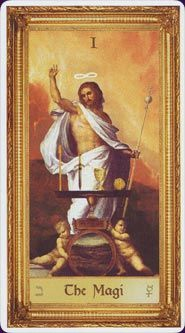
The Magi
A robed central figure stands beneath card I inside a dense gold frame, surrounded by emblems that make the image feel ceremonial rather than casual. The printed title is clearly The Magi, not The Magician, and that exact wording matters.
The card still occupies tarot’s number-I place of skill, focus, and directed will. Its useful expression is the moment when scattered gifts gather around one intention. In shadow, ceremony can become display. Ask what you are truly making—and what you may only be arranging to look impressive.
Four suits, four textures of experience
Wands bring heat, appetite, courage, and creative motion. Cups carry relationship, longing, memory, and emotional exchange. Swords sharpen the atmosphere around ideas, choices, and conflict, while Coins ask what can be built, tended, paid for, or sustained.
When a suit repeats, do not only count it. Notice how its visual texture changes from card to card. A run of Cups may begin as openness and end as withdrawal; repeated Swords can move from confusion toward a cleaner boundary.
A creative fire finding its form
Use these four positions for the first spark, the wider horizon, visible progress, and mature creative command.


The sequence asks you to protect the spark without keeping it private forever. Let the Queen show how confidence can become warmth, steadiness, and something others are invited to share.
Making a decision without flattening the art
For a practical reading, ask each card for one observation before asking it for advice. What is happening? Who has power? Where is the tension? Only then translate the scene into one action, conversation, or boundary.
This two-step method keeps the reading imaginative without becoming vague. The painting is allowed to stay complex, while the final takeaway remains simple enough to use tomorrow morning.
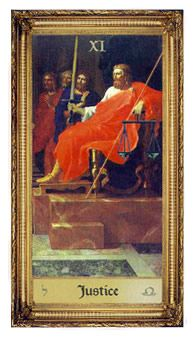
Justice
A seated figure in vivid red occupies the centre of the card while a blue set of scales hangs nearby. Other figures stand behind, and the stone steps beneath the throne create a strong sense of public consequence and order.
Justice asks for proportion rather than punishment. Upright, it favours evidence, accountability, and a decision that can be explained clearly. In shadow, the grand setting can hide bias behind ceremony. In a reading, ask which fact would still matter if every performance were stripped away.
Let emotional cards remain complicated
The Cups do not need to be divided too quickly into happy and sad. Sacred Art Tarot’s borrowed faces and landscapes often hold several moods at once. A beautiful scene can feel lonely; a severe one can contain tenderness.
Name both responses. The card may be showing the feeling you admit and the feeling waiting underneath. That double reading is especially useful in relationship questions, where affection, fear, hope, and self-protection often share the same frame.
The changing weather of the heart
Place these cards for what wants to open, what deserves celebration, what must be grieved, and the emotional wisdom available now.
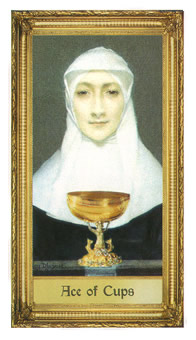
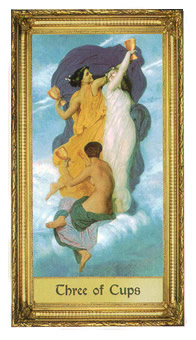
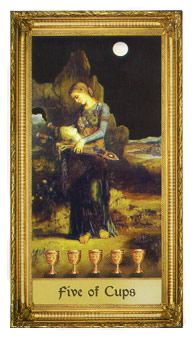
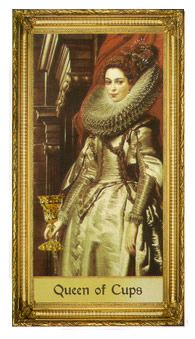
Do not force the spread toward cheerfulness. Let joy and grief sit at the same table; the Queen’s role is not to erase either one, but to hold enough emotional space for both to become honest.
When the image feels stranger than the question
Some cards will resist a tidy first impression. That is useful. Instead of reaching for certainty, find the smallest stable detail: a direction, a colour, a doorway, a hand, or the nearest figure. Let that detail become your anchor.
Then ask what remains unknown. Sacred Art Tarot is often clearest when it shows the edge of understanding rather than pretending every mystery has already been solved.
The Moon
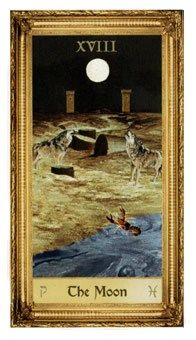
A full white moon hangs above a barren, gold-brown landscape. Two distant towers mark the horizon, animal forms face one another across the open ground, and a small creature rises from blue water in the foreground.
The scene feels exposed yet uncertain: everything is visible, but nothing is close enough to read comfortably. In a useful expression, The Moon honours instinct and unfinished information. In shadow, distance becomes projection. Ask what you know, what you sense, and what the night has tempted you to invent.
Who will love Sacred Art Tarot?
This deck suits art lovers, intuitive readers, journalers, and anyone who enjoys finding a new emotional doorway into a familiar tarot structure. It is particularly rewarding for creative questions, spiritual reflection, relationship nuance, and readings where atmosphere matters as much as plot.
If you want bold contemporary illustration, large print, or instant visual simplicity, the fine details may feel demanding. Its physical cards are relatively narrow and compact, and the 40-page booklet is concise. This is a deck that grows through looking, not through being explained all at once.
A clear-minded way through
Use the Swords for the idea, the divided choice, the transition, and the principle that can guide the final decision.
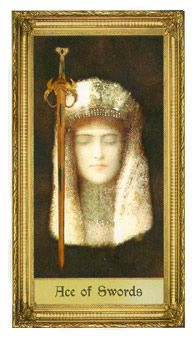
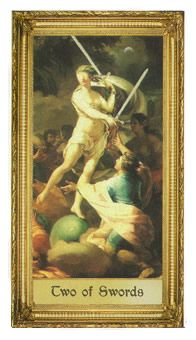
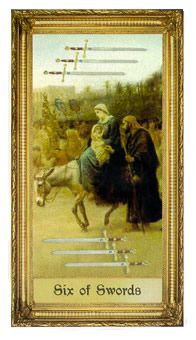

Clarity is not always immediate. Let the spread move from insight through hesitation and passage before asking the King for a final standard. Good judgment often needs that middle journey.
Sacred Art Tarot Pros & Cons
What works beautifully
- Fine-art collage creates rich emotional and symbolic layers.
- The traditional 78-card structure gives readers a familiar foundation.
- Gold frames make the complete deck feel visually cohesive.
- Strong for journaling, creative reflection, and intuitive close reading.
What to know first
- Small details reward patience and may be difficult in low light.
- The concise booklet leaves much of the visual interpretation to the reader.
- Princess and Prince courts differ from standard Page and Knight terminology.
- Availability can vary because this is an older publication.
Sources checked
Final Thoughts
Sacred Art Tarot does something rare: it makes old paintings feel less like preserved answers and more like living questions. The gilded frames invite reverence, but the faces, gestures, distances, and shadows keep each card human.
Choose it if you enjoy tarot that asks you to look twice. With patience, this deck becomes a quiet gallery companion—one that helps beauty loosen the question, then guides you back toward a clear and courageous choice.
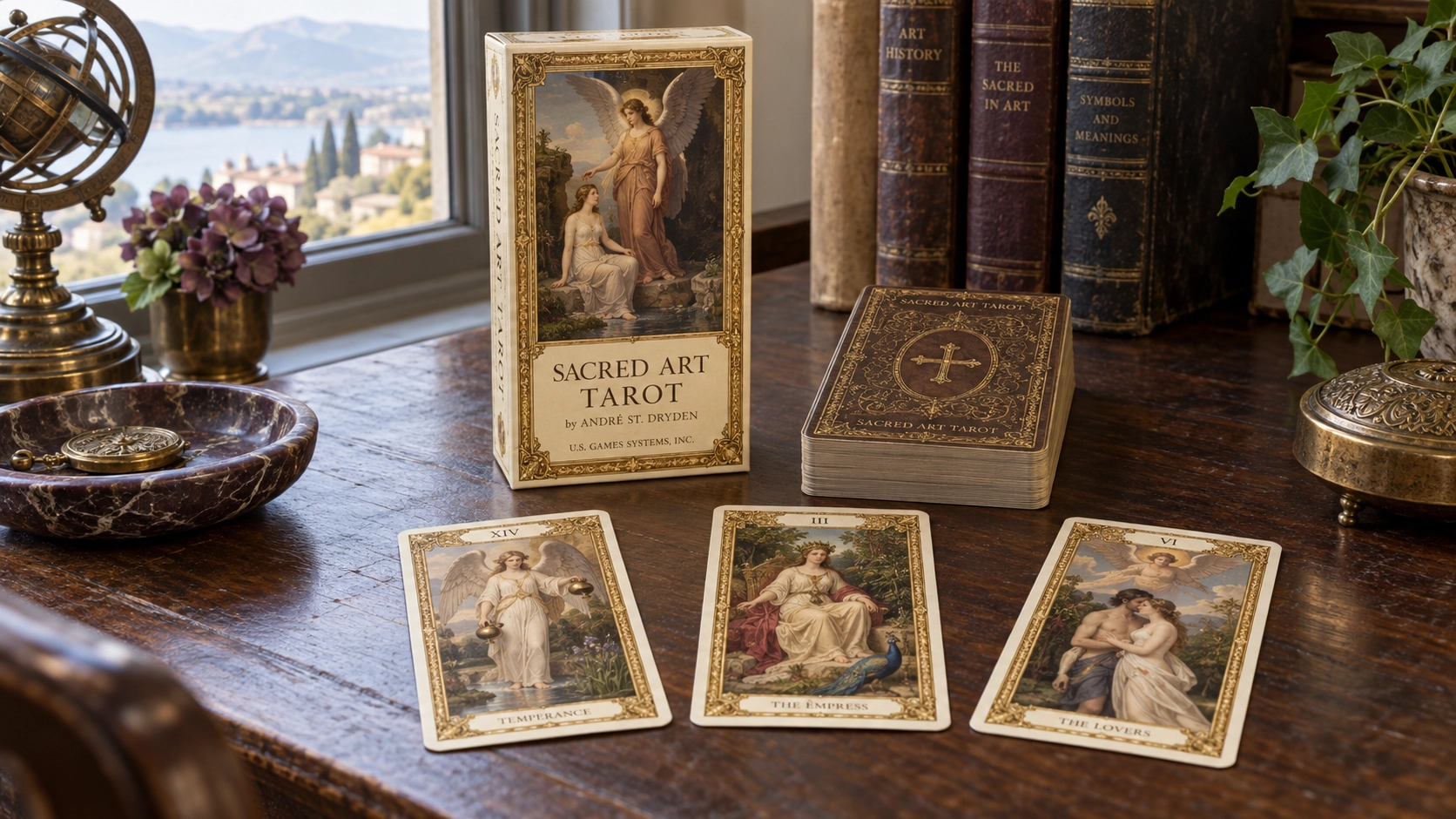 View Sacred Art Tarot on Amazon
Frequently Asked Questions
Who created Sacred Art Tarot?
Artist and author André St. Dryden created Sacred Art Tarot. U.S. Games Systems published the deck in 2008.
How many cards are in Sacred Art Tarot?
The complete deck has 78 cards: 22 Major Arcana and 56 Minor Arcana across Wands, Cups, Swords, and Coins.
Why is card I called The Magi?
The title printed on this edition is The Magi. It fills the familiar number-I role that many Rider–Waite–Smith-based decks call The Magician, so the Gallery keeps Dryden’s wording.
What court titles does the deck use?
Each Minor Arcana suit uses Princess, Prince, Queen, and King. The suits are Wands, Cups, Swords, and Coins.
Does Sacred Art Tarot use reversals?
The ornate card back is visually reversible, but Dryden’s booklet says he did not intend reversed readings. Readers can still work with visual tension and card relationships without turning cards upside down.
Is Sacred Art Tarot beginner-friendly?
It follows a recognizable 78-card structure, so beginners have a familiar handrail. Its fine-art collage language is dense, though, and rewards slow looking more than quick keyword reading.