Explore the Hermetic Tarot Cards
Explore the complete verified Hermetic Tarot Gallery in official deck order. Choose a deck family below, then select any card to open its larger Lightbox view.

A note from Aurica
The Hermetic Tarot feels like opening a midnight study where every lamp reveals another symbol. Its black-and-white lines are stern at first glance, yet the longer I sit with them, the more movement I find: wings lifting, serpents curling, stars turning, and old emblems quietly answering one another across the table. I love that the deck asks for attention without asking me to abandon intuition.
The High Priestess draws my eye first. She stands between stillness and revelation, surrounded by signs that seem almost to hum beneath the ink. Beside The Magician, The Moon, and the Ace of Cups, she makes the spread feel like a conversation between disciplined knowledge and the softer voice underneath it. I notice which shape repeats, which figure faces another card, and where the white space suddenly feels bright; then I test that first impression against the card’s familiar tarot role.
I reach for this deck when a question has layers—when a simple yes or no would flatten something important. I begin with the ordinary meaning, then let the titles, planetary marks, elemental cues, and surrounding cards sharpen the message. Journaling helps because the first answer is rarely the whole answer here; one honest sentence often opens a second door, and that second door is where the reading becomes useful.
This is not a deck I would hurry. Give it a quiet table, a clear question, and enough time for the symbols to settle into a pattern you can actually use. The Hermetic Tarot may look formidable, but it rewards patient curiosity—and every careful reading can leave you feeling more capable of meeting mystery with both wisdom and courage.
Hermetic Tarot is the deck I reach for when I want tarot to feel like a study room, a ritual table, and a symbolic map at the same time. Godfrey Dowson’s black-and-white artwork is not trying to be cozy. It is precise, old-school, and packed with Golden Dawn correspondences.
The walkthrough video sits near the top, the card gallery opens into a larger lightbox, and the card studies plus four-card readings show how this symbol-dense deck behaves in practice.
Hermetic Tarot quick take
The Hermetic Tarot is best for readers who already know tarot basics and want more structure, not less. Every card carries title, sign, element, number, and symbol pressure. That makes it excellent for study readings, shadow questions, ritual planning, and journal work where you want the answer to unfold in layers.
I would not choose it for a soft one-minute affirmation. I would choose it when the question deserves exact language: what force is operating here, what pattern is underneath, and what disciplined action would meet it honestly?
Card study
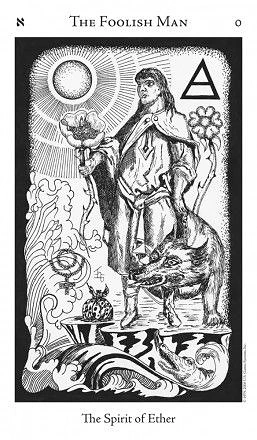
The Foolish Man as risk with a warning label
The Foolish Man keeps the familiar threshold energy of The Fool, but the title changes the temperature. It asks whether the leap is sacred trust, genuine freshness, or carelessness dressed up as freedom.
In a reading, this card can still say begin. The Hermetic version simply adds a second question: what signs have already been given, and am I stepping into mystery with awareness or avoiding the facts in front of me?
Artwork, tone, and occult structure
The black-and-white line art is the deck’s great strength. Without color, the eye moves toward geometry, posture, title, and symbol. The cards feel like etched occult diagrams rather than scenes from ordinary life, which makes them especially good for readers who enjoy slowing down and comparing small details.
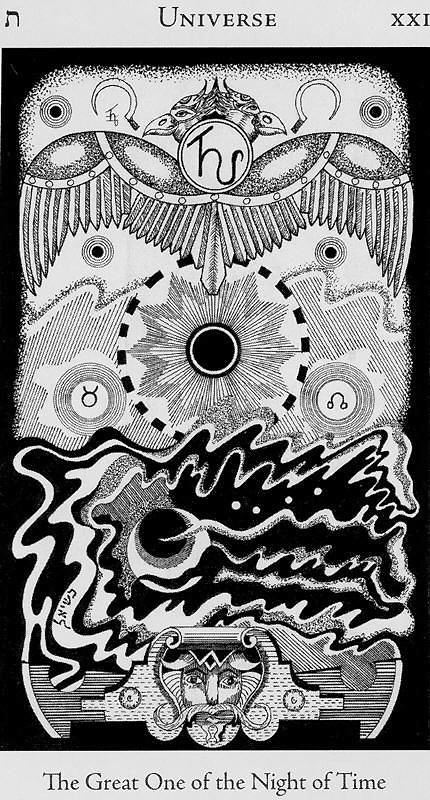
The majors use several Golden Dawn-flavored names: Fortitude instead of Strength, The Blasted Tower instead of The Tower, Universe instead of The World. The minors are fully illustrated through symbolic arrangements, astrological glyphs, and esoteric titles rather than everyday narrative scenes.
Four-card reading
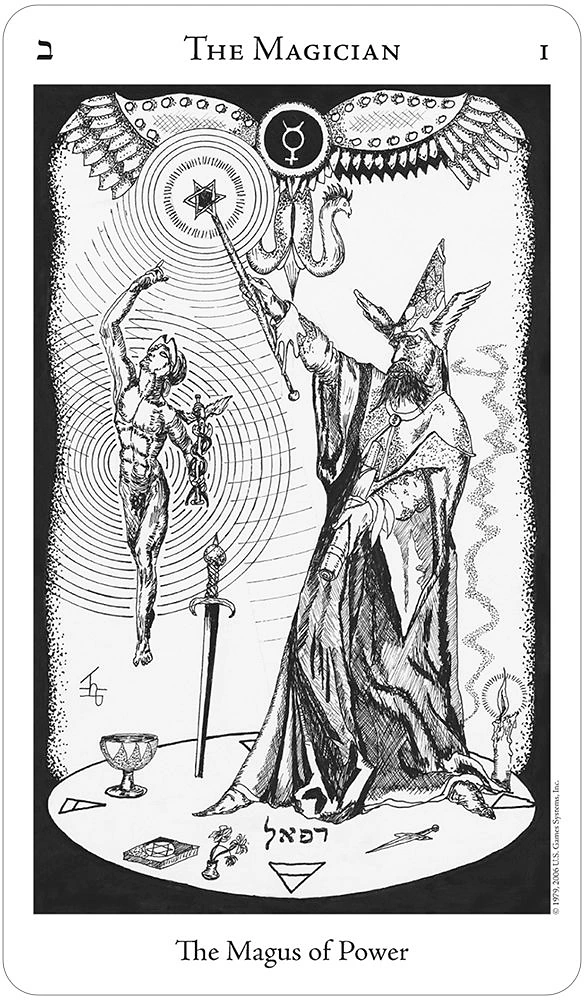
Entering the work of the deck
This line reads like an initiation: step over the threshold, gather the tools, train the will, and measure the choice against the whole pattern rather than a temporary mood.
How it reads in practice
In practice, I read the Hermetic Tarot in two passes. First I name the normal tarot meaning so the reading does not float away. Then I look at the extra Hermetic layer: the title, the sign, the directional force, and the way the image feels beside the surrounding cards.
That method keeps the deck readable. If you jump straight into correspondences, it can become too much. If you ignore the correspondences, you miss what makes the deck special. The sweet spot is classic tarot meaning first, symbolic refinement second, and one grounded action at the end.
Card study
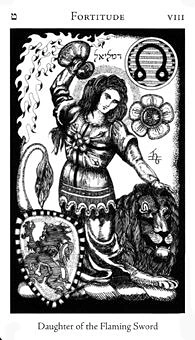
Fortitude as trained strength
Fortitude is the deck’s Strength card, but the word feels more disciplined than gentle. This is courage that has been practiced, desire that has been held with both respect and control.
When Fortitude appears, I ask where restraint is actually power. It can describe emotional regulation, spiritual discipline, patient devotion, or the refusal to make a dramatic move just to discharge pressure.
Reading the current beneath the symbols
After Fortitude has steadied the centre of a spread, I pause before moving on. The Hermetic Tarot rewards that breath: first notice the ordinary emotional current, then let the planetary and elemental signs refine it. This keeps the symbols in service of the question, so the next four cards feel like a living conversation rather than a catalogue of correspondences.
Four-card reading
Emotional pattern check
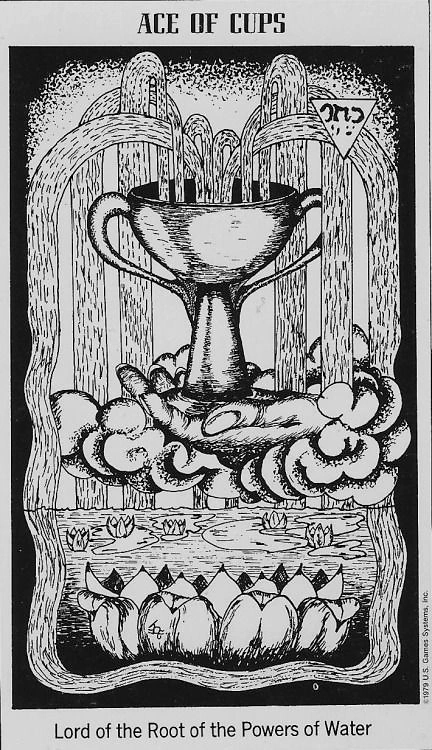
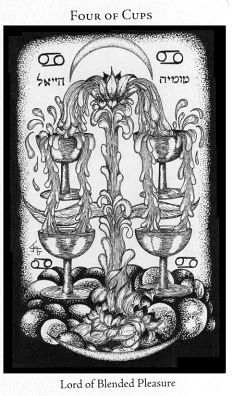
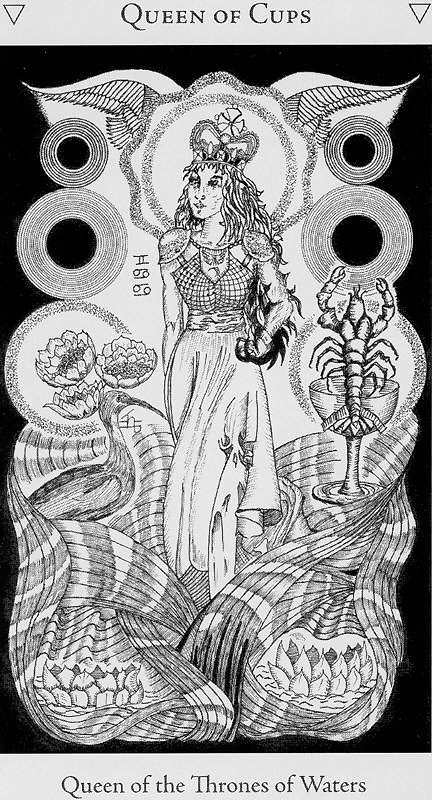
The Cups sequence moves from opening, to emotional pause, to necessary departure, to mature feeling. It is useful for asking which emotions deserve devotion and which ones need release.

Best uses for Hermetic Tarot
This deck shines in study-heavy spreads. I like it for questions about motives, timing, hidden structures, spiritual practice, and the unseen logic of a situation. It also works well when you want to compare multiple cards by number, suit, or elemental balance.
For love readings, I use it carefully. It can reveal power dynamics, avoidance, boundaries, and emotional discipline, but it is not always gentle. For career and creative readings, it is strong because the Swords and Pentacles/Coins cards make decisions, craft, pressure, and resources feel concrete.
Four-card reading
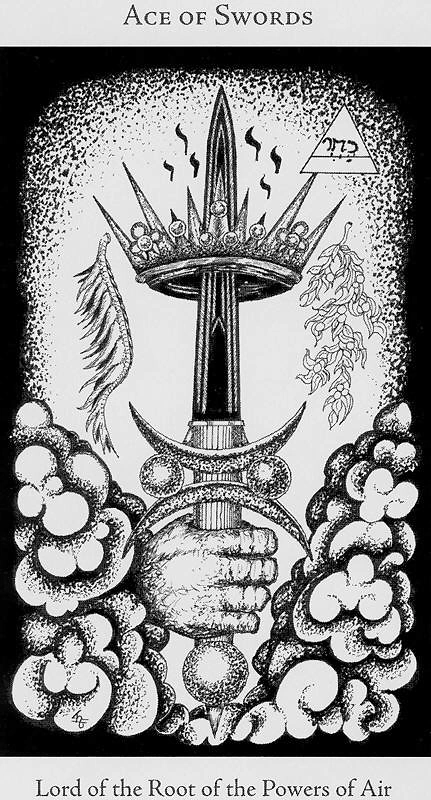
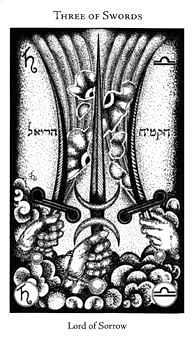
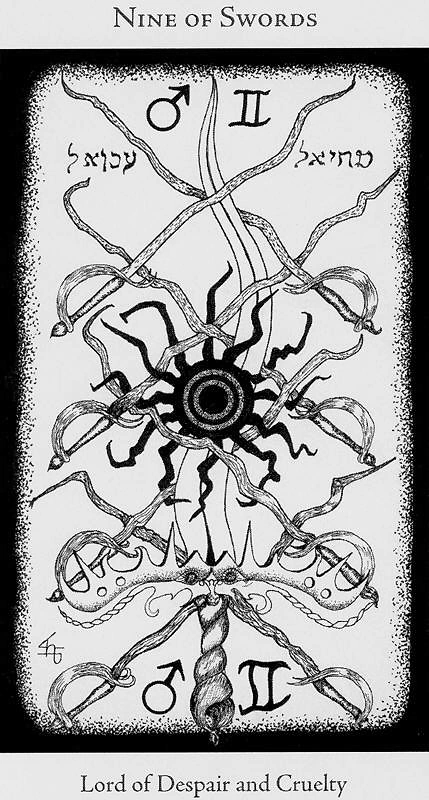
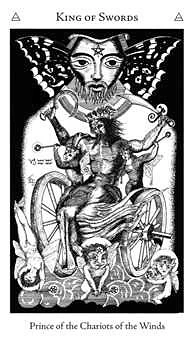
When the mind is under pressure
This is a hard but useful sequence: truth arrives, pain becomes visible, anxiety amplifies it, and the King asks for disciplined judgment rather than panic.
Pros and cons
| Pros | Cons |
|---|---|
| Serious Golden Dawn symbolism with a complete deck structure. | Can overwhelm readers who want simple, scene-based storytelling. |
| Excellent for journaling, ritual planning, shadow work, and analytical readings. | Black-and-white line art may feel austere if you prefer lush color. |
| Distinct titles such as The Foolish Man, Fortitude, Universe, and Princess courts give the deck a memorable voice. | The small symbols reward time, guidebook support, and repeated study. |
Card study
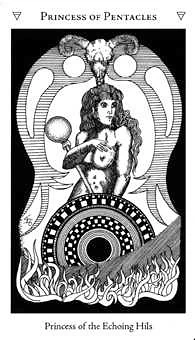
Princess of Pentacles as practical magic
The Princess courts are one of the reasons this deck feels older and more ceremonial than many modern tarot decks. The Princess of Pentacles (Coins) is the first physical proof: the seed, the habit, the coin, the body, the desk, the first page.
In readings, I treat her as grounded magic. She asks for one real action that lets the symbol enter life: clean the space, start the ledger, make the appointment, write the first line, or choose the body-safe next step.
The Hermetic golden rule
Name the human story before you name the correspondence. Once the card has spoken plainly about courage, grief, desire, or choice, let its astrological and elemental details sharpen that message. The symbols should illuminate the path under your feet, never turn the reading into a locked room.
Four-card reading
Making the symbol real
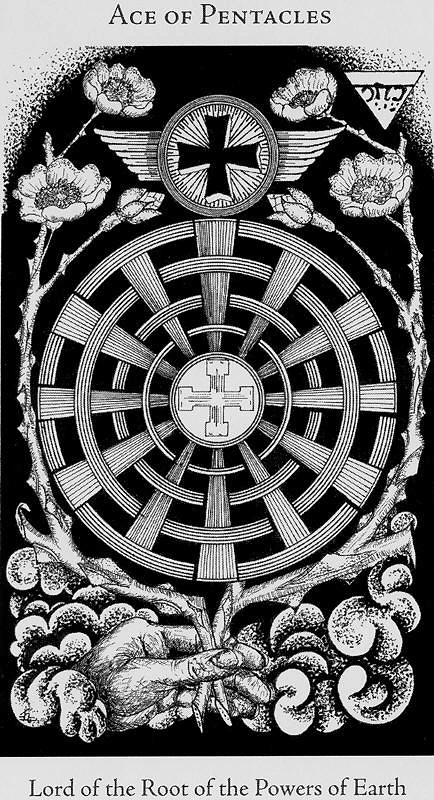
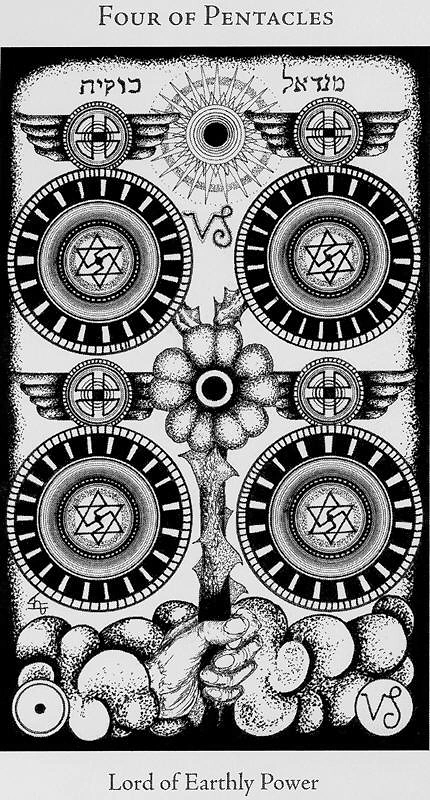
The Pentacles/Coins line brings the deck back to earth: receive the seed, protect the resource, repeat the craft, and let the Princess turn study into a lived habit.

Final Thoughts
Hermetic Tarot is a powerful deck for readers who want depth, discipline, and a traditional occult atmosphere. It is not casual, and that is part of its appeal. The cards feel like they expect you to pay attention.
If you already enjoy tarot structure, astrology, Kabbalah-flavored symbolism, or Golden Dawn deck systems, this is a deck worth spending time with. If you want instant softness, it may feel severe. But if you want a black-and-white tarot that can keep teaching you over years of study, Hermetic Tarot has real staying power.

Hermetic Tarot FAQ
Is the Hermetic Tarot good for beginners?
It can work for a motivated beginner, but I think it is better as a second or study deck. The astrology, Hebrew letters, elemental symbols, and Golden Dawn titles make it richer than a plain starter deck.
Why is The Fool called The Foolish Man?
The older title gives the card a sharper Hermetic tone. I still read the leap, openness, and threshold of The Fool, but I also ask whether the move is inspired, naive, or underprepared.
What does Fortitude mean in this deck?
Fortitude is the Hermetic Tarot version of Strength. It points to trained courage, restraint, disciplined desire, and the ability to hold power without letting instinct run the whole reading.
Why does the deck use Princess courts?
The Princess cards replace the Pages found in many Rider-Waite-Smith decks. I read them as the earthy beginning point of each court family: the place where an idea, feeling, conflict, or resource starts to become real.
Are Pentacles and Coins the same here?
Yes. In this review I use Pentacles/Coins for the material suit: money, body, work, craft, resources, security, and practical magic.