Byzantine Tarot Card Gallery
Explore this verified partial card archive in official deck order. Choose a group below or open any available card for the larger carousel; missing cards are never padded or invented.
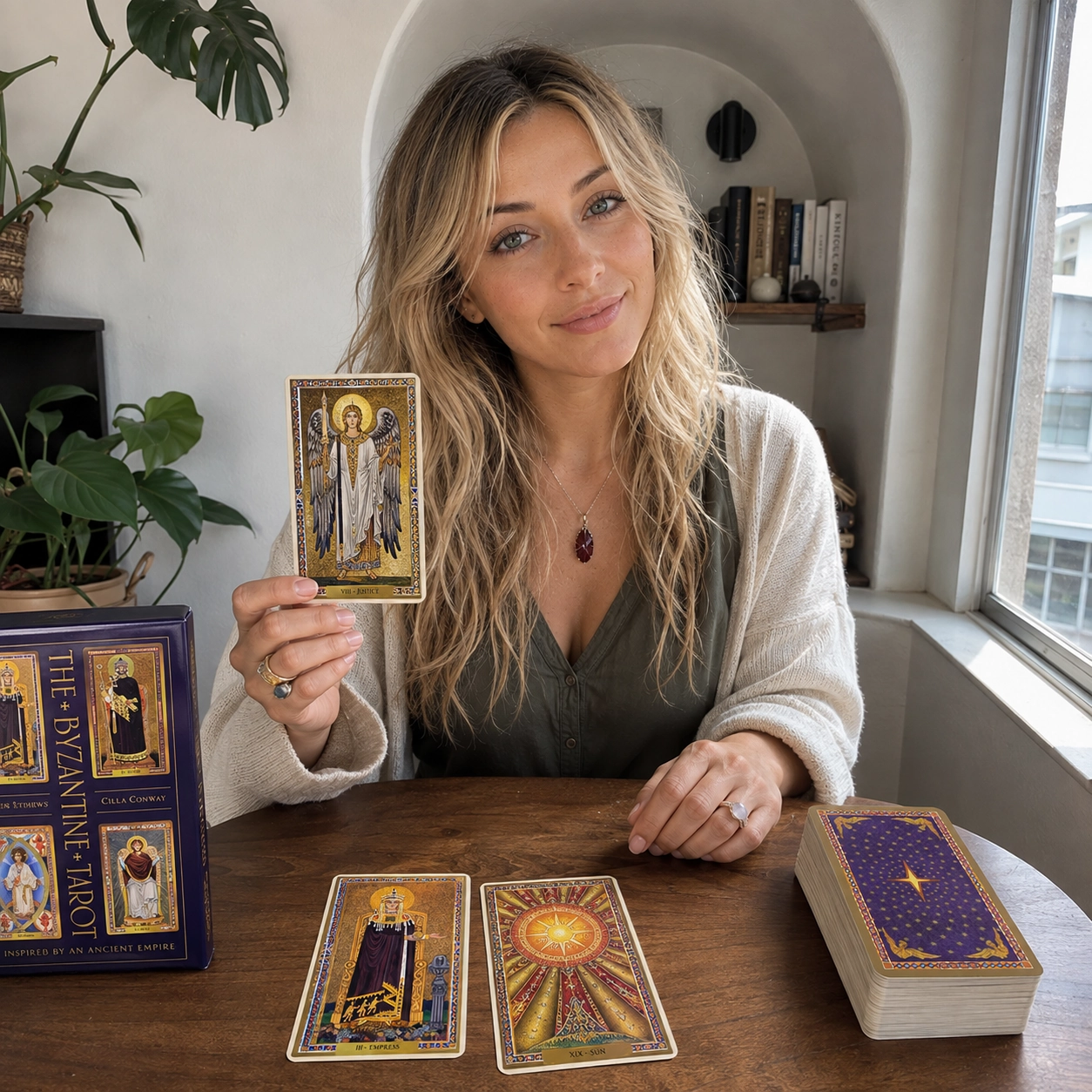
A note from Aurica
Byzantine Tarot feels to me like entering a small chapel just after the candles have been lit. Gold catches at the edges of every figure, yet beneath that beauty I sense the weight of vows, rank, faith, and consequence. I would bring this deck to a question that deserves stillness rather than a quick comforting answer.
VIII Justice is the card that makes me sit straighter. The winged figure stands inside an ornate frame with the scales held calmly aloft, as if truth does not need to shout to be heard. In a reading, I would notice which side of the scales pulls my eye first, compare that feeling with the surrounding cards, and ask where fairness now requires a clear decision.
III Empress carries a different authority. Her purple robe and golden halo make abundance feel ceremonial, not careless; what she protects has been tended over time. Beside her, XIX Sun opens like a jeweled window of warm light. Together they remind me that confidence grows brightest when care, responsibility, and joy are allowed to belong in the same story.
I especially like this deck for questions about leadership, loyalty, inherited expectations, and the difference between sacred commitment and simple obedience. Its icon-like faces can seem formal at first, so I let one colour, gesture, or gaze speak before I reach for the traditional meaning. That small pause turns the old-world imagery into something immediate and human.
Byzantine Tarot leaves me with a hopeful thought: you can honour the wisdom behind you and still choose the bright, honest path that is yours to walk.
Byzantine Tarot: icons, gold, and sacred decisions
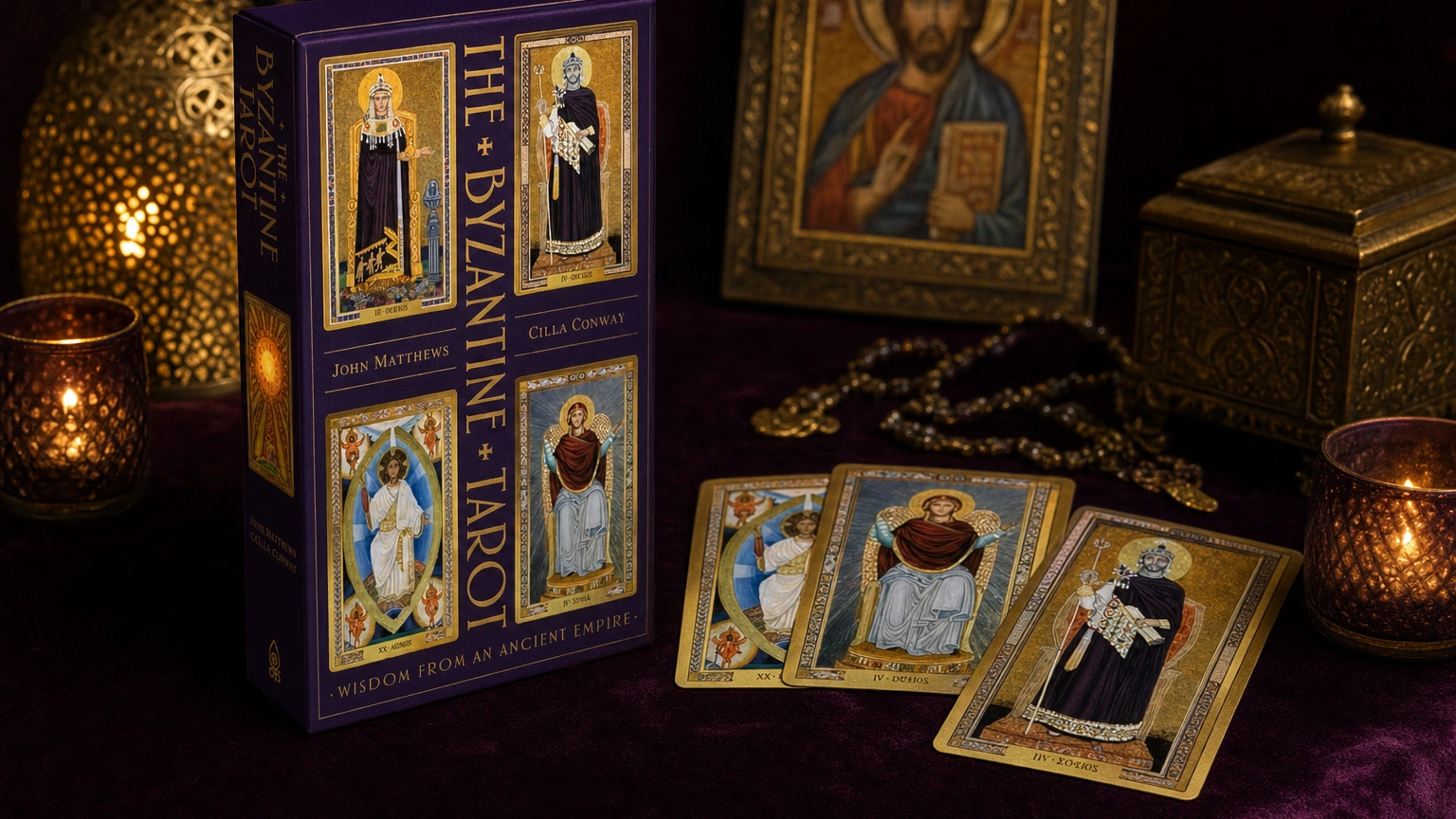
I reach for Byzantine Tarot when I want a reading to feel ceremonial. This ornate historical deck combines Cilla Conway’s Byzantine-inspired artwork with John Matthews’s companion text. Gold grounds, holy faces, courtly clothing, angels, rulers, saints, coins, cups, swords, and horses make every spread feel half chapel and half royal court.
It is not a casual, modern-minimal deck. Byzantine Tarot asks me to slow down, look at rank and gesture, and notice who has power in the image. It is especially strong for questions about tradition, spiritual duty, vows, family systems, authority, devotion, and choices that need dignity instead of speed.
My First Impression
My first feeling with Byzantine Tarot is reverence with a little pressure behind it. The deck looks beautiful, but it does not feel soft in a fluffy way. It feels like entering a hall where every figure knows their role. There are blessings here, but there are also laws, oaths, consequences, and old patterns that have lasted for a long time.
I like that tension. The deck can speak about faith and beauty, but it can also speak about hierarchy, control, temptation, and the cost of staying loyal to a system. In a reading, I would not rush to make every image comforting. Sometimes the message is: respect the sacred thing, but do not hand your whole voice to an earthly throne.
Art Style and Symbolic Voice
The art uses a Byzantine-inspired visual language: flat sacred space, intense color, golden framing, frontal figures, angels, courtly robes, architectural settings, and symbolic objects that look important before they look realistic. That makes the deck feel more iconic than cinematic. The cards are not trying to show a movie scene. They are trying to hold a spiritual truth still long enough for you to study it.
Because of that, I read this deck through posture, placement, light, and ritual objects. A raised hand can feel like a blessing or a command. A coin can become worldly order. A chalice can become devotion. A mounted figure can become public action. The deck is very good at showing where the soul meets structure.
Case Study 1: The Sun as Sacred Approval and Public Clarity
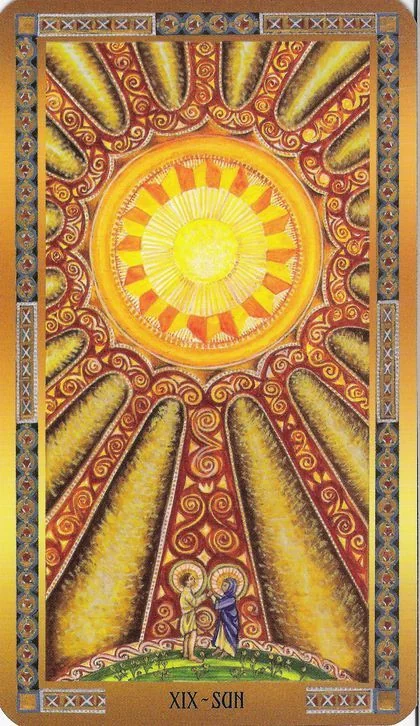
This radiant card is one of the clearest examples of the deck’s icon-like confidence. The golden sun does not feel like simple cheerfulness. It feels like a seal of visibility, blessing, and truth brought into the open.
In a reading, I would use it for moments when the querent needs to stop hiding behind vague language. What is being revealed? Who can see it now? And does this clarity feel liberating, or does it make a private matter suddenly public?
That is the gift of Byzantine Tarot: beauty with accountability. Its light is gorgeous, but it is also formal. When a card shines, it often asks me to behave as if my choice matters in front of something larger than my mood.
Four-Card Moment: Heaven Sets the Clock
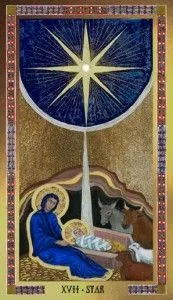
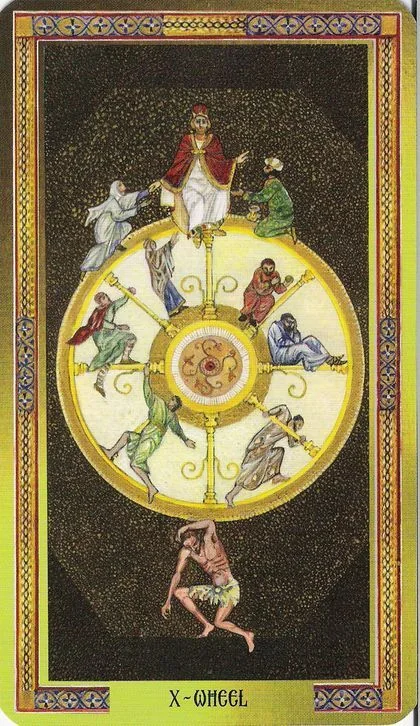
This line feels like a celestial reading. XIX Sun, XVII Star, XVIII The Moon, and X Wheel create a story about timing, fate, prayer, and the bigger pattern around a decision. I would use it when someone wants to know whether to push forward or wait for the right opening.

How It Reads in Practice
In practical readings, Byzantine Tarot is strongest when the question has layers of duty. It can handle “What do I want?” but it is even better with “What am I responsible for?” or “Which promise is still holy, and which one has become a prison?” It has a courtly, spiritual voice that makes everyday choices feel part of a larger moral pattern.
I would use it for family roles, religious or spiritual questions, leadership, workplace hierarchy, legacy, marriage vows, creative discipline, and moments when a person has to choose between private desire and public responsibility. For quick party readings, it may feel too solemn. For deep journaling, it is excellent.
Case Study 2: The Shadow Figure as Temptation, Fear, and Misused Power
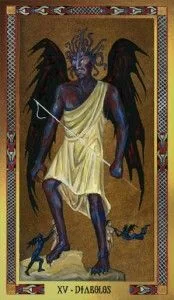
The dark horned image gives the deck needed contrast. Against all the gold and blessing, this card says that sacred-looking systems can still create fear, shame, appetite, or control.
I would read it as a warning to name the bargain clearly. What is being offered? What is the price? Is the querent obeying conscience, or only trying to appease a powerful figure, habit, or desire?
This is why I do not read the deck as only pretty historical art. It has teeth. The same visual world that gives us angels and saints also gives us hierarchy and danger. That makes it useful for honest readings about power.
Four-Card Moment: Court, Crown, and Stewardship
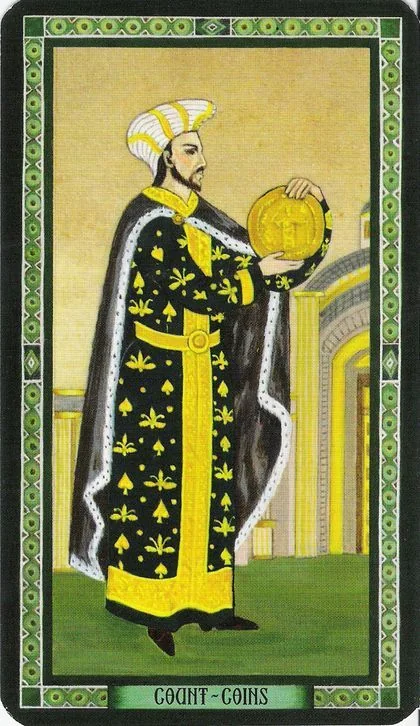
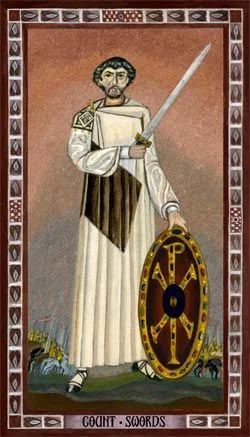
This sequence feels like a council table. III Empress, Count of Coins, Countess of Cups, and Count of Swords ask who should hold authority now. I like it for leadership readings, inheritance questions, or choosing the most mature seat in a conflict.


Beginner Friendliness
Byzantine Tarot can work for a beginner, but I would not call it the easiest first deck. Some scenes are readable right away, while others need patience with the guidebook and the deck’s historical language. If you already know Rider-Waite-Smith basics, you can bring those meanings in, then let the Byzantine details deepen the answer.
For a new reader, I would start with one card at a time. Ask: Who has authority here? What object is central? Is the mood blessing, judgment, duty, temptation, travel, grief, or celebration? That simple visual method keeps the deck from feeling too academic.
Case Study 3: The Storm as Crisis, Judgment, and a Broken Pattern
The storm image is dramatic because it interrupts the polished ceremonial mood. It feels like a moment when the old order cannot keep pretending everything is stable.
In a reading, I would treat it as a necessary shock: a secret exposed, a structure cracked, or a belief system tested. The card is not only disaster. It can also be the mercy of truth arriving before the damage gets deeper.
The partial TarotFans gallery currently shows 72 available card images, which is enough to feel the deck’s voice without pretending every card image is present here. I still recommend using the companion book if you own the deck, because this kind of historical symbolism rewards context.
Four-Card Moment: Leaving the Palace Road
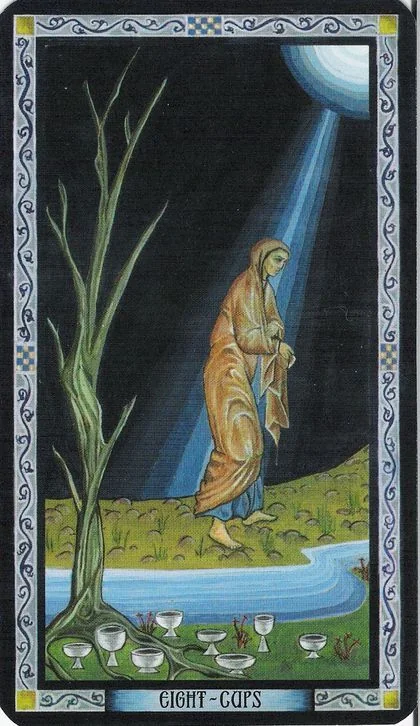
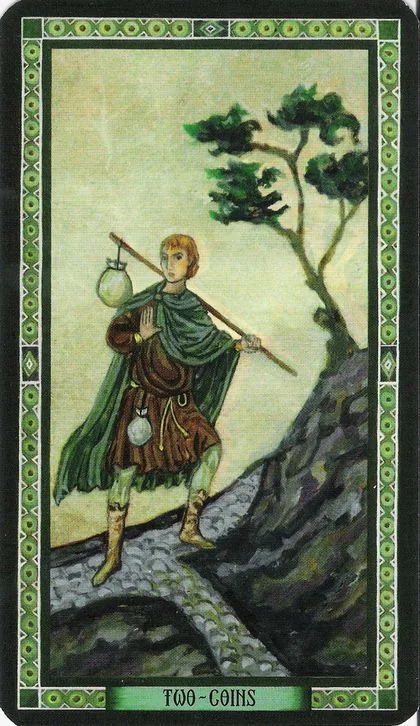
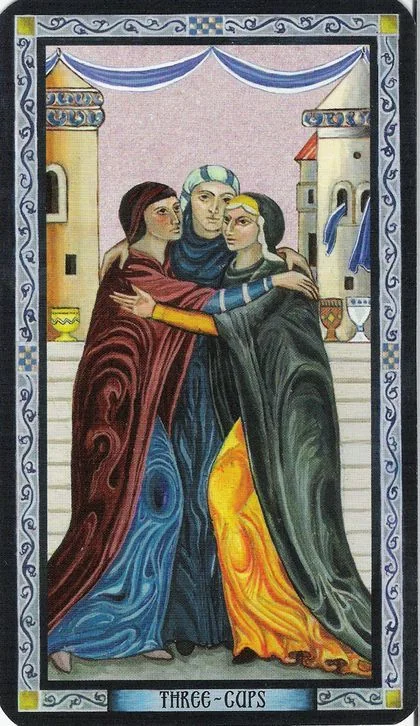
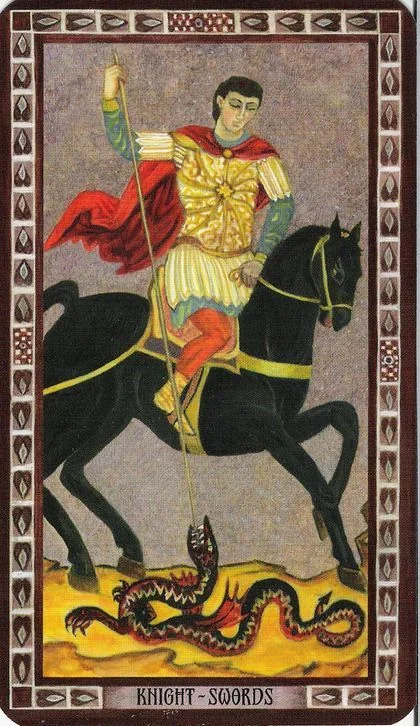
This row feels like movement away from a fixed court. Two of Coins, Two of Staffs, Three of Cups, and Knight of Swords show transition, humility, emotional passage, and urgency. I would use it for relocation, career transition, or any choice that carries both honor and risk.

Best Questions to Ask Byzantine Tarot
- Which duty is real, and which duty is only fear dressed as tradition?
- Where do I need more spiritual discipline before I act?
- Who holds power in this situation, and how should I respond wisely?
- What old pattern is asking to be blessed, questioned, or released?
- How can I make this decision with dignity instead of panic?
These questions fit the deck better than tiny yes-or-no prompts. Byzantine Tarot likes context, lineage, visible consequences, and a question with enough room for conscience.
Four-Card Moment: Mercy, Cup, Prayer, Surrender
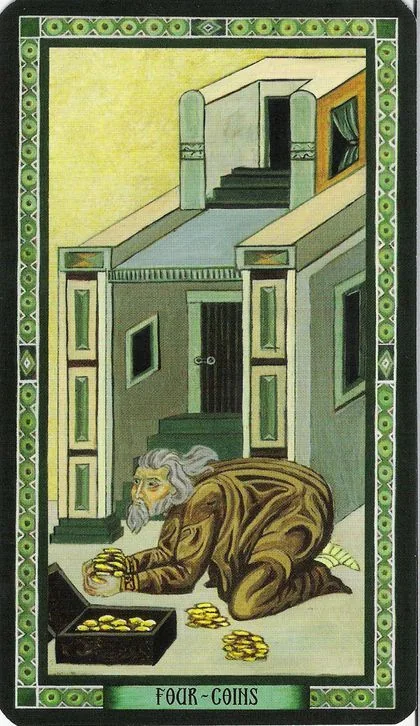
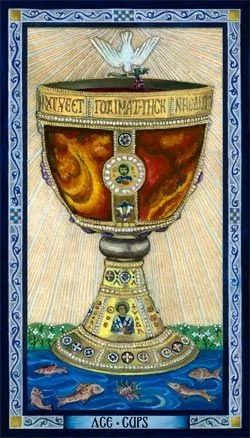
This final strip is quieter and more human. Four of Coins, Ace of Cups, Ten of Cups, and Nine of Swords create a devotional healing line. I would use it when someone needs compassion, confession, forgiveness, or the courage to stop fighting a truth they already know.


Guidebook, Edition Notes, and Collecting
The guidebook matters with Byzantine Tarot. The deck can be read intuitively, but the historical and religious references are part of the pleasure. If you are buying a copy, check whether the listing includes the companion book, box, publisher edition, and condition details, especially with secondhand copies.
The art style is also the reason I would call this a special-purpose deck rather than an all-purpose comfort deck. It shines when the reading needs tradition, ceremony, moral weight, or sacred atmosphere. If you mostly want casual daily affirmations, it may feel formal. If you love icon art, old empires, spiritual symbolism, and courtly drama, it has a strong voice.
Final Thoughts
Byzantine Tarot is a rich, serious, beautiful deck for readers who enjoy history and sacred art. I like it most for readings about authority, devotion, family duty, vows, leadership, and decisions that should be made slowly. Its gold is not just decoration. It turns the reading table into a small ceremonial space.
My favorite thing about the deck is that it does not separate beauty from responsibility. The images can bless, warn, crown, expose, and console. If you want a tarot deck that feels ornate, spiritual, old-world, and direct about power, Byzantine Tarot is worth studying with patience.
Byzantine Tarot FAQ
What kind of art style does Byzantine Tarot use?
It uses a Byzantine-inspired style with gold, icon-like figures, saints, angels, rulers, ceremonial objects, and courtly scenes. The cards feel sacred and historical rather than modern or casual.
Is Byzantine Tarot beginner-friendly?
It can work for patient beginners, but it is not the simplest first deck. New readers may want to pair it with the companion book and a basic tarot guide, then read the visible symbols slowly.
Does Byzantine Tarot follow familiar tarot meanings?
Yes. It can be read with familiar tarot structure, but the art adds a strong historical and spiritual layer. I start with the traditional meaning, then look at rank, gesture, object, colour, and mood.
Does the TarotFans Gallery show the complete deck?
No. This is an honestly labelled partial archive of verified available cards, so the page does not pretend that every card is visible.
Should I care about the guidebook or edition?
Yes. The guidebook is helpful because the deck leans on Byzantine history, religious art, and symbolic references. When buying, check that the companion book and box are included if those matter to you.
What readings suit Byzantine Tarot best?
It is best for spiritual decisions, family duty, leadership, tradition, vows, ethical questions, legacy, and ceremonial journaling. I would not choose it first for very light party readings.