The Page of Cups tarot card meaning centres on emotional openness, imagination, and learning how to express what matters to you. Upright, it can suggest a tentative invitation, a creative idea, or a kinder way to begin a conversation. Reversed, it may bring creative blocks, disappointment, or avoidance into focus.
Think of the first sketch in a notebook or the message you rewrite because you want it to sound sincere. You do not need perfect words to make a thoughtful start. This card offers a way to reflect on your own choices; it cannot reveal someone else's private feelings or guarantee news coming your way.

Page of Cups Tarot Card Meaning at a Glance
- Main keywords: sweet messages, creativity, crushes, gentle feelings
- Upright meaning: beginner energy, messages, study, and trying something new. In the Cups suit, this connects to feelings, love, friendship, intuition, and the heart
- Reversed meaning: immaturity, distraction, or needing to listen before acting. The reversed meaning asks you to check how you are handling feelings, love, friendship, intuition, and the heart
- Yes or no: yes, if you stay open and sincere
- Best question to ask: What is this card trying to help me understand right now?
Page of Cups upright meaning: make room for curiosity
The upright Page of Cups suggests being receptive to an idea before deciding whether it is practical. A song, a conversation, or an unexpected memory might give you something worth exploring. Listen to your intuition as a starting impression, then check it against what you can actually observe.
In an advice position, this card favours a modest, sincere gesture. Thank someone properly, ask about an interest you share, or try a creative activity without judging the result immediately. New experiences can be enjoyable even when you are not especially good at them yet.
When the Page of Cups appears as a message card, many readers associate it with an invitation, an apology, or affectionate communication. That is a reading tradition, not evidence that a specific person will contact you. Consider what you are ready to receive and what you might communicate yourself.

Page of Cups tarot card meanings in a tarot reading
Read the position and surrounding cards before settling on an interpretation. In the past, this Page may describe an early interest or a conversation that opened something up. In the present, it can encourage attention to feelings and emotions you have not put into words. In the future, treat it as a prompt to consider how you could respond to an opportunity, rather than a prediction.
Love tarot: a gentle approach to love
In a love reading, the Page of Cups can indicate the tentative stage of a new connection. If you have a new love interest, suggest a simple meeting and give them room to answer freely. Curiosity about potential partners works better than building an entire relationship around a few pleasant messages.
For an existing relationship, express your feelings honestly and specifically: "I liked having breakfast together. Can we do that again this weekend?" A warm message or a thoughtful apology can help you begin. An apology still needs changed behaviour when harm has occurred.
Love or romance does not have to be dramatic to matter. Shared jokes and playfulness can make ordinary time together feel easier. But the card cannot prove attraction, predict reconciliation, or tell you what an ex secretly wants. Ask directly when appropriate and respect both their answer and their boundaries.
Career reading, money, and school
In a career reading, the Page of Cups invites you to notice creative energy and interests that have not had much room. You might enjoy writing, design, or work that involves listening to people. Test the fit through a small project, a class, or a conversation with someone doing the work.
An idea can be promising without being a complete plan. If you want to sell your artwork, calculate the materials, time, and likely demand before spending heavily. Stay grounded in reality about income and commitments. Tarot does not establish investment returns or replace qualified financial advice.
At school, being a beginner is useful information, not a verdict on your ability. Ask for an example, make a rough attempt, and use feedback to improve it. A friendly study partner may help you keep going when a subject feels unfamiliar.
Representing a person: an archetype, not a diagnosis
As a court card, the Page may describe an imaginative, sensitive, or inexperienced approach. A person of any age or gender can show those qualities. The picture's youthful figure does not require the reading to concern a boy, a child, or a particular physical appearance.
The Page of Cups represents a learner's relationship with feeling. Someone may be willing to connect yet unsure how to handle emotional depth. Look at their actual actions rather than calling them emotionally immature on the strength of a card. The Page of Cups can also describe your own approach, a role, or the mood of a situation.
Page of Cups reversed: feelings need a clearer outlet
The reversed Page of Cups suggests checking the gap between what you imagine and what is happening. You may be hoping for a reply, taking criticism personally, or putting off a conversation because it feels awkward. Self-reflection can help you separate disappointment from an assumption about another person's motives.
Creative blocks are another common interpretation. You might have plenty of ideas but avoid making anything because the first attempt will be imperfect. Try a ten-minute draft that nobody else needs to see. You do not have to stop dreaming; give one dream a small, workable task.
Readers sometimes use the keyword emotional immaturity here. Apply it to a behaviour, such as refusing to listen or expecting someone else to guess your needs, rather than diagnosing a personality. Feeling hurt is different from acting hurtfully. Pause before sending an angry message and return to the specific problem.
A reversal can also describe feelings kept private while you work out how to share them. Quietness is not automatically immaturity. You can take time, ask for support, and choose a conversation you are ready to have.
Page of Cups yes or no meaning
Some readers lean toward a gentle yes for questions about starting a creative activity or making a sincere invitation. Reversed, they may suggest a pause until expectations are clearer. Neither answer is a reliable forecast of how another person will respond.
Instead of "Will they like me?", ask "How can I approach this respectfully?" For an important decision, include the facts, costs, and other people's consent. A symbolic yes cannot do that work for you.
Advice, personal growth, and playfulness
The Page of Cups encourages a little experimentation. Paint something without planning to sell it, send a kind note without expecting a favour back, or ask a question you would normally keep to yourself. Let enjoyment be part of the reason.
If you use the phrase inner child, treat it as a metaphor for curiosity and permission to play, not a clinical explanation. Remembering an activity you enjoyed can help you choose something to try now. You do not need to recover a particular memory or complete a healing ritual.
Grounding can be as ordinary as sleeping enough, eating regularly, and checking your calendar before saying yes. In spiritual readings, Cups often correspond to the element of water. Some traditions connect this Page with intuition or psychic abilities, but a card does not verify supernatural powers or a medical condition.
Tarot and oracle cards can prompt reflection; neither replaces qualified care. If distress affects everyday life, seek appropriate support. No card can confirm pregnancy, diagnose illness, or promise a cure.
One archetype, four perspectives
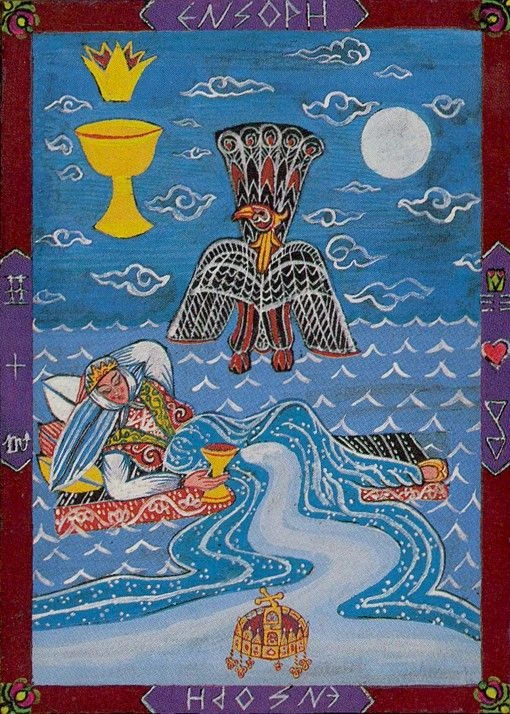
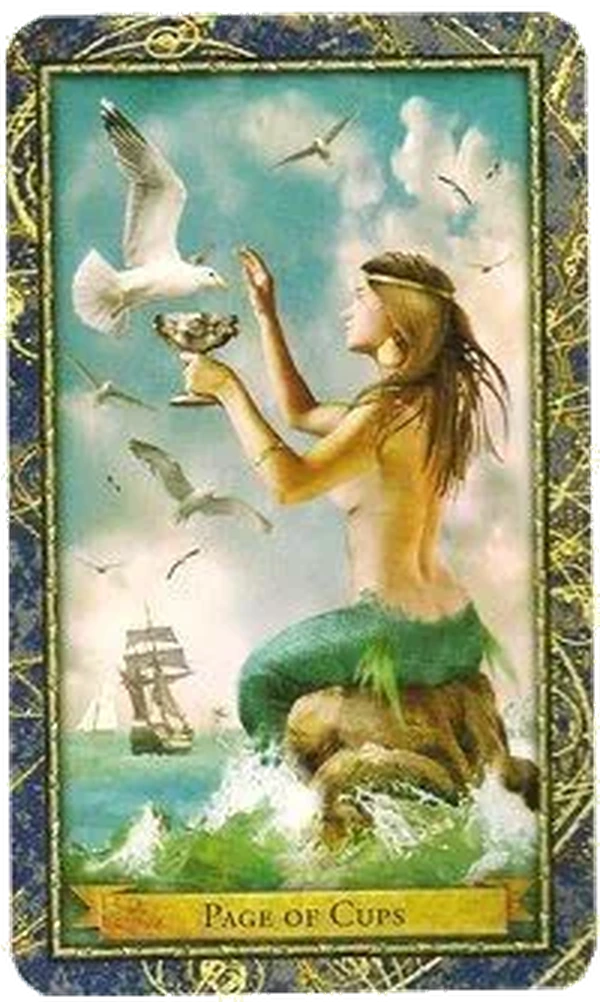
Page of Cups Across Four Tarot Decks
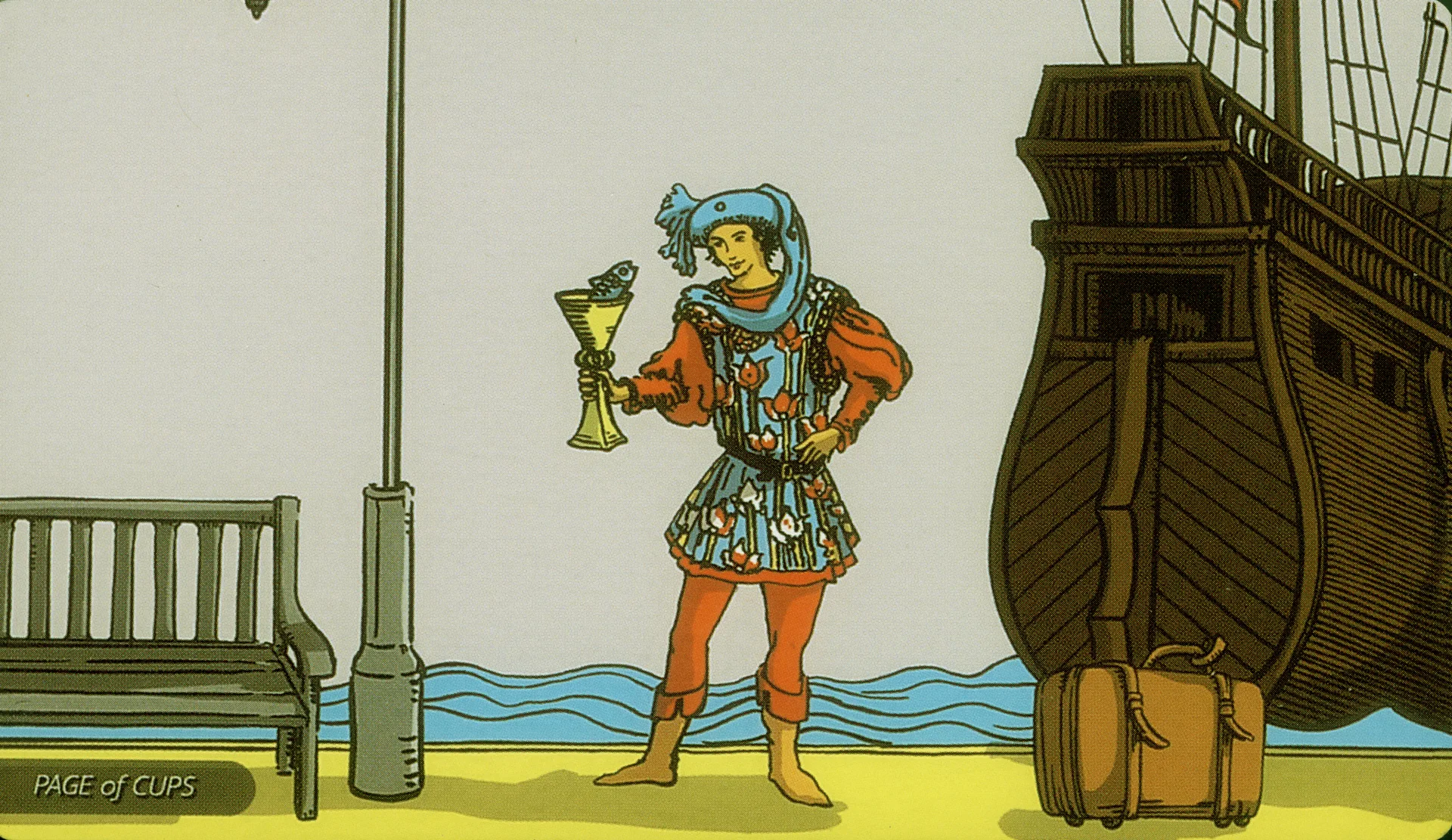
Compare the familiar Rider-Waite-Smith card with the moments before, behind and after the classic scene in three Lo Scarabeo decks.
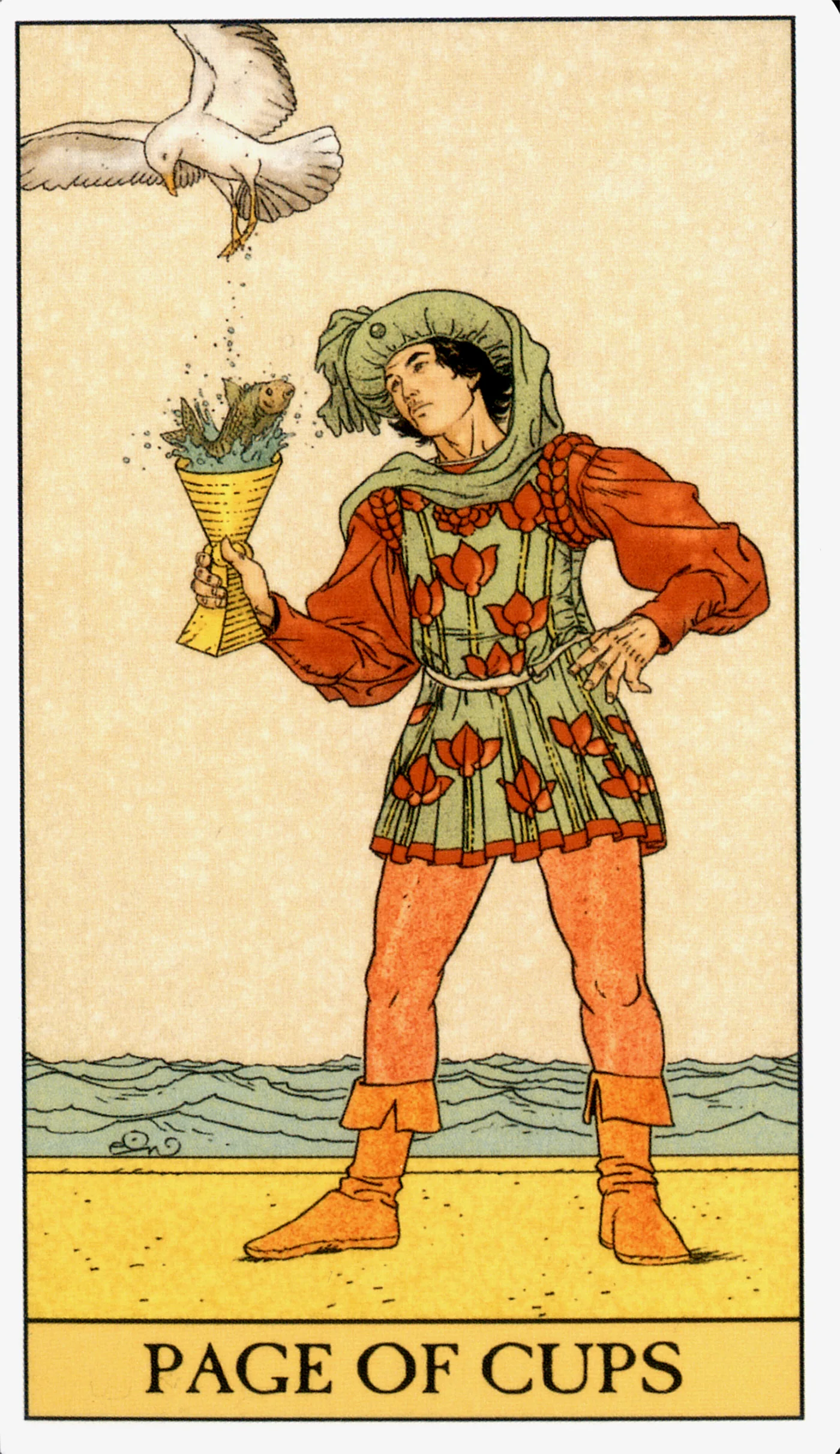
What apparently happens just before
What actually happened
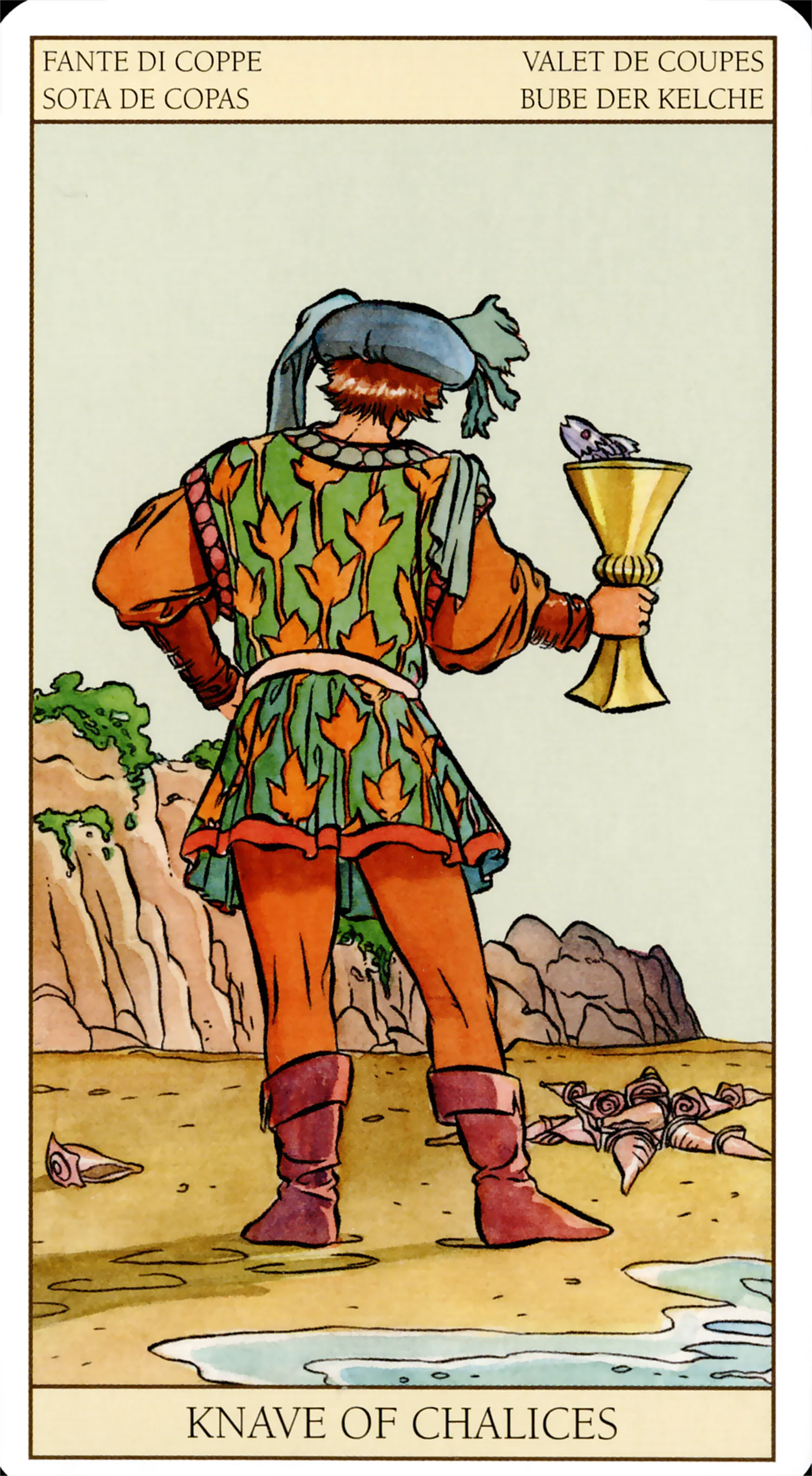
What happened on the opposite side

What apparently happened afterwards
Card description: the fish in the cup
The Rider-Waite-Smith portrait shows a figure holding a golden cup with a fish inside, looking toward the fish while resting the other hand on a hip. The figure wears a blue tunic patterned with pink flowers, pink sleeves and leggings, yellow boots, and a blue beret-like cap with draped fabric. Blue waves run behind the figure, who stands on yellow ground. The lower border reads PAGE of CUPS.
The fish emerging from the cup is the picture's surprising detail. Readers often say the fish represents an unexpected thought or a pleasant surprise. It can symbolize imagination interrupting an ordinary moment. The image does not show a promised message, a pregnancy announcement, or the figure's private intentions.
Descriptions sometimes call the draped headwear a flowing scarf. In this portrait, it hangs beside the head and across the shoulder. The water and cup commonly support interpretations about receptivity, while the firm stance can remind you to give an idea solid ground through action. Those are symbolic readings, not facts hidden in the painting.
Page rank and the Minor Arcana Cups suit
This is the Page court rank in the Cups suit, part of the Minor Arcana in a standard tarot deck of 78 cards. It follows the Ten in the usual suit sequence, but it is not a numbered Eleven or a Major Arcana card. Cups commonly concern relationships, creativity, and emotional life. Court-card meanings vary by deck and tradition.
Some systems associate Pages with the earth aspect of their suit, giving this one an earth-and-water correspondence. Others use Princess for a related court role or make different elemental assignments. Check your deck's guide rather than attaching one universal zodiac sign or planet to every Page.
Reading with nearby cards
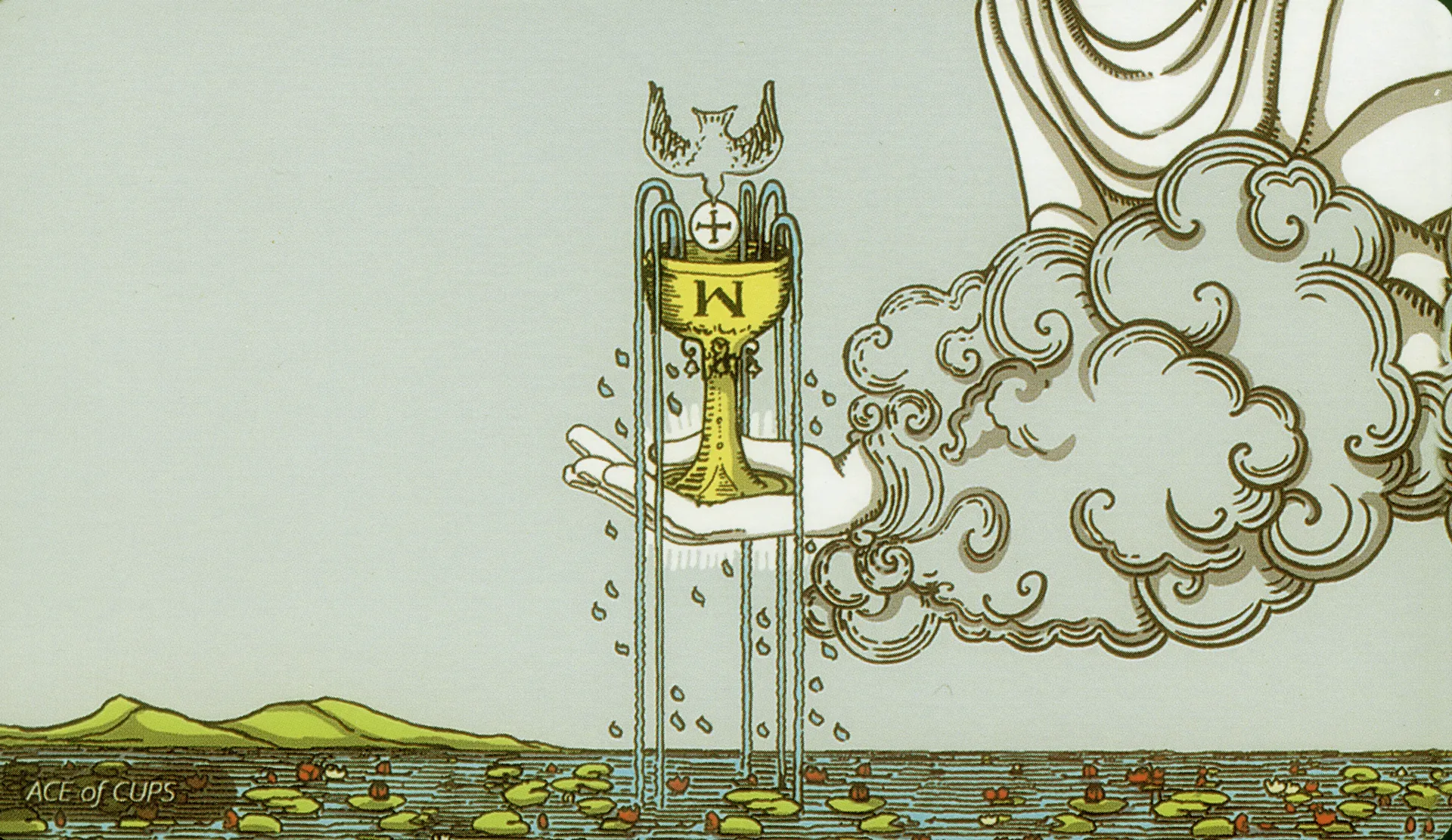
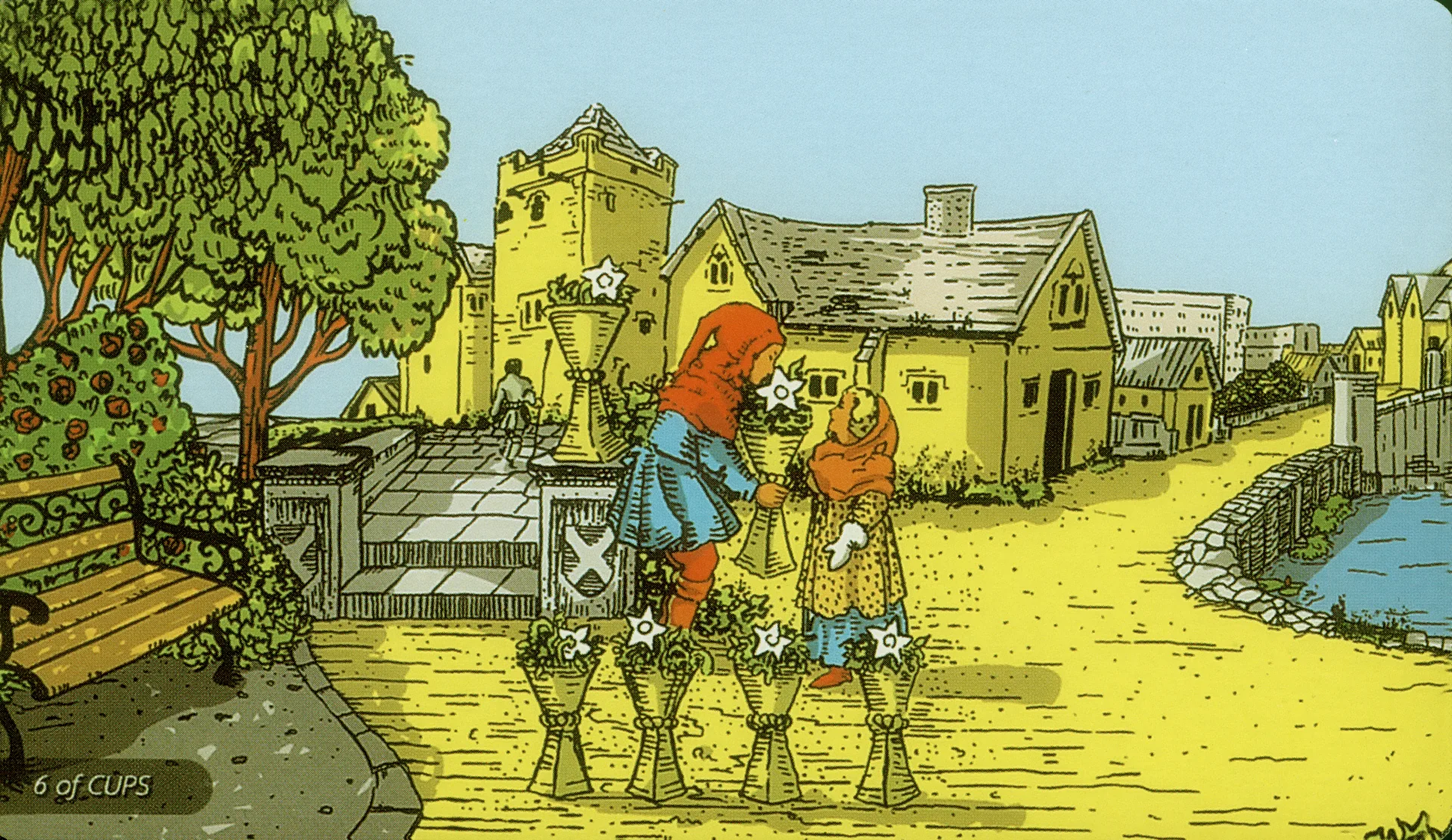
With the Ace of Cups, you might explore how an emotional beginning could take a small, visible form. The Six of Cups can bring memory or familiarity into that reflection: are you enjoying a connection as it is, or expecting it to recreate the past?
With a practical Pentacles card, consider how to support an idea with time, materials, or training. With a challenging Swords card, distinguish a feeling from the story you are telling about it. These examples offer questions rather than fixed combinations that predict events.
A short tarot cheat sheet for practice
For a one-card exercise, write down the feeling, the observable facts, and one kind action you can take. Keep the same question in view rather than drawing more cards until you get a reassuring answer. Keep the exercise short enough that you can act on it today.
- What small idea would I enjoy trying?
- How could I express a feeling without demanding a particular response?
- What am I assuming that I could ask about instead?
- Which practical step would help me gain clarity?
One card, many perspectives
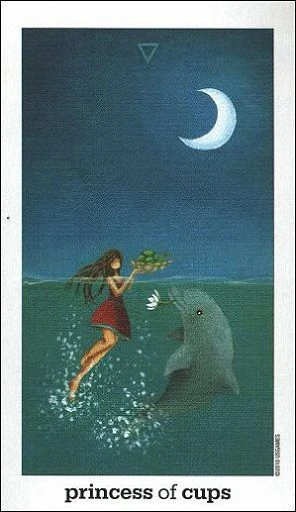
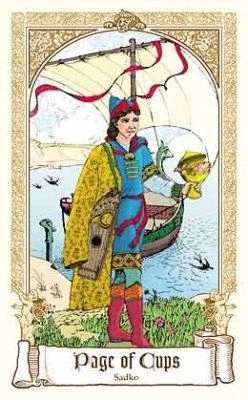
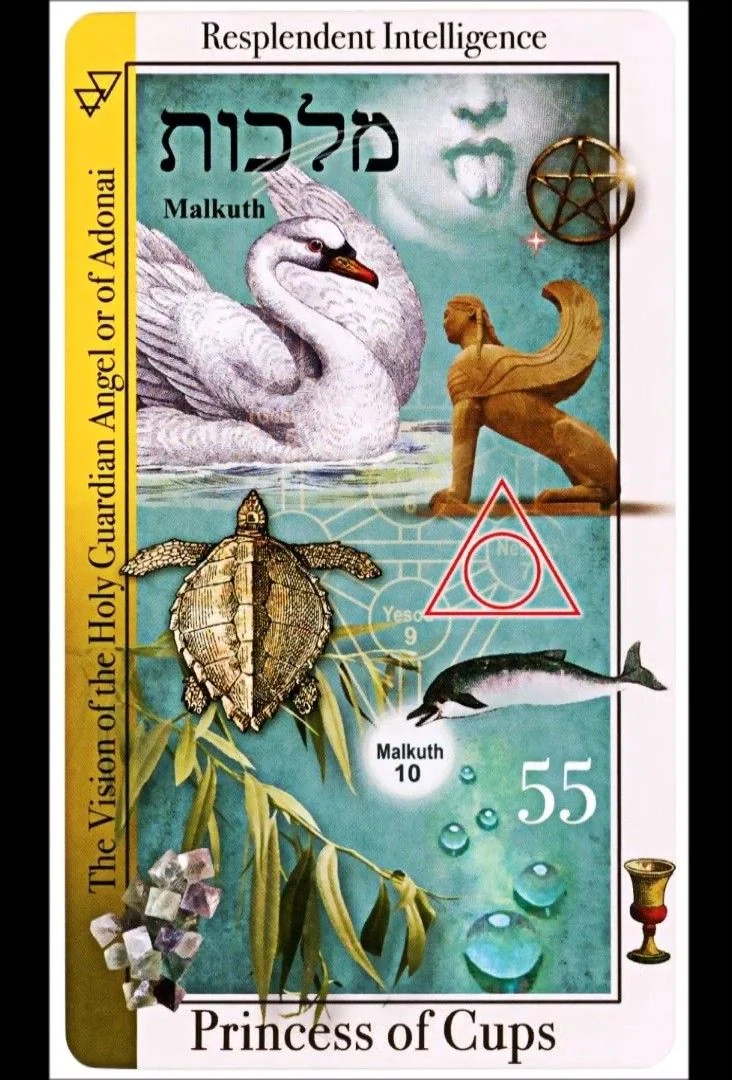
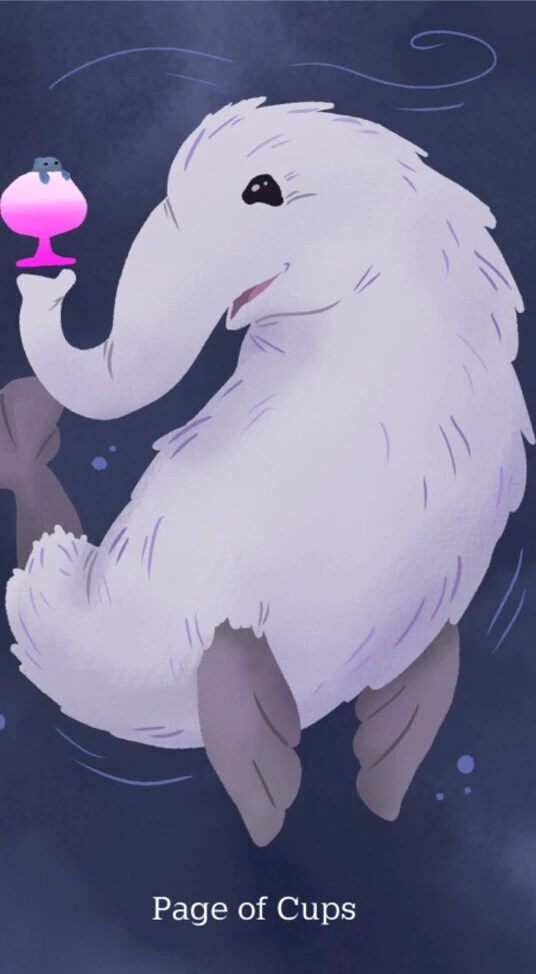
See Page of Cups Card from Other Decks
Discover how other tarot decks interpret this card. Select a deck to explore its full review and gallery.







Page of Cups FAQ
What does the Page of Cups mean upright and reversed?
Upright, it commonly suggests receptivity, creative ideas, and sincere communication. Reversed, it can focus on blocked expression, unrealistic expectations, or difficulty handling disappointment. The question and circumstances determine which reading is useful.
Does the Page of Cups mean someone has feelings for me?
It can invite reflection on affection or a tentative approach, but it cannot reveal private feelings. Look at communication, consent, and consistent behaviour rather than treating the card as proof of attraction.
Does this card have to represent a young man?
No. The Page is a court-card archetype that can describe anyone learning to express feelings or try something creative. Age, gender, appearance, and a fixed personality are not required.
What should I do after pulling the Page of Cups?
Choose a small, sincere action: try an idea, express appreciation, or ask a respectful question. Let yourself enjoy the experiment while keeping expectations proportionate to the facts.