Distant Past Tarot Card Gallery
Browse the verified card fronts currently available for this edition. Use the deck-group filters, then open any card for a larger carousel view.
A note from Aurica
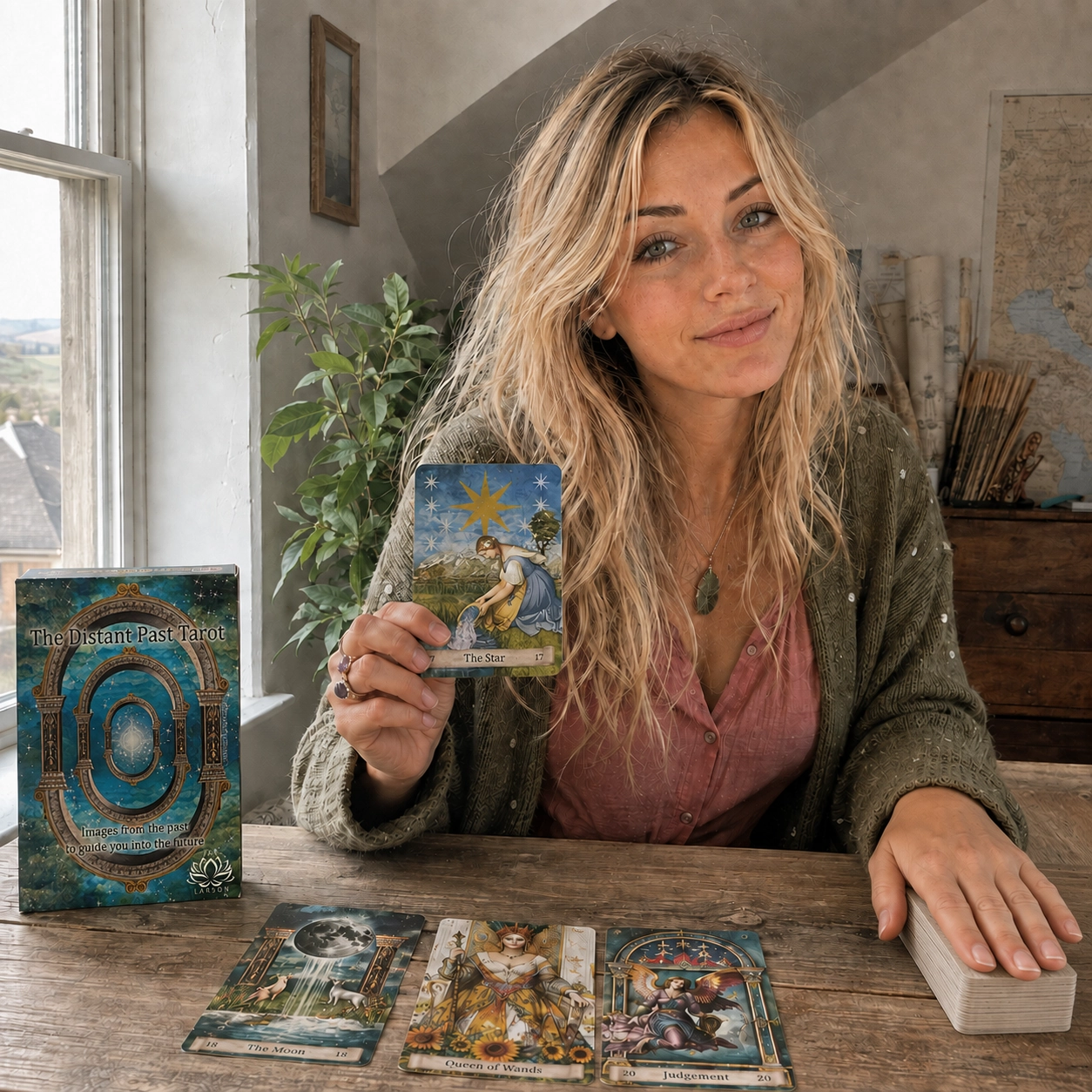
Distant Past Tarot feels like opening a drawer of old letters and finding that the colours have kept their secrets. Jae Larson’s collages place familiar figures inside skies, arches, gardens, and rooms that seem remembered rather than simply illustrated. I love beginning with the detail that catches like a loose thread—the enormous moon suspended between carved pillars, the quiet bend of the woman beneath The Star, or the watchful black cat beside the Queen of Wands.
In a reading, I let that first emotional spark speak, then bring it back to the card’s traditional work. The Star still offers renewal, but here her lowered gaze makes hope feel private and patient, like water finding its way through tired ground. The Moon feels less like a vague warning than a threshold: two animals stand apart beneath that impossible silver presence, asking whether instinct is protecting me or keeping me circling the same old story.
This deck is especially beautiful for questions about memory, inherited patterns, and the way yesterday colours a choice without deciding it. I compare repeating shapes and gestures across the spread, then ask what has changed between one image and the next. Queen of Wands brings warmth, confidence, and cultivated life into the conversation, while Judgement’s winged figure suggests that reflection is meant to wake something, not trap us in the archive.
I would reach for Distant Past Tarot when an answer needs time to emerge through atmosphere instead of arriving as a blunt instruction. Its images invite a slower look, but they never ask us to live backward. Follow the brightest living detail in the spread, and this deck can help you carry the wisdom of the past into a future that is still wonderfully yours to shape.
Distant Past Tarot review: memory, atmosphere, and patient visual reading
Distant Past Tarot is the kind of deck I want to read slowly. It does not feel like a glossy clone with familiar symbols pasted into new scenery. It feels like a series of weathered scenes: figures, thresholds, animals, old rooms, soft shadows, and symbolic fragments that invite you to look twice before you decide what the card is saying.
This review keeps the evidence honest. The TarotFans Gallery contains only verified usable card fronts from the recovered Distant Past Tarot source set. One same-board card back is excluded, and unavailable faces are never replaced with guesses. Where source metadata remains incomplete, neutral labels preserve that uncertainty instead of pretending every card name is certain.
That honesty fits the deck. Distant Past Tarot is strongest when you treat it as an intuitive conversation with the image in front of you. It rewards the reader who can hold classic tarot structure in one hand and visual mood in the other.
Card study
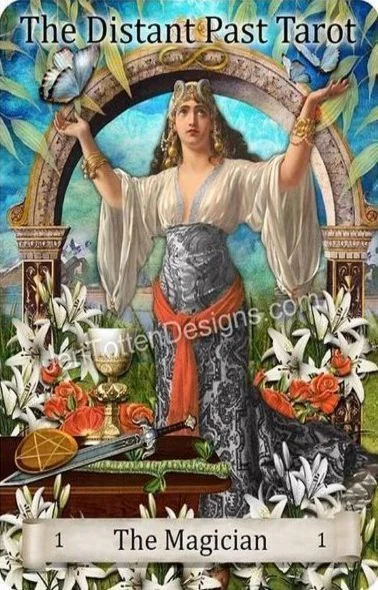
Card 01: entering through atmosphere first
This first recovered image is useful as a doorway into the deck because it asks for observation before interpretation. I would begin by naming the emotional temperature of the scene: what feels hidden, what feels exposed, and where the eye wants to pause.
In a spread, that kind of card can become a mirror for memory. It may not answer with a blunt keyword, but it can show the posture of the question: guarded, curious, haunted, ready, or still waiting for language.
How Distant Past Tarot reads in real spreads
In practice, I would read Distant Past Tarot with smaller spreads rather than huge tableaus. Three to five cards give the art enough room to breathe. A question like what is still shaping this situation from behind me? suits the deck better than a rushed yes-or-no pull.
The most reliable method is simple: start with the card position, describe the visible image without judgment, then connect that description back to tarot. If the scene feels cramped, ask where the querent is constricted. If it feels spacious, ask what is becoming possible. If the image feels old or remembered, ask what pattern has been carried forward.
A four-card question for the hidden thread
These four available images make a useful reading rhythm: what is visible, what is withheld, what is asking for patience, and what action can stay gentle but real.


Artwork, symbolism, and the partial gallery
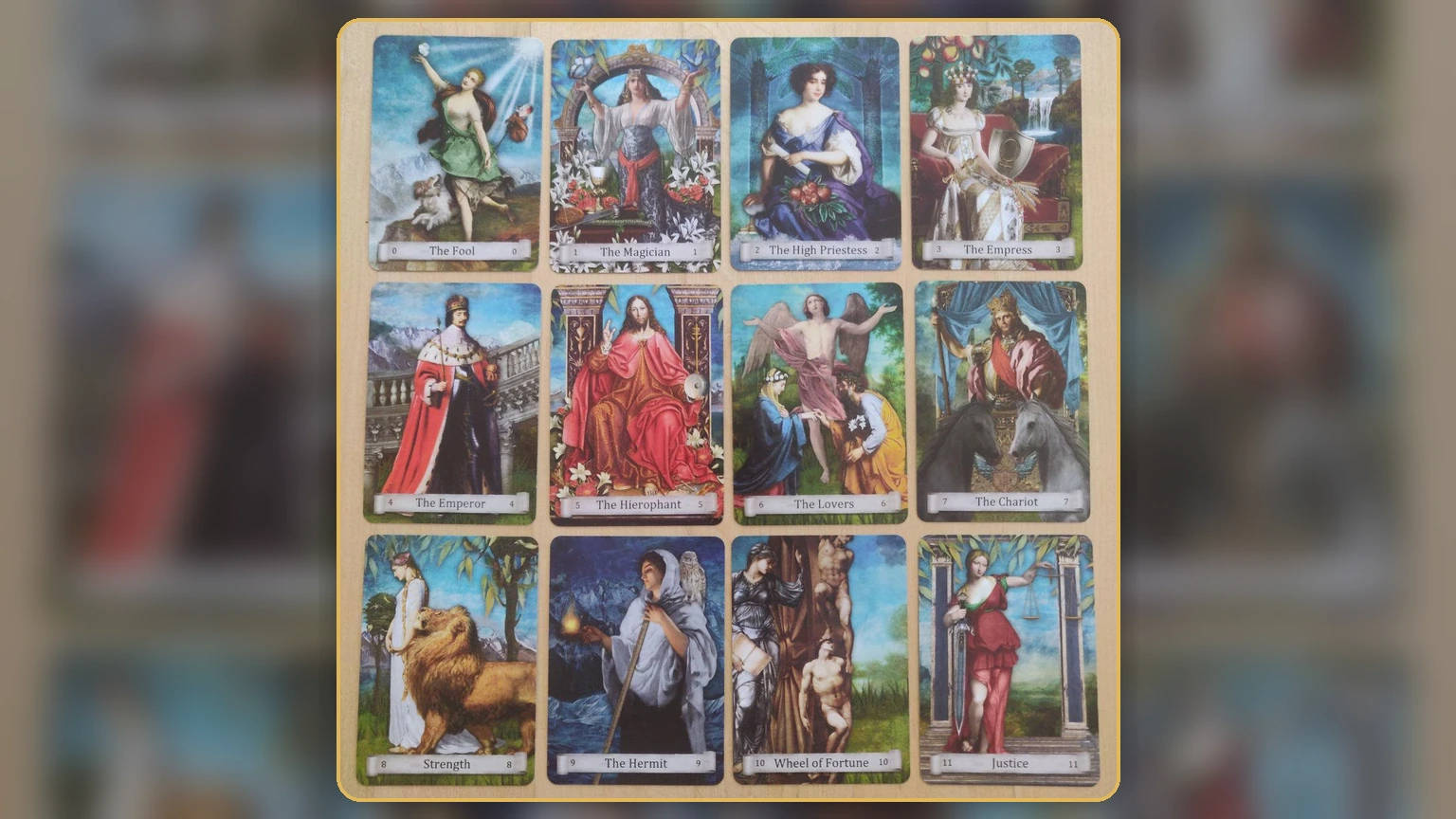
The available cards show a deck with a quiet but specific visual voice. Some images feel like storybook fragments; others feel more like private symbols from a dream. I like that the deck does not over-explain itself. It gives enough structure to read, but it leaves room for the querent’s own associations.
The partial Gallery matters because a strong archive is not the same as a complete deck. Several familiar Major Arcana and Coins cards remain unavailable in the recovered source. TarotFans leaves those spaces open rather than filling them with guesses, so the images you see remain useful evidence rather than a false reconstruction.

Card study
Card 16: a scene that wants a slower question
This card shows why Distant Past Tarot is better for reflective work than speed reading. The value is not only in identifying the nearest traditional meaning. The value is in noticing what the card makes you feel before the mind tries to tidy it up.
I would use it for questions about old emotional material, creative blocks, family stories, or decisions where the past is still leaning on the present. It asks the reader to listen for the quiet part of the answer.
From image to pattern
Once one card has named the emotional weather, I widen the lens. Repeated colours, thresholds, and gestures reveal whether the past is asking to be remembered, questioned, or gently released. That pause keeps the next group of cards connected to the reading instead of turning it into decoration.
When the past is still speaking
This four-card moment works for journaling: memory, resistance, a useful truth, and the next grounded response.
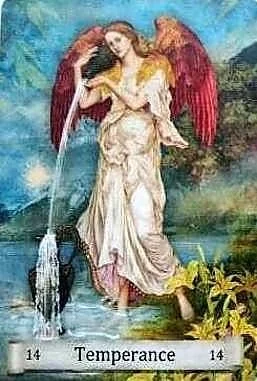


Who will love it and who may not
You may love Distant Past Tarot if you like atmospheric decks, antique-feeling scenes, symbolic ambiguity, and readings that become clearer as you describe the image out loud. It is a strong match for journaling, creative practice, shadow-aware reflection, and spreads about memory or inner timing.
You may not love it if you want every card to announce its meaning instantly. The available gallery has neutral labels because the recovered evidence is incomplete, and the visual language asks for a reader who enjoys interpretation. For absolute beginners who want direct keyword training wheels, I would start with a more standard deck and come back to this one later.
Texture, distance, and visual patience
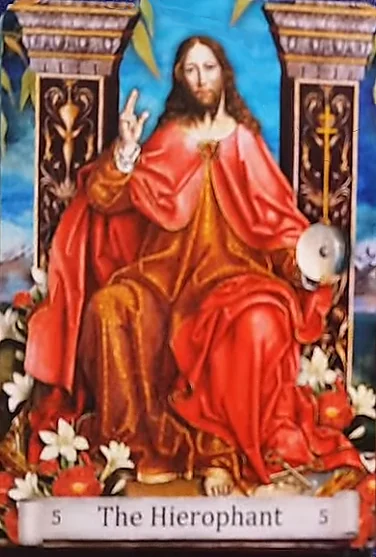
These cards show why the deck is not just decorative. It creates distance so the reader can notice pattern, mood, and memory without rushing to a canned answer.


Best spreads for Distant Past Tarot
My favorite spread for this deck is a four-card “distant past” spread: what began before I noticed, what I inherited, what still has influence, and what can be released or reworked now. The deck’s name almost demands that kind of inquiry, and the artwork supports it without becoming melodramatic.
For daily pulls, I would ask one precise question. Try: What old story am I bringing into today? What detail should I not overlook? What is asking for gentleness? What is no longer useful even if it is familiar?

Card study
Card 40: the useful uncertainty of an unnamed image
Because the source label is neutral, this card becomes a good example of how to read responsibly. I do not need to force a title onto it. I can read what is visible, compare it to the spread position, and let the card earn its meaning in context.
That is a useful tarot habit in general. Certainty is not always accuracy. Sometimes the strongest reading begins with a careful description and only then moves toward interpretation.
Let uncertainty stay useful
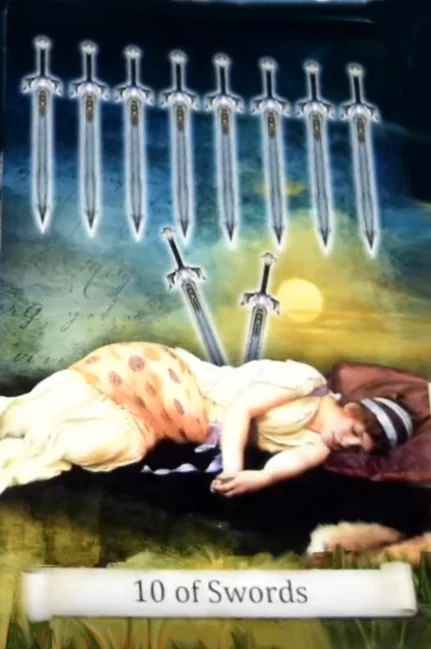
An unnamed image can still earn its place through careful observation, but it should not be forced into certainty. I carry that humility into the next four-card spread: each position asks what is visible now, what pressure lingers, what resource remains, and which response creates room for a different future.
A compact spread for memory work
Use these positions as a model: the image of the past, the pressure it creates, the resource still available, and the next step that does not repeat the old pattern.



Final Thoughts
Distant Past Tarot is a moody, patient, visually thoughtful deck. I would not choose it when I need a fast, literal answer. I would choose it when a question has layers and the querent is willing to sit with the image long enough for the first easy answer to soften.
The verified partial Gallery is enough to feel the deck’s voice, while its acknowledged gaps keep the review grounded. If you like tarot that behaves like memory, atmosphere, and symbolic storytelling, Distant Past Tarot is worth studying closely.
Distant Past Tarot FAQ
Is Distant Past Tarot beginner-friendly?
Yes, if a beginner enjoys intuitive, image-led reading and is comfortable with a deck that asks for patience. I would pair it with a basic tarot book and use the visible scene as the first layer of interpretation.
Is the TarotFans Gallery complete?
No. It is a verified partial Gallery built from the recoverable Distant Past Tarot source set, and it does not claim to reconstruct cards that are unavailable.
Why are some Distant Past Tarot cards still missing?
The recovered Gallery uses safely readable card titles and the available deck order. Unavailable cards remain absent rather than being filled with placeholders or invented artwork.
What readings suit Distant Past Tarot best?
It works best for reflective, creative, memory-heavy, shadow-aware, and personal-growth readings where atmosphere matters as much as a quick keyword.
Where can I find Distant Past Tarot?
No reliable current product page is confirmed here. The page uses a cautious availability search CTA and the YouTube walkthrough rather than inventing a specific shop listing.


