Wildwood Tarot Cards
Explore the available Wildwood Tarot card images in their forest-inspired sequence. This is a partial gallery; choose a group below, then tap any card for a larger carousel view.
Showing all available cards.
Quick Take: who Wildwood Tarot is for
I reach for the Wildwood Tarot when I want a reading to feel like stepping off a road and into a deep green path. This is not a shiny city deck. It is earthy, seasonal, animal-led, and full of old forest energy. Mark Ryan, John Matthews, and Will Worthington built a tarot world where the Major Arcana becomes a sacred landscape, and the suits become Bows, Vessels, Arrows, and Stones. If you love nature, myth, Celtic mood, animal guides, and practical spiritual work, this deck has a strong voice.
My quick take is simple: Wildwood Tarot is powerful, beautiful, and a little demanding in the best way. It is friendly to a beginner who wants to learn slowly, but it does not spoon-feed every meaning from standard Rider-Waite imagery. It asks you to look, feel, and listen. I would choose it for shadow work, seasonal spreads, life-direction questions, grief, healing, creativity, and “what is the wiser pattern here?” readings.
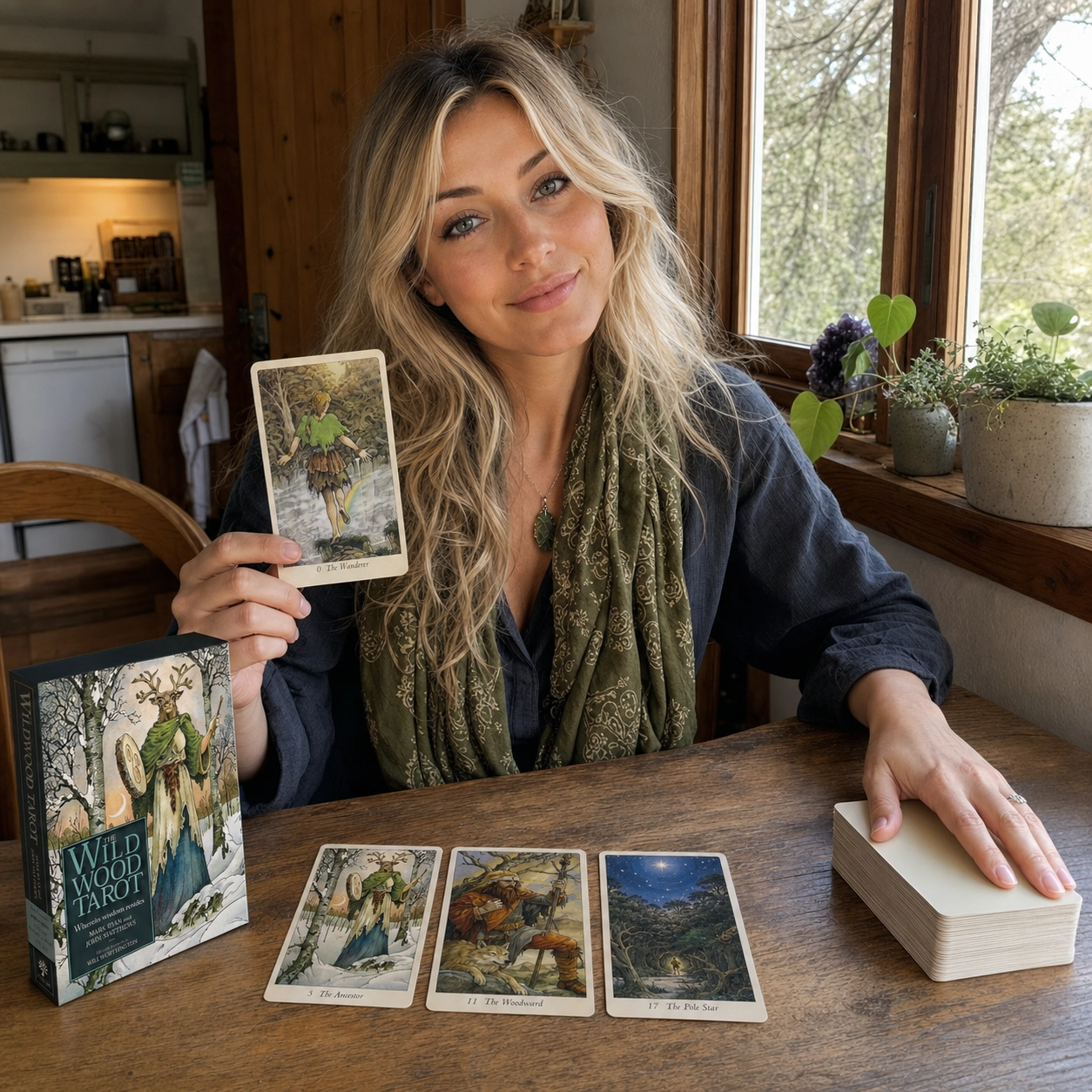
I begin with the detail that feels alive: the rainbow under The Wanderer’s foot, the antlers and winter hush around The Ancestor, or the small human light beneath The Pole Star. Then I set that feeling beside the card’s familiar task and ask the surrounding cards whether the path is opening, warning me back, or simply asking for patience.
The deck speaks best when I give it room. Three cards can feel like three clearings in the same wood, each revealing a different piece of the question. I finish by naming one grounded next step, because even the most beautiful forest symbol should lead me back to daily life. When I follow that quiet Wildwood path with honesty, I leave the reading feeling steadier, hopeful, and ready to take one brave step beneath the trees.
Art style and deck personality
The art feels hand-made and alive. The colors are mossy greens, winter blues, bark browns, fire oranges, and soft moonlight. Many cards show animals, trees, rivers, stones, bows, and ancient figures. Instead of trying to look glamorous, the deck feels rooted. It has the kind of beauty that gets stronger the longer you sit with it.
The deck personality is honest, grounded, and slightly wild. It does not flatter me. It shows me what is growing, what is decaying, what needs patience, and what is ready to be released. The best part is how physical the meanings feel. A card is not just an idea. It is weather, body, hunger, rest, movement, instinct, and season.
The Wanderer: beginning without pretending to know the whole path

The Wanderer is this deck’s Fool, but it feels less silly and more sacred. I read it as the moment before a real threshold. The figure is not being careless; they are choosing trust. In practical readings, this card tells me to stop demanding a full map before taking the first step. It can show a move, a new identity, a brave conversation, or a fresh spiritual path.
The warning is not to confuse freedom with drifting. The Wanderer asks for open senses, not empty planning. If this card appears with Stones, I ask what needs practical support. If it appears with Arrows, I ask which old story must be left at the gate.
How I read with it in practice
I read Wildwood Tarot more slowly than I read many modern decks. I like to pull the cards, name the scene out loud, then ask what the land is doing. Is the card open or closed? Is the animal watching, moving, nesting, hunting, or hiding? Is the human figure working with nature or fighting it? This method gives clear answers without forcing the deck into standard meanings too quickly.
For daily readings, one card is enough. For bigger questions, I like three to five cards, because the deck is strong at showing a journey. I also like it for year-wheel readings around solstices, equinoxes, birthdays, and new seasons. It helps me ask: what is ending, what is returning, and what does my life need next?
Four-card moment
A brave start that still needs grounding


This four-card line feels like a person saying yes to a new path, then building a real base under it. The Pole Star makes the choice feel guided, while the Ace of Stones reminds me to make it practical.
Beginner friendliness and example questions
Wildwood Tarot is beginner-friendly if you are patient and enjoy symbolism. It may feel medium-hard if you only want classic card names and instant keywords. The renamed suits and majors are part of its magic, but they also mean you will learn the deck on its own terms.
- Easy question: What energy should I notice today?
- Medium question: What pattern is shaping my next choice?
- Hard question: What old survival habit is ready to become wisdom instead of fear?
My advice for new readers is to keep a small journal. Write the card name, the animal or scene, three things you notice, and one simple message. Do not worry about being perfect. Wildwood rewards close looking. The deck becomes easier once you stop asking, “What should this mean?” and start asking, “What is happening in this scene?”
The Green Woman: growth, care, and embodied abundance

The Green Woman is one of my favorite cards in the deck because she makes abundance feel real instead of fancy. She is not about buying more or proving success. She is about what grows when life is tended. In readings, I see her as nourishment, creative fertility, body wisdom, gardens, kitchens, art tables, and safe relationships.
When she appears, I ask: what needs warmth, food, time, or protection? She can also call out over-giving. A garden cannot bloom if the soil is stripped. Her message is generous, but it has boundaries.
What the renamed suits add
The suit names are a big part of the Wildwood experience. Bows feel like will, craft, fire, and chosen direction. Vessels carry feeling, relationship, grief, memory, and belonging. Arrows bring thought, conflict, truth, and focused perception. Stones hold the body, resources, work, home, and the slow reality of time.
Once those elements click, the deck becomes much more readable. Instead of translating every card back into Wands, Cups, Swords, and Pentacles, I let the new language work on me. It makes readings less mechanical and more sensory. A difficult Arrows card can feel like cold wind through the mind. A Stones card can feel like a hand on the ground saying, “Start here.”
Four-card moment
Emotional healing after confusion
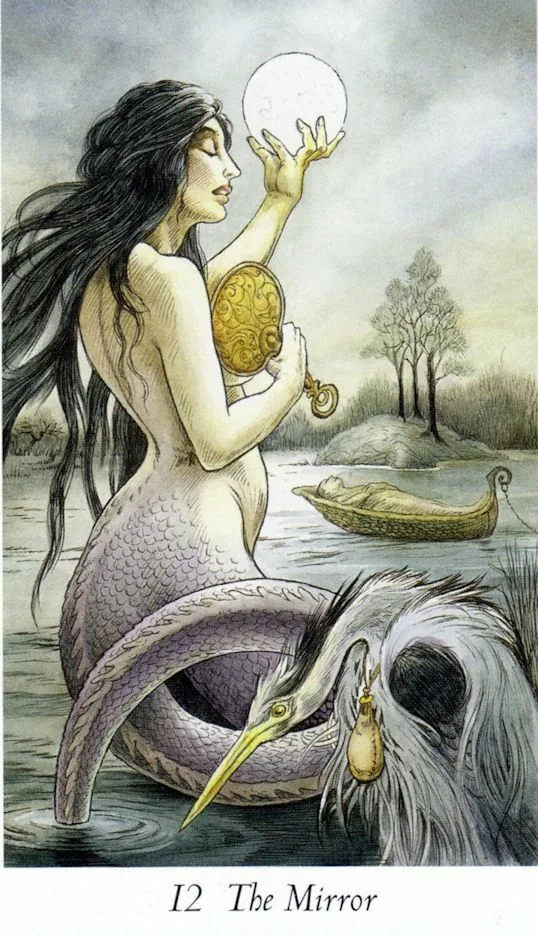


Here the deck shows the hard middle of healing. The Mirror asks for honesty, the 5 of Vessels names sorrow, and the Queen of Vessels brings emotional steadiness before the 10 of Vessels returns a sense of belonging.
What I like most
I love that Wildwood Tarot makes tarot feel older than a trend. The deck has atmosphere, but it is not vague. It can be blunt about fear, grief, desire, and responsibility. It also has a rare talent for helping me read the body. Some decks live mostly in the mind. Wildwood asks what my hands, chest, breath, sleep, and instincts already know.
I also like how the court cards feel less like social roles and more like living energies. A Page can be curiosity. A Knight can be movement. A Queen can be deep holding. A King can be mastery. Because the suits are natural elements, I find them easy to connect with once the deck’s language clicks.
The Hooded Man: solitude that gives wisdom back

The Hooded Man is Wildwood’s Hermit, and he feels like winter knowledge. He does not isolate because he hates people. He steps back so the inner flame can become visible again. I read this card as quiet study, spiritual maturity, private grief, rest, and the kind of answer that only arrives when noise stops.
In love readings, The Hooded Man may say, “do not chase a response just to calm your nerves.” In work readings, it can mean research before action. In healing readings, it often asks for gentle distance from the crowd so the soul can hear itself.
What to know before buying
This is not the deck I would buy if I wanted a cute, quick, ultra-modern tarot. It has renamed cards, and some images are more symbolic than scene-based. If you dislike animal guides, pagan nature themes, or darker forest moods, it may not be your match. The missing standard labels can slow down early learning, though the system becomes very readable with practice.
You will probably love it if you enjoy nature spirituality, seasonal practice, myth, folklore, and grounded shadow work. You may not love it if you want bright pop colors, simple relationship prompts, or a deck that copies Rider-Waite-Smith scenes card for card. The guidebook helps, but the real relationship comes from repeated readings.
Four-card moment
When conflict becomes clean action


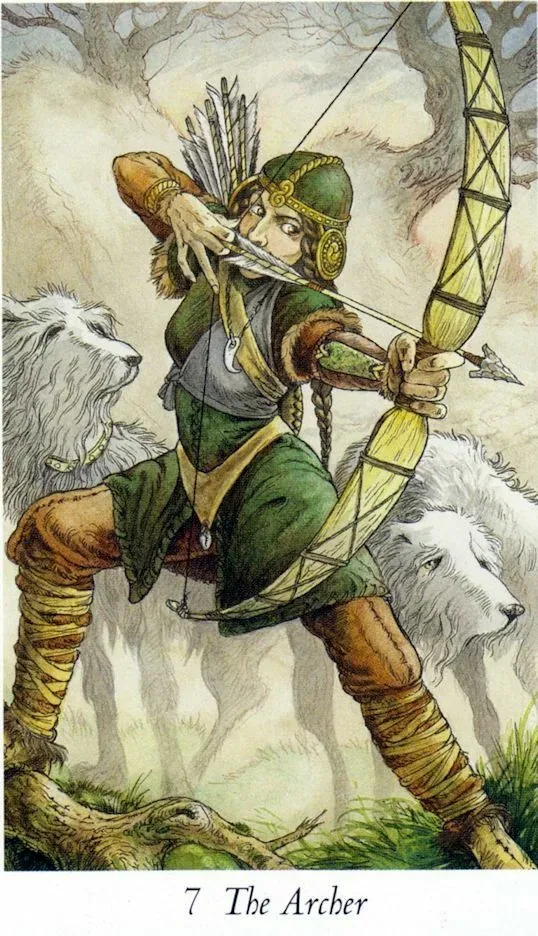

This is a sharp spread. The Ace and 5 of Arrows show a truth that may not be comfortable. The Archer then focuses the aim, and the King of Bows asks for mature, brave leadership instead of reactive heat.
TarotFans golden rule for this deck
My golden rule for Wildwood Tarot is: read the landscape before you read the keyword. Notice the creature, the weather, the direction of movement, and the feeling in your body. Then add the traditional tarot meaning. This keeps the reading alive and stops the deck from becoming just another list of memorized answers.
If you are using this deck for a larger spread, I also recommend reading the season of the cards. Ask whether the cards feel like spring growth, summer heat, autumn release, or winter listening. That one extra layer can turn a basic reading into something much more personal and useful.
Four-card moment
Slow success through patience


This is the Wildwood version of steady progress. It says to balance resources, protect what matters, keep practicing, and trust that completion comes through craft rather than rush.
Final thoughts
Wildwood Tarot is a serious keeper for readers who want depth without drama. It is spiritual, but not floaty. It is practical, but not dry. It helps me ask better questions and accept slower answers. I would recommend it to anyone who wants a tarot deck that feels like a guide through seasons of change, especially when life is asking for courage, patience, and honest self-knowledge.
The best way to approach it is slowly. Let the full card gallery give you the first impression, then return to a few cards at a time. If you build a relationship with the deck instead of rushing it, Wildwood becomes one of those rare tarot tools that can feel like a landscape, a teacher, and a mirror all at once.

Wildwood Tarot FAQ
Is Wildwood Tarot good for beginners?
Yes, if you are happy to learn its nature-based system slowly. It is not the easiest first deck for memorizing classic Rider-Waite scenes, but it is excellent for intuitive readers who love animals, seasons, and myth.
How is Wildwood Tarot different from Rider-Waite-Smith tarot?
It keeps a tarot structure, but renames many cards and suits. Wands become Bows, Cups become Vessels, Swords become Arrows, and Pentacles become Stones. The Major Arcana also uses forest and seasonal archetypes.
What kinds of readings suit this deck best?
I like it for shadow work, life direction, seasonal spreads, healing questions, creative blocks, and spiritual practice. It is especially good when you need a grounded answer rather than a fast yes or no.
Does Wildwood Tarot feel dark?
It can feel deep and serious, but not hopeless. Its darkness is more like a forest at night: honest, quiet, and full of signs if you slow down enough to look.
Can I use Wildwood Tarot for love readings?
Yes. It reads love in a mature way, focusing on needs, patterns, honesty, healing, and emotional responsibility. If you want only sweet romantic reassurance, it may feel a little too direct.
Who will not love this deck?
Readers who prefer bright modern art, standard card names, or very literal scenes may struggle with it. It is best for people who enjoy symbolic images and are willing to build a relationship with a deck over time.