Marigold Tarot Card Gallery
Browse the verified card fronts currently available for this exact Marigold Tarot edition. Use the deck-family filters, then select any card for a larger carousel view.

Aurica’s Quick Take
The Marigold Tarot is stark, beautiful, and unmistakably itself. Amrit Brar builds its world from anatomy, plants, animals, bones, ceremonial forms, and distinctly Punjabi imagery, all held together by deep black and metallic gold. I would choose it for shadow work, ancestral questions, endings and beginnings, creative recovery, and readings that benefit from direct symbolic language.
I love how a spread looks as though it has been etched into midnight and then warmed at the edges with gold. A skull may meet a flower, a blade, or a quiet hand gesture, and that contrast makes me pause before reaching for an easy answer. I begin with the detail that catches like a spark, then ask what is ending, protecting itself, or trying to grow.
The Sun captures that voice beautifully. Its bright disc rises above a lion’s skull, so joy here does not feel shallow or untouched by loss; it feels earned, brave, and fully awake. Beside Death or The High Priestess, I read that light as permission to face what is true and still make room for warmth.
The illustrated Majors and courts offer strong emotional anchors, while the pip-style numbered cards ask me to listen closely to number, suit, rhythm, and the cards around them. That makes this deck especially satisfying when I want a reading to unfold slowly, with each black-and-gold image adding one clear note to the story.
I would bring the Marigold Tarot to questions about ancestry, reinvention, creative courage, and the tender threshold between letting go and beginning again. Its marigolds seem to bloom beside the bones as a promise: what you have survived can become the gold that lights your next brave step.
Marigold Tarot review: life, death, gold, and Punjabi symbolism
This is a 78-card deck with fully illustrated Major Arcana and court cards, while the numbered Minor Arcana are pip cards. The current Classic edition includes a pocket guidebook and uses 310gsm black-core linen-finish stock in standard tarot size.
Card study
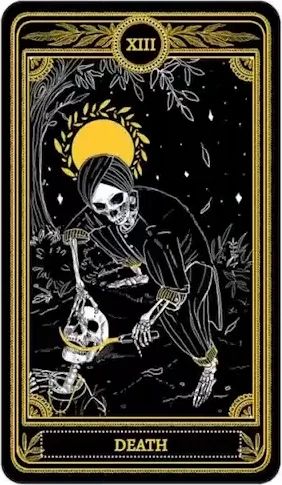
Death: making change physical
Marigold Tarot does not soften the fact that transformation has a body. Death asks what has completed its natural cycle and what becomes possible only after we stop preserving it.
In a reading, notice whether the image feels like decomposition, release, inheritance, or renewal. Its clearest advice is rarely “destroy everything.” More often it asks for an honest ending so energy can return to circulation.
What makes The Marigold Tarot distinctive?
The deck’s identity comes from the tension between ornament and mortality. Gold suggests preciousness, devotion, memory, and permanence; bones and anatomy remind us that every living form changes. Marigolds carry their own associations with remembrance, ceremony, grief, and brightness.
Punjabi references give the deck cultural specificity rather than a generic mystical surface. The result is not a neutral tarot vocabulary. It has a point of view, and that point of view is exactly why many readers connect with it so strongly.
Four-card moment
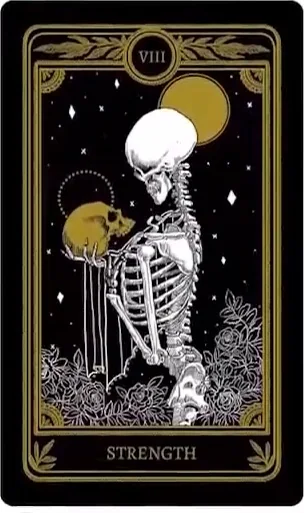
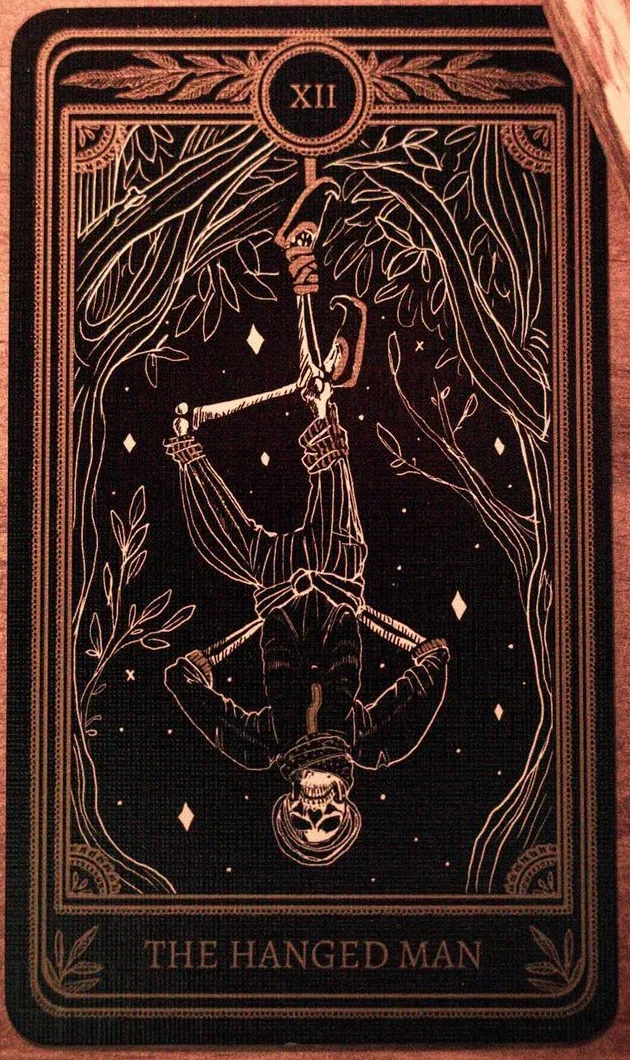
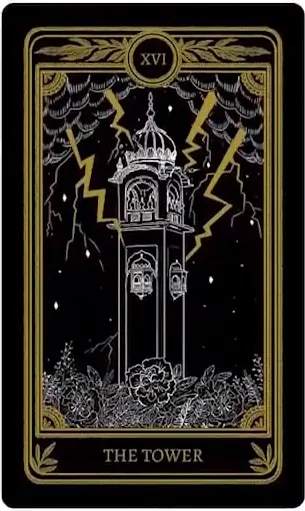
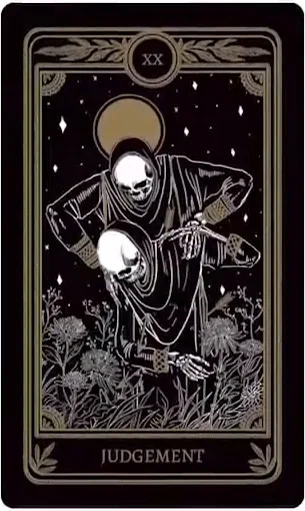
The Major Arcana moves through power, surrender, rupture, and return
These four cards show how the deck combines recognizable tarot structure with its own anatomy-and-gold visual language.
How The Marigold Tarot reads in practice
The Major Arcana and courts offer figurative scenes, while the pip cards ask you to work more directly with number, suit, arrangement, and atmosphere. That combination rewards readers who know a basic tarot structure but still want room for intuition.
Begin with the suit and number, then identify the strongest visual fact: repetition, direction, symmetry, emptiness, a bodily detail, or an object that appears ceremonial. Ask how that detail changes the standard meaning. The deck becomes clearer when observation comes before explanation.
Beginner friendliness
A motivated beginner can absolutely learn with this deck, especially with the pocket guide nearby. However, pip cards offer fewer narrative cues than fully illustrated Rider–Waite–Smith minors. If you learn best from scenes with people performing obvious actions, the minors may require more study.
Easy prompt: What deserves my attention today? Medium prompt: What must be honored before I move forward? Hard prompt: Which inherited pattern am I ready to transform?
Card study
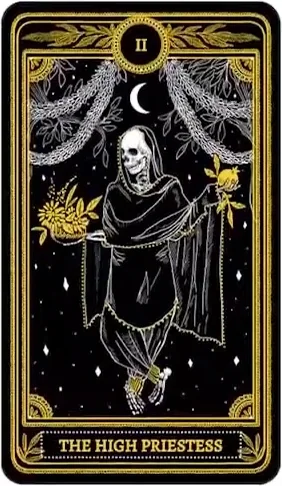
The High Priestess: knowledge held beneath language
The High Priestess asks you to recognize what you already sense but have not yet converted into a tidy answer. In this deck, secrecy feels less like withholding and more like protecting something while it matures.
Her gift is discernment, patience, and trust in quiet information. Her shadow is passivity or using mystery to avoid a decision. Ask what needs silence—and what now needs to be named.
Art style and deck personality
The palette is dominated by black, cream, and gold, with anatomy, botanical forms, animals, tools, and sacred-looking arrangements carrying the meaning. The cards feel graphic and tactile rather than painterly. Repetition and negative space are important parts of the composition.
The deck’s personality is solemn but not joyless, confrontational without being cruel, and ornate without losing clarity. It handles grief, identity, family, ambition, and transition with unusual confidence.
Four-card moment
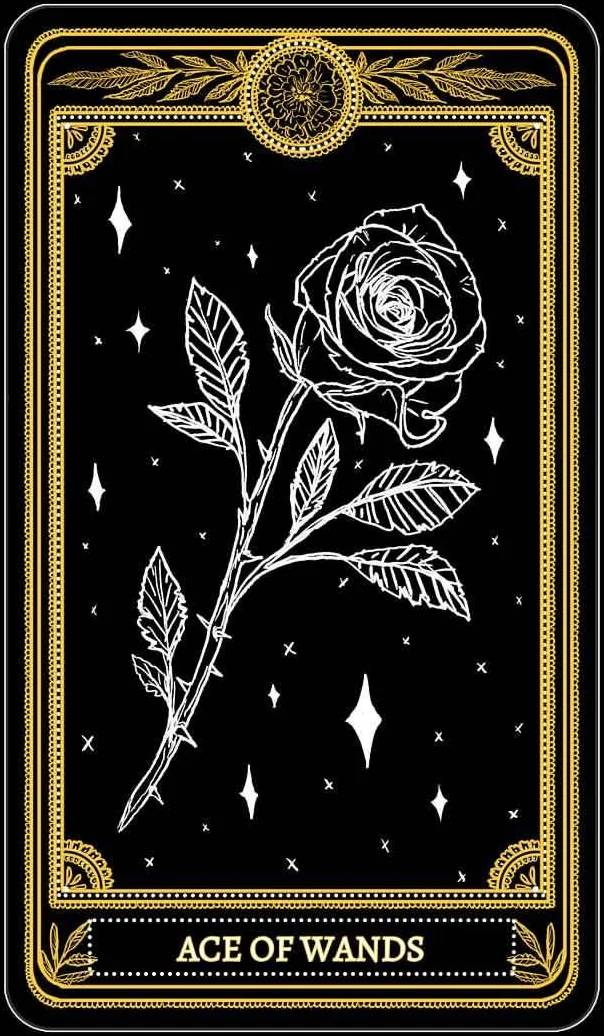
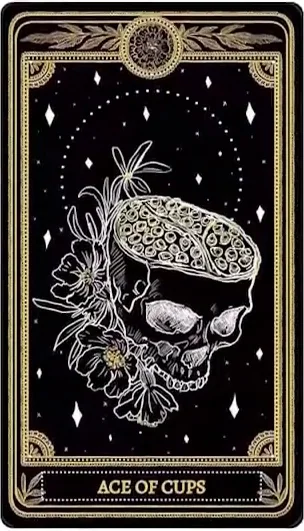
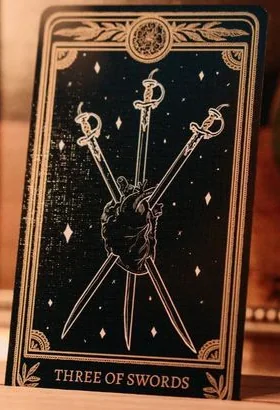
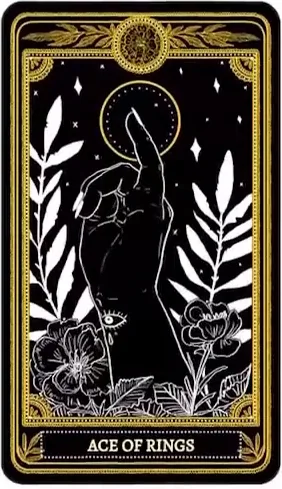
Four suits, four material languages
The deck uses Wands, Cups, Swords, and Rings, with each suit developing its own rhythm and symbolic texture.
Who will love this deck?
It is a strong match for readers drawn to high-contrast graphic art, cultural specificity, anatomy, botanicals, ancestor work, and honest conversations about change. Collectors who value a cohesive artist-created world will also find plenty to study.
Skip it if you need every numbered minor to contain a detailed scene, prefer bright multicolor decks, or want imagery that stays emotionally neutral. Marigold Tarot is memorable because it does not disappear behind the reading.
What Orica likes most
I like how quickly the deck establishes visual rules. Black creates depth; gold marks attention; anatomy grounds spiritual questions in lived reality. Those choices make a spread feel coherent even before individual cards are interpreted.
I also appreciate that the deck’s beauty never erases mortality. It can make difficult subjects feel worthy of care without pretending they are easy.
Card study
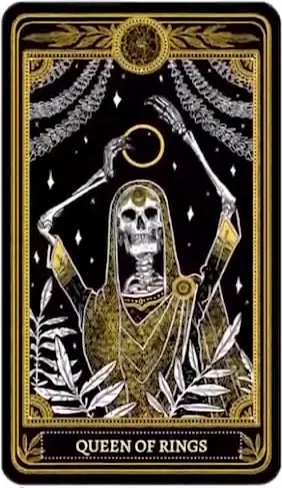
Queen of Rings: tending what must endure
The Queen of Rings represents grounded care, resourcefulness, and the ability to make stability feel alive rather than restrictive. Her wealth is not only possession; it is skill, continuity, nourishment, and stewardship.
In shadow, she can overfunction, measure love through labor, or protect security so tightly that growth stops. Ask what deserves sustained care—and what responsibility can be shared.
What to know before buying
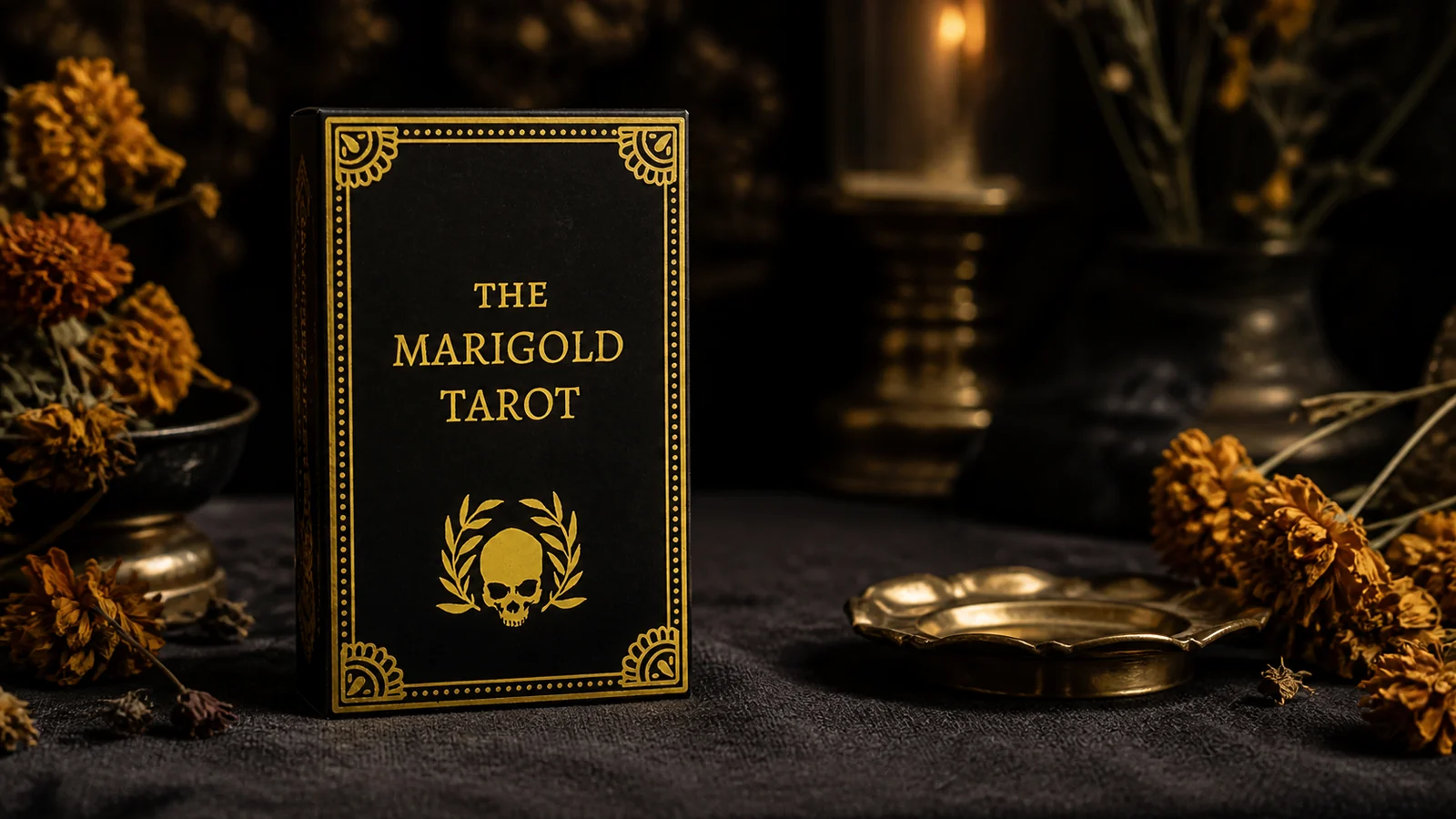
The Classic fourth-print edition contains 78 cards and a matte-black pocket guidebook. The cards are standard tarot size, printed on 310gsm German black-core linen-finish stock, and use metallic gold ink rather than foil. The box is a two-piece foil-stamped nested design.
The numbered minors are pip cards; Major Arcana and court cards are fully illustrated. A separate hardcover symbolism guide is available from the publisher, and a gilded-edge edition may also be offered separately.
Four-card moment
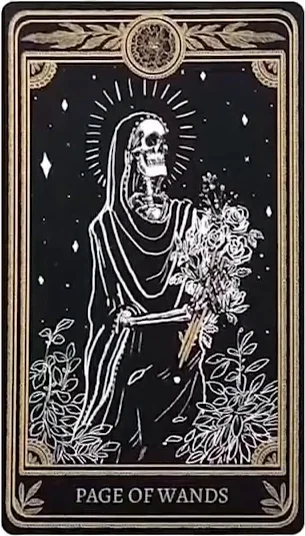
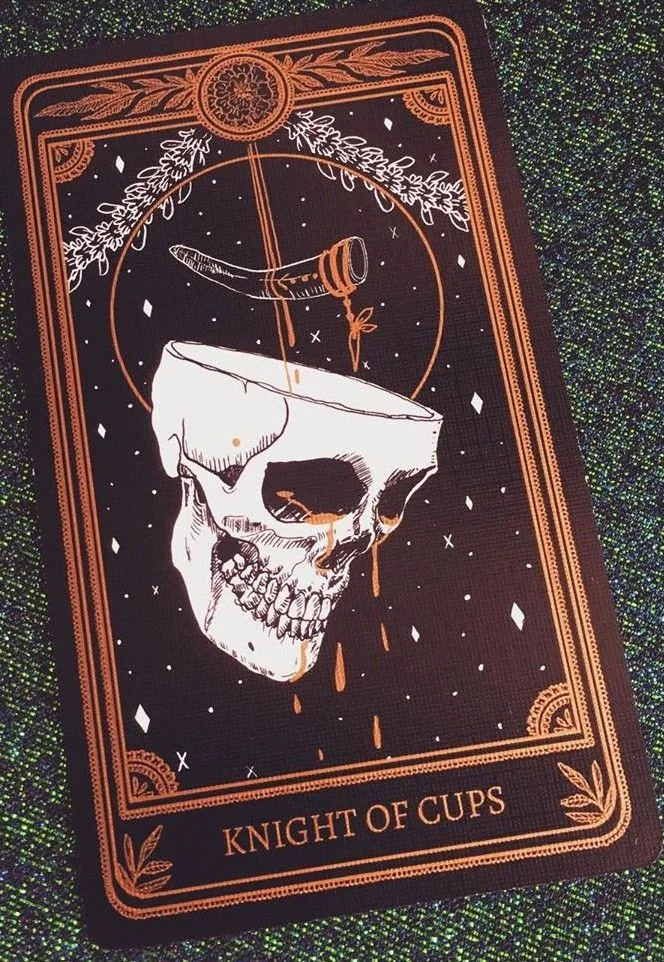
The courts bring personality back into the elemental suits
These figures add posture, relationship, and human agency to the deck’s otherwise spare pip structure.

Orica’s golden rule for reading with The Marigold Tarot
Ask what the image is honoring. A bone, flower, vessel, blade, animal, or repeated mark is rarely decorative here. Identify what has been placed at the center of attention, then ask why that symbol needs witness in this reading.
Final Thoughts
The Marigold Tarot is a focused, artist-led deck with a strong symbolic backbone. Its black-and-gold world is immediately recognizable, but the deck has more to offer than a memorable palette: it creates thoughtful space for mortality, memory, culture, and transformation.
If you want tarot art that feels ceremonial, specific, and unafraid of difficult subjects, this deck deserves a close look.
The Marigold Tarot FAQ
Is The Marigold Tarot beginner-friendly?
Yes for beginners willing to learn pip-card structure and use the guidebook. Readers who need fully illustrated scenes on every minor may prefer it as a second deck.
Who created The Marigold Tarot?
The deck was illustrated by Amrit Brar and is published by 13th Press.
What imagery does the deck use?
Its visual language draws from anatomy, nature, mortality, gold, and distinctly Punjabi imagery.
Are the Minor Arcana fully illustrated?
The numbered Minor Arcana are pip cards. The Major Arcana and court cards are fully illustrated.
What comes with the Classic edition?
The current Classic listing includes 78 cards and a matte-black pocket guidebook in a two-piece foil-stamped nested box.
Where can I buy The Marigold Tarot?
The Classic edition is available from the publisher, 13th Press. Check the product listing for current price, edition, and delivery options.