
Lotus Tarot Cards Revealed
Explore Angie’s verified photographic-collage deck in its official order, from the Major Arcana through Wands, Cups, Swords, and Pentacles. Choose a group or open any card for the accessible carousel.
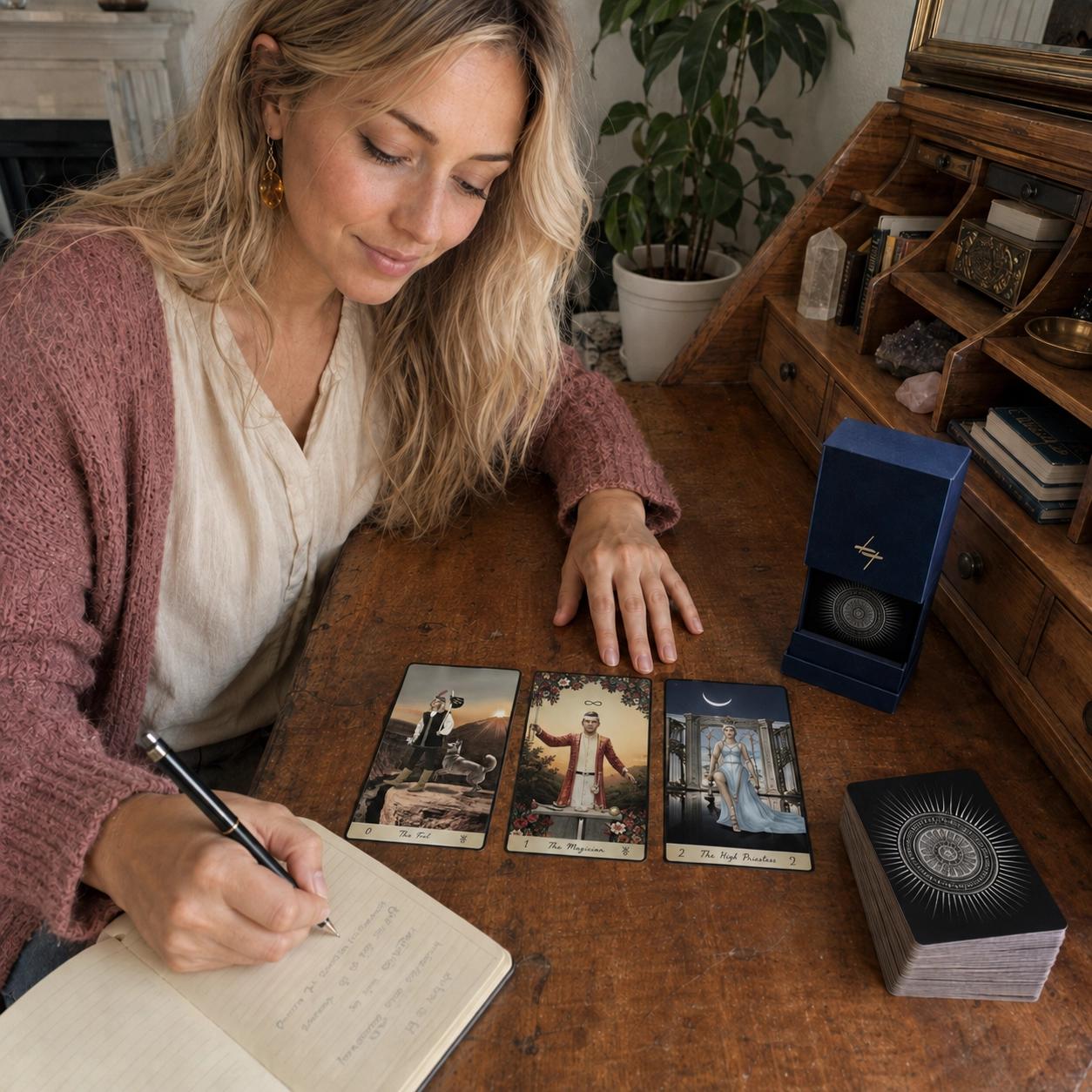
Aurica’s Quick Take
Angie’s Lotus Tarot is a 78-card Rider-Waite-Smith-based deck built from collaged live photography. Familiar archetypes step into real landscapes while astrological signs, ritual objects, animals, and elemental details keep its theatrical visual language connected to traditional tarot.
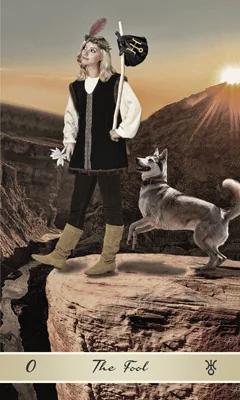
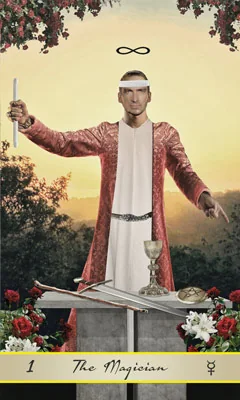
It is especially strong for intuitive work, journaling, relationship readings, and readers who respond to posture, expression, costume, and setting. I notice the human gesture first, then let the Rider-Waite-Smith structure steady that impression: the Fool loosens fear around a beginning, the Magician gathers intention, and the High Priestess invites a quieter truth.
I love how these figures feel as though they have stepped into the room, giving even the strangest collage an emotional cue to follow. Lotus Tarot makes intuition feel less like a test and more like a living conversation—and every sincere question gives you another bright petal to unfold.
The Lotus Tarot Review: photographic tarot with a living, esoteric pulse
What makes the Lotus Tarot distinctive?
The official Lotus Tarot source describes the deck as based on the Rider-Waite-Smith tradition, with Major Arcana influence from Paul Foster Case and the BOTA school. Angie completed all 78 cards using collaged live photography. That foundation explains why the cards remain recognizable while looking unlike a standard Pamela Colman Smith redraw.
The photographic figures give the deck an immediate human presence. Landscapes are frequently expanded into symbolic stages: moons loom above castles, clouds open onto impossible cliffs, and ordinary objects become ritual emblems. The collages do not aim for naturalistic realism; they use realism as raw material for dream imagery.
Deck-specific card study
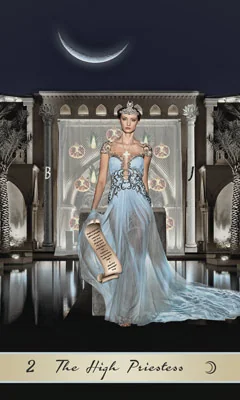
The High Priestess: knowledge held behind the threshold
A woman in a pale blue gown stands before a dark, reflective entrance beneath a crescent moon. Architectural columns frame her like a temple guardian, while the scroll in her hand makes hidden teaching visible without fully explaining it.
The card preserves the High Priestess’s classic themes—silence, intuition, guarded knowledge—but the live figure makes the boundary feel personal. She is not simply a symbol on a throne; she appears to be deciding whether the viewer is ready to enter.
How the Lotus Tarot reads in practice
The deck reads most fluently when classic structure and direct observation are used together. Start with the familiar card meaning, then ask what the photographic scene changes. Is the figure approaching, withholding, grieving, performing, or watching? Does the landscape feel safe, exposed, fertile, or impossible?
Because the imagery is emotionally explicit, the deck can be direct in relationship and self-reflection readings. It is less neutral than a plain teaching deck: the weather, color, and body language often push a reading toward a particular mood. That subjectivity is part of its voice, not a flaw to be ignored.
Card moment: the archetypal stage
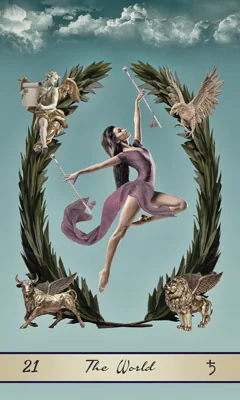
Four majors show how photography becomes myth
These cards keep recognizable tarot roles while turning landscapes and human figures into cinematic scenes.
Is Lotus Tarot good for beginners?
It can be. The deck follows the familiar 78-card structure and retains enough Rider-Waite-Smith symbolism to support study. The people and settings also make many emotional situations easy to describe before a beginner knows every keyword.
The caution is that photographic collage can add visual information that is not part of a traditional teaching image. Beginners should compare difficult cards with a Rider-Waite-Smith reference and treat the extra scenery as interpretation rather than universal doctrine.
Easy, medium, and hard readings with Lotus Tarot
Easy: “What deserves my attention today?” Name the first person, object, or direction of movement you notice, then connect it to one practical action.
Medium: “What pattern is shaping this relationship?” Compare distance, eye contact, openness, and protection across the spread.
Hard: “What truth am I making more dramatic—or less dramatic—than it is?” The deck’s theatrical scenes are useful for separating a real warning from an emotional projection.
Deck-specific card study
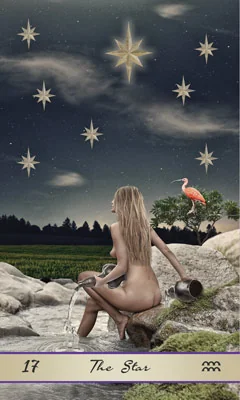
The Star: hope after exposure
A seated figure pours water beside a rocky pool under eight bright stars. The landscape is open and quiet, with a bird adding a small point of life and attention. The scene feels vulnerable without feeling endangered.
The photographic body makes the card’s openness literal. Hope here is not a slogan; it is the willingness to be seen after the disruption of The Tower. The calm horizon and repeated stars return scale and order to the reading.
Art style and personality
Lotus Tarot combines photographed models, natural scenery, architecture, animals, and digitally assembled esoteric symbols. Some compositions are serene and balanced; others deliberately feel surreal. The visual seams are part of the deck’s identity, giving it the quality of a personal dream journal or theatrical set.
Its palette changes card by card rather than enforcing one color wash across the whole deck. That makes each scene memorable, though it also means the deck feels more like a sequence of individual visions than one continuous illustrated world.
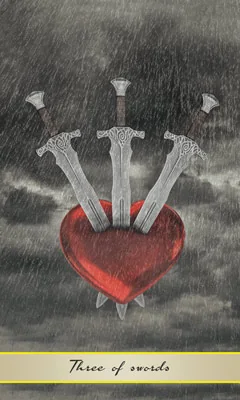
Card moment: intimacy, uncertainty, and repair
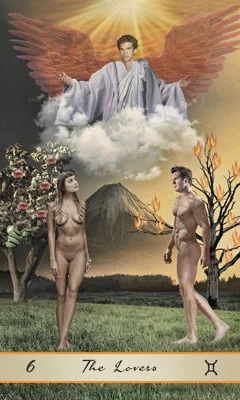
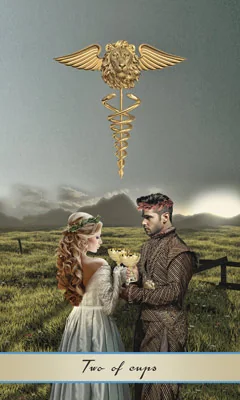
Relationships are shown through distance and atmosphere
These four cards move from attraction and mutual exchange into ambiguity, hurt, and renewed openness.
Who will connect with this deck?
- Rider-Waite-Smith readers who want a photographic reinterpretation.
- Intuitive readers who notice faces, gestures, costumes, and landscapes.
- Journalers and creative readers who enjoy dreamlike visual prompts.
- Collectors interested in an independently created esoteric deck.
- Readers who want cards that feel human, dramatic, and emotionally legible.
It may be less suitable for readers who prefer minimalist art, strict historical reproduction, pip-only minors, or an emotionally neutral study deck.
What Aurica likes most
The strongest feature is the tension between familiarity and surprise. You can usually recognize the card immediately, but the photographed person or altered environment gives you another question to ask. That keeps an experienced reader from reciting meanings on autopilot.
The complete minor arcana matters too. The deck does not rely on the Major Arcana alone for its identity; everyday cards also receive full scenes, so practical readings retain the same visual richness.
Deck-specific card study
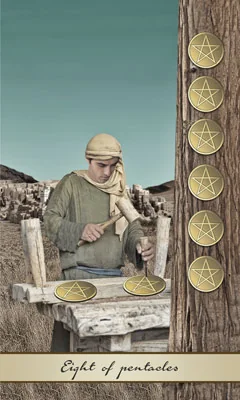
Eight of Pentacles: the quiet dignity of repetition
A seated craftsperson works at a rough bench while completed pentacles rise vertically beside him. The bright sky and plain setting keep attention on the hands, tools, and sequence of finished work.
The image makes progress visible without turning it into spectacle. Skill develops one object at a time. In a reading, this card favors practice, correction, and patience over waiting for inspiration to feel perfect.
Buying guidance and official availability
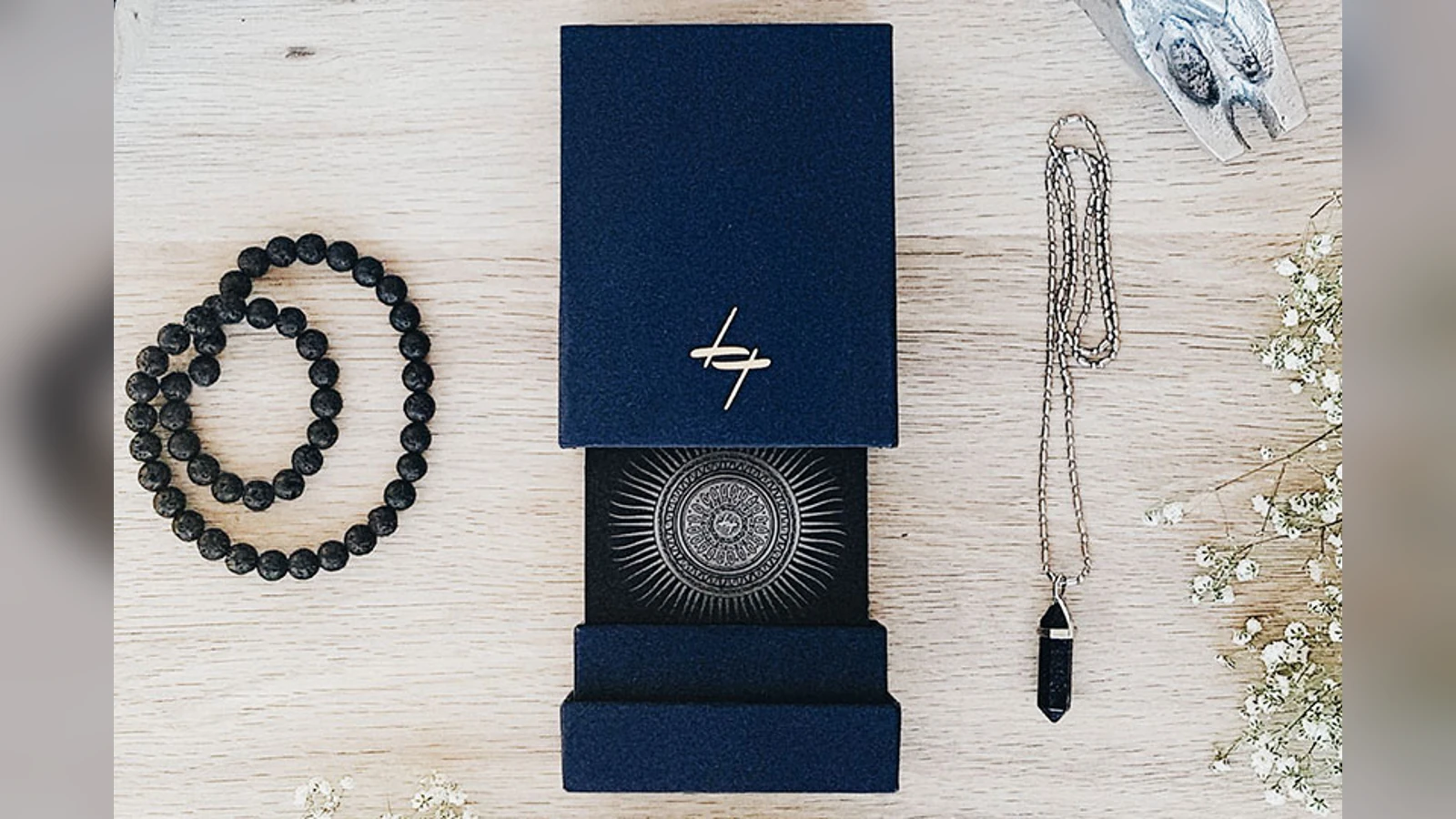
The official product page describes the Lotus Tarot Signature Deck as a limited first edition of 1,000 copies, printed by the Expert Playing Card Company on casino-grade card stock with a silky linen finish and a rigid magnetic-close box. The official page currently lists the signature deck as sold out.
Because availability can change, check the official page rather than assuming a marketplace listing is authorized or from the same edition. The 78-card gallery above is also useful for confirming that a second-hand listing shows Angie’s photographic-collage deck rather than another deck with “Lotus” in its title.
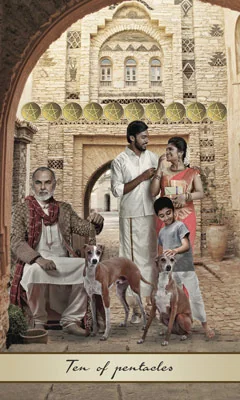
Card moment: from spark to mastery
The deck makes effort feel tangible
In these cards, beginnings, practice, endurance, and shared legacy unfold through concrete human scenes.

Aurica’s golden rule for reading with Lotus Tarot
Let the photograph speak, but make the tarot structure answer. Your first emotional reaction is valuable, yet every dramatic detail does not automatically become a prediction. Ground the scene in the card’s number, suit, elemental role, and position in the spread before deciding what the added imagery means.
Final Thoughts
Lotus Tarot succeeds because it is neither a conventional Rider-Waite-Smith clone nor an art project that abandons tarot structure. Its live-photo collages make the archetypes feel embodied, while the traditional framework keeps readings usable.
If you enjoy modern, emotionally expressive decks, compare it with The Light Seers Tarot, Touchstone Tarot, and Tarot of Dreams.
Lotus Tarot FAQ
Who created the Lotus Tarot deck?
The deck was created by Angie, the resident graphic designer identified by the official Lotus Tarot site. She assembled all 78 cards from collaged live-photography imagery.
Is Lotus Tarot based on Rider-Waite-Smith?
Yes. The official source describes it as Rider-Waite-Smith-based, with influence on the Major Arcana from Paul Foster Case and the BOTA school of tarot.
Does the deck contain all 78 cards?
Yes. The official source states that Angie completed all 78 cards, and the gallery on this page presents all 22 Major Arcana and all 56 Minor Arcana in canonical order.
Is Lotus Tarot good for beginners?
It can be, especially for visual learners. Its structure is familiar, but beginners should use a Rider-Waite-Smith reference when a photographic collage adds symbolism they do not recognize.
Can I buy the Lotus Tarot deck?
The official product page currently lists the limited Lotus Tarot Signature Deck as sold out. Check that page for any future availability or creator announcements.
What readings suit Lotus Tarot best?
It is particularly effective for intuitive readings, relationships, journaling, creative questions, and self-reflection because the figures, gestures, and landscapes provide strong emotional cues.


