Dreams of Gaia Tarot Card Gallery
Browse the verified card fronts currently available in the deck’s official Life, Earth, Air, Fire, and Water order. Choose a group, then open any card for a larger carousel view.
Major Arcana
Earth
Air
Fire
Water
A note from Aurica
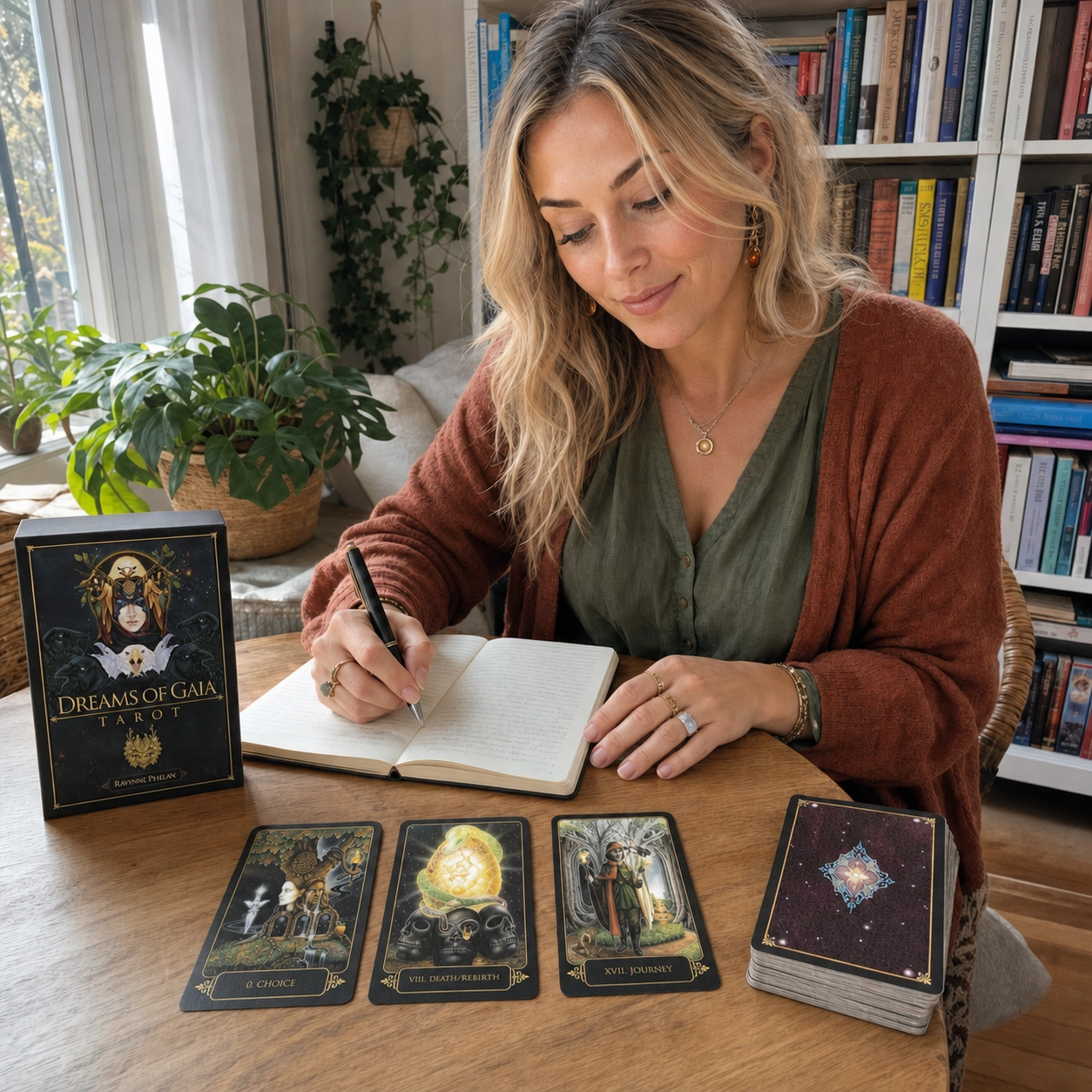
Dreams of Gaia Tarot feels like stepping beneath an ancient tree where every path remembers who has walked it. Ravynne Phelan’s figures carry whole inner worlds in their faces: tenderness beside ferocity, wonder beside grief, and the steady hush of someone becoming more fully themselves. I love that the deck asks for attention before it offers an answer.
When I read with it, I begin with the feeling that catches in my chest, then look for the choice hidden inside that feeling. The Choice card makes that process beautifully visible: different selves stand beneath branching possibilities while bright and shadowed ways open ahead. Beside Death/Rebirth, the message may be to release an identity that has grown too small; beside Journey, it can be permission to move without knowing every turn.
This is not a deck I would hurry. Its 81-card structure and elemental families create their own language, so I let colour, gaze, animals, landscape, and the repeated gold-framed symbols speak before I reach for familiar tarot habits. In a practical reading, I ask which figure mirrors the querent, where the image feels most alive, and what one honest action would honour that energy today.
I would choose Dreams of Gaia for questions about identity, creative direction, relationships that are changing shape, and the brave work of beginning again. Even its darker cards hold a pulse of life beneath them, like a seed waiting in deep soil. These cards remind you that transformation is not a test you must pass perfectly—it is a living path, and every sincere step helps your own light find its way forward.
Dreams of Gaia Tarot review: a mythic deck for inner evolution
Dreams of Gaia Tarot is not trying to be a tidy Rider-Waite-Smith clone with prettier fantasy art. Ravynne Phelan built it as a spiritual map: part oracle, part tarot, part elemental mirror. The result is a deck that feels less like a fortune-telling shortcut and more like a conversation with the self you are becoming.
The art is rich, saturated, and unmistakably mythic. Faces look directly at you. Animals, guardians, elemental symbols, and luminous bodies create the feeling of a private initiation. Some cards are gentle, some are confronting, and many sit in that useful middle place where beauty and discomfort are both allowed to speak.
Dreams of Gaia is officially an 81-card deck: 25 Major Arcana and 56 elemental Minor Arcana. This TarotFans gallery contains 78 verified same-deck card fronts. The three unrecovered cards are X. Wisdom, 7 of Fire, and 9 of Water, so the gallery stays transparent rather than quietly pretending the deck has only 78 cards.
Card study
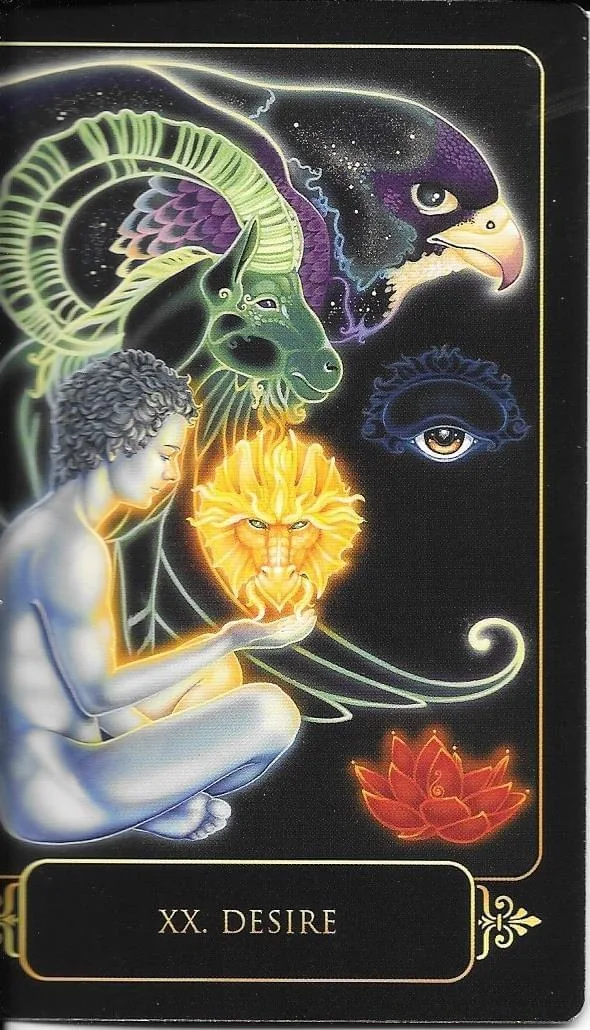
Desire: hold the flame without letting it hold you
The seated figure cups a bright, personified flame as if meeting desire face to face. Above it, a horned ram and an eagle bring instinct, appetite, ambition, and far-reaching vision into the same field. The watchful eye suggests awareness, while the red lotus near the base turns raw longing into something that can be contemplated and refined.
In a reading, XX. Desire does not automatically say “indulge” or “deny.” It asks you to identify the force inside the wanting. Is it creative fire, attraction, hunger for recognition, an old wound seeking relief, or a truer life asking to be chosen? The figure’s calm posture is the key: desire becomes useful spiritual information when it is held consciously rather than obeyed blindly.
How Dreams of Gaia Tarot reads in practice
This is a reflective deck first. It can answer practical questions, but it often pulls the reading deeper than the surface problem. A career spread becomes a question about vocation, courage, and self-trust. A love spread becomes a question about vulnerability, sovereignty, and old patterns. A spiritual spread becomes less abstract because the art keeps bringing the message back into body, choice, and lived emotion.
The guidebook is not optional here in the way it can be with traditional decks. The card titles, elemental courts, and life-stage archetypes have their own language. Once that language starts to click, the deck becomes surprisingly direct. It does not only say what is happening; it asks who you are becoming because of what is happening.
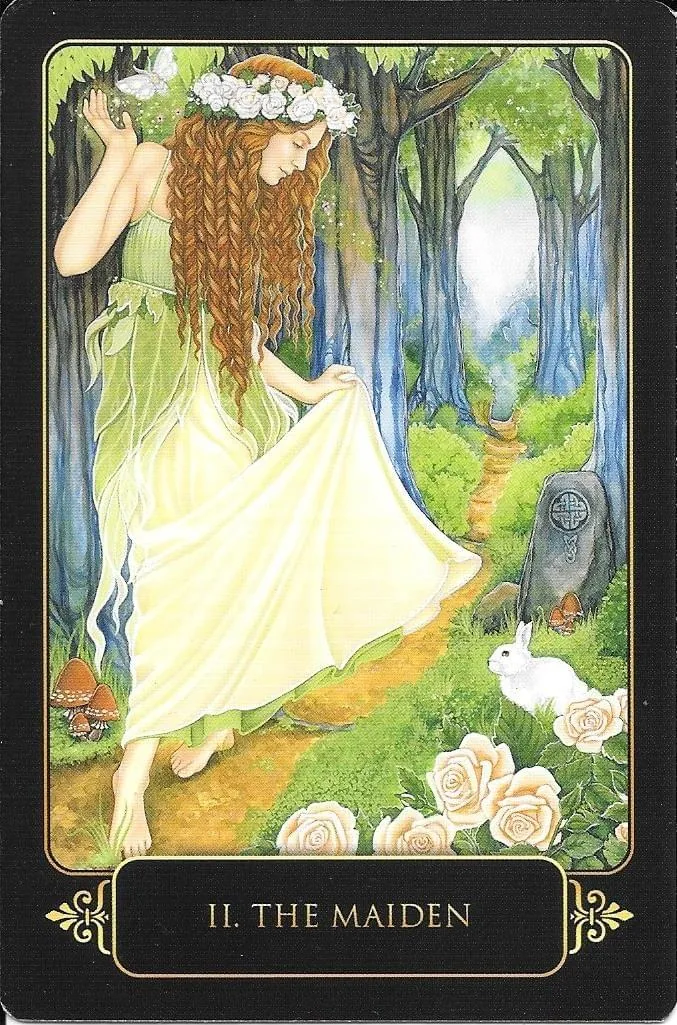
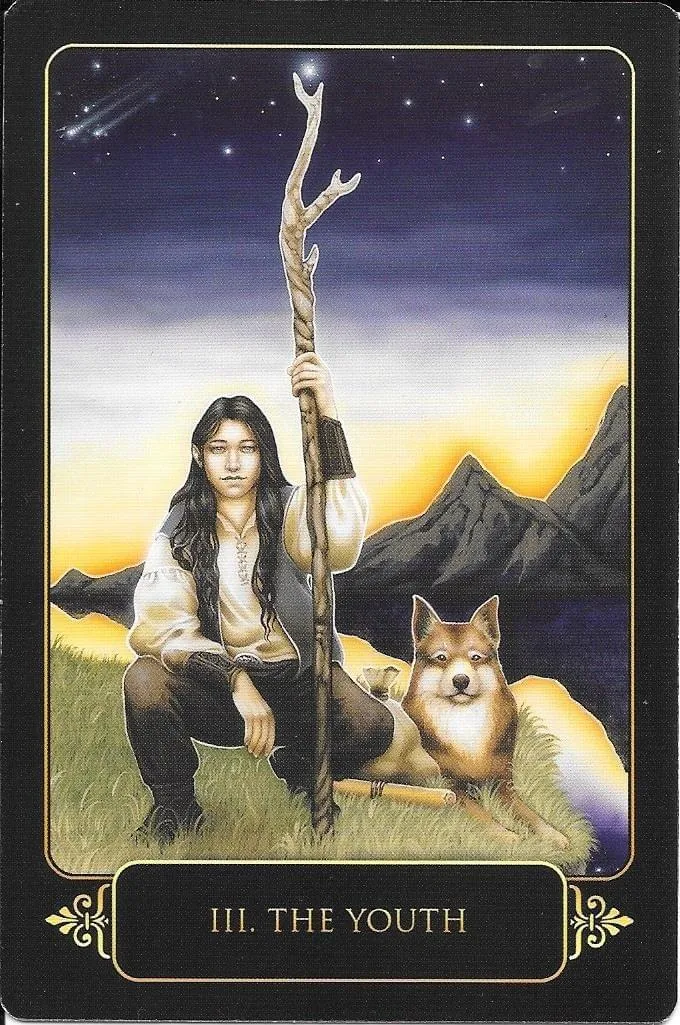
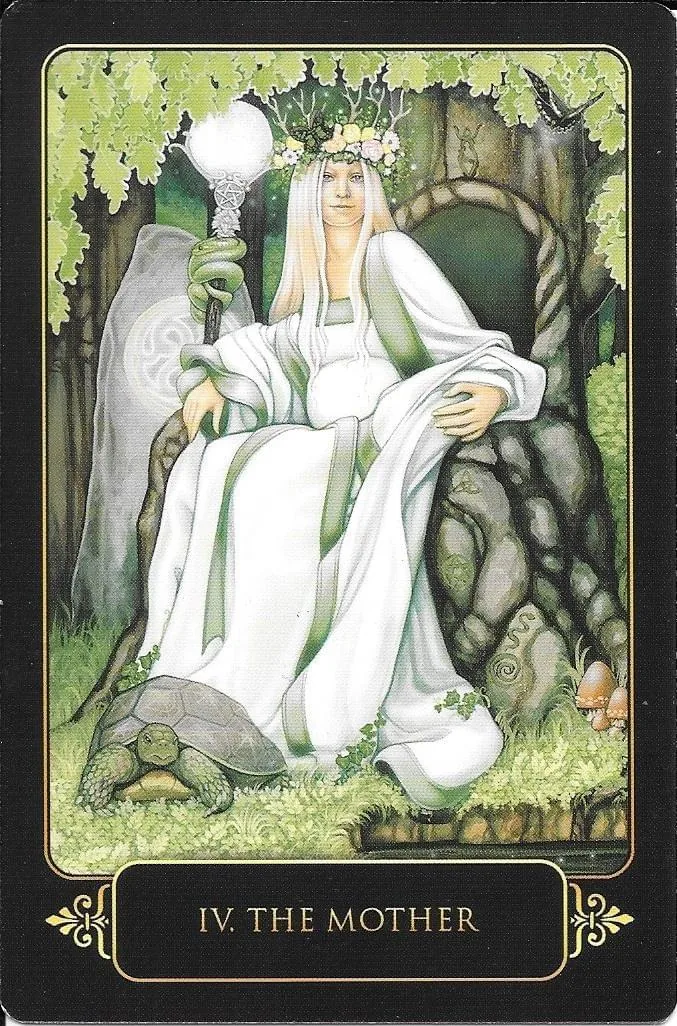
Life-stage mirrors
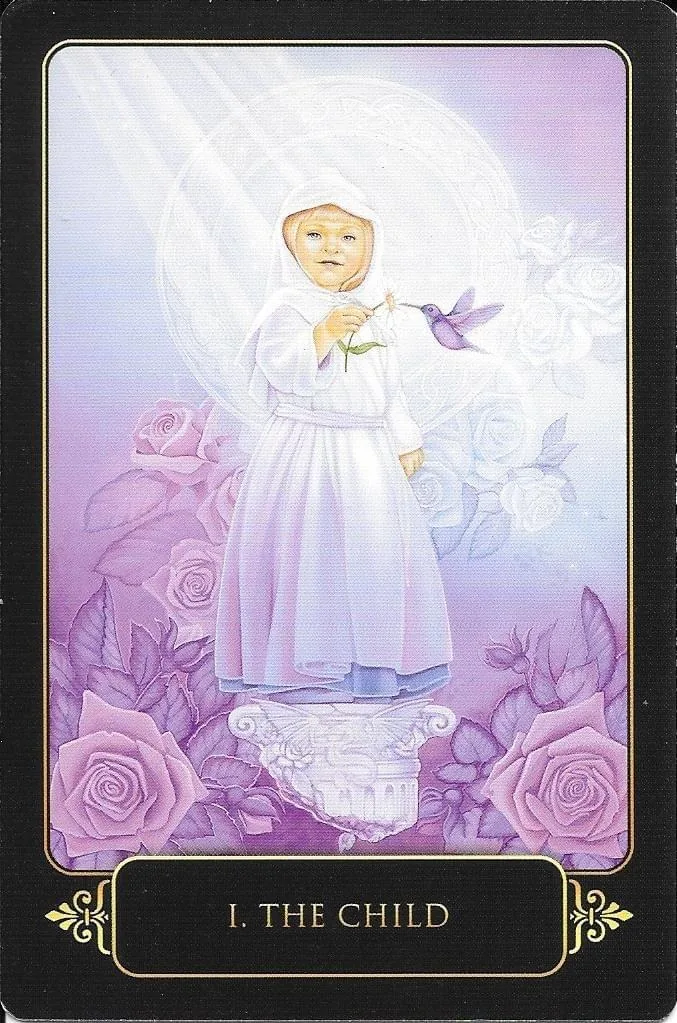
These cards show why Dreams of Gaia feels like a growth deck. The archetypes are not costumes; they are developmental mirrors for innocence, emergence, courage, and care.
Artwork, symbolism, and gallery notes
The visual language is bold: black borders, glowing color, fantasy portraiture, animals, masks, elemental signs, and repeated gazes that feel almost ritual. Earth cards lean green and embodied. Fire burns gold and orange. Water moves through blue emotion and lunar feeling. Air is pale, sharp, mental, and sometimes severe.
Because the gallery now uses the visible card titles, it works as a cleaner visual card index as well as a mood check. You can see the deck’s atmosphere, palette, figure work, and symbolic density before deciding whether the system is one you want to learn.
Card study
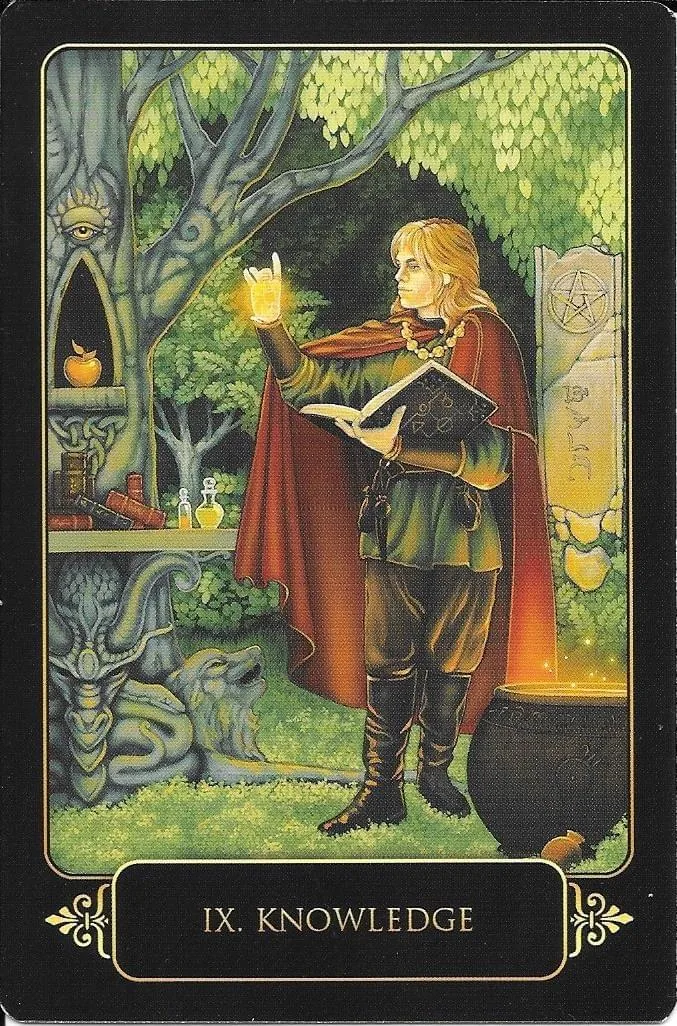
Knowledge: study becomes power only when it is practised
A forest scholar holds an open book while raising a hand lit from within. Around the figure are bottles, stacked books, a cauldron, a carved watching eye, an animal companion, and a standing stone marked with a pentagram. The image joins formal learning with observation, experiment, intuition, nature, and embodied craft.
IX. Knowledge can mark research, training, mentorship, or the moment scattered facts finally form a usable pattern. Yet the glowing hand matters as much as the book: knowing is not complete until it changes what you can do. In a reading, ask whether knowledge is being applied with care—or collected as a way to postpone action and responsibility.
Reading with the elemental courts
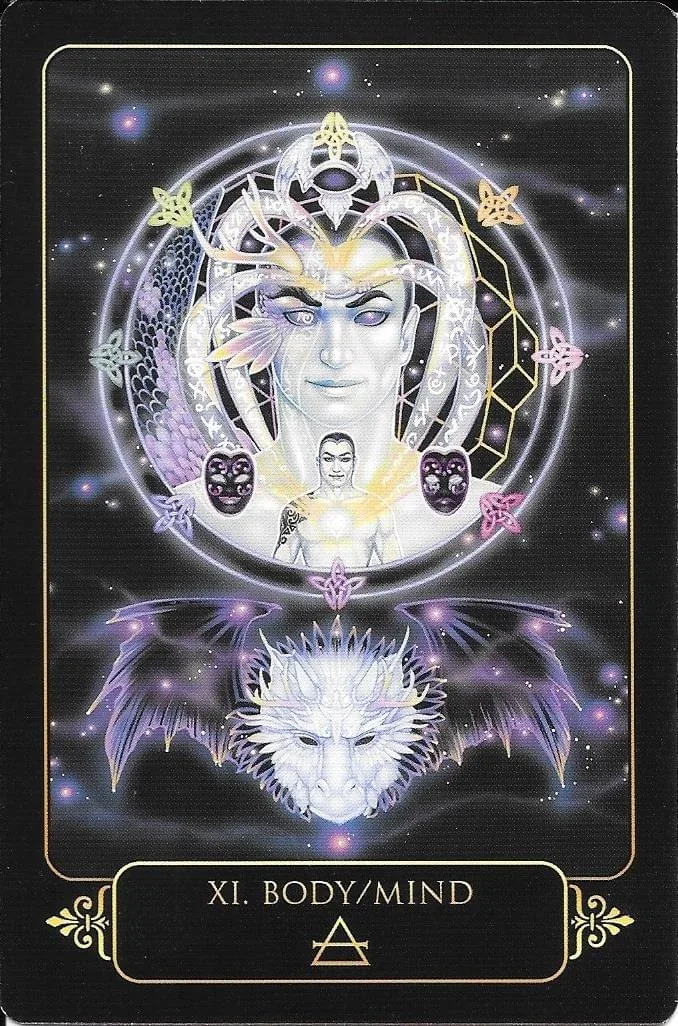
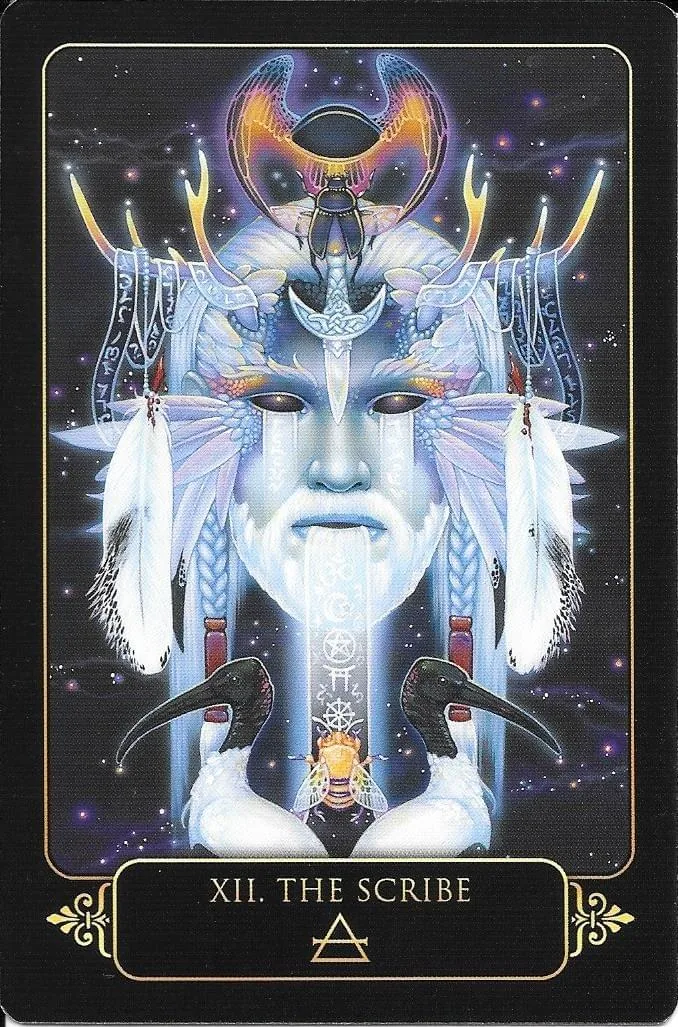
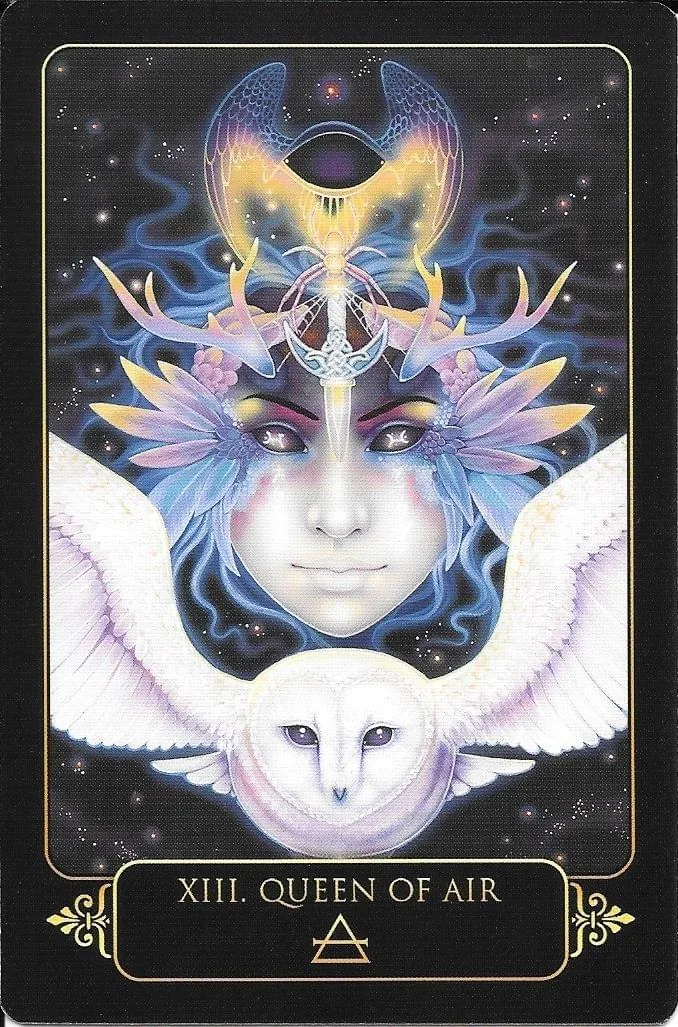
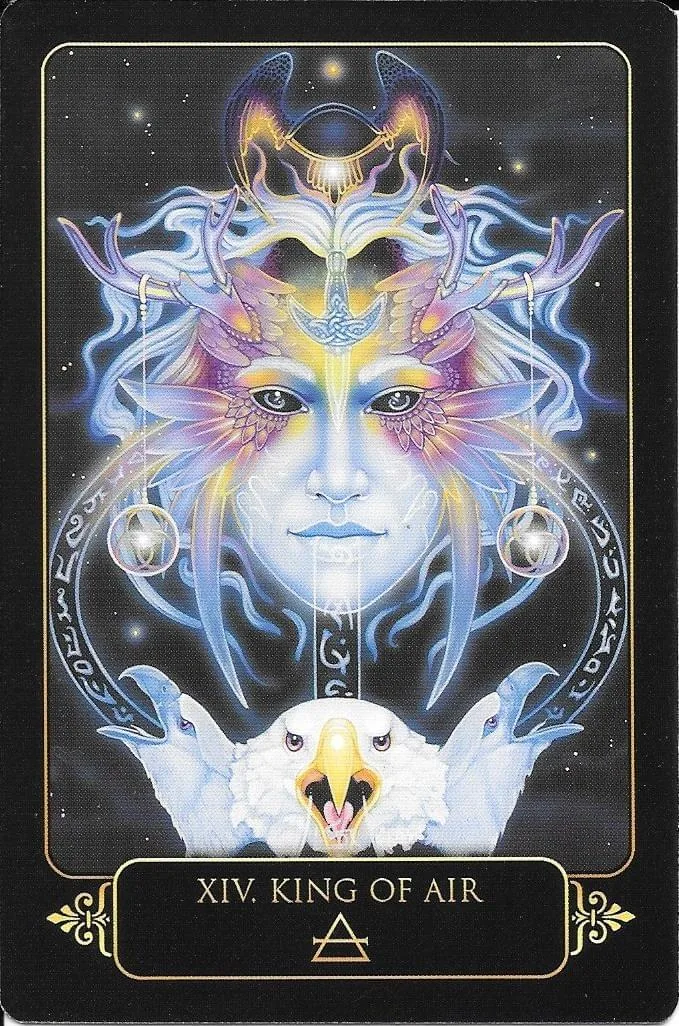
Dreams of Gaia replaces the familiar Page-and-Knight ladder with elemental roles such as Body/Mind, The Scribe, The Counsellor, and The Hero. Reading them works best when you notice the function each figure performs: balancing, recording, advising, or acting. The four-card group below shows how Air turns thought into language, discernment, and accountable choice.
Mind, language, and clarity
Body/Mind asks for inner alignment; The Scribe records and communicates what is true; the Queen tests perception with mature discernment; and the King turns clear thought into a principled decision. Together they show Air moving from self-awareness to language, judgement, and leadership.
Strengths and watch-outs
The strongest thing about Dreams of Gaia Tarot is how committed it is to transformation. The deck does not feel decorative. Even the beautiful cards have an edge of invitation: look closer, be honest, take responsibility, choose from the adult self rather than the frightened self.
The watch-out is that this same intensity can be too much if you want a quick daily pull with a familiar structure. Readers who prefer Marseille minimalism, strict RWS correspondences, or fast yes/no readings may find it too involved. Readers who like journaling, shadow work, spiritual psychology, and nontraditional systems are much more likely to connect with it.
Who will love this deck
I would recommend Dreams of Gaia Tarot to readers who want a deck with a strong inner-world voice. It is especially good for self-inquiry, spiritual direction, identity work, grief, renewal, creative blocks, and readings where the real question is not “What will happen?” but “What part of me is being asked to mature?”
It can work for beginners, but only the right beginners: people who enjoy guidebooks, archetypes, and reflective practice. Intermediate and advanced readers may get the most from it because they can appreciate how deliberately it bends tarot structure into its own system without becoming vague.
Card study
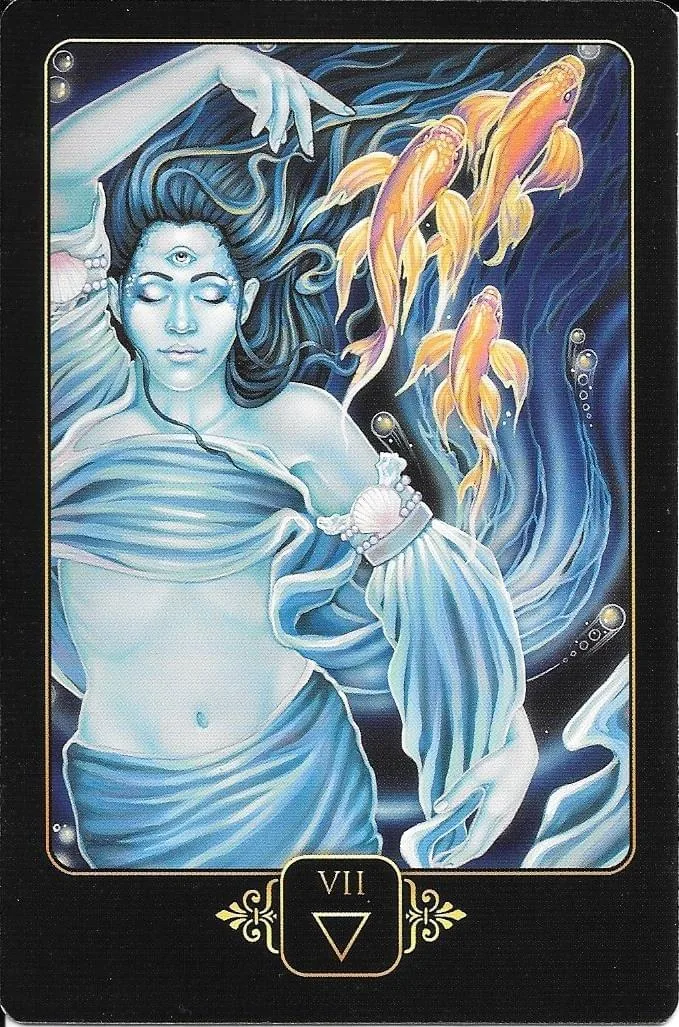
7 of Water: let feeling move instead of forcing an answer
A serene figure floats with eyes closed while a third eye remains open. Pale hands emerge through the current, shells and beads suggest treasures carried from emotional depths, and golden fish rise through the dark blue water. The contrast between the still face and moving water makes receptivity—not passivity—the centre of the image.
In a reading, the 7 of Water can ask you to stop arguing with a feeling long enough to hear it. Dreams, intuition, memory, and several emotional possibilities may be moving at once. The card favours patient witnessing, creative imagination, and allowing the truest response to rise naturally rather than choosing the most dramatic option.
Let the element become a conversation
After sitting with one card closely, I widen the spread and listen for how the elemental voices answer one another. A repeated gaze, colour, or gesture can show whether emotion needs room, grounding, language, or courage. That pause keeps the next four images connected to the reading instead of turning them into decoration.
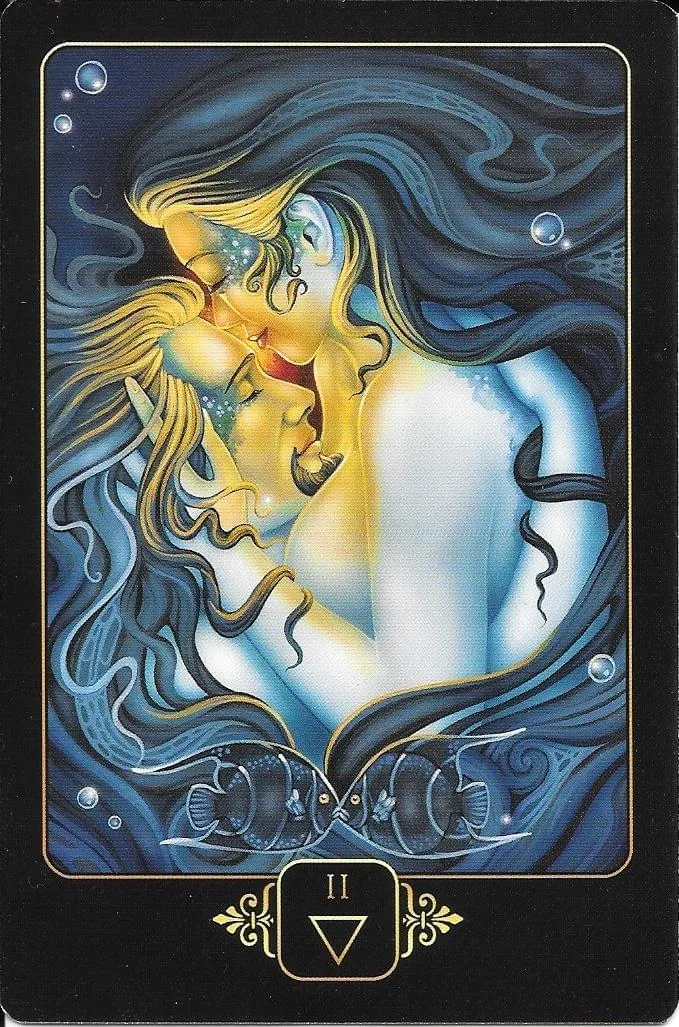
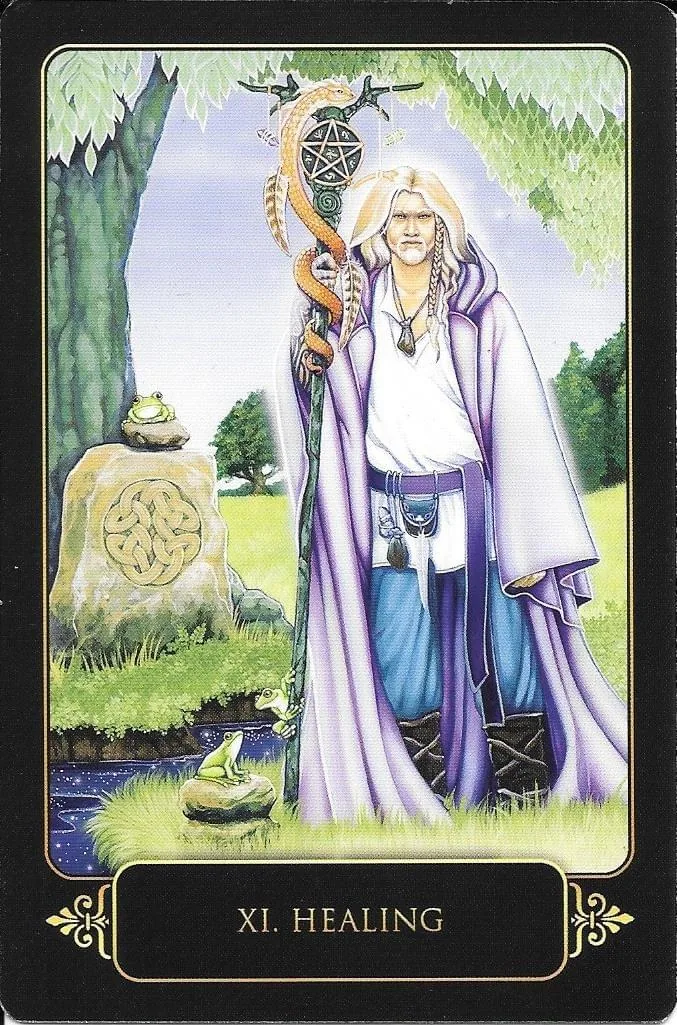
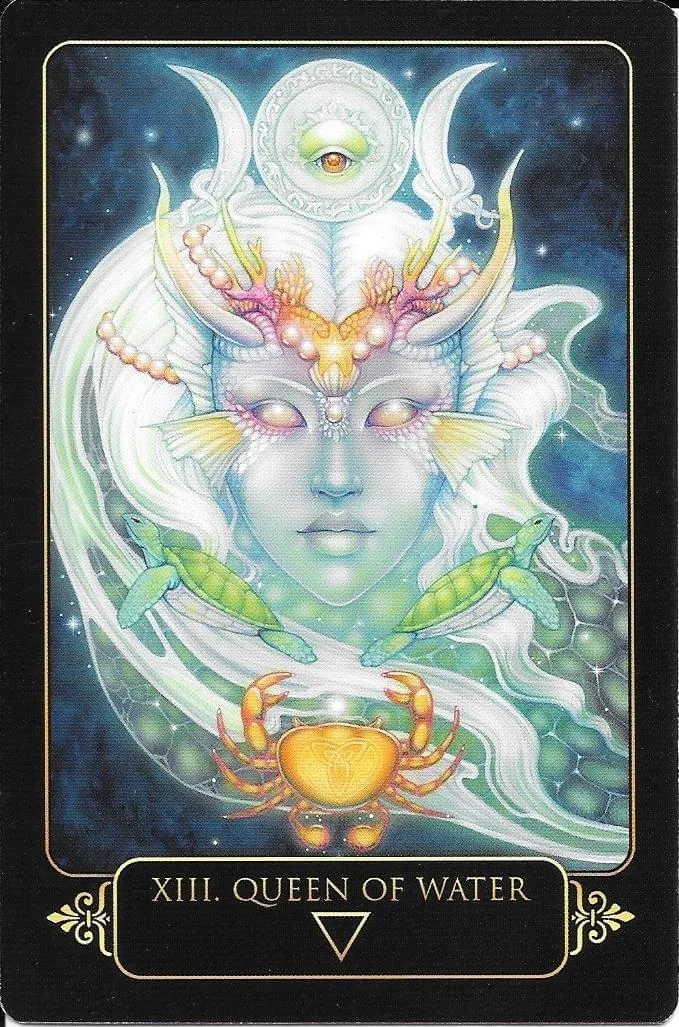
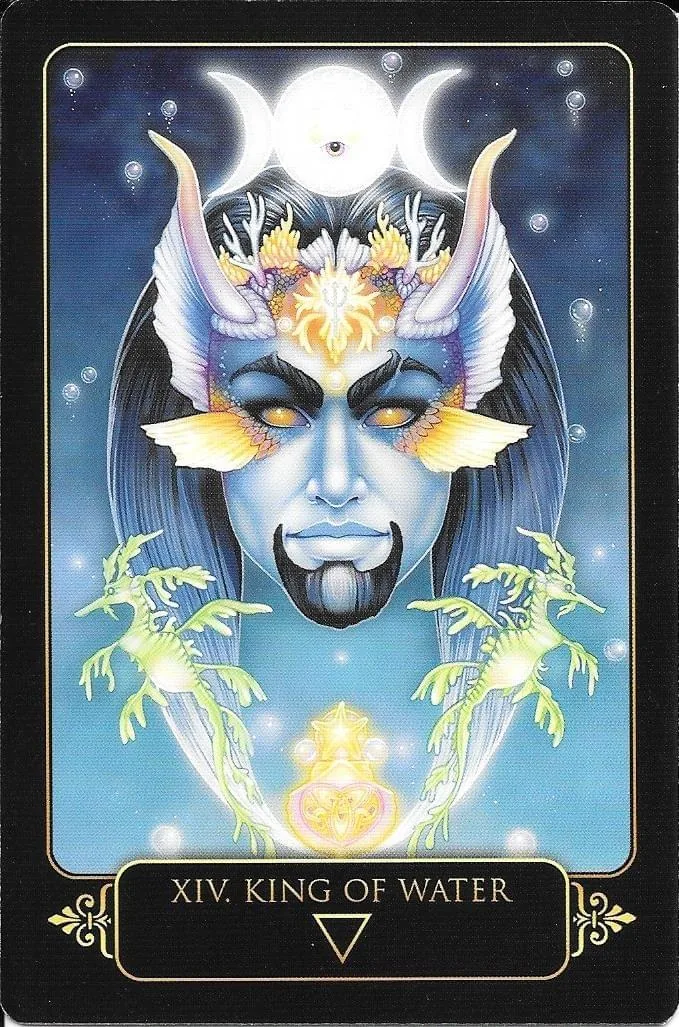
Water, healing, and emotional maturity
The Queen and King hold emotional authority without suppressing sensitivity. The 2 of Water brings relationship and exchange, while Healing asks for active restoration. As a four-pack, they move from connection through repair toward the steadiness required to hold complex feelings well.
Final Thoughts
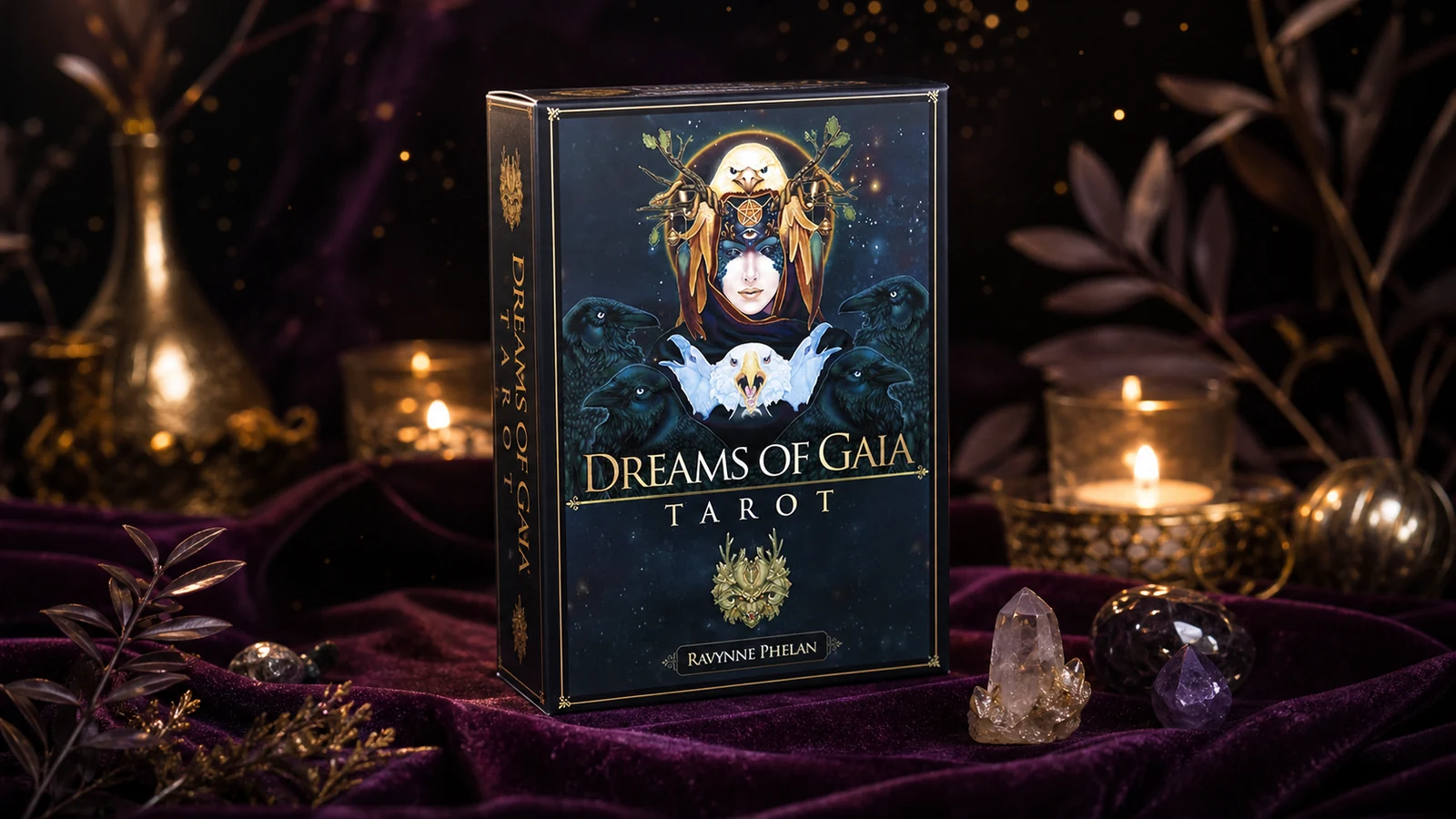
Dreams of Gaia Tarot is luminous, intense, and genuinely its own thing. I would not buy it expecting a standard tarot deck with fantasy art pasted over the usual card list. I would buy it if I wanted a deep, visually dramatic system for reflection, growth, elemental work, and readings that ask better questions than the obvious one.
The upgraded page now gives the deck the presentation it needs: YouTube walkthrough first, a clean TarotFans native gallery, Light Seers-style reading sections, four-card visual moments, a product CTA, and a compact FAQ. My verdict is simple: if the images call to you and you are willing to learn the guidebook’s language, Dreams of Gaia Tarot can become a powerful companion deck.
Dreams of Gaia Tarot FAQ
Is Dreams of Gaia Tarot a normal Rider-Waite-Smith deck?
No. Dreams of Gaia Tarot uses its own 81-card mythic and elemental structure rather than repainting the standard sequence. That independence is part of its appeal, but it also means the guidebook matters more than usual.
How many cards are in Dreams of Gaia Tarot?
The official full-size Dreams of Gaia Tarot contains 81 cards: 25 Major Arcana and 56 Minor Arcana across Earth, Air, Fire, and Water.
How many card images are in this TarotFans gallery?
This review shows 78 verified card fronts in official deck order. The three cards not recovered from the available source set are X. Wisdom, 7 of Fire, and 9 of Water.
Who created Dreams of Gaia Tarot?
Dreams of Gaia Tarot was created and illustrated by Ravynne Phelan and published by Blue Angel. Its imagery and guidebook centre growth, choice, elemental experience, and personal evolution.
Is Dreams of Gaia Tarot beginner-friendly?
It can suit a beginner who enjoys guidebooks, archetypes, and reflective practice. Readers wanting a quick keyword deck that mirrors traditional tarot card for card may find it more demanding.
Where can I buy Dreams of Gaia Tarot?
The buttons on this review lead to the direct Amazon product listing for the full-size deck and use the TarotFans affiliate tag. Check the listing photos, format, condition, and seller details before ordering.


