
Explore Tarot of the Mystic Spiral Cards
Browse the visually verified card fronts in the deck’s Major Arcana, Chalices, Pentacles, Swords, and Wands order. Choose a group to filter the continuous Gallery, or select a card for the full-size Lightbox.

Aurica’s Quick Take
I am drawn into this deck by the way one spiral opens into another. A wheel turns inside coloured cloth, a nautilus pours water like a patient promise, and old names, temples, creatures, stars and formulas sit together as though history has become a living reading table.
It asks me to look twice. First I notice the atmosphere—whether a figure is guarded, reaching, standing still, or being pulled by a larger pattern. Then I return to the card’s tarot role and the cards beside it. That little circle keeps intuition honest: wonder begins the reading, while visible detail gives it somewhere to land.
This is not the deck I would choose for instant keywords. It rewards a reader who enjoys symbolism, cultural references and images that keep unfolding after the first answer. Follow the detail that quietly turns your attention, and the Mystic Spiral can remind you that every thoughtful step already belongs to the path.
A spiral through science, myth and inner change
Tarot of the Mystic Spiral takes one ancient shape and follows it everywhere: through shells and storms, wheels and galaxies, architecture, number, ritual and the human urge to understand. Giovanni Pelosini’s concept gives the deck its intellectual thread, while Giuseppe Palumbo’s fully illustrated scenes make that thread visible in bodies, landscapes, creatures and objects.
The cards keep a familiar 78-card foundation, but they do not simply restage one visual tradition. Chalices, Pentacles, Swords and Wands move through cultural and historical references, and the courts use Knave rather than Page. I find it best to read each picture as a particular doorway into the card, not as a decorative footnote.
Artwork that rewards the second look
The dark navy border and turquoise knotwork hold the deck together, yet the inner scenes shift boldly from soft gardens to machines, temples, sea passages, figures from history and sudden fields of colour. That variety can feel busy at first. Stay with the card long enough for one relationship to emerge: figure and animal, body and structure, water and vessel, or stillness and movement.
A useful method is to describe the image before interpreting it. Name the three strongest visible details, notice which one carries the feeling, then compare that feeling with the card’s traditional function. The spiral here is not a shortcut to mystery; it is a way of returning with a little more understanding.

Card study
The Wheel — change held inside one turning form
A dark wheel fills the card, its hub marked by a black-and-white yin-yang. Four broad forms in green, yellow, blue and red fold around it, while a pale hand-like shape flashes through the upper field. The picture feels less like a fairground spin than a whole system turning through different states.
Upright, I read it as movement that cannot be understood from one colour alone: timing, consequence and opportunity are circling together. In shadow, the wheel can become passivity—waiting for fate to do all the work. Ask which part of the cycle is already changing, and where one deliberate choice can meet it.
How it reads in an actual spread
This deck reads like a conversation between pattern and choice. Repeated curves, circles, crossings and paths may show where a question is looping, widening or asking to be seen from another angle. Human gestures keep that symbolism close to ordinary life: who reaches, who waits, who guards, and who turns toward the opening?
In a three-card spread, begin with the card that contains the clearest movement. Let it show what is changing. Use the stillest card to identify what needs patience, then ask the final card for one action that can carry the insight into the day.
Four-card story
Four ways the path finds light
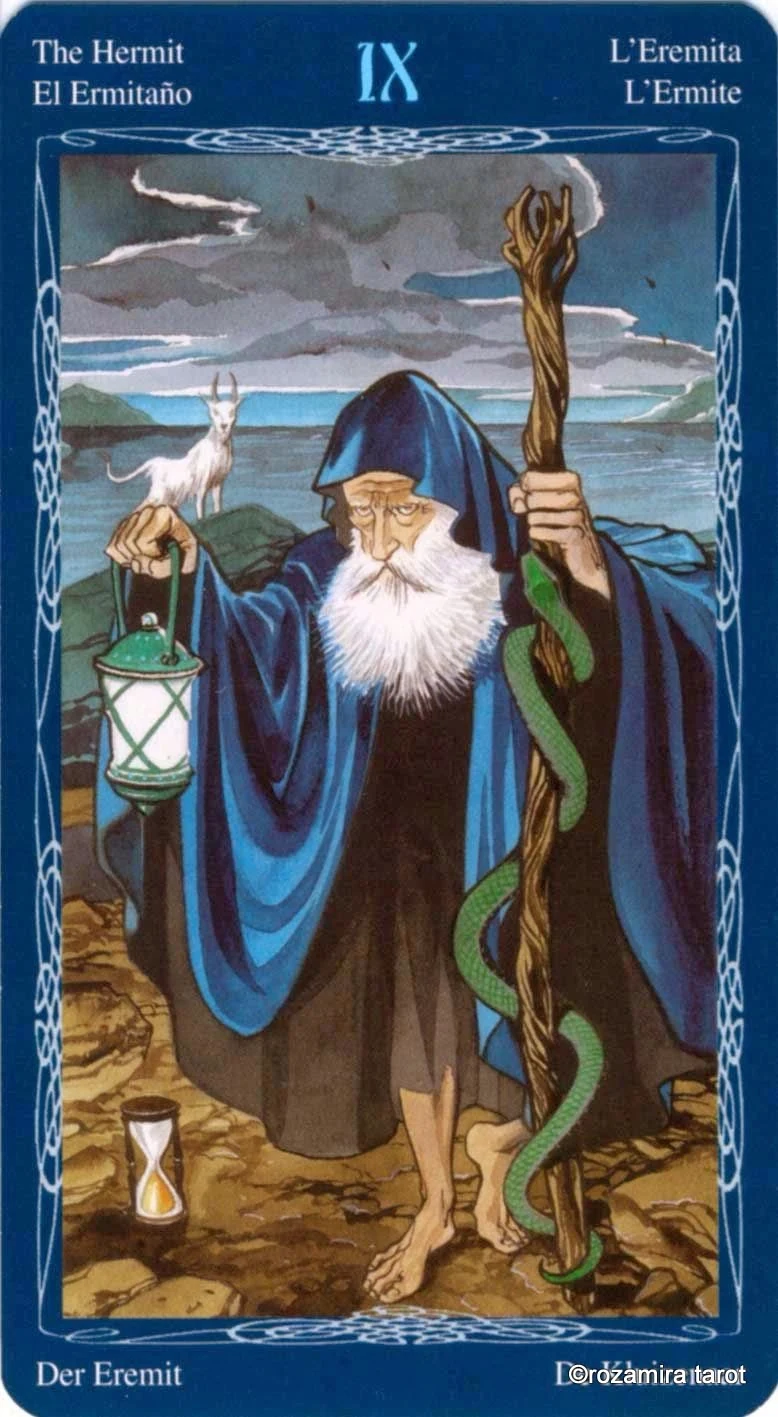
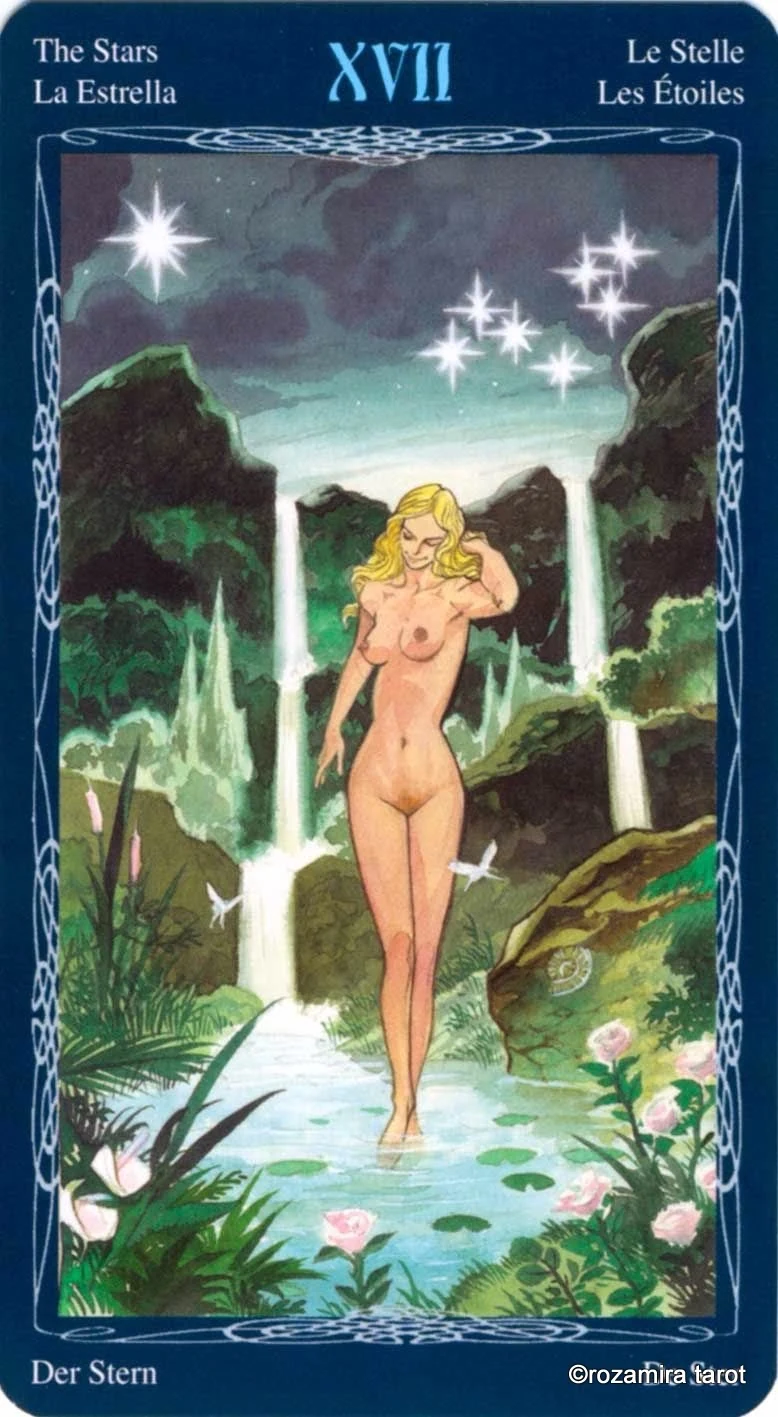
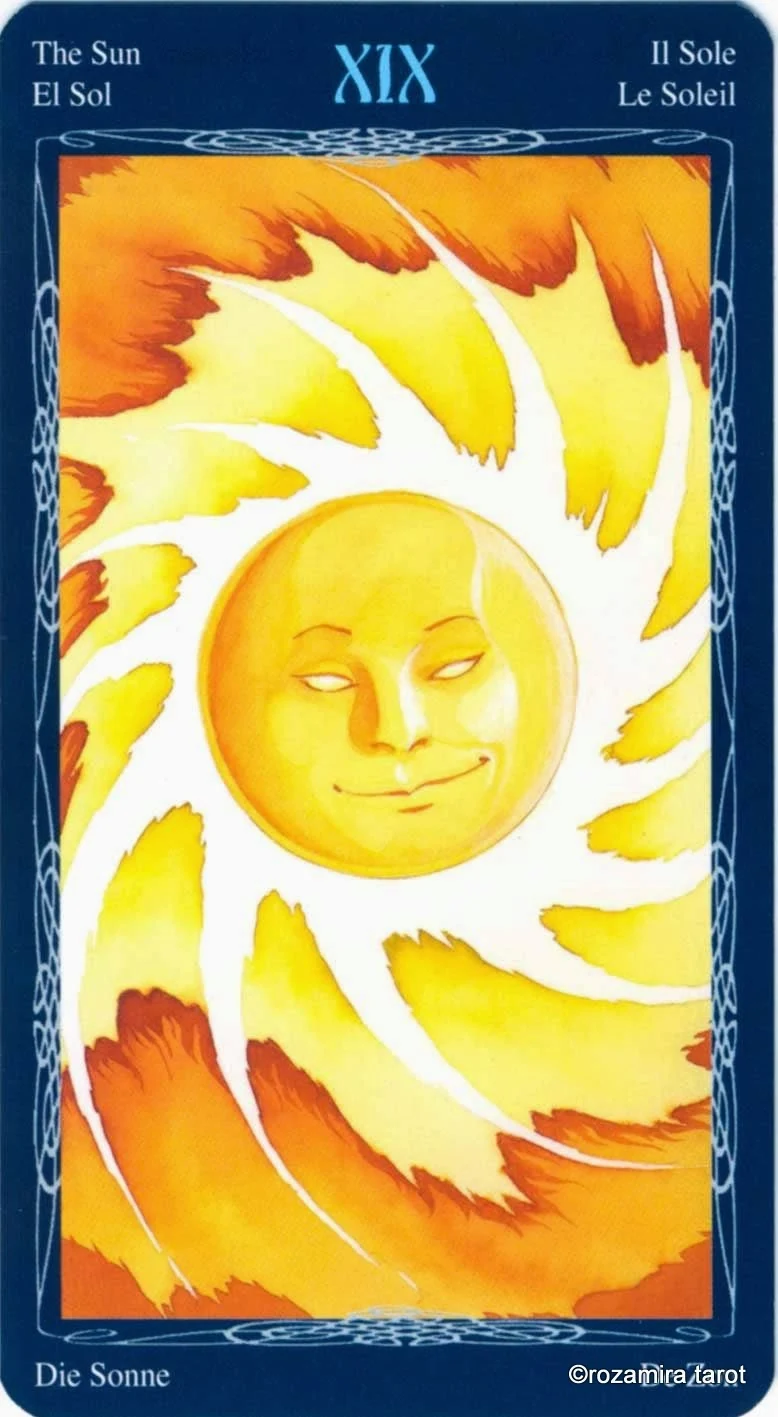
The Hermit carries a lantern beside a deer, staff, serpent and hourglass; The Hanged Man pauses upside down between two trees; The Stars places a woman among water, flowers, columns and bright points in the sky; and The Sun becomes a golden face inside white spiral rays. Together they move from searching, through surrender, into renewed orientation and warmth.

Beginner friendliness and useful prompts
A beginner can work with this deck if curiosity feels stronger than the need for instant certainty. The titles and suit structure offer a handrail, while the booklet helps explain references that may not be obvious from the art alone. Give yourself permission to learn the deck’s vocabulary gradually.
Easy reading
What pattern wants my attention today?
Medium reading
What keeps returning, and what is different this time?
Deep reading
Which belief is shaping the path before I make a choice?

Card study
Ace of Chalices — a nautilus that cannot keep its water
A pale nautilus shell rests on a rose-coloured column and releases a clear stream into open water. Small lotus flowers float below, while the ribbon reads SVRSVM CORDA—lift up your hearts. The spiral shell gives feeling a beautiful shape, yet the water refuses to remain contained.
In a reading, this Ace can be emotional renewal, affection, spiritual openness or the first honest movement of the heart. Its shadow appears when feeling is admired but not allowed to flow. Name what wants expression, then give it a real vessel: a conversation, a creative act, an apology, or simple care.
Reading emotion without losing the ground
The Chalices can be wonderfully spacious, but their symbols often ask for translation. A shell, stream, serpent or cosmic field may open an intuitive response before it explains itself. Let that response arrive, then ground it in the card number, the question and the neighbouring suit.
For love or family readings, look at exchange and containment: what is offered, what is withheld, and whether feeling has room to move. For creative work, ask what wants a vessel. An idea becomes useful when it can pour into a page, conversation, practice or decision.
Four-card story
When thought tightens—and when it clears
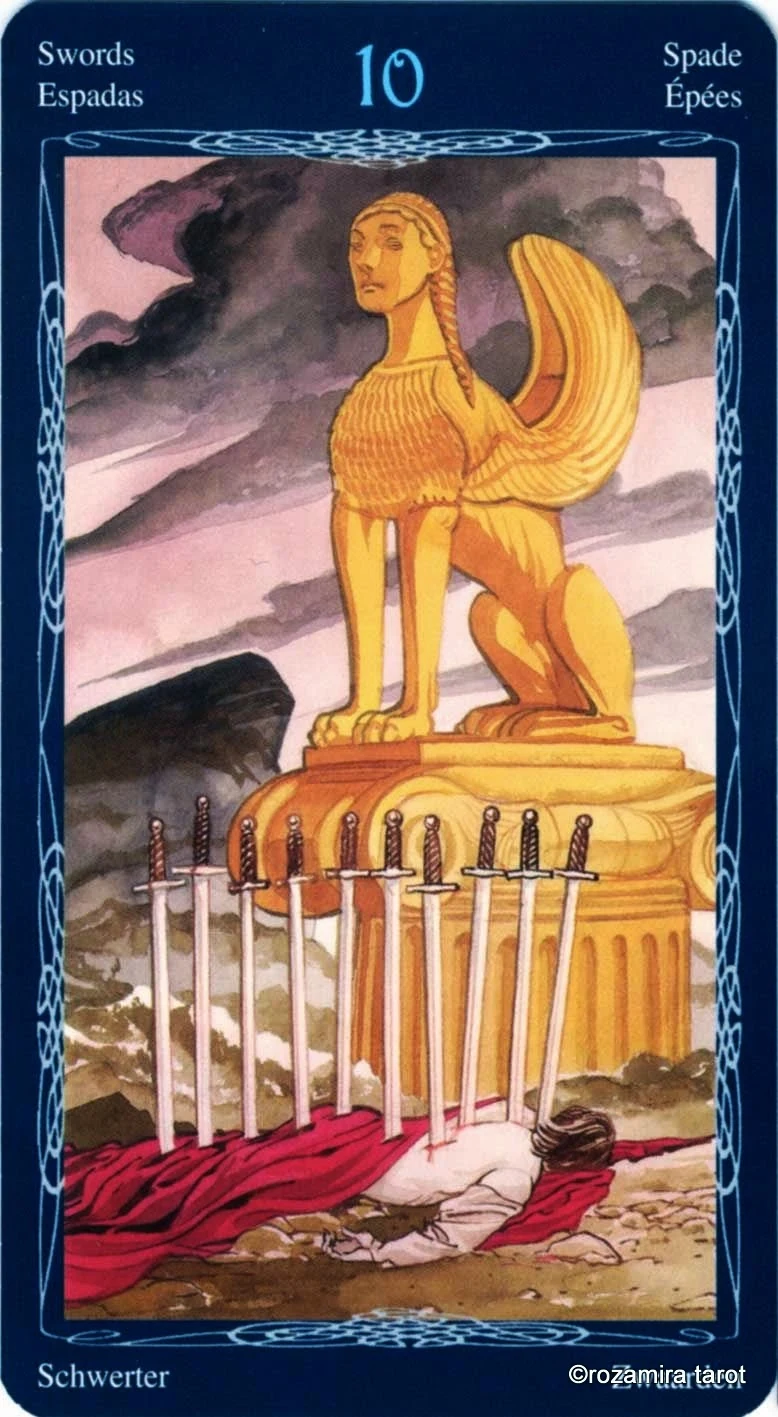
The Ace of Swords wraps a green serpent around a single blade beneath the ribbon MENS AGITAT MOLEM; Two of Swords crosses two weapons above leaping dolphins under a crescent moon; Eight of Swords binds a figure against a tall column; and Ten of Swords lays a body beneath ten upright blades and a golden sphinx. These four show thought as insight, stalemate, enclosure and final consequence.


Who will connect with this deck?
This deck may suit readers who love symbolic art, history, sacred geometry, mythology, science, philosophy and cards that invite research after the reading. It can be especially satisfying for journaling, study, personal-growth questions and anyone who enjoys tracing a motif across several cards.
You may prefer another deck if you want quiet minimalist scenes, close Rider–Waite–Smith visual echoes, or meanings that arrive before you have looked at the details. Browse several Minors and courts as well as the Majors; they reveal how richly the deck changes register.
Card study
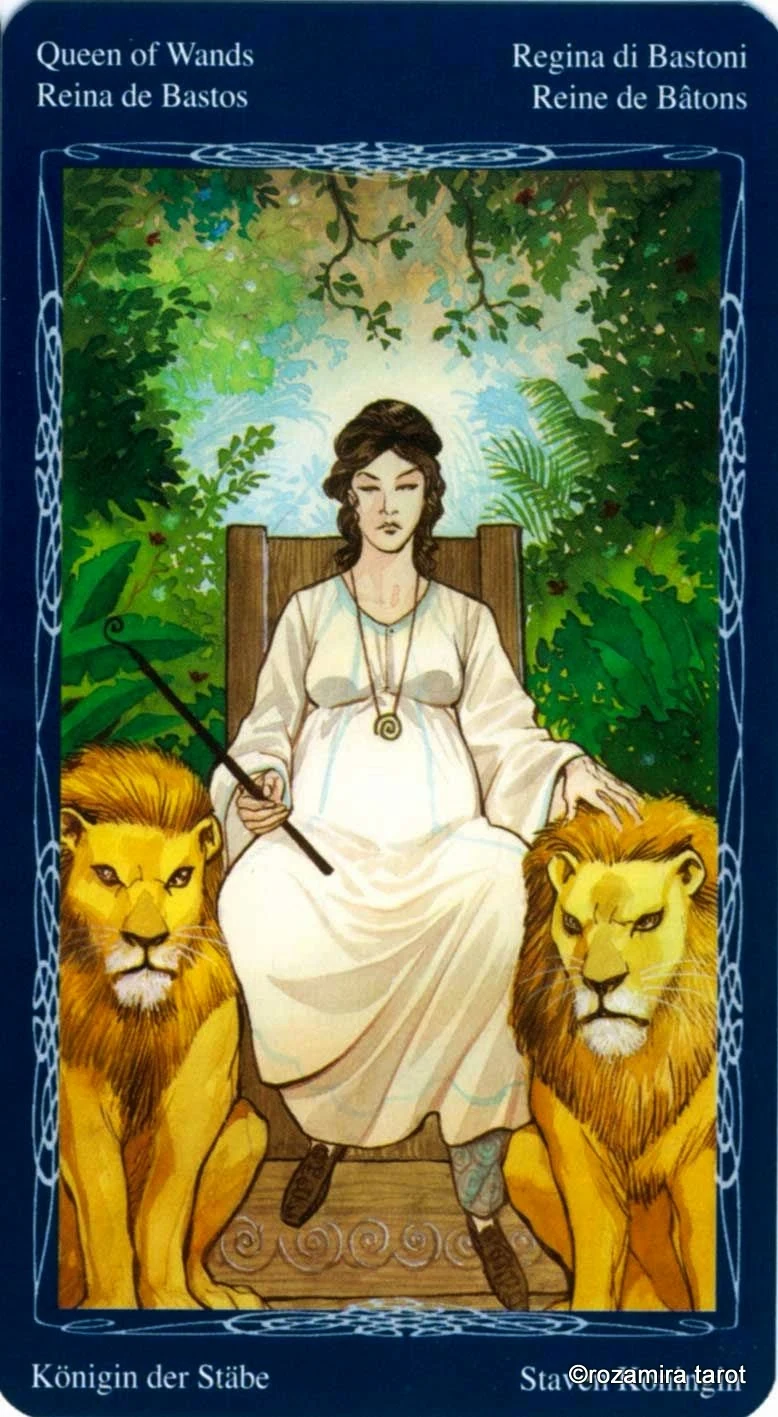
Queen of Wands — warm authority between two lions
A woman in white sits upright in a green garden, a slim wand resting in one hand. Two lions flank her chair, their golden faces turned outward while she remains still at the centre. Her white robe cools the scene; the animals carry its heat.
She reads as confidence that does not need to shout. Upright, she can show creative command, generous presence and courage held with grace. In shadow, composure may conceal the effort of keeping every lion calm. Ask where your warmth can lead without becoming a performance, and which boundary protects the fire you want to share.
Work, creativity and practical decisions
Pentacles often connect material questions with makers, thinkers, systems and structures, while Wands carry growth, movement and inventive fire. In a work spread, do not let an impressive reference become an abstract answer. Ask what the pictured person or object is actually doing, then translate that action into your situation.
For a project, one card can describe the pattern, one the available energy, and one the smallest useful experiment. That keeps a complex deck from producing a complex excuse. Insight should widen possibility, but it should also help your hands know what to do next.
Four-card story
Four makers inside the spiral
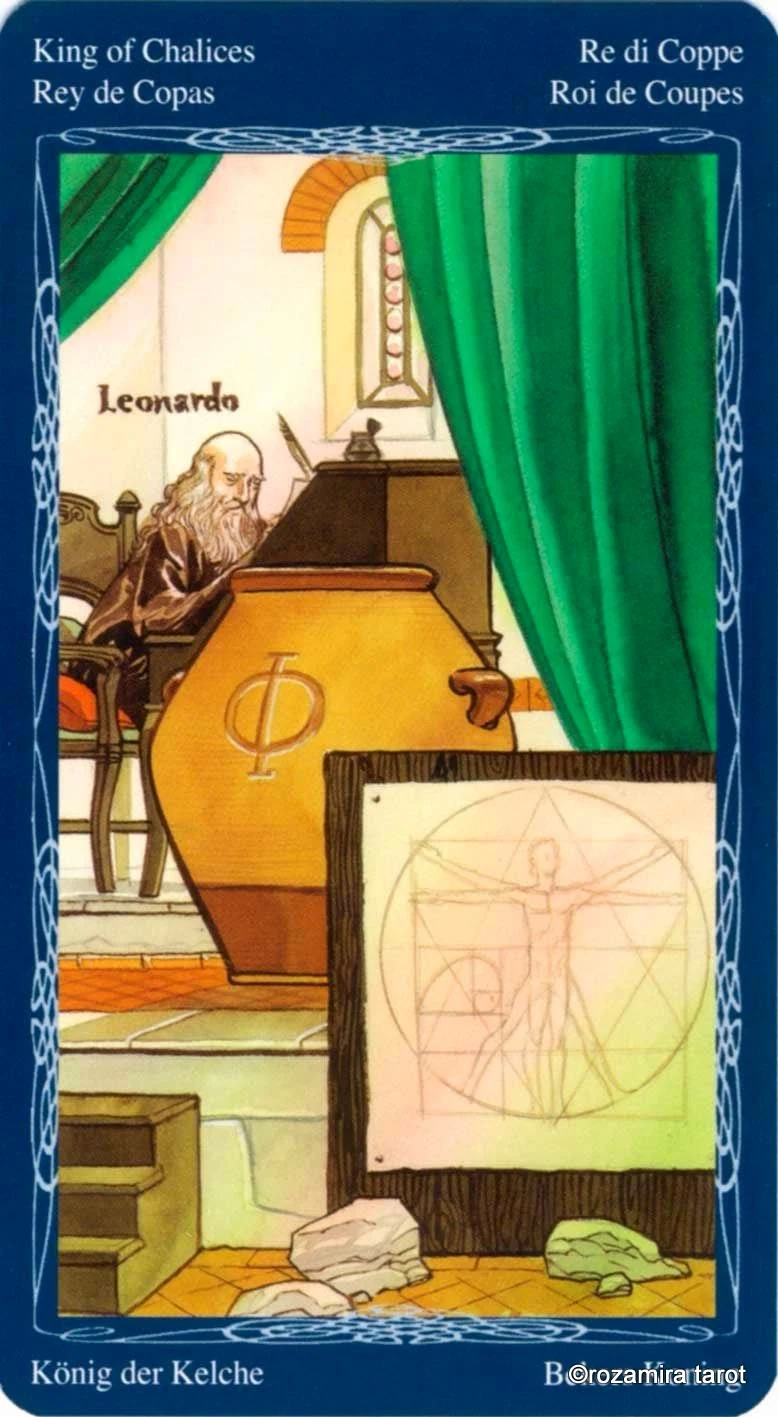
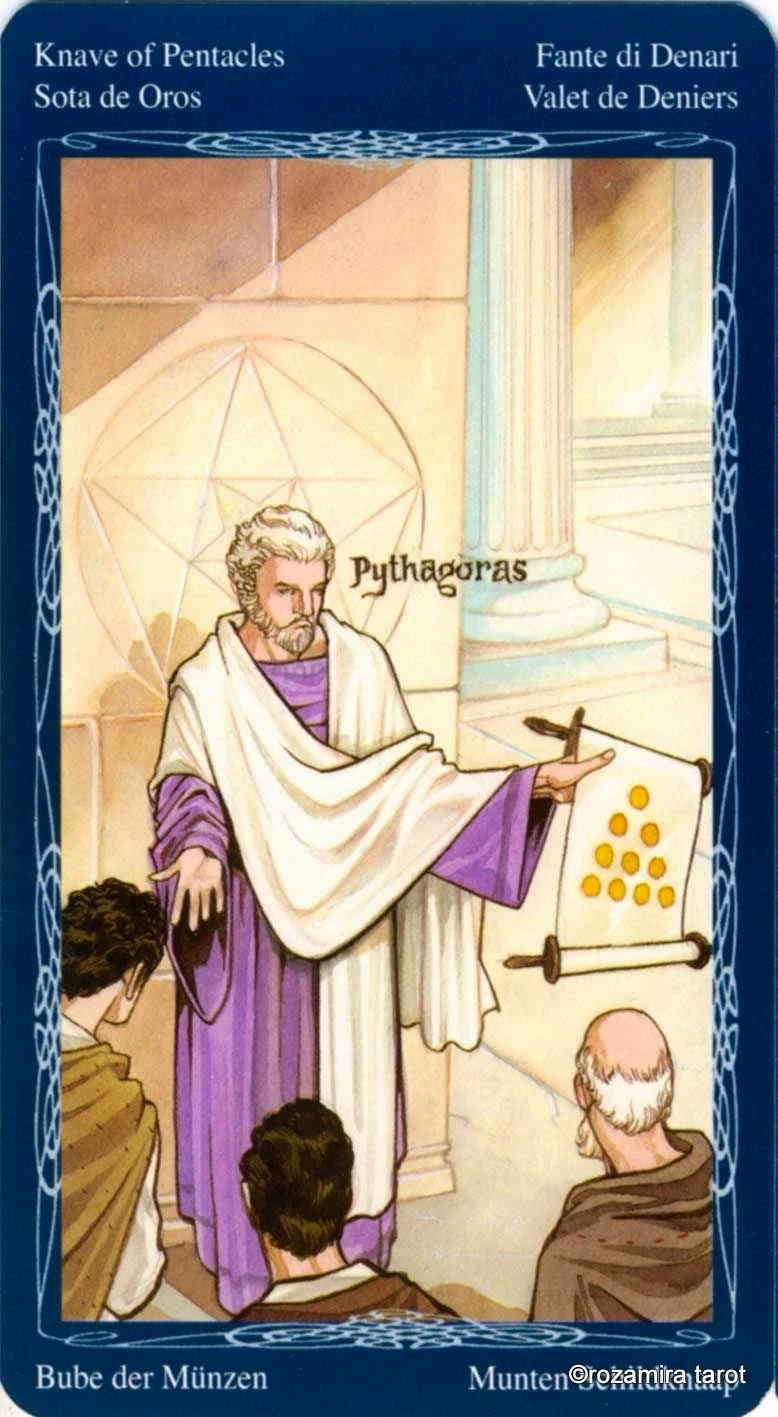
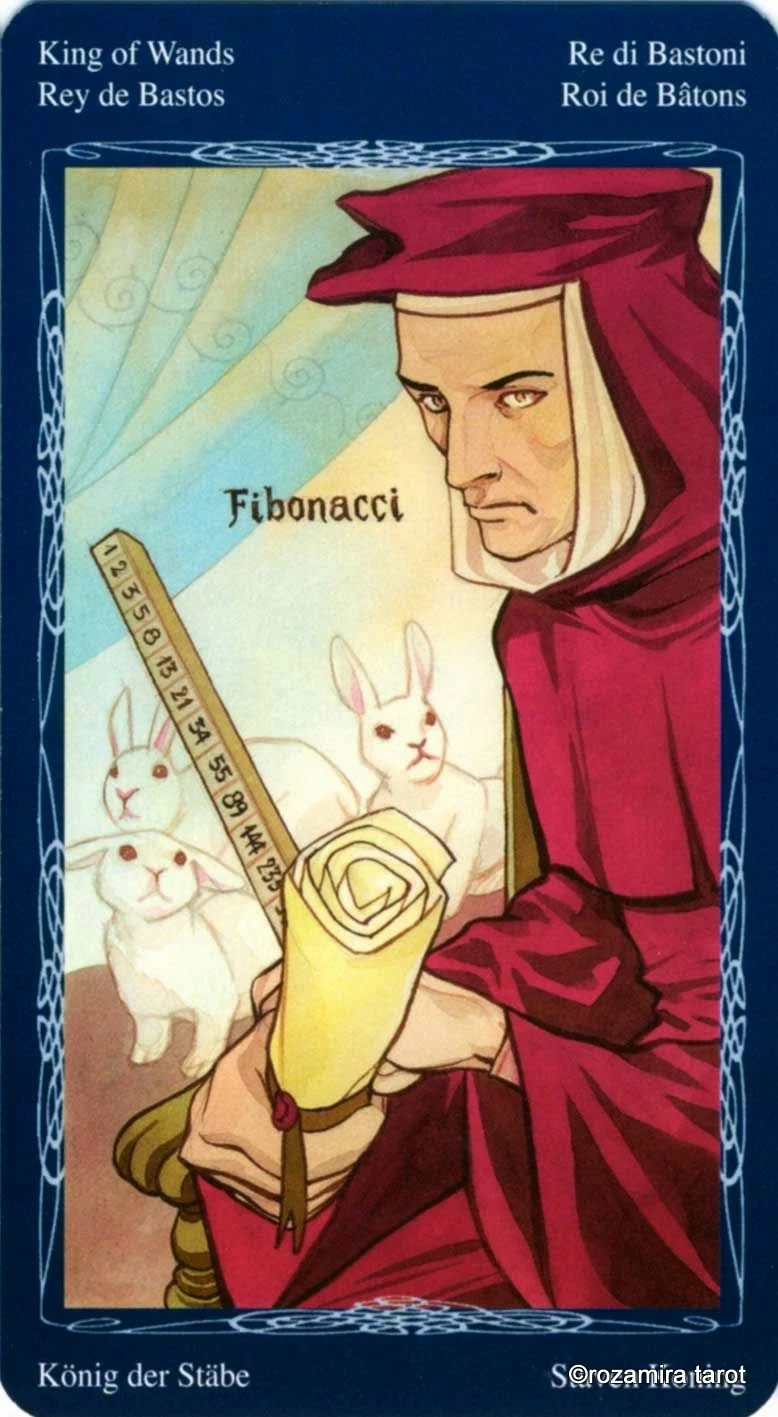
The King of Chalices places Leonardo beside a vessel and geometric drawing; the Knave of Pentacles names Pythagoras before students and a diagram; the King of Pentacles shows Pacioli among solid forms; and the King of Wands names Fibonacci beside rabbits, a number strip and a rolled plan. The deck turns courtly authority into four different relationships with pattern, proof and discovery.

Buying guidance for the exact edition
The reviewed edition is credited to Giovanni Pelosini for concept and text, Giuseppe Palumbo for artwork, and Lo Scarabeo as publisher. The creator’s own site describes a boxed deck with 78 full-colour cards and an instruction booklet. The Gallery’s dark navy borders, turquoise knotwork and multilingual titles are the clearest visual checks when comparing a listing.
The buttons here lead to a direct Amazon product page for the Lo Scarabeo deck. Stock, seller, language mix and packaging condition can change, especially for older titles, so compare the current listing photographs with the verified cards and box art on this page before purchasing.
Aurica’s golden rule for the Mystic Spiral
Let the symbol open the circle, then let the visible action close it.
A spiral can carry the mind a long way. Before you finish a reading, return to the figure, object or movement you can actually see and name one grounded next step.
Final Thoughts
Tarot of the Mystic Spiral is generous with ideas. Its strongest readings feel like walking through an old library with the windows open: history, number, myth and natural forms gather around one present question, each offering a different angle of light.
I would recommend it to the reader who enjoys looking, learning and returning. Choose one card that keeps tugging at you, follow its curve without rushing, and let the answer become useful before it becomes grand.
 View Tarot of the Mystic Spiral on Amazon
Tarot of the Mystic Spiral FAQ
Who created Tarot of the Mystic Spiral?
Giovanni Pelosini created the concept and text, Giuseppe Palumbo illustrated the cards, and Lo Scarabeo published the deck.
Is it a complete 78-card tarot deck?
Yes. The edition reviewed here contains 22 Major Arcana and 56 Minor Arcana, and the Gallery presents the complete verified card set.
Does it follow familiar tarot structure?
Its structure is recognisable, with Major Arcana plus Chalices, Pentacles, Swords and Wands. The courts use Knave rather than Page, and the imagery adds historical, mathematical, mythic and esoteric references that give familiar positions a distinct voice.
Is Tarot of the Mystic Spiral good for beginners?
It can be a rewarding first deck for a patient visual learner, but it is not a plain Rider–Waite–Smith teaching deck. Keep the booklet nearby, name what you can actually see, and build the traditional meaning from there.
What readings suit this deck best?
It is especially strong for personal growth, repeating patterns, study, creativity, turning points and questions that benefit from both intuition and careful reflection.
What should I check before buying?
Compare the live listing with the box and dark navy, turquoise-knotwork card borders shown here. Marketplace stock and language editions can change, so verify the seller photographs and what is included before ordering.
More Tarot Decks to Discover
Follow another symbolic world when you are ready to trace a fresh path through the cards.


