Saints Tarot Card Gallery
Explore this verified partial Gallery in the deck’s traditional order. Choose a group, then select any card to open its larger Lightbox view.

A note from Aurica
I feel the hush in Saints Tarot before I begin to read it. The pale skies, bright halos, and clear old-fashioned lines make the table feel a little like a chapel after everyone has gone home: quiet enough to hear the honest question underneath the question.
The Lovers draws me first. St. Valentine stands behind the couple like a witness to tenderness, but the card does not ask me to romanticise every bond. In a reading, I look at what the two people are choosing, what they are willing to protect, and whether affection is being carried by truth as well as longing.
Justice and The Hermit bring a steadier light. St. Michael stands over the dragon with his scales held level, while the Hermit turns inward toward a wisdom that cannot be hurried. Together they tell me that conscience needs both courage and reflection: name what is right, then give yourself enough silence to act from conviction rather than heat.
I reach for this deck when a question touches duty, forgiveness, service, grief, or the difficult boundary between sacrifice and self-erasure. I begin with the familiar tarot meaning, notice the saint and gesture chosen for the card, and then ask how the neighbouring images soften or sharpen the message. That keeps the reading compassionate without letting it become vague.
My gentle rule is to let devotion become a living choice, not a burden you carry only because it is old. Saints Tarot reminds me that quiet courage can be practical, warm, and deeply human—and that every sincere act of kindness can still lead you toward a stronger light.
Tarot of the Saints is a quiet, devotional tarot deck about courage, compassion, service, conscience, and spiritual endurance. It keeps the familiar tarot structure, but it filters the cards through saints, icon-like imagery, and moral questions. That makes it feel different from a bright everyday deck. It asks not only what is happening, but what kind of person you are becoming while you move through it.
I would not call this a fast, flashy, beginner-first deck. I would call it reflective. It works best when the reading needs patience, forgiveness, grief processing, family duty, service, spiritual study, or a steady look at what is right rather than what is easy.
How Tarot of the Saints Reads
The deck’s strongest feature is its saint layer. A card such as Strength is not only about confidence. It becomes a question about gentle courage. Justice is not only about fairness. It becomes a question about conscience. The Hermit is not only solitude. It becomes protected wisdom, prayer, study, and the lamp you keep lit when the world gets loud.
The suit language also has an older rhythm. Staffs carry action, energy, calling, and the work of the spirit. Cups speak about feeling, devotion, mercy, and memory. Swords bring truth, conflict, discernment, and difficult words. Coins bring body, money, food, care, labor, and practical support.
Moral Courage in Motion


This four-card moment reads like a mature kind of bravery: move forward, choose fairness, keep the heart gentle, and do not let urgency make you reckless.
Artwork, Mood, and Symbolism
The artwork is restrained and manuscript-like, with simple figures, pale space, clear gestures, and devotional atmosphere. It does not try to overwhelm the reader with glitter or drama. Instead, it gives each card enough silence to be studied slowly.
That silence is part of the deck’s power. Tarot of the Saints can make a reading feel like a candlelit pause. The question becomes more honest when the cards are not shouting. For some readers, this will feel plain. For others, it will feel peaceful, serious, and sincere.
Card study
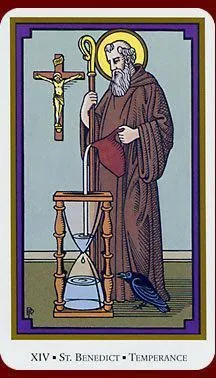
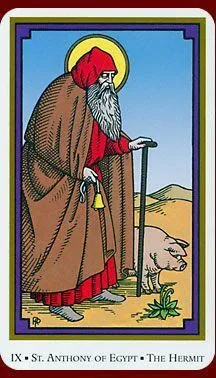
The Hermit: sacred solitude, not isolation
The Hermit is one of the clearest examples of this deck’s voice. I read it less as hiding from life and more as protecting the inner lamp from being scattered by noise.
In practical readings, it can suggest study, prayer, meditation, journaling, research, or simply stepping back before answering. It is a wise pause, not a punishment.
Love, Family, and Forgiveness
For love readings, this deck is strongest when the question has history, duty, or a need for emotional maturity. It can show where compassion is real, where sacrifice has become unhealthy, and where forgiveness is possible without pretending that everything is fine.
It is also a good deck for family questions because it naturally talks about obligation, care, patience, boundaries, and service. It does not make every answer soft. Sometimes the saintly answer is honest, firm, and clear.
When the Heart Feels Tired


This sequence moves from numbness and grief into memory, sweetness, and a small blessing that can still be received.
Let compassion find its backbone
After the cups have named what the heart is carrying, I pause before turning to Strength. Tenderness becomes more useful when it can hold a boundary, and this quieter space lets the next card show how mercy and courage can stand together.
Strength in practice
Strength: compassion with a spine
Strength is not about forcing a result. In Tarot of the Saints, it is courage that stays humane. It asks where you can be brave without becoming cruel.
For daily readings, this card can point to emotional self-control, patient care for someone difficult, or confidence that does not need to shout.
Career, Service, and Purpose
Tarot of the Saints can also work well for career questions, especially when the question is about purpose rather than only money. It is good for asking where your work serves something meaningful, where discipline is needed, and where you may be giving too much from guilt instead of love.
The Coins cards are especially practical. They bring the reading down from spiritual ideals into food, money, time, labor, and real-world help. That makes the deck useful for questions about caregiving, work ethics, study, long-term service, and sustainable generosity.
When Truth Has to Be Spoken


This pack says to find the clean truth, rest before reacting, speak directly, and keep boundaries clear.
Who Will Enjoy Tarot of the Saints?
- Readers who like saint symbolism, icon art, Christian history, and devotional atmosphere.
- Tarot students who want familiar structure with a deeper ethical tone.
- Journalers who ask about forgiveness, courage, service, grief, duty, and purpose.
- Readers who prefer calm symbolic art over trendy or highly decorative decks.

Practical compassion
6 of Coins: generosity that stays grounded
The 6 of Coins has a natural home in a deck about saints because it deals with giving, receiving, balance, and practical care.
I read it as compassion with hands: time, food, money, attention, or useful support. It can also ask whether generosity is fair. Are you giving from love, or from guilt? Are you able to receive help without shame?
Bring the blessing back to earth
The Six of Coins asks where care becomes practical. Before the following Four pack, I like to name one act that can be offered, received, repeated, or repaired; the wider spread can then turn a beautiful intention into something another person can actually feel.
Practical Service Matters Most


This is grounded spiritual work: start with what is real, work with others, give where you can, and keep practicing the craft.
Pros and Cons
| Pros | Cons |
|---|---|
| Distinctive saint symbolism gives the deck a sincere, contemplative voice. | The Christian imagery is specific and may not suit every reader. |
| Excellent for reflection, forgiveness, conscience, grief, service, and purpose questions. | Not the fastest choice for quick, casual, or highly practical yes/no readings. |
| Familiar tarot structure keeps it usable if you already know the basics. | Total beginners may need extra study for saint references and older suit names. |
| Quiet artwork leaves room for journaling and slow symbolic reading. | Readers who want lush fantasy art or bright modern imagery may find it too restrained. |
Final Thoughts
Tarot of the Saints is best when a reading needs wisdom more than spectacle. It is a deck for serious questions, soft courage, and moments when the answer needs to include compassion and responsibility.
If you are drawn to saints as symbols of endurance, healing, mercy, sacrifice, and moral choice, this deck is worth studying slowly. Let it be quiet. That is where it becomes powerful.

Tarot of the Saints FAQ
Is Tarot of the Saints a Christian tarot deck?
Yes. It uses Christian saints and devotional history as a major symbolic layer. It still follows tarot structure, but the saint associations make the readings feel more reflective and ethical.
Do I need to be Christian to read with this deck?
No. You can approach the saints as archetypal figures, historical people, or symbols of compassion and courage. Still, you should be comfortable seeing Christian imagery in your tarot practice.
Is Tarot of the Saints good for beginners?
It is better for readers who already know basic tarot meanings. Beginners can use it, but the saint references, older tone, and quieter art may require extra study.
How does this deck differ from Rider-Waite-Smith?
The tarot skeleton is familiar, but the saint layer changes the reading tone. It makes cards feel more connected to devotion, mercy, moral courage, sacrifice, and character.
What kinds of questions suit this deck best?
I like it for spiritual reflection, forgiveness, grief, service, family duty, long-term purpose, and moments when you need wise guidance rather than a fast yes-or-no answer.
Who might not enjoy Tarot of the Saints?
Readers who prefer bright, modern, fantasy-heavy, or beginner-keyword decks may find it too restrained. It is better for people who enjoy contemplative symbolism and devotional art.