
Deck Availability
See The Roman Tarot Deck on Etsy
Use the supplied Etsy listing shown throughout this review to check the current Collector’s Edition, product images, price, and availability.
See The Roman Tarot Deck on EtsyThe complete card journey
Roman Tarot Card Gallery
Move through Christine Cianci’s Roman world in deck order, or filter by Major Arcana and the four Latin-named suits. Open any card for a larger view and use the arrow controls to continue.
Edition note: the card face prints “IXX Sol”, and the creator-hosted cup court sample prints “Legatus Scythi”. They are preserved here as visible edition details rather than silently rewritten.
Showing all cards.
Deck Availability
See The Roman Tarot Deck on Etsy
Use the supplied Etsy listing shown throughout this review to check the current Collector’s Edition, product images, price, and availability.
See The Roman Tarot Deck on Etsy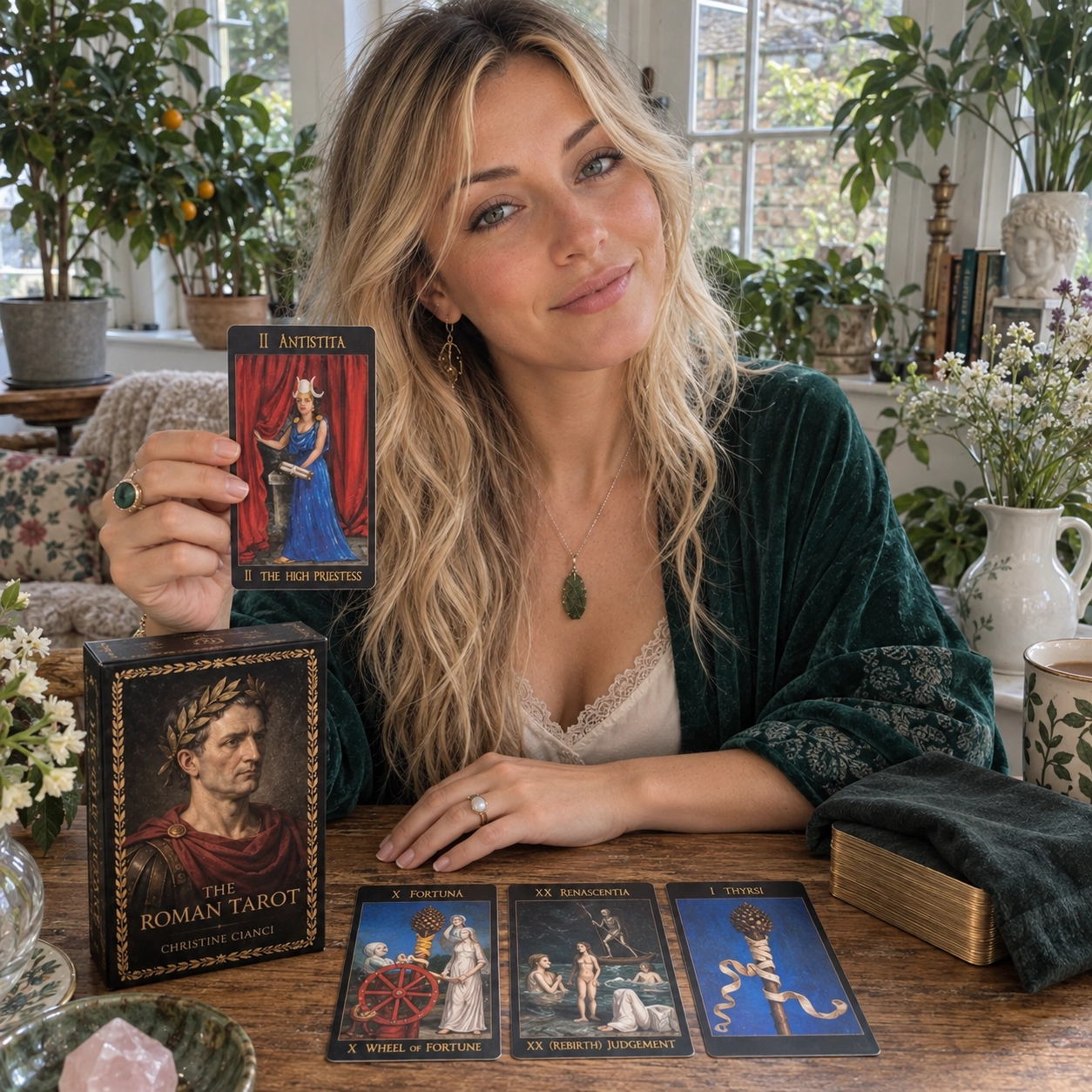
Aurica’s Quick Take
The Roman Tarot feels like stepping from warm sunlight into a marble hall where every portrait has been waiting to speak. Christine Cianci gives the deck the gravity of history, but beneath the laurel wreaths and formal robes I keep noticing human glances, guarded hands, pride, longing, and the quiet cost of being seen.
My verdict: choose it if Roman history, classical portraiture, renamed suits, and questions about power make your imagination stir. The Latin titles ask for a little patience at first, yet the familiar tarot bones remain underneath, and the fully illustrated number cards give the eye plenty to follow.
I begin with the person before the monument. In Antistita I notice composure before I name intuition; in Fortuna I feel the turn of circumstance before I speak about fate. Then I look to the neighbouring card: a bright Thyrsi can make authority brave or impulsive, while a heavy Aurei can reveal what that decision will cost in the real world.
This deck reminds me that dignity is not the same as hardness. Read slowly, let the Latin words become doorways, and allow each old Roman scene to return one living choice to your hands—you may leave the table feeling steadier, clearer, and more courageous than when you began.
History becomes a living oracle
The Roman Tarot lets old marble breathe
Christine Cianci’s deck feels like walking into a gallery where the painted Romans have just turned their heads. Laurel wreaths, armour, drapery, columns, coins, feasts, and battlefields give the cards the weight of history, yet the questions they ask are wonderfully present: Who holds power? What does loyalty cost? When does discipline become fear?
The structure remains recognisably tarot, but its language changes the air. Wands become Thyrsi, Cups become Scyphi, Swords become Gladii, and Coins become Aurei. Even the courts move through Tiro, Legatus, Imperatrix, and Imperator. I find that this small pause for translation makes me look more carefully before reaching for a familiar meaning.
Card study · the quiet chamber
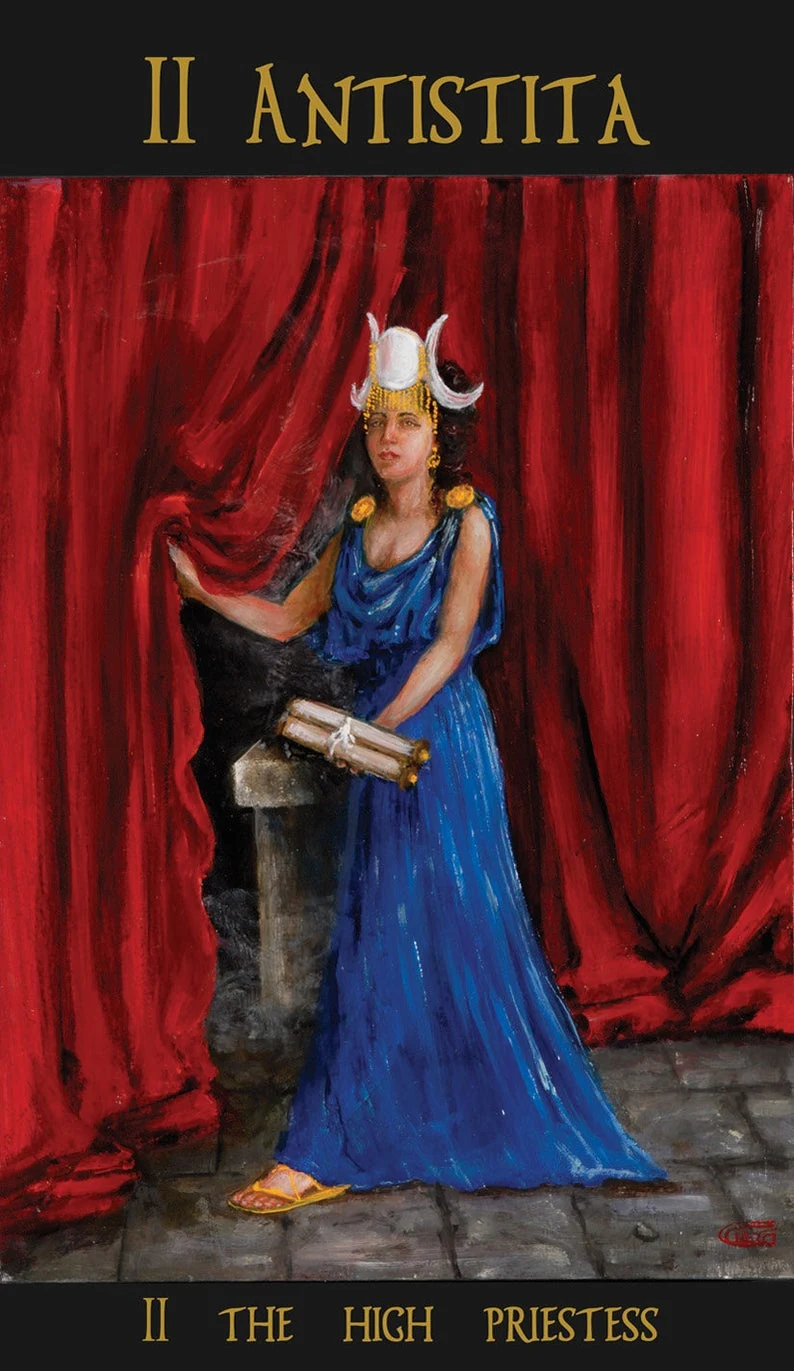
Antistita listens behind the public story
The High Priestess arrives as Antistita, a woman whose authority is inward and ceremonial. The composed figure, formal clothing, and enclosed classical setting make silence feel deliberate rather than empty. She is the keeper of what cannot be rushed into daylight.
In a reading, I would let her cool the noise around the question. Upright, she can point to timing, private knowledge, and the wisdom of watching one more moment. In shadow, secrecy may be protecting fear. Beside a fiery Thyrsi card she asks what should ripen before action; beside Gladii she asks which thought is true once the performance falls away.
How Roman history changes the reading voice
This deck does not use Rome as wallpaper. Public duty, conquest, patronage, law, household power, and reputation sit inside the pictures, so even a personal question can acquire a civic echo. A promotion may feel like a laurel crown, but the neighbouring card reveals whether that honour is earned, borrowed, or heavy.
Start with the body language. Notice who sits and who stands, who is watched, what is being offered, and where the doorway leads. Then return to the card’s traditional function. The history adds texture; it should not drown the human feeling underneath.
Four-card spread
A road through Roman power
Read these as the wanderer, the maker, the ruler, and the world shaped by their choices.

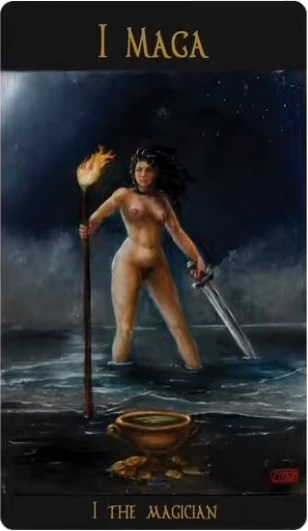


Together they ask: Where am I free, what can I shape, how should I use authority, and what larger order will my choices create?
How it reads in practice
The Roman Tarot reads best when the question has room for motives and consequences. Its scenes often feel public, as if a private choice might soon be carried into the forum. That makes it vivid for leadership, work, family roles, reputation, commitment, and turning points.
When a spread feels stern, look for the softer witness: a hand, a cup, a patch of sky, or the direction of a gaze. When it feels grand, ask what the ordinary person in the scene might be feeling. Those details keep the reading human.
Card study · history turns
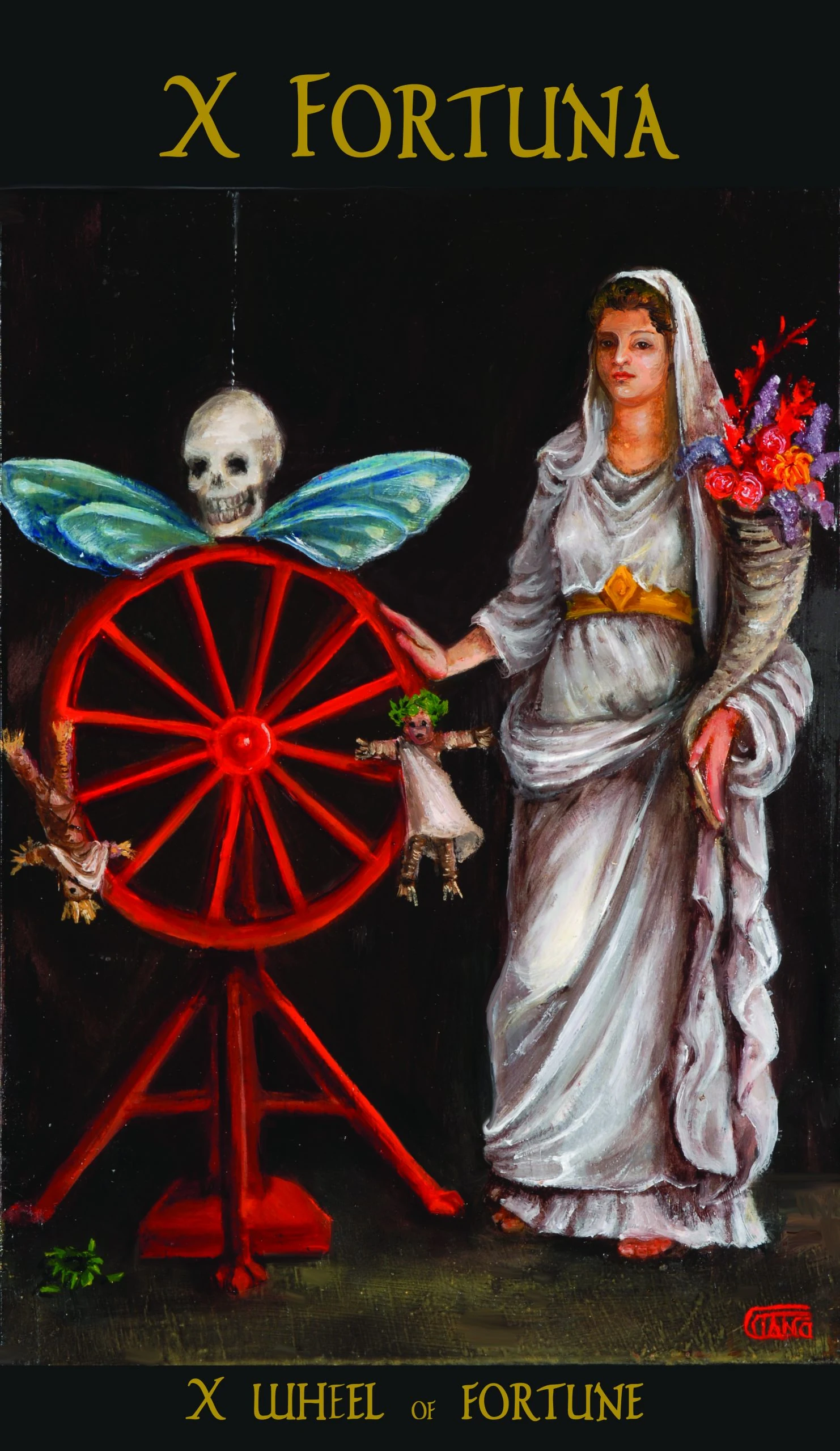
Fortuna reminds us that no throne stays still
Fortuna carries the old truth that power, comfort, and certainty move in cycles. In this Roman setting, the Wheel feels less like an abstract mechanism and more like the rise and fall of names carved into stone. Glory can be bright and temporary; loss can open the next gate.
Upright, she can show a change in conditions, a timely opening, or movement larger than one person’s will. In shadow, we may surrender agency and call it fate. With Aurei, watch material conditions; with the Chariot, ask whether you are steering with the turn or fighting the road itself.
Beginner friendliness and three ways to enter
A beginner can read this deck, but it rewards a little patience. The familiar architecture is underneath the Latin names, while the fully illustrated number cards offer more visual help than a plain pip deck. Keep a suit-and-court key nearby for the first few readings, then let repetition teach your eye.
Easy
What quality will help me meet today with dignity?
Medium
Where am I seeking approval, and what would steadier self-respect change?
Deep
Which inherited idea of power am I ready to keep, revise, or release?
Four-card spread
The four elemental gates
Let one card from each suit show how desire, feeling, thought, and material reality answer the same question.


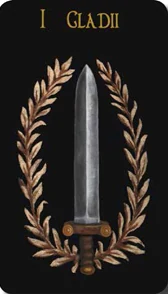

Thyrsi begins the fire, Scyphi receives the feeling, Gladii names the truth, and Aurei asks what can be built in the real world.
The art: painted presence and illustrated daily life
Cianci describes the Majors, courts, and aces as beginning in oil paintings on panel, while cards two through ten use unique digital illustrations. That gives the deck an interesting pulse: iconic figures hold the grand threshold moments, while the numbered cards bring Roman life closer to the table.
Famous Romans appear on the face cards, but recognition is not required for a useful reading. First read the expression, posture, objects, and atmosphere. Historical research can deepen the second pass without turning the spread into an exam.

Card study · answer the summons
Renascentia makes renewal a conscious return
Judgement becomes Renascentia—rebirth—which softens the idea of a verdict and brings the body back into the story. The card’s formal Roman world suggests that renewal is not forgetting the past; it is standing before it with enough honesty to choose again.
Upright, this is an awakening, a reckoning, or a call that can no longer be politely ignored. In shadow, shame may disguise itself as responsibility. Beside Death, it confirms that an ending has already changed you; beside the Star, it asks you to live as though hope deserves practical loyalty.
Who will connect with this deck?
This deck will suit readers who enjoy classical history, portraiture, renamed systems, political or leadership questions, and cards with a solemn theatrical presence. It is especially useful when you want to examine authority without pretending power is simple.
It may be less comfortable for someone who wants instant modern scenes, standard English titles, or very bright contemporary colour. The Roman frame is strong, and the deck asks you to meet it rather than glance past it.
Four-card spread
Four faces of command
Place the four Imperators around one decision and ask what each element believes good leadership requires.

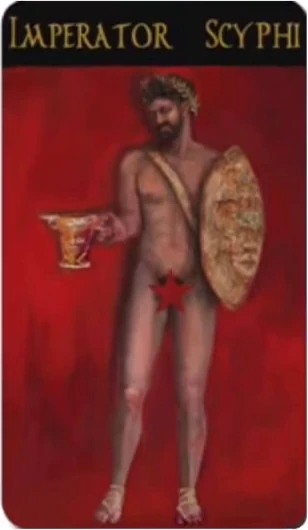
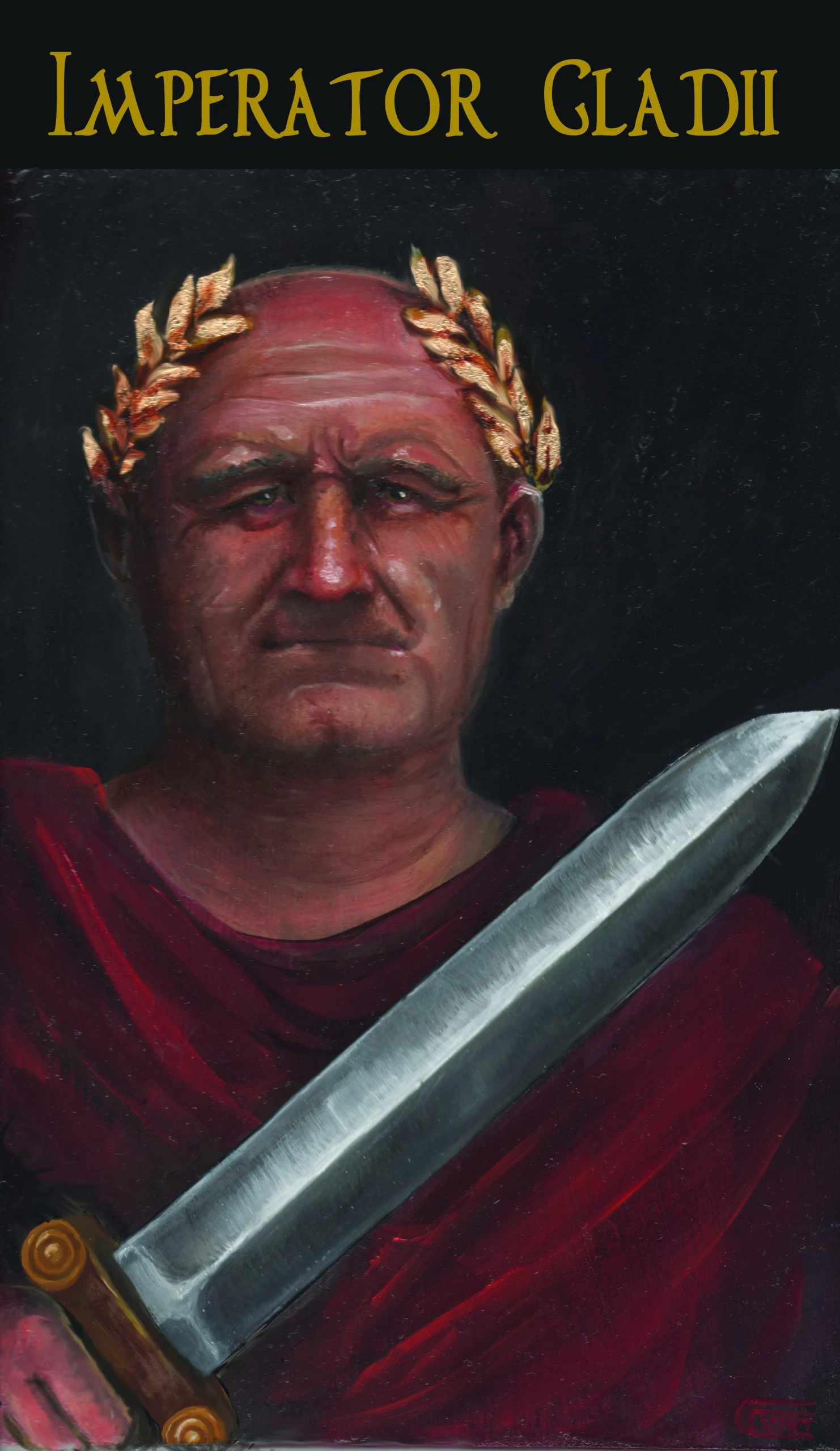

Fire calls for courage, water for emotional responsibility, air for clear judgement, and earth for patient stewardship. The strongest answer usually borrows from all four.
Buying and edition guidance
Christine Cianci’s official page describes the current release as the second or Collector’s Edition, self-published in 2024. It adds a new box, a colour-cover booklet, higher-resolution coated cards, and gold-foil edges. The earlier edition is catalogued to 2013, so compare box photography and edition wording before ordering.
The separate Roman Tarot: A Contemplative Guide to the Symbolism and Reading of the Roman Tarot is a 132-page 2018 companion book. It can deepen study, but it is not the physical deck. The product buttons on this review lead to the supplied Etsy listing for the Collector’s Edition deck.
Aurica’s golden rule
Read the human before the monument
Rome can make every card look carved in certainty. Begin with the face, gesture, and relationship in front of you; then let the column, crown, coin, or blade show how the wider world is pressing on that human moment.
Final Thoughts
The Roman Tarot is at its best when a reading needs dignity without distance. Its emperors and priestesses do not remove ordinary feelings; they show what those feelings become when duty, history, and consequence gather around them.
If the Latin names seem like a closed gate, begin with one suit and a simple question. Soon the unfamiliar words become doorways. The deck’s loveliest promise is that history is not only something behind us—it is a mirror we can use to choose with greater courage now.

Questions, clearly answered
Roman Tarot FAQ
Who created The Roman Tarot?
Christine Cianci created the deck’s artwork and text. Her official page describes famous Romans on the face cards and a complete Roman-history setting for tarot.
How many cards are in The Roman Tarot?
The deck contains the familiar 78-card structure: 22 Major Arcana and 56 Minor Arcana cards across four suits.
What are the Roman Tarot suit names?
Thyrsi corresponds to Wands, Scyphi to Cups, Gladii to Swords, and Aurei to Coins or Pentacles. The courts are Tiro, Legatus, Imperatrix, and Imperator.
Is The Roman Tarot suitable for beginners?
It can suit a committed beginner who keeps a reference nearby. The core structure is familiar, but Latin titles, Roman figures, and historical symbolism add a useful learning curve.
Why does the Gallery show “IXX Sol” and “Legatus Scythi”?
Those spellings appear on creator-hosted card imagery for this edition. TarotFans preserves the printed details and explains them rather than altering the artwork.
What should I check before buying?
Confirm the edition and what is included. The current second or Collector’s Edition is described by the creator as having a new box, colour-cover booklet, higher-resolution coated cards, and gold edges. The separate 2018 contemplative guide is a book, not the physical deck.


